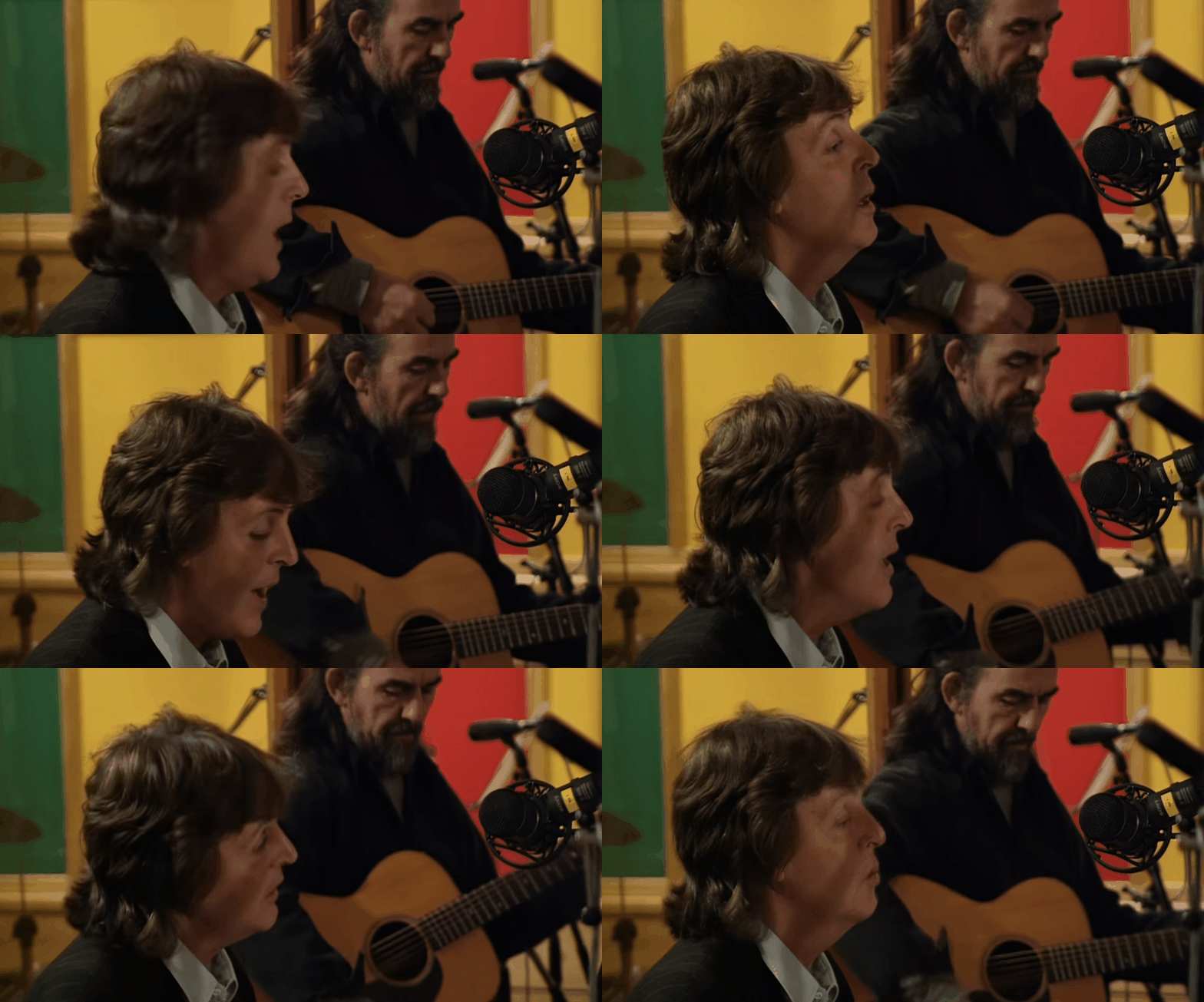
TMBP Extra: Jan. 13, 1969 recap

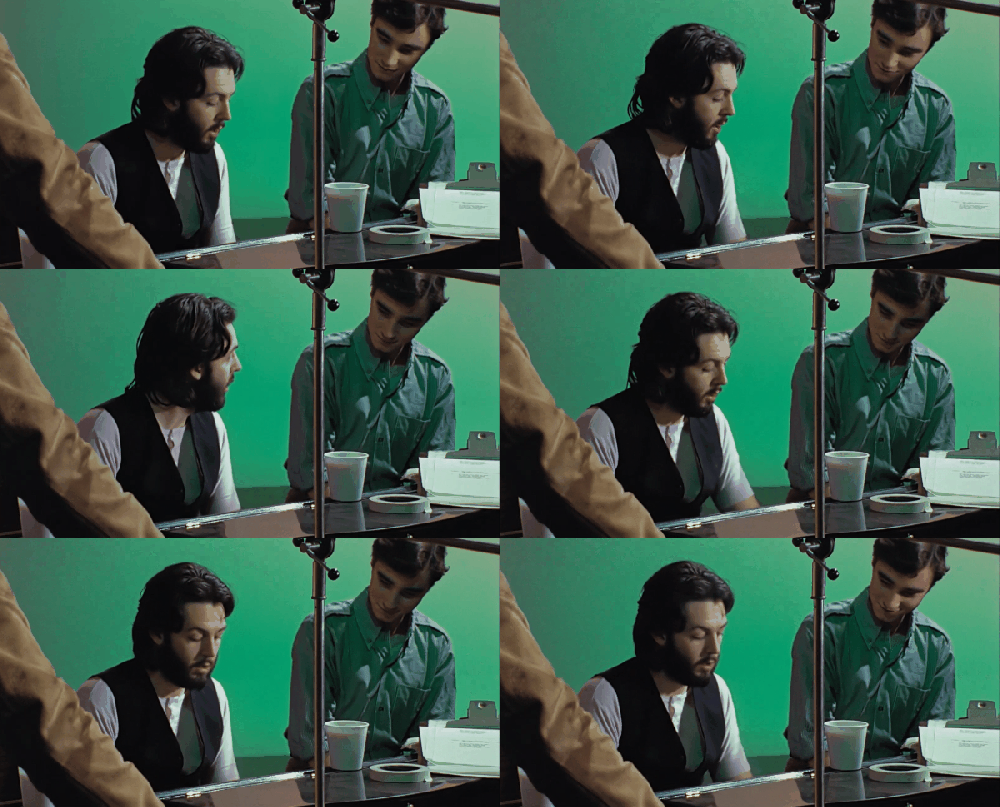
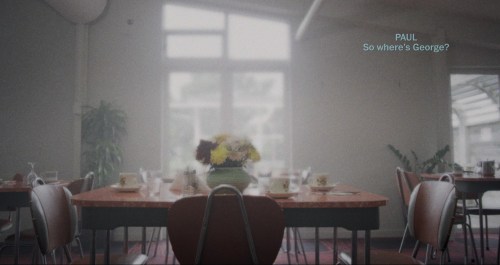
The Beatles’ January 13, 1969, happened in history and it was portrayed in the 2021 docuseries Get Back, and the two aren’t necessarily the same.The canteen discussion stands at the core of the day’s drama, but Beatles still made music and did their best to sort out their issues best they could. Dig in here for a better understanding how the day played out:


  • And then there were two: The Beatles’ great divide isn’t centered around the departed George Harrison, but instead John Lennon and Yoko Ono. This is the full story around the docuseries’ gut-wrenching core — and how it’s not quite how it’s presented.
  • Picasso’s last words: Old masters and friendly competitors inspire disagreement in the broken Beatles’ search for pace and purpose. Paul speaks to John! Linda Eastman spars with Michael Lindsay-Hogg! There’s pottery! There are camels! We get into obscure TV! The body language is tangible! It’s all here.
  • The Lunchroom Tape (Pt. 1): Get Back cleaned up the sound but muddied the facts in its portrayal of the Beatles’ secretly recorded canteen conversation. Dig into who was really there, what was really said and why it matters.
  • The Lunchroom Tape (Pt. 2): Ego, leadership and how the Beatles can reach their full potential dominate a spirited, complex conversation.
  • The Lunchroom Tape (Pt. 3): Eavesdrop on the Beatles for a half hour and what do we learn? This conclusion to the canteen trilogy reveals the wounded working relationship between John and Paul, its spillover effect on George and beyond.
  • Looking for the greener grass: With George in self-imposed exile, Paul, John and Ringo Starr needed just 30 minutes to investigate the who, what, where and why of the developing song “Get Back” at the end of an exhausting, cathartic day.
  • Et cetera: What was Ringo singing at the start of Get Back Episode 2 and how can we tie it to the 1980s? Why was everyone talking about Wings’ guitarist years before they existed? Explore these and more leftover storylines from Twickenham.

1 Comment

Filed under Extra, Recap

Get Back advent calendar: Countdown to the sessions

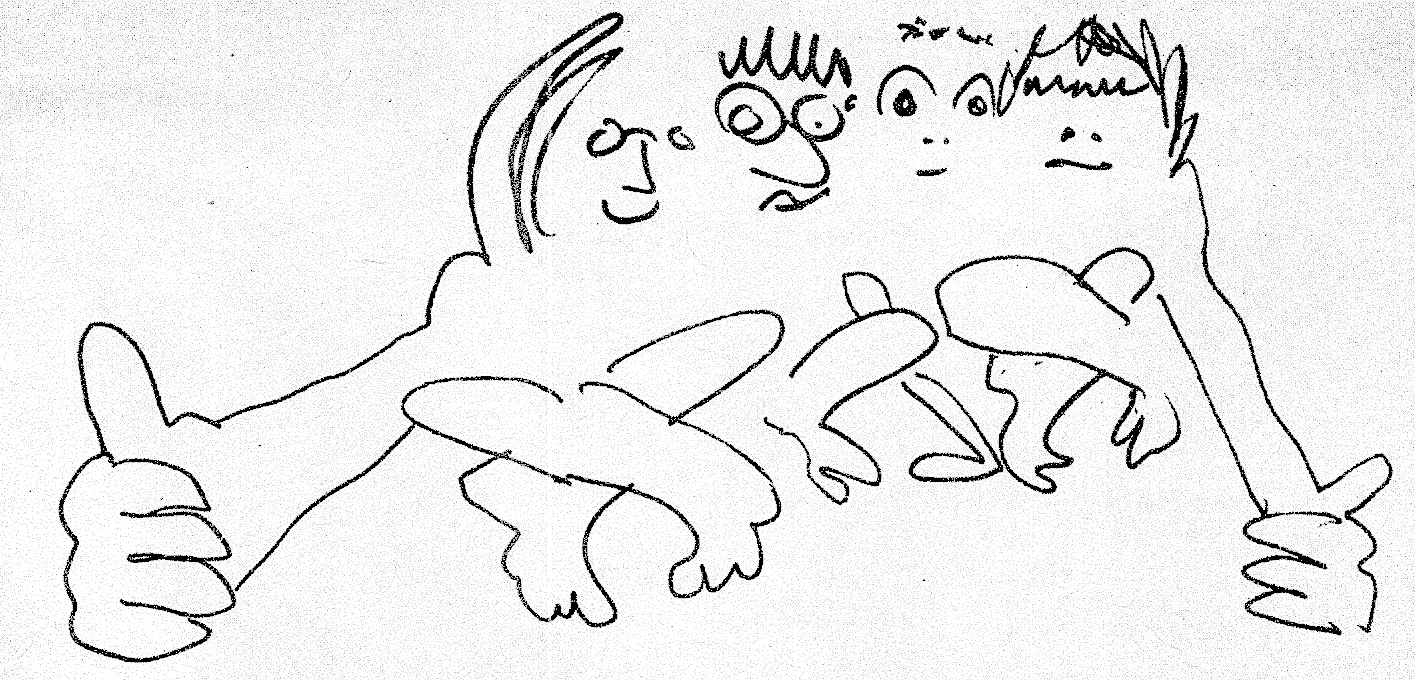
The Beatles, as depicted by John Lennon in November 1968, as published in the  December 7, 1968, issue of New Music Express.

In my faith, we count down the 25 days to the start of the Get Back/Let It Be sessions. This is completely normal.

To operate this particular digital advent calendar, simply click the day below and read up on what our boys and their extended circle were doing in these days leading up to their Most Holy Assemblage at Twickenham Film Studios on January 2, 1969.  

10 Comments

Filed under Day by day, Extra

TMBP Extra: Stay till it’s time to go

“The world is still spinning and so are we and so are you. When the spinning stops – that’ll be the time to worry. Not before. Until then, The Beatles are alive and well and the Beat goes on, the Beat goes on.”

These were the instructions Apple publicist Derek Taylor articulated April 10, 1970, the marker for the end of the greatest pop music group there ever will be, the day the papers blared “PAUL QUITS THE BEATLES.”

That was more than 53 years ago, and it’s still not time to worry.

I felt compelled to write about “Now and Then,” the Beatles’ new single, and “last song,” even though I generally keep my focus to the Get Back sessions of a half-century earlier. One of the reasons I started researching and writing They May Be Parted in 2012 is because I thought I was investigating the endgame of the Beatles, and I wanted to understand that ending. Listening to the Nagra tapes of the sessions themselves, the January 1969 sessions weren’t what we were led to believe, a revision to history that now is mainstream opinion since the release of the Get Back docuseries.

I’ve posted some takes on “Now and Then” on social media and voiced a few others as a podcast guest, but since I have this permanent platform, I wanted to post here for posterity, too.  Maybe this is more for me than anyone else. I tried to keep my thoughts in some kind of order, but this is certainly a brain-dump of high order. 

“Now and Then” was released just over a week before I published this post, and today hit No. 1 on the U.K. charts. My feelings on the song and the accompanying video evolved in that short time, and may continue to, I’m sure. 

There simply won’t be and can’t be consensus on any aspect of “Now and Then.” Contemporary critics routinely called Beatlemania a fad. One writer famously said Sgt. Pepper was “ultimately fraudulent.” Abbey Road was described by another as “an unmitigated disaster.” So from the jump, we can abandon any thought of a common opinion and there doesn’t need to be. It only matters what it means to you, if anything. It’s like attending a funeral — you go because you feel compelled to mourn for your own personal reasons. 

Assuming we all know the original backstory – John Lennon committed the idea to cassette in the late 1970s and widow Yoko Ono handed the tapes of this and three other songs to Paul McCartney in 1994 for use as potential new Beatles songs – let’s pick things up in 2023 with the song’s rollout.

One basic truth to have any “Now and Then” discussion: We simply have to accept the fact this song and video exist in order for us to have a reasonable conversation about it. Whether the song should or shouldn’t exist never was our call. It was up to the two living Beatles and the two estates.  In the 1990s, the decision was made to break the seal and reopen the Beatles as an active unit. This is just a continuation of that act in the 1990s. 

Is it real, or is it TDK?

George Harrison left explicit instructions to his son, Dhani, and Jeff Lynne outlining how he wanted Brainwashed, his posthumous 2002 LP, to be finished after his death. John didn’t leave behind anything except for the music itself.  If the tape of “Now and Then” actually said “For Paul” in John’s writing, we just don’t know if that meant it was dedicated to him, meant to give to him to listen to or something else altogether.  It could imply there were tapes that said “For May” or “For Sean.” Maybe there were and no one else has seen them.

Since I’m picking up the story in 2023 via 1995, I’m not really going to get into John’s original intent or inspiration in writing the song, the deeper Lennon-McCartney relationship, the Carl Perkins “My Old Friend” stuff or anything along those lines. There are some terrific voices in the Beatles-sphere who can offer their opinions on that. But ultimately, the most important interpreter is Paul. If we all (myself included) can hyper analyze every word and every note the Beatles play and find deeper meaning, certainly Paul McCartney has the right to decode and determine how a song by his longtime songwriting partner and dear friend spoke to him.

The 2023 rollout window for “Now and Then” was highly compact, and it allowed for knee-jerk takes and then knee-jerk reactions to those initial takes.

Straight away, Paul stumbled into the first step of the rollout in June, saying AI was key to completion of the song. Really, the blame goes to the person who wrote the BBC headline: “Sir Paul McCartney says artificial intelligence has enabled a ‘final’ Beatles song.”

The clumsy description spoiled the promotion of project from the outset, even if the actual use of the the technology wasn’t anything wrong. If he just said “we’re using same gadgets Peter Jackson used to clean up the Get Back tapes” it wouldn’t have put the rollout on the back foot from the start.

Jackson put together the magnificent making-of documentary, unveiled the day before the song’s actual release, on November 1, pulling together unseen home movies of John and Anthology-era footage of George. How remarkable it was to be able to enjoy them both so alive again. Watching Paul singing along to “Now and Then” in the 1990s was extremely moving. 

Regardless of whether the musical performances of “Now and Then” in the documentary were a solid sync job or authentic, the sequence made a straight-line link between the ’90s and now, pulling “Now and Then” into the Anthology era as second-act Beatles song and doing everything it could to ensure George was part of this story. Utilizing the Yellow Submarine time travel and timeline was deft, and little easter eggs like using Magic Alex’s sound “technology” was clever and really gave a deep nod and wink to let even the most diehards know, “We’re with you, and this new song can speak to you too.”

It’s entirely anecdotal, from social media, but people started to weep once they heard John Lennon’s voice in isolation. It took me until a few seconds later, when Paul joined him in harmony.

To me, that’s one of the most important and enjoyable features of “Now and Then,” which was officially released on November 2  — Paul owns his “old-man voice,” which he really hasn’t done during his solo career as it’s become more prominent. He’s treating his Beatles work separate from his solo work, which often takes him out of his realistic vocal range.  But for this final Beatles track, he leans into that feature of his singing voice as a complement to John, who in his mid-to-late 30s when he recorded “Now and Then” was about 40 years Paul’s junior at his current age. It would have been like John singing with an 81-year-old George Burns in 1977.

I think the strings do a great deal of heavy lifting. Superficially, this is the biggest difference with whatever they would have worked on in the ’90s, when they didn’t employ strings at all on “Free as a Bird” and “Real Love.” I found the arrangement lovely and not overwhelming, evocative enough of “I Am the Walrus” and “Eleanor Rigby” without overwhelming the listener.  

I’ll say the same for the harmonies that were sampled from “Because,” “Eleanor Rigby” and “Here, There and Everywhere.” Giles Martin applied them tastefully and subtly enough into the fabric of the song it sounded completely natural. 

Ringo was typically fab on the kit, and his added color on vocals were welcome. But it’s too bad surviving guitar parts were mixed low as they were. Much has been said about Paul’s slide solo in tribute to George — it did make you miss George, and it probably would have had a little more flavor and guts to it had he been around.

I do really feel like they were playing together, instead of this cross-generational, cross-dimensional, analog-digital hybrid. It’s all very tidy, under four minutes, not at all ponderous and conscious of overstaying its welcome. 

I thought John’s original recording was a little slight — I didn’t love any of the original piano sketches as they were taped, to be completely honest.  Certainly they were never meant to be release-ready or anything close to it. 

In contemporary interviews from the Anthology era, Paul himself didn’t pull any punches when it came to the quality of the content itself. On what was clearly “Now and Then,” from the November-December issue of Beatlefan:

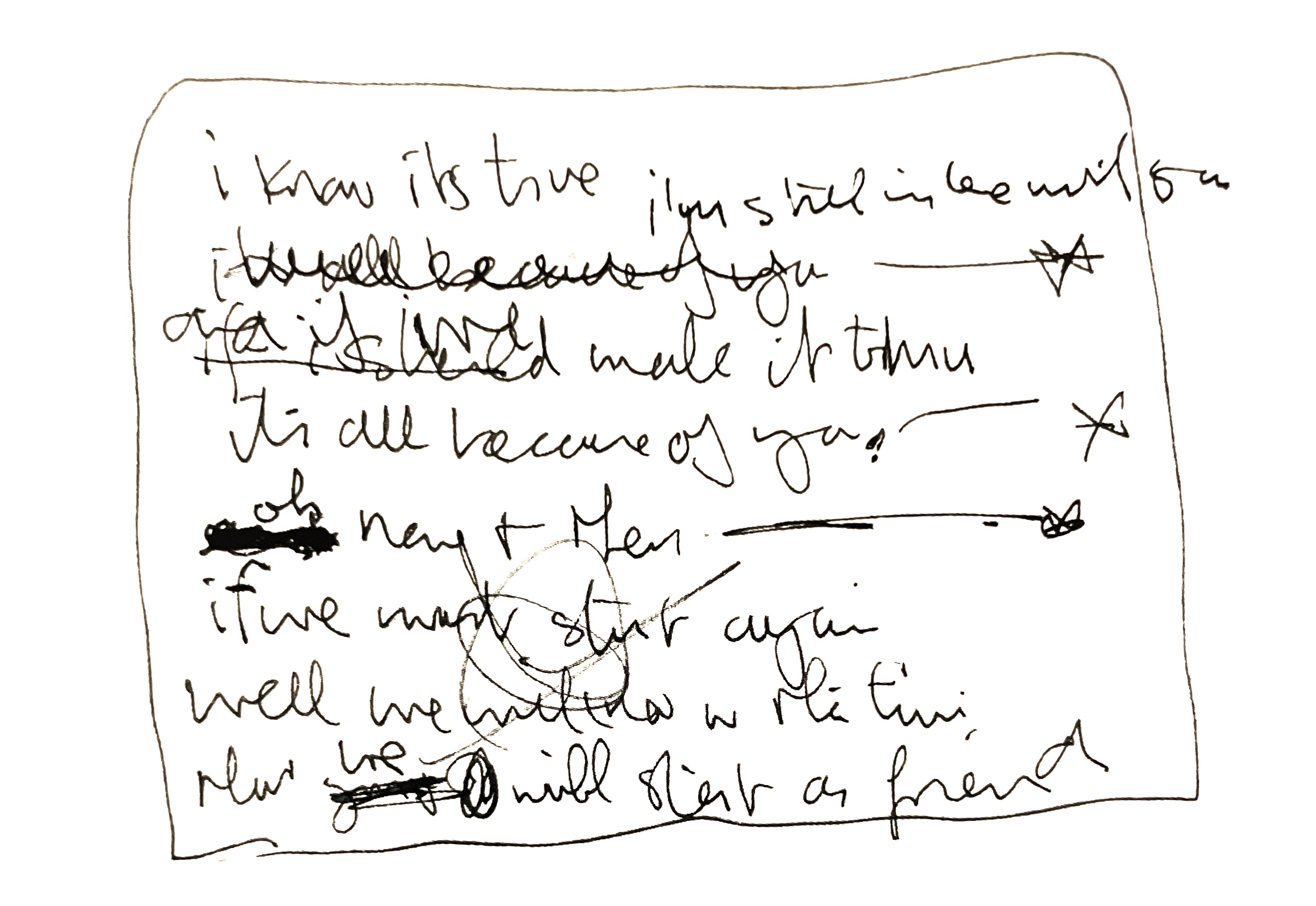
Yeah, what’s it called – I don’t know, it didn’t really have a title [Sings: “You know/it’s true; it’s up to you…] That beginning bit’s great and then it just goes a bit crummy. We all decided that it’s not one of John’s greatest songs. So that we’d have to manipulate all of that, which is just a little bit more difficult.

I think it’s worth considering how different a 1995 version of the song would have been. We can be assured the overall sound would be different with Jeff Lynne at the helm as originally planned. Would the song have been adjusted, arranged and edited the same way? At the minimum, George would have had a say in the song’s writing and arrangement, probably in a 50-50 manner with Paul (minus some percentage offered to Ringo Starr, to be fair).  This is in no way meant to come off crass, but without George’s presence, it freed Paul to fully arrange “Now and Then” with complete freedom. 

Even if every now and then he’d feel so insecure, Paul had the confidence to open up the door to collaborate with John as an equal partner, as he felt he had every right to do and had done so many times. If Paul thought the song’s original bridge was clunky, extraneous and “crummy,” he was justified in killing it. I know it seems insane to say “No, we don’t want to hear any more unreleased John Lennon,” but the Beatles were always great editors. Paul McCartney is a magnificent song fixer, and this is the ultimate, final fix.  

And this returns me to Get Back. I long heard on the Nagras and everyone has since seen in the series that the others explicitly trusted Paul with their songs. He led the way, whether it was John letting him arrange “Don’t Let Me Down” or George welcoming input to “I Me Mine.” That’s just two small examples in a career of such collaboration.

Does “Now and Then” sound like it belongs on a Beatles LP? Of course not, and why should it?  Not quite a mashup, but think of it like the single version of a compilation album. It’s pieces from four of the last six decades woven in under four minutes, I think quite seamlessly. At times “Now and Then” sounds natural in any of those decades, though without fitting comfortably in any of them, either.

What is the essence of a Beatles song? Is it the personnel or the sound? The Beatles didn’t always record as a quartet, certainly not as the years went on. You only needed one Beatle to make Beatles song sometimes. “I Me Mine” was written and rehearsed with no input from John in 1969, and then recorded with him out of the country and having quit the band in 1970. Yet it’s undeniably a Beatles song.

Paul and Ringo got together recently for lunch, but had to send each other files of “Now and Then” — they couldn’t even bother to record the last song in the same room. Maybe there’s something calculated to that: If they couldn’t be in the same room as John and George, then they wouldn’t record without them as a unit. They’d all be apart, together.
The Beatles’ wild variety of styles defines the group’s music. So if it’s not the personnel or sound that makes a Beatles song a “Beatles song,” maybe the essence of a Beatles song rests in its original time — the 1960s. But, as George and John sang in response to “you say stop” in “Hello Goodbye,” they can stay till it’s time to go. And they decided it wasn’t time to go.

In the last 30 years, since the Threetles first attempted “Now and Then,” we lost George Harrison, Linda McCartney, George Martin, Neil Aspinall, Geoff Emerick and so many others, people close to the Beatles, their story and their music. John wasn’t the only one missing anymore, and each of these people to some degree must have been on Paul’s mind as he worked on “Now and Then,” this song of memories and loss. 

And to that end, it’s also quite clearly a song of closure. The promotion — so actively screaming that it’s the “last” Beatles song — leans completely into that. But the music does too. I’m not any kind music theorist, but I have two operational ears, and this is what I hear:
“Now and Then” is the only one with a conclusive ending. 

I love the concept of the butterfly effect, so let’s apply it here. There’s no answer, but what if “Free as a Bird” had the poor demo tape recording and “Now and Then” ended up salvageable in 1995? Maybe the quote I shared earlier, where Paul said it was “not one of John’s greatest songs” would have meant “Real Love” would have been the lone reunion song? We’re left to guess.

And that brings us to the video. It’s divisive and a little insane. 

There’s a lot to unpack. My initial reaction was that it was too contrived, too scattered. The 1990s Anthology outtakes were outstanding, as it was in the making-of film — images of George we hadn’t seen before and the Threetles at work. But my overall first impression was that this video was the kitchen sink, trying to stuff so much in four minutes: present-day performances, ’90s video, archival footage and photos. 

I would imagine that if they didn’t do the “Free as a Bird” video already, that would have been an apt solution. 

That’s one way to go, when there’s a member of the band who’s not around anymore, a creative film that had few images of the Beatles as they had been and none of the surviving members pictured in the ’90s. “Real Love” took a more straightforward approach, compiling moments from throughout their career with 1990s footage. But there’s no narrative.

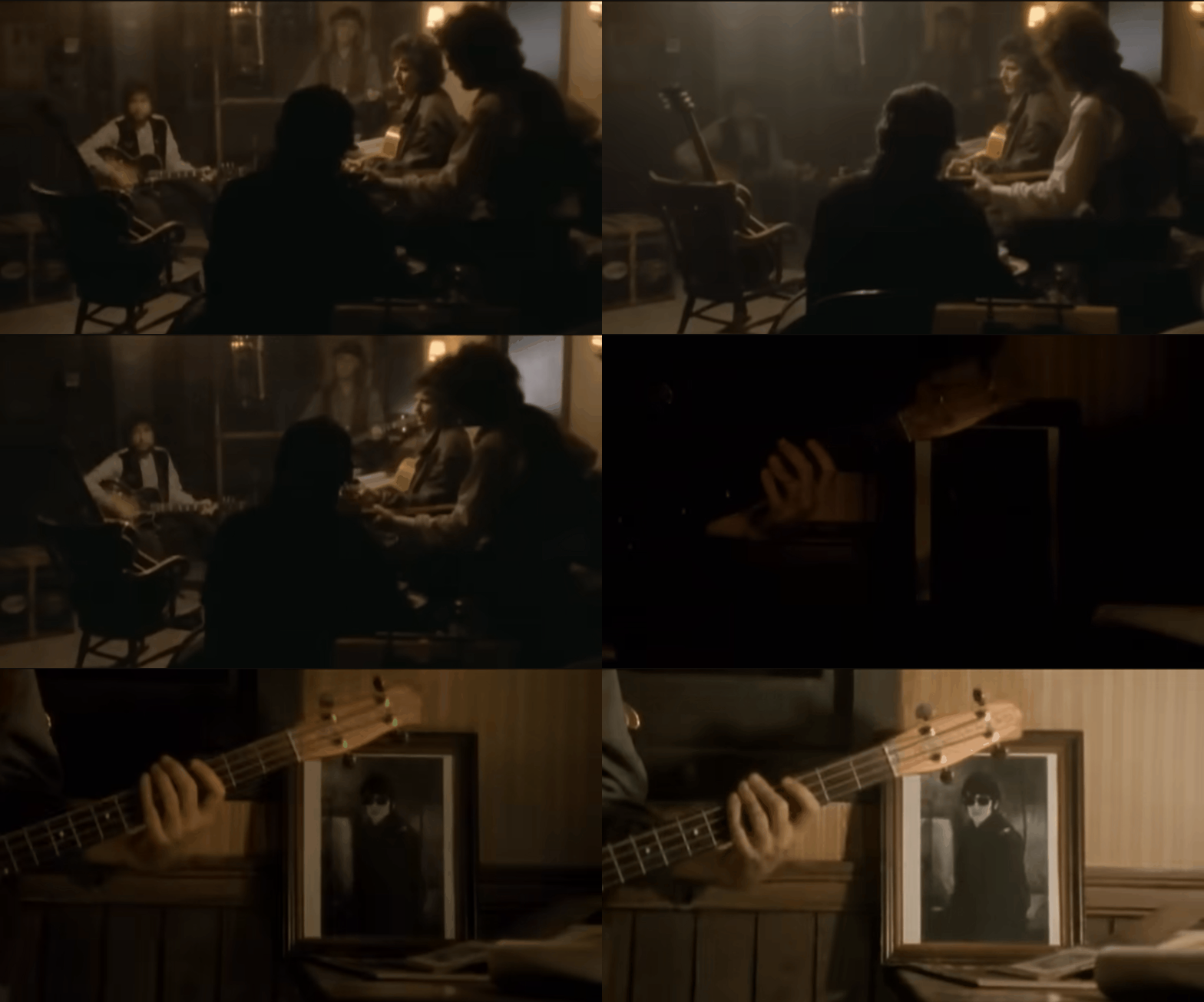
Roy Orbison died shortly after the first Traveling Wilburys album came out in 1988, and in the “End of the Line” video, released a few months later, he was represented by a rocking chair with a guitar and a photograph shown during his vocal lines. It was moving and sad, but I don’t think it was an approach that would have worked for the Beatles, with half the band gone. It would have come off maudlin, and completely against the idea that “Now and Then” was a full-group effort. (Mind you, I don’t think “End of the Line” was maudlin — it was still in the early phases of mourning Orbison.)

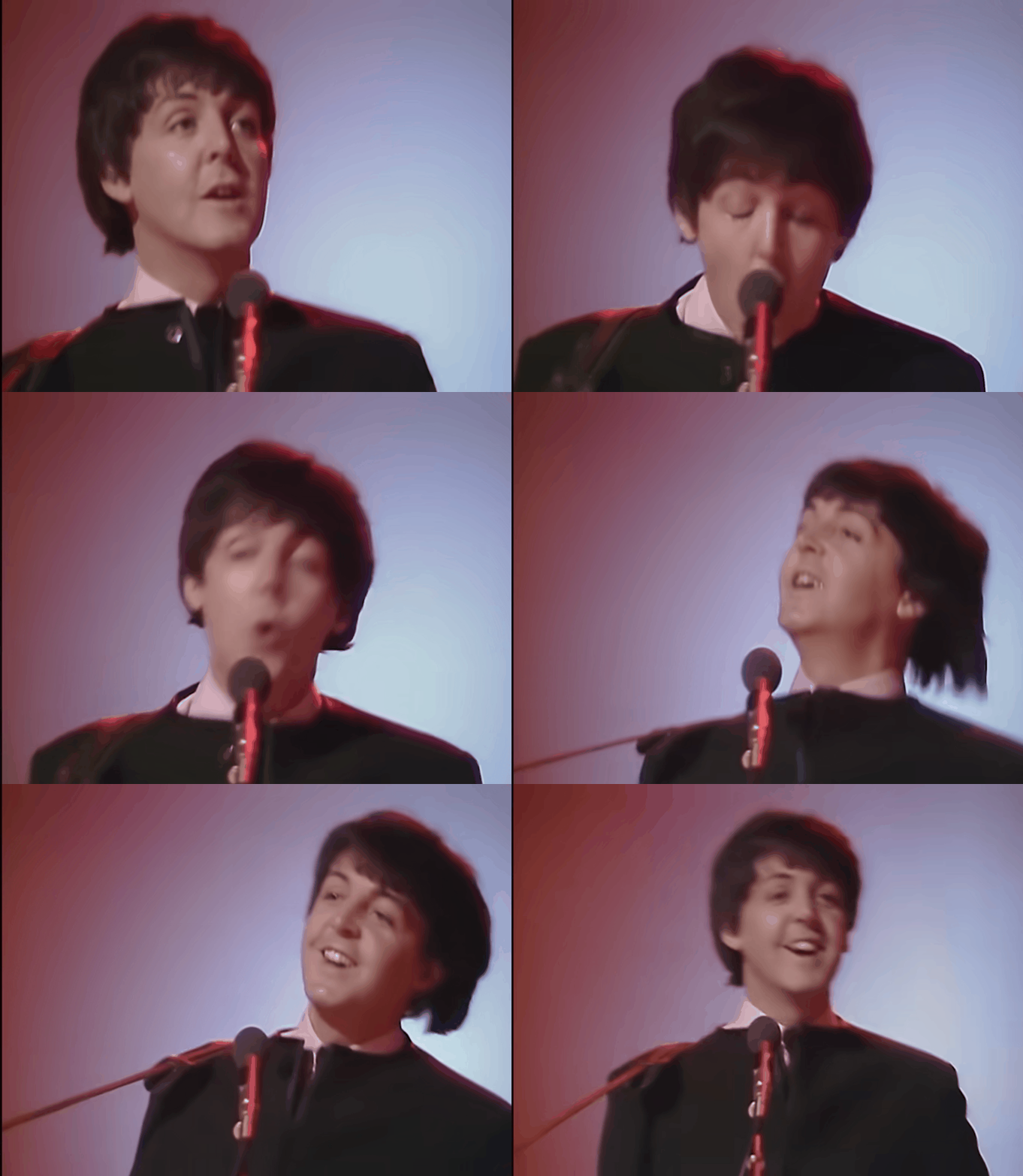
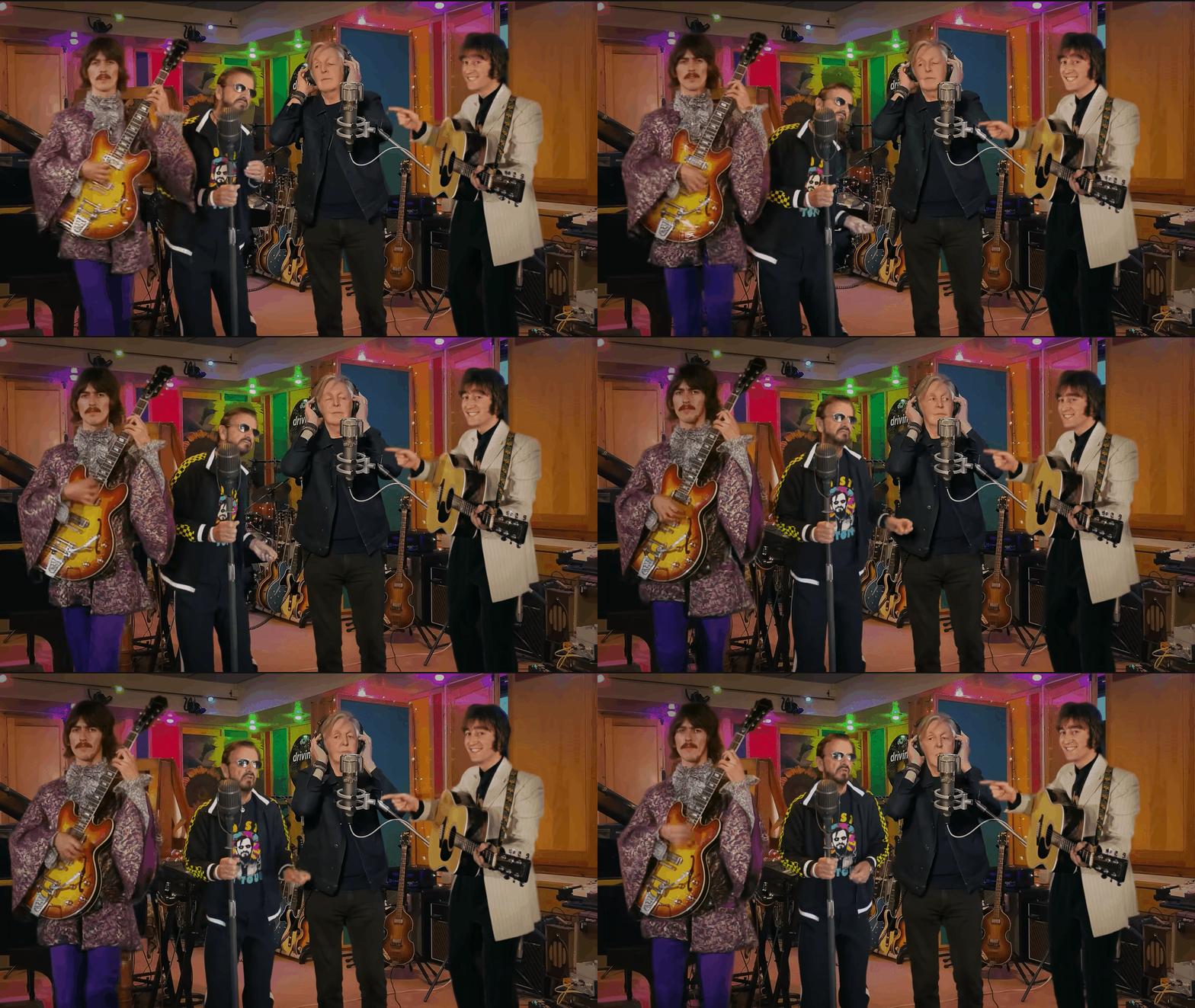
I was completely skeptical when I first saw 1967-era “Hello, Goodbye” John and George intermingling with 2023 Paul and Ringo. The word “cringe” was thrown around a lot on social media, and I get that. My thinking on the video quickly evolved from the first to second viewing — your milage may vary. 

We’re faced with two issues: Would the departed Beatles want to be represented this way? And if so, should it be as silly as presented? 

Paul as Beatle Paul (above) in 1980 and George as Beatle George (below) in 1974.

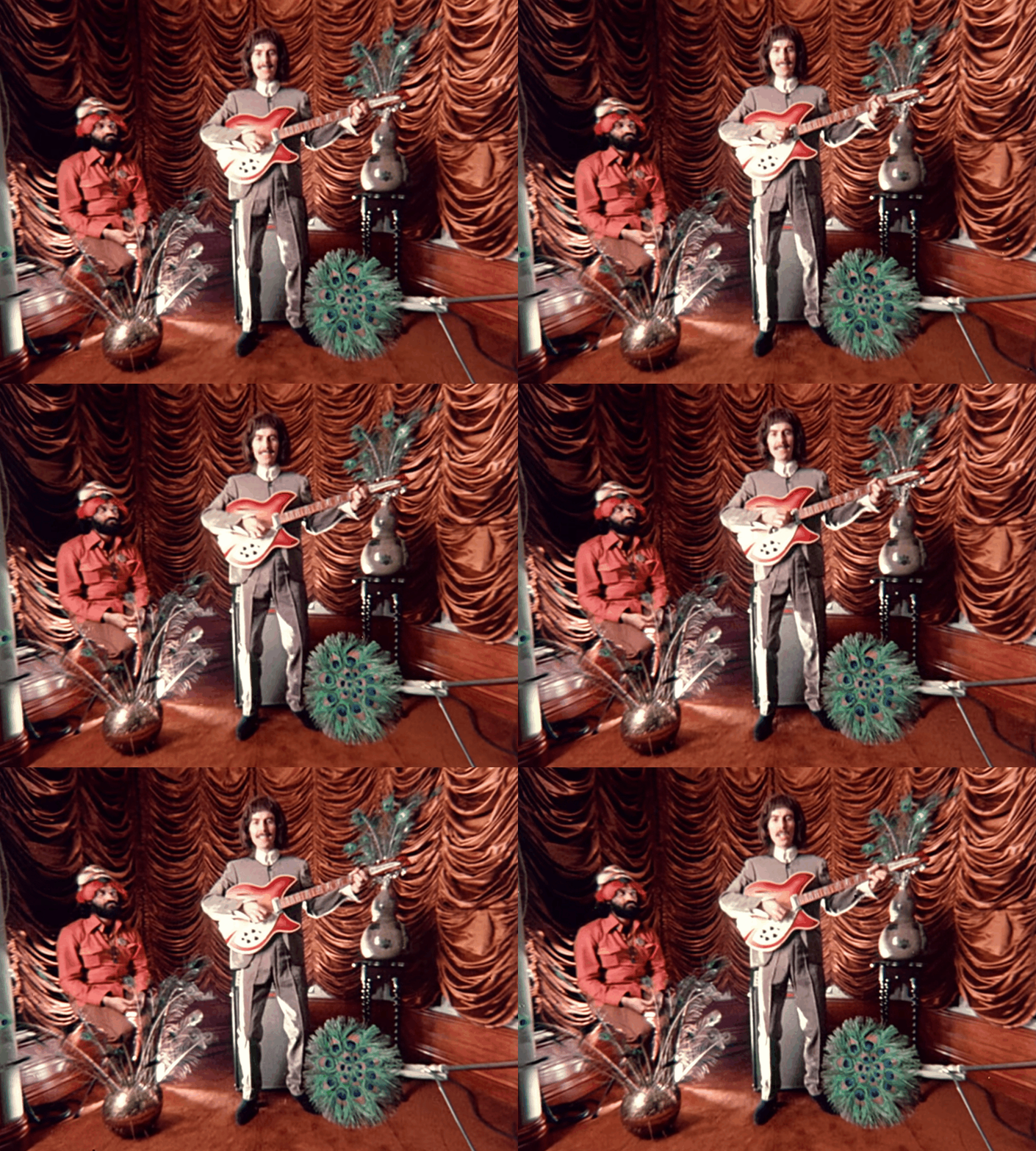
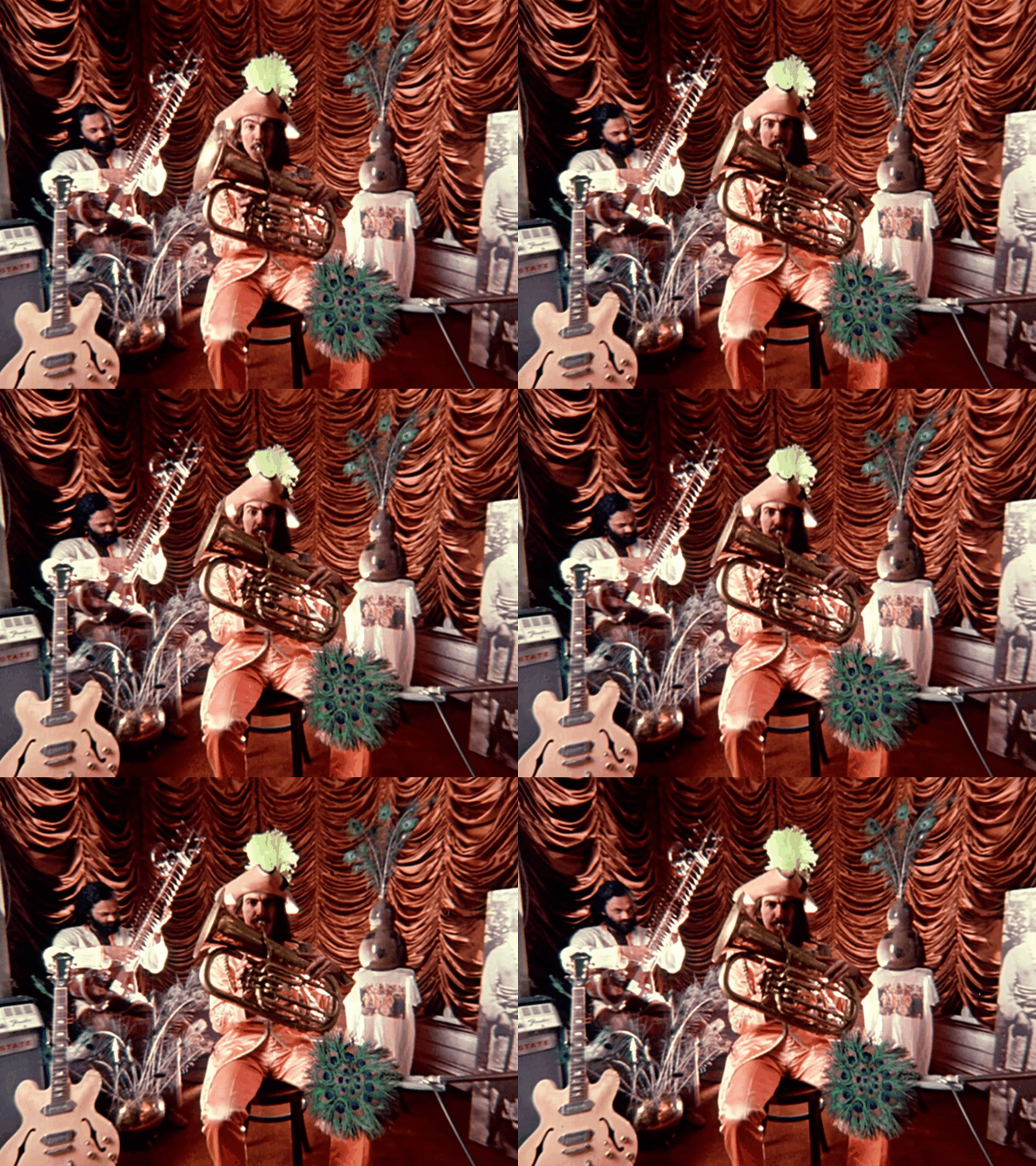
Let’s not pretend George and John didn’t revisit their Fab Four period in their solo years. Putting aside the many callouts in songs, either cryptic or overt, George did things like dress in the same Sgt. Pepper costume he wore in “Now and Then” and elsewhere, and John literally had the Beatles on the cover of a solo record. Complicated feelings they may have been, they never wrote off that time.

St. Pepper George in the 1974 “Ding Dong” video, one of many Beatle guises he employed as he tried to “ring out the old.”

In their day, the Beatles embraced comedy in their films and promos, and beyond into the solo years (George was the funniest of all, with his estate keeping that flame alive). Even with a wistful lyric at play, it wouldn’t be the Beatles’ way to match it with a bleak visual. 

One way they could have gone would have been to make multiple videos, something the Beatles did themselves over their career and when they went solo. Build out a full video of the ’90s sessions co-mingled with appropriate ’70s Lennon home or studio footage. The Beatles at work on their last song.

Another direction would be a more direct clip/highlight reel, something they added to the video for “Real Love,” but now with another 30 years of memories added, and earlier footage cleaned up.

Finally in the last video, they could have really owned the time-travel element and gone completely bananas. Stick Paul into the “How Do You Sleep” sessions. Put 60 years of Ringos into one room. Get the 1980 Paul pretending to be the 1960s Paul and put him on stage with the Plastic Ono Band in Toronto. You get the idea. Really play into the fact these four guys were always together, even when we can document they weren’t.

Those were my knee-jerk impressions of the video, kind of a mixed bag. Then I watched the video again, this time with my wife, who helped me open my eyes to a better interpretation.

A lot of people really don’t like the video, and I get it. It’s jarring, uncomfortable and the technology — as impressive as it is — still isn’t perfect. 

Peter Jackson described the concept as “Ringo and Paul in 2023 trying to work on a song and they get invaded by the 1967 Beatles,” but I think there’s much more to it than that. 

It’s Ringo and Paul deliberately surrounding themselves with the John and George they knew so well. At a funeral, wake, shiva – this is when we remember and talk of the vibrant life of the person we’re remembering, sharp and in color, not memories of their weakness or death. These days are filled with silly memories and pictures from all across their lives, laughter among the tears. I don’t think there’s any doubt Paul and Ringo vividly remembered a vitalized John and George — and even their own former vigorous selves — when they were in the studio last year working on “Now and Then.”  It’s just the Beatles and their closest associates:  George Martin was embodied through his son, and Mal Evans through the MAL technology used to extract John’s voice. 

This part of the video isn’t meant for us, it’s for them. We just get to be voyeurs. 

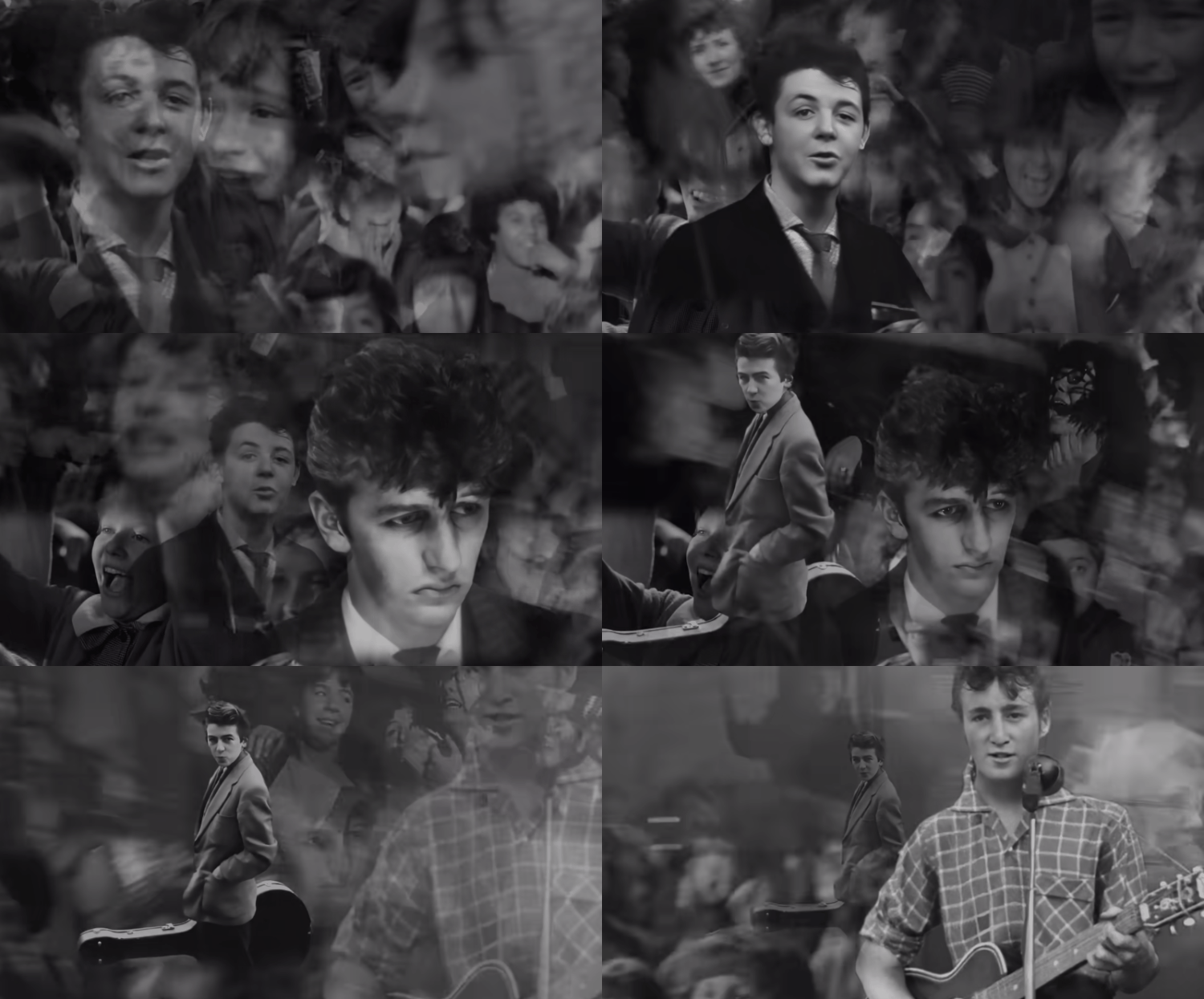
As the video nears the end, their life literally flashes before their eyes. Again, the animation is awkward in spots, but I’ll argue in favor of the concept. When I look at a photo of people I’ve lost in my life, their memory isn’t stuck in that 4×6 print. They live, they move. Every time I see their face, it reminds me of the places we used to go, a concept Ringo and George certainly understood.  

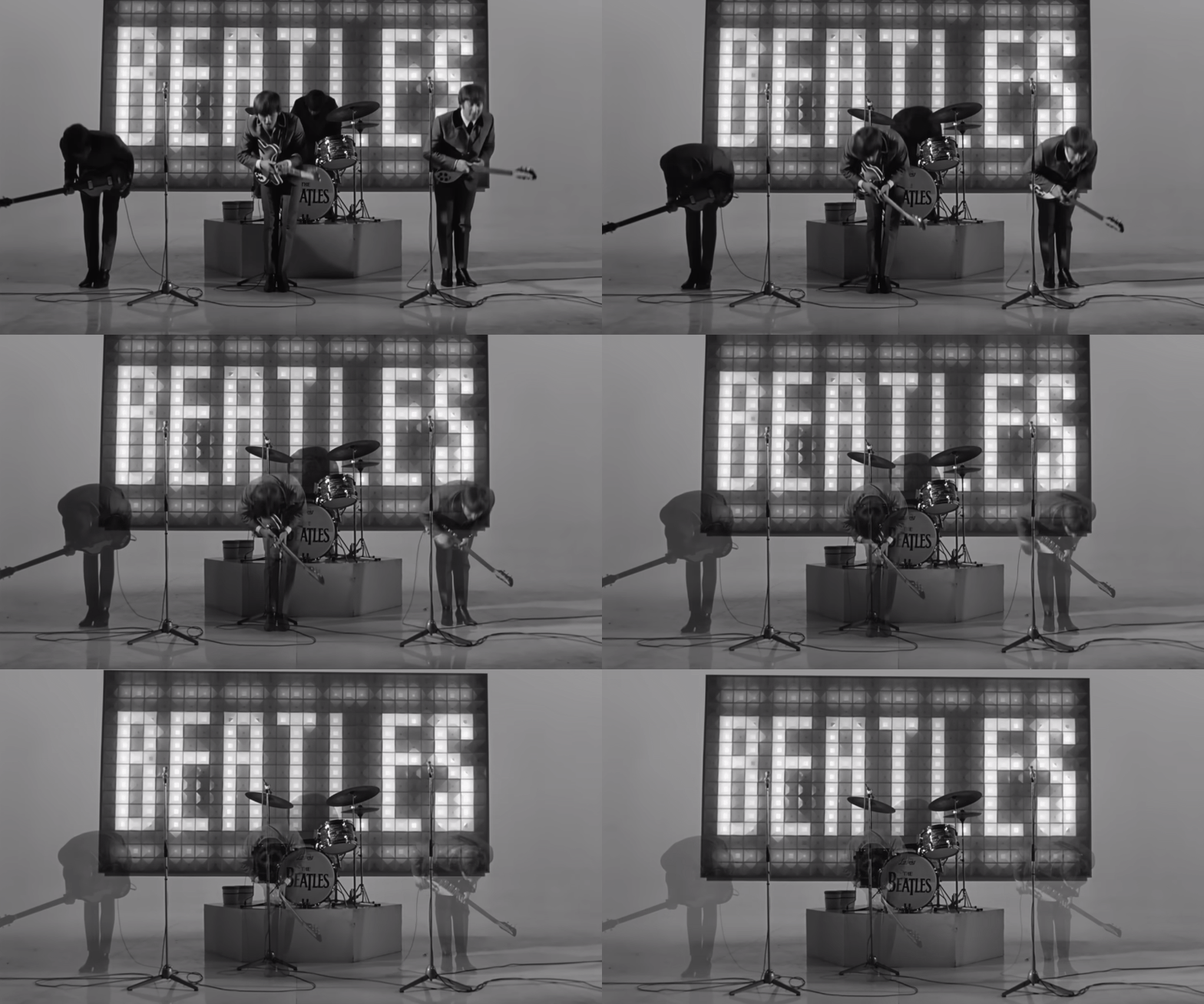
And then we were snapped back into reality, the reality of 1964, and the Beatles all together in a single time and place. With their concluding bow, taken from their performance of “She Loves You” in the “A Hard Day’s Night” film, the Beatles vanish before our eyes, and the lights spelling out their name burn out. That was the point in the video I lost it. 

If the rest of the video was for the surviving Beatles, this ending was for us, the Beatles fan, the rest of the world. They were singing to us now, not each other. 

Deliberate or not, this ending evokes a dramatic sequence in The Compleat Beatles, an unauthorized but highly valuable biography of the band from 1982. In the sequence on the breakup of the band, we see the iconic black-and-white photos of the band from April 1969, with George, Ringo, John and Paul vanishing, in sequence, as “I’m So Tired” plays in the background, the aggressive lyric, “I’d give you everything I’ve got for a little peace of mind.” 

In the “Now and Then” video, that tone has changed. Go to the source in “A Hard Day’s Night,” and you can hear the valedictory statement they give prior to their bow: “With a love like that, you know you should be glad.” See, it does work both ways: If Paul McCartney and Peter Jackson can search for deep meaning in these kinds of things, so can I.

The Beatles have said “Hello, Goodbye” many times. Breakup rumors started in 1964, and continued until they actually broke up. Until their partial reunions. The only endings that ultimately matter are John Lennon’s death in 1980 and George Harrison’s in 2001.

I’ll bring things back one more time to Get Back, Let It Be and original breakup, with these points: No living Beatles (out of four) approved the Get Back edit by Glyn Johns in 1969 (it later came out packaged with the Let It Be reissue in 2021). That’s two fewer Beatles that approved “Now and Then.”

I don’t think they could have sold “Now and Then” as a genuine cosmic reunion of friends, not merely co-workers, without the Get Back docuseries coming first. That set the stage to a mainstream audience that the the Winter of Discontent was much milder than forecast. 

And thus ends the Beatles’ final act. Or does it?  Paul offered this relevant remark to his fan club magazine, Club Sandwich, in the Winter 1995 issue, when asked if Anthology was the “last word” on the group:

I don’t know. That’s the difficult thing. In the electronic press kit we all enigmatically said, “Where does the circle end and where does it begin? An end is a beginning, of sorts.” But to me, for now, it’s an end.

An entire new generation of fans had the experience of hearing the “last” new Beatles song as their first new Beatles song, something some of us got to experience in the 1990s, in the 1980s, in the 1970s and all the time in the 1960s. Where does the circle end and where does it begin?

There is no end to the Beatles, as long as they occupy our lives, our ears, our eyes. Don’t take it from me. Just ask Derek Taylor, who said this on April 10, 1970: 

“The Beatles have changed so many lives, that the need for them still exists. The hope that they represent still exists. And as long as that exists, then they have to exist. They’ve got to be there to fulfill that need, and who are they to take themselves away, to say ‘OK kids, that’s it’? …

“If the Beatles don’t exist, you don’t exist.”

4 Comments

Filed under Extra

TMBP Extra: Every now and then

The Last Beatles Song

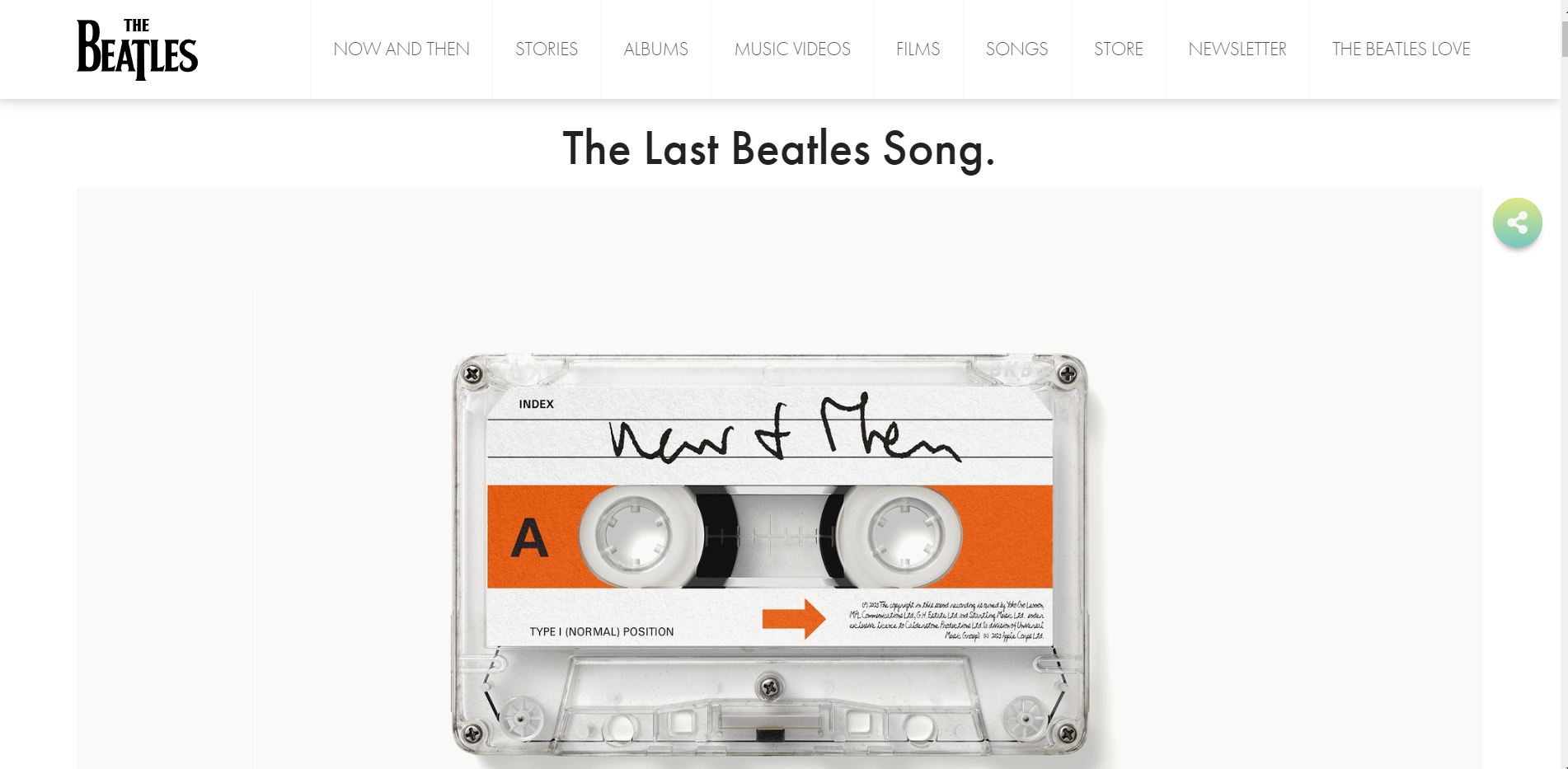
The Beatles website, as captured in the days leading up to the release of “Now and Then.”

The Last Beatles Song.

Let’s be a little more accurate and say with several qualifiers that it’s the last, new officially released Beatles song. The diehards already knew it from bootlegs, of course.

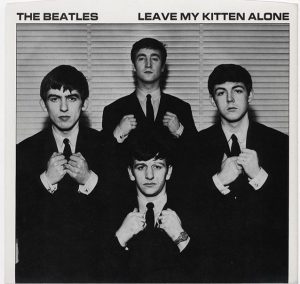
Not now, but back then, it was some other John Lennon vocal — not “Free as a Bird” or “Real Love” but the group’s 1964 recording of “Leave My Kitten Alone” — that qualified as the first last Beatles song.

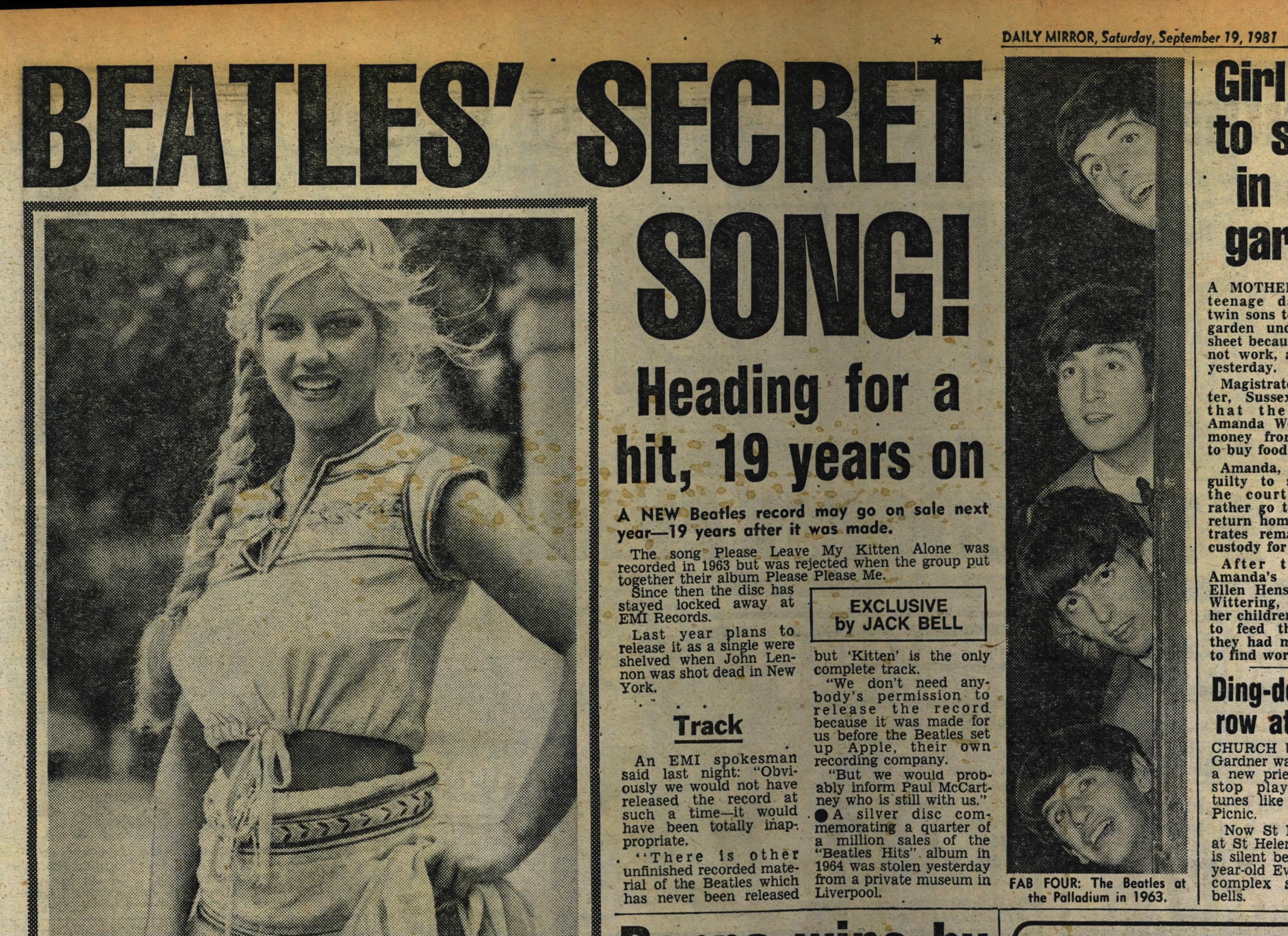
“There is other unfinished recorded material of the Beatles which has never been released but ‘Kitten’ is the only complete track,” an EMI spokesman (presumably Brian Southall) told the Daily Mirror in September 1981. That same story said John’s death derailed initial plans to release the song as a Christmas 1980 single.

Daily Mirror, Sept. 19, 1981.

If you’re looking for a sign of the times and an indication of how much the coordination between the label and band have changed in 40 years for legal reasons and otherwise, here’s another quote from EMI:

We don’t need anybody’s permission to release the record because it was made for us before the Beatles set up Apple, their own recording company. But we would probably inform Paul McCartney who is still with us.

(George Harrison and Ringo Starr were still with them, too, by the way.)

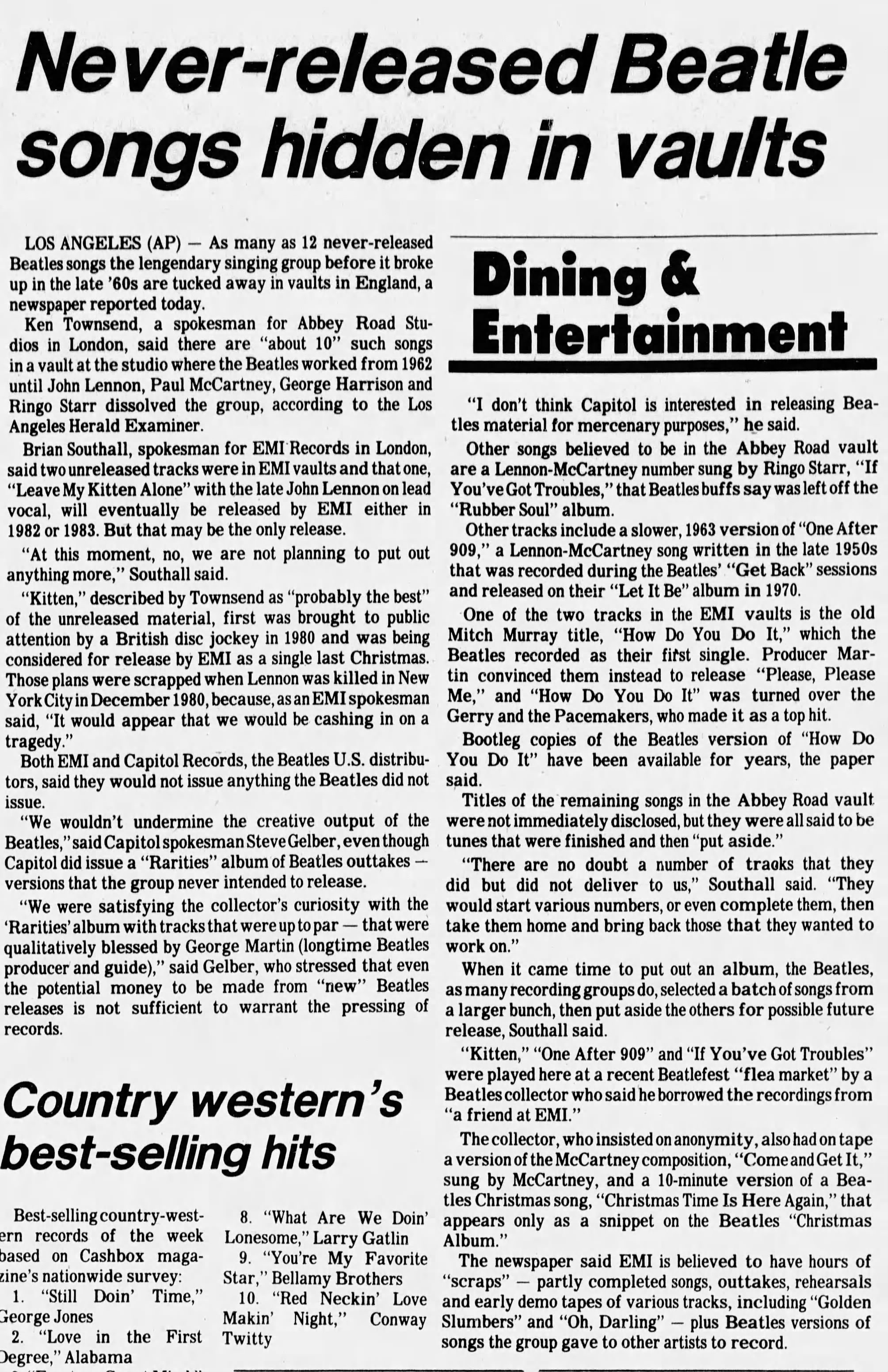
Further details emerged later in 1981, when an AP report (citing the now-defunct Los Angeles Herald Examiner) said a dozen unreleased Beatles songs were in the vault, but only “Leave My Kitten Alone” would see daylight, probably in 1982 or 1983. Hope we didn’t get too excited back then because …

“At this moment, no, we are not planning to put out anything more.”

Just how do EMI and the Beatles lose a song and recover it years later?  Here’s a quick timeline:

  • August 14, 1964: The Beatles commit their ferocious cover of “Leave My Kitten Alone” — originally recorded by Little Willie John in 1959 and two years later by Johnny Preston — to tape at EMI Studios. It’s done in five takes, including false starts.
  • December 4, 1964: Beatles for Sale is released, and of its whopping six covers, none are “Leave My Kitten Alone.” We don’t hear of the song again in the Beatles career, not even during the Get Back sessions, when they played all kinds of things.
  • August 15, 1970: Apple flack Peter Brown tells Melody Maker that there is no unreleased recorded Beatles material. Even then, everyone knew better as Get Back session outtakes, for instance, were already circulating.
  • 1976: With the Beatles no longer under contract as an entity to EMI, the label began to take stock of what actually was in the Abbey Road archives, a lengthy process.  An in-house EMI compilation of songs that included “Leave My Kitten Alone” eventually made its way into collectors’ hands, and ultimately bootlegs.

This brings us to the early 1980s, and EMI’s admission that the song would ultimately be released.

The emergence of “Leave My Kitten Alone” was tangible and exciting at the time. It wasn’t a fringe bootleg or a brief mention in newspapers anymore. You could hear it on mainstream radio.

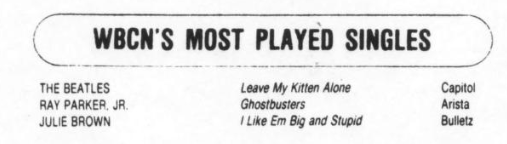
Here’s one example: For a solid month in late summer 1984, the song was listed among the “Most Played Singles” on Boston’s WBCN (the same station which happened to be the source of the famed Kum Back bootleg 15 years earlier).

From the Aug. 28, 1984 issue of the Boston Phoenix.

The excitement for the song wasn’t isolated to one market, either. I know because I remember it myself.

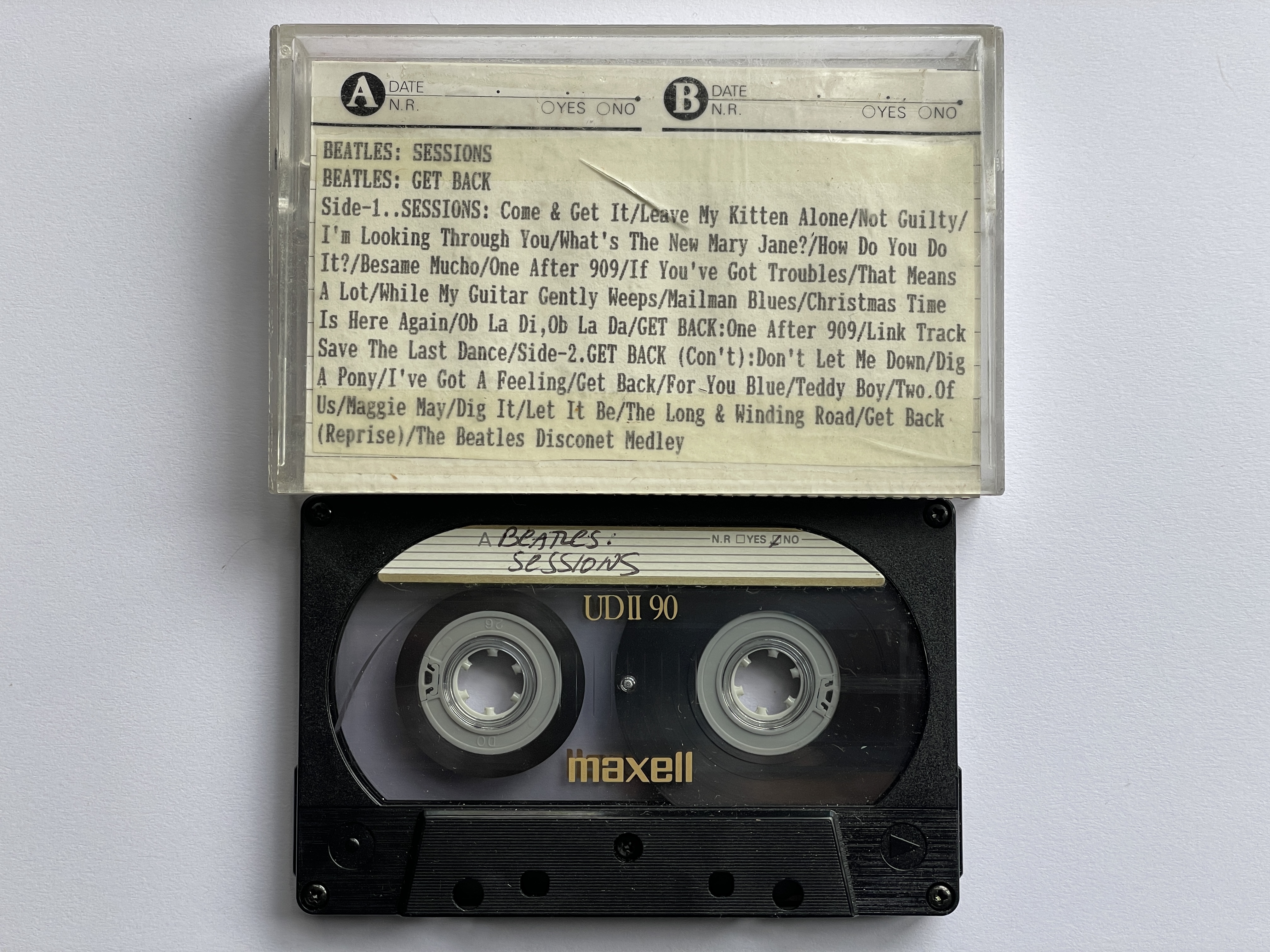
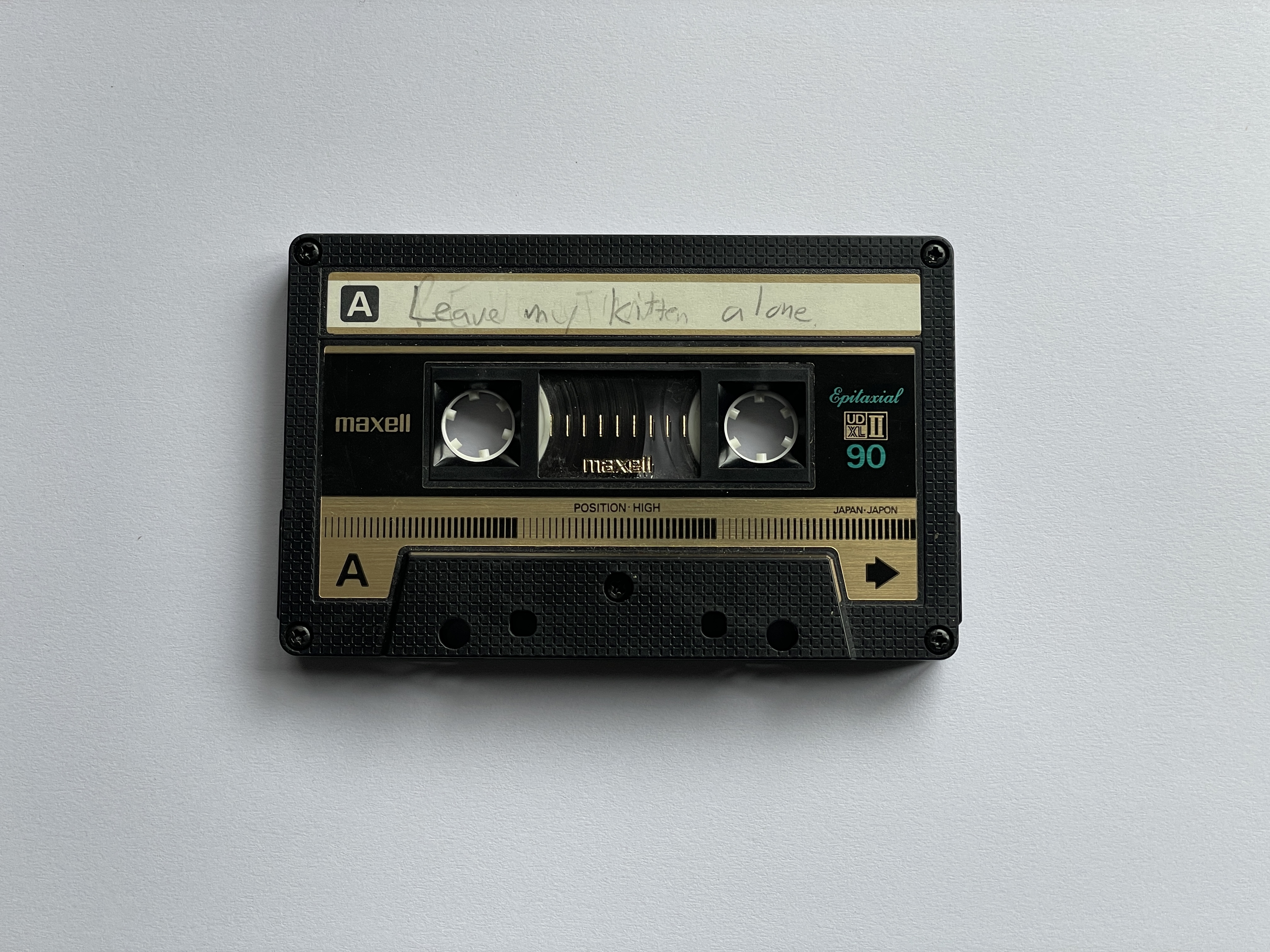
That child is going to miss you: My ’80s dub off the radio here accompanied by elementary-school-era scrawl on the label. As you can tell, I save everything.

It must have been some time in that same period in 1984 that one of the local New York radio stations (WNEW? WAPP?) played the song. I was 10, but already a fully formed Fab Four fan. I remember the station’s promotion was breathless — it was the “new” Beatles song, and I’d never experienced such a thing.

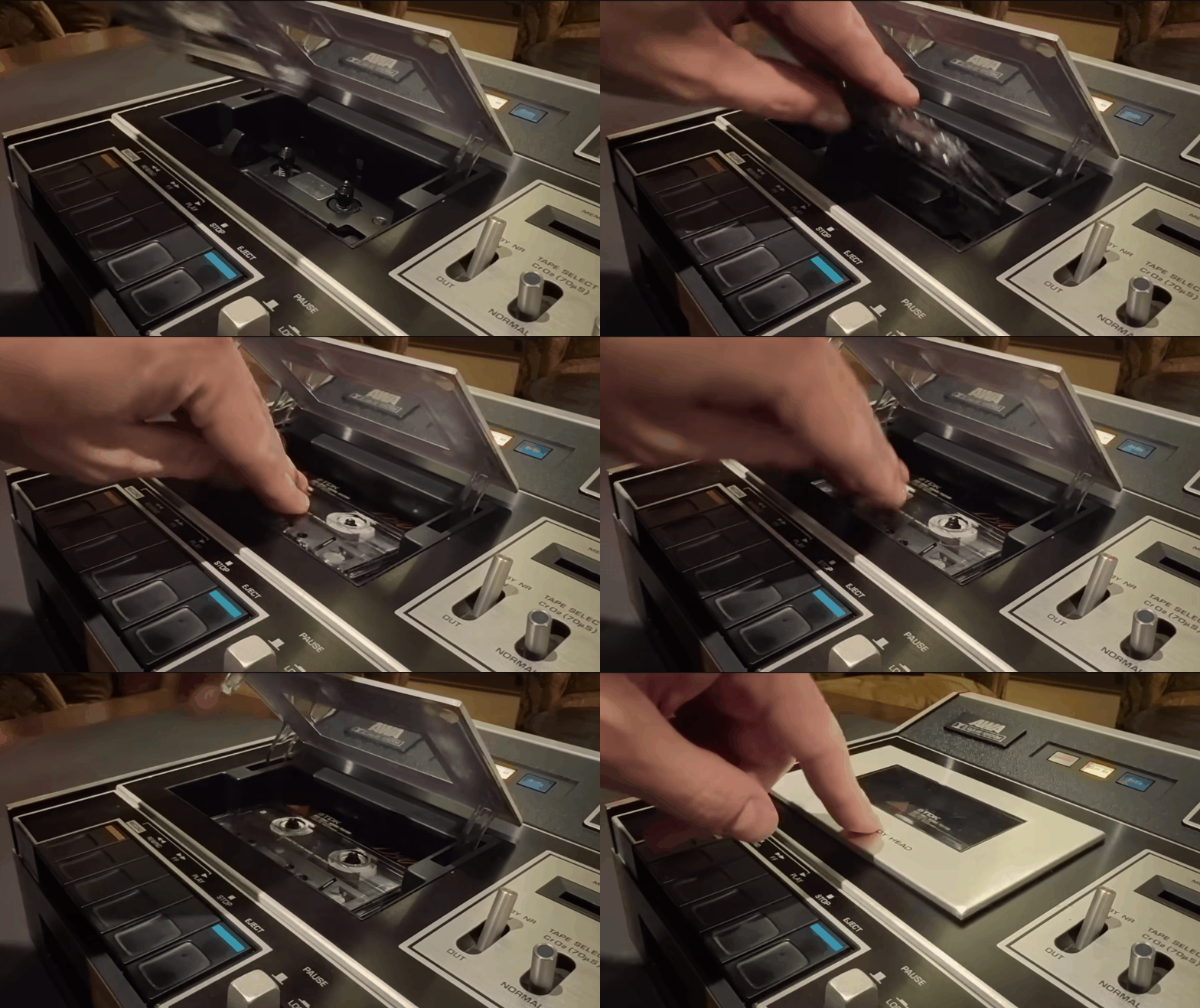
I grabbed a cassette tape not unlike the one central to the 2023 “Now and Then” promotional campaign (mine was Type II though, only the best for the Beatles). I hit play-record a few seconds into the song, and while I thought I was doing myself a favor at the time cutting out commercials, 40 years later, I wish I hadn’t lost the extra context.

By this time, the song’s release dovetailed with that of the compilation, Sessions, which has its own entire backstory. The LP and its lead single, “Leave My Kitten Alone,” had catalog numbers and release dates for early 1985.

There’s some debate if this is genuine or a fake, but it’s definitely some kind of sleeve for a “Leave My Kitten Alone” single.

Suddenly, the entire project was dead, reportedly because of objections from the three living Beatles and the Lennon estate, as well as the fallout from a new lawsuit between Apple and EMI.  Like so much else, the Sessions LP lived on in bootlegs, almost immediately. (I had mine on cassette, backed with Get Back.)

It took another decade, after all manner of legal issues were resolved, that Yoko Ono handed tapes of four demos by John — “Free as a Bird,” “Real Love,” “Grow Old With Me” and “Now and Then” to Paul in 1994 for the surviving Beatles to adorn for Anthology.

The technical (as well as critical and commercial) success of Natalie Cole’s “Unforgettable” duet with her late father in 1991 made a Beatles recording with John feasible. Until then, every Beatles reunion suggestion centered around a replacement for John. This ensured the irreplaceable would not be replaced.

This “Kitten” had nine lives, finally hitching a ride with the next last Beatles song — “Free as a Bird” — onto Anthology 1, officially becoming canon 31 years after it was recorded.

And it left the door open for another to be the last Beatles song.

6 Comments

Filed under Extra

Jan. 13: Et cetera

For all the storylines and spectacle of the Beatles’ January 13, 1969, there’s even more detail that just didn’t fit into the 20,000 words I’ve already written about this single day. For context, Kafka’s The Metamorphosis checks in around 21,000 words, most about a bug yet not a single one about a Beatle.  Here are some of the delicious leftovers from our Fab Four’s day:

***

It’s the opening theme to the second episode of Get Back:

“You’re my world, you’re my only love,” croons Ringo Starr as the credits roll.

This audio is displaced. In its original context served on the Nagra tapes, the moment comes a good hour after the documentary implies, happening when Ringo is exiting, not entering, the Twickenham Film Studios main stage on January 13, 1969, just before the drummer joins Paul McCartney in meeting John Lennon at the Twickenham canteen.

It’s not obvious what song Ringo’s singing. The vocal could be a misquote from Liverpool pal Cilla Black’s 1964 smash “You’re My World,” a four-week UK chart-topper that was ultimately knocked out of the top spot by Lefty Wilbury.

Years earlier, Ricky Nelson had a hit with “You’re My One and Only Love,” but that doesn’t seem like the inspiration, either.

It could just have been spontaneous on Ringo’s part.

There is another song he could be quoting more directly, though the source is a mystery. A clue could be in a hit song not by Ricky Nelson but Lefty’s brother Nelson Wilbury  — Ringo’s bandmate George Harrison.

George’s “When We Was Fab” paid homage to life as a Beatle, but one line that fit unassumingly in 1987 stands out a little bit more as we revisit January 1969.

“You are my world, you are my only love”

Remember when around the same time, George pulled a largely unknown, decades-old B-side and album track from his memory and record collection and stuck it on his new album?

It sure seems there’s a missing link for “you’re my world, you’re my only love” — maybe it’s something the Beatles’ drunk uncles would sing at the pub in the Dingle or Speke in 1947 — a composition since lost to time that inspired callouts from both Ringo on January 13, 1969, and George, nearly 20 years later.

***

The near(er) future — more like 1974 — was tangible on January 13, 1969, too. Just ask Paul.

With two future members of Wings in the room at Twickenham Film Studios, a third was an occasional topic of conversation throughout the course of the day. Linda Eastman wasn’t a keyboardist yet, but Jimmy McCulloch, all of 15 years old and more than five years away from joining Wings, already earned status as a sharpshooter guitarist.

In flight: Jimmy McCulloch, Paul and Linda McCartney of Wings

McCulloch’s new band, formed by The Who mastermind Pete Townshend only a few weeks earlier, had barely started recording. Still, word certainly got around in the right circles in early 1969.

“[The Who’s manager] Chris Stamp told me that they’ve got a new group now … the guy (Andy Newman) that works in the GPO (General Post Office),” director Michael Lindsay-Hogg said. “What’s he called? Clapperbell or something. And they’ve got a guitar player who’s 14 [sic], who looks like he’s 6.”

“Plays like he’s 80,” Ringo retorted.

It wasn’t called Clapperbell, instead it was …

“Thunderclap Newman,” Paul said, hours later and out of the blue — perhaps he caught a glimpse of them on the front cover of the most recent issue (January 11) of DISC and Music Echo —  in the closing moments of the day’s Nagra tapes.

“That’s the guitar player they’re telling me about who looks 6, who’s going to be 14,” Michael replied, excitedly.

They may have been formed by the Who’s leader, but Thunderclap Newman’s early biography tied closely to the Beatles, too. The group’s smash debut single “Something in the Air” – originally titled “Revolution” but renamed for obvious reasons – has the distinction of knocking “The Ballad of John and Yoko” from the toppermost of the poppermost in July 1969. The song later appeared on the soundtrack to The Magic Christian which, of course, starred Ringo and was co-headlined by Badfinger’s version of “Come and Get It,” as penned by Paul.

“Something in the Air” was recorded at Townshend’s home studio in Twickenham – precisely one mile from where the Beatles were presently gathered.

***

If it wasn’t enough to dream of future bands, the January 13 Nagras revealed pre-Beatles adventures, too.

On the heels of Linda’s relating a story of a horse stepping on her toes, Ringo described a more catastrophic injury suffered by his previous bandleader, Rory Storm.

“[He was] diving off New Brighton diving stage, going down and down, and he thought, where’s the water? And just as he decided to look up for the water, he slipped, and he broke his nose. So with a broken nose, blood everywhere, he ran right back up and dived off again.”

“He would, yeah, that’s Rory’s thing,” Paul chimed in before saying he recently ran into Rory “in the drive, washing his car.”

“He’s a swimming instructor when I saw him, and DJing, and trying to put a new group together. He’s great though, Rory, I like him. He’s a hustler.”

***

You’ll remember the sequence as comic relief in an otherwise sobering segment in Get Back.

A man delivering flowers to George seemed to be the last man standing who couldn’t recognize the absent Beatle. Doubled over laughing, Michael pulled himself together in time to ask Ringo if he liked the Hare Krishnas, who sent the gift.

“No, not really,” the drummer replied in perfect deadpan.

***

“Have you seen [that of] the top nine records in America, five are Motown?” Michael asked early in the day.

Music was always on everyone’s lips, even as the Beatles’ own production stalled.

“Penny Lane, I think, is one of the greatest songs I’ve heard in my whole life. You like it?” Michael asked later.

“Yes, but I don’t think it’s the greatest song I’ve ever listened to in my whole life,” Ringo replied in earshot of the song’s author.

Conceding how much Penny Lane “moved” him, Paul asked Michael if he was “from suburbia.”

MLH: No, it had to do with nostalgia for me.

Ringo: His father’s a fireman.

MLH: No, nor [worked at a] barbershop. But it’s about nostalgia, which always makes me break up and cry. That’s why Otis Blue is a very big [album] in my life.

We also learned a little trivia about the first records ever bought by some of our protagonists.

For Michael, it was “Quarter to Three” by Gary U.S. Bonds, while Glyn Johns’ first single was Lonnie Donegan’s “Rock Island Line.”

 ***

I mentioned this quote from Ringo in an earlier post somewhat in passing, but I thought it was interesting enough to call out again with greater surrounding detail.

With the time-limited Get Back sessions ongoing as filming for The Magic Christian loomed on the horizon, he was asked by Michael what he enjoyed more, drumming or acting. The answer revealed Ringo’s strong professional motivation. Someone give this guy a raise — and a little more vacation time.

“Well, it’s hard to say, doing so little movies and such a lot of the drums,” Ringo answered. “‘Help!’ and ‘A Hard Day’s Night’ was all right because its the four of us and we played, and did it. The only trouble with those [was] when I didn’t know what I was doing. … So I did ‘Candy‘, which was only two weeks — which was great because I have to do something.” (emphasis mine). 

It wasn’t enough to be a father of two young children and drummer of the biggest band on earth and galaxies beyond. Ringo just had to work and eliminate extended down time. No wonder he got along so well with Paul.

4 Comments

Filed under Day by day