The second day of the sessions at Twickenham, Jan. 3, begins with Paul alone at the piano, and in the span of the first five minutes we hear the first fleeting tastes of “Long and Winding Road” and “Oh! Darling,” plus an extended preview of “Maxwell’s Silver Hammer,” which would see an extensive full band rehearsal later in the day.
While it’s among the dozens of covers sampled that day alone, a few minutes of Paul riffing Samuel Barber’s “Adagio for Strings” jumped out at me as someone who’s seen the film “Let it Be” countless times.
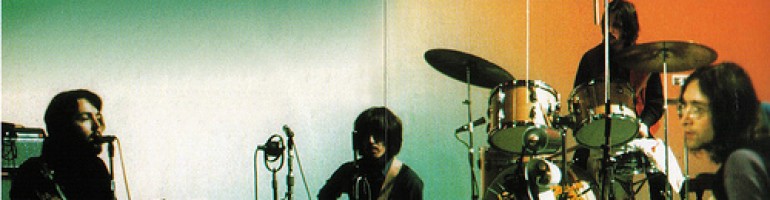
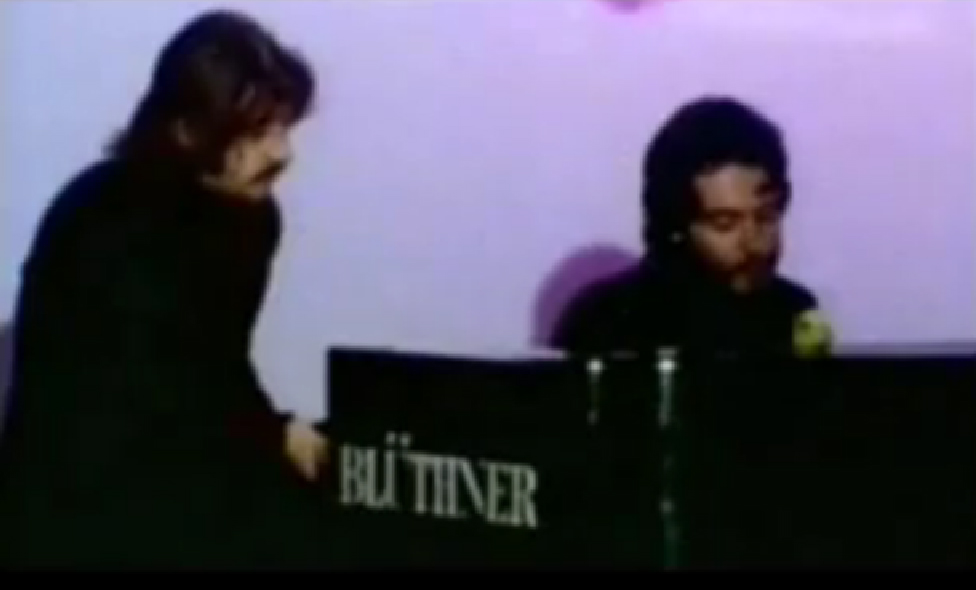
And as the Twickenham stage is set on Jan. 2, the actual first day of the sessions, “Adiago” plays as the opening credits roll, cutting to Paul (with Ringo) at the piano. This truncated version of the song gives way to “Don’t Let Me Down,” and the rest of the film.
The Adagio was broadcast over the radio at the announcement of Franklin D. Roosevelt’s death. It was also played at the funeral of Albert Einstein and at the funeral of Princess Grace of Monaco. It was performed in 2001 at Last Night of the Proms in the Royal Albert Hall to commemorate the victims of the September 11 attacks, replacing the traditional upbeat patriotic songs.
…
In 2004, listeners of the BBC’s Today program voted Adagio for Strings the “saddest classical” work ever..
Thus, of all songs to use to begin the film that ostensibly chronicles the band’s breakup, we get this over the credits.
Something I never completely got my head around is why the Get Back sessions had to happen when they did, in the beginning of the new year, 1969. And in such a disorganized state, to boot.
The timeline is stunning, really, when you look back on it, even in the context of the music industry not being what it is today, when you can go years and years between records.
Consider: On Jan. 2, 1969, the Twickenham sessions got under way. “Hey Jude” was recorded five months earlier (July 31, 1968), released four months earlier (Aug. 26, 1968) and had just finished runs at No. 1 around the world. The White Album was released SIX WEEKS earlier. Six weeks!
The members of the band couldn’t have been bored — John and Yoko were doing the concept art thing, George and Bob Dylan were writing together only weeks earlier in late November (he’d show off “Let it Down” on this day). Paul and Linda were a little less than two months from marrying. Ringo had just appeared in “Candy” and was soon to be in “Magic Christian.” They had stuff going on!
And again, I know, the industry is different today than it was then. But even considering that, there really wasn’t that much reason for the Beatles to rush into the studio in January 1969. It’s just what they did.
Famously, the goal here was to rehearse fresh material for a film or TV special, culminating in a concert before a live audience. New material. Six weeks after they put out a double album.
But there they were, at the Twickenham sound stage on Jan. 2. Six weeks after they released the White Album (did I mention that?). And despite the rush to be there, sessions beginning in the morning like it was an office job, they still didn’t really have the the session’s raison d’être lined up. There was no agreement on a venue to actually perform the concert.
A little more than halfway through the day’s recordings, Glyn Johns and Michael Lindsay-Hogg discuss with Paul — in addition to the state of his beard — the potential venues for the culmilation concert. Legend has local clubs, African amphitheaters and the like in the mix, but from discussions on the first day of the sessions, it’s clear that it’s most likely going to be a soundstage. Twickenham itself is an option, and seemingly Paul’s preferred one (“Just as well stay here”). Another option pitched is Intertel Studio in Wembley, where the Stones’ Rock and Roll Circus was recorded a mere three weeks earlier. The venue received raves — “It sounds like a good live studio.”
Amazingly, at that moment elsewhere at Twickenham– and sure, who knows if he was in the room at the time, out having a smoke, grabbing a bite or in the bathroom — was John Lennon. But he was never consulted (on tape, at least) about what he thought of Intertel. And he only performed “Yer Blues” there a mere three weeks earlier.
But even though it was a potential concert venue following the rehearsals there, everyone hated Twickenham. PAs hadn’t even been set up (they were arriving later that day). John was suggesting they move into a corner of the room — Ringo was too far away. “This place sounds terrible,” Paul said.
Said Lindsay-Hogg to laughter, “I think the thing to do is just be very flexible about every aspect of the enterprise.”
As a director, Lindsay-Hogg was naturally eyeing a dramatic scene. A Tunisian open-air amphitheater was famously pitched, the Beatles to play at dawn. “Snake charmers, holy men … torchlit, 2,000 Arabs and friends around,” Lindsay-Hogg visualized.
It was never going to happen, no matter what. Paul put it straight right there on Day 1. “I think you’ll find we’re not going abroad, because Ringo just said he doesn’t want to go abroad. And he put his foot down.”
The stage is set at Twickenham as the opening credits roll in “Let it Be.”
Lindsay-Hogg hoped to change minds. “Let’s see what we all feel in a day or two… instead of making anything hard and fast.”
There would be no budging. “Ringo definitely doesn’t want to go abroad,” Paul said, “so that means we don’t go abroad. Maybe we go abroad next time… [but] it would be nice to find some way to do it out of doors.”
Like John wasn’t even considered when discussing a venue he played just weeks earlier, Ringo didn’t state his case in person, only via proxy. It did really sound like it was the first time the topic of concert venue was seriously discussed immediately between the director and the film’s principals, and it was after they had already began the sessions.
Thus, there they were on Jan. 2, starting 20 days of rehearsals culminating in a concert that had absolutely no parameters decided outside of the band scheduled to perform.
Line of the day, directed at Paul during a discussion with director Michael Lindsay-Hogg:
“You going to keep the beard? You look like a Talmudic student.”
As it happened, one of the few covers they ran through on that day was Chuck Berry’s “Brown-Eyed Handsome Man.”
Thirty years later, Paul McCartney would record his own version of the song on Run Devil Run, and perhaps with his subconscious working overtime, among the video’s line dancers (around 52 seconds in) would be none other than…
Author’s note from September 2020: Eight years later, and I finally got to the point in the tapes where George quit the Beatles. So stop reading this post, and instead read my comprehensive retelling of this moment here.
The original post remains below.
—
Continuing to interrupt regular programming to offer up a quick one while he’s away. He, being George Harrison, who quit the band this very day in 1969, marking the second Beatle to leave the group in five months (Ringo having left briefly during the White Album sessions).
A comprehensive post on this moment will come in the future, but wanted to mark the occasion on the actual anniversary.
Director Michael Lindsay-Hogg describes the incident, which happened at lunch, in his 2011 autobiography, “Luck and Circumstance.”
George was usually with us, joining in the conversation, affable and friendly and interested in the give- and- take, but on the day of the Tunisian discussion, he wasn’t with us as the meal started. At the morning rehearsal, I could tell by his silence and withdrawal that something was simmering inside him, and so in my role as documentarian, I’d asked our soundman to bug the flower pot on the lunch table.
We’d finished the first course when George arrived to stand at the end of the table.
We looked at him as he stood silent for a moment.
“See you ’round the clubs,” he said.
That was his good-bye. He left.
John, a person who reacted aggressively to provocation, immediately said, “Let’s get in Eric. He’s just as good and not such a headache.”
Paul and Ringo would not be drawn in, and after lunch we went back to the studio where Paul, John, and Ringo improvised a ferocious riff, half an hour of anger and frustration expressed with guitars and drums. Yoko sat on the edge of the rostrum on the blue cushion which had been George’s and howled into his mike.
Part of the jam was The Who’s “A Quick One, While He’s Away” — just one sliver of the song. And he indeed would “soon be home” — he was back with the group 11 days later when they moved the sessions to Savile Row, which was a condition of his rejoining.
George, meanwhile, was pretty productive once he got to his actual home.
…[A]fter one of those first mornings — I couldn’t stand it; I decided this is it! — it’s not fun anymore — it’s very unhappy being in this band — it’s a lot of crap — thank you I’m leaving. Wah Wah was a ‘headache’ as well as a footpedal. It was written during the time in the film where John and Yoko were freaking out screaming — I’d left the band, gone home — and wrote this tune.
“Wah Wah” would never see life as a Beatles song, joining “All Things Must Pass,” “Hear Me Lord,” “Let it Down” and “Isn’t it a Pity” — four Harrisongs brought to the Get Back sessions for the Beatles to work on — on his solo debut instead.
In honor of what have been Elvis Presley’s birthday, I’m going to step out of order here for a post and offer up a few clips of the Beatles covering the King of Rock & Roll during the Get Back sessions.
This isn’t exhaustive, but hits a lot of the highlights.
From the Anthology, the Beatles discuss meeting Presley in 1965.
Turnabout is fair play, etc. Here’s Elvis covering “Get Back” in a medley with “Little Sister”:
Jan. 8 also marks David Bowie’s birthday. While the Beatles never played anything by Bowie, John Lennon of course worked with him in writing and performing on “Fame.” The same album, 1975’s Young Americans, also yielded Bowie’s cover of “Across the Universe,” which featured Lennon on guitar and backup vocals.
 Thus, of all songs to use to begin the film that ostensibly chronicles the band’s breakup, we get this over the credits.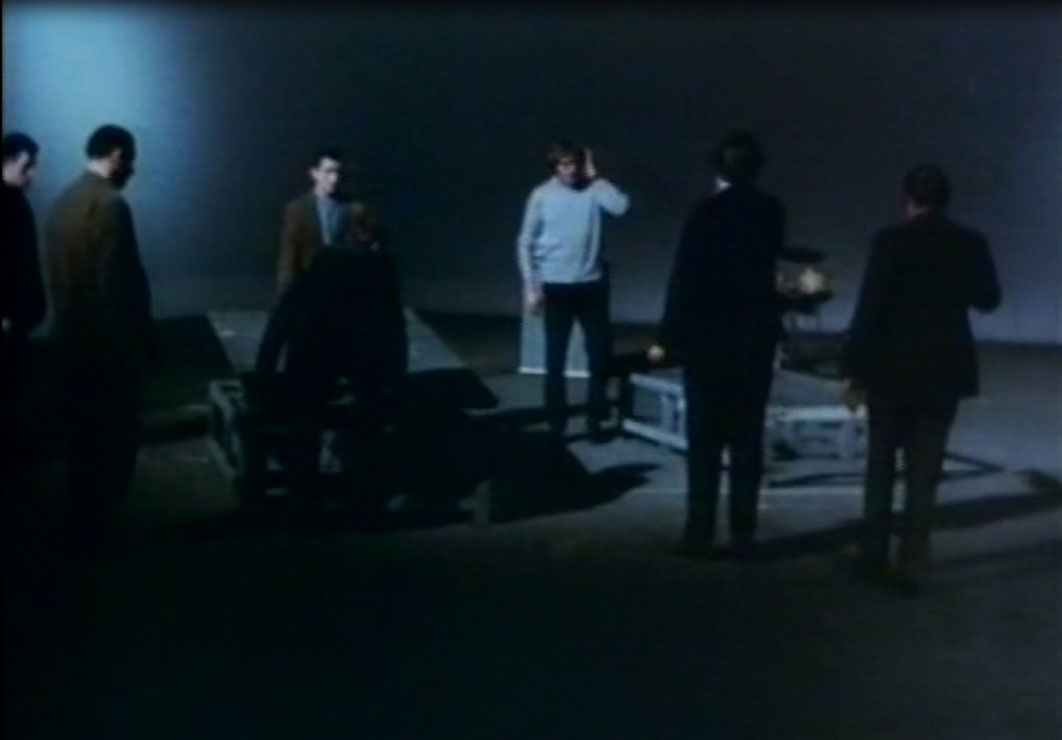


 They May Be Parted