NOTE: I originally posted this on May 20, 2012, when this was a mere blog bébé. I gave it a scrub and a revision May 13, 2020, with better information on the May 13 premiere of the film at various venues across the United States.
***
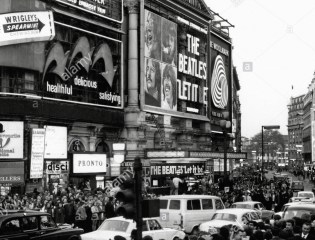
Outside the London premiere on May 20, 1970.
There was no glitz, no red carpet.
When the Let It Be film was shown to the public for the first time on the big screen, it was in ordinary theaters dotting the United States, not at a promoted premiere in New York, an event that’s still cited across the internet because of a 50-year-old press release.
From Keith Badman’s The Beatles: After the Break-Up 1970-2000:
The film Let It Be will, in Britain, be simultaneously premiered in both London and Liverpool on May 20, and, under the distribution agreement with United Artists, the film will open in New York on May 13 and will be shown in 100 cities all over the world! Let It Be is described by United Artists as a ‘Bioscopic Experience’.
The New York premiere, he writes, never happened, and the film was to open May 28.
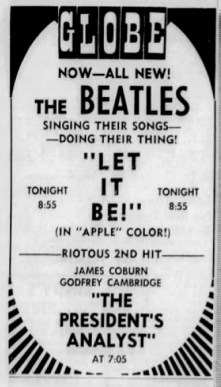
The Beatles: “Singing their songs, doing their thing. “Pretty accurate. (From the Salinas Californian, May 13, 1970)
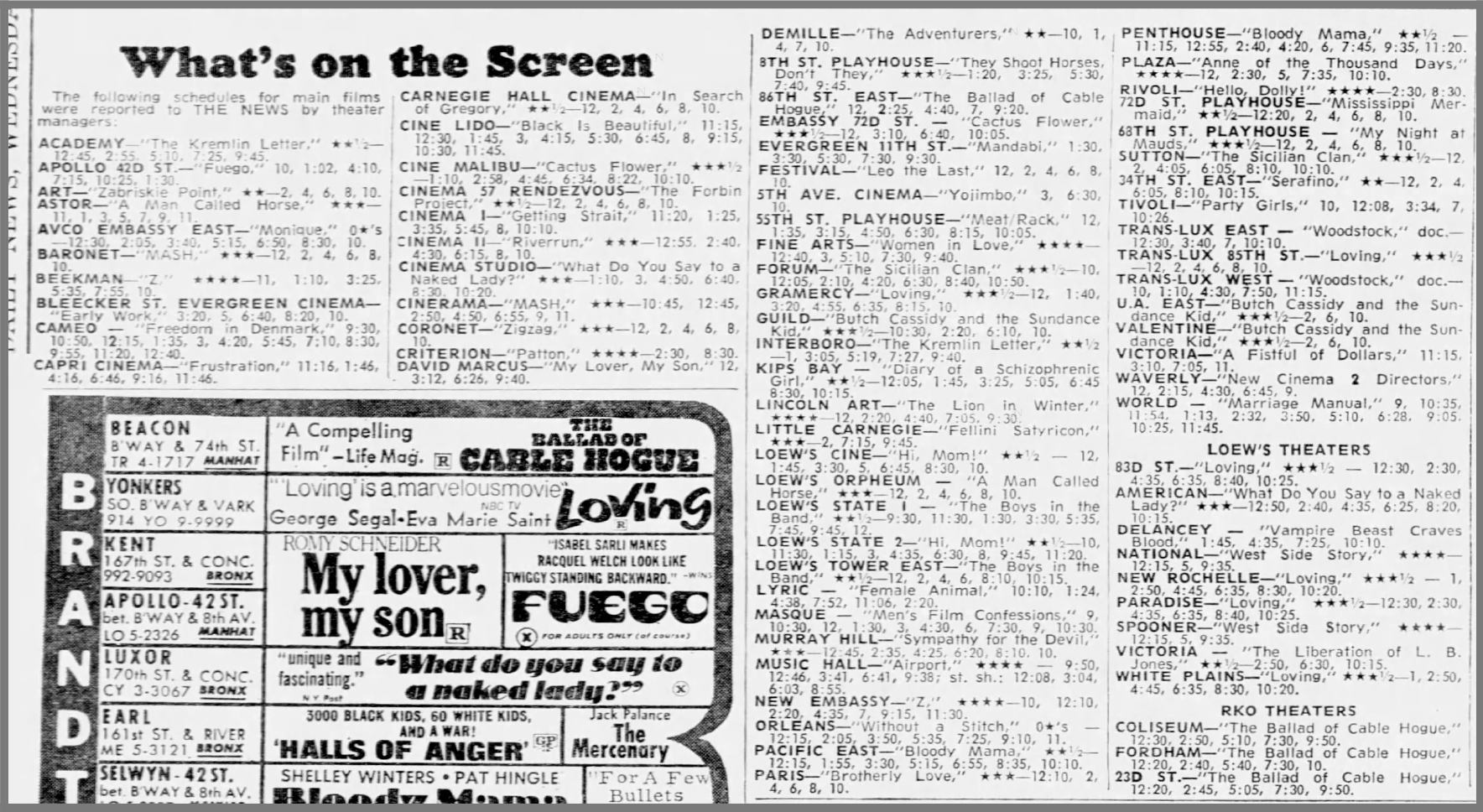
But that’s not completely accurate either. There indeed was not a New York premiere. There wasn’t even a New York showing, when searching the day’s movie listings. (You could still catch six showings of Jean-Luc Godard’s Sympathy for the Devil in Murray Hill, though.)
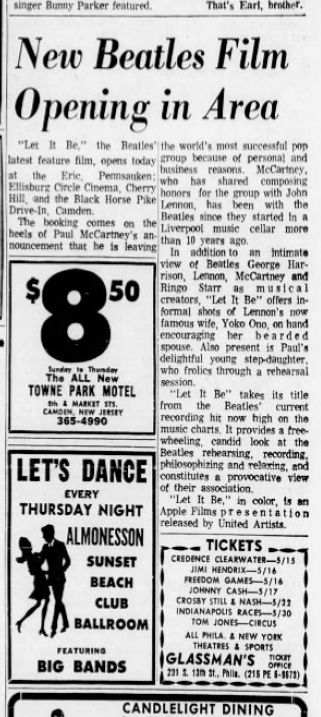
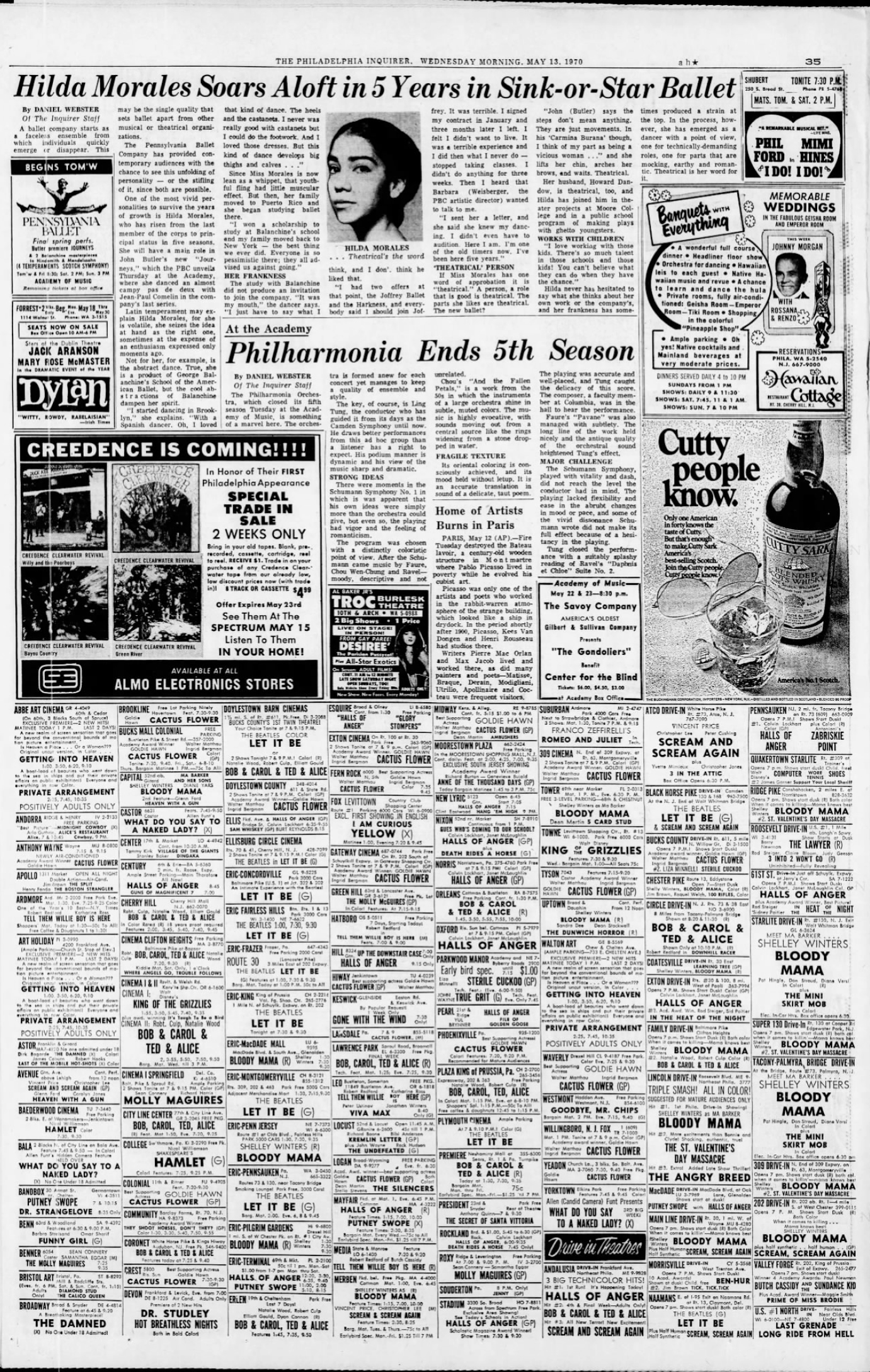
While the Big Apple was shut out for another week, Let It Be was showing on screens across California, Ohio, Georgia, Pennsylvania and other states, in theaters and drive-ins. A week later, it received wider distribution across the U.S.
May 20 was even more important in England, where the film finally received its proper sendoff, premiering in London and Liverpool with the pomp missing stateside.
Back to Badman:
The Let It Be film opens today in Britain with special simultaneous Gala North-South premiere events. In the South, crowds surge upon the London Pavilion where guests include Spike Milligan, Mary Hopkin, Julie Felix, Sir Joseph Lockwood, Richard Lester, Simon Dee, Julie Edge and Lulu. Not to mention fifty dancing members of the Hare Krishna group and various members of The Rolling Stones and Fleetwood Mac pop groups. Most noticeable in the crowd are women no longer involved with The Beatles, John’s ex-wife Cynthia Lennon and, two years after her split from Paul, the actress Jane Asher. Before entering the cinema, Spike is playfully pictured by the press, alongside the police, trying to hold back the large excited crowds.
At the conclusion of its first week at the 1,004-seat cinema, where Let It Be was screened a total of 41 times, the film nets approximately £ 6,229. Brian Millwood, on behalf of UA, announces: “We’re happy with the start made by the film. It’s by no means the biggest take for the house, but it’s nevertheless good.”
Let It Be will run at the London Pavilion for five weeks until Tuesday June 23, when it is replaced by the Mick Jagger film Ned Kelly. Meanwhile in Liverpool, the northern premiere takes place with a comparatively quiet, invitation only, event at the Gaumont in Camden Street, London Road. (The screenings at both cinemas commence at 8:45pm.) Let It Be will eventually go on to be released in 100 major cities around the world.
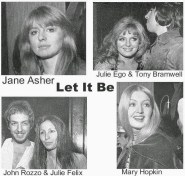
At the London premiere
The film received mixed reviews and has endured a love-hate relationship with fans as well as the group. But the importance of the film and these sessions in the band’s — and music history (see: Rooftop) — can’t be diminished.
September 4, 2020, we get to do it all over again, when Peter Jackson’s The Beatles: Get Back retells the story of the January 1969 sessions.
 They May Be Parted