Tag Archives: argument

TMBP Extra: Then and now

It’s spring 2024 A.D., and when we last saw the Beatles, they were vanishing before our eyes in the “Now and Then” video, ascending to Pepperland, probably. In the moment, it was a powerful and tidy conclusion to the clip and the greater arc of their career.

But to paraphrase Paul McCartney, there is no end to what they can do together. Having reclaimed the top spot on the charts in what they trumpeted as their “last song,” the Beatles have chosen to re-audition after all.

The Beatles don’t really do tidy endings. They keep the accidental outtake “Her Majesty” after the majestic “The End.” They break up the band in the most clumsy fashion. And now, after the triumphant back-to-back successes of the Get Back docuseries in 2021 and “Now and Then” last November, the Beatles exhume a movie George Harrison called a “fiasco” and “painful,” John Lennon said made him “sick” and Ringo Starr said had “no joy.” Ringo’s quote is from two weeks ago. Ringo still has issues with Let It Be. Doesn’t he know he’s supposed to promote this thing?

Leave it to me, Ringo. I’m excited, because the return of Let It Be to Beatles canon is critically important, even as it comes off now as the Beatles trying to be completists.

Once I started listening to the full run of Nagra Tapes on my own in 2012, it completely changed my point of view on how the sessions played out. I’ve been writing that story here for 12 years.  And for most of that time – until Get Back premiered — I could only cross-reference the Nagras’ account with what amounts to a late 20th century antique (a video cassette of Let It Be) and nearly 50 years’ worth of public grievances. And that’s precisely why I didn’t think the film should have remained inaccessible for so long and truly feared it would stay buried. Because Let It Be didn’t tell the story of the Beatles breakup, the reaction to it did. This, above all else, is why Let It Be matters.

I first saw Let It Be on VHS in the mid-1980s – we rented it and subsequently pirated our own copy in a nod to the tradition of Let It Be/Get Back bootleging. Of course I bought into the idea that Let It Be showed their breakup – I was an impressionable fan, didn’t dig independently into it (where were the counter-narratives back then anyway?) and if the Beatles themselves said that’s the way to interpret the film, who am I to say otherwise? If it’s in Compleat Beatles, it was gospel. Also, remember we didn’t have the full Nagras leaked at the time, only a few hours of bootleg records, mainly of performances.

That VHS release, along with an edition on Laserdisc (a contemporary technology with the video cassette) and Betamax, represent the most modern formats on which Let It Be exists prior to its  streaming debut. I’ve written this before, but it’s worth repeating: In the time since street-legal Let It Be appeared on store shelves, you could have picked up A Hard Day’s Night on VHS, Betamax, Laserdisc, DVD, Blu-Ray, 4K UHD and streamed it.

The last UK television broadcast of Let It Be came May 8, 1982, according to the Radio Times. The film was screened sporadically in American theaters into the mid-1980s, but then it simply disappeared. Other Beatles productions remained stocked, promoted and upgraded. Magical Mystery Tour (which had its own terrible reputation for a long time) was belatedly released on VHS in October 1988 – like the other Beatle movies, it had its subsequent reissues on modern formats.

Once in a while, Let It Be’s absence was made conspicuous to the general public.

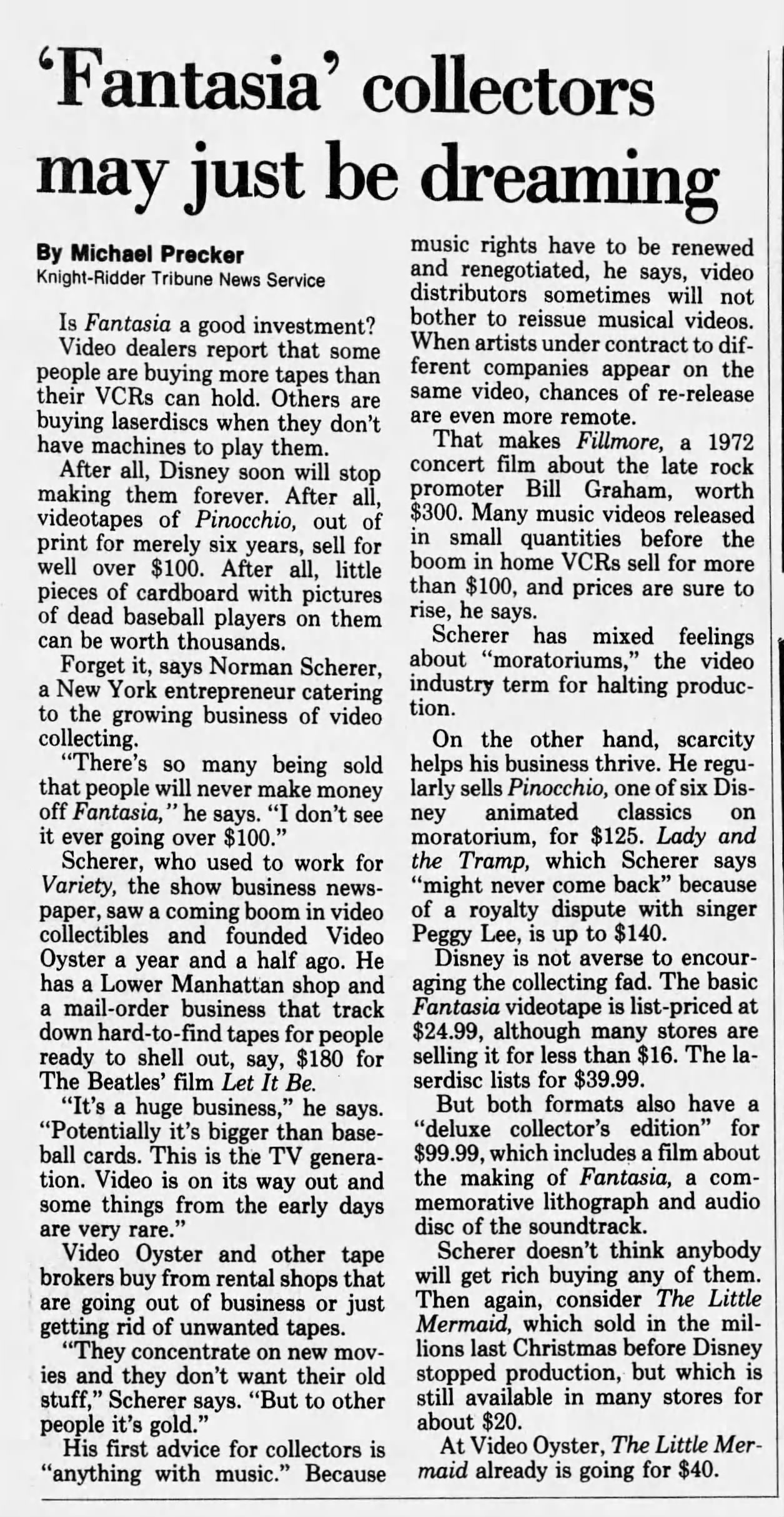
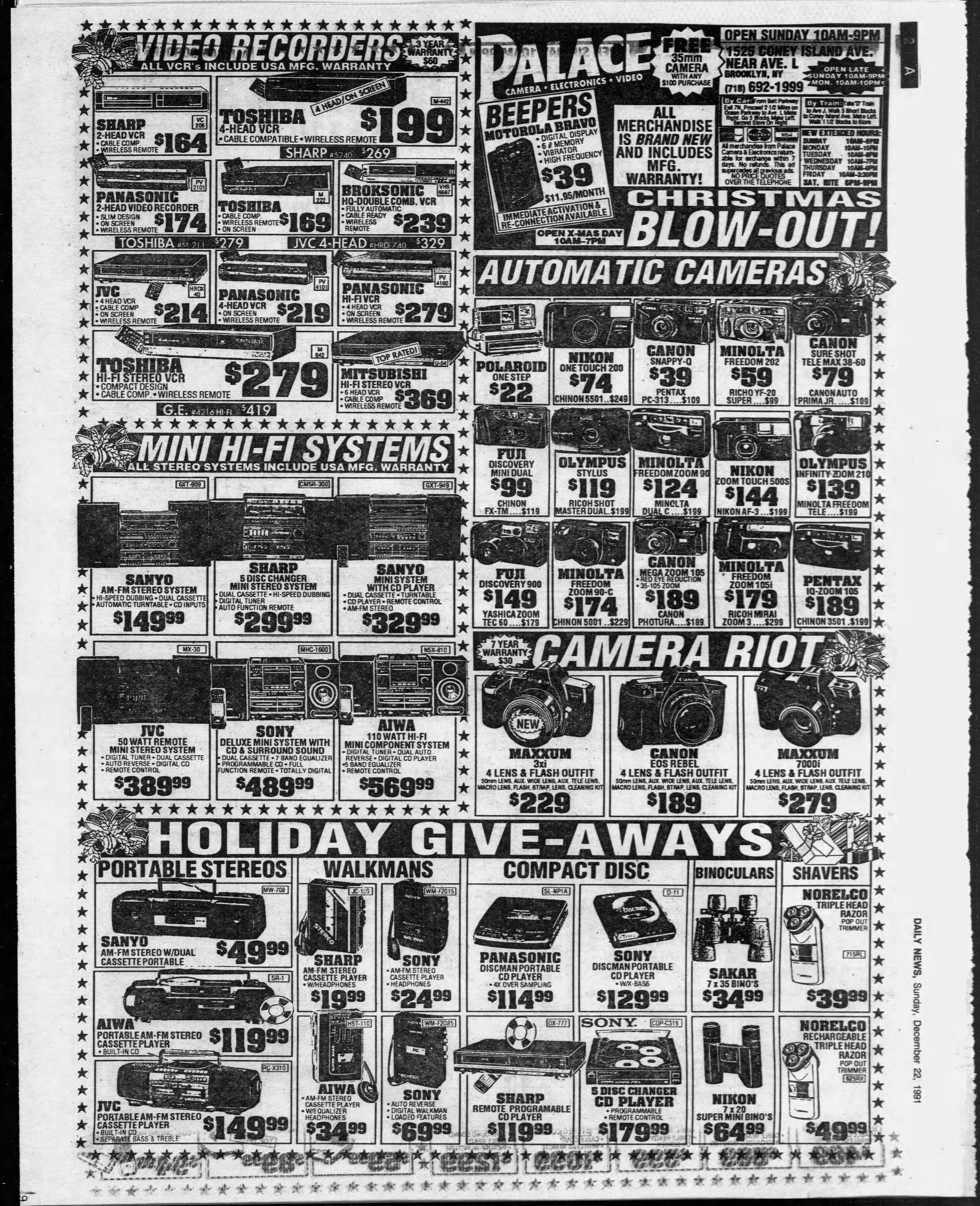
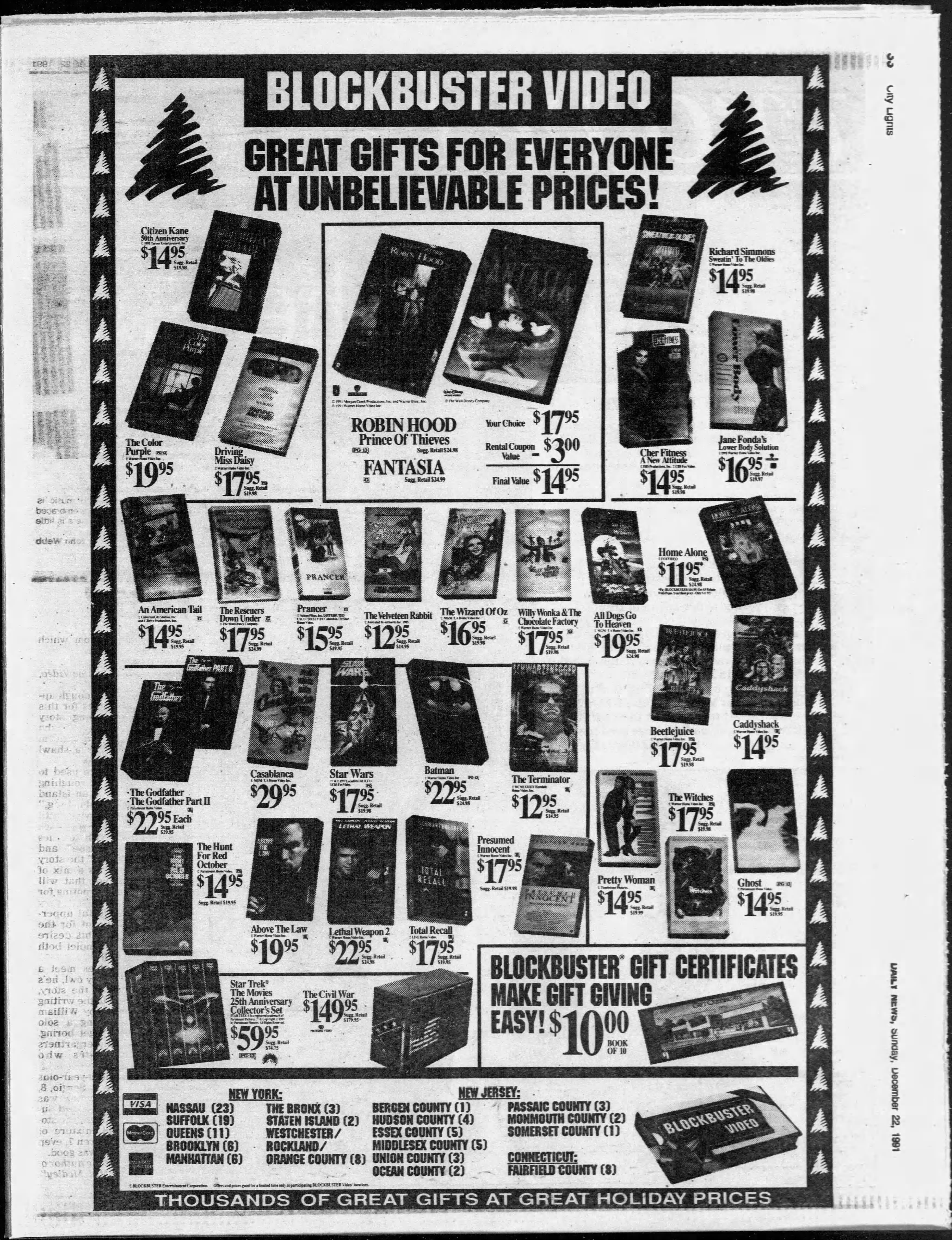
Buried in a 1991 news story about the future collectible value of Disney VHS tapes (which was really a thing, I remember it!), a mail-order video store reported it was tracking down copies of Let It Be videotapes for $180. For context, you could have bought a decent name-brand VCR for that price – or about 10 new copies of “Star Wars” or “Driving Miss Daisy” (or 13 copies of “Sweatin’ To The Oldies”).

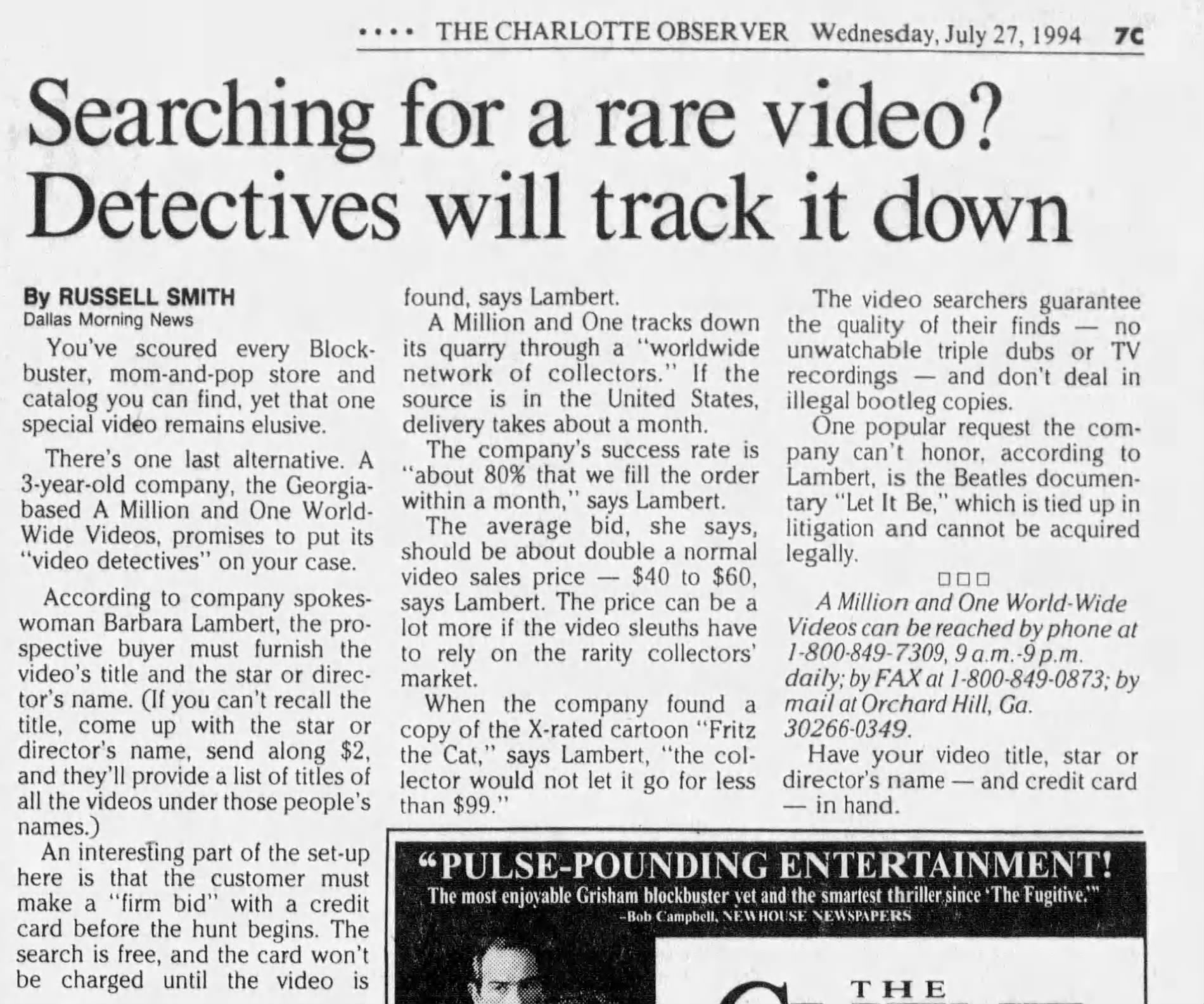
Only three years later, on Anthology Eve, a copy of Let It Be was truly priceless.

“[A]pparently the collectors who own it aren’t willing to part with the title,” said a representative from a different specialty video store in 1994.

That was 30 years ago.

Let it Be is haunted by more than a half century of degradation and denigration as a physical product and a featured work in Beatles history, a ruin by which it’s defined.

If you wanted to watch the movie prior to its Disney+ debut, you were forced to view it on technology that peaked in the 1980s in its native format or on a digital copy ripped from those same 40-year-old analog formats. It’s a bad experience. And even in 1970, the original theatrical release was trashed, including the decision to blow up and crop the original 16mm print to 35mm, and it was hit for poor sound quality too.

(David Bowie deliberately had the Blackstar LP, released days before his death in 2016, physically degrade before your eyes, employing a hard clear plastic sleeve destined to aid in wrecking your record beyond routine wear and tear on the turntable and viewable through a window in the front cover.)
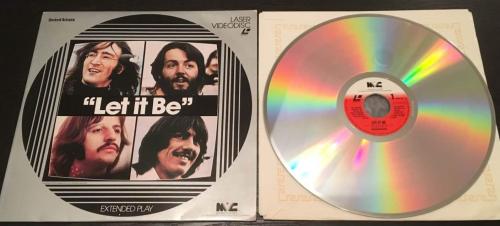
Let It Be on Laserdisc

Before you even slipped your Let It Be Laserdisc (for instance) into your player, you were hit over the head with the breakup story on the back cover:

The Beatles were breaking up. The Beatles were boys becoming men. … One squirms as Paul snips at George and Ringo for not playing their parts correctly, as if the Beatles magic was of a kind that could be whipped into shape. But you can’t blame Paul, because he, like us, saw the Beatles coming to an end.

(Paul said exactly as much during 1990s interviews for Anthology, too: “When we got in there, we showed how the breakup of a group works. We didn’t realize that we were actually sort of breaking up as it was happening.”)

That the film originally reached theaters — a reported 225 in the U.S. alone — a month after the “PAUL IS QUITTING THE BEATLES” headline shattered the music world is critical, but not alone in its importance. Some people still expected the wacky, scripted Beatles to appear on the big screen.

Let It Be followed Help! into theaters by less than five years (to get into that headspace, here are some films that came out in 2019 — it doesn’t feel like too long ago). Magical Mystery Tour, which was considered a misstep in its own time, was shown to British television audiences less than 2 ½ years prior.

Don’t think that matters? To give one example, Variety’s May 20, 1970, review of the film bemoaned “the Beatles’ past togetherness, the chummy camaraderie, the quickness to seize on a line and build a series of gags is no longer there.”
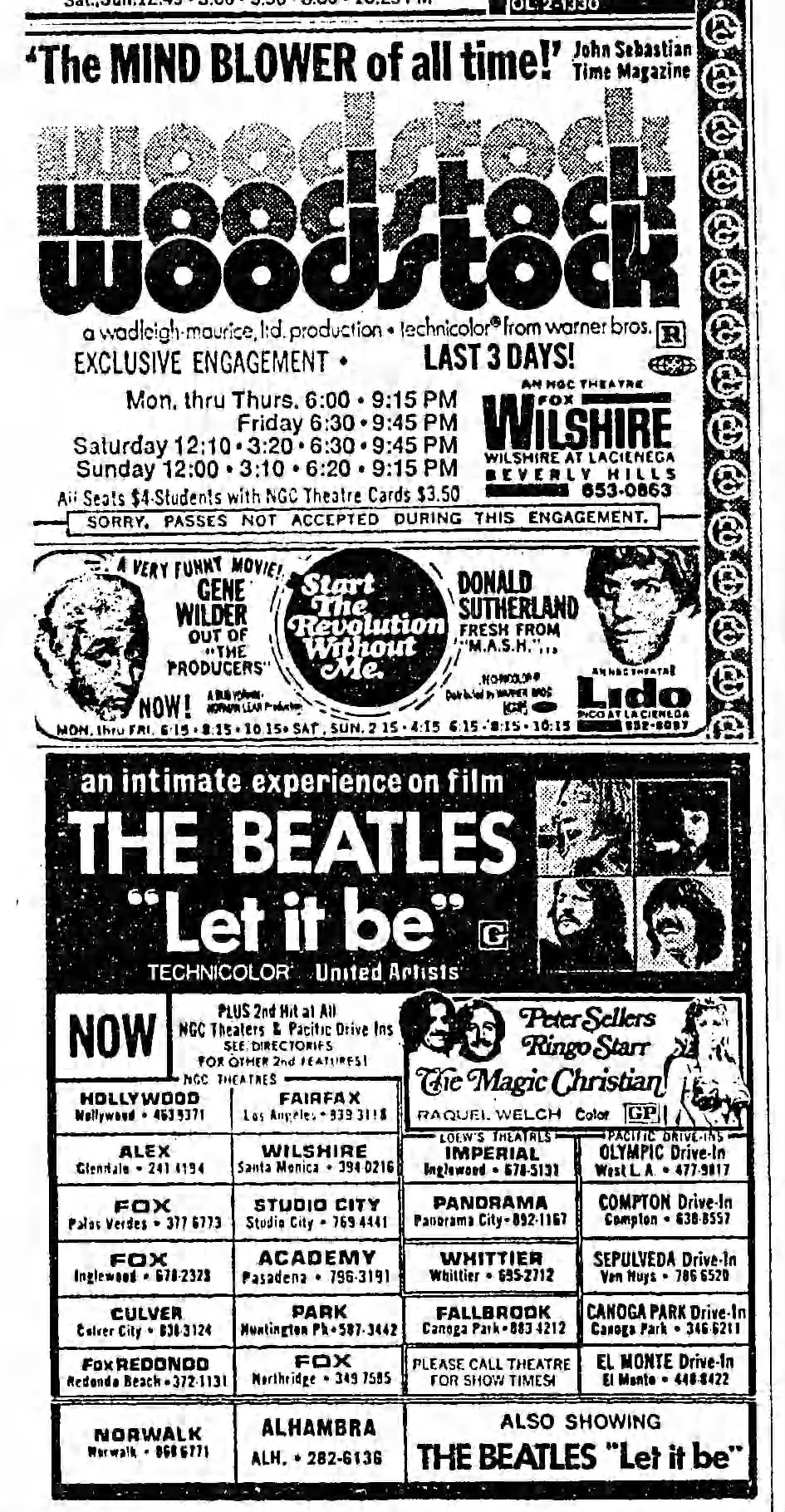
Los Angeles Times movie listings, June 20, 1970

We can nitpick even further and argue that if someone wanted to spend their $1.50 or 6/1 ½, maybe it was better spent on Woodstock, which was in theaters much at the same time (Woodstock was reaching more theaters as Let It Be completely ran out of steam). Running 100 minutes longer than Let It Be, the cinematic release of the concert documentary earned widespread critical and commercial acclaim.

Just a few pages away from the movie listings for Let It Be, reviews and stories touted the Beatles’ recent split, and record store ads promoted Paul’s new solo LP.

Or, as that same Variety review said, “If the film has an air of emptiness and resignation, it is because we know that this is almost certainly the last Beatles picture we are going to see.”

Let’s be clear about the Beatles’ audience, now and then. The younger Beatles fan base that exists today is utterly outstanding, bringing a completely different perspective on the group and, critically, lacking the baggage so many of us had to live with and work to shake free. I’m a second-generation fan, a born in the mid-1970s and too late to be around for Beatles’ first run, but I remember the possibility all four could one day reunite. And I remember hearing on the radio John was killed.

I grew up with The Compleat Beatles, Lennon Remembers, Shout! and later aged with Anthology and Drugs, Divorce and a Slipping Image – so the story was baked in: Let It Be was hell, period.
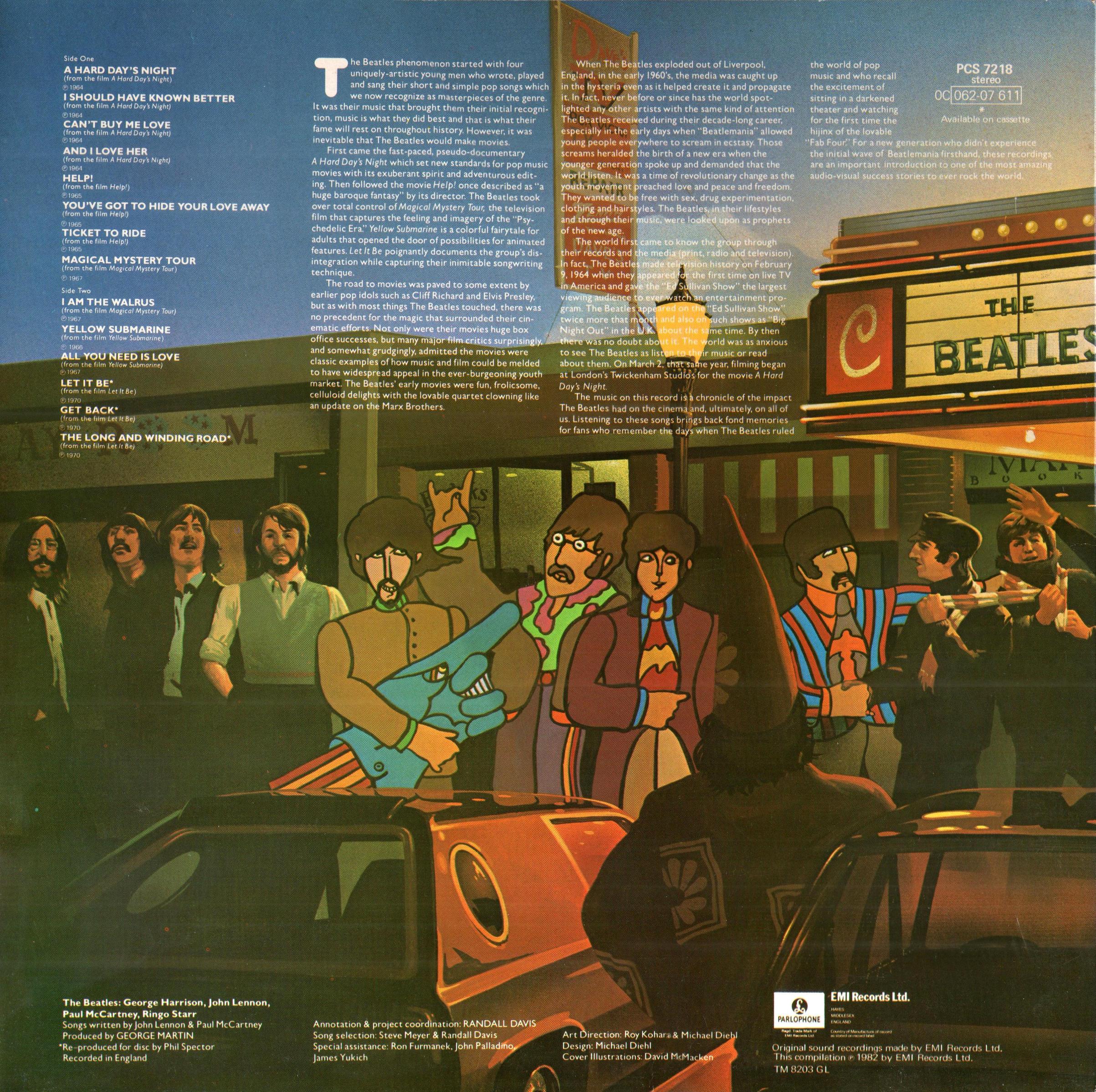
Even the Beatles’ own records promoted that this was a bad time.  The back cover  to Reel Music (1982) said “Let It Be poignantly documents the group’s disintegration while capturing their inimitable songwriting technique,” while the liner notes to Let It Be … Naked nearly 20 years later put it this way:

It is the Twickenham sessions that have characterised the whole Let It Be project as an unhappy one both in the minds of the Beatles themselves and anyone who saw the documentary footage in the movie.

In 1970, Get Back was merely the name of a song and an abandoned LP (and film title) while the Nagras sat securely in Apple Records’ vault. Multiple generations loved the Beatles, but they were all “first-generation” fans who witnessed the group’s evolution and dissolution in real time, not forced to read about it in a book or watching it from a documentary. When Let It Be was promoted in theaters, there wasn’t a new generation of fans to reach.
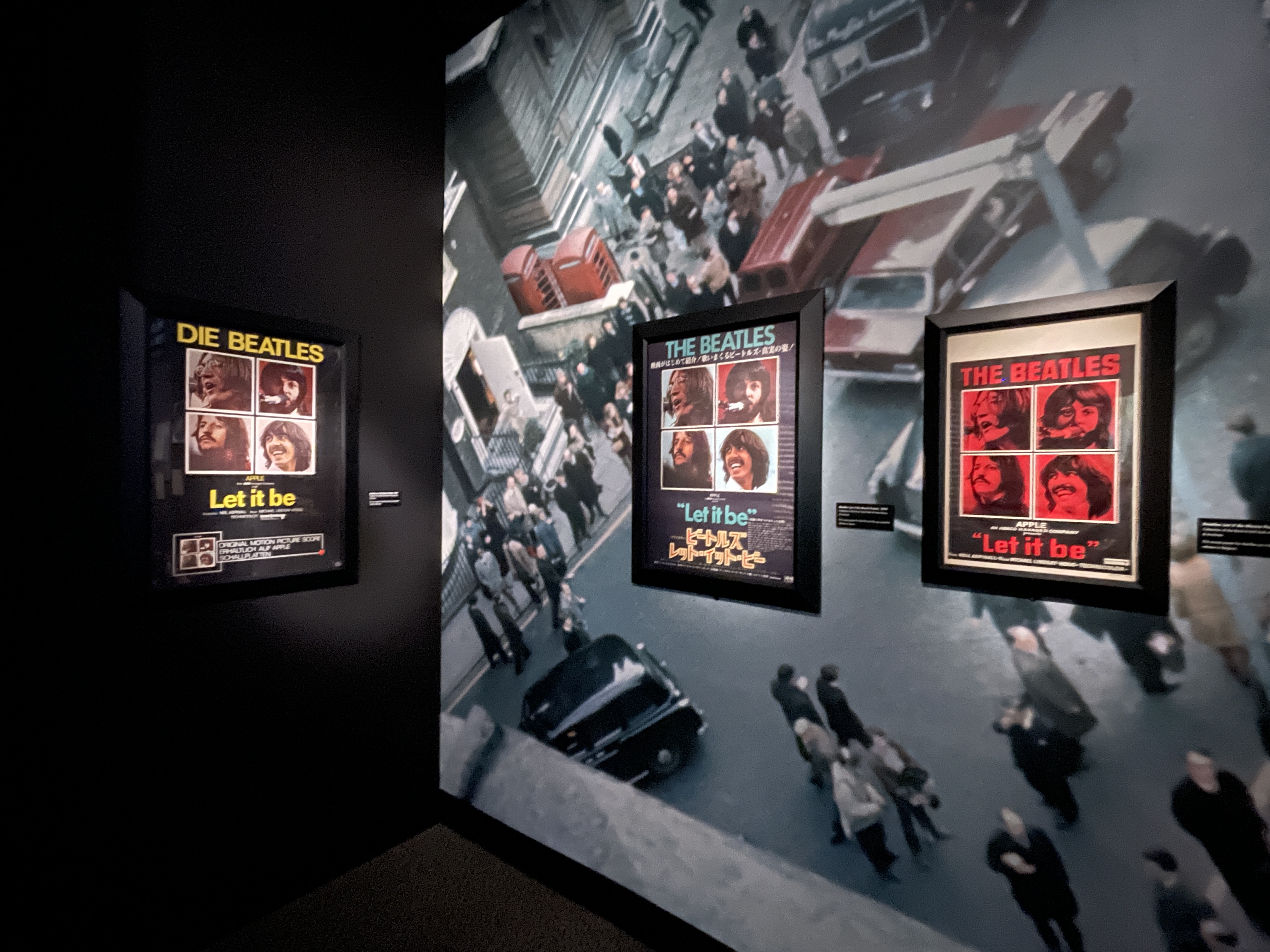
Let It Be movie posters as displayed at the Rock and Roll Hall of Fame in 2022.

Much as the audience mattered, the four most important figures requiring appropriate contextualization are the Beatles themselves. To them, Let It Be wasn’t just a monthlong session in 1969 and a movie premiering after a breakup in May 1970.  The Let It Be experience spanned the 16 months in between too. That’s a long time.

It’s time that included rejected cuts of the film (“Let me put it this way. I’ve had three calls this morning to say [Yoko Ono footage] should come out” is how director Michael Lindsay-Hogg remembered the reaction to an initial screening).

Those 16 months included several rejected Glyn John edits of the soundtrack album, tapes eventually being dumped on Phil Spector and Paul hating much of what Spector did.

It included John saying he wanted a divorce from the Beatles, and later McCartney accepting it, properly beginning the Beatles solo era.

It had all of the Northern Songs drama and the disintegrating Apple. And Allen Klein brooding over everything.

All of that happened to the Beatles as part of their Let It Be-era experience, when a long and lonely “winter of discontent” really spans six calendar seasons. We can separate an 80-minute film from the period, but how could they?

The music wasn’t blackballed the same way the movie was. I always thought it was great, and I never bought John’s complaints about it (“[Phil Spector] was given the shittiest load of badly recorded shit – and with a lousy feeling to it – ever. And he made something out of it … When I heard it, I didn’t puke.”).
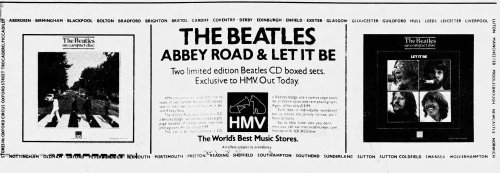
I may not have been in under the lights and in front of the cameras, but I do listen to the music and haven’t puked either. It makes me feel quite good! Let It Be made its CD debut in tandem with Abbey Road to great fanfare in 1987, capping the band’s reissue campaign on the new-ish format. A dozen songs from the sessions appeared on 1996’s Anthology 3.  Seven years later in 2003, a reworked mix emerged as Let It Be … Naked.  We can even throw in Reel Music and the Movie Medley for more examples that they fully incorporated Let It Be’s music into their catalog since its release.

I think the film just sat there as this giant symbolic target. It was harder to pan the companion soundtrack LP when it was such a smash – it had the biggest initial sale of any LP in American history at $26 million in 2 weeks. The movie, on the other hand, was a relative box office failure, pulling in $1.06 million gross. That sounds like a lot of money until you see A Hard Day’s Night made $11 million and Help! pulled in $12 million.

If the music from the same sessions have been tolerated by Beatles Inc. over the last 50 years, what was so damning about Let It Be’s visuals for so long? Was it the scant minutes featuring Yoko in the frame? The “confrontation” between Paul and George. The waltz? We know it wasn’t about Billy Preston, and the rooftop has long been justifiably lionized. The three completed songs performed in the basement (“Two of Us,” “Let It Be” and “The Long and Winding Road”) are perhaps staged a bit too formally, but those have resurfaced at various times in Beatle releases (eg., two of the three on the 2015 “1” DVD).

There is very little in the way of actual dialogue – as in full, extensive conversations — in Let It Be (and in its original print, which is very muddy compared to the MAL-enhanced sounds of the 2020s).

Much of that dialogue fits on one side of a 45, in fact:

George has been quoted multiple times referring to Yoko’s “freakout” with John in Let It Be – but that never made the final cut. An early edit long colored George’s opinion of the film – it wasn’t a first-hand memory, since he wasn’t in the room when Yoko performed with the others. Did George even see the theatrical version of Let It Be?

It’s probably a matter of simple bias: When you listen to Let It Be you can’t see Paul and George bickering, John asking if they can “play a fast one,” Paul yawning, Ringo looking like he’s going through the motions or Yoko just sitting there.
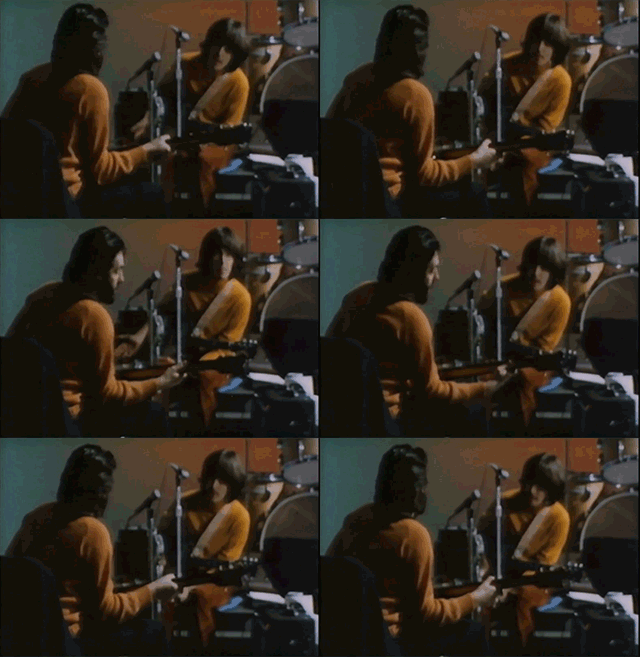
“I’ll play, you know, whatever you want me to play. Or I won’t play at all, if you don’t want me to play. Whatever it is that will please you, I’ll do it.”

The result is actually backed up by science – what we hear isn’t as sticky as what we see.

Paul and George did bicker. Yoko did just sit there. That’s real, even if that’s not all they did.

What is spread out over eight hours in Get Back simply didn’t translate as well over 80 minutes in Let It Be. Some of that was by choice — maybe it could have benefitted by one less oldies cover and one more evolution of an original song — but there was really little wiggle room in the format.

We’re lucky to have Get Back, for its clarity of picture and sound, and all that footage. Normally a recording session wouldn’t have a particular story to tell — group frustrations come to a boil, a member walks out, but they rally and stage a memorable performance, etc. — and in 1969/70, the Beatles never intended to tell anything more than “this is how an album is made, and here we are performing it as the payoff” as the original TV concept.

And to that end – with Get Back as its companion — Let It Be should be considered an honest depiction of the band. Still, it’s always been a struggle to describe what exactly Let It Be is.

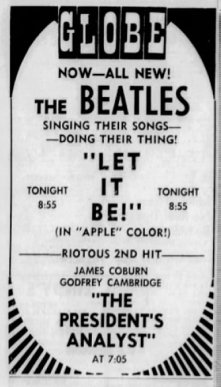
The original movie trailer (which was given an homage in the 2024 Disney+ trailer) asked viewers to view the band “rehearsing, recording, rapping, relaxing, philosophizing, creating.”  One movie ad was more blunt: “The Beatles singing their songs, doing their thing.”

Let It Be appeared on HBO in the late 1970s, and the cable network’s guide described the film on different occasions as “A film to make you smile” and, simply, “McCartney sings Besame Mucho.”

The original movie poster (“an intimate bioscopic experience”) and present-day blurb on Disney+ (“Available for the first time in over 50 years, the original 1970 film about the Beatles”) both tout the plain fact that Let It Be is a movie as it’s main descriptor.

It feels like the original VHS box got the story right, with a positive spin not common at the time:

An exhilarating documentary of the making of an album by The Beatles, the film concentrates on the many recording sessions that went into the production of the “Let it Be” album. It offers a unique glimpse into the creative process of this world-renowned group as well as the subtle relationships among the individual members. There is jamming of old songs and painstaking work on new ones. In search of a new direction, The Beatles play an inspired concert on the roof of their London offices.

In the announcement of the 2024 reissue of Let It Be, Peter Jackson said Get Back and Let It Be “enhance each other.”

 ‘Let It Be’ is the climax of ‘Get Back,’ while ‘Get Back’ provides a vital missing context for ‘Let It Be.’

That first part sounds reversed, but the director is absolutely right. Let It Be isn’t backward compatible because of how it directly influenced the subsequent 50 years of Beatles history. Let It Be owns it’s baggage, period.

Get Back told a specific story, but it was reactionary, too, not simply giving a nod to Let It Be, but deliberately clarifying — and in a sense undermining — some of the original film’s more negative moments.

My favorite example (of several): Paul tries to stifle a yawn in Let It Be,  50-year-old proof that the band is bored. But a drowsy Beatles performance of “I’m So Tired” results in a minute-long sequence in Get Back, with everyone yawning. George yawns his way through Paul’s magical “Get Back” origin story.
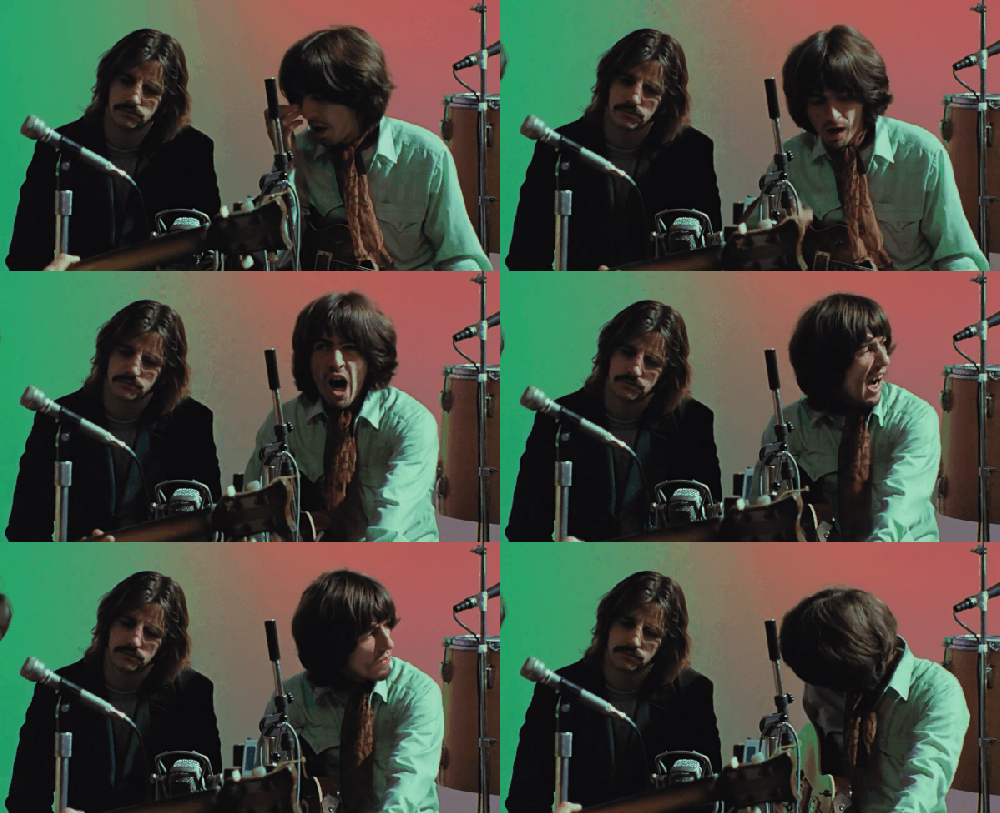
For all the drama in Get Back — agonizing over the band’s future, dealing with walkouts (George) and sit-ins (Yoko) — the only real resolution we get was to the problem of how to stage the show, by going onto the roof. Both films feature the same ending, with Get Back criminally dustheaping the full indoor performances, a robbery rectified with Let It Be’s restoration.

No matter how Michael Lindsay-Hogg edited Let It Be, he was stuck in his time. We all knew what came after the credits in 1970 — it wasn’t a gag reel or sneak preview, but a very public breakup, a breakup that was inevitable whether the January 1969 sessions were in front of cameras or not.

“We filmed the whole thing showing all the trauma we go through,” John said in the April 12, 1969, Melody Maker, which hit newsstands right around the time the “Get Back” b/w “Don’t Let Me Down” single was released and more than a year before Let It Be reached theaters.

Tellingly, there’s more to the quote: “Every time we make an album we go through a hellish trip.” (emphasis mine).

Let It Be was put together  in the Beatles’ time, yet could only reflect the past tense. It’s no accident Michael put Paul’s piano rendition of “Adagio for Strings” —  once voted the ““saddest classical” song — over the opening credits.
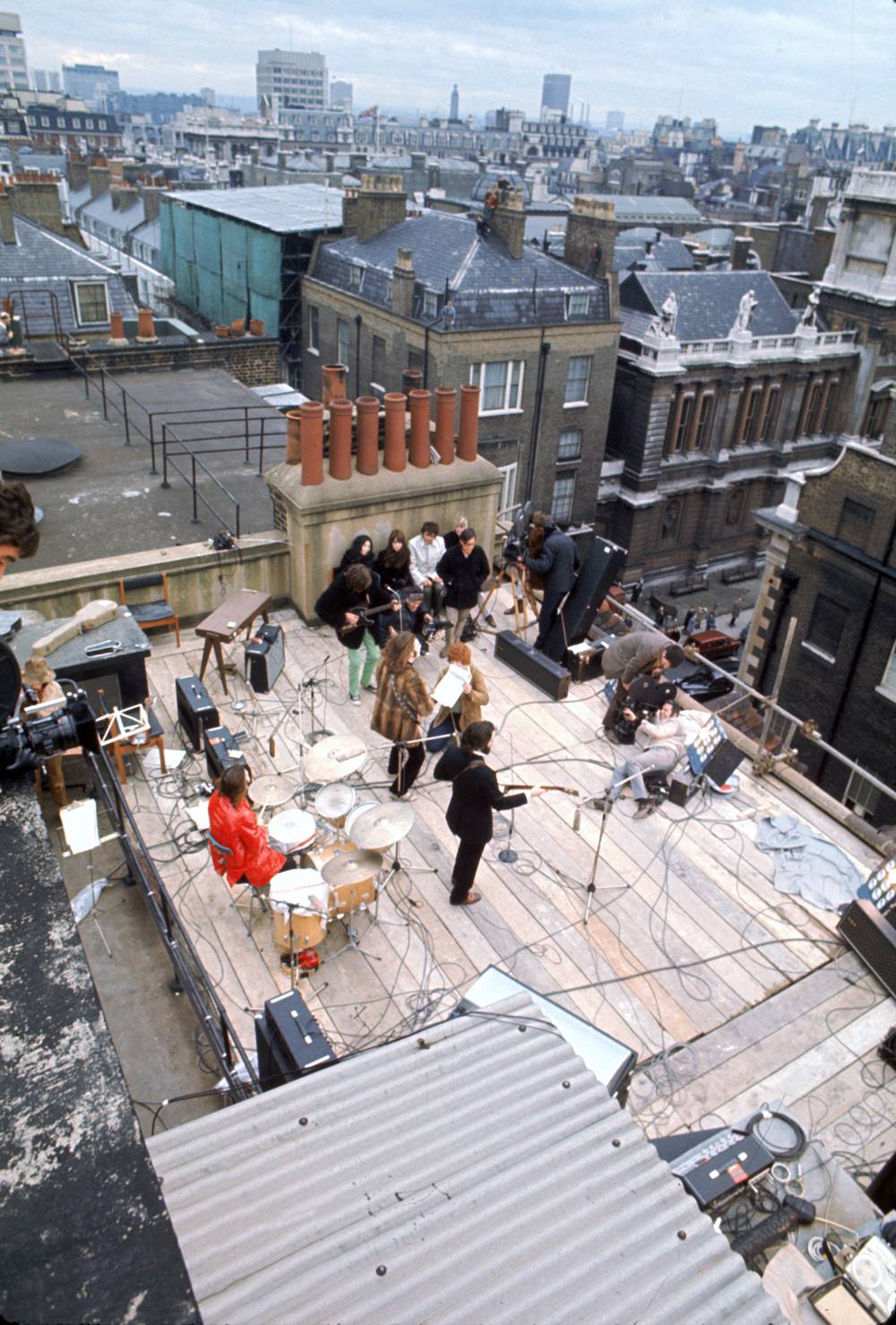
Fifty years later, with a different concept and such a different, wider audience, Get Back allowed — and still allows — us to dream on a future.  It freed the Beatles from the events that came after it. That story, so focused on the friendship of the band, directly set up “Now and Then.” The same rooftop ending delivered an alternate ending.

The existence of Get Back offers the original Let It Be the same liberation. Today, in 2024 and beyond, it’s indeed the climax to Get Back, the scar that healed over, at once an apocryphal footnote and a window into the post-breakup era — if you know to look for it.
Leave a comment

Filed under Extra

Jan. 13: The Lunchroom Tape (Pt. 3)

To write about the Beatles’ lunchroom discussion on January 13, 1969, is to write about a conversation that has no particular aim and a sudden ending. As I wrote last time — I cut-and-pasted this part — it’s sincerely impossible to give a linear rundown of this 30-minute discussion, as it isn’t a linear discussion. My disclaimer remains: You may have already read some of the below in previous posts. Now three parts in, this isn’t a straight recap — instead I’m trying to follow themes as they moved across different points in the conversation.

If you haven’t already,  please read Part 1 first and then Part 2. It’ll get you right where you need to be to start off here. 

***

There’s no snark, no playing for the cameras, no sarcasm. Otherwise absent, John Lennon revealed his instinctual charm in his vulnerability.

“I played a weaker game now than ever,” John was recorded saying at one point during the Beatles’ lunchroom discussion on January 13, 1969, as captured by the Nagra Tapes.

He did know, however, that whomever he was speaking to, Paul McCartney, Ringo Starr, Yoko Ono and Linda Eastman could listen in and follow up. This wasn’t complete privacy.

This conversation, like so much on the lunchroom Nagra tape and so much of the serious discussion around the band these days, is framed around the group’s approach to George Harrison’s role in the group.  John and Paul certainly admitted to treating him “like a mongrel.” But much of the conversation is really centered on John and Paul themselves, the conjoined Nerk Twins and compositional heart and soul of the Beatles, the two biggest heads of the mighty four-headed monster that embodied the Beatles.

Much drama lay in store for the John and Paul relationship in years to come, but a lot had developed already. The threat of a further fracture — of the greater four, of these specific two — hung over Twickenham on January 13, 1969. The four were really three at this point anyway, with George gone.

And then there were those two. It was clear the relationship between John and Paul was, at best, impaired. The Lennon-McCartney partnership was discussed at some length before John and Yoko arrived for the day. In the presence of Ringo, Linda and others, Paul admitted his relationship with John — certainly when it came to songwriting, their job — wasn’t the same.

As the tapes secretly rolled in the Twickenham canteen, John came off as sincere in airing his grievances, which he must have held close prior, given how fresh his admissions sound.

“It’s like George said,” John conceded 12 minutes in, a line captured in the 2021 Get Back docuseries. “It just doesn’t give me the same sort of satisfaction anymore, because of the compromise we’d have to make to be together.”

The end result of the records now aren’t enough. … When something came out, like Revolver or [Sgt.] Pepper or whatever, there was still that element of surprise that we didn’t know where it came from. But now we know exactly where it comes from, and how it arrived at that particular noise, and how it could have been much better. Or it needn’t have been at all. The only way to do it satisfactorily, for yourself, is to do it on your own. And then that’s fucking hard.

So what’s the way out? It should have been these very sessions — the Beatles were in the midst of conducting exactly what it seems like John sought. The Get Back sessions weren’t delicately curated, and even if the actual noises weren’t necessarily unique, the process of creating new songs for a show demanded spontaneity unseen in their history.

John didn’t say the above to Paul, who was engaged in conversation with Yoko. Instead, John was speaking to Linda, who challenged her partner’s partner.

Linda: But you were saying yesterday … you write good songs and it can’t be any better way. You don’t want just studio musicians. I mean, that’s how I look at it. You make good music together, whether you like it or not.

John: I like it.

Linda: And making good music is also … it’s really hard working at a relationship.

Issues clearly emerged in 1968, and whether it sprouted from the death of Brian Epstein or the trip to India or during the White Album sessions itself isn’t necessarily relevant to this discussion. While the 1967 noises still surprised, the White Album left John “dissatisfied” (Ringo disagreed), even though “the end result was as good as it could’ve been.”

At once, John yearned for time on his own, while also lamenting that the Beatles had turned more in that very direction – more actively working separately — during the recording of their last album. To this end, The Beatles LP should have been called “John, Paul, George and Ringo.”

“I dig it, individually, far more than Sgt. Pepper,” John said. “But as a whole — as a Beatles thing, I think it didn’t work as a Beatles thing.”

There’s another contradiction. To get The Beatles Thing, they had to be themselves. But that behavior alienated George.

I wrote about some of what’s written below when I recounted Paul’s concept of a “breakup show” earlier on the 13th, but it’s worth not only repeating but going into further detail in the context of the rest of the lunchroom tape. We’re now in the post-Get Back docuseries world, which requires more commentary than before to amplify or clarify what a broader audience has now seen.

“You try and make George play competently, because you’re afraid that how he’ll play won’t be like you want him to play,” John told Paul. “And that’s what we did.

“And that’s what you did to me.”

The accusation came as no surprise to Paul, who simply mustered a “yeah,” like he did so many times during this conversation in response to John.

We can’t pretend this is a surprising point of contention. Paul Was Bossy largely defined the iconic Winter of Discontent. It was why the Let It Be Sessions, as we often called it once upon a time, was a “failure,” and why we believed the Beatles entered the summer of 1969 to produce Abbey Road as a way to go out on a high. This is 50 years of how Beatles history was recounted, whether you like it or not, to quote Linda.

We know better today, but even if it wasn’t the ultimate casus belli, of course Paul was bossy, even if that’s just in the lowercase. The other Beatles struggled with it: George quit at least in part because of it, and at the canteen, John protested. Paul may have placed himself as merely “secondary boss” earlier in the conversation when discussing an expanded lineup, but now, with around seven minutes left on the lunchroom recording, John conceded he felt powerless working with Paul, and had for some time.

“I’d got to a bit where I thought it’s no good, me telling you how to do it, you know? All I tried to do on [the White A]lbum was just sing it to you like I was drunk, you know? Just did me best to say, ‘Now look, this, this stands up on its own.’

“And I’m not doing this quite well this time, ‘cause I — like, even with ‘Don’t Let Me Down’, the first time I sang it. Because I hadn’t allowed meself to say it was a whole song. I couldn’t — it was only after we’d done it that I’d realized it was done.  You know, and on The Beatles album, I just sort of said, ‘Here it is, ignore here, this is me singing it drunk, but I’m pretending as if I’m not. What would you do with it? George, you play whatever you like.’”

Paul arranges “Don’t Let Me Down,” from the January 6 sequence of Get Back.

Paul laughed at John’s second mention of singing drunk, but it goes to John feeling he had to be stripped of inhibitions to present and arrange a song to Paul as finished in his ears and in his eyes. John entered these sessions feeling unsure again, though. As he said regarding “Don’t Let Me Down,” it took Paul and George to help arrange it earlier in the sessions after John himself said he wasn’t sure in which order the song’s three sections should be presented.

You know, and that’s what it was. It wasn’t -– it wasn’t the arrogance of, “Listen, this is it, baby.”  It was that I can’t tell you what to do because you won’t play, here, like what I think you should play. And I’m not going to tell you what to play.

Paul and John continued to speak to and over each other. It wasn’t angrily, they just were doing everything to make their respective points.

Paul: OK, and that’s great, you know. And then – it’s just being able to say that, on the occasion, just being – say, “Look, I’m not going to say anything about the song, because it’ll be difficult … to sing it to you.”

John: Yeah, I know, but you wouldn’t say – listen to me – you probably arranged it you know?

Paul: I know, I know.

John: Well, I’m saying that “Dear Prudence” is arranged. Can’t you hear [John vocalizes part of the song]. That is the arrangement, you know?  But I’m too frightened to say “This is it.” I just sit there and say, “Look, if you don’t come along and play your bit, I won’t do the song,” you know? I can’t do any better than that. Don’t ask me for what movie* you’re gonna play on it.

Because apart from not knowing, I can’t tell you better than you have, what grooves you can play on it.  You know, I just can’t work.  I can’t do it like that.  I never could, you know.  But when you think of the other half of it, just think, how much more have I done towards helping you write?  I’ve never told you what to sing or what to play. You know, I’ve always done the numbers like that.  Now, the only regret, just the past numbers, is when because I’ve been so frightened, that I’ve allowed you to take it somewhere where I didn’t want.

[* Author’s note: I swear “movie” is what John said there, even if it doesn’t sound like it makes sense in context.]

What made the last bit a dialogue instead of a monologue was only the occasional “yeah” delivered by Paul.

John was pouring it out.  He admitted fear, regret and submission.

“And then, my only chance was to let George take over, or interest George in it, because I knew he’d …”

“’She Said, She Said,’” Paul interrupted, and John confirmed.

Interestingly, you can hear Linda replying, “yes, yes,” which means this was a big enough deal to Paul that he shared the story of that song’s recording with her (the couple didn’t meet for nearly a year after that session, so she wasn’t around at the time). It’s easy to reason why he did, and why he likely brought it up within the last 100 hours. With George having just quit, Paul probably told Linda about the time he himself walked out on the band – during the recording of the final song cut for Revolver, on June 21-22, 1966.

An anecdote absent from Beatles history until 1997 — the post-Anthology era — Paul recalled the walkout for Barry Miles’ authorized biography Many Years From Now.

I’m not sure but I think it was one of the only Beatle records I never played on. I think we all had a blarney or something and I said, “Oh, fuck you!” and they said, “Well, we’ll do it.” I think George played bass.

Paul’s account had been the single source of this incident. It’s now part of the Beatles’ official history with this passage appearing in the book that accompanied the 2022 Revolver deluxe reissue (along with Paul’s quote):

The disagreement that happened in the dead of night seems to have been about how to resolve differing ideas for the arrangement. A recording sheet in the Abbey Road archive indicates a piano was added to the song at one stage, but no trace of the instrument remains on the tapes.

Back in the Twickenham canteen, John was clear about what mattered to him that night in 1966: “He’d take it as it is,” John said of George before continuing.

“So on [the White Album] it’s probably George, you know, if there’s anything wrong with it.  Because I don’t want your arrangement on it … I only want your …  If you give me your suggestions, let me reject them, or if there’s one I like, it’s when we’re writing songs. The same goes for the arrangement.”

Exasperated and resigned, John continued, “I don’t want it to … I don’t know.”

Both Paul and Yoko said they knew what he meant, even if John couldn’t pin it down.

Opposite sides of the same coin. Not captured in Get Back: Yoko chiming in.

In the tape’s final moments, John returned the focus to his in-studio working relationship to Paul and continued to show what, at best, can be called inconsistencies.

And that’s all I did on the last album was say, “OK, Paul, you’re out to decide [how] my songs [are] concerned, arrangement-wise.” … I’d sooner just sing them, than have them turn into, into ‘[Being For the Benefit of] Mr. Kite,’ or anything else, where I’ve accepted the problem from you that it needs arrangement. …  I don’t see any further than the guitar, and the drums, and, and George Martin doing the … I don’t hear any of the flutes playing, you know?  I suppose I could hear ‘em if I [spoken as if straining] sat down and worked very hard! You know, I could turn out a mathematical drawing, if you like …

Indeed, John was more likely to tell George Martin he wanted “to smell the sawdust” in “Mr. Kite’s”  circus atmosphere, or that he wanted to sound like the Dalai Lama chanting from a mountaintop in “Tomorrow Never Knows.” It’s all consistent with John’s outspoken, retrospective dissatisfaction with arrangements on his own songs, like “Across the Universe” and “Strawberry Fields Forever.”

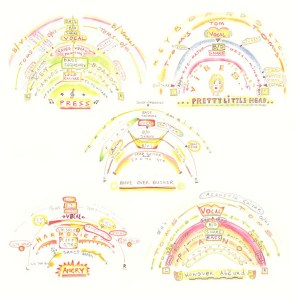
And I really am relying on your touch: Paul’s hand-drawn instrument charts from the gatefold of 1986’s Press to Play LP.

Isn’t John lucky to have run into a guy like Paul McCartney (and a producer like George Martin) to help him take the song beyond guitar and drums and happily chart out those mathematical drawings?

It’s the archetypal refrain when bands splinter: There were musical differences. The Beatles didn’t really have musical differences. Just listen to the music they kept making and their general output as solo artists. These guys just had differences in how to make music. Despite the protestations, John and Paul weren’t incompatible but perfectly complementary, they knew it and we all know it.

How to fit in George (Harrison) was an entirely different issue. This was all part of the “compromise we’d have to make to be together,” as John said earlier at the canteen.

Paul:  I’m onto the same thing, you know.  …  It is only, like, if you can just remember that we’re, you know, the four of us are trying to do that.  ‘Cause I mean, all of those things you say, you know, in some way, apply to me. Not always —

John: Yes, yes, because everything applies a little bit to each other.

Paul: It is just you saying it.  They’re all, you know, in some way, to some degree, will apply to me.

John: But there was a period where none of us could actually say anything, about your criticisms.

Paul: Yeah.  Yeah.

John: ‘Cause you would reject it all.

Paul: Yeah, sure.

John: And so George and I would just go, you know, “I’ll give you a line here,” “OK,” you know, “We’ll do four in a bar, and I’ll do…” [resigned, sincere] And a lot of the times you were right.

Paul: Yeah.

John: But a lot of the times you were the same as they always are.  But I can’t see the answer to that.

The “we’ll do four in a bar” bit is what the Get Back docuseries claimed was “I’m Paul McCartney” — my complete forensic analysis of this sequence is here at CSI: Twickenham.  Regardless if the show’s transcription decision was human (or AI) error or a deliberate editorial misrepresentation, even if John wasn’t actually mocking Paul we can understand why Peter Jackson and Co. either thought he was or just wanted that quote to have some traction.

Paul’s ego at this moment was justifiably boundless, and it extended to his thoughts on the band itself. The Beatles’ reputation earned them wiggle room. It ties indirectly to an imaginary scenario he laid out earlier in the conversation: drunkenly playing the piano just because he felt like it and “everyone in that room will dig it, because it’s me really doing it.”

Here Paul insists the Beatles don’t have to play perfectly to sound that way to listeners and critics.

The thing is, like, within each other, within ourselves, we’ve reached something that’s nearly perfect. And everyone else who’s listening to it — “That’s it! We’ve done it!” … OK, so we know we nearly made it, but we’ve really made it for everyone else. ‘Cause, OK, we’re into the fine, finest, finest technicalities, you know, I mean, that’s where it’s at, you know? If one day, we can even keep all the people who are listening to this, nearly, nearly made it, they think we’ve made it. They think that’s it.

The next bit is familiar from the opening moments of the lunchroom scene of the Get Back series, although on the tapes it actually was said very close to the end.

“Like last week,” Paul said, “I say I was doing all right for me, I was really trying to just say to George, ‘Take it there,’ you know? Whereas I wouldn’t have gone, previously — I would have said, “Take it there – with [vocalizing] ‘diddle-derddl-diddle-der.’  But I was trying last week, to say, ‘Now, take it there, and it needs to be like…”

“You see, the point now is we both did that to George this time,” John replied.

The policy that kept us together. The compromise we’d have to make to be together. John had asserted in the canteen several times there was a system, and in not so many words, he believed that system had collapsed and they broke George. This was, like so many issues these four had, a communication problem.

John put it succinctly: “It’s like if I say, ‘All right, take it,” he’ll say, “Well, look, I can’t take it.”

Before the tape ran out in the lunchroom, as John and Paul continued to discuss their inability to get through to George, musically, we get to hear part of an exchange that was introduced in an edited fashion very early in the Get Back version of the sequence.

Paul: So he knows that when we say, “Take it,” we expect [Paul vocalizing]. If I said that, then he’d … [vocalizing George playing a simplified version of that same part]

John: But it’s just that bit. The bit where we’ve — “I’ve Got a Feeling.” There’s no way we could have translated it to him to say …

Paul: He’d have said, “I’ll do it at home.”

John: He’s gonna go home. But so have I, you know. I’m gonna go home in a studio, rather than go through this with anybody.

Paul: I’ve never said to George, “Look, George, I think, when I want a guitar bit, I want it exactly like I want it.”  And he’s never said to me, “Well, you can’t have it.”  … But that’s it, while he’d never said that to me, and I’ll never say that to him, and we’ll go on.  But, really, I mean it is gonna be much better if we can actually say, “Look George, ‘I Got A Feeling,’ I want … exactly [like this].”  And he’ll say, “Yeah, but I’m not you and I can’t do it exactly how you do it.”

And that ended the near-30-minute reel. It’s unclear how much longer they spoke, and what direction the conversation took.

So where are we left after extensively eavesdropping on the Beatles?

Ultimately we only know what a 1960s-era miniature spy microphone shoved into a flowerpot in an active lunchroom was able to pick up over a single half-hour period. At several points, the conversation is completely indistinguishable. At others we have a conversation being picked up in the foreground when one in the background is completely obscured. Even with Get Back’s AI, we’ve learned it’s not all perfectly heard.

Thanks to the lunchroom tape we know the Beatles better than before if only because there are more data points to draw upon, but that doesn’t mean we understand things proportionally better. These Beatles were never ones to keep a story consistently straight when it was for public consumption, and it doesn’t seem much different in private.

All at once during this same conversation, John wanted to:

  • Assign song arrangements to Paul because he didn’t want to bother with the job himself
  • Ask for suggestions on arrangements with the right of refusal
  • Not have any additional arrangements to his songs

As relaxedly outspoken he was on the lunchroom tape as well as earlier in talking to the others prior to John’s arrival,  Paul was likewise levelheaded, perhaps thinking all along, “John, you’re all over the place, as usual” while never coming close to saying as much.

The tape and these sessions overall allow us to witness a maturation in Paul’s temperament and what sounds anecdotally like a softening in his micromanagement style in the 30 months since his 1966 walkout. He could still be very stubborn, but if we assume the “She Said, She Said” situation was comparable to other tense moments in January ’69, he handled these recent situations with greater poise. Paul recognized it himself saying just above, “Like last week, I say I was doing all right for me.”  There are several similar snapshots throughout the sessions at Twickenham where Paul can be heard stopping himself.

Get Back was misleading in its presentation of the “I’ll go home to do it” quote. It’s not that George wanted to quit the band — or for that matter that John wanted to also. Home was the space George was more comfortable working on certain things. Witness the “last-night” songs George composed alone at home. When John says George will go home, he didn’t mean he was quitting the band, as Get Back implies. The context is clear it was to be in a different space to work out his parts.

Still, George had quit the band, and attempts to get him back the day before failed. Perhaps John was so vocal at the canteen as a reaction to the complaints others had that Yoko was speaking for him over the weekend. John wasn’t relying on her, or code words or telepathy to communicate with Paul.

The Get Back edit of the lunchroom tape is a very frustrating viewing once you know the contents of the entire original half-hour audio tape. Deceptive at its worst and unreliable at other points, the TV edit simply blurs an already schizophrenic conversation. Even if the two central participants were John and Paul, the active presence of Ringo, Yoko and Linda needed to be acknowledged, period.

An alternate televised account of the lunchroom — perhaps openly presented as a supercut or trailer of sorts of the full conversation — would have come off cleaner. A movie trailer never presents the action in the final order, but that’s OK and assumed by a viewer. Openly presenting the lunchroom sequence as a sampler of the conversation — one that jumps in, out and all around — would have been a more fair portrayal to satisfy the critics (like me) while keeping with the show’s clear time limitations.

Paul was most outspoken when discussing the group’s future, both before and during the lunchroom tape. But to be clear, the Beatles always discussed their future, even publicly, going back to the dawn of Beatlemania. You’ve heard John’s quote from November 1963 before:

You can be big-headed and say, ‘”Yeah, we’re gonna last 10 years.” But as soon as you’ve said that you think, ‘We’re lucky if we last three months,’ you know.

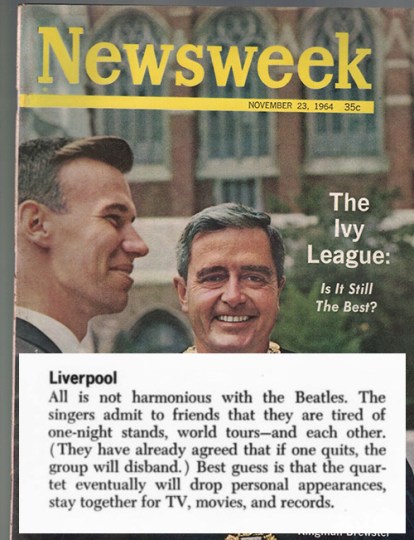
That they were conscious of their future more than six years after that interview should be no surprise. Breakup rumors appeared in the mainstream press as early as 1964 and reignited periodically. They were always expected to break up until they unexpectedly broke up.

The issue date of this Beatles breakup rumor — November 23, 1964 — was the same day “I Feel Fine” was released in the U.S.

How often did the Beatles privately have conversations like this one at the Twickenham canteen? How often over their career during a bumpy period? How often in January 1969? This 30-minute sequence was a one of a kind capture, but it doesn’t make it a one-of-a-kind conversation.

The individual Beatles of January 13, 1969, were closer to 30 years old than 20. Closer to the release of the McCartney LP than Sgt. Pepper. Their egos were developed, and John said he needed to smother his in Paul’s shadow. George’s could hardly develop in the space of John and Paul.

Did John even want George back? That’s not my question, that’s John’s question.

At this point, there are conflicting goals: self-preservation and singing how you really sing it vs. the Beatles Thing. With the luxury of retrospection, we know it shook out OK. Abbey Road was terrific, Let It Be was great and the intermittent singles were fab. It was more in question on January 13, 1969.

Meanwhile, if John was looking for sounds that would surprise, in 10 days time, the embodiment of a new sound and new attitude would walk through the door, giving life to John’s search for an element of surprise.

***

Like “Her Majesty” — the conclusion to Abbey Road that had its origins in the Get Back sessions — the lunchroom tape cuts off unresolved. We only know what comes next some short time later: John, Paul and Ringo head back to Twickenham’s sound stage. George isn’t there.  They don’t replace him either. They simply go back to the studio.

But George’s on their mind.

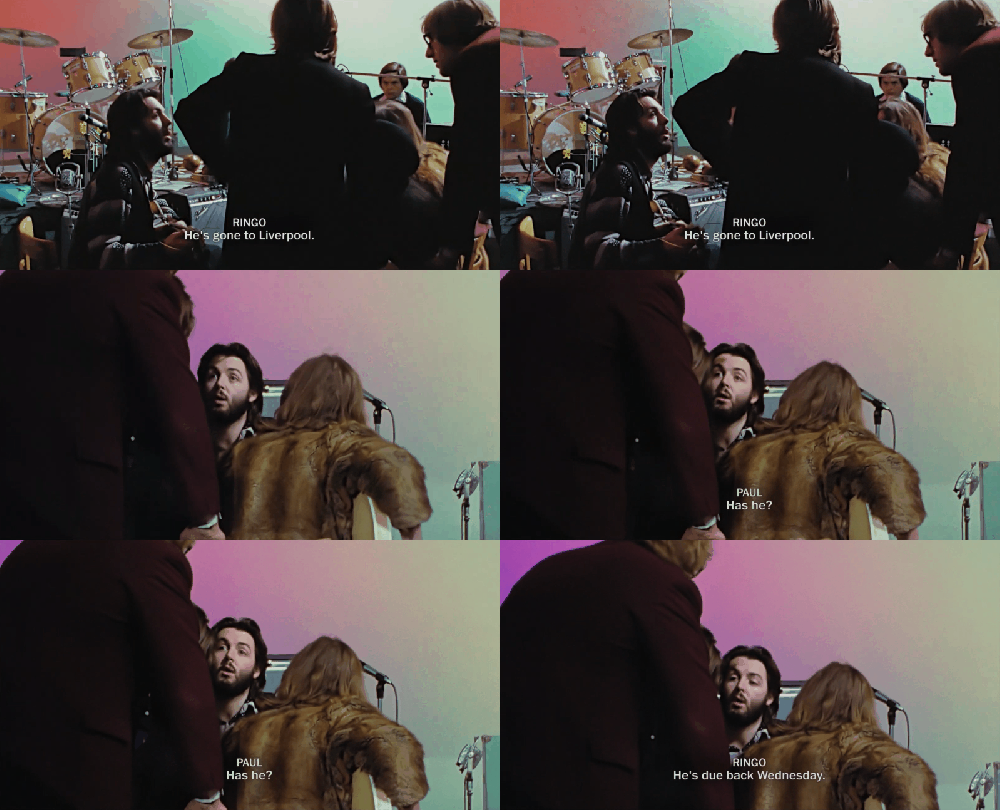
“Let’s go and see George,” Paul said about 10 minutes into the post-lunch Nagras, which were initially filled with idle talk — a little bit about camera work,  some about television. There was one problem with that excellent plan, and Ringo delivered the news: George, in fact, had — quite literally — gone back home.

“He’s gone to Liverpool” and would be back Wednesday.

“Oh, then Wednesday’s the day we see him, right?” Yoko replied, cheerfully.

“Yeah, and I think til then … ” Paul said before being cut off by Ringo.

“Should we rehearse the numbers?”

And so the remaining Beatles got back to work.

5 Comments

Filed under Day by day

Jan. 13: The Lunchroom Tape (Pt. 1)

I’ve previously dipped in and out of the lunchroom tapes in recounting the events of the weekend of January 11-12, 1969. Now that our timeline here has finally reached the afternoon of January 13, you’ll see some facts and points repeated from earlier, but now in its original canteen context.

It comes a little less than three hours into the Get Back docuseries (counting credits), about a third of the way into the entire series, and it’s a shocking and quite unnerving moment — as it should be. This could be the most unique sequence of the Beatles recorded on tape and one that most fans, even the self-proclaimed die-hards, probably didn’t know existed before November 2021.

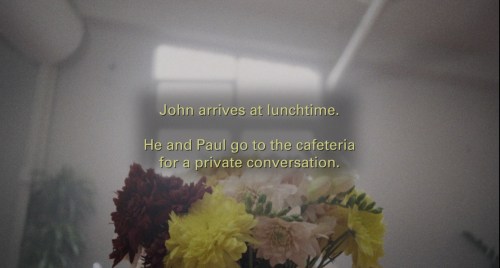
Director Peter Jackson used the Beatles’ January 13, 1969, lunchroom tape to great effect. The chyron says it all, in clear, yellow type:

John arrives at lunchtime.

He and Paul go to the cafeteria for a private conversation.

They are unaware that the film-makers have planted a hidden microphone in a flowerpot.

Behold true flower power: A planter with a bug designed to capture a colony of Beatles. This is also where a real problem begins for viewers and, importantly, the historic record.

First, there’s the “who,” and this is the most important misrepresentation of all.

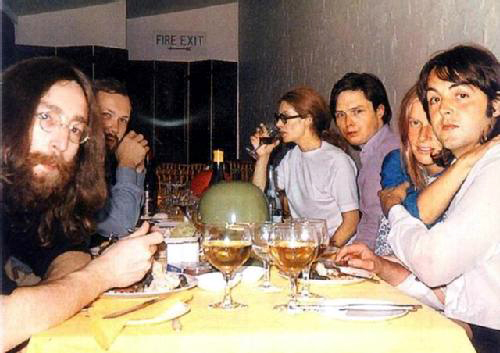
Paul McCartney and John Lennon did have a “private conversation,” insomuch as it wasn’t at a public venue but at the Twickenham Film Studios cafeteria.  But Ringo Starr, Yoko Ono, Linda Eastman and Mal Evans were there, too, and probably Neil Aspinall as well, all equal parties to the discussion.

At least one of that group knew a hidden microphone was in Michael Lindsay-Hogg’s arsenal. Ringo and George Harrison found that out the previous week; they just didn’t know where or when their hired documentarian would deploy it.

“This is the bugging device, so we can surreptitiously bug your showbiz conversations,” Michael openly boasted on January 9, the day before George quit.

On separate occasions, both George and Ringo asked if “that” was the tape on which they were being secretly recorded.  A day later, on January 10, Michael suggested to the same pair that he could color the microphone to make it look like one of the director’s signature vices.

“Do you think if I paint this brown and put red on top it’ll look like a cigar?”

“You wouldn’t see the red, just the ash,” George replied.

At this moment on January 13, George was most certainly seeing red, dining away from the office that Monday. Ringo, among the quieter figures on the full lunchroom tape, never indicated any suspicion this showbiz conversation was being surreptitiously bugged.

For something so esoteric, we’re left with two distinct experiences: The Get Back version of the lunchroom, and the Nagra tape reality, which cut off suddenly after nearly 29 minutes but was recorded in a true, linear sequence — an actual conversation.

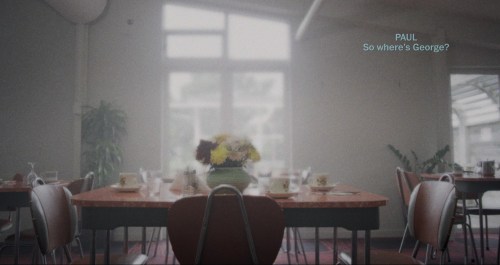
The Get Back docuseries’ timeline of events leading up to lunch was accurate: The group gathered upon John’s arrival on January 13. Paul wondered aloud where George was.

This wasn’t the first spoken moment on the lunchroom Nagra tapes – instead, that’s John, in medias res defending his relationship to Yoko in the context of his recently dissolved marriage to Cynthia.

(When John said “I would sacrifice you all for her” as the lunchroom Nagra recordings begin, a segment also transcribed in the 2021 Get Back book, any kneejerk reaction that it was about the Beatles’ current situation vis-à-vis Yoko should be tempered; on the tapes he already mentioned it was as “a husband.”)

Paul essentially began the lunchroom discussion – “So where’s George?” — with a bit of cheek. In the TV edit, John replied, “Well, he doesn’t want to be here,” per the subtitles, although it’s not entirely clear that’s what he’s really saying if you listen closely, and it’s difficult to even find that line on the Nagras.

Without going line-by-line – and I can, would you like me to? — that is the main takeaway on the televised representation of this lunch: It’s different.

On the tapes – omitted from the discussion in Get Back – Ringo quickly replied with a punchline: “It smells like George is here.”

So the evidence is clear from the absolute beginning: The Get Back lunchroom sequence and the full Nagra lunchroom tape are completely different representations of a specific, important moment in time. I don’t think the TV series was at all edited maliciously, but to dramatically distill a 29-minute sequence to six and deliver a specific narrative. I’d watch 29 minutes of this stuff, but maybe that’s why my filmmaking career never got off the ground.

Intent aside, however, it’s still an inauthentic experience. Only with this understanding can we even try to parse anything.

How scattered is the Get Back edit? Here’s a look at me and my notes.

It should go without saying, but I’ll say it anyway at the outset (and yes, more than 800 words into this post, this is only the outset): The work Peter Jackson’s crew performed to clean up the audio of the lunchroom tape is nothing short of remarkable. Listen to 10 seconds of the bootleg tapes and then 10 seconds of the audio in Get Back; the technological advances are staggering.

Michael — who later misremembered the recording as capturing George’s departure of the Beatles days earlier — considered the tape unusable, writing in his 2011 autobiography Luck & Circumstance:

My bug had only picked up the sounds of cutlery banging on china plates, obscuring what the muffled voices had said.

At times, the Get Back AI is a little too good, and the voices can sound almost processed and nearly garbled. Listen to the televised sequence on headphones, you’ll hear what I mean.

The chyron subtitles aren’t completely accurate, either. This could be a case of my ears vs. their ears, and my eyes vs. their claims. But, I think my eyes and ears are pretty OK.

A great example comes more than 2 1/2 minutes into the Get Back scene. In a complaint about Paul’s unwillingness accept criticism, so to speak, John  — per the subtitles — sort of mockingly says “I’m Paul McCartney” in a soundbite that took me completely by surprise when I first saw it. That’s because it’s not in the tapes.

Instead, I think John clearly says “four in a bar,” as in the rhythm. That absolutely fits the context that line was originally in, with John saying he and George would just surrender to Paul’s musical decisions to finish a song. (We’ll get to that plotline later.)

Here’s that line on the Nagra tapes in its original context:

And the “four in the bar” line, slowed down a tick:

It seems clear he does not say “I’m Paul McCartney.”

In other words: We have to proceed with genuine caution consuming this sequence.

Paul was drinking Dos Equis, and John enjoyed a glass of wine. While this has long been called the lunchroom tape, we don’t actually hear anyone dining; the clatter of cutlery is from the staff working in the cafeteria. They may not have been recorded having a feast, but plenty was eating away at the Beatles.

We don’t know what John and Yoko were doing at home besides leaving their phone off the hook, but Paul — especially — and Ringo had already spent hours speaking relatively candidly about the group’s inner relationships, not only in the context of George’s departure, but quite deeply regarding the Lennon-McCartney partnership. The day must have completely exhausted and gutted Paul even beyond the depictions we now can see in Get Back.

This is a dramatic oversimplification, but the 29-minute conversation covers several overarching and highly overlapping points, including:

  • John and Paul’s relationship with and treatment of George, and the latter’s future as a Beatle
  • The concept of being a Beatle – and also an independent individual (and tangentially, a solo musician)
  • Leadership – and bossiness
  • The Beatles’ working relationship – as in, how they made music

The conversation is scattered – like any other normal discussion between actual humans under stress and a little bit of influence. They weave in and out of each of these broad points. This isn’t a meeting with a printed agenda and action items.

John and Paul are at the center of this dialogue, but across the discussion, Linda, Yoko and Ringo participate. Mal’s engagement comes across as a servant only. If Neil is there, he’s quiet. Only the impenetrability of the tapes makes his presence a question, but he was at Twickenham prior to the lunch and part of the day’s earlier discussions, so it would make sense the ultimate insider would join any important conversation.

It can’t be repeated enough, though: Paul and John are just two of the people in this conversation. To not mention Ringo most specifically as a party to this discussion is to sideline and discount one-quarter of the Beatles, a self-proclaimed democracy of four. Much as this conversation presented John and Paul at their most unfiltered, the presence of  Linda and Yoko doubtless clouds a bit of their candor. Still, they speak in a fashion that we hardly hear through the duration of the month otherwise — especially John, who displays little in the way of wit and humor but plenty of self-refection and doubt.

But it has to be repeated: The portrayal of this discussion as a one-on-one conversation between only John and Paul is a very unfortunate failing of the excellent Get Back.

We’ve established John, Paul and Ringo are all there …

So where’s George?

His absence isn’t the only thing that makes this conversation interesting, but it jump-starts the discussion, and like an odor, it permeates the meeting. The Beatles’ problems ran deeper than George’s resignation, but without it, would this lunch have even been recorded?

Given how the tapes begin, we can establish this is close to the start of the conversation.

“It’s a festering wound,” John said of what he thought George must have been feeling, early in the discussion—as documented on the Nagras and edited into Get Back. “And yesterday (at the meeting at Ringo’s house), we allowed it to go even deeper. But we didn’t give him any bandages.”

John blamed the indifference on Beatle egos. He said he tried to “smother” his ego at the two meetings he had with George over the previous weekend – the first meeting really more an ambush. John used the same phrase – smothering his ego — to describe how he made it possible to “carry on” working with Paul. We’ll get back to that dynamic later.

On multiple occasions on the tapes — not in Get Back, since it’s not acknowledged that she’s even there — Yoko not only steers the conversation to ask about George but also remarks the ease of which they can bring George back. But …

“Do I want him back, Paul? I’m just asking, do I want it back, whatever it is, enough?”

John’s indecision of how he wanted to approach his and the band’s near-term future overlapped an admission that George had “been on such a good ride.”  But at the same time, he said – agreeing with something Paul had previously remarked – that George was “some other part.”

I mentioned this in a previous post: George was viewed as an other. Though never explicitly described as such, it was clear George was both musically and socially separate from John and Paul. (And this was said without an apparent realization he was temporarily estranged from his wife.) Further, the rough-edged John blamed his own management style on his upbringing, saying he knew he’s treated people “this way” since primary school.

Get Back doesn’t pull in this part of the conversation. Instead, it implies George’s absence was a direct result of Paul’s – and to a lesser extent, John’s – in-studio musical enforcement. Not necessarily “musical differences,” but exhaustion from day-to-day life as the implied Beatles session guitarist.

That may have been the case, but there’s a lot more to it.

Get Back follows up less than a minute into the sequence with this exchange, which actually happens in Minute 27 of the original tapes:

Paul: The thing is, that’s what I was trying to say to George, you know. Whereas, previously I would have said, “Take it there, with diddle-derddl-diddler-der.” But I was trying, last week, to say, “Now take it there, anything you like. Put whatever you …”

John: You see, the point is now, we both do that to George this time, and because of the buildup to it.

Paul may not have given instructions to play a guitar part verbatim, but there were several moments where he was very specific with how he wanted something to sound. It was enough that it drove George to tell Paul whatever it was that would please him, he’d do it, after all.

Was that enough to drive George out of the band, though? The Get Back portrayal of the lunchroom tapes implies his absence is the final statement of this intimate discussion, and not only is it John and Paul’s decision if George should even be a part of the band, but that this could well be the end of the Beatles as we know it, for now.

John: If we want him, if we do want him, I can go along with that because the policy has kept us together.

Paul: Well, I don’t know, you know. See I’m just assuming he’s coming back.

John: Well do you want …

Paul:  If he isn’t, then he isn’t, then it’s a new problem. And probably when we’re all very old, we’ll all agree with each other and we’ll all sing together.

The last bit of conversation on the Get Back portrayal is a … complicated edit job, pulling in lines from various moments in the first half of the Nagras.

There’s more to the above quotes — in their original context — and I’ll get to that. This post is only “Pt. 1” after all.

16 Comments

Filed under Day by day

Jan. 12: A family outing (Pt. 2)

FYI at the outset: I’m applying the same disclaimer from last time, when I started recounting the Beatles’ January 12, 1969, meeting at Ringo Starr’s house.  For this series of posts, I’m going to jump between various parts of the January 13 Nagra tapes that directly address January 12, for the sake of the overall narrative.  Specific quotes and certain discussion topics conspicuously absent here will soon be tied back into the story. I promise!

****

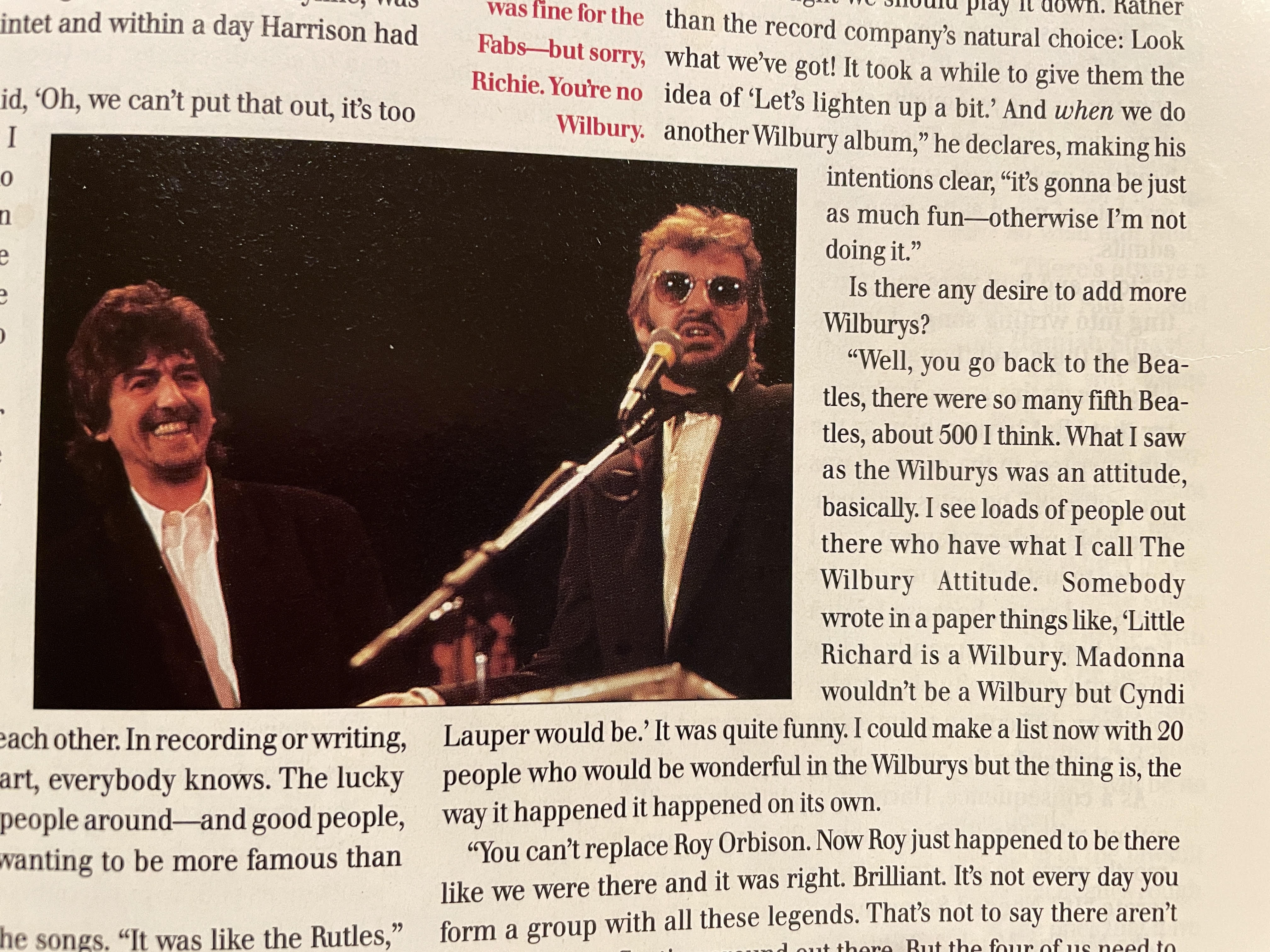
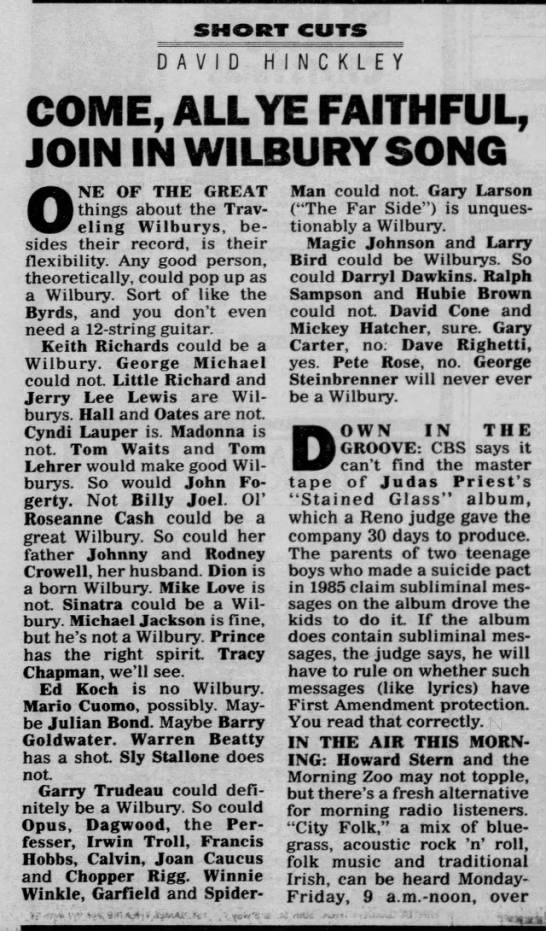
Twenty years after the breakup of the Beatles and in the midst of leading his own supergroup, George Harrison characterized the “Wilbury Attitude.”

From the March 1990 issue of Musician:

Somebody wrote in a paper things like, ‘Little Richard is a Wilbury. Madonna wouldn’t be a Wilbury but Cyndi Lauper would be.’ It was quite funny.

While there may have been “about 500” fifth Beatles, as George estimated in that same Musician profile, the four proper members of the Beatles were set in stone (Pete Best and Stu Sutcliffe screw up this accounting, so let’s just stick with the figure of four), and the lineup had been stable for more than six and a half years by the time we reached January 1969.

John Lennon proposed expanding the group more than once over the course of that month. The Beatles’ board meeting on January 12 was one such occasion.

Most of what we know about that meeting we learned from recordings of John, Ringo and Paul McCartney — among several other key figures — captured a day later. And while some of those January 13 conversations were filmed openly at Twickenham Studios on the set, so to speak, of Let It Be, a clandestinely recorded lunchroom discussion fleshed out the story.  Remember Michael Lindsay-Hogg’s spy microphone? Documenting this lunch became the device’s greatest legacy.

It must be repeated to make it clear: This meeting was not merely between Paul and John, as suggested by the 2021 Get Back docuseries. There were at least half a dozen people present.

“The Beatles, to me, isn’t just limited to the four of us,” John said on the 13th, candidly recounting what became a contentious point discussed during the previous day’s meeting and in response to Ringo relaying that George wanted a meeting limited to the four Beatles. It’s worth noting there were multiple occasions during lunch that Ringo and Paul explicitly referred to the “four” Beatles.

“I think that I alone could be a Beatle. I think [Paul] could. I’m not sure whether [Ringo] could. … I’m just telling you what I think. I don’t think the Beatles revolve around the four people.”

Maybe it’s hindsight speaking, but of course the Beatles revolved around four people, and it had since Stu stepped out in 1961, even if their nominal leader suggested otherwise by calling a critical upgrade at drums merely a reorientation.

“It’s like [Ringo] joining instead of Pete,” John continued. “To me, it is like that.”

We don’t hear Yoko Ono’s name explicitly mentioned in the context of being a part of an expanded Beatles, a proto-Plastic Ono Band, but it’s the clear suggestion amid her omnipresence and in the wake of her taste of the fab experience 48 hours earlier.

For her part, Yoko didn’t see George’s departure as anything but temporary. His return was, in her eyes, completely in the hands of the others.

“You could get back George so easily, you know that,” Yoko said during the lunch.

****

Reputation’s changeable, situation intolerable: George stuck on the third rung

“The third boss.”

That’s how Paul plainly described George’s place in the Beatles hierarchy on the lunchroom tape. (Paul conceded John was at the front and himself secondary.)

It was only a few days prior when George openly bemoaned his status within the group and the dead-end destiny of so many of his contributions: “I’ve got about 20 songs from 1948, because I knew very well at the moment I’d bring them into the studio that [splat sound], there its gone.”

This complaint on January 7 came immediately before he called for “a divorce,” which he pursued when he walked out January 10. At the January 12 board meeting, it only got worse, according to John.

“It’s a festering wound … yesterday we allowed to go even deeper,” John said early in the recording of the lunchroom discussion. “But we didn’t give him any bandages.”

Not only a reluctant medic, John wasn’t sure he wanted George to even be a Beatle anymore. Maybe the Beatles could be a four-piece after all, just with Yoko and without George.

“Do I want him back, Paul?” John said. “I’m just asking, do I want it back, whatever it is — the myth?”

That remark echoed George himself from the divorce conversation, in his response to Paul, saying the band used to be “switched on,” George had replied, “If that’s what doing it is, that’s why I don’t want to do it.”

Like George, John was searching for motivation to maintain the group’s status quo, even when the Beatles’ status quo was really a constant state of invention and reinvention, at least to the point of view of us on the outside.

During lunch on January 13, Paul and John agreed the duo would “connive,” when it came to their marginalization of George within the band and their maintenance of creative control. This, while George “could afford to be more insensitive” himself, as “some other part,” an other acting separately from the other members of the band, perhaps musically, perhaps socially.

“I do think that as grim as it all is,” Paul said, “that [George] is right. And I do think that our sole approach is exactly what he’s been saying.”

John simply said that he knows he’s treated people this way since primary school and offered the customary breakup excuse, “It’s not him, it’s just me.”

Yet while the duo acknowledged the problem of their treatment of George as a tertiary Beatle — later Paul would admit they treated him “a bit like a mongrel” — they didn’t set forth a path to solve it directly. The board meeting on the 12th, which was supposed to be a general business meeting, went so far beyond just an attempt to reconcile George’s walkout. The band’s very existence was in question. Again.

“It’s like George said. It doesn’t give me much satisfaction anymore,” John said on the 13th. “Because of the compromise we’d have to make to be together. The end result of the records now aren’t enough. …  When something came out like Revolver or Pepper or whatever, there was still that element of surprise that we didn’t know where it came from. But now we know exactly where it comes from, and how we arrived at that particular noise and how it could have been much better.

“The only way to get it satisfactorily for yourself is to do it on your own. And then that’s fucking hard.”

Here John again mirrors another of George’s points from January 7, when the latter said he wanted no part of performing any of his own songs at the presumptive forthcoming concert “because they just turn out shitty. They come out like a compromise.”

A fab feast, July 1969

Linda Eastman, who like Yoko was at the lunch on the 13th, responded by throwing some of John’s words back in his face. “But you were saying yesterday … you write good songs and it can’t be any better way. You don’t want just studio musicians. I mean, that’s how I look at it. You make good music together, whether you like it or not.

John admitted that he liked it. Still, he was dissatisfied with the White Album. Not his own contributions, which he remained happy with, but the sum of the parts. While Ringo said he dug it “far more than Sgt. Pepper,” John struggled to reconcile how good the White Album was and what he felt it should have been.

As difficult as the situation was, Paul was the optimist. He didn’t even see George’s absence as a problem — yet.

“See, I’m just assuming he’s coming back, you know? I’ll tell you, I’m just assuming he’s coming back.

“What if he isn’t?” John asked.

“If he isn’t, then it’s a new problem.”

****

A “new” problem implies previously existing problems, and on January 12, 1969, the Beatles definitely had other problems.

With the benefit of hindsight,  we know Yoko was right and Paul’s optimism was justified. It was easy to get George to return to the group. It took a couple painless concessions from the others, and he was back with the Beatles just a few days later — this wasn’t any protracted estrangement, just one with good retrospective drama and publicity. For context, Ringo’s resignation during the White Album sessions lasted almost twice as long.

While acknowledging the issue, why didn’t John and Paul go a step further and apply the bandages to salve George’s festering wounds? It’s unclear, as they had recognized, at least in the wake of the meeting — if not during it — their “conniving” problem.

“Our brains sort of … con him,” Paul said at lunch, calling those moments “so innocent” and “so simple.”

That kind of treatment came completely natural to John. “It might have been my game. It might have been masochistic,” he said describing his approach. “But the goal was still the same: self-preservation.”

Yet, John said he “had to fight it the last three years,” saying he overcompensated by feeling he was actually giving in to George for several years, going out of his way to work with and relinquish a territory on their records, while George was creatively on “a good ride.”

He didn’t use the word “connived,” but in later interviews George did consider the others’ actions selfish. None of this should surprise anyone who has followed the Beatles for the last half-century.

From George’s terrific 1977 interview with Crawdaddy:

There were too many limitations based upon our being together for so long. Everybody was sort of pigeonholed. It was frustrating. The problem was that John and Paul had written songs for so long it was difficult. First of all because they had such a lot of tunes and they automatically thought that theirs should be the priority, so for me I’d always have to wait through ten of their songs before they’d even listen to one of mine. … I had a little encouragement from time to time, but it was a very little. It was like they were doing me a favor. …

Paul would always help along when you’d done his ten songs, then when he got ‘round to doing one of my songs, he would help. It was silly. It was very selfish, actually.

Then there’s Yoko, who George didn’t want around the studio as a non-participant, much less as an artistic partner. He may have been insensitive to her when she entered John’s life (invoking her “bad vibes”), but he clearly felt that behavior was justified. This emerged as the red line for John. We know how the story ended, and Yoko didn’t leave John’s side while the Beatles were together. John won that part of the battle, even if she wasn’t elevated to a member of the group.  (Through tragedy she ultimately became a member of the Apple board.)

There was no punch-up on January 10, 1969, that pushed George to take a break from the Beatles, it was just, largely, the simple, sweeping con he endured for years. You could almost say George had been fobbed off and he’d been fooled, he’d been robbed and ridiculed. John and Paul recognized and acknowledged as much on the lunchroom tape.

Like it or not, in the words of Linda, the Beatles made good music together. After the meeting on January 12, 1969, it was an open question if the four of them had any mutual desire and consensus to resume doing so.

15 Comments

Filed under Day by day

Jan. 10: See you ’round the clubs

On the afternoon of January 10, 1969, seven days into the Get Back sessions and nearly 10 years into his tenure with the band — a term that began when he was 15 years old — George Harrison quit the Beatles.

George: I’m leaving the band now.

John Lennon: When?

George: Now.

After a cut in the Nagra tapes, which captured the exchange, George casually continued: “Get a replacement. [Place an ad] in NME and get a few people.”

While the tapes don’t capture him saying “see you ’round the clubs,” it’s too good a line to be purely apocryphal (and it’s, in fact, alluded to by others on the tapes later in the day). George then briefly shared a few words with Mal Evans and was off, his boots echoing as he departed.

Likewise, for the sake of the complete record, there is simply no indication on the tapes of what happened between the final take of “Two of Us,” and George’s departure, the immediate spark of George’s decision (if there was any). Like the Beatles themselves, the tapes were out to lunch.

Film director Michael Lindsay-Hogg, so proud of his spy microphone hours earlier, had the right instincts and was prepared for this moment, but he probably should have upgraded to a better model.

“My bug had only picked up the sounds of cutlery banging on china plates, obscuring what the muffled voices had said,” Michael wrote in his 2011 autobiography Luck and Circumstance. In his “role as documentarian,” he had asked his sound engineer to mic the flowerpot on the dining room table as George encountered the band at lunchtime. Per Michael, George concluded by saying, “See you ’round the clubs.”

George grabs his coat on his way out of the utter sty that was the studio at Twickenham, as pictured on an earlier day. (Screen capture from Beatles Anthology)

What exactly happened over lunch is a source of legitimate dispute in Beatles history. Dig in — here are varied accounts that span 50 years.

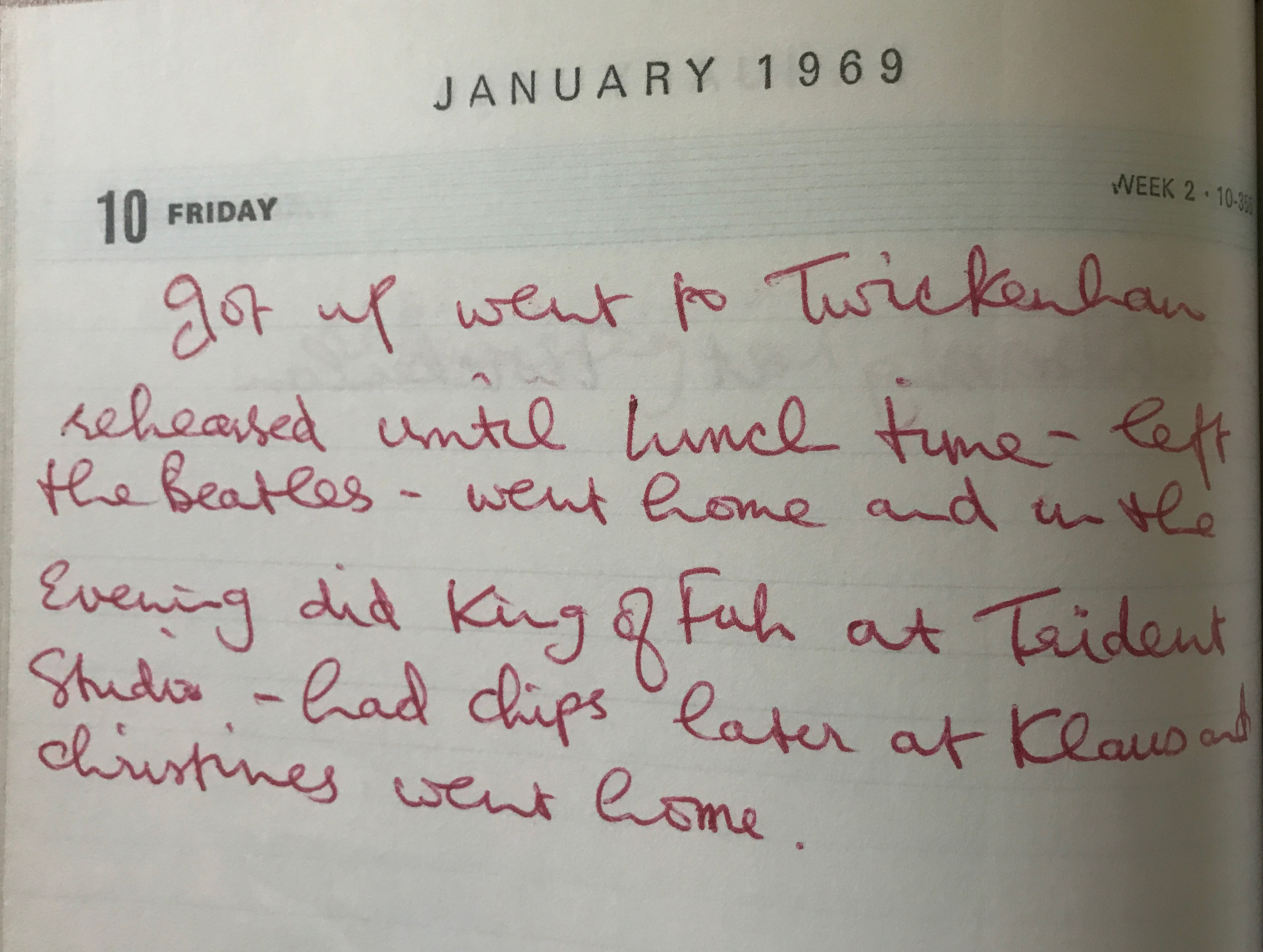
The most contemporary retelling of the events of January 10, 1969, comes from George himself, later that day, in his personal diary.

Got up went to Twickenham rehearsed until lunch time – left the Beatles – went home and in the evening did King of Fuh at Trident Studio — had chips later at Klaus and Christines went home.

George’s diary entry for January 10, 1969, as later published in the Living in the Material World book in 2011.

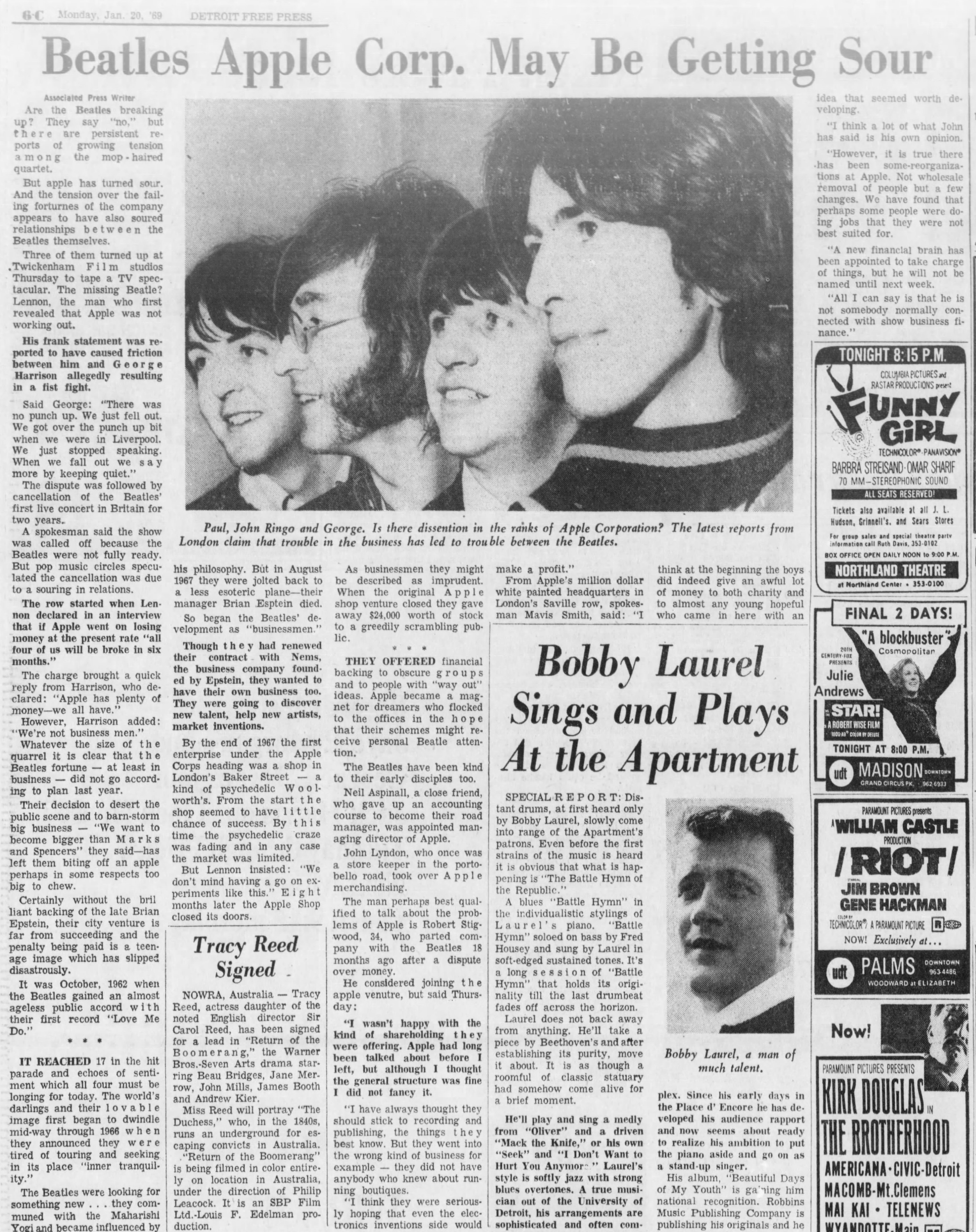
There wasn’t any Twitter in 1969 (although John and Yoko probably would have dominated the platform had it existed), so when George left the Beatles, it didn’t instantaneously go viral. But within days, George’s resignation was widely reported around the world — jumping off an original report by the Daily Sketch (more on their reporting to come in a subsequent post) — though he was already back with the band by the time those reports came out.

It wasn’t just that George left the Beatles. Word was out that that things got violent.

From the Daily Express, January 16, 1969:

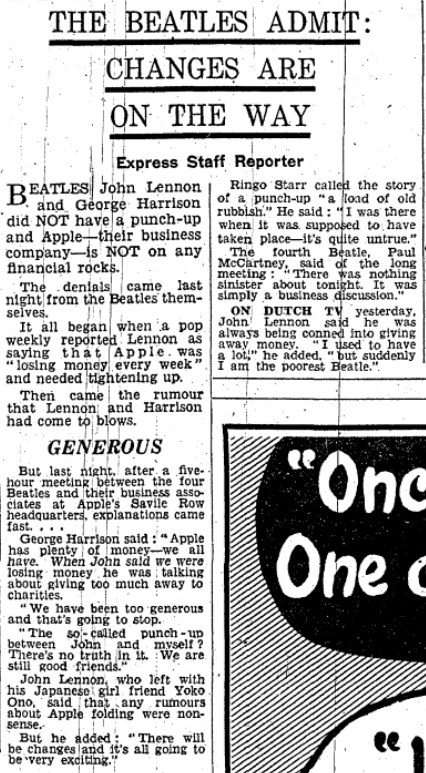
Beatles John Lennon and George Harrison did NOT have a punch-up and Apple — their business company — is NOT on any financial rocks.

The denials came last night from the Beatles themselves.

It all began when a pop weekly reported Lennon as saying that Apple was “losing money every week” and needed tightening up.

Then came the rumour that Lennon and Harrison came to blows.

But last night, after a five-hour meeting between the four Beatles and their business associates at Apple’s Savile Row headquarters, explanations came fast.

“The so-called punch-up between John and myself? There’s no truth in it. We are still good friends.”

Ringo Starr called the story of a punch-up “a load of old rubbish.” He said: “I was there when it was supposed to have taken place — it’s quite untrue.”

A few days later, on January 21, Ringo told BBC’s David Wigg that “there’s that famous old saying, you’ll always hurt the one you love,” when he was asked if the group was still close. But he spoke without any specifics regarding George’s departure, just generic reconciliatory language.

“[W]e all love each other and we all know that,” Ringo said. “But we still sort of hurt each other, occasionally. You know… where we just misunderstand each other and we go off, and it builds up to something bigger than it ever was. Then we have to come down to it and get it over with, you know. Sort it out. And so we’re still really very close people.”

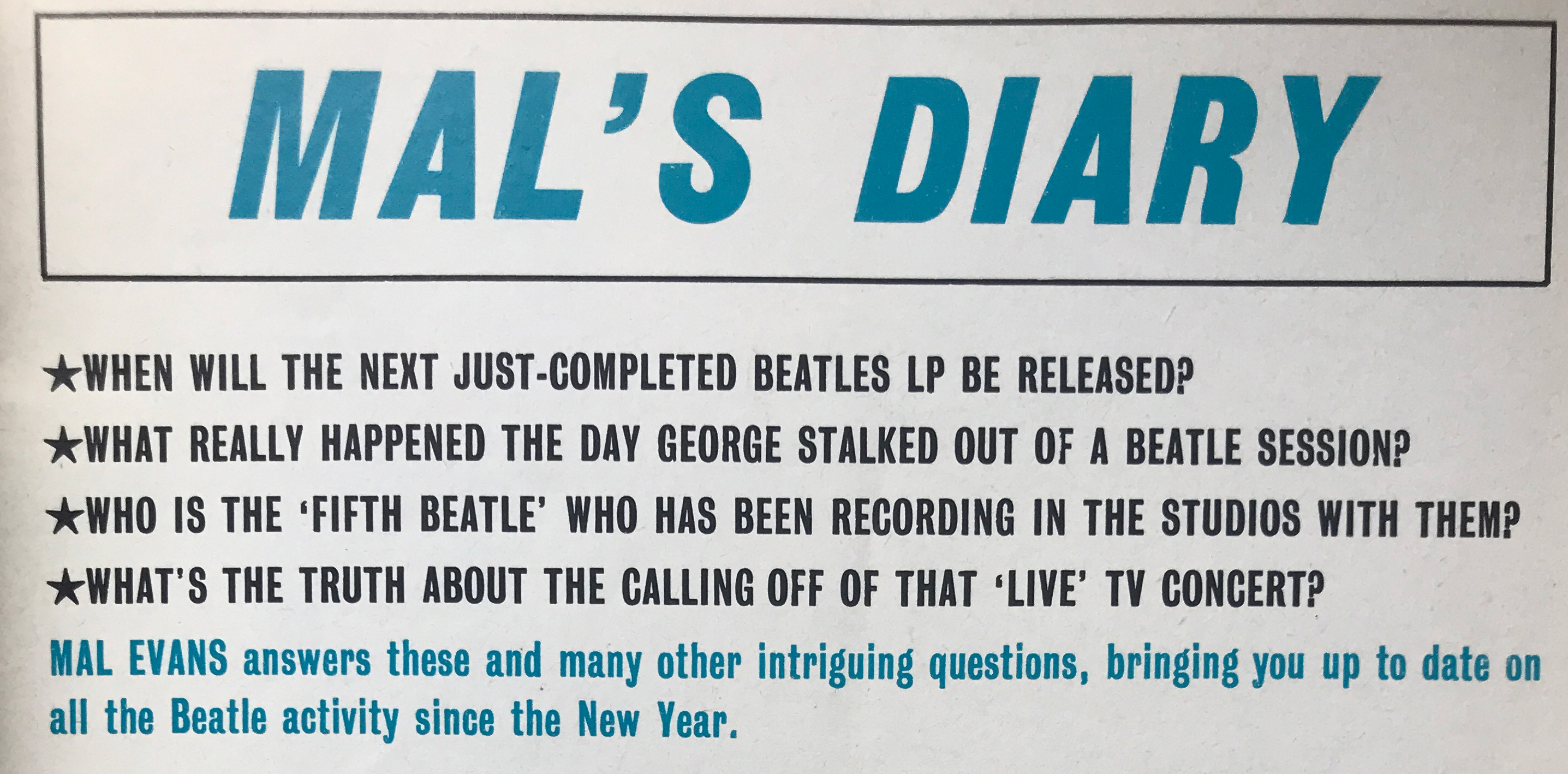
One of the Beatles’ official mouthpieces, the Beatles Book Monthly fan club magazine predictably poured cold water on the idea of a physical altercation in its March 1969 issue. In his diary feature, Mal Evans went as far to write there wasn’t any argument at all when George “stalked” out.

Matching the account on the tapes, Mal said George simply came over during lunch to “quietly” say he was going home. “There WASN’T a fight, physical or verbal,” Mal wrote. “There WEREN’T any tempers or shouting. I just couldn’t believe it when I saw the press afterwards.”

George Harrison maintained in subsequent interviews that no punches were thrown. But another George had another memory.

“They actually came to blows,” George Martin told Phillip Norman in his 2008 biography John Lennon: The Life. “You’d think it would have been with Paul, but it was John. It was all hushed up afterwards.”

Here’s where the retelling of the day’s events descends more deeply into farce.

According to a separate account from EMI engineer Dave Harries, a frazzled Martin only arrived at Twickenham that day as Harrison departed from the studio.

As related in Ken Womack’s Martin biography Sound Pictures:

I remember that George Martin had just backed across the car park in his Triumph Herald and knocked a dent in the door of George Harrison’s Mercedes and he didn’t have time to tell him he’d dented his car before George walked out in a huff and drove off.

Just hours after engaging in passionate car talk, this wasn’t George’s finest hour.

While George Martin was around to some arguable degree that morning (and at the sessions overall), there was no doubt fellow producer Glyn Johns was there on January 10. He was an active participant on the day’s tapes.

Johns, too, wrote of his recollections of that day in his 2014 autobiography Sound Man:

I have a very clear memory of sitting outside in the bleak surroundings of the soundstage at Twickenham on that cold gray afternoon with Denis [O’Dell], the line producer for the film, both of us praying that the elation of being employed for a project with the most successful artist in the world was not about to come to a grinding halt after two days.

It is not my place to discuss any detail of what happened, but it is common knowledge that George left the band and was persuaded to return a couple of days later.

While an implication is there, Glyn wouldn’t spill the beans. Although in Graeme Thompson’s 2015 George Harrison biography Behind the Locked Door, Glyn conceded there may not be too many beans to spill:

When it became apparent that there was going to be a bit of an argument those of us who weren’t in the band left the room. It was clear that it would be intrusive for us to remain. So what actually was said and and what went on I don’t know, but I do know that George left the band that day. The whole thing was very uncomfortable, and it was very embarrassing for me and others who were not in the band to be close by while this was going on — to have to watch this begin and be there in the immediate aftermath. It was very unpleasant and I felt really awkward.

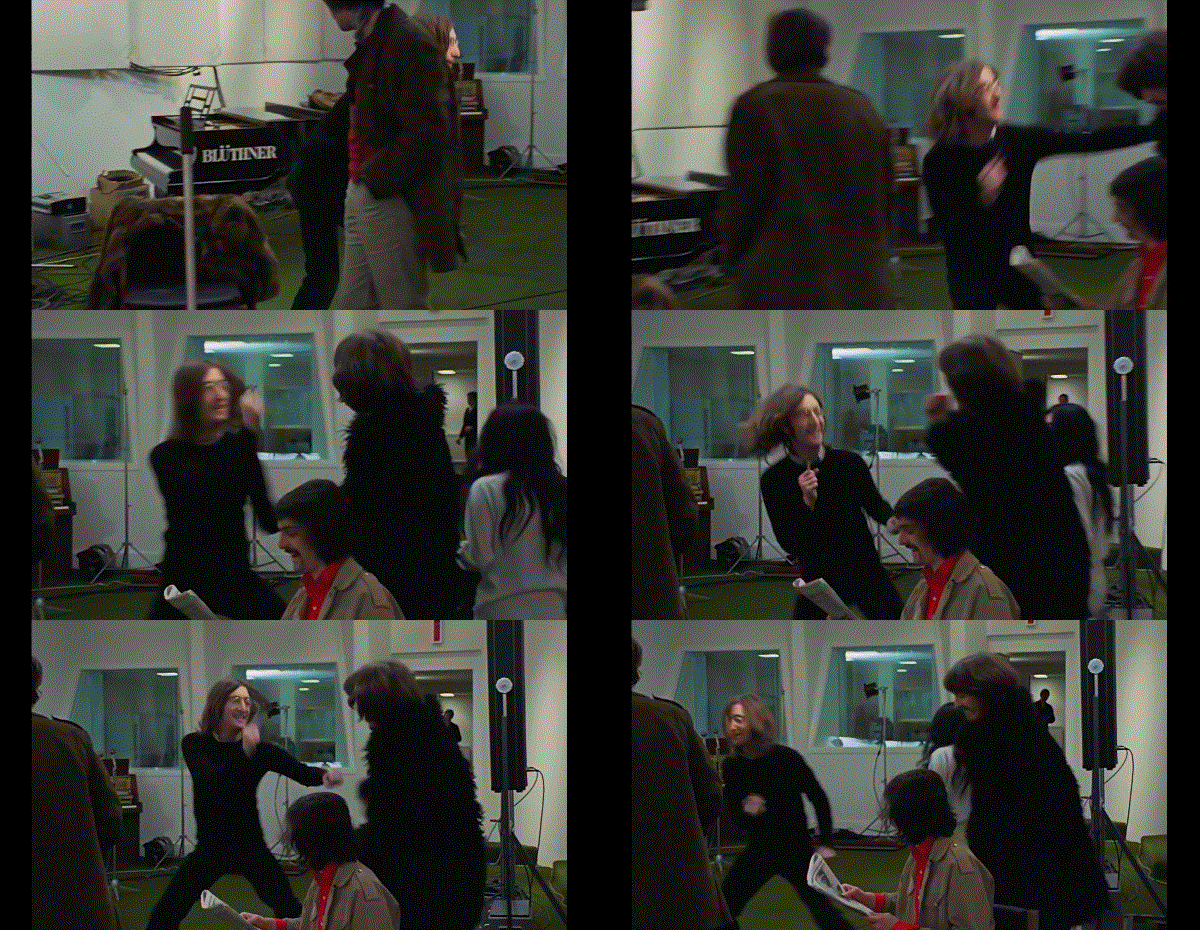
The Beatles pre-enact their January 10, 1969, fistfight more than five months before it probably didn’t happen. (From the Mad Day Out photo session in 1968).

More than 50 years after the fact, what we know with absolute certainty is that George Harrison quit the Beatles the afternoon of January 10, 1969. Everything else — most prominently whether there was a physical altercation — is ultimately speculative.

It’s not just what happened that’s in question, but the why. We’ll never unearth that last straw, the specific reason George quit when and how he ultimately did on January 10. There’s just too much open to interpretation, and as long as the tapes of the day are considered complete, there is simply no smoking gun, no spark that broke George. The conversation with Dick James, the rehearsals of “Get Back” and “Two of Us” — these moments lacked an obvious trigger beyond what were usual pockets of growing frustration.

It’s worth mentioning the other three Beatles openly discussed their feelings and opinions in the wake of George’s departure on the Nagra tapes, directly addressing his growing sense of frustration as a junior member of the group. They were aware of this, and their conclusions were consistent with much of what is discussed below.  I’ll examine those specific conversations, which also touch on off-site meetings, however, in future posts when we reach those days on the blog’s timeline.

Still, by rewinding many of the same sources we examined above in this post to construct what happened, we can put together a loose reasoning as to why George left the Beatles. Notably absent from each of these recollections is the one mentioned specifically in the original flurry of news reports — George’s fury with John over the latter’s comments about Apple’s difficult financial situation. George and John even had light-hearted discussions about business earlier in the day. It seems clear the Apple finances excuse for George’s departure was a leap of faith by the media. Musical and personal differences were responsible.

Back to Mal’s Diary in the March ’69 Beatles Book Monthly:

Singing and playing together would always be fine with [George] and the last thing he was suggesting was any break-up of the Beatles. So that day, January 10, George didn’t want to stay at Twickenham rehearsing for a show he couldn’t believe in.

And what — or who — could make George an such an unbeliever? In published interviews over the subsequent decades, George was at least consistent on why he left: His famed filmed argument with Paul (“I’ll play, you know, whatever you want me to play“) gave him a moment of clarity.

From George’s 1980 memoir I Me Mine:

I remember Paul and I were trying to have an argument and the crew carried on filming and recording us. Anyway, after one of those first mornings I couldn’t stand it. I decided this is it! — it’s not fun any more — it’s very unhappy being in this band — it’s a lot of crap — thank you I’m leaving.

His Anthology interviews, conducted in the early 1990s and first broadcast in 1995, yielded similar memories:

They were filming us having a row. It never came to blows, but I thought, “What’s the point of this? I’m quite capable of being relatively happy on my own and I’m not able to be happy in this situation. I’m getting out of here.’

Everybody had gone through that. Ringo had left at one point. I knew John wanted out. It was a very, very difficult, stressful time, and being filmed having a row as well was terrible. I got up and I thought, ‘I’m not doing this anymore. I’m out of here.’

Paul wanted nobody playing on his songs until he decided how it should go. For me it was like: ‘What am I doing here? This is painful!”

In other words, George’s recollections were colored by the Let It Be movie. He’s just like the rest of us!

George elevated the “I’ll play” argument in a way that other recent encounters, which were also filmed but not included in the final release, did not.

“I’ll play, you know, whatever you want me to play. Or I won’t play at all, if you don’t want me to play. Whatever it is that will please you, I’ll do it.”

Even Paul had the self-awareness to admit his role in George’s departure, saying in the Anthology book with a hilarious parenthetical: “These things had been going down in Let It Be. George leaving because he felt he was being told what to do (I think that’s why he left).”

Ringo was more certain of the reason, going way back. He corroborated George’s accounts in 1971, telling Melody Maker:

George had to leave because he thought Paul was dominating him. [H]e was, because Michael Lindsay-Hogg liked Paul I would think more than the rest of us.

Indeed, George called for a divorce one day after the “I’ll play” argument, but a move to actually leave was delayed. This, as George continued to match Paul in productivity (or come close) during the sessions, certainly lapping a creatively spent John. But it was George’s own songs that were afterthoughts and that treatment deeply affected him.

Paul, though, was not the lone accused party.

Yoko Ono has unjustifiably been blamed for a lot of terrible things over the last half-century. Among the dramatis personae of the Get Back sessions, she was largely out of the spotlight to this point on the tapes, often speaking for John but not fighting for overall attention, certainly not as the group actually made music. And, perhaps by the filmmaker’s design, Yoko was usually off-mic. But since the White Album sessions, she was a disruptive figure to the other three Beatles. While Paul earned his share of the blame, Yoko drove George out of Twickenham, too.

“[S]uperimposed on top of that was Yoko, and there were negative vibes at that time,” George later said in interviews for Anthology. “John and Yoko were out on a limb. I don’t think he wanted much to be hanging out with us, and I think Yoko was pushing him out of the band, inasmuch as she didn’t want him hanging out with us.”

The accusation of bad vibes wasn’t something John quickly forgot. From his famously raw Lennon Remembers interview for Rolling Stone, conducted in December 1970:

George, shit, insulted her right to her face in the Apple office at the beginning, just being ‘straight-forward,’ you know that game of ‘I’m going to be up front,’ because this is what we’ve heard and Dylan and a few people said she’d got a lousy name in New York, and you give off bad vibes. That’s what George said to her! And we both sat through it. I didn’t hit him, I don’t know why.

(Emphasis added.)

George had a stubborn memory, too, to the point of remembering things that didn’t quite happen. From a 1977 interview in Crawdaddy:

There’s a scene [in Let It Be] where Paul and I are having an argument, and we’re trying to cover it up. Then the next scene I’m not there and Yoko’s just screaming, doing her screeching number. Well, that’s where I’d left.

A few years later in I Me Mine, George references “the time in the film where John and Yoko were freaking out screaming.”

There’s only one problem with George’s accounts: There is no scene in Let It Be where Yoko is performing and “freaking out screaming.” She’s hardly in the movie at all, really. But the event in question — Yoko sitting in with the other three Beatles and “doing her screeching number” is an event that did happen.  The original, longer rough cut of the Let It Be film did feature Yoko jamming with the other Beatles, per Peter Jackson, and it appeared in the unreleased pre-Anthology documentary “The Long and Winding Road” (which George was not only aware of, but shared a copy with Eric Idle with as source material for The Rutles).

Playful punch-up: John and George at Savile Row after discussing — and denying — any fight between the two. Footage from Peter Jackson’s Get Back.

To the surprise of absolutely nobody who has closely followed the group’s history, the combination of the four Beatles, their associates and the passage of a half century makes for a most compelling but absolutely terrible narrator. Barring the emergence of additional footage or audio, we’ll never know the trigger for George’s departure.  Maybe Yoko did do something specific to put him over the edge (the digestive biscuit episode allegedly happened later, so that wouldn’t be it). Or it could have been something John said — or didn’t say, leaving his opinions to Yoko. Maybe the “I’ll play, you know, whatever you want me to play” argument between George and Paul really did change everything.

Or maybe John had it all figured out for an interview he gave for Earth News in 1976 — a quote later used to great effect in Anthology:

[L]ike people do when they’re together, they start picking on each other. It was like, ‘It’s because of youyou got the tambourine wrong — that my whole life is a misery. It became petty, but the manifestations were on each other because we were the only ones we had.

George’s domestic situation at this precise moment is essential to the story yet is generally ignored. For the duration of the Twickenham sessions, he was estranged from his wife, Pattie, and involved with 20-year-old Charlotte Martin — Eric Clapton’s ex-girlfriend — who was living at Kinfauns with him for the duration of their brief affair.

After George left the Beatles on January 10, 1969, he drove back to his Esher home, ended the affair and began his reconciliation with Pattie. Oddly, those decisions didn’t reach the threshold of snacking with the Voormanns’ to make his diary. It wasn’t a choice of the Beatles or Pattie, but like John suggested, perhaps George’s musical issues were amplified by his marital issues.

George wasn’t working for the Beatles anymore that afternoon, but he remained on the clock. In his first act as a temporarily liberated solo artist, George played, you know, whatever he wanted to play, and he wrote “Wah-Wah,” which later appeared on the All Things Must Pass LP and was the opener of his first solo performance, at The Concert For Bangladesh. George couldn’t have found  a more symbolic beginning to his stage debut as a solo headliner, opening with a song born from his first independent moment.

“‘Wah-Wah’ was a ‘headache’ as well as a footpedal,” George later wrote in I Me Mine.

George’s hand-written lyrics to “Wah-Wah.” (Published in I Me Mine)

“It had given me a wah-wah, like I had such a headache with that whole argument,” George told Crawdaddy in 1977.

“It was such a headache.”

Professional clashes with Paul, personnel issues with Yoko (and John), personal crises with Charlotte and Pattie — these were all reasons George left the Beatles. If Paul wasn’t so pushy, maybe it would have made dealing with Yoko and the problems at home easier. If Yoko wasn’t so ubiquitous and John withdrawn, maybe George could work more easily with Paul with one less work distraction. If George’s marriage was fine, maybe he could have slogged through the work day, more easily accepted his continued junior role and at least had an opportunity to unwind and unload in a relaxed home.

But each of those factors played off the other. He’s just like the rest of us.

38 Comments

Filed under Day by day