Tag Archives: Let It Be movie

TMBP Extra: Red-carpet anniversary

NOTE: I originally posted this on May 20, 2012, when this was a mere blog bébé. I gave it a scrub and a revision May 13, 2020, with better information on the May 13 premiere of the film at various venues across the United States. 

***
pavilion

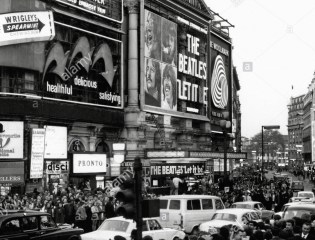
Outside the London premiere on May 20, 1970.

There was no glitz, no red carpet.

When the Let It Be film was shown to the public for the first time on the big screen, it was in ordinary theaters dotting the United States, not at a promoted premiere in New York, an event that’s still cited across the internet because of a 50-year-old press release.

From Keith Badman’s The Beatles: After the Break-Up 1970-2000:

The film Let It Be will, in Britain, be simultaneously premiered in both London and Liverpool on May 20, and, under the distribution agreement with United Artists, the film will open in New York on May 13 and will be shown in 100 cities all over the world! Let It Be is described by United Artists as a ‘Bioscopic Experience’.

The New York premiere, he writes, never happened, and the film was to open May 28.
californian-051320

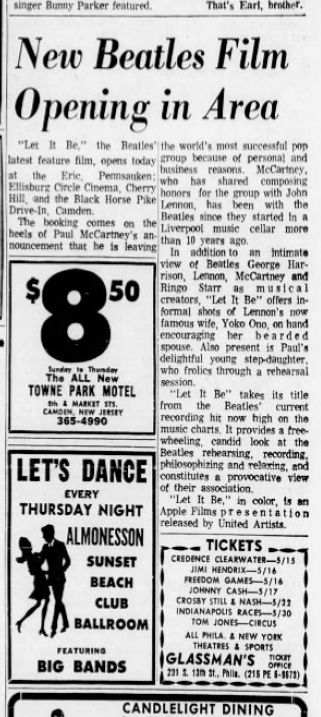
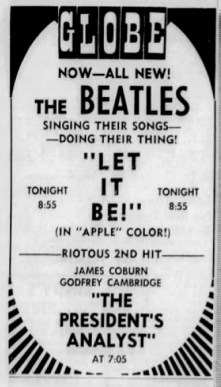
The Beatles: “Singing their songs, doing their thing. “Pretty accurate. (From the Salinas Californian, May 13, 1970)

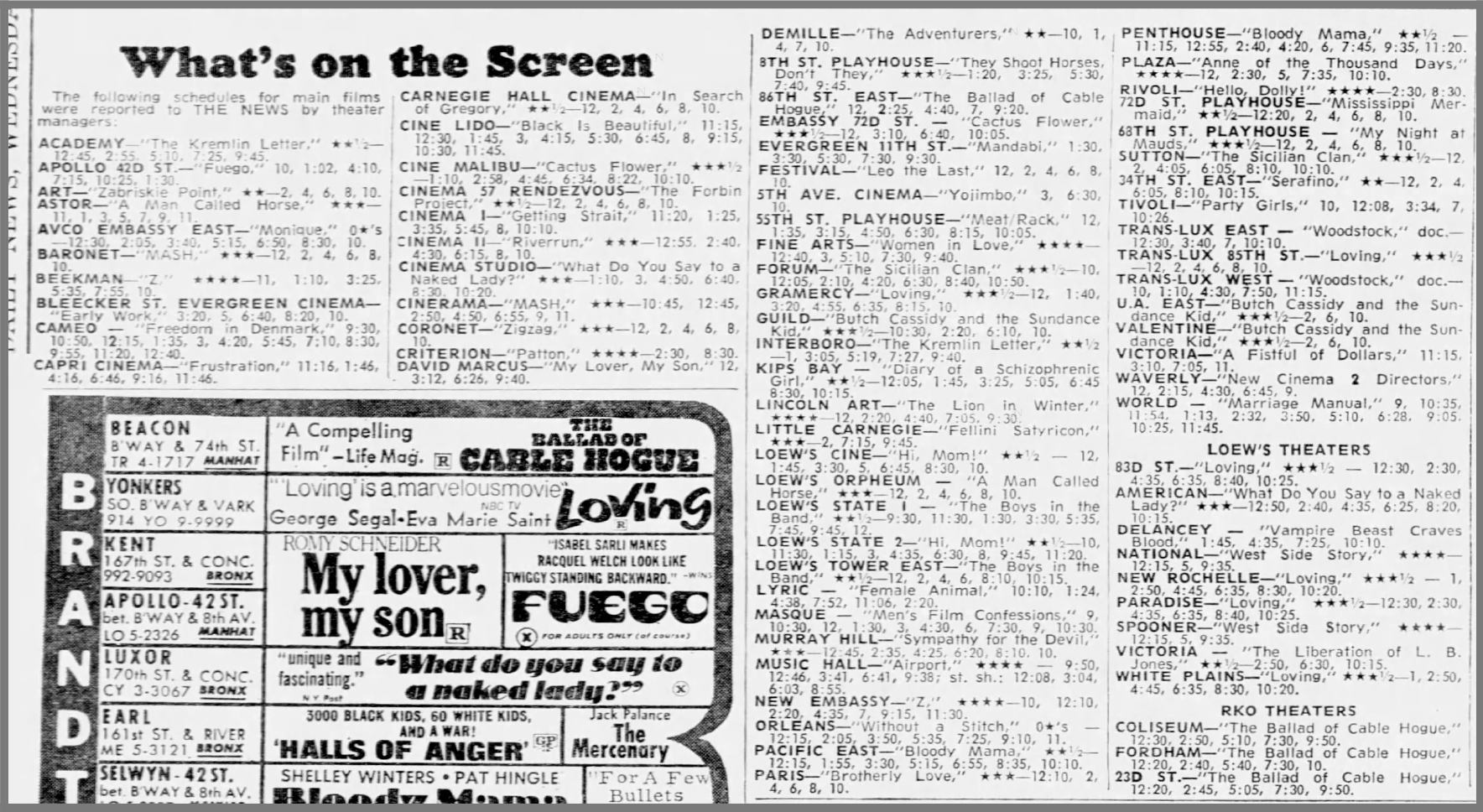
But that’s not completely accurate either. There indeed was not a New York premiere. There wasn’t even a New York showing, when searching the day’s movie listings.  (You could still catch six showings of Jean-Luc Godard’s Sympathy for the Devil in Murray Hill, though.)

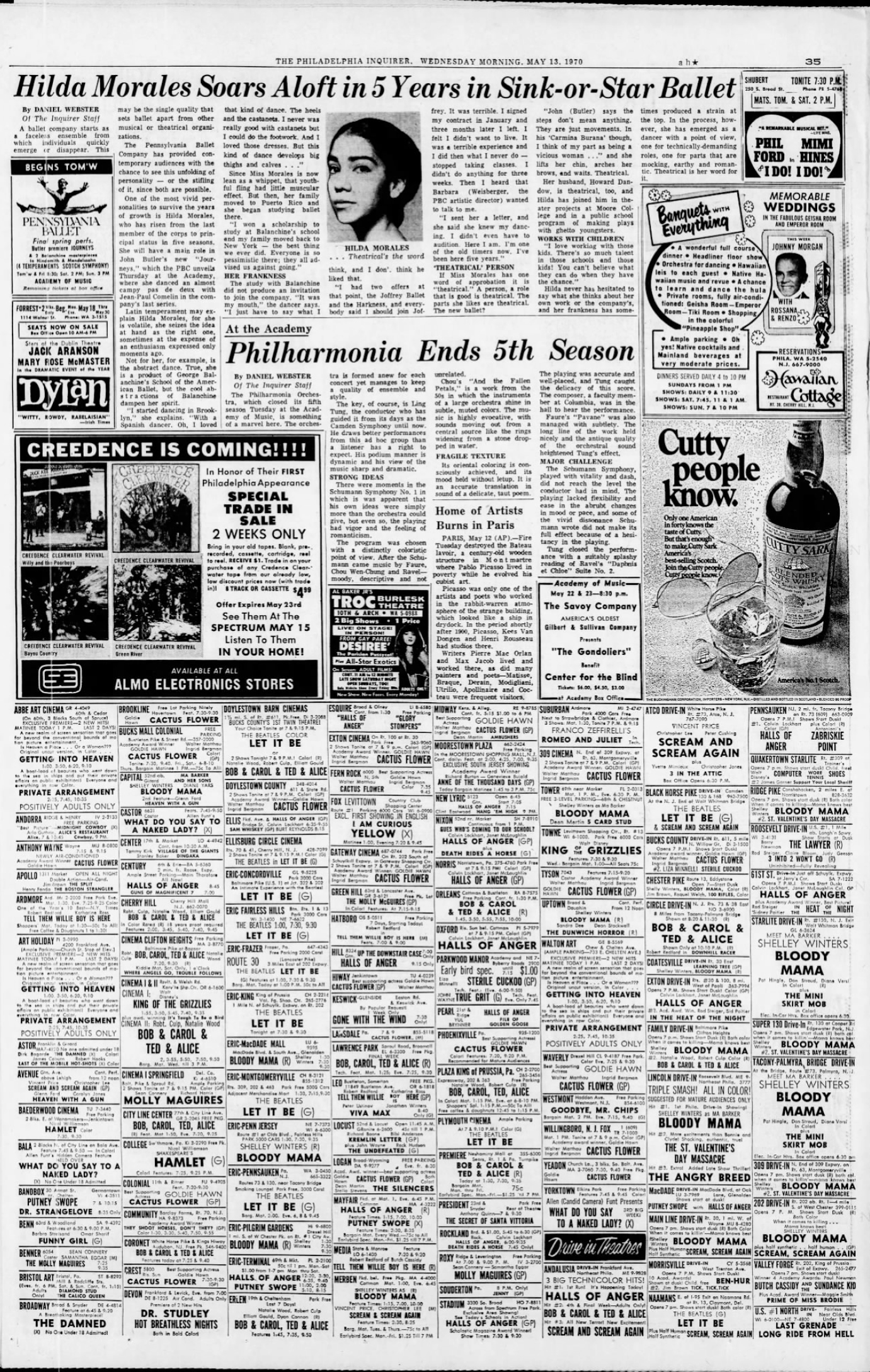
While the Big Apple was shut out for another week, Let It Be was showing on screens across California, Ohio, Georgia, Pennsylvania and other states, in theaters and drive-ins. A week later, it received wider distribution across the U.S.

May 20 was even more important in England, where the film finally received its proper sendoff, premiering in London and Liverpool with the pomp missing stateside.

Back to Badman:

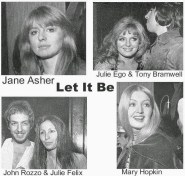
The Let It Be film opens today in Britain with special simultaneous Gala North-South premiere events. In the South, crowds surge upon the London Pavilion where guests include Spike Milligan, Mary Hopkin, Julie Felix, Sir Joseph Lockwood, Richard Lester, Simon Dee, Julie Edge and Lulu. Not to mention fifty dancing members of the Hare Krishna group and various members of The Rolling Stones and Fleetwood Mac pop groups. Most noticeable in the crowd are women no longer involved with The Beatles, John’s ex-wife Cynthia Lennon and, two years after her split from Paul, the actress Jane Asher. Before entering the cinema, Spike is playfully pictured by the press, alongside the police, trying to hold back the large excited crowds.

At the conclusion of its first week at the 1,004-seat cinema, where Let It Be was screened a total of 41 times, the film nets approximately £ 6,229. Brian Millwood, on behalf of UA, announces: “We’re happy with the start made by the film. It’s by no means the biggest take for the house, but it’s nevertheless good.”

Let It Be will run at the London Pavilion for five weeks until Tuesday June 23, when it is replaced by the Mick Jagger film Ned Kelly. Meanwhile in Liverpool, the northern premiere takes place with a comparatively quiet, invitation only, event at the Gaumont in Camden Street, London Road. (The screenings at both cinemas commence at 8:45pm.) Let It Be will eventually go on to be released in 100 major cities around the world.
6a416-1970-05-132b-2blet2bit2bbe2bfilm2bpremiere2b3

At the London premiere

The film received mixed reviews and has endured a love-hate relationship with fans as well as the group. But the importance of the film and these sessions in the band’s — and music history (see: Rooftop)  — can’t be diminished.

September 4, 2020, we get to do it all over again, when Peter Jackson’s The Beatles: Get Back retells the story of the January 1969 sessions.

2 Comments

Filed under Extra

TMBP Extra: The quiet man

Unlike a few weeks later, when none of the Beatles would show up to accept their Oscar for best film score, at the 13th Grammy Awards — held March 16, 1971 — there was indeed a member of the Fab Four in the house. Way in the back of the house.

Presenting the award for Best Original Score Written for a Motion Picture or a Television Special was none other than a not necessarily sober John Wayne (who was pretty funny with Andy Williams in the intro to the award). Safe to say there was no Beatles connection.

In fact, the award wasn’t given to the Beatles at all, but to the individual composers.

How the other three Beatles — who lost the case Paul brought against them to formally split up the band four days earlier — reacted to the McCartneys taking their awards for an album he was so dismissive of would have been interesting to see, to put it mildly.

Paul kept his thanks as brief as they could be with a “thank you, good night.”

The awards show itself seemed like a fun watch.

Here’s a rundown, via Film Threat by way of the Internet Archive (update January 2018: It doesn’t look like this link works anymore, but it did back in 2012 when I first saw this).

Speaking of acceptance speeches, no one said anything beyond a mere thanks. Even the most dramatic audience response of the night, which accompanied the surprise appearance of Paul McCartney (with his wife Linda) to accept the Best Original Score Written for a Motion Picture or Television Special Award, was capped by McCartney saying a mere “Thank you!” before disappearing from the show. (Herb Alpert, a guest presenter, deviated from the script to offer a sincere word of praise for McCartney’s attendance at the broadcast.)

But for the rest of the show, “The 13th Annual Grammy Awards” was fascinating for its sheer strangeness. Some of the presenters were having a seriously off-night: Lynn Anderson was sporting a large chin brace (she never explained why, only joking that she was trying “to keep my chin up), Nancy Sinatra boasted of having the flu, John Wayne (who announced the award McCartney accepted) appeared to have indulged in a few too many drinks and was visibly bobbing and weaving, Brook Benton and Glen Campbell could not see the distant TelePrompter during their respective podium turns and needed Williams to help read the nominations out loud, and Zsa Zsa Gabor (introduced by Williams as being “beautiful and talented”) flustered co-presenter Bob Newhart (for the comedy recording award) by the ad-libbed suggestion he was fathering children out of wedlock.

Further, here’s another account of the night, via Ottawa Beatles Site

The following is an excerpt from the “Variety” book entitled “The Grammy’s”  by Thomas O’Neil….

“Bridge [may have] swept the top honours”, wrote the L.A. Times, “but it was ex-Beatle Paul McCartney, in a rare public appearance, who created the most excitement” at the ceremony. “Though the event was strictly black tie, McCartney strolled in wearing a blue suit, red flower shirt and open at the neck, and white tennis shoes.”

Like Simon & Garfunkel, the Beatles broke up in 1970 but still had a bounty of nominations (six) for their farewell LP, Let It Be. They won only one award — for Best Original Score written for a Motion Picture or TV Special – after losing Record and Song of the Year nods (in a close contest, according to the Washington Post) to “Bridge.” But “there were shrieks of surprise” from the audience when the winner of the best film score was announced, the Times reported. “With Linda at his side, McCartney raced up to the podium to accept the award from actor John Wayne, saying only, ‘Thank you.'”

Variety columnist Army Archerd added, “Paul McCartney kept his word, returned to the press tent after the awards — and, as expected, had to plough his way thru a mob to reach his car with (expectant) wife Linda. McCartney, informally attired (would you believe sneakers?), admitted, ‘I didn’t know whether they’d let me in.'”

Interesting side note: During the presentation, Wayne said the nominees were John, Paul and George — and he in fact handed Paul three awards.  But as history tells, Ringo should have also received some hardware.

10 Comments

Filed under Extra

TMBP Extra: Oscar night

Not initially intended as a feature film, Let It Be was indeed eventually released in theaters in May 1970, more than a year and three months since the end of the Get Back sessions. Paul became the final member to quit the band a month earlier, and famously, none of the Beatles attended the premiere.

By the time the subsequent Oscars rolled around, on April 15, 1971, the Beatles were, well, really broken up. George and Paul each had No. 1 hits in either the US the UK or both (All Things Must Pass LP and “My Sweet Lord” single for the former, McCartney LP for the latter), John would have his first later in the year (Imagine LP and single) and Ringo had just released his biggest hit to date, “It Don’t Come Easy.”

Also, everyone was suing each other.

But ancient history was relevant to the Academy,  who gave The Beatles — whatever that was anymore — the award for Best Music, Original Song Score over the soundtracks to The Baby Maker, A Boy Named Charlie Brown (one of this author’s chidhood favorites), Darling Lili and Scrooge.

Of course, the Beatles wouldn’t be at the ceremony to pick up what would be their lone Academy Award (A Hard Day’s Night had two nominations in 1964, lost both). That honor would go to Quincy Jones, who had already produced a track on Ringo’s Sentimental Journey and would more than 10 years later work with Paul. (Decades later still, the two would be in the news together again).

Paul’s absence, apparently, wasn’t for lack of trying by Jones, who said he visited Macca —  while he was recording RAM in New York — and tried to convince him to come out for the ceremony.

Paul would later get two nominations as a solo artist for best song (“Live and Let Die” in 1973 and “Vanilla Sky” in 2002), but he went 0-for-2.

And with that, John, Paul, George and Ringo’s trophy cases only had the lone Oscar for Let It Be — provided Quincy Jones gave it to them.

4 Comments

Filed under Extra

Jan. 3, 1969: Setting the tone

The second day of the sessions at Twickenham, Jan. 3, begins with Paul alone at the piano, and in the span of the first five minutes we hear the first fleeting tastes of “Long and Winding Road” and “Oh! Darling,” plus an extended preview of “Maxwell’s Silver Hammer,” which would see an extensive full band rehearsal later in the day.

While it’s among the dozens of covers sampled that day alone, a few minutes of Paul riffing Samuel Barber’s “Adagio for Strings” jumped out at me as someone who’s seen the film “Let it Be” countless times.

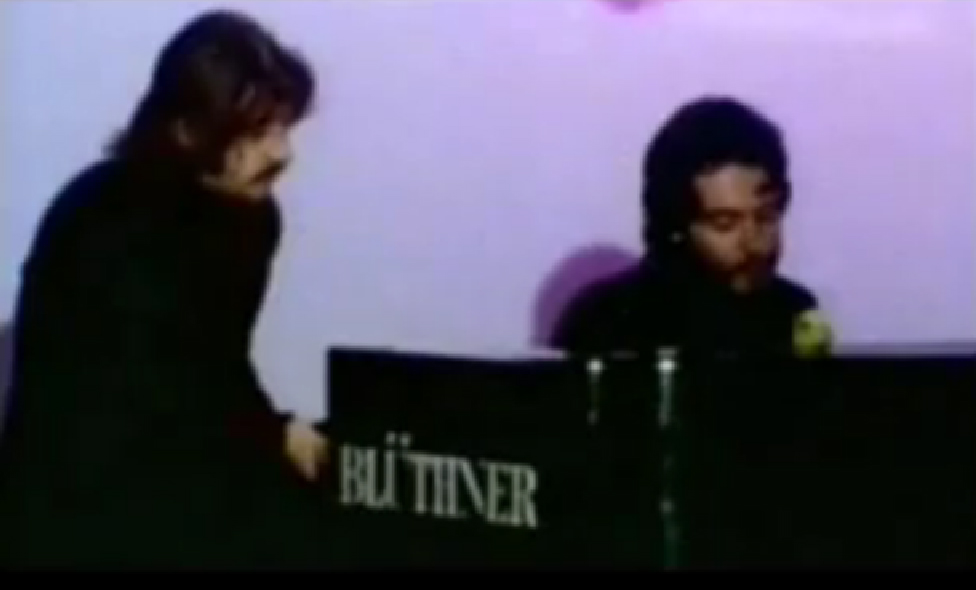
And as the Twickenham stage is set on Jan. 2, the actual first day of the sessions, “Adiago” plays as the opening credits roll, cutting to Paul (with Ringo) at the piano. This truncated version of the song gives way to “Don’t Let Me Down,” and the rest of the film.

Sayeth Wikipedia:

The Adagio was broadcast over the radio at the announcement of Franklin D. Roosevelt’s death. It was also played at the funeral of Albert Einstein and at the funeral of Princess Grace of Monaco. It was performed in 2001 at Last Night of the Proms in the Royal Albert Hall to commemorate the victims of the September 11 attacks, replacing the traditional upbeat patriotic songs.

In 2004, listeners of the BBC’s Today program voted Adagio for Strings the “saddest classical” work ever..

Thus, of all songs to use to begin the film that ostensibly chronicles the band’s breakup, we get this over the credits.

Well played, Michael Lindsay-Hogg.

8 Comments

Filed under Day by day