Tag Archives: Paul McCartney

Jan. 6: Such a lovely audience? (If there’s a rock show, Pt. 2)

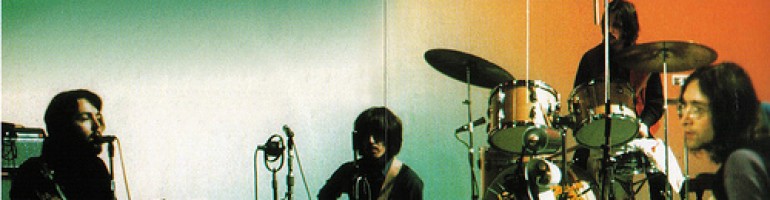
Having established earlier in the conversation that there will be two live shows to cap the documentary of which filming is already in progress, the band — primarily Paul — plus Yoko Ono, George Martin, Michael Lindsay Hogg and a few other insiders (probably the likes of Mal Evans, Neil Aspinall and Derek Taylor? I don’t know them as well by voice) — continue their lengthy discussion about the show, potential venues and the composition of an audience.
For a show plan first hatched more than a month earlier, things remain in total flux.

Paul latches onto Yoko’s idea of playing to an empty house, at least for one of the two proposed shows, with the second night’s performance before a conventional audience.

Hey, maybe there will be some traction here! Paul’s on board with Yoko’s ideas up front and early on (and John doesn’t seem to care, not chiming in at all during this chat), so a huge part of the battle here is over, George’s independent streak — which is about to erupt — notwithstanding. And it’s not much of a surprise, really, given Paul’s avant garde leanings.

Alas, Lindsay-Hogg punctures that idea, saying there’s no need to eschew a crowd “partly [because] the documentary is playing in silence. I know it’s not for an audience, but it’s the same thing.”

Paul replies to say that the band has ignored the camera from the moment they started filming at Twickenham a few days earlier, repeating the  “performance might be — should be — two cameras or two audiences …  two something.”

But Yoko pressed on — with Paul again agreeing —  saying the audience isn’t the draw for people watching the film at home, unless it’s something different, like “kings or queens coming to see it.”

The director keeps pressing back.

MLH: What I think is if you got in front of an empty house and played, it makes you look too … rich, in the bad sense. In other words, whats the point? This is the negative aspect of that. What’s the point in you getting up and playing for an empty house when you could be giving people happiness with whatever kind of full house we decided?

Yoko: Nobody’s going to think that. They’re going to think it’s a very poetic situation. And they know the Beatles are rich …

Voice of reason George Martin, as he did earlier in the conversation, again sides with Lindsay-Hogg on just what a waste a live performance to an empty room would be, putting it succinctly:

There’s no point in doing a live performance, it’s like going into a recording studio and doing one take.

He then repeats the point that an audience would give an extra something to the band they wouldn’t get otherwise.

Someone chimes to suggest one of the more exotic venues that had been in the mix, presumably since December,as the band hatched the live-show idea.

You’re going right back to Sabratha, [then].

Sabrathra was alluded to on the first day of filming by the director, promising a scene replete with “snake charmers, holy men … torchlit, 2,000 Arabs and friends around.”

And a beautiful, unique venue the former Roman amphitheater outside Tripoli, Libya, would have been and with such an unusual audience. It’s certainly something that would one-up recent rock films like Cream at the Albert Hall and the recently completed Rolling Stones Rock & Roll Circus.

Paul agrees with a remark that a bit of a focus on the audience (wherever it may be)  isn’t a bad thing — seeing the reaction of people who have seen the band before in the Beatlemania era and how they’d react to the band now, post-1966 and the end of their live era.

Yoko: Then it should be a real scene. You have to announce in the newspaper say that it’s going to be a real alive show. It’ll be a crazy scene, like everybody queuing for it and everything.

Neil? Mal? Derek? Then it should be an Albert Hall scene.

Lindsay-Hogg,  who joked earlier in the day about a Beatles show at “the Albert Hall with those quick cuts,” said a few hours later that he’s not opposed to a show at the nearly 100-year-old stage. But…

MLH: I just think it slightly smells of a few years ago. The Shea Stadiums, wherever it has been.

Yoko: Say anything, and it will slightly smell of a few years ago or slightly less than a few years ago because they topped it.

MLH: I’m not particularly supporting this idea, but it is an idea we can then say no to and go away from if we can top it. But [Sabratha] is a location which is marvelous in itself, by the sea.
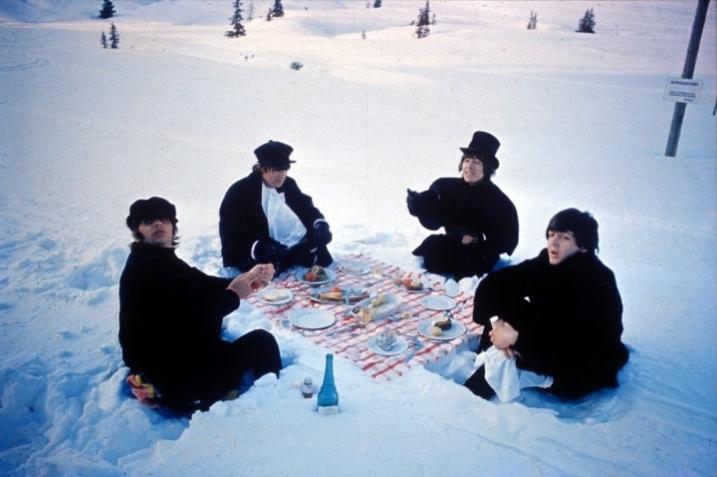
The Beatles faced winter elements before

Perhaps this is just calling Ringo’s bluff.  As Paul said on Jan. 2, “I think you’ll find we’re not going abroad, because Ringo just said he doesn’t want to go abroad. And he put his foot down.”

And calling the drummer’s bluff is something the Get Back book and Let it Be Naked’s “Fly on a Wall” disc proves was done repeatedly. But for the second time this day, Paul shoots down an overseas trip, saying, “Look, it has to be in England. An outdoor scene has to be in England, because we’ve decided we’re not going  abroad.”

To someone responding that a performance under the skies couldn’t be done in wintertime England, which is “too bloody cold,” Paul doubles down, after agreeing to the sentiment.

We have decided, it’s a definite decision, that we’re not going abroad, so we should sort of rule that out. It’s not even to the two-way, should we go abroad, we like, we definitely said no to that.

So as usual these days, they’re back to Square One, crossing the seas and back in just a few minutes, only to end up again home in England — and potential venues therein as the discussion continues.

—

An odd postscript to the Sabratha flirtation: More than 40 after the Beatles toyed with the idea of playing at Sabratha just eight months before Khadafi led a coup to take over Libya, former Apple exec and Beatles assistant Peter Brown had his PR firm hired to improve the dictator’s image.

Tune in next post, where we resume this Jan. 6, 1969, conversation about the forthcoming show.
24 Comments

Filed under Day by day

Jan. 6: Playing to the gods (If there’s a rock show, Pt. 1)

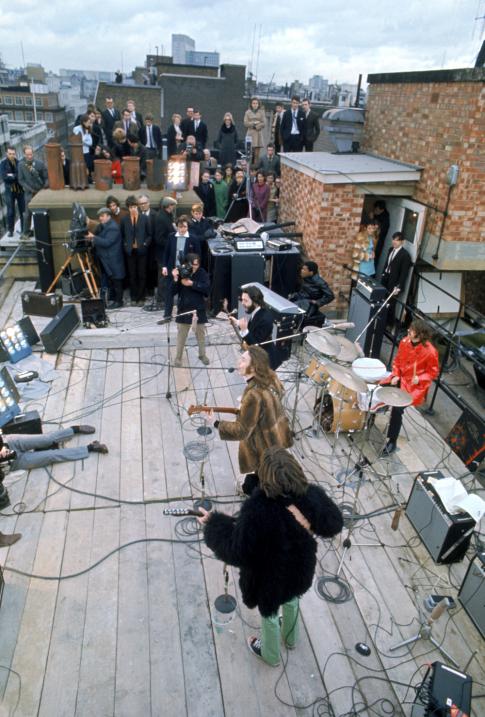
Even the most casual rock music fan knows how the Let it Be film ends, even if they’ve never seen it or even if they’re not really Beatles fans. The sight of John, Paul, George and Ringo trying to pass their audition on the roof at 3 Savile Row isn’t merely an iconic Beatles moment, it’s an iconic moment in popular music history and pop culture itself.

Watch the movie, and there’s never an inkling that wasn’t the plan all along. Less than three years removed from their last tour, the group rehearses some new songs, then when they’re ready simply climb the stairs and rock from the roof. It’s just like they planned it all along, right?

Source: Beatles.com

Of course not. And right here’s another reason why I’m loving listening to these tapes and find them so valuable — it’s not just to hear the songs in progress and rehearsed in context or to hear songs they threw away or just shelved until they could revisit as solo acts. It’s to hear a conversation like one we hear a few hours into Jan. 6, the kind of thing that never made compilations of the sessions.

I keep getting back to my need to operate within context throughout this blog. So we know the end of he story: the rooftop show. But how did they get there? We get an incredible glimpse here.

After exploring George’s “Hear Me Lord” and knocking out a few covers, conversation shifts to the planned live show, a topic promised earlier by director Michael Lindsay-Hogg and just touched upon in the prior days on the tapes.

And there’s an awful lot going on here in what’s marked “Dialogue,” 14-plus music-free minutes, the 53rd track on the Jan. 6 collection of Purple Chick’s A/B Road.

Two figures that loomed so large in Beatles history — George Martin and Yoko Ono – make their first significant appearances on these tapes. Ono would remain key to the story of Get Back/Let it Be. Martin would not. Well, he would be, ultimately, quite conspicuous by his absence.

But it’s not necessarily the people involved but what they’d discuss that makes it a memorable sequence.

The endgame here, after all, is a live show, even if they have no set plans for one in place.  Yoko begins the conversation – on the tapes, at least, where after a quick cover of Chuck Berry’s “I’m Talking About You” (a song they used to play in Hamburg), we join the chat in medias res.

Yoko’s first suggestion is for the Beatles, who four years prior played before more than 55,000 in their iconic Shea Stadium show on Aug. 15, 1965, to have something of a more modest audience.

Yoko: “…[have a] stage, you know, and it’s like an open-air something, and you’re playing to the gods! You know, and to the stars.

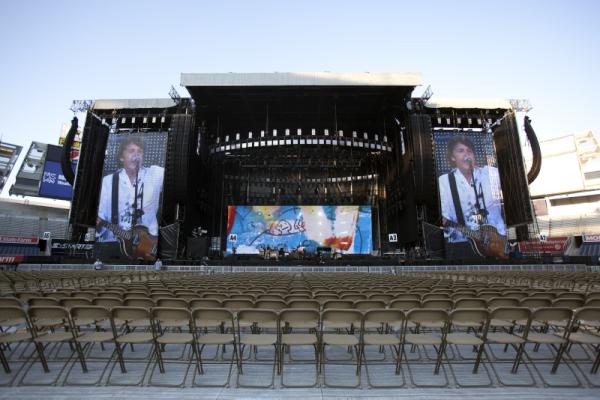
Yoko’s plan: Paul’s soundcheck at Yankee Stadium, ’01

While Paul’s agreeable to the suggestion — or at least something avant garde — Michael Lindsay-Hogg tries to push another angle for the live show involving all those seats being filled by actual people, even if they’re not necessarily fans of the Beatles.

MLH: “Or, even playing to people that have never seen you before. See, I think you’re right. Any stage performance of an ordinary sort, visually, will never be topped, because we all remember – and you better than I — the past.”

But Paul — quite the veteran of the stage even at this young age — sides with Yoko.

Paul: “What’s the use of an audience? The use of an audience is like… for you, it’s out of sheer charity to play to them because you love them. Or for you to collect ticket money, or to get a reaction between you, for the sake of your shows. But look the thing is then, that’s presuming that we’re not enough for a show. That presupposes there’s really not enough in the four of us, that you really have to pan off on to a postman.”

Enter George Martin, who joins Team MLH after some indistinguishable crosstalk.

Martin: “The whole point about the audience is to give you something when you’re performing.”

MLH: “Like an actor on stage”

George Harrison is there too, and at this point, I think he says that “It’ll be just our luck to get a lot of cunts in there [at the show].” Perfectly reasonable thought.

Lindsay-Hogg gets things back on point, reminding the band that once they’re on a stage, they’re performers.

MLH: “And you got to have something to do it to. Of some sort, either a camera or real people, I think.”

Yoko: “Empty chairs would be much more dramatic. I mean 20,000 empty chairs!”

MLH: “Looks like they haven’t bought any tickets!”

Paul: “Look, nobody’s going to think that way.  Nobody’s going to think that haven’t bought any tickets.”

After agreeing with Paul, Yoko says people are wondering what makes up the audience in this post-Beatlemania world before continuing to pitch the actual lack of an audience.

Yoko: “It should be like the invisible, nameless everybody in the world, instead of some teenager or something, and they say, ‘Oh, so they still have that teenage audience.’ Or if you have costumed people they say, ‘Oh, that’s the audience now.’ It’s very dangerous.

“[With empty chairs], now you have audience in every heart in the world, you see? It’s very bad to limit it.”

The diplomatic Lindsay-Hogg says he does like the idea. But…

MLH: “That sounds to me more, though, like five minutes rather than 15 minutes. Because you’re right — what we do want to attack is all over the world. It oughtn’t be anymore the kids that queue up outside the gate, it ought to be the whole world. And that was one of the things we tried to get on Jude [the Hey Jude promo clip, directed by Lindsay-Hogg nearly to the day four months prior at these very same Twickenham Studios].”

Oh, that’s OK, says Paul, since “we’re doing two shows, aren’t we? We’re taping the shows on the Sunday and the Monday, aren’t we?”

Sunday and Monday shows. Of course.

And here we have the sessions in a nutshell:  The band is doing a show with songs they can’t agree on and haven’t finished writing and at a location — possibly international — that hasn’t been determined. BUT. They do know they’re taping two shows, to the point where they know it’s a Sunday and a Monday.  The devil’s in the details, not only in her heart, it appears.

Tune in next post, where we continue this Jan. 6, 1969, conversation about the forthcoming show.
25 Comments

Filed under Day by day

Jan. 6: Here comes the bird king

Maybe all the Cream talk got the band in the mood to jam.

With the third day of rehearsing during Get Back/Let it Be sessions (for the record, we had heard “Let it Be” thus far, but not “Get Back”) under way, once everyone was settled in — and not to long after after George introduced “Hear Me Lord” on the tapes — the Beatles basically started fooling around, tuning and warming up with everyone position. Presumably: Paul on organ, John on bass, George on guitar and Ringo on drums.

And then they jammed.

Jams — and lengthy ones — weren’t unprecedented for the band, certainly — witness “Helter Skelter” and the legendary 27-minute version and various takes of “Revolution 1,” recorded just a few months earlier, or the much shorter  Take 37 of “Something” from a few months later. And pretty soon, we’ll hear the original lengthy version of “Dig It.”

I like my Beatles in 2- to 3-minute increments, for the most part (“Hey Jude” notwithstanding). But hey, it’s the Beatles. I’ll take a 10-minute improv jam by them over one by mostly anyone else.

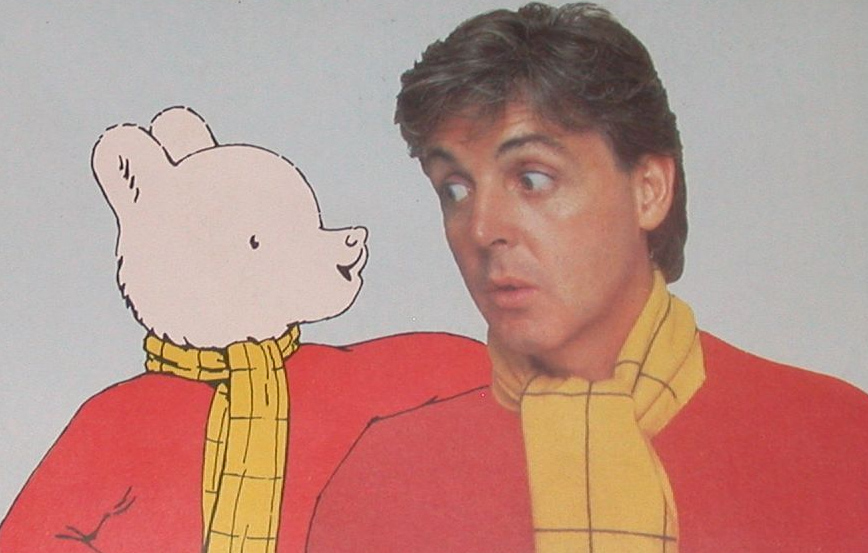
While most serious fans know these sessions birthed songs that would later appear on Abbey Road and multiple solo Beatles albums, one song debuted in these sessions that I didn’t previously know would end up as an outtake on, of all things, Paul’s unreleased (but bootlegged) Rupert the Bear film soundtrack.

So let’s give a very special They May Be Parted welcome to “The Palace of the King of Birds.”

Slowly the group joins in, plodding along for more than 10 minutes. It’s not unpleasant, but it’s probably the kind of thing you’d never deliberately put on a playlist to listen to again. Paul and George spend the first few minutes of the song chatting with each other about equipment. Ringo does his thing. John throws in a riff or two. Paul’s active a little at the start and then a bit at the absolute end.

It’s actually not the last we hear of the song these sessions. But I think it’s the most extensive version. And the Beatles didn’t return to it after January 1969.

Nine years later, Paul would record the song with Wings for a planned Rupert the Bear movie that never came to fruition. By then, it was called “Castle of the King of Birds.” What caused the bird king to be forced to change the location his headquarters from the palace to the castle, I don’t know.

The song is a footnote in Beatles history, for sure, but a neat one from the standpoint of where the song would eventually surface.

Straight out of “…King of Birds,” comes another loose rocking jam, initiated by what sounds like John playing “Louie Louie” on the organ (it’s much more deliberate on the tapes before this below clip starts).

The band then dances around a few set pieces before a few more improvisations. “Across the Universe” is briefly attacked — it was still nearly a year from being released on No One’s Gonna Change Our World, and John is clear he isn’t happy with how the song was last recorded a few months earlier — and the band also teases a version of Bob Dylan’s “I Want You” as their own song of the same name thus far remains unrehearsed (and probably unwritten).

“Why Don’t We Do it in the Road” presaged much of what would come next. (In style, that is. The song itself sprang from Paul’s one-man jam).

In the first of a few improvisations that would be at home on McCartney or as a RAM outtake, Paul belts out “You Wear Your Women Out.” This I like. Groovy bassline seems to hold things together nicely. It’s a kindred spirit to an “I’m Down” or “Lady Madonna,” even.

The group makes a pitstop with a full run-through of “I’ve Got a Feeling,” which is coming together pretty decently. Paul’s in full yell on this particular take, which ends with him jokingly claiming, “The downtown rhythm and blues influence in ‘I’ve Got a Feeling’ can be noted by the Aeolian cadences and the Cadaconic clusters,” in a nice old-school Beatles reference.

He then lets his bass kick off the journey into the next improvised jam, “My Imagination,” with a riff borrowed from Bobby Parker’s “Watch Your Step” (the same inspiration for “I Feel Fine” among other things) and vocal stylings that occasionally veered into something that could be called Ono-esque.

Hey, that’s not so bad! Not sure about the vocals, but it’s still relatively catchy.

The fun ends with one more apparently Paul-led jam, “I’m Gonna Pay for His Ride,” thus named for its lyric barked out by McCartney at the end.

The band sounds pretty good, and pretty loose, much like they do while running through covers during the sessions.

While there would be more jamming in these sessions, and “…King of Birds” would eventually nearly make it to release, for the final three songs mentioned here — “My Imagination,” “You Wear Your Women Out” and “I’m Gonna Pay for His Ride” — it would be the last we’d hear of them.

9 Comments

Filed under Day by day

TMBP Extra: They say it’s his birthday

I originally put this post together in 2012, to mark Paul McCartney’s 70th birthday. Since then, I’ve added similar, more extensive birthday posts for John Lennon, George Harrison and Ringo Starr.

Like the many millions of Beatles-focused blogs, of course I need to recognize Paul McCartney’s milestone birthday.

I’ve wrestled with just how. This blog is a niche, focused on January 1969’s Get Back/Let It Be sessions and its reasonable relations (the Let It Be album and movie). June 18 is half a year away from January, so there’s no direct tie to the timeline.

The easy way out is to post a relevant video of Paul from the sessions, pluck out some classic tune, and I just leave it there.

But I got to thinking about June 1969, a few months after the sessions, and just what the band was doing. And the answer was… nothing.

“Get Back” — the single — was already a hit. The Get Back album was alive and being worked on by Glyn Johns.  A couple of songs for Abbey Road were worked on, but not extensively. “The Ballad of John and Yoko” was quickly written and recorded in April and released the end of May.

But June? No studio time.

Come July 1, the full recording sessions for Abbey Road would formally begin. Before September was out, it was in stores. Think about that. It took less than three months for the vast majority of Abbey Road to be recorded. It took me about three months to bang out 10 posts for this blog.

So with nothing going on June 18, 1969, I backed up a year to the same date in 1968. There was no recording session that day, either,  but the band was about three weeks into the White Album sessions, with “Revolution” “Don’t Pass Me By” and “Blackbird” having been worked on to that point.

And yet again, like I always am by the Beatles and keep finding myself as I work on this blog, I’m left marveling at things I already knew but didn’t think much about. Between Paul’s birthday in 1968 and 1969, the band recorded the vast majority of the White Album, the entirety of what would become Let It Be and had gotten Abbey Road under way (with most of the songs already written) — not to mention recording and releasing things like “Hey Jude,” too. Tack on three more months, and over 15 months we had all three albums in the can. Remarkable. (And that’s just what they did on vinyl — they also built Apple, had personal lives, side projects, etc.).

So where does that leave this post? Well, back to the start I think:  Pluck something from the sessions and leave it at that.

So for Paul’s 70th, here’s one of the greatest of them all, and the song from which this blog’s name came from, “Let It Be.”

Happy birthday, Paul!

4 Comments

Filed under Extra

Jan. 3: Et cetera

With Maxwell’s Silver Hammer, the band wrapped the second day of the sessions at Twickenham. This blog is ready to move onto Jan. 6, the next day the band assembled after the weekend, but first, I wanted to tie up a few loose ends and address a few items that didn’t quite merit their own separate posts.

•  After being introduced the day before, the band continued to work on “Two of Us” in a matter that totally didn’t distinguish itself. The song had the familiar architecture and same lyrics as would be eventually released, while the tune was a little bit quicker than we’d hear. Just ordinary runthroughs churned with nothing groundbreaking and no remarkable dialogue or discussion.

•  With the exception of his introduction of a pair of never-to-be-released originals, Ringo was the real quiet Beatle on Jan. 3. Totally invisible except for his drumming, which was characteristically steady.

•  As they famously did throughout the sessions, the band covered “oldies” (by this point, we’re talking some songs that in 1969 were less than a decade old, of course).  George, Paul and John each led the way at different points. And while they seemed happy — or at least not bored — they weren’t necessarily very good.

To me, this is a hallmark of what these sessions were about prior to beginning to listening to the complete tapes, when I all would see/hear were compilation bootlegs of the sessions. “The Beatles cover all these songs!” OK, great, but they’re not particularly listenable. Or at least re-listenable.


Interesting to note just how many of these songs would eventually see release by these guys on solo records (John and Paul, at least).

This environment of the oldies, however, did at least bring to the forefront their oldies, like “One After 909.”

•  Plus they touched upon a number of contemporary  songs, but “touching” is even too strong a term. Often it was just for a few seconds, and often it was mere mockery. And even then, it’s completely disingenuous to call it covering. In some cases, like “I’m a Tiger” by Lulu, Paul sings the chorus while George tunes up  (That song, incidentally, appeared on No One’s Gonna Change Our World, the record that first debuted “Across the Universe.”).

Dylan got his due with “All Along the Watchtower,” “Blowin’ in the Wind” and “Please Mrs. Henry.”


Paul shows his love for Canned Heat at one point in a hilarious exchange with George and Michael Lindsay-Hogg.

“That Canned Heat number, I love that new one. It’s cornier than the last one, not quite as good. ‘Up the Country‘ is it?”

Paul proceeds to sing the first verse before continuing.

“It’s just got flutes playing. It’s a bit of a fruity thing they do. … Almost no soul.”

“Almost no what?” George asks.

“Soul,” says Paul. “They don’t bend the flutes or anything. But it’s great because they don’t. It’s sort of a … “

Paul offers the flute part in falsetto “doo-doo-doos” and continues..

“The end is great. They do, like, a false end.”

More “doo-doo-doos.”

“They keep going with the flute!”

After some laughs, George does a few-second quote of Canned Heat’s other hit, “On the Road Again,” before the band completely changes course and reintroduces “One After 909”.

As the band departed the session, the last point of discussion caught on tape was George and Mal picking up the discussion they had about equipment earlier in the day, during the “All Things Must Pass” rehearsals. Then with the goodbyes, the day’s tapes are done.

9 Comments

Filed under Day by day