TMBP Extra: Around the Beatles

In this space, one post from now, you’ll see this quote from Paul McCartney as he describes a new idea for the January 1969 live show:

It’s a bit like “Around the Beatles.”

By early 1969, the nearly five-year old program was relative ancient history. Today, it’s just a footnote in the group’s momentous 1964.
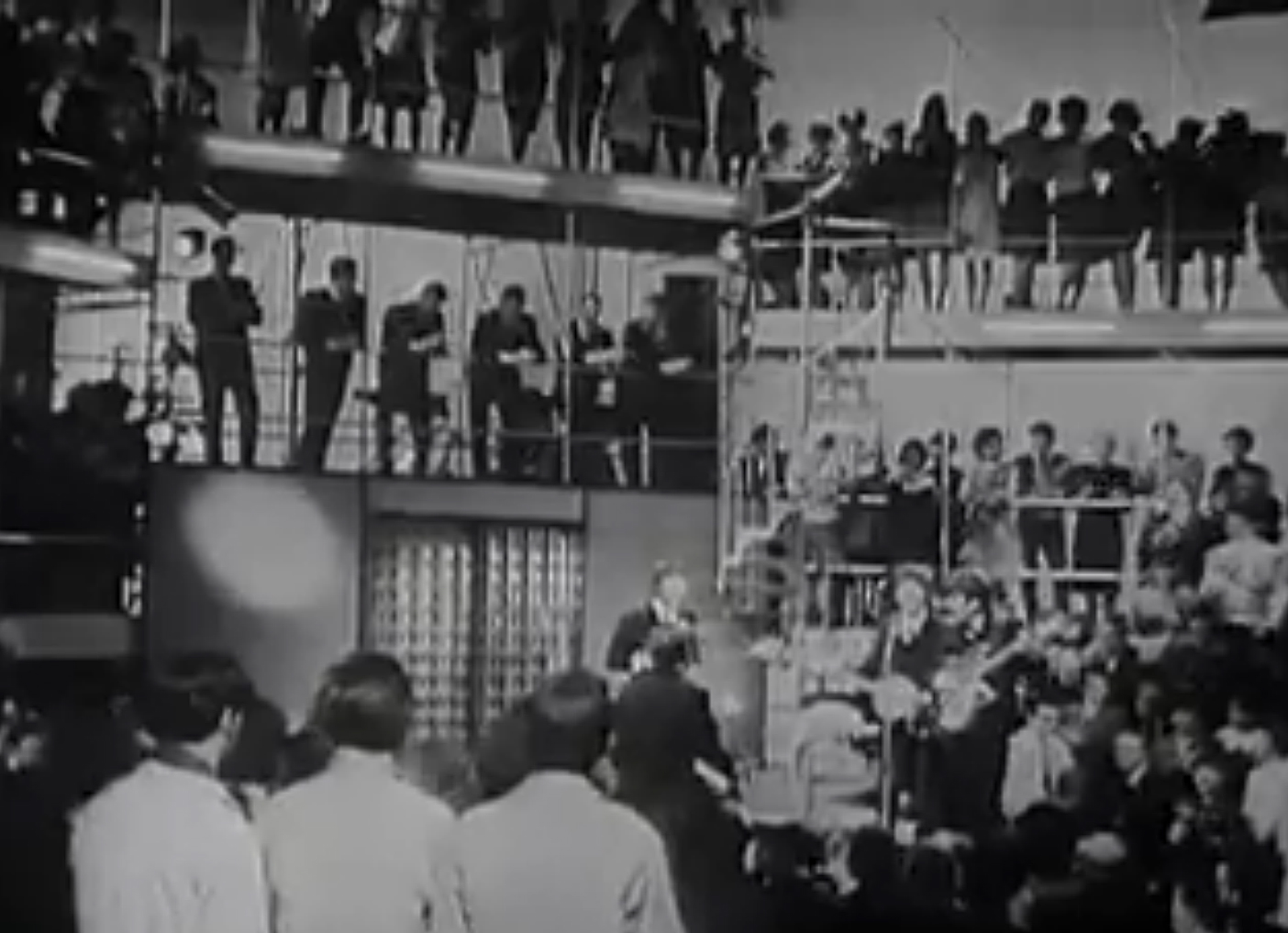
The Beatles and what's around them. 1964.

The Beatles and what’s around them. 1964.

A Beatles variety show difficult to compare to much else in their career, “Around The Beatles” is notable in its own right, in addition to serving as another benchmark for the group to use in developing their January 1969 production. Yet again, a significant moment of Beatles history can be retold from within the context of the Get Back sessions.

And speaking of context, let’s precisely spot “Around The Beatles” on the band’s remarkable 1964 calendar. Here’s a drastically incomplete look at the few months surrounding the show:

— February 9 : Beatles appear on Ed Sullivan
— February 9-23: United States tour
— March 2: Filming begins for A Hard Days Night
— April 2: “Can’t Buy Me Love” hits No. 1 in UK
— April 4: Beatles own top 5 songs on Billboard U.S. chart
— April 19: Music for “Around The Beatles” recorded (they lip-synced on the show)
— April 28: “Around The Beatles” is filmed
— May 6: “Around The Beatles” broadcast in U.K.  (it was broadcast in November 1964 in the U.S.)
— June 4: Filming ends for A Hard Day’s Night
— June 26: A Hard Day’s Night LP released in U.S.
— July 6: A Hard Day’s Night premieres
— July 10: A Hard Day’s Night LP released in U.K.

A lot, lot more happened before, during and after that timeline. This period marks Beatlemania at its most Beatlemaniacal.

Jack Good, already a pioneering producer of fast-paced rock & roll variety shows with Six-Five Special and Oh Boy! and who would develop Shindig! in the U.S. just a few months after the staging of “Around The Beatles,”  was at the helm for this program. The set was a small theater in the round — this is “Around The Beatles” after all — a spartan take at the Globe Theater, with fans encircling the performers on three sides on ground level, and around the stage on elevated catwalks. Non-performing acts, including the Beatles, watched from these standing-room sections.

Play along here, and watch the entire show (in somewhat dubious quality online). It runs a little under an hour.

Something the show did not feature at its outset was music. In a sequence as campy as anything the band would partake — and trust me, I’ve seen Magical Mystery Tour several times — the Beatles took part in a nationwide tribute honoring the 400th anniversary of William Shakespeare’s birth (which fell April 23, just before the show was filmed and aired).
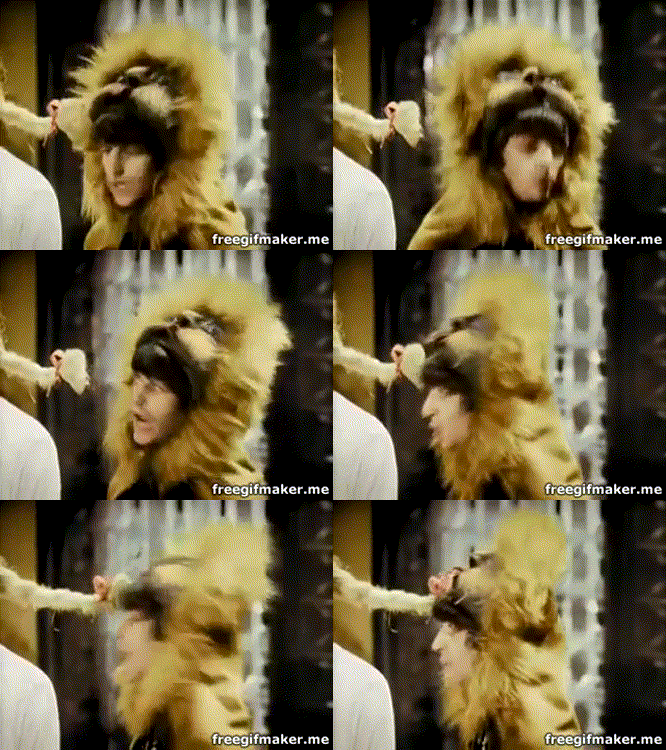
Ringo as the Lion

Specifically, the group exuberantly stages Act V Scene 1 of A Midsummer Night’s Dream, the play-within-the-play “Pyramus and Thisbe,” written as poorly acted by working class, amateur actors. It was an inspired and appropriate choice. Paul plays Pyramus, John is the woman Thisbe, Ringo is the Lion and George is Moonshine. To a staged heckling crowd, the group very much plays the part in the controlled chaos, delivering their lines with comedic injections (e.g., Ringo refers to all the money he’s making drumming).

Glimpse at the Bard a la Beatles in color here:

Nearly seven minutes pass from the show’s opening credits to the end of the sketch.

Speaking with the BBC the day after the show aired, John described how comedy has always been a Beatles trait, something fans around the world had already no doubt discovered.
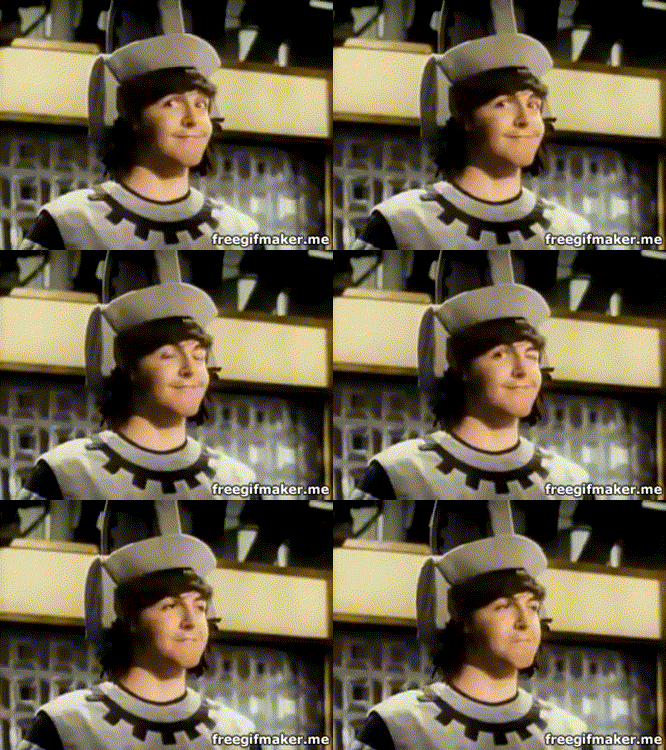
Paul as Pyramus

“We used to do it, especially in the old Cavern days… Half the whole thing was just ad-libbed. We used to just mess about and jump into the audience and do anything.”

The Beatles could have lost the audience really, really quickly, but they’re so charming, so clearly joyous and having a blast, that even if they’re at times difficult to understand — between the Shakespearean English and the thick accents — it’s impossible to turn it off.

The first music we’d hear in the show, outside of the opening sequence’s fanfare, comes from Jamaican teenager Millie Small, who performed “My Boy Lollipop” as it rapidly rose on the charts en route to a peak of No. 2 in the U.K.
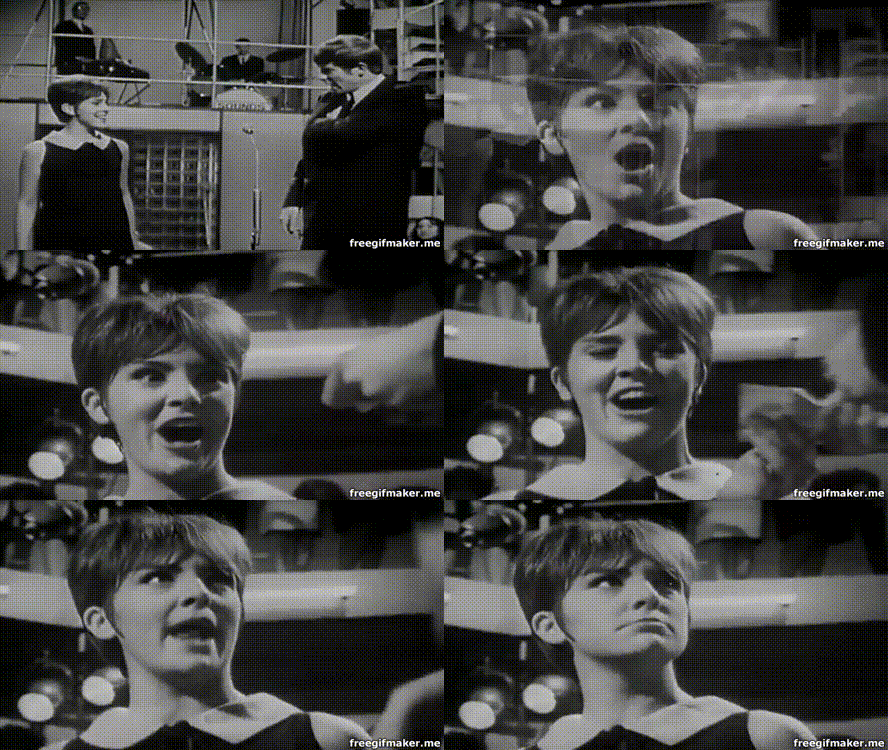
Money

She kicked off a lengthy, energetic sequence of artists who weren’t the Beatles taking to the stage. Long John Baldry and The Vernons Girls follow with a fast-paced medley that included Baldry handing out cash during “Money.” That sequence was backed by Sounds Incorporated — who looked a fraction of their age (which, on the whole, was a few years older than the members of the Beatles) — and they followed with their own instrumental performance before the unyielding energetic crowd.
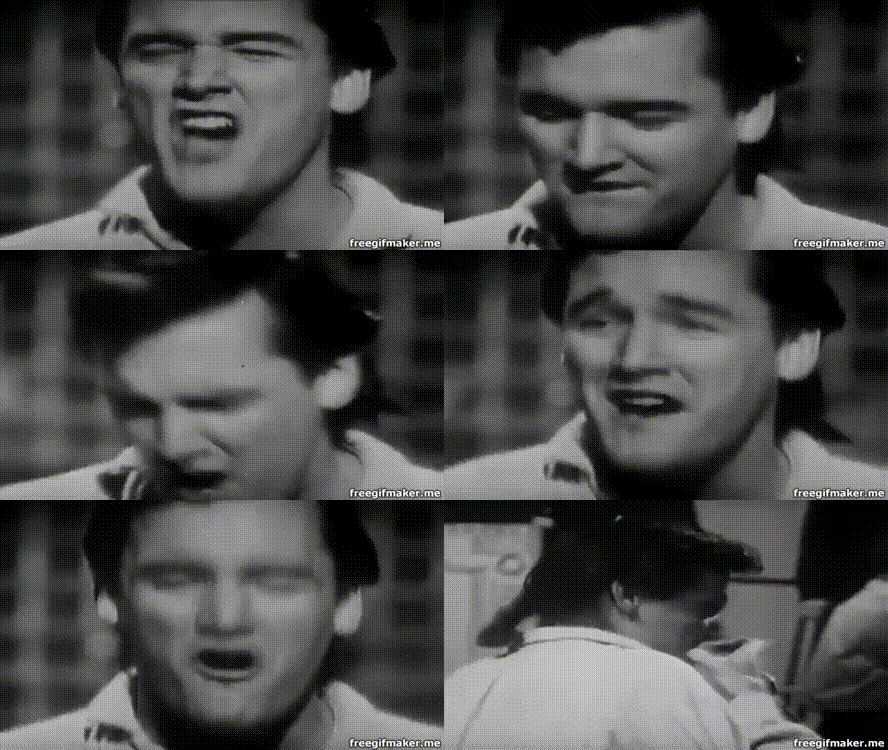
P.J. Proby

Nearly 20 minutes in, we’re graced with the presence of a Beatle, when Paul introduces a “very good friend of ours,” P.J. Proby, whose good looks, gravely voice, lip bite and ribboned mini ponytail make even the most 40-something-aged Beatle bloggers’ heart flutter.

The Texan entered the Beatles orbit via Good, and impressed Beatles manager Brian Epstein enough that Proby was asked to come to England and be a part of the show. But while a friendship would blossom with John, according to Proby, it was a rough go at the outset with Paul. Via Finding Zoso:

So, we went to lunch that day, and at the table I was sitting there having a sandwich when I heard this voice, “Give us a song then P.J.” I turned around and I couldn’t see anybody. Then this newspaper sloooowly started coming down and this head appeared. It was Paul McCartney. And he said, “Sing us a song now P.J.”, and I said, “Sing to yourself you son of a bitch, I’m having lunch!” So, Paul didn’t speak to me from then on; fifteen days he wouldn’t speak to me.

At the end of the fifteen days when we were going to film, all The Beatles drew our names out of a hat [to introduce us] and I found out that Paul had drawn mine. So, I thought to myself, “Well, he’s not gonna do me any favors. I’m just gonna get on there, do my spot, get on the next airplane, and get back to Hollywood.” So I was just about to go on and Paul turned around to introduce me and said, “Now Ladies and Gentlemen, our dear friend, our best friend from Hollywood, California. His first appearance ever on television in England. P.J. Proby!” It shocked me so much, that I almost didn’t step onto my mark and go before the cameras.

After that, Paul and I became very good friends. What he was doing was testing me to see if I was as good as Jack Good had made out I was. So I passed the test and we’ve been friends ever since!

Proby’s performance gave way to another appearance by Millie, Sounds Incorporated, The Vernons Girls and Cilla Black, who would be another figure to later feature in the Beatles’ story. Oh, and about that Fab Four, we get the occasional glimpse of them enjoying the show from the stands.

The entire first half of this show is absolute non-stop music and action with consistently bad lip-syncing across the board.
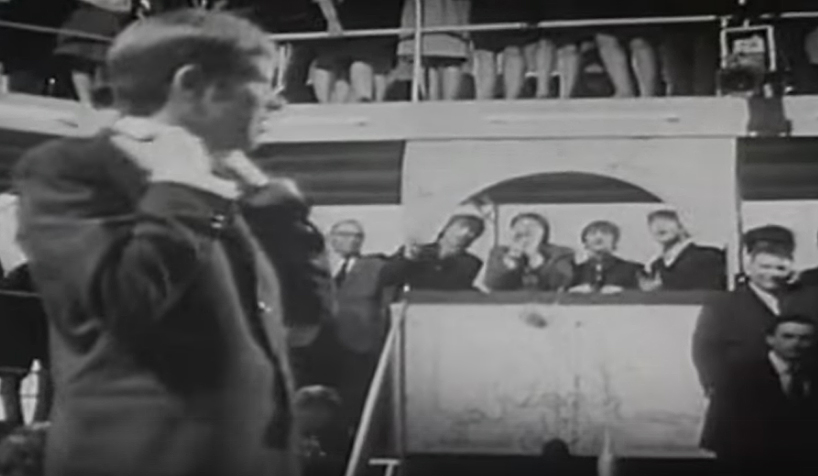
From their perch, the Beatles sing along with Long John Baldry on

From their perch, the Beatles sing along with Long John Baldry on “Got My Mojo Workin’.”

Thirty minutes into their show, Murray the K lets the audience know, “In the U.S.A., England is what’s happening.” But it’s not until five minutes later and after another appearance from Black and her lovely hair that the show’s eponymous stars finally take the stage as musical performers.

Each member of the band is showcased on vocals on the pre-recorded, lip-synced set: “Twist and Shout” (John) starts things off, and the crowd returns to its feverish frenzy, matching the band’s own energy. “Roll Over Beethoven” (George) comes next, making it back-to-back covers. “I Wanna Be Your Man” (Ringo) follows, with “Long Tall Sally” (Paul) — another cover — leading into a true anomaly in the group’s career: a medley. Recorded separately and edited together, the group peeled off, over the course of four minutes, “Love Me Do”, “Please Please Me,” “From Me To You,” “She Loves You” and “I Want To Hold Your Hand.”

Why, that’s the first five Beatles singles, strung together in succession. The final three all went to No. 1. The edit came off a little jerky, but the performance was characteristically upbeat. It felt rushed, but hey, no one asked me if they needed to give Sounds Incorporated so much airtime earlier in the show.

But they weren’t done. “Can’t Buy Me Love,” their newest single and the song that was presently reigning atop the charts, followed the medley. This performance of the song was officially released on the 1+ DVD/Blu-ray set.

The Beatles had one prize left, and another cover — another Isley Brothers cover, at that. Not satisfied with “Twist and Shout” alone, the group made “Shout” their own, a complete rarity as a song that wasn’t part of their live set. In another rarity, all four Beatles alternated on vocals during a stirring rendition that did prove the Beatles still needed to work on their lip-sync skills just as much as the rest of the acts did.

With that, it’s fin.

In 2016, unsanctioned clips here on the Internet are far and away the easiest way to watch “Around The Beatles.” It did receive an official release in 1985 on VHS, and it’s an inexpensive purchase on eBay, provided you still have a working player. I personally recommend grabbing your brother’s old copy of the tape during your parents’ move (look, I’m not saying that kind of thing happens often, but it’s possible it happened once). The show has never been released on DVD/Blu-ray, but as mentioned, “Can’t Buy Me Love” is on the 1+ release.  As for the music, you can find “I Wanna Be Your Man,” “Long Tall Sally,” “Shout” and “Boys” — another cover and a song that was recorded for the show but didn’t make the final cut — on Anthology 1.
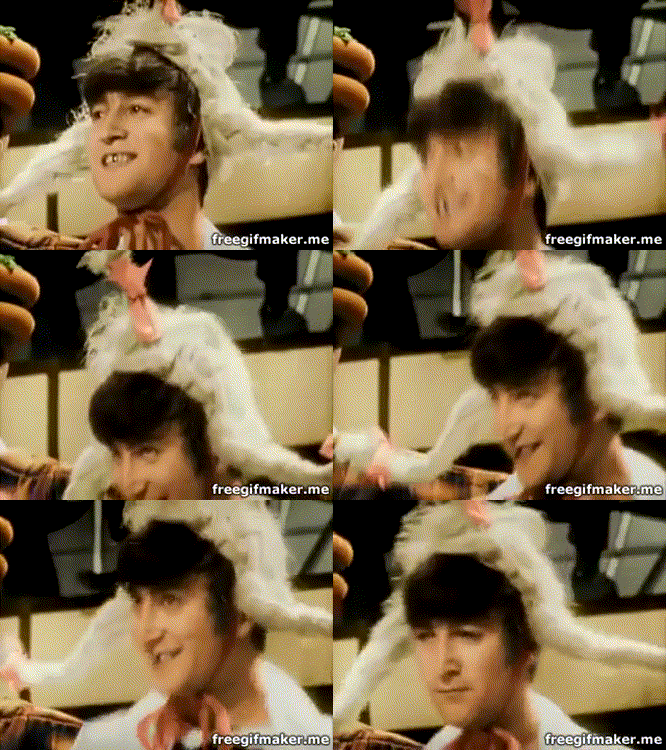
John as Thisbe

The show runs less than an hour, and there’s so much to unpack, but we have the benefit of the last 52 years of hindsight to really dig deep. Let’s start with the stars of the show, the Beatles. The show is almost treated as a belated introduction of the group to the global audience, even though by the time it aired — in May in the United Kingdom and November in the United States — the Beatles were a known, beloved quantity around the world. Their charm and sense of humor, so evident in the Shakespeare sketch, was certainly established, and this was in the weeks before A Hard Day’s Night hit theaters. The very fact that the group had four Number One hits available to perform speaks volumes, too. The show itself was a tremendous success, rating among the top shows of the year in the U.K.

It says plenty that the Beatles were assigned to carry their own show so early in their career. Obviously, they were up to task, and we know how their career played out. But what about the others? Each of the acts — which collectively seem like an anonymous gallery of C-list British Invasion acts from an era that produced far more memorable names — sharing the stage with the Beatles ultimately had an interesting story of their own, with many crossing paths with the group as the rest of the 1960s played out and several playing a part in notable moments in rock history over the subsequent decades.

Let’s start with Millie Small. A one-hit wonder in the U.S. and U.K., she’s credited as a seminal figure in popular Jamaican music. And in an alternate world, she’d have been part of Paul McCartney’s extended family. In the mid-1960s Millie briefly dated Peter Asher of Peter & Gordon, the brother of Paul’s longtime girlfriend Jane Asher.

Paul, his ubiquitous sweater and Cilla

Paul, his ubiquitous sweater and Cilla

Liverpudlian Cilla Black was in the Beatles orbit early on and was under manager Brian Epstein’s umbrella by the time “Around The Beatles” was produced. She was an established success with a No. 1 hit (”Anyone Who Had a Heart”) before the show was recorded and had another to come (”You’re My World,” as produced by George Martin) shortly after. Her career was long and successful and included recording several Lennon/McCartney songs. One of them — “It’s For You” — was in the news within the last few days of this writing, when a long-lost demo from Paul was sold at auction.

Like Black, The Vernons Girls hailed from Liverpool, with the group’s first iteration performing while the Beatles were still in school. Ultimately whittled down from a 16-part choir to three members, the girl group shared bills with the Beatles and had modest chart success and their opportunistic 1963 single “We Love The Beatles” is remembered today, at least by certain members of the Beatles blogging community. The Vernons Girls disbanded later in 1964.

Baldry befriended the Beatles at the Cavern in Liverpool while a member of the Cyril Davis All Stars (which also included Nicky Hopkins, who played with just about everybody, including the Beatles on “Revolution” and on records from all four of them solo). Baldry, who was openly gay, had a relationship with Dave Davies of the Kinks, and would lead a band that featured a young Rod Stewart. Another group led by Baldry in the late 1960s, Bluesology, featured one Reggie Dwight on keyboard. Dwight would later adopt the stage name Elton John — “Elton” after Bluesology saxophonist Elton Dean and “John” in honor of Long John Baldry. Baldry remained a friend and influence to the superstar pianist; he was “Sugar Bear” in Elton John’s “Someone Saved My Life Tonight”. Baldry eventually moved to Canada and in addition to working as a blues musician, he did voice acting work.

Buoyed by his appearance on “Around The Beatles,” P.J. Proby went on to score a trio of Top 10 hits in the U.K. in 1964, and a minor hit in “That Means a Lot” a Lennon/McCartney leftover from Help!

As Proby’s career played out, he ended up crossing paths with more of rock’s heavyweights. His 1969 LP featured the New Yardbirds as his backup band; that’s Led Zeppelin before they had their own record out. Proby later would portray Elvis and Roy Orbison on stage and perform with The Who in their 1997 revival of Quadrophenia among other productions. His 1995 Savoy Sessions is absolutely bananas. Proby is still active; you can catch the recent Rockabilly Hall of Fame inductee on tour in the U.K. this September and October.

Beatles insider Tony Bramwell wrote in his book “Magical Mystery Tours” of John’s relationship with Proby, which sounds like it bordered on infatuation.

Beyond his obvious talent, John was almost hypnotically fascinated by P.J.’s demonic, destructive nature. P.J. was like John’s dark twin, a man who quickly found his way into the wilder circles and excesses of London society. He was a Jack Black man, lots of it, but John wasn’t. To Cynthia’s dismay, John started to hang out with the lean Texan, who dressed like a cowboy during the day and in velvets, ruffled pirate shirts and buckled shoes by night.

Bramwell goes on to write that it was in fact Proby who introduced Lennon to marijuana — he “felt waves of nausea sweeping over him and rushed to the bathroom, where he threw up into the large white bathtub” — months before Bob Dylan was credited with exposing the Beatles to the drug.

The relationship between the Beatles and Sounds Incorporated stretched back to the groups’ shared time in Hamburg and extended deep into the 1960s. Sounds Incorporated — which would also end up managed by Epstein — became a frequent opening act for the Beatles, including at the landmark show at Shea Stadium in 1965. The saxophones you hear on “Good Morning, Good Morning” off Sgt. Pepper were delivered by the group’s horn section. Among other acts, Sounds Incorporated’s Tony Newman would go on to drum for David Bowie on the Diamond Dogs LP.

But John, Paul, George and Ringo weren’t the only figures from our January 1969 story that worked with Sounds Incorporated. More than six years before the Get Back sessions and prior to “Around The Beatles,” Sounds Incorporated recorded a song written by Billy Preston, who — at 17 — joined the group on organ.

“Around The Beatles” was a product of Beatlemania, but not forgotten by the group — and not just because Paul named his cat Thisbe. A joyous, successful production, “Around The Beatles” became another jumping-off point for the group to use in 1969, in working their way to a stage return.

—

Author’s note, October 2020: When this post was first written more than four years ago, I included a section on Glyn Johns’ purported role in the “Around the Beatles” recording session — the group pre-recorded their numbers and lip-synched on the show. Going back several decades, Glyn said he was the “second engineer” on that April 19, 1964, session. He wasn’t. 

Alan Florence, the session’s lead engineer, and Peter Robinson, who was the second engineer, both reached out to me to correct the record, and for that I’m grateful. I communicated with them both in the comments section of the subsequent post as well as privately.  References to Glyn’s involvement in “Around the Beatles” have been removed from his own memoirs, also. No one upgraded my hardbound copy, so I only just found out.

While Glyn’s involvement in a 1964 Beatles sessions would have made for a nice narrative bookend to his role with the group in 1969, it never actually happened. Thanks again to Alan and Pete for reaching out to me to make sure the history is clear and their own contributions are recognized. 
4 Comments

Filed under Extra

Jan. 8: Two for the Road

Formal recording for Abbey Road wouldn’t come until months after the Beatles’ January 1969 sessions and not until the project was shelved along with its stable of new songs. It’s with the luxury of retrospection we can establish that the sessions served as a demo venue for Abbey Road, not a bad byproduct of the weeks in the studio.

To this point — the pre-lunch portion of the January 8 session — the Beatles had in one form or another performed six future Abbey Road tracks (”Maxwell’s Silver Hammer,” “Oh! Darling,” “Sun King,””She Came In Through the Bathroom Window,” “Golden Slumbers” and “Carry That Weight”) that were either contenders for the live show or simply unfinished bits for another day, if any.

“All Things Must Pass,” deplorably, didn’t make the cut on either Abbey Road or Let It Be. On this day, the final stabs at that Harrisong (which were the best ones to that point in these sessions, too) found John at piano, and it was there he re-introduced a future piece of the Abbey Road medley, “Mean Mr. Mustard.”

New to the Get Back sessions, “Mean Mr. Mustard” wasn’t at all new to the other Beatles, who had heard John’s demo for the song the previous May at Kinfauns. You, too, can hear it for yourself if you crack open your copy of Anthology 3 and pop in the first disc, or on the 2018 reissue of the White Album. Or just listen below!

Pretty earthy, but that’s the Esher Demos for you. Like “All Things Must Pass” and others, the influence of the group’s February 1968 India trip stretched far past the subsequent White Album. Back in Twickenham, Mr. Mustard’s sister was still Shirley, and he’s yet to rediscover his roots with Polythene Pam. Her sordid story will come later. First, we can enjoy John performing “Mean Mr. Mustard” at the Get Back sessions.

A bit more fleshed out with full instrumentation, the first 1969 take of “Mean Mr. Mustard” is roughly what it was nearly a year earlier, and not awfully far off from what it would become later on Abbey Road. It also stands as an alternate version of his work-in-progress “Madman,” which was a few days away from debut at these sessions. But the Madman’s story will come later, too.

Ultimately, John trashed the song, calling it, along with “Sun King” and “Polythene Pam,” merely “bits of crap that I wrote in India.”

But is one man’s trash another’s treasure?

All right, fine. Paul probably wasn’t inspired by this take of “Mean Mr. Mustard,” despite sharing bouncy piano chords, but it wouldn’t have been the first time a song drawn from these sessions would bizarrely resurface many years later.

Before breaking for a bite, the Beatles returned to another song that would later be separated only by one track on the Abbey Road Side 2 medley. The number had already had a few rehearsals over the last few days, but it finally was given its formal name on January 8.

Paul: I think it’s called “Bathroom Window” … But it’s funny. It doesn’t sound like a title. “She Came in Through the Bathroom Window.”

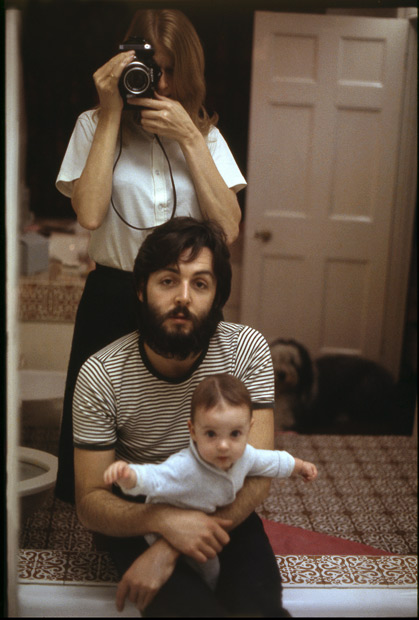
Paul, Linda and Mary McCartney in the bathroom, 1969. The window is out of the frame.

Paul, Linda, Mary and Martha in the bathroom, 1969. The window is out of frame.

An earlier stab at a rehearsal never materialized, but after the Beatles spent about a half hour focusing on “All Things Must Pass” and John’s quick “Mean Mister Mustard” detour, the “Window” was reopened.  “Do you want to stay on that for ‘Bathroom Window?'” Paul asked John, who was still at the piano. He did, and it marked the third consecutive day the group spent time on the song.

Mentioned previously in this space, one delight of the Twickenham takes of “She Came In Through The Bathroom Window” is the chance to hear Paul harmonizing with John on the song. Remember the Abbey Road version features Paul double-tracked.

Still, it’s hard to call these takes ultimately pleasurable. After some brief instruction, we hear three total takes of the song, with the first two dragging to the finish. The final take is a bit livelier. Unlike other McCartney compositions in the first week of the sessions, the song is indeed complete, though, with the same lyrics, melody and general instrumentation as we’d hear on Abbey Road, once that blessed day would come.

Now with “Mustard” on the table and the “Window” closed, the Beatles adjourned, quite appropriately, for lunch.

4 Comments

Filed under Day by day

Jan. 8: An hors d’oeuvre

“All Things Must Pass” should have been a Beatles song, another gripping, iconic anthem dating to the group’s long goodbye.

gh-rs

By the time the Beatles were rehearsing and recording in January 1969, George Harrison’s emergence into a songwriter that rivaled John Lennon and Paul McCartney was essentially complete, with “All Things Must Pass” part of that transformation. Taste matters, but a fair argument could be made that the song could have been the band’s greatest.

“All Things Must Pass” — which had the potential to emerge during the Get Back sessions, be performed live and later land on the Let It Be LP — thus could have gone a long way to giving George his ‘moment’ prior to the group’s send-off of Abbey Road. It never happened. But on January 8, John and Paul gave George the option of taking his song, creating that moment and enjoying his own spotlight at the live show to come. They never said it, but based on the prior week’s tapes, the two senior members of the band were probably just disinterested in playing the song.

“Do you fancy just doing it on your own on an acoustic?” Paul asked. “That would work. But it’s a bit of a thing for you.” The “thing” in question was effort.

Paul would know about playing alone on stage with an acoustic guitar while the rest of the Beatles waited in the wings.

Would opportunity knock, but for George this time?

John was on board, too, condescendingly positing George could serve “an hors d’oeuvre” to the presumptive hungry crowd.

George didn’t directly knock the idea, but didn’t follow up on the suggestions, instead trying work Paul and John on the chorus’ harmonies. After scuttling Paul’s suggestion to begin the song with George’s instrumental opening straight into the chorus, instead of the first verse — hey, it worked for “Don’t Let Me Down” a few days earlier — the pair haggled over the bassist’s harmony line, with Paul complaining it moved too much.

The group spent about a half hour on the tapes working on and around “All Things Must Pass” on January 8 — returning to the song after skipping it the day before — and while there was no significant or specific alterations to the song from the previous days’ rehearsals, they capped the day’s work on the song with a legitimate, listenable and, dare I say, enjoyable take of “All Things Must Pass.” It’s a version that should have shown up, at least, on Anthology 3, in addition to George’s one-man demo from a month later.

While the day’s final take is not too dissimilar in overall form than the one ended up on the final recording on George’s solo debut the following year (excepting the orchestration and dozens of additional flourishes, of course), John’s piano part here — he had moved over from organ in the final phases of the day’s takes — added little, usually amounting to pounding out chords. Still, it’s not wholly detrimental, and Paul’s bass line is on point.  Ringo, as usual, hits the spot.

The Beatles’ greatness has been amplified by the what ifs and what could have beens, and the possibility of a “Beatles’ 1969 classic ‘All Things Must Pass’” is a genuine opportunity lost.

It sounds as good as it could at this point in what amounts to a few hours of overall rehearsal and arrangement with half to three-quarters of the band giving a fraction of effort. It’s the Beatles playing a coherent, complete version of “All Things Must Pass,” and that counts for something in a world where such a release never existed, yet we all paid money (several times, in fact, thanks to new formats, remastering, etc.) to buy “Wild Honey Pie” and “Dig It.”

There is a “rest of the story.” But the vast majority of history of “All Things Must Pass” by the Beatles is now mostly told. This pre-lunch performance marked the final time they played the song at Twickenham. They returned to it very briefly near the end of the month at Savile Row with the support of Billy Preston, who released the song a few months before George would in 1970. By January 8, 1969, the rehearsal stage was essentially over, however, and this was really the final fumes of “All Things Must Pass” as a Beatles song.

Notably, the song never appeared in the Let It Be film. “I Me Mine,” revealed earlier on January 8, did, joining “For You Blue” (which was properly introduced to the band a day later) as George’s contribution to the Get Back sessions. Despite all the hours of rehearsals, the song he carried over into January 1969 as a product of his days with Dylan and The Band, would be passed over by his own band. And it was good enough to serve as the title track of what could be argued to be the greatest Beatles solo album.

6 Comments

Filed under Day by day

TMBP Extra: RIP George Martin

It’s so obvious a statement, it sounds dumb to write: Without George Martin, who died Tuesday at 90, the Beatles would have been a completely different entity from the one he signed, nurtured and produced.

martin

January 1969

The Beatles existed before Martin agreed to sign them to Parlophone in 1962, and had he not, the group would have continued to do so.  If George Martin didn’t manage and help develop the Beatles sound, someone else ultimately would have. But we can only imagine what the output would have been, and if we would still be talking about it more than 50 years later. Because of Martin, there’s no question: Here we are still talking about it.

George Martin produced, arranged, mixed, composed and was otherwise involved with hundreds of records over half a century. The Beatles’ output adds up to a fraction of it (and he notably wasn’t involved in one record). But his creativity and willingness to interpret the sounds inside the heads of Lennon/McCartney/Harrison/Starr and pull together the resources to apply it tangibly to wax earned Martin all the praise he has received as a forefather, godfather, innovator and icon. If he didn’t make the Beatles into The Beatles, maybe we’d be writing here about how innovative his work with another band was — if he crossed over from jazz and comedy records to pop music at all.

McCartney & Martin in the ’80s

This blog deals with January 1969, the precise moment when George Martin mattered least to the Beatles. He ended up something of an adviser at the Get Back sessions, and it was ultimately left to Phil Spector to, as Martin would describe it, “overproduce” Let It Be for release. As someone who brought the most out of the Beatles (I was going to list song titles as examples, then the list got too long), Martin’s view of the Spector production reveals what Martin himself thought he did best for the Beatles.  From Anthology:

[Spector’s Let It Be] was bringing The Beatles’ records down a peg — that’s what I thought. Making them sound like other people’s records.

The Beatles may have pinched ideas from other bands, but when George Martin produced, they never, ever sounded like another band.

Paul McCartney — the only Beatle to work again with Martin after the breakup — asked him to produce Abbey Road as a swan song, and that record is damn near perfect — like so many other wildly varied Beatles efforts Martin was tasked with producing.

George Martin put up with a lot of nonsense working with the Beatles, often enabling implausible sonic ideas while increasingly dealing with, to use sports parlance, an out-of-control clubhouse. The Beatles may have wanted to make an “honest” album with Abbey Road, but that didn’t mean they got along much better than they did while working on Let It Be (or the White Album, for that matter).  But recording that final album gave Martin closure, too.  Again, from Anthology:

Nobody knew for sure that it was going to be the last album — but everybody felt it was. The Beatles had gone through so much and for such a long time. They’d been incarcerated with each other for nearly a decade, and I was surprised that they had lasted as long as they did. I wasn’t at all surprised that they split up because they all wanted to lead their own lives — and I did, too. It was a release for me as well.

It’s 2016, and the world has been without two of the Beatles for a long time now. There have been a lot of contenders for “fifth Beatle” — George Martin, Mal Evans, Billy Preston — and we’ve lost them all, too. (A silly case could be made that Ringo is the fifth Beatle, since Pete Best is arguably part of the first four, but that’s for another rainy day). But whether it’s vinyl, cassette, CDs or MP3s, thank God we’ll always have the music.

Rest in peace, George Martin.

2 Comments

Filed under Extra

TMBP Extra: Since he fell out of the womb

Over the years, we’ve celebrated the birthdays of Paul McCartney, John Lennon and Ringo Starr, looking back at the periods straddling the big days in 1968-1969. Today it’s George Harrison’s turn. It may be the anniversary of George Harrison’s birth today, or it may be the day after the anniversary of his birth. With Liverpool under bombardment during World War II, keeping the records became confused that day in 1943. But February 25 is the day George celebrated, so it’ll be the day we mark, too.

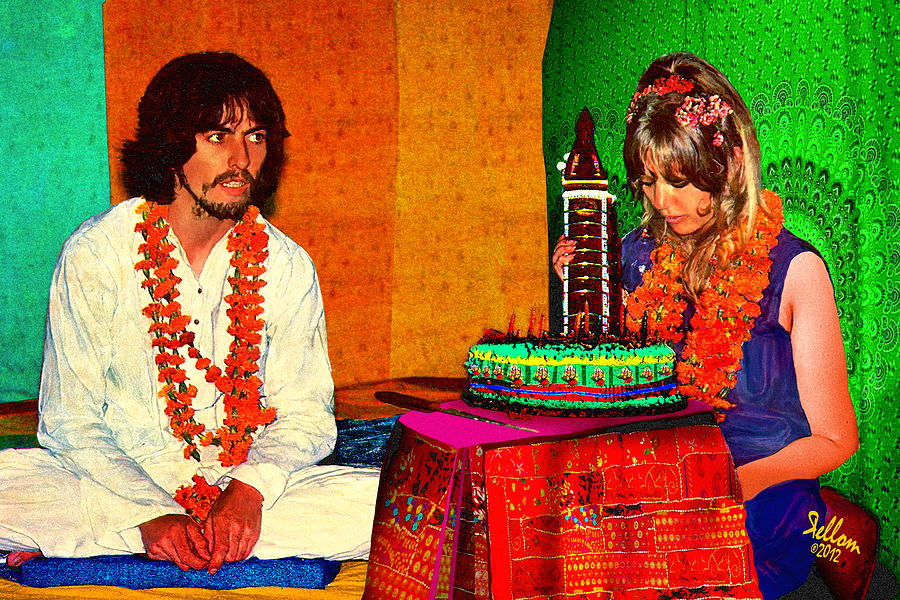
1968, in India. That's actually a cake for Pattie Boyd, whose birthday was a three weeks after George's.

India, 1968. That’s actually a cake for Pattie Boyd, whose birthday was three weeks after George’s.

George’s 26th birthday came just a few weeks after the Beatles wrapped up the Get Back sessions at Twickenham and Savile Row. It capped a remarkable year in his life and career, one that could fill a book, much less a blog post.

George’s 25th birthday was celebrated in India less than 10 days after the Beatles arrived to study Transcendental Meditation under Maharishi Mahesh Yogi. Their retreat lasted nearly two months (for George, who outlasted the rest of the Beatles), transforming the four men, their music and Western culture along the way.

Starting in May and lasting throughout the summer, the Beatles recorded The Beatles. The double White Album, featuring a career-high four compositions, would be released before the winter. In between, George produced Jackie Lomax and saw the release of his solo LP Wonderwall, which was recorded late 1967 and early 1968. (It’s really great, and worth infinite listens).

With Winter 1968 came another transformative overseas trip, this time on the other side of the earth from India, a journey that included a stop in upstate New York, where George spent an intimate holiday with Bob Dylan and the Band, playing and writing songs. They were not laying the groundwork for the formation of the Traveling Wilburys about 20 years later, but it’s worth the dream.

That brings us to January 1969, and you can read all about it here and in posts to come. It’s worth noting, George brought Billy Preston into the Beatles’ circle, and then later would produce him for Apple.

What happened next? George had his tonsils out a week after the rooftop concert, and was laid up for about another week.

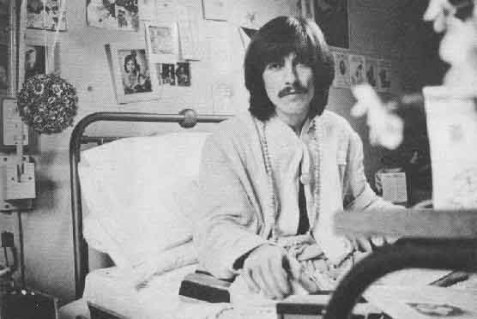
George breaks up with his tonsils, February 1969. Photo appears in his autobiography, I Me Mine.

George breaks up with his tonsils, February 1969. Photo appears in his autobiography, I Me Mine.

He joined the rest of the Beatles on February 22, 1969, to record the first 35 takes of “I Want You,” essentially beginning the Abbey Road sessions, and that about brings things up to his 26th birthday, on February 25, 1969.

Of course, that’s not it. What about the music? Check out this list of Harrisongs composed or at least worked on seriously between his 25th and 26th birthdays (listed alphabetically, with one obvious omission I’ll explain below): “All Things Must Pass,” “Badge” (with Eric Clapton), “Circles” (eventually released in 1982), “Dehradun,” “For You Blue,” “Hear Me Lord,” “I Me Mine,” “I’d Have You Anytime,” “Isn’t it a Pity,” “Long, Long, Long,” “Not Guilty” (left off the White Album, it was released in 1979), “Nowhere to Go” (All Things Must Pass LP outtake written with Dylan), “Old Brown Shoe,” “Piggies,” “Savoy Truffle,” “Sour Milk Sea” (written for Jackie Lomax), “Wah-Wah,” “While My Guitar Gently Weeps,” “Window, Window” (another All Things Must pass outtake). And there’s probably others we don’t know the origins of that would fall in this timeframe too.

Enjoy it all on this YouTube playlist (it’s not just “Badge” as the image implies — click around!):

Not too shabby. As a bonus, he finally had his first song to appear on a Beatles single — the mighty “The Inner Light” was on the flip side of the “Lady Madonna” single, released while they were in India.

Oh, he bought a Moog, too. More about that later in 1969.

George had a really good year, artistically. It was an important one spiritually, too, and he was expanding his professional horizons and stockpiling compositions. In many ways, he shaped the Get Back sessions by walking out and resetting the parameters under which the group would perform live, plus he brought Billy into the fold. His relationship with Dylan, developed when he was in New York, was a critical moment in his career and his own window into how other artists could interact, and reflecting everything that was wrong with the Beatles. While he was still not quite yet afforded the same global respect given to Paul and John, the Beatles’ junior member’s time would come in 1969, thanks in large part to something.

Sorry, I missed the punctuation and capitalization. That’s thanks in part to “Something.” 

There are lots of dumb ways to spend a birthday in your 20s, but recording a few demos at EMI Studios on Abbey Road isn’t one of them.  February 25, 1969, saw George cut solo acoustic versions of “Old Brown Shoe” (first debuted during the Get Back sessions) and “All Things Must Pass” (from 1968, and rehearsed extensively in January 1969). The final song he worked on that day was “Something”, the seeds of which were planted in 1968, but he hadn’t completed as late as the final days leading to the rooftop concert on January 30, 1969.

You can find takes of all three songs on Anthology 3, with a fleshier version also on the 2019 Abbey Road anniversary deluxe edition.

The commercial and critical success of the Abbey Road release of “Something” (finally, his first A-side) — earning high praise from Lennon and McCartney — plus the LP’s “Here Comes the Sun,” changed how George Harrison, Songwriter, was viewed. The time and efforts he spent between his birthdays in 1968 and 1969 propelled him to that point.

6 Comments

Filed under Extra