Before I move on with the Twickenham happenings on January 7, 1969, I wanted to offer up this bit of context as Paul McCartney circles the globe on his latest world tour.
As in, 60-something hours before I posted this, the same James Paul McCartney that sat before a piano at Twickenham introducing these songs to a room of just a few people, played the very same numbers to 47,000 at Safeco Field in Seattle (playing “Golden Slumbers/Carry That Weight/The End” and “Get Back” with the surviving members of Nirvana). That’s after performing them hundreds and hundreds of times over the decades.
Four songs he introduced over the course of about an hour one morning in 1969 at age 26. He turned 71 in June.
According to setlist.fm, Paul played 39 songs in Seattle — seven that were introduced in January 1969 and a whopping 14 (!) originating from 1968-1969. That’s 36 percent of his show in 2013 spanning less than 24 months, the remainder covering another 50 or so years of his career.
Author’s note from July 6, 2017: I originally wrote this several years ago. Unlike the other posts on this blog, to which I try to limit any changes, I’ve come back to this one a few times, rewritten some parts, tweaked others, in an effort to more clearly bring things into a fuller circle.
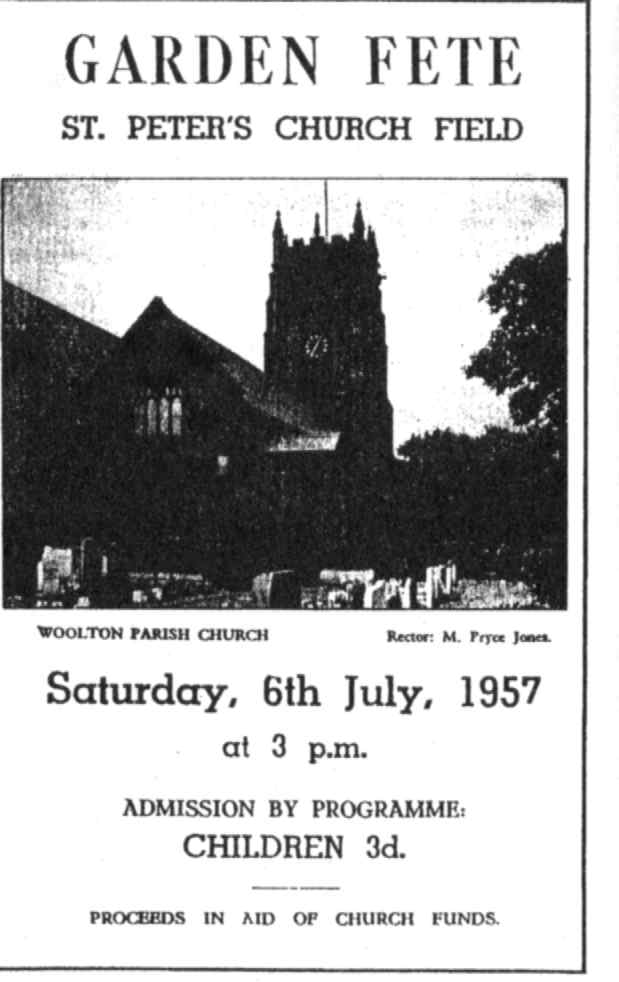
There’s obviously no need to overstate the importance of July 6, 1957, to any reader of this blog. It’s the day John Lennon and Paul McCartney met after John’s Quarrymen played the Garden Fête in Woolton, and thus, everything changed in this world, and for the better.
First, a quick recap of that day, via the Beatles Anthology DVD. Take it, Paul!
For fun, here’s the story as portrayed in Nowhere Boy:
Let’s get back to reality and what the Quarrymen really sounded like that day, from authenticated tapes recovered decades after the fact:
There simply can’t be a more important moment in Beatles history than the birth of the Lennon-McCartney partnership. Everything came from that, not the least of which was Paul soon introducing George Harrison to John. But that’s another story.
The church hall proudly displayed photos and information on the John-Paul meeting on bulletin boards in the same manner and wall space as it did contemporary children’s artwork pic.twitter.com/KE2xcWiqCk
— They May Be Parted (@TheyMayBeParted) June 4, 2024
Mark Lewisohn dedicates an entire short chapter to July 6, 1957, in his indispensable extended edition of his Beatles biography Tune In, vastly expanding upon any basic retelling of the Lennon-McCartney origin story and going so far as to tease the possibility the two actually first met — without any guitars — prior to the fête. But no matter what happened before that day, Paul taking the initiative and confidently performing “Twenty Flight Rock” for John was the moment that mattered.
And it wasn’t merely that Paul could play “Twenty Flight Rock.”
“The thing I think that impressed him most was I knew all the words,” Paul said in the above Anthology clip.
The Beatles never covered “Twenty Flight Rock” — Paul eventually would on numerous occasions solo and with Wings — but they did give it a nod amid the Get Back sessions, on Jan. 23, 1969, by which point the recording had moved to Apple HQ at Savile Row.
More than 11 years after Paul played the song for John — impressing him enough to begin their partnership — and some months from the last time John and Paul would work together again, Paul couldn’t quite remember the words. At all.
Alas, the elevator’s indeed broken down. There’s not too much magic to the light-hearted clip, although it’s nice to hear Billy Preston, and George’s solo is pretty good. But no longer is Paul playing the song to impress John. In so many ways, it was Paul’s group by then.
By now, Paul has shifted to his Hofner with George having arrived at Twickenham. Straight out of a light-hearted zip through “What’d I Say” and “Shout” for Michael Lindsay-Hogg’s benefit with a little bit of “Carry That Weight” mixed in, Paul fiddles with “Get Back” for the very first time — the tapes run for a more than 15 minutes, but cuts and fades prove they went on longer.
Following the song’s initial introduction, and seemingly apropos of nothing (a tape cut shrouds the probable spark of the conversation), Paul and George are engaging in a discussion about Randy Newman. George had borrowed a copy of his debut album from Paul, and said he “wasn’t impressed.” He gave it a re-listen the night before because he met him “and because he’s a nice fellow, and all, but I still don’t like it.” Why’s that, George?
It’s nice on the first one, just the idea of his voice, he sounds pissed [drunk], just going [George slurs a few words]. But when he goes on and on every track, he sounds pissed. [Laughs] Musically, it’s good. But not my cup of mead.
More to George’s liking is “Get Back,” even in this nascent state, as he jams along with Paul, working on a lead guitar part. There’s not a whole lot to the song just yet, but we do have a strong framework, with the verse, chorus and melody line basically in place as George adds guitar lines while Ringo provides hand-claps and possibly some shakers.
This sequence has emerged as one of the more dazzling scenes from the 2021 Get Back docuseries.
By the time they finished a few run-throughs, Ringo eventually shifted to the drum kit to lift the song’s intensity, and both lyrically and musically the song took a defined form. Paul’s already playing with “Arizona” and “California grass” in the verse, plus lyrics like “she thought she was a woman, but she was another man,” “say she got it coming, but she gets it while she can” and “knew it couldn’t last” are there. “Get back to where you once belonged” is already the chorus. Neither Jo-Jo nor Loretta have arrived yet, but we have the makings of another enduring song.
And from this early moment, we hear how catchy it is. Just a few minutes after hearing it for, presumably, the first time, Ringo sings along to the verse and chorus.
With the benefit of hindsight, it would turn out to be one of the more interesting songs to emerge from the session, if only for its lyrical elasticity. Born from this jam, the lyrics would evolve into a political statement about immigrants, then back again to your everyday rocker about American transvestites. And we get to hear it all over the course of a month’s tapes.
Ian MacDonald in Revolution in the Head, is not alone in suggesting Canned Heat is the inspiration for the song (while admitting there’s nothing there musically).
Paul McCartney and Jackie Lomax (Image from jackielomax.com)
In June ’68, during the White Album sessions, Paul, Ringo and George played on the latter’s “Sour Milk Sea,” given to Lomax for his forthcoming debut album produced by George. The memory is obviously still fresh.
“Sounds like Jackie,” Paul says a few moments before deliberately warbling “get back” and “get back to where you once belonged” a number of times in Lomax’s trademark voice. It didn’t sound like Paul was asking if he sounded like Lomax, or had any concern that he did. It was a simple acknowledgment that his vocal line resembled this one particular influence, one of so many influences the group paid tribute to during the sessions — Bob Dylan, Buddy Holly, Elvis Presley, The Band, Motown (and the list goes on).
And with that context, it’s obvious why Paul’s voice has an odd timbre (for him). It’s a rocker, but his delivery is nothing like it on “I’ve Got a Feeling,” “Helter Skelter” or any of his other recent high-energy vocals.
The voice isn’t the only inspiration from Lomax or the experience on “Sour Milk Sea.” Give the song a listen in full, and it’s easy to hear how Lomax’s “Get out of Sour Milk Sea/You don’t belong there/Get back to where you should be” — as written by George — would give Paul a good jump-off point for his new song (especially evident in the repeated “get back” as the song jams to a finish).
The rehearsal ends somewhat abruptly with a tape change. It’s the same thing responsible for keeping us from learning just how long these sessions for “Get Back” really ran — the tape cuts out several times during the “Get Back” introduction.
We would, of course, get back to the song again and again over the subsequent three-plus weeks. And this month’s rehearsals would eventually be known for this song: The Get Back Sessions.
With Paul McCartney seated at the piano at Twickenham on the morning of Jan. 7, 1969, the seeds of the Abbey Road medley are planted. Or, at least, unveiled on tape.
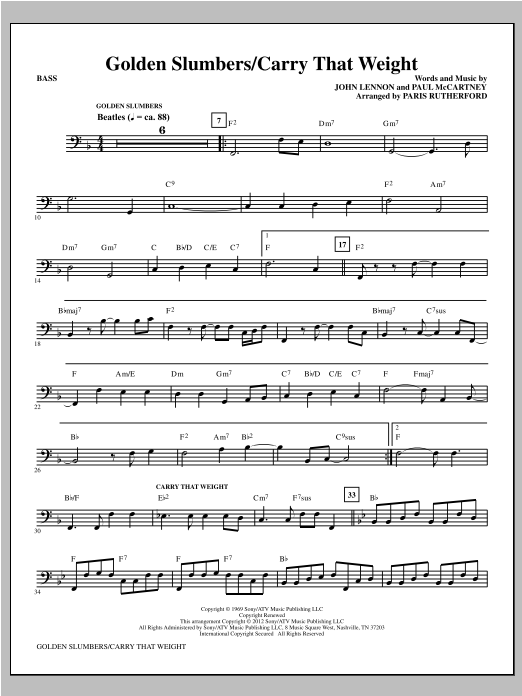
Famously pinched, in part, from a poem that was more than 350 years old, “Golden Slumbers” debuted minutes into the Jan. 7 tapes, another of Paul’s performances solo at the piano.
Lyrically and musically, the song is just about what would end up on Abbey Road.
Once there was a way to travel homeward
Once there was a way to get back home
Sleep pretty darling, don’t you cry
And I will sing a lullaby
Golden slumbers fill your eyes
Smiles awake you when you rise
Sleep pretty darling, don’t you cry
And I will sing a lullaby
While the song has its origin in a Thomas Dekker poem from 1603, the recollection of a “way back home” is Paul. Here’s the inspiration, the original verse by Dekker:
Golden slumbers kiss your eyes,
Smiles awake you when you rise.
Sleep, pretty wantons, do not cry,
And I will sing a lullaby,
Rock them, rock them, lullaby.
Care is heavy therefore sleep you.
You are care and care must keep you.
Sleep, pretty wantons, do not cry,
And I will sing a lullaby,
Rock them, rock them, lullaby.
After repeats of the song, Paul transitions right into “Carry that Weight.” Of course, it sounds like the songs are made for each other, but that could be more than 40 years of built-in bias.
As the piano part winds down, implying “You Never Give Me Your Money” (which is yet to be written), instead he goes right back into “The Long and Winding Road,” the same song Paul began to play prior to “Golden Slumbers.”
Any other day, it wouldn’t strike a chord, no pun intended (really!). But on this morning, “Golden Slumbers” and “The Long and Winding Road,” separated by five months in the studio and eight on vinyl, are pieces of a puzzle that I didn’t realize existed.
Of course, book-ending “Golden Slumbers/Carry that Weight”with “The Long and Winding Road” could just as well be coincidence, too. But this context, deliberate or not, sheds light on what sounds like shared DNA.
The Long and Winding road that leads to your door, will never disappear, I’ve seen that road before. It always leads me here, lead me to your door.
Having completed that performance, Paul unveils the song’s echo in “Golden Slumbers.”
“Golden Slumbers” shares the yearning as “The Long and Winding Road” but, side-by-side, it sounds further removed with a stronger sense of contemplative acceptance to the singer’s situation.
The time has passed: There “once” was a way to get back homeward. So while “The Long and Winding Road” (as written to this point, at least) has a sense of distant, desperate hope, “Golden Slumbers” delivers acceptance but a promise of a better tomorrow via Dekker’s original lyric (“Smiles awake you when you rise”).
It’s Paul’s “All Things Must Pass.”
Bundle “The Long and Winding Road” and “Golden Slumbers” with “Carry That Weight” — not to mention “Let it Be,” which is absent from this sequence but was first played four days prior — and in Paul you have a man who seems to readily acknowledge and be at peace with the fate of his band more than a year before they would actually split.
A difficult January 6, 1969, did not result in a collapse of the sessions at Twickenham — which were entering just its fourth day — nor a break in the band. Not yet, at least.
So with the promise of optimism any new day delivers — daylight is good at arriving at the right time, after all — Paul was again the first back at the studio Tuesday, Jan. 7. And as was the norm that developed, he kicked off the day’s tapes solo at the piano.
“The Long and Winding Road” had the most brief of debuts at the first full session, Jan. 3, lasting about 10 seconds prior to Paul launching into “Oh! Darling” during his first morning piano jam.
He says as much on the brand-new official Let it Be … Naked site (Note from 2018 — it’s since vanished from the web) — in an interview that was probably from the record’s original release in 2003, not from 2013, I’d guess, repeating the point about “writing as” Ray Charles, but stopping short of saying “The Long and Winding Road” is about his relationship with the group.
On the heels of saying that people read a lot into “Two of Us” being about him and John when it was actually written for Linda, Paul does leave the door open about what exactly “The Long and Winding Road” was about:
It’s to do with your personal situation at the time. You don’t always realize it.
While the song had been demoed months earlier, the song this day is in nascent form.
He plays for about five minutes, with the skeleton of the piano part in place, but just few lyrics.
The Long and Winding road that leads to your door, will never disappear, I’ve seen that road before. It always leads me here, lead me to your door.
Many times I’ve been alone, and many times I’ve cried. …
And that’s all we hear, beyond a few scatted lyrics to what was the eventually vocal melody.
We hear the song one more time later in the day — it’s a 30-second instrumental, straight out of a short rehearsal of “Oh! Darling” right after Paul moves to the piano in advance of a lengthier session on “Maxwell’s Silver Hammer.” It’s just a time-filler as everyone else tunes up.
Even without the later, tacit acknowledgement, it’s very easy to read his struggles with the rest of the group in what few lyrics he did have written for “The Long and Winding Road.” And it’s illuminating to know he felt this same sense of desperation already during the White Album sessions. It’s just another reinforcement to the thought that the Get Back/Let it Be sessions were part of the road to the breakup, not necessarily the vehicle for it.
George is confrontational and about 72 hours away from quitting the group. John is drugged, distant and tethered to Yoko. Ringo keeps a great beat but is otherwise not much of an active participant. But still, what they mean to Paul brings him back to Twickenham’s door.
The song ultimately would become a lightning rod, the most flagrant example of Phil Spector’s fingerprints on the final release and in a bit of a legal sense, the song that technically broke up The Beatles.
Listen to “The Long and Winding Road” on its own, and it’s a somber, beautiful song about not much in particular. Apply your own dysfunctional relationship here to what could be another typically McCartneyesque vague lyric.
Listen to it on this the morning after the fractious Jan. 6 sessions, and at this moment, the fact it’s about the band — and Paul’s feeling of helplessness, which runs counter to the bossy image he’s developed — is inescapable.



 They May Be Parted