Jan. 7: Sing a lullaby

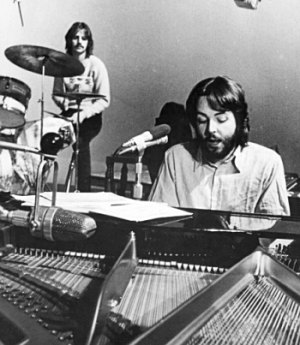
With Paul McCartney seated at the piano at Twickenham on the morning of Jan. 7, 1969, the seeds of the Abbey Road medley are planted. Or, at least, unveiled on tape.

Famously pinched, in part, from a poem that was more than 350 years old, “Golden Slumbers” debuted minutes into the Jan. 7 tapes, another of Paul’s performances solo at the piano.

Lyrically and musically, the song is just about what would end up on Abbey Road.

Once there was a way to travel homeward
Once there was a way to get back home
Sleep pretty darling, don’t you cry
And I will sing a lullaby

Golden slumbers fill your eyes
Smiles awake you when you rise
Sleep pretty darling, don’t you cry
And I will sing a lullaby

While the song has its origin in a Thomas Dekker poem from 1603, the recollection of a “way back home” is Paul. Here’s the inspiration, the original verse by Dekker:

Golden slumbers kiss your eyes,
Smiles awake you when you rise.
Sleep, pretty wantons, do not cry,
And I will sing a lullaby,
Rock them, rock them, lullaby.

Care is heavy therefore sleep you.

You are care and care must keep you.
Sleep, pretty wantons, do not cry,
And I will sing a lullaby,
Rock them, rock them, lullaby.

After repeats of the song, Paul transitions right into “Carry that Weight.” Of course, it sounds like the songs are made for each other, but that could be more than 40 years of built-in bias.

It’s unclear if the link was simply improvised that morning, conjured over breakfast or what. But “Carry That Weight” sure did seem to be a standalone piece when brought to the band the day before.

As the piano part winds down, implying “You Never Give Me Your Money” (which is yet to be written), instead he goes right back into “The Long and Winding Road,” the same song Paul began to play prior to “Golden Slumbers.”

Any other day, it wouldn’t strike a chord, no pun intended (really!). But on this morning, “Golden Slumbers” and “The Long and Winding Road,” separated by five months in the studio and eight on vinyl, are pieces of a puzzle that  I didn’t realize existed.

Of course, book-ending “Golden Slumbers/Carry that Weight”with “The Long and Winding Road” could just as well be coincidence, too. But this context, deliberate or not, sheds light on what sounds like shared DNA.

Paul’s incomplete lyric to “The Long and Winding Road” — truly debuted as the tapes began to roll on Jan. 7, 1969, just moments earlier — spoke of  this sad, Sisyphean journey.

The Long and Winding road that leads to your door, will never disappear, I’ve seen that road before. It always leads me here, lead me to your door.

Having completed that performance, Paul unveils the song’s echo in “Golden Slumbers.”
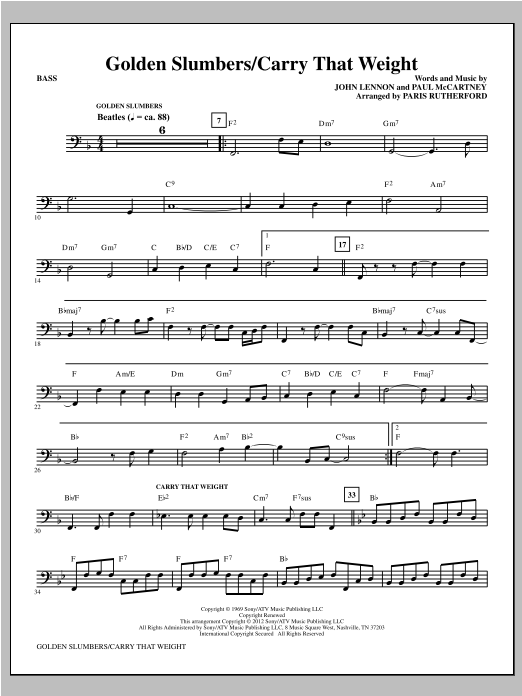
HL_DDS_9079800pW60Dl5XJ“Golden Slumbers” shares the yearning as “The Long and Winding Road” but, side-by-side, it sounds further removed with a stronger sense of contemplative acceptance to the singer’s situation.

The time has passed: There “once” was a way to get back homeward. So while  “The Long and Winding Road” (as written to this point, at least)  has  a sense of distant, desperate hope, “Golden Slumbers” delivers acceptance but a promise of a better tomorrow via Dekker’s original lyric (“Smiles awake you when you rise”).

It’s Paul’s “All Things Must Pass.”

Bundle “The Long and Winding Road” and “Golden Slumbers” with “Carry That Weight” — not to mention “Let it Be,” which is absent from this sequence but was first played four days prior —  and in Paul you have a man who seems to readily acknowledge and be at peace with the fate of his band more than a year before they would actually split.

14 Comments

Filed under Day by day

Jan. 7: Still they lead him back

paul-at-pianoA difficult January 6, 1969, did not result in a collapse of the sessions at Twickenham — which were entering just its fourth day — nor a break in the band. Not yet, at least.

So with the promise of optimism any new day delivers — daylight is good at arriving at the right time, after all — Paul was again the first back at the studio Tuesday, Jan. 7. And as was the norm that developed, he kicked off the day’s tapes solo at the piano.

“The Long and Winding Road” had the most brief of debuts at the first full session, Jan. 3, lasting about 10 seconds prior to Paul launching into “Oh! Darling” during his first morning piano jam.

It’s a poignant beginning to this session, on the heels of the rough day prior. Paul has very much alluded that “The Long and Winding Road” is about the splintering of the group — although the song itself wasn’t really new. Instead it was a few months old, a product to the White Album sessions, and one he said he wrote channeling Ray Charles.

He says as much on the brand-new official Let it Be … Naked site (Note from 2018 — it’s since vanished from the web) — in an interview that was probably from the record’s original release in 2003, not from 2013, I’d guess, repeating the point about “writing as” Ray Charles, but stopping short of saying “The Long and Winding Road” is about his relationship with the group.

On the heels of saying that people read a lot into “Two of Us” being about him and John when it was actually written for Linda, Paul does leave the door open about what exactly “The Long and Winding Road” was about:

It’s to do with your personal situation at the time. You don’t always realize it.

While the song had been demoed months earlier, the song this day is in nascent form.

He plays for about five minutes, with the skeleton of the piano part in place, but just few lyrics.

The Long and Winding road that leads to your door, will never disappear, I’ve seen that road before. It always leads me here, lead me to your door.

Many times I’ve been alone, and many times I’ve cried. …

And that’s all we hear, beyond a few scatted lyrics to what was the eventually vocal melody.

We hear the song one more time later in the day — it’s a 30-second instrumental, straight out of a short rehearsal of “Oh! Darling” right after Paul moves to the piano in advance of a lengthier session on “Maxwell’s Silver Hammer.” It’s just a time-filler as everyone else tunes up.

Even without the later, tacit acknowledgement, it’s very easy to read his struggles with the rest of the group in what few lyrics he did have written for “The Long and Winding Road.”  And it’s illuminating to know he felt this same sense of desperation already during the White Album sessions. It’s just another reinforcement to the thought that the Get Back/Let it Be sessions were part of the road to the breakup, not necessarily the vehicle for it.

George is confrontational and about 72 hours away from quitting the group. John is drugged, distant and tethered to Yoko. Ringo keeps a great beat but is otherwise not much of an active participant. But still, what they mean to Paul brings him back to Twickenham’s door.

The song ultimately would become a lightning rod, the most flagrant example of Phil Spector’s fingerprints on the final release and in a bit of a legal sense, the song that technically broke up The Beatles.

Listen to “The Long and Winding Road” on its own, and it’s a somber, beautiful song about not much in particular. Apply your own dysfunctional relationship here to what could be another typically McCartneyesque vague lyric.

Listen to it on this the morning after the fractious Jan. 6 sessions,  and at this moment, the fact it’s about the band — and Paul’s feeling of helplessness, which runs counter to the bossy image he’s developed — is inescapable.

16 Comments

Filed under Day by day

TMBP Extra: Let it Be … Naked on iTunes; what’s next?

In some pretty great, and somewhat unexpected news (to me), Let it Be … Naked has been sprung into the iTunes store. It’s nice to know I’m not the only person thinking about the January 1969 sessions at this moment in history.

Better news: That means the “Fly on the Wall” disc (well, digital music file) and all the random studio chatter and song clips within is also now on iTunes, albeit as part of the iTunes LP experience (ie., you can’t buy it as an individual track).

Yet better news: The iTunes LP, which includes all the songs, plus “Fly on the Wall,” appears to have the Get Back book in its entirety, legitimately available for the first time in the United Sates. Furthermore, videos for”Get Back” and “Don’t Let Me Down,” with beautiful remastered footage in the Naked edits, are now on sale, too.

The best news? There’s more to come.

Over the next couple of weeks we’ll be celebrating Let It Be… Naked in a few ways.  We are launching a series of five special podcasts featuring tracks from the album, original archive sound from the making of Let It Be, and interviews with Paul, George and Ringo reflecting on that period in The Beatles’ career.

The podcasts will be featured on the Let It Be… Naked site, or alternatively catch them on Facebook and Twitter. The complete version should be available for download on the iTunes podcast store shortly. It will be annnounced at thebeatles.com

Renewed attention to Let it Be and the sessions? This can only be a good thing.

But what does it all mean?

It could just be they’re filling in the gaps with their apocryphal material. The Anthology compilations weren’t in the first wave of albums to reach iTunes, and after this, Live at the BBC could be next to go digital.

Maybe they’re just marking 10 years since LIBN. The footage for the videos, for instance, was already remastered long ago for Anthology and perhaps more recently for LIBN.

But a big promotional push for The Beatles “as nature intended”? Maybe, just maybe, that Let it Be DVD/BluRay isn’t too far behind.

Leave a comment

Filed under Extra

Jan. 6: Et cetera

What a day!

Six hours of tapes that inspired 12 posts — and this one makes it a baker’s dozen. Some songs are introduced, others tortuously rehearsed and the proposed live show is discussed at length for the first time.

So before ripping off the desk calendar page and welcoming Jan. 7, 1969, I wanted to tie up some loose ends and look at a few songs and moments that were important enough to mention but not so much to warrant standalone posts.

“One After 909” wasn’t the only unlikely John Lennon song resurrected in the first few days of the sessions. “Across the Universe” was recorded 11 months prior — a pre-White Album contemporary with “Lady Madonna,” “The Inner Light” and “Hey Bulldog” — and sat finished but not yet released as of January 1969.

There’s more than enough to say about the song at this point to justify its own post — and it will. Once the song has a more prominent role, in the next day’s session, I’ll do more than offer this brief mention.

While George had introduced other songs,”All Things Must Pass” remained the primary Harrisong to this point the band was rehearsing. Jan. 6 saw just a smattering of takes running about 20 minutes on the tapes, barely memorable. Frankly, the song sounds like a dirge at times thanks in part to John’s unimaginative organ droning.

It’s such a great song, and I keep telling myself — “This is The Beatles doing ‘All Things Must Pass,’ for heaven’s sake” — but I don’t find myself caring, which pretty much puts me on par with the rest of the group. That sentiment was encapsulated in a brief exchange at the end of what would be the day’s final run-through of the song.

Paul: Wanna to do it again, George?

George: Not really.

Simple as that, they moved onto the final properly rehearsed song of the day: “She Came In Through the Bathroom Window.”

This was the song’s introduction to the sessions, and with the day nearing an end, it was a brief one, lasting just 15 minutes on the tapes. The song’s pretty well crafted at this early stage, as far as structure and lyrics. It took only a few takes and just a couple of minutes for the band to pick up the chords and string together a few reasonably decent takes.

It’s nice to hear the voices of George and John deliver harmonies, since we’re used to Paul double-tracked on the recorded Abbey Road version.

Eventual Abbey Road medley mate “Carry That Weight” was a Paul suggestion as a vehicle for Ringo, and he wasn’t alone thinking about giving a song to the drummer. It’s just that Paul was the only one who wrote a song that endured.

John offered up about half a minute of the upbeat “Annie,” which sounds just barely sketched out enough not to be an improvisation. There’s not much meat to the bones, but it’s pleasant enough and very easy to hear Ringo singing it.

Not to be left out, George immediately followed with a new song he likewise said was for Ringo. More fleshed out than “Annie” — or “Carry That Weight,” for that matter — “Maureen” was credited to Bob Dylan, according to George.

Maureen and George in India, Februrary 1968

Maureen and George in India, February 1968

It’s folky and laid back, and there’s no reason necessarily to think it’s not a product of the November ’68 Harrison-Dylan sessions in upstate New York, if you accept the premise Dylan was writing songs named for Ringo Starr’s wife in George’s style and less his own. As it would happen, George and Maureen did have a lengthy affair, but Pattie Boyd’s autobiography only pins it to the early 1970s. But who knows what was going on before that — I don’t, and I’m drifting badly off-topic in discussing band members’ infidelity.

What the song does do, like so many other random bits of music that passed through Twickenham, is add another curio to sessions replete with such oddities we’d never hear from again.

The group tackled a few covers, but of course they did. It’s a hallmark of these sessions, and a wildly overrated and overstated hallmark to boot.

One of the memorable covers of the day was an oldie they had mastered in the past and was so strongly associated with their live act. Surprisingly, it’s the only time they performed a take of “Dizzy Miss Lizzy” at the sessions, and it apparently happened to be an instrumental (any singing was off-mic, at least). Clunkier and a little slower than the original, if it was ever to be remotely considered for this live show — and there’s no indication it was to be — they’d probably just rely on memory.

The song served as a jumping point for a few other oldies in succession: “Money,” “Fools Like Me,” “Sure to Fall” and “Right String, Wrong Yo-Yo.” (All included in the above clip.)

Perhaps the covers throughout the duration of the sessions could be described as red herrings along with the one-off originals like “Annie” and “Maureen” — interesting merely because they’re rare Beatles recordings, but not nearly as enlightening as seeing the songs we know develop or listening to the fascinating conversation about the live show and the future of the band.

With that, I’ll close the book on Jan. 6, 1969. See you “tomorrow”!

2 Comments

Filed under Day by day

Jan. 6: That weight and this boy

It’s as if one James Paul McCartney had a crystal ball on this Monday morning, fully aware of the serious depth of frustration these Jan. 6 sessions would ultimately become in the ensuing hours with their iconic struggles with “Don’t Let Me Down” and “Two of Us.”

So in serving as rough bookends to what was, well, a rough day of rehearsals, it’s easy to read even more into “Carry That Weight” than Paul ultimately disclosed.  While not a complete template to the eventual cut on Abbey Road — it’s in standalone form, not attached to “Golden Slumbers” yet —  its introduction informs just why the song is as much a Ringo song than anyone’s. And I’ll admit, I wasn’t originally expecting this to be a post that much about Ringo.

On Abbey Road, the track is listed at a mere 1:37, much of that a reprise of “You Never Give Me Your Money” and the only real, tangible identification of the song as its own independent work of art is repeat of the dozen words in the chorus — “Boy, you’re gonna carry that weight, carry that weight a long time”

As Paul tells Barry Miles in “Many Years From Now”:

We were taking so much acid and doing so much drugs and all this [Allen] Klein shit was going on and getting crazier and crazier and crazier. Carry that weight a long time: like for ever! That’s what I meant.

…

‘Heavy’ was a very operative word at the time — ‘Heavy, man’ — but now it actually felt heavy. That’s what ‘Carry That Weight’ was about: not the light, rather easy-going heaviness, albeit witty and sometimes cruel, but with an edge you could exist within and which always had a place for you to be. It was serious, paranoid heaviness and it was just very uncomfortable.

Talk about heavy — that’s some pretty heavy analysis for a minute-or-so chant, no?

On this day, just under 40 minutes into the Jan. 6 tapes and before they do any heavy lifting, we learn it’s no mere chant. At least for this, the song’s debut, which comes mere moments after George’s futile introduction of “Hear Me Lord.”

“I have a bit there which might interest you,” Paul said. “I was thinking for a song for Ringo.”

And off he goes, solo organ accompaniment to the familiar chorus we would all know from Abbey Road, sung alone. He implores the rest of the gang to sing along, which they do less than enthusiastically.

After the full-group singalong, the “Carry That Weight” we ultimately would know and love for so long delivers something unexpected:  a verse.

When I’ve been told the first time that I’d seen that wasn’t done, but I can’t get over the way he treat me wrong.

I guess that could be about dealings at Apple. Or it could just be generic filler lyric Paul’s so good at creating.

Another verse, mainly actual gibberish, spilled into a brief description of chords. Things broke up with John and Yoko’s arrival moments later. As the couple discuss  “that diary” with George, Ringo hits the ivories and introduces a bit of “Octopus’ Garden,” before Paul steers it back into “Carry That Weight.” Ringo sings enthusiastically.


Unintelligible chatter makes way to another revelation.

That bit, I was trying to do, like, a country song.

So Paul writing something — even just a “bit” for Ringo —  makes perfect sense, with country songs obviously in his wheelhouse. That Paul’s looking to write something for Ringo also speaks of his confidence in the future of songs like “Taking a Trip to Carolina” and “Picasso” (“Octopus’ Garden,” too).

There’s another verse, but nothing that’s particularly understandable. Country-ish, in the way Paul writes country.

Paul suggests perhaps Ringo sings the chorus alone — or maybe it’s everyone.

With that, and an alternate take of the chorus — “Boy, you’re going to open that gate,” suggested by George, and in what sounds like something inspired by something that just happened in the studio — the group moved on to some instrumentals and improvisational songs before they later fell into “Don’t Let Me Down,” “Two of Us” and other works-in-progress.

And with Paul proposing “Carry That Weight” could have been a song to be sung by the drummer from the start, we have an answer to the question (that I always wondered) of why Ringo is just so wonderfully prominent on Abbey Road’s recorded version.

Having carried the weight of keeping a semblance of cohesion of the group, the sessions and a very long day, Paul sounds slap-happy in singing the chorus to “Carry That Weight” on his way out of the studio at the conclusion of the Jan. 6 rehearsals, completing the other half of the bookend.

13 Comments

Filed under Day by day