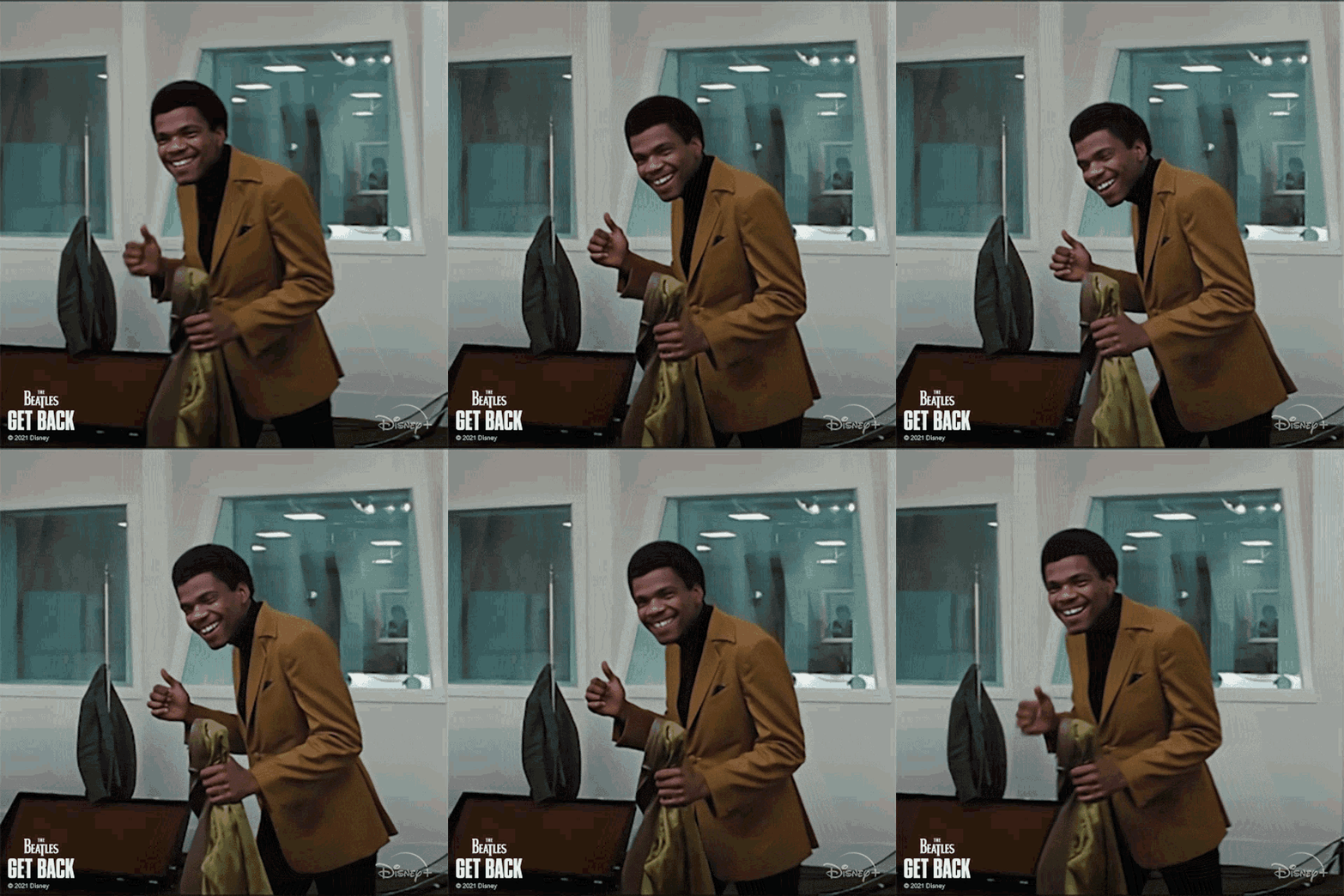
For all the storylines and spectacle of the Beatles’ January 13, 1969, there’s even more detail that just didn’t fit into the 20,000 words I’ve already written about this single day. For context, Kafka’s The Metamorphosis checks in around 21,000 words, most about a bug yet not a single oneabout a Beatle. Here are some of the delicious leftovers from our Fab Four’s day:
***
It’s the opening theme to the second episode of Get Back:
“You’re my world, you’re my only love,” croons Ringo Starr as the credits roll.
This audio is displaced. In its original context served on the Nagra tapes, the moment comes a good hour after the documentary implies, happening when Ringo is exiting, not entering, the Twickenham Film Studios main stage on January 13, 1969, just before the drummer joins Paul McCartneyin meeting John Lennonat the Twickenham canteen.
Years earlier, Ricky Nelson had a hit with “You’re My One and Only Love,” but that doesn’t seem like the inspiration, either.
It could just have been spontaneous on Ringo’s part.
There is another song he could be quoting more directly, though the source is a mystery. A clue could be in a hit song not by Ricky Nelson but Lefty’s brother Nelson Wilbury — Ringo’s bandmate George Harrison.
George’s “When We Was Fab” paid homage to life as a Beatle, but one line that fit unassumingly in 1987 stands out a little bit more as we revisit January 1969.
It sure seems there’s a missing link for “you’re my world, you’re my only love” — maybe it’s something the Beatles’ drunk uncles would sing at the pub in the Dingle or Speke in 1947 — a composition since lost to time that inspired callouts from both Ringo on January 13, 1969, and George, nearly 20 years later.
***
The near(er) future — more like 1974 — was tangible on January 13, 1969, too. Just ask Paul.
With two future members of Wings in the room at Twickenham Film Studios, a third was an occasional topic of conversation throughout the course of the day. Linda Eastman wasn’t a keyboardist yet, but Jimmy McCulloch, all of 15 years old and more than five years away from joining Wings, already earned status as a sharpshooter guitarist.
In flight: Jimmy McCulloch, Paul and Linda McCartney of Wings
“[The Who’s manager] Chris Stamp told me that they’ve got a new group now … the guy (Andy Newman) that works in the GPO (General Post Office),” director Michael Lindsay-Hogg said. “What’s he called? Clapperbell or something. And they’ve got a guitar player who’s 14 [sic], who looks like he’s 6.”
“Plays like he’s 80,” Ringo retorted.
It wasn’t called Clapperbell, instead it was …
“Thunderclap Newman,” Paul said, hours later and out of the blue — perhaps he caught a glimpse of them on the front cover of the most recent issue (January 11) of DISC and Music Echo — in the closing moments of the day’s Nagra tapes.
“That’s the guitar player they’re telling me about who looks 6, who’s going to be 14,” Michael replied, excitedly.
If it wasn’t enough to dream of future bands, the January 13 Nagras revealed pre-Beatles adventures, too.
On the heels of Linda’s relating a story of a horse stepping on her toes, Ringo described a more catastrophic injury suffered by his previous bandleader, Rory Storm.
“[He was] diving off New Brighton diving stage, going down and down, and he thought, where’s the water? And just as he decided to look up for the water, he slipped, and he broke his nose. So with a broken nose, blood everywhere, he ran right back up and dived off again.”
“He would, yeah, that’s Rory’s thing,” Paul chimed in before saying he recently ran into Rory “in the drive, washing his car.”
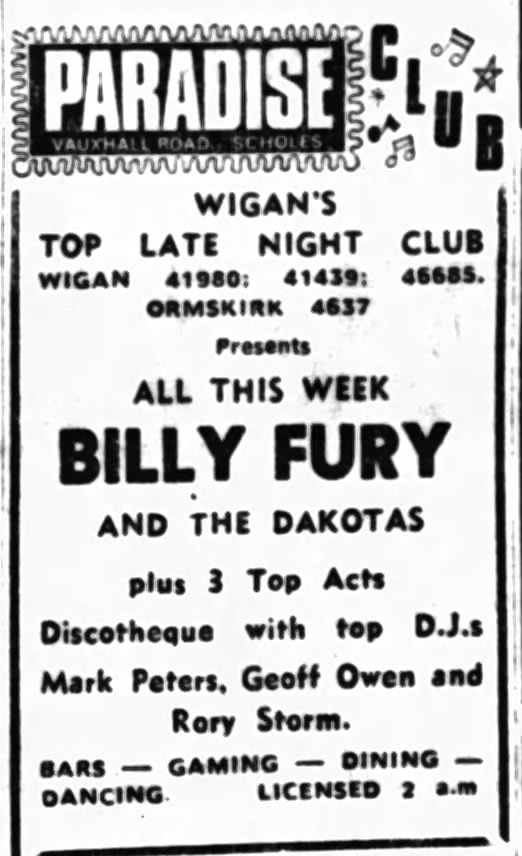
“He’s a swimming instructor when I saw him, and DJing, and trying to put a new group together. He’s great though, Rory, I like him. He’s a hustler.”
***
You’ll remember the sequence as comic relief in an otherwise sobering segment in Get Back.
A man delivering flowers to George seemed to be the last man standing who couldn’t recognize the absent Beatle. Doubled over laughing, Michael pulled himself together in time to ask Ringo if he liked the Hare Krishnas, who sent the gift.
“No, not really,” the drummer replied in perfect deadpan.
Music was always on everyone’s lips, even as the Beatles’ own production stalled.
“Penny Lane, I think, is one of the greatest songs I’ve heard in my whole life. You like it?” Michael asked later.
“Yes, but I don’t think it’s the greatest song I’ve ever listened to in my whole life,” Ringo replied in earshot of the song’s author.
Conceding how much Penny Lane “moved” him, Paul asked Michael if he was “from suburbia.”
MLH: No, it had to do with nostalgia for me.
Ringo: His father’s a fireman.
MLH: No, nor [worked at a] barbershop. But it’s about nostalgia, which always makes me break up and cry. That’s why Otis Blue is a very big [album] in my life.
We also learned a little trivia about the first records ever bought by some of our protagonists.
For Michael, it was “Quarter to Three” by Gary U.S. Bonds, while Glyn Johns’ first single was Lonnie Donegan’s “Rock Island Line.”
***
I mentioned this quote from Ringo in an earlier post somewhat in passing, but I thought it was interesting enough to call out again with greater surrounding detail.
With the time-limited Get Back sessions ongoing as filming for The Magic Christian loomed on the horizon, he was asked by Michael what he enjoyed more, drumming or acting. The answer revealed Ringo’s strong professional motivation. Someone give this guy a raise — and a little more vacation time.
“Well, it’s hard to say, doing so little movies and such a lot of the drums,” Ringo answered. “‘Help!’ and ‘A Hard Day’s Night’ was all right because its the four of us and we played, and did it. The only trouble with those [was] when I didn’t know what I was doing. … So I did ‘Candy‘, which was only two weeks — which was great because I have to do something.” (emphasis mine).
It wasn’t enough to be a father of two young children and drummer of the biggest band on earth and galaxies beyond. Ringo just had to work and eliminate extended down time. No wonder he got along so well with Paul.
I recently had the pleasure of chatting with author Steve Matteo, who not only is a fellow New Yorker, but even better, also shares the unique experience of writing at length about the Let It Be/Get Back sessions. You may have already read his 33 1/3 on “Let It Be,” and now his latest book — Act Naturally: The Beatles on Film — takes on the entirety of the group’s core movies in heightened detail with expansive context enveloping the period. If 33 1/3 was an LP, this book is a deluxe box set.
We spoke for almost 90 minutes, which was a great experience in real time — I suggest talking about the Beatles with people for hours, it’s always a wonderfully rewarding experience — but delivering a full transcript would cause severe eye strain. And I’m not going to start podcasting, despite my standout overnight freeform college radio stint almost 30 years ago.
So I did a little bit of both, transcribing the best bits of the conversation and then dropping extended soundbites when you want to hear a little more.
A caveat as you dig in with the hope you dig it: I’m neither a broadcaster nor professional podcaster (although I’ve appeared on severalas a guest!). I recorded the audio by putting poor Steve on speakerphone and then taping the interview from a mic on a computer. I cough some. Dogs mournfully bark for treats in the distance. The conversation wasn’t originally meant to be heard, but I ultimately believed smaller soundbites would be an effective way to present further parts of the interview, even if it wasn’t properly produced.
One other minor note: We talked a little about the potential of a future “Let It Be” reissue. This conversation was held a few weeks before we starting hearing rumors of a late 2023/early 2024 re-release of the film.
The Beatles, literally, at the movies
They May Be Parted: Why did films appeal to the Beatles? Was it just general desire for fame and exposure? There was nothing their earlier biographies to suggest otherwise. They were performers but not necessarily people who dreamt of acting. Was it just a product of the time and their own love of films that drew them in?
Steve Matteo: One, let’s make some money. They’re still young kids who grew up in Liverpool and had nothing. I think it was part of just the way it was done. When you became popular and you became big in the pop music world, like Elvis and Cliff Richard, you made a movie.
And I also think that they just loved movies, especially American movies. I think that movies had always been an escape for people who are middle class or lower-middle class, where you can go, there was a time you can literally spend your 10 cents and go into these big, beautiful movie palaces and escape into this other world. And if you’re young kids in Liverpool that lived in this place that in this country was literally bombed during World War II and you’re lucky to be alive and you have no money and you have really nothing, to go into these beautiful movie theaters and see these incredible American, mostly American films of cowboys and Indians.
And, you know, Ringo loved Westerns. So it’s like a fantasy. Like you’re this kid watching these movies. You never thought you would become a movie star. You never thought you would be in a movie. That’s why the title of the book comes from that particular song (“Act Naturally”). It works so perfectly.
So there’s all of these reasons. I think once they did “A Hard Day’s Night” though, I think they kind of felt like once the train of “Help!” had started up, they were sort of like, “Oh, now we’re going to do this again.”
You know how they were, they didn’t want to repeat themselves. I think after “Help!” they were sort of like, “Well, we’re not going to make movies like that anymore.”
Listen for more
“Paul saw the potential for creativity and it was like, ‘Well, let’s try this. We’re the Beatles. We can do anything.’”
TMBP: Your book spends a great deal of space on films that predated and were contemporaries of the Beatles’ movies. How intimate were you with these films previously? Did you think, “I know the context around the Beatles films, so I want to include that?” Or, “I’m writing about the Beatles films so I need to learn this context?”
SM: I think I knew a lot about the Beatles films, but there’s always more to discover. I’ve always really loved the British films of the ’60s. I’m a big fan of spy movies, and it’s a very rich period. There was a lot that I knew, but then obviously once you start doing research, there’s so much more that you learn about. So I just felt like I didn’t want to write a book that was, “OK, the Beatles made ‘A Hard Day’s Night.’ Oh, OK, and then they did ‘Help!'” And I wanted there to be context. I wanted there to be connective tissue.
It’s like the Beatles sort of influenced everything in that period, but they were also influenced by what was going on. So it is a film book. And when you write a book on the Beatles, you want to figure out a way to have it be somewhat different because there’s so many of them. So I felt like all of this context would kind of be a way to do that. And I think it became more than I thought it was going to be.
And there’s obviously, there’s musical context too. I give a lot of what’s going on, the British Invasion, the British music that came later, the psychedelic music. And I included the San Francisco sound and the psychedelic culture and all that was going on with mod fashions and photography. And it’s like a sort of cultural history of the ’60s where the sort of jumping-off point is the Beatles films. But then I give you all this other stuff.
“I hope that really hardcore Beatle people will appreciate the book … but I didn’t want to just write a book for the fans, or a book that was just for people who are only into the hardcore.”
TMBP: With hindsight we get it, but what did United Artists see in these guys to sign them for three films in 1963? You wrote it was for a quickie B-movie kind of thing, but the group had just a couple hit songs in the UK and no American footprint at all at the time. And UA took this incredible leap of faith.
SM: I think what they really were signing on for first was the soundtrack album. Capitol had this horrible contract where they did not have the rights to a soundtrack. And so United Artists, who had a really strong soundtrack component to their media company knew Capitol doesn’t have the U.S. rights to a soundtrack. “We got to sign these guys up. They’re selling records, and we’ll make money just on the soundtrack. And if we break even on the movie, it’s fine. It’s a cheap, old movie. It’s not going to cost us a lot of money.”
“They were one of the first United States artistic media companies that were formed by the creative people. … United Artists is really important to this story”
TMBP: There’s no question to the Beatles’ brilliance, but — whether it’s the serious Beatles fan, a Beatles scholar, music writers – do we almost give the band too much credit for inventing things out of whole cloth, instead of crediting them for synthesizing and improving upon their influences and contemporaries?
SM: That’s why I wrote it the way I did, because I wanted people to realize, for example, how important Richard Lester is. How important the other people who worked on the films — the cinematographers, the camera people, the writers, all of these folks.
“You do it because you love the Beatles, and there’s a lot of love that’s going on here. I try to be a journalist, though, too, and I want to be objective.”
TMBP: Researching the Beatles is a minefield, going through 10 years worth of the band’s history that’s more than 60 years removed.
SM: And that’s why I like to use books as a source of more than newspaper articles, because newspaper articles, it’s where they say journalism is the first draft of history. The newspaper articles often get it wrong because they’re rushing to hit a deadline. And it’s written by people who don’t know pop music. And it’s, “Oh, this is going to happen.” When you read about “Let It Be,” and you read about what was being said in Beatles Monthly or those things, they’re just talking about what it’s going to be. And as you know, this is your area, it constantly changed what it was going to be and what it eventually became.
That section in particular, I felt like whatever was sort of contemporary material is it’s just filled with conjecture on what the Beatles thought it was going to be. And you know, Derek Taylor’s saying whatever. And it’s not anybody lying. It’s just, well, on January 4th, it’s going to be X. By January 10th, it’s going to be something different. So books, I like to use more as a source because they’re after the fact. Here it is. This is what happened. It’s written down here, you know.
And I try to like, you know, and I go, as you know, I go deep into explaining my sourcing. I felt it was important to do. It is a minefield. And I really worry. And then the thing that drives you the most crazy is you read sources that are supposed to be the definitive, authorized, correct sources. And those people get it wrong. Humans make mistakes, and facts that are not facts get picked up over and over again where they become gospel.
There was one fact alone, when John and Yoko met with Klein, I could not get, we’re literally talking about not even 24 hours. I could not nail that down. I contacted Chip Madinger. He was great. He’s like, “Here you go, Steve.”
People are going to just read that one sentence in a 350-page book. I must’ve spent three days on that. Just that one sentence, literally. But it has to be right. I mean, if we’re writing history, we’re writing history, we’re not writing an opinion piece. And I’m a journalist. I’m not a music critic. I’m not writing Revolution In the Head.
TMBP: The Get Back sessions are always justifiably referred to as having no set plan. They’re making up everything as they go along. In reading your book, it seemed like there was a lot of making things up as they go along in “Magical Mystery Tour,” in “Yellow Submarine.” They were written on the fly, too. It almost seems like this is just the way they like to work.
Honey pie (chart): Paul’s “Magical Mystery Tour” breakdown
SM: With “Magical Mystery Tour” they had a blueprint. They had like an outline, as you know, the pie chart that Paul came up with. And then with “Let It Be,” it’s reality TV. It’s just like, “So we’re going to set up here, you guys turn the cameras on.” I mean, that’s really what it was. So that’s a documentary.
I don’t know if you’ve read my “Let It Be” book.
TMBP: I literally have it in my hand because I have a follow-up question about it.
SM: What I did was when I wrote that, I said, “OK, ‘Let It Be,’ it was a documentary.” So I think that’s my approach. I like the journalistic approach because first of all, I don’t think anybody cares about my opinion. And I would rather present the facts and let people come to their own conclusions. There are some people that they don’t like that. They find it a little dry. They feel like it’s just that you’re stringing a lot of facts together. I try to create a certain amount of, I have my opinions here and there, and I make observations. And obviously there’s, particularly with this [new] book, there’s a ton of context. So I just think that that’s what it is. It’s a documentary. I mean, you’re not going to script a documentary. You know what I mean?
So, of course, they would rather work sort of extemporaneously. I mean, that’s what they did when they wrote songs. That’s what they did in the studio. They would say, “Let’s try this. Let’s try that. Oh, let’s go down that road.”
One of the reasons why the music is so great is because they didn’t sit around thinking too much like, “But they’re not going to play that on the radio.” And, “Well, we’re only going to sell a million copies if we do it that way instead of 5 million.”
They were these geniuses. You had these great songwriters and that’s kind of where it starts. You’ve got these songs and you’ve got this great supporting cast in the studio. You’ve got George Martin and these great engineers. And yeah, there was limitations with Abbey Road Studios. We all know that, but there was also the amazing studio with the real echo chambers, real, not digital delay. And it just kind of all comes together, if you’ll excuse the joke.
TMBP: They were also — and this includes George Martin — great editors, and they knew they knew what should stay and what should go. And whether during the songwriting process or whether in the actual recording of the song, knowing just what was too much, what they didn’t need. And it seems, again, in reading your book, that they were good at that with their films — whether it was in “A Hard Day’s Night” and “Help!” or “Magical Mystery Tour” — knowing what to cut, knowing what they need to rework, knowing what they need to shorten. And it wasn’t always just, “We’ll give you everything.”
SM: Right. I think that “A Hard Day’s Night” and “Help!”, that was a lot in terms of Richard Lester and whoever was editing which particular film. You know, “Magical Mystery Tour,” they had a lot of help with that too, in terms of editing it down and creating something that was close to being cohesive. “Let It Be” is this thing of just hours and hours and hours because of the nature of it, because it was a documentary.
I mean, keep in mind, they obviously have all of this control over their music as time went on. But with the films, it is very much collaborative and various decisions in the way things end up is very much the filmmakers’ and not the Beatles. “Magical Mystery Tour,” they had almost total control over.
TMBP: So I was saying, I have your 33 1/3 on “Let It Be” in my hand. On the last page (this is a spoiler alert for anyone who has not read it yet) you write — and this is right after they found the stolen tapes – “Whether the recovery of the stolen Nagra tapes will impact the fate of the new DVD remains to be seen.” When you wrote that 20 years ago, what did you expect would happen?
I meant it when I said I had Steve Matteo’s 33 1/3 on Let It Be in my hand. Please visit the Contact Me page if you’re looking for an inexperienced hand model.
SM: When I interviewed Michael Lindsay-Hogg, he told me that he was interviewed for extras for a DVD release. And there were other people that I talked to who said the same thing. Now, of course, it never came out. The whys, we don’t know. There’s always been this speculation that the Beatles didn’t like “Let It Be,” particularly George. And that was a lot of the reason why it kind of sat on the shelf.
This is after George passed away [in November 2001]. I’m working on the book mostly in 2003. So that must have been the impetus, in some ways, to say, “Now’s the time to get this thing off the ground. George was never really a fan.”
I don’t mean this in a negative way. They weren’t being like, “OK, George is gone. Let’s put this out.” I don’t mean that. That’s not where I’m going with this. I think that I think it’s just the opposite. I think they respected, they all had an equal share, and he really wasn’t a fan of putting it out.
So now that George had left us, I think that was one of the projects they felt like, “We don’t like it, [but] people want to see it. So let’s get it out there.” But it never happened. And whatever the reason, I don’t think anybody really knows that. If somebody knows it now, tell them to e-mail me and let me know. Was there something? Because they put all this work into it. And if you remember, also, when they announced “Get Back,” they announced “Let It Be” would be re-released.
SM: Right. And so here we are, once again. It’s, as Yogi Berra said, déjà vu all over again. Every time they do this, people start calling me and they want to interview me. And I say this, the story of “Let It Be,” “Get Back” — whatever you want to call it — it is not over, it will not die, it will not go away.
And that was one of the reasons why I did the 33 1/3 book. Because I felt like of all their albums, that was the one that the life of it was not finished. It wasn’t something that was done. I mean, look at it. As much as they hated it, we’ve had Let It Be … Naked, we’ve had “Get Back,” and we’ve had the Let It Be box. And whatever’s on the Anthology albums, the CDs, and it’s still not over.
You have to remember, too, that Peter Jackson said that he’s going to work on another project with Paul and Ringo. And whether that is the “Now and Then” thing or whether it’s hopefully more like the Star Club-type stuff. I think it’s more than just using that technology to get better recordings out of some of this to put out. But I don’t know, I have no inside information.
TMBP: What were your experiences listening to the Nagra tapes? Because there aren’t that many of us who have put in the effort to hear it all. For me was very eye-opening to get this full breadth of who they were. You got little bits of it in all the bootlegs that came out from 1969 on, but then to finally get the full extent of it — what was that like for you?
SM: I was never a big bootleg guy. I know there was almost an industry of Let It Be/Get Back bootlegs, but it always intrigued me and it was interesting. And then when I started working on the 33 1/3 book, obviously I started really digging deep into this stuff, and it is fascinating. You do kind of get into it and the history of it, the photography, the pictures. I love the way that — and I talk about this in the new book — these bootleggers would come up with these crazy names for these things, like “Jamming with Heather.” I named the last section of the book after “Posters, Incense and Strobe Candles,” the BCN bootleg. I love that stuff.
I mean, I know some people think this stuff should all remain dead and buried. Some people want to hear every note. Steely Dan, they’ve never wanted to release all of the outtakes and all of that stuff. They have this aversion to it. I think they’ve released one unreleased song in their entire history. They just don’t want this, they are such perfectionists. They don’t want people to see Picasso’s sketches.
TMBP: At some point in the 1970s or early ‘80s, didn’t George Martin say there’s nothing in the vaults anyone would want to hear? But that wasn’t true. And then you have someone like Bob Dylan, who in his lifetime makes the decision to put everything out there. And I think that’s what the fan wants to hear.
TMBP: And I want to hear everything. But I guess that’s me. And again, I don’t know how many people would sit through 80 or 85 hours of Nagra tapes or whatever the band’s leftovers are.
SM: They could make it available digitally or something. I think that Capitol, Universal, Apple — I think they’ve gotten better at it. I think that the Anthologies were the kind of first step towards doing this stuff right. Whatever problems they’re all with it, and everybody’s got their opinion. And then I think the next kind of leap was once they started with the Sgt. Pepper 50th anniversary, I think they’re getting this stuff right. And I think the reason why is because I think they’re trying to be more open to listen to what the people who really know have to say, not just relying on whoever the person is at the particular label at the particular time who’s in charge of catalog development.
“It all ended in 1970. I think they’re going to reach a point where they’re going to run out of stuff. But I think there’s still stuff left to be put out.”
TMBP: What was your reaction to the “Get Back” series, to hear the tapes cleaned up and see those visuals? There are moments in “Get Back” not quite portrayedthe wayit really happened, some scenes not edited sincerely – there are some gray areas. How did you view how “Get Back” was presented overall?
SM: What you’re saying in terms of your knowledge of it, where you know, they played with that, they enhanced it, or it’s a little out of sequence, which is troubling. But I think that’s just what filmmakers do.
TMBP: It’s a good story. Peter Jackson made a great story.
SM: Right. And I don’t think they’re necessarily trying to mislead anybody. I just think there’s a sense of it doesn’t make sense, even though it’s correct.
Because you know, “No, that’s wrong. That’s enhanced. They overdubbed something there.” But maybe they didn’t, maybe it’s just this new technology. They were able to fix it. Maybe it wasn’t right before because you couldn’t hear it right. And now it is right because you can hear it now because of the new technology. I mean, that’s a discussion to have.
TMBP: For sure. I’ve thought everything that Peter Jackson did was certainly from a good place. Maybe I’m speaking like this is the world of sports, but “Get Back” invigorated the fan base, so to speak, and then brought in so many new, younger fans. I’m on social media and shocked in the best way at how many teenagers, 20-somethings are knowledgeable and fully invested in the Beatles. I think these were the right choices at the right time, the right phase of the Beatles to blow this out.
SM: Yeah. I think that it was — these guys are so cool and not just the four of them, but all the people that surround them. Glyn Johns wins the “Get Back” Fashion Award. I don’t think there’s any question about it. I think that they, the world, the media world is so used to these long-form streaming shows, these bingeable kind of things. Rather than just watch some dopey show on network television or go to a movie, this is almost like a new format, for lack of a better word. And it was so smart to put it on the first time over Thanksgiving weekend, when everybody’s home for this long weekend, and everybody’s exhausted from eating too much turkey and drinking too much wine. We’re kind of in the middle of COVID. So it’s sort of like, “Well, what do you want to do tonight? Yeah, let’s watch ‘Get Back.’”
And the critics seem to really love it. It’s Peter Jackson, too. He’s like the biggest at that time. No one could touch him as a filmmaker. He’s like this old hippie, too. So I think he comes from, like you said, the right place. It wasn’t just, “This brilliant director guy, we’ll just have him do it.” Don’t forget the Beatles wanted to do Lord of the Rings. Well, here’s the guy that did Lord of the Rings. So how perfect is this? I mean, it really, once you heard that this was going to happen, it was like, ah, perfect.
Peter Jackson and Co. cross the Road during the mixing of the Lord of the Rings soundtrack in the early 2000s.
TMBP: Exactly. There was, there were a lot of ways they could have gone. And it couldn’t have gone better.
SM: I could have written a book just on that. I’m in the 11th hour on my [new] book, and at that point that I was able to say — and we were cutting a bit from that section — I could have went on and on and on. I could go back and really do the “Let It Be” book again as “Let It Be/Get Back.” That would make a great book. Someone’s going to do that. I know it. I wish it would be me, but I’m not going to go retread that area again. It doesn’t make any sense. It will not go away.
I think part of it is it’s the end of the Beatles. So no one wants it to end. It’s the one part of their period that no one wants to see. It’s metaphorically, on so many levels, you know what I mean? Culturally, musically, generationally. It’s just like, “Oh no, wait, the Beatles broke up. What do you mean?”
TMBP: “Get Back” came at a time with so many generations of people watching, so many more than had seen “Let It Be” first-hand. So you have people who experienced the breakup in real time and read Lennon Remembers when it came out. And it’s like, you know what? Maybe John didn’t really mean all those things. Look how happy he was in the moment. And then you have people who never dwelled on the breakup, didn’t live through it, watching these guys creating songs out of nothing. It kind of hit something for every kind of fan.
SM: It’s like a soap opera, too. It’s like “Downton Abbey” or something. It’s “Downton Abbey Road.” It’s like “Bridgerton.” I’m stretching here, obviously, but it’s all those hours. There was a time where people would be like, “What, how many hours is it? Forget it. It’s more than a half an hour. I’m not watching it.”
But we’re all so used to this now, with Netflix and Apple TV+ and Hulu. People don’t read anymore. They don’t read long novels, but they’ll watch the eight-hour limited series on Netflix. They’re hungry for that. They want to be told an enveloping story, but they don’t want to sit down and read Thomas Wolfe.
“You get to watch them, and they’re silly, and they’re hysterical, and they have no computers, and they have no cell phones.”
TMBP: They had no cell phones and they were busy reading newspapers. “Get Back” is a beautiful time capsule, and while in that sense it’s dated, watching the footage, it seems timeless.
SM: Right, exactly. That’s what it is. You get to people. So there’s no time machine. Well, yeah, there is, and it’s called records and books and movies. And either it means you go back in time or you read something that somebody wrote yesterday about something that either happened in 1965, or they made it up about 1965. So that’s the time machine. People are stressed. I mean, between COVID and Trump and climate change, and I could go on and on, people are kind of fed up. So you go back to the ’60s and everybody’s groovy and having a good time.
Yeah, there were other things going on like the Vietnam War, and the world wasn’t perfect, let’s face it. But if you look at it through rose-colored glasses or kaleidoscope eyes, there’s this phrase for golden-age thinking — everybody thinks because something happened in the past, it’s better because you see it differently. It seems simpler, but it really was better. I’m sorry.
TMBP: In watching “Get Back,” I was struck by Michael Lindsay-Hogg’s work. I guess we know why he edited “Let It Be” as he did — he had four Beatles to please in real time — but he edited his own film in such a different way than Peter Jackson did with “Get Back.” Michael took such spectacular shots and we had to wait 50 years to see them.
SM: He is a great filmmaker. And one of the other things that I liked about “Get Back” is, Michael and Peter — it’s a mutual admiration society. They both really, truly like each other and respect each other. Michael went on, as you know, to have a great career. Before the Beatles, he was one of the main people in the evolution of Ready, Steady, Go!, probably the greatest music television show ever. And then after the Beatles he did “Brideshead Revisited.” That was huge. That was a phenomenon when it came out. In terms of critical acclaim and in terms of the amount of people that watched it, that was the “Downton Abbey” of its day. And of course he did other things, and he’s a painter. And I tell you what, he’s the nicest guy in the world. I’d like to hang out with him. He’s so talented. He’s a renaissance man. He’s a throwback. He really is, truly. And he’s royalty, too — he’s a baronet.
I’m glad that he is getting his just desserts, in a good way. That’s another reason why I would like to see “Let It Be” come out. Because I think that it will be reevaluated. And I think that Michael deserves his moment in the sun.
“Whether they’re collectively or as solo artists or the various labels, there’s so much material to re-put out again.”
TMBP: Twickenham Film Studios is part of their entire career. They’re going in and out of Twickenham, whether it’s for movies or promotional films, all these different things. Was that the only real feasible location in the UK or in London for such a large-scale operation?
SM: No, there are other places to make movies. I just think Twickenham just happened to be the place. I think it was just kind of happening at the time. I think maybe United Artists also had some sort of connection with them. It was probably the most fulsome setup. It was maybe a little bit more centrally located than some of these other studios that were a little farther outside of London than Twickenham was. They could just become like, ‘Oh, we just happen to work here first.’ And then they’re like, ‘Oh, yeah, that worked out fine.’ So we’ll just go back there again. There’s not a lot of thought put into it.
TMBP: It’s like always going to EMI when you could go anywhere. I’ve always wondered if there ever any suggestion — and presumably wouldn’t be from them, but who knows – of shooting something in Hollywood. You would think that would be fun, at least for them.
SM: “Magical Mystery Tour” is mostly shot on location. And I think they even tried to film some scenes at Twickenham, but it was all booked up. And that’s why they used that big Air Force hangar, because they couldn’t get into one of the film studios at the last minute.
TMBP: And thank God they did that, because the “I Am The Walrus” sequence one of the great scenes in their history.
SM: And then “Help!,” obviously, is shot on location in the Bahamas and Austria. And “A Hard Day’s Night” is mostly shot on location. So yeah, they did a lot of promos at Twickenham. They shot almost half of “Let It Be” there. So I don’t think there was necessarily that much thought that went into these things. I think maybe it was just a question of a certain comfort level, you know?
TMBP: Sticking with “Magical Mystery Tour,” should that have been a cinematically released film instead of a TV show? We see how influential “Yellow Submarine” became, acknowledging how they weren’t involved with it. But would “Magical Mystery Tour” have had that same sort of acclaim had it been in theaters instead of on TV in 1967, and changed its historic trajectory?
SM: I think it was a film, but I think it was a short film. Let me just qualify that. And then, why it was shown on television? I think it was because they really couldn’t get film distribution because it was so freaking weird. And also it wasn’t the length of a feature film. So again, they’re in this weird place. I think they wanted to show it on television because I think they wanted to get it out quicker. And I think they perceived it as almost like partially, believe it or not, as a promotional tool. So if they released it as a film in the shape that it was in, and what I mean is by length.
And it was just shown at universities and at the UFO Club or Middle Earth or whatever, I think that it would have gotten the avant-garde media, underground media, which was ‘67 is just really coming into place. Rolling Stone magazine launches in October. I believe FM radio was actually around in ‘66 in New York with WOR. So you’re just getting the beginning of sort of the underground. I guess you have Oz magazine … and it’s very underground. So if it’s shown as a film in the kind of places where those kinds of people go, and it’s only covered by that media, then maybe it starts out in a different sort of spot. It was wrong for it to be shown the way it was shown, particularly on the date, but we all know that.
The day after. From Page One of the December 27, 1967 Evening Standard.
TMBP: Why was it kept off American TV for so long?
SM: NBC turned it down. They just thought, “This is just too weird. We’re not going to show this stuff.” You have to remember this is 1967. If you’re in New York or San Francisco or London or maybe some places in Colorado or Boston, yeah, you’re plugged into this counterculture underground, this thing is happening. This is the next phase.
It comes out after the Summer of Love. So we’ve been through all of that. It’s not quite the tail end of psychedelia, because psychedelia starts and ends. It’s a wide period of time, but the peak is a short period of time where it sort of peaks.
TMBP: What’s your favorite Beatles film?
SM: I think “A Hard Day’s Night.” Without getting into a long-winded explanation, I think “A Hard Day’s Night” still the best, it is still such a great movie. It stands on its own as a film. You can watch it and kind of separate the Beatles from it, but you can view it just a film. And it’s just great, it’s an important film. It’s part of this evolution of ’60s cinema, where you can’t really say that about the other films. Maybe “Yellow Submarine” in terms of it being the first sort of major important animated feature-length animated film for adults. But I think it’s “A Hard Day’s Night.” Give a lot of credit to Richard Lester.
Is that your favorite? Or is it “Let It Be?”
TMBP: It’s “Let It Be” and it’s sort of in a sick way, but I recognize “A Hard Day’s Night” as their greatest film –- I acknowledge the separation between favorite and best. What about something that someone else has done about The Beatles? Is there something that stands out?
SM: “Anthology,” I really would like to see it again. And I would like to see them fix it. I don’t know if you’re into Pink Floyd, but they took one of these films, it was from the ’80s. And what they did is they went back and they completely redid it — they made it in widescreen, they took away some of the clunky sound of it. They did a restoration to it. I would really like to see that done with “Anthology.” And then I think I would have a certain feeling about it.
I really loved “Across the Universe.” I thought that was really beautifully done. You know, it’s hard to kind of make a movie like that. I really like “The Beatles and India” film a lot. I thought that was really, really wonderfully done. I remember seeing “I Wanna Hold Your Hand” when it came out in the movies. It was kind of cute, the idea of it. I think it was done with a lot of heart.
“Backbeat,” that’s probably my favorite, I love that movie. Everything about that movie just works. “The Concert for Bangladesh” is a great show. It’s a time capsule. I can remember, I had just gotten an FM radio of my own, a whole stereo setup. And I remember them playing that on the radio, premiering it and playing chunks of it in a row on the radio and just being blown away by it.
SM: Yes, me too. I have that on VHS. That’s never come out on DVD or Blu-ray. I think they’ve lost all the rights on that.
TMBP: The Beatles have all these little pockets of things that we’ll never see ever again. Or, who knows when we’ll see it, whether it’s “Let it Be,” or “Anthology.” I mean, unless you own the physical media.
SM: I think they will put those out. I think you’ll see these things — when, I don’t know. I hope they don’t just do like what they did with the rooftop concert audio, where they just put it out on streaming only. To me, I don’t think they know who their audience is when they’re doing that. You know, their core audience is still is physical media people. Especially vinyl. Now maybe their plan is at some point to do that, but I thought that was awful that they did that.
TMBP: Paul did something similar with the Flowers in the Dirt box set, where more than a dozen songs -– demos, B-sides, remixes – were bundled for purchase and download-only.
SM: If you see the way that they’re discounting some of this stuff, I think that from their point of view, whatever numbers they had in mind, I think there’s a certain degree of disappointment. I think it’s selling a lot, but I think that sometimes I think they have an overinflated sense. I also think that they, what they want to do is if they print a 100,000 copies, they’ve got to sell every last one. Like they want to wring out every last penny from it.
And I know that Disney did not handle the “Get Back” reissues on Blu-ray. That was not handled right. They did a terrible job on that. It was almost like they didn’t even want to do it. I have this conversation with my wife all the time — there was a time that a record, an album, a CD, a DVD, a Blu-ray, people love this stuff as a gift, because there’s a certain personal connection there. And it’s an inexpensive gift. Twelve-inch albums aren’t small, but it’s relatively small. It’s value for money too. Some of these are things people don’t want to spend the money themselves. They think it’s extravagant, but if you give somebody a $25 Blu-ray or if you give them a nice double vinyl album, they’re like, “Whoa, thank you.” And these record companies and film companies that want to phase this stuff out.
“Once you buy a record or a CD or, or an album or a book, you own it. It’s yours. You can do whatever you want with it. You can have it forever. They don’t like that.”
TMBP: : Your book stuck to the core films. Did you consider writing about “Anthology” or “Eight Days a Week” or anything like that?
SM: The only one that I thought possibly could have been included was the Shea Stadium concert. But again, I felt like it really was just a television show and it just would have made things so much more complicated. I think that those five films is the way that it is. That’s the canon, so to speak. I don’t think Shea Stadium is really part of it. I touch on Shea Stadium, but again, then the book becomes, it becomes unwieldy. It really ended, I have to let it be. That’s it. It’s over, you know? I mean, I give you a little sense of how these ’60s films would go on to influence. And then I give you a laundry list of film directors — Marty Scorsese and Francis Ford Coppola and Robert Altman and the usual suspects, how important ’70s American film is, how that kind of takes over. That’s like the golden age. Again, there’s that phrase, you know?
I thought about maybe at the end, I could put a couple of pages of a capsule review of some of the films that came after, but then where does it end? I’m having trouble with the length of my manuscript to begin with. So to even think about that, maybe that’s a Part Two, but I don’t know if I would ever actually do it.
I should probably have one of these disclaimers: Steve sent me a review copy of the book. But in all honesty, I would have bought it anyway.
Paul McCartney emerged January 13, 1969, as a journalist investigating a story of his own creation, and he spent the back end of his day at Twickenham Film Studios enduring some newsroom drama to sweat a co-byline with John Lennon and attack most of the five W’s of a catchy little tune the world eventually knew as “Get Back.”
True reporters, they worked on a tight deadline.
“OK, let’s try to get words to ‘Pakistani,’” Paul said of the song, which was very much in progress and still politically tinged. “We’ll do an hour,” telling director Michael Lindsay-Hogg “don’t worry,” because the staff will deliver content this afternoon (even if it didn’t last quite as long as promised).
But before attacking “Get Back” on the Nagra tapes, Paul continued to share what he felt his approach toward George should be right now, as he spoke presumably, to John and Ringo Starr and with the same candor everyone shared in the lunchroom earlier.
‘Look, I once thought the situation was that, and I don’t anymore.’
But I find that the most difficult thing ever to say. Because I hear myself say it, and I haven’t quite said it. I didn’t quite convince him. And as I think that, you think that, he thinks that — blah, blah, blah, it goes on forever.
Paul continued in another instance that’s unclear who he’s addressing, either straight to John or indirectly to George.
We’ve got the same problem that causes you to get on your guitar and wail. It’s the same one over and over. I’m wailing with ya. But I don’t say it right there and then, because I suspect we mightn’t be wailing about the same thing. So I won’t quite say it, and I never have quite said it, but some time I hope to say it. I may never say it, and fuck it if I don’t.
If Paul was speaking to John, he still wasn’t quite saying it. If it was directed to George, it remained theoretical — George was in Merseyside, as Ringo reported.
Mal sticks around, with pencil
This was a half-hour on the tapes resembling something closer to a vintage McCartney-Lennon writing session. Mal Evans — who Paul implored to “stick around with pencil” — took dictation and, as he did so many times over the past decade (including these sessions), participated uncredited in the songwriting process, too.
Jo Jo Jackson eventually lost his surname, though it stuck for now. Loretta kept her saccharine sobriquet, but her family name was very much up for debate on the 13th, with Paul souring on John’s suggestion: “Marsh.”
“We’re not sure about that, but put it in,” Paul told Mal early in the sequence, though he would quickly revisit that decision. We get to see this next bit in Get Back in an edited fashion.
Paul’s first choice suggests a tapping into the character-rich McCartneyverse.
“Sweet Loretta Mary. it’s got to be a name.” Paul tries out the name a few times, but Mary found her way in only one song from these sessions.
The process continued.
John: Sweet Loretta Marvin. Paul: It’s got to be a meah [sound] John: Meatball Paul: Martin
In other words, “Sweet Loretta Meatball” enjoyed a non-zero chance of being a Lennon-McCartney lyric.
Sweet Loretta Martin was already an option Paul suggested days earlier.
While the surname search continued, it’s notable the established first names — Jo Jo and Sweet Loretta — never encountered debate.
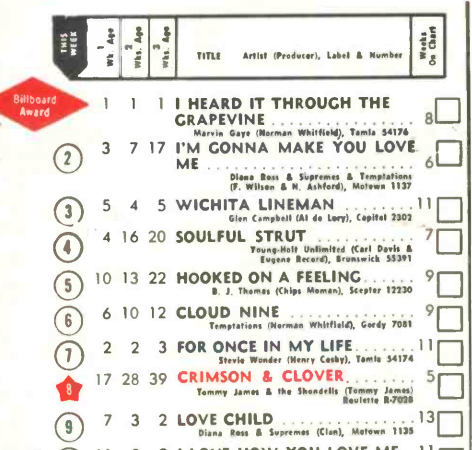
Many people have since claimed to be the Jo Jo and they’re not, let me put that straight! I had no particular person in mind, again it was a fictional character, half man, half woman, all very ambiguous. I often left things ambiguous, I like doing that in my songs.
Paul’s 2022 memoir Lyrics reveals no additional information on the people named in the song.
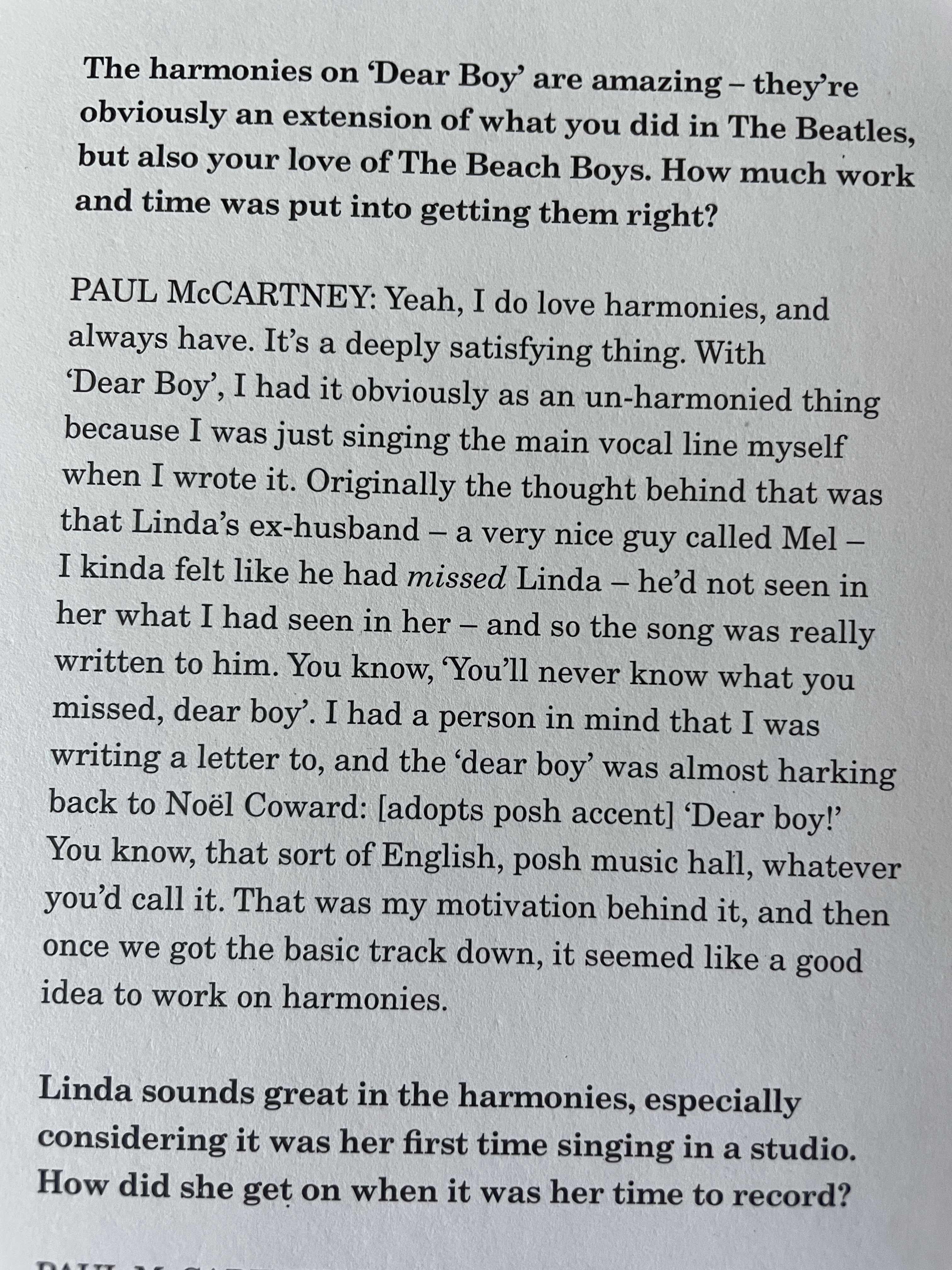
Upon his suicide in 2000, Joseph Melville See, Linda Eastman’s first husband — whom she met and later married in Tucson, Ariz., in 1962 — was commonly referred to as the inspiration of “Jo Jo.” There’s not much to go on beside the name Jo(seph) and the locale — his biography doesn’t otherwise fit the lyric. Moreover, he commonly went by “Mel.” So it’s a nice idea, but he doesn’t seem to be the answer.
That same singability informed the where of Get Back, too.
Since the song’s origin, the character in the first verse escaped the same southwestern state, Arizona. On January 9, as that verse developed, Paul sang on a few occasions “I left my home in Arizona.” Subsequently, including on January 13, he toggled between “Northern Arizona” and “Tucson, Arizona” as the point of departure. (Tucson is on the southern end of the state, for those unfamiliar.)
After one of the run-throughs, John fact-checked the lyric.
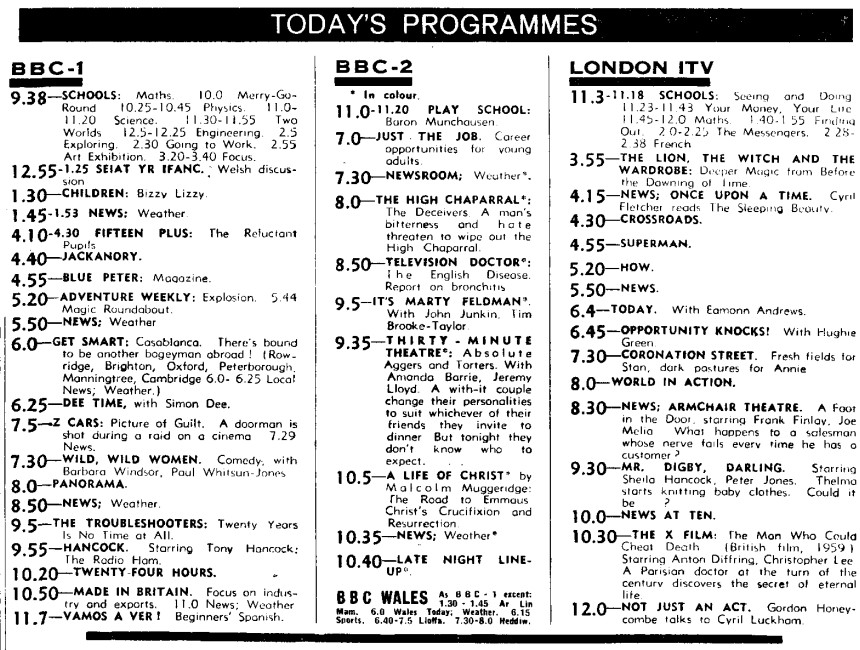
John: Is Tucson in Arizona? Paul: It’s where they make “[The] High Chaparral.”
January 13, 1969, BBC-2 listings
The American Western was a fixture on BBC-2, broadcast Monday nights, so it made for an obvious benchmark. More relevant to Paul, the second-largest city in the state was the former home of his girlfriend, who studied art history at the main Tucson campus of University of Arizona. Linda’s first child, Heather, was born in Tucson in 1962.
Just across Arizona’s western border lies the Golden State, and the line “California grass” predated most of the lyrics in “Get Back” as Paul sang it at the song’s origin on January 7. But the California reference wasn’t finalized, and this led them to work on the what and why of the lyric.
“Joey ran away from his home in Arizona,” Mal said, searching for a line.
Paul: Looking for a … something to last? … Looking for a what? What is it? Looking for a home to last … Mal: Looking for a love to last? Paul: Something like that, yeah.
Mal jumped off the suggestion and proposed both “looking for his blasted past” and “trying to escape his past.”
At the end of the day, Paul ultimately settled on “looking for the greener grass,” which comes off a little boilerplate and lazy, especially when he already had the more evocative “California grass” lyric in his back pocket for the time being. Paul was sure to this point, however, that he “had to be a loner,” with that lyric, also dated to January 7, remaining in the song today.
Upon the conclusion of the session, Paul settled on the first verse as such:
Jo Jo left his home in Tucson, Arizona, looking for the greener grass Joey said you had to be a loner, but he knew it couldn’t last
“Leave that verse, exactly as it is,” he told Mal. “And next time it might be better.”
Throughout this 30-minute sprint working on “Get Back”, the power trio thrashed at full throttle. Like their jams following George’s walkout the previous Friday, they’re edgy and loose. Paul and John often share lead vocals, singing in unison.
With the Beatles’ lead guitarist 200 miles northwest, Paul appointed John for a spontaneous solo. He replied with something rudimentary, but the assignment stuck — the solo remained John’s own through the song’s final performance on the roof.
Even with the song unfinished in so many parts and rushing through a brief window this afternoon, Paul remained characteristically mercurial, criticizing Ringo’s drum outro (“you’re doing a bit too long on those breaks”), vocalizing exactly how he wanted it to sound and offering specific instructions.
“So once you go on to the top tom-tom it’s like four from there on,” instructed Paul.
For a band highly conscious of poor focus and squandered studio time — a week earlier, Paul complained, “I think we do waste, physically, waste a lot of time, the four of us together” — this concentrated “Get Back” session was a very efficient use of time. Whether it was because there was one less cook in the lunchroom or a general understanding the three of them had their own reasons to wail, this particular afternoon was not squandered.
Satisfied with their progress, Paul called it a wrap.
“OK, and we’ll go home now,” he said. “We’ll come in tomorrow and try to do a bit more.” They settled on an 11 a.m.-ish Tuesday reunion in the studio.
But was that aspirational? After all, citing the Twickenham facilities crew, Michael said Apple Films head Denis O’Dell “canceled all his stuff for the show.” That decision, made off screen, set off an obvious chain reaction.
Paul: The [show scheduled for January] 18th should be canceled. So we have to be flexible, we’re going to have to be very flexible now. The 18th today has changed to the 19th, cause we lost a day today. Tomorrow it will change to the 20th. The day after it’ll change to the 21st. If George comes back, put it back a full week.
MLH: I think to stay flexible is important.
John stuck an optimistic tone to close out the day in another sequence captured in Get Back. “I’m leaving my favorite guitar here as a sign,” he promised. Paul meanwhile brandished his Hofner bass, replete with the setlist from their final show.
As Paul read song names for the cameras, nobody was certain if that artifact would remain the setlist from the Beatles final live performance. A token from John may not be good enough, and the other Beatles didn’t have time to hang a sign on George.
The new Beatles show would now be pushed to about two weeks out from January 13. While the songs were gradually taking shape, it was a concert that still lacked form otherwise. But even as the producer was canceling “all his stuff,” Michael said in the closing moments of the day’s tapes, “I think at some point we need to talk conceptually about the show.“
With the future fuzzy and Michael clearly feeling the pressure, Paul played for the cameras.
“So I’d like to say to the cast of this whole production, good night, and thank you very much for having us, it’s been wonderful working with you. ‘Cause I know it’s been wonderful working with me, but it’s been wonderful working with you too.”
“Do you think this will help my movie career or not?” Michael asked.
“You know you need this kind of traumatic event,” Paul replied.
***
The Beatles lost a day, but January 13, 1969, wasn’t a lost day. A Beatles ‘69 Comeback Special clearly required George’s participation — otherwise, why put the show off any longer? — but the other Beatles proved they could at least cover the gaps, produce and adapt in his absence. The attention to the lyrics, John’s guitar solo assignment, the care paid to the music are all proof.
Paul’s Monday was exhausting and cathartic. As the workday began, he described the failure to lure George back into the band, detailed the difficulties of his songwriting partnership with John and shared a vision for the breakup of the Beatles. In the lunchroom, the band’s interpersonal relationships were laid more bare in a presumed private setting. And the day at the office ended with a concentrated, successful songwriting session.
The Beatles — minus George and plus Mal and Yoko — at work on January 13. (Photo by Ethan Russell)
John’s day played out differently. We can sketch a scenario in which he probably slept in and deliberately left the phone off the hook — this was when “telephone’s engaged” prior to the “and then there were two” moment — before dragging himself with Yoko to Twickenham in time for the lunchroom discussion. It wouldn’t be any sort of revelation to say drugs may have been involved in his day. In front of the cameras, in the visual we see in 2021’s Get Back, John didn’t look like he was entirely there. But, there he was.
To write about the Beatles’ lunchroom discussion on January 13, 1969, is to write about a conversation that has no particular aim and a sudden ending. As I wrote last time — I cut-and-pasted this part — it’s sincerely impossible to give a linear rundown of this 30-minute discussion, as it isn’t a linear discussion. My disclaimer remains: You may have already read some of the below in previous posts. Now three parts in, this isn’t a straight recap — instead I’m trying to follow themes as they moved across different points in the conversation.
If you haven’t already, please read Part 1 first and then Part 2. It’ll get you right where you need to be to start off here.
***
There’s no snark, no playing for the cameras, no sarcasm. Otherwise absent, John Lennon revealed his instinctual charm in his vulnerability.
“I played a weaker game now than ever,” John was recorded saying at one point during the Beatles’ lunchroom discussion on January 13, 1969, as captured by the Nagra Tapes.
He did know, however, that whomever he was speaking to, Paul McCartney, Ringo Starr, Yoko Ono and Linda Eastman could listen in and follow up. This wasn’t complete privacy.
This conversation, like so much on the lunchroom Nagra tape and so much of the serious discussion around the band these days, is framed around the group’s approach to George Harrison’s role in the group. John and Paul certainly admitted to treating him “like a mongrel.” But much of the conversation is really centered on John and Paul themselves, the conjoined Nerk Twins and compositional heart and soul of the Beatles, the two biggest heads of the mighty four-headed monster that embodied the Beatles.
Much drama lay in store for the John and Paul relationship in years to come, but a lot had developed already. The threat of a further fracture — of the greater four, of these specific two — hung over Twickenham on January 13, 1969. The four were really three at this point anyway, with George gone.
And then there were those two. It was clear the relationship between John and Paul was, at best, impaired. The Lennon-McCartney partnership was discussedat some length before John and Yoko arrived for the day. In the presence of Ringo, Linda and others, Paul admitted his relationship with John — certainly when it came to songwriting, their job — wasn’t the same.
As the tapes secretly rolled in the Twickenham canteen, John came off as sincere in airing his grievances, which he must have held close prior, given how fresh his admissions sound.
“It’s like George said,” John conceded 12 minutes in, a line captured in the 2021 Get Back docuseries. “It just doesn’t give me the same sort of satisfaction anymore, because of the compromise we’d have to make to be together.”
The end result of the records now aren’t enough. … When something came out, like Revolver or [Sgt.] Pepper or whatever, there was still that element of surprise that we didn’t know where it came from. But now we know exactly where it comes from, and how it arrived at that particular noise, and how it could have been much better. Or it needn’t have been at all. The only way to do it satisfactorily, for yourself, is to do it on your own. And then that’s fucking hard.
So what’s the way out? It should have been these very sessions — the Beatles were in the midst of conducting exactly what it seems like John sought. The Get Back sessions weren’t delicately curated, and even if the actual noises weren’t necessarily unique, the process of creating new songs for a show demanded spontaneity unseen in their history.
John didn’t say the above to Paul, who was engaged in conversation with Yoko. Instead, John was speaking to Linda, who challenged her partner’s partner.
Linda: But you were saying yesterday … you write good songs and it can’t be any better way. You don’t want just studio musicians. I mean, that’s how I look at it. You make good music together, whether you like it or not.
John:I like it.
Linda: And making good music is also … it’s really hard working at a relationship.
Issues clearly emerged in 1968, and whether it sprouted from the death of Brian Epstein or the trip to India or during the White Album sessions itself isn’t necessarily relevant to this discussion. While the 1967 noises still surprised, the White Album left John “dissatisfied” (Ringo disagreed), even though “the end result was as good as it could’ve been.”
At once, John yearned for time on his own, while also lamenting that the Beatles had turned more in that very direction – more actively working separately — during the recording of their last album. To this end, The Beatles LP should have been called “John, Paul, George and Ringo.”
“I dig it, individually, far more than Sgt. Pepper,” John said. “But as a whole — as a Beatles thing, I think it didn’t work as a Beatles thing.”
There’s another contradiction. To get The Beatles Thing, they had to be themselves. But that behavior alienated George.
I wrote about some of what’s written below when I recounted Paul’s concept of a “breakup show” earlier on the 13th, but it’s worth not only repeating but going into further detail in the context of the rest of the lunchroom tape. We’re now in the post-Get Back docuseries world, which requires more commentary than before to amplify or clarify what a broader audience has now seen.
“You try and make George play competently, because you’re afraid that how he’ll play won’t be like you want him to play,” John told Paul. “And that’s what we did.
“And that’s what you did to me.”
The accusation came as no surprise to Paul, who simply mustered a “yeah,” like he did so many times during this conversation in response to John.
We can’t pretend this is a surprising point of contention. Paul Was Bossy largely defined the iconic Winter of Discontent. It was why the Let It Be Sessions, as we often called it once upon a time, was a “failure,” and why we believed the Beatles entered the summer of 1969 to produce Abbey Road as a way to go out on a high. This is 50 years of how Beatles history was recounted, whether you like it or not, to quote Linda.
We know better today, but even if it wasn’t the ultimate casus belli, of course Paul was bossy, even if that’s just in the lowercase. The other Beatles struggled with it: George quit at least in part because of it, and at the canteen, John protested. Paul may have placed himself as merely “secondary boss” earlier in the conversation when discussing an expanded lineup, but now, with around seven minutes left on the lunchroom recording, John conceded he felt powerless working with Paul, and had for some time.
“I’d got to a bit where I thought it’s no good, me telling you how to do it, you know? All I tried to do on [the White A]lbum was just sing it to you like I was drunk, you know? Just did me best to say, ‘Now look, this, this stands up on its own.’
“And I’m not doing this quite well this time, ‘cause I — like, even with ‘Don’t Let Me Down’, the first time I sang it. Because I hadn’t allowed meself to say it was a whole song. I couldn’t — it was only after we’d done it that I’d realized it was done. You know, and on The Beatles album, I just sort of said, ‘Here it is, ignore here, this is me singing it drunk, but I’m pretending as if I’m not. What would you do with it? George, you play whatever you like.’”
Paul arranges “Don’t Let Me Down,” from the January 6 sequence of Get Back.
Paul laughed at John’s second mention of singing drunk, but it goes to John feeling he had to be stripped of inhibitions to present and arrange a song to Paul as finished in his ears and in his eyes. John entered these sessions feeling unsure again, though. As he said regarding “Don’t Let Me Down,” it took Paul and George to help arrange it earlier in the sessions after John himself said he wasn’t sure in which order the song’s three sections should be presented.
You know, and that’s what it was. It wasn’t -– it wasn’t the arrogance of, “Listen, this is it, baby.” It was that I can’ttell you what to do because you won’t play, here, like what I think you should play. And I’m not going to tell you what to play.
Paul and John continued to speak to and over each other. It wasn’t angrily, they just were doing everything to make their respective points.
Paul: OK, and that’s great, you know. And then – it’s just being able to say that, on the occasion, just being – say, “Look, I’m not going to say anything about the song, because it’ll be difficult … to sing it to you.”
John: Yeah, I know, but you wouldn’t say – listen to me – you probably arranged it you know?
Paul: I know, I know.
…
John: Well, I’m saying that “Dear Prudence” is arranged. Can’t you hear [John vocalizes part of the song]. That is the arrangement, you know? But I’m too frightened to say “This is it.” I just sit there and say, “Look, if you don’t come along and play your bit, I won’t do the song,” you know? I can’t do any better than that. Don’t ask me for what movie* you’re gonna play on it.
Because apart from not knowing, I can’t tell you better than you have, what grooves you can play on it. You know, I just can’t work. I can’t do it like that. I never could, you know. But when you think of the other half of it, just think, how much more have I done towards helping you write? I’ve never told you what to sing or what to play. You know, I’ve always done the numbers like that. Now, the only regret, just the past numbers, is when because I’ve been so frightened, that I’ve allowed you to take it somewhere where I didn’t want.
[* Author’s note: I swear “movie” is what John said there, even if it doesn’t sound like it makes sense in context.]
What made the last bit a dialogue instead of a monologue was only the occasional “yeah” delivered by Paul.
John was pouring it out. He admitted fear, regret and submission.
“And then, my only chance was to let George … take over, or interest George in it, because I knew he’d …”
“’She Said, She Said,’” Paul interrupted, and John confirmed.
Interestingly, you can hear Linda replying, “yes, yes,” which means this was a big enough deal to Paul that he shared the story of that song’s recording with her (the couple didn’t meet for nearly a year after that session, so she wasn’t around at the time). It’s easy to reason why he did, and why he likely brought it up within the last 100 hours. With George having just quit, Paul probably told Linda about the time he himself walked out on the band – during the recording of the final song cut for Revolver, on June 21-22, 1966.
I’m not sure but I think it was one of the only Beatle records I never played on. I think we all had a blarney or something and I said, “Oh, fuck you!” and they said, “Well, we’ll do it.” I think George played bass.
Paul’s account had been the single source of this incident. It’s now part of the Beatles’ official history with this passage appearing in the book that accompanied the 2022 Revolver deluxe reissue (along with Paul’s quote):
The disagreement that happened in the dead of night seems to have been about how to resolve differing ideas for the arrangement. A recording sheet in the Abbey Road archive indicates a piano was added to the song at one stage, but no trace of the instrument remains on the tapes.
Back in the Twickenham canteen, John was clear about what mattered to him that night in 1966: “He’d take it as it is,” John said of George before continuing.
“So on [the White Album] … it’s probably George, you know, if there’s anything wrong with it. Because I don’t want your arrangement on it … I only want your … If you give me your suggestions, let me reject them, or if there’s one I like, it’s when we’re writing songs. The same goes for the arrangement.”
Exasperated and resigned, John continued, “I don’t want it to … I don’t know.”
Both Paul and Yoko said they knew what he meant, even if John couldn’t pin it down.
Opposite sides of the same coin. Not captured in Get Back: Yoko chiming in.
In the tape’s final moments, John returned the focus to his in-studio working relationship to Paul and continued to show what, at best, can be called inconsistencies.
And that’s all I did on the last album was say, “OK, Paul, you’re out to decide [how] my songs [are] concerned, arrangement-wise.” … I’d sooner just sing them, than have them turn into, into ‘[Being For the Benefit of] Mr. Kite,’ or anything else, where I’ve accepted the problem from you that it needs arrangement. … I don’t see any further than the guitar, and the drums, and, and George Martin doing the … I don’t hear any of the flutes playing, you know? I suppose I could hear ‘em if I [spoken as if straining] sat down and worked very hard! You know, I could turn out a mathematical drawing, if you like …
Indeed, John was more likely to tell George Martin he wanted “to smell the sawdust” in “Mr. Kite’s” circus atmosphere, or that he wanted to sound like the Dalai Lama chanting from a mountaintop in “Tomorrow Never Knows.” It’s all consistent with John’s outspoken, retrospective dissatisfaction with arrangements on his own songs, like “Across the Universe” and “Strawberry Fields Forever.”
And I really am relying on your touch: Paul’s hand-drawn instrument charts from the gatefold of 1986’s Press to Play LP.
Isn’t John lucky to have run into a guy like Paul McCartney (and a producer like George Martin) to help him take the song beyond guitar and drums and happily chart out those mathematical drawings?
It’s the archetypal refrain when bands splinter: There were musical differences. The Beatles didn’t really have musical differences. Just listen to the music they kept making and their general output as solo artists. These guys just had differences in how to make music. Despite the protestations, John and Paul weren’t incompatible but perfectly complementary, they knew it and we all know it.
How to fit in George (Harrison) was an entirely different issue. This was all part of the “compromise we’d have to make to be together,” as John said earlier at the canteen.
Paul: I’m onto the same thing, you know. … It is only, like, if you can just remember that we’re, you know, the four of us are trying to do that. ‘Cause I mean, all of those things you say, you know, in some way, apply to me. Not always —
John: Yes, yes, because everything applies a little bit to each other.
Paul: It is just you saying it. They’re all, you know, in some way, to some degree, will apply to me.
John: But there was a period where none of us could actually say anything, about your criticisms.
Paul: Yeah. Yeah.
John: ‘Cause you would reject it all.
Paul: Yeah, sure.
John: And so George and I would just go, you know, “I’ll give you a line here,” “OK,” you know, “We’ll do four in a bar, and I’ll do…” [resigned, sincere] And a lot of the times you were right.
Paul: Yeah.
John: But a lot of the times you were the same as they always are. But I can’t see the answer to that.
Paul’s ego at this moment was justifiably boundless, and it extended to his thoughts on the band itself. The Beatles’ reputation earned them wiggle room. It ties indirectly to an imaginary scenario he laid out earlier in the conversation: drunkenly playing the piano just because he felt like it and “everyone in that room will dig it, because it’s me really doing it.”
Here Paul insists the Beatles don’t have to play perfectly to sound that way to listeners and critics.
The thing is, like, within each other, within ourselves, we’ve reached something that’s nearly perfect. And everyone else who’s listening to it — “That’s it! We’ve done it!” … OK, so we know we nearly made it, but we’ve really made it for everyone else. ‘Cause, OK, we’re into the fine, finest, finest technicalities, you know, I mean, that’s where it’s at, you know? If one day, we can even keep all the people who are listening to this, nearly,nearly made it, they think we’ve made it. They think that’s it.
The next bit is familiar from the opening moments of the lunchroom scene of the Get Back series, although on the tapes it actually was said very close to the end.
“Like last week,” Paul said, “I say I was doing all right for me, I was really trying to just say to George, ‘Take it there,’ you know? Whereas I wouldn’t have gone, previously — I would have said, “Take it there – with [vocalizing] ‘diddle-derddl-diddle-der.’ But I was trying last week, to say, ‘Now, take it there, and it needs to be like…”
“You see, the point now is we both did that to George this time,” John replied.
The policy that kept us together. The compromise we’d have to make to be together. John had asserted in the canteen several times there was a system, and in not so many words, he believed that system had collapsed and they broke George. This was, like so many issues these four had, a communication problem.
John put it succinctly: “It’s like if I say, ‘All right, take it,” he’ll say, “Well, look, I can’t take it.”
Before the tape ran out in the lunchroom, as John and Paul continued to discuss their inability to get through to George, musically, we get to hear part of an exchange that was introduced in an edited fashion very early in the Get Back version of the sequence.
Paul: So he knows that when we say, “Take it,” we expect [Paul vocalizing]. If I said that, then he’d … [vocalizing George playing a simplified version of that same part]
John: But it’s just that bit. The bit where we’ve — “I’ve Got a Feeling.” There’s no way we could have translated it to him to say …
Paul: He’d have said, “I’ll do it at home.”
…
John: He’s gonna go home. But so have I, you know. I’m gonna go home in a studio, rather than go through this with anybody.
Paul: I’ve never said to George, “Look, George, I think, when I want a guitar bit, I want it exactly like I want it.” And he’s never said to me, “Well, you can’t have it.” … But that’s it, while he’d never said that to me, and I’ll never say that to him, and we’ll go on. But, really, I mean it is gonna be much better if we can actually say, “Look George, ‘I Got A Feeling,’ I want … exactly [like this].” And he’ll say, “Yeah, but I’m not you and I can’t do it exactly how you do it.”
And that ended the near-30-minute reel. It’s unclear how much longer they spoke, and what direction the conversation took.
So where are we left after extensively eavesdropping on the Beatles?
Ultimately we only know what a 1960s-era miniature spy microphone shoved into a flowerpot in an active lunchroom was able to pick up over a single half-hour period. At several points, the conversation is completely indistinguishable. At others we have a conversation being picked up in the foreground when one in the background is completely obscured. Even with Get Back’s AI, we’ve learned it’s not all perfectly heard.
Thanks to the lunchroom tape we know the Beatles better than before if only because there are more data points to draw upon, but that doesn’t mean we understand things proportionally better. These Beatles were never ones to keep a story consistently straight when it was for public consumption, and it doesn’t seem much different in private.
All at once during this same conversation, John wanted to:
Assign song arrangements to Paul because he didn’t want to bother with the job himself
Ask for suggestions on arrangements with the right of refusal
Not have any additional arrangements to his songs
As relaxedly outspoken he was on the lunchroom tape as well as earlier in talking to the others prior to John’s arrival, Paul was likewise levelheaded, perhaps thinking all along, “John, you’re all over the place, as usual” while never coming close to saying as much.
The tape and these sessions overall allow us to witness a maturation in Paul’s temperament and what sounds anecdotally like a softening in his micromanagement style in the 30 months since his 1966 walkout. He could still be very stubborn, but if we assume the “She Said, She Said” situation was comparable to other tense moments in January ’69, he handled these recent situations with greater poise. Paul recognized it himself saying just above, “Like last week, I say I was doing all right for me.” There are several similar snapshots throughout the sessions at Twickenham where Paul can be heard stopping himself.
Get Back was misleading in its presentation of the “I’ll go home to do it” quote. It’s not that George wanted to quit the band — or for that matter that John wanted to also. Home was the space George was more comfortable working on certain things. Witness the “last-night” songs George composed alone at home. When John says George will go home, he didn’t mean he was quitting the band, as Get Back implies. The context is clear it was to be in a different space to work out his parts.
The Get Back edit of the lunchroom tape is a very frustrating viewing once you know the contents of the entire original half-hour audio tape. Deceptive at its worst and unreliable at other points, the TV edit simply blurs an already schizophrenic conversation. Even if the two central participants were John and Paul, the active presence of Ringo, Yoko and Linda needed to be acknowledged, period.
An alternate televised account of the lunchroom — perhaps openly presented as a supercut or trailer of sorts of the full conversation — would have come off cleaner. A movie trailer never presents the action in the final order, but that’s OK and assumed by a viewer. Openly presenting the lunchroom sequence as a sampler of the conversation — one that jumps in, out and all around — would have been a more fair portrayal to satisfy the critics (like me) while keeping with the show’s clear time limitations.
Paul was most outspoken when discussing the group’s future, both before and during the lunchroom tape. But to be clear, the Beatles always discussed their future, even publicly, going back to the dawn of Beatlemania. You’ve heard John’s quote from November 1963 before:
You can be big-headed and say, ‘”Yeah, we’re gonna last 10 years.” But as soon as you’ve said that you think, ‘We’re lucky if we last three months,’ you know.
That they were conscious of their future more than six years after that interview should be no surprise. Breakup rumors appeared in the mainstream press as early as 1964 and reignited periodically. They were always expected to break up until they unexpectedly broke up.
The issue date of this Beatles breakup rumor — November 23, 1964 — was the same day “I Feel Fine” was released in the U.S.
How often did the Beatles privately have conversations like this one at the Twickenham canteen? How often over their career during a bumpy period? How often in January 1969? This 30-minute sequence was a one of a kind capture, but it doesn’t make it a one-of-a-kind conversation.
The individual Beatles of January 13, 1969, were closer to 30 years old than 20. Closer to the release of the McCartney LP than Sgt. Pepper. Their egos were developed, and John said he needed to smother his in Paul’s shadow. George’s could hardly develop in the space of John and Paul.
Did John even want George back? That’s not my question, that’s John’s question.
At this point, there are conflicting goals: self-preservation and singing how you really sing it vs. the Beatles Thing. With the luxury of retrospection, we know it shook out OK. Abbey Road was terrific, Let It Be was great and the intermittent singles were fab. It was more in question on January 13, 1969.
Like “Her Majesty” — the conclusion to Abbey Road that had its origins in the Get Back sessions — the lunchroom tape cuts off unresolved. We only know what comes next some short time later: John, Paul and Ringo head back to Twickenham’s sound stage. George isn’t there. They don’t replace him either. They simply go back to the studio.
But George’s on their mind.
“Let’s go and see George,” Paul said about 10 minutes into the post-lunch Nagras, which were initially filled with idle talk — a little bit about camera work, some about television. There was one problem with that excellent plan, and Ringo delivered the news: George, in fact, had — quite literally — gone back home.
“He’s gone to Liverpool” and would be back Wednesday.
“Oh, then Wednesday’s the day we see him, right?” Yoko replied, cheerfully.
“Yeah, and I think til then … ” Paul said before being cut off by Ringo.
The lunchroom discussion on January 13, 1969, winds and turns, overlaps and often overwhelms. It’s sincerely impossible to give a linear rundown of this 30-minute discussion, as it isn’t a linear discussion. So here’s another disclaimer: You may have already read some of the bits below in previous posts, and if you haven’t, you may eventually read some of it again. This isn’t a straight recap — instead I’m trying to follow themes as they developed at different points in the conversation.
Also, please read Part 1 first, if you haven’t already. It’s there I lay out the background of the lunchroom conversation and the key differences between the Nagra tapes and the Get Back docuseries’ portrayal of events. It’s not insignificant.
***
John, Paul, George and Ringo.
From 1962 to this very moment, it’s how we break down the Beatles. It’s the quintessential ordinal.
Open up your eyes now, tell me what you see: From the closing credits to A Hard Day’s Night
At once, it’s a simple accounting of tenure in the Beatles dating back to the Quarrymen days, but also a power ranking, a long-term hierarchy openly affirmed during the January 13, 1969, lunchroom tape. Yet at its most elemental, it’s a listing of four ostensibly separate co-workers assigned to the same group project. They’re still individuals with their own names and agendas.
After all, “we have egos,” to quote John Lennon in the opening moments of this recorded conversation.
The full half-hour of audio from the lunchroom reveals periodic contention between John and Paul McCartney, but it’s based in candor not animosity. You can hear it in their spoken tones.
Still, John is constantly raising the subject of ego and individual and collective self to Paul. At this point early in the tapes, it’s in the specific context of wanting the departed George Harrison to return to the band. From around two minutes into the recording, following John’s “ego” declaration and in a sequence omitted from the Get Back docuseries:
Do I want him back, Paul? … [D]o I want it back, whatever it is, enough? Then if it is, you know, I’ve had to smother my ego for you, and I’ve had to smother me jealousy for you to carry on, for whatever reasons there is.
It’s a strong statement, but Paul likely knew as much all along — he didn’t reply. John said he couldn’t be his real self, or who he wanted to be, to partake in the Beatles experience. He didn’t bury Paul; he’s saying he buried himselffor the sake of Paul. John’s jealousy could be rooted in a lot of things — later in the lunchroom we hear John and Paul seriously discussing John’s feelings of submission at Paul’s musical direction. We’ll get to that another time.
John continued to unload in a sequence that’s complicated to follow, speaking at times to Yoko Ono and at others directly to Paul. He may even be speaking just to get his thoughts gathered out loud. Part of John’s argument is that Paul only “this year” came to recognize his own shortcomings and took responsibility not just for Paul’s treatment of George but his relationship with John, too. But he also gets into Paul’s interpersonal approach, too.
There’s plenty to unravel. John’s liberal use of pronouns instead of given names and constant shifting from first to third person is dizzying. I want to get this right, but I’m not sure this can be gotten right entirely. (I covered some of this territory earlier, in the recap of the band meeting the day before.)
John: It’s only this year that you’ve suddenly realized, like, who I am, or who he is or anything like that. But the thing is … you realize that like you were saying like George was some other part. But up till then, you had your thing that carried you forward. … I know, I’d deduced it before you … that would make me hipper than you, but I know that I’d deduced it to you before that for selfish reasons and for good reasons, not knowing what I was to do, and for all these reasons I’d adjusted to all these, and allowed you to, if you wanted to let me be that guy, whatever it is.
But this year, you’ve seen what you’ve been doing and what everybody’s been doing, and not only felt guilty about it, the way we all feel guilty about our relationship to each other, is we could do more.
I’m not putting any blame on you for only suddenly realizing it, see. Because this was my game, you know. It might have been masochistic, but me goal was still the same — self-preservation, you know. And I knew what I liked. I know where, even though I didn’t know where I was at, you know, the table’s there, and just let him do what he wants, and George too, you know? …
But this year, see, it’s all happening to you. And you’re taking the blame suddenly as if he’ll say, “Oh yeah, you know I’m a mean guy” as if I’ve never known it. And then I thought, “Fucking hell, I know what he’s like. I know he used to kick people. I know how he connived with Len, Ivan, and I now know, you know? Fuck him.” And then, “Oh, but right, I’ve done such things.” All that.
So you’ve taken the five years … of trouble, this year. So half of me says, “All right, you know I’d do anything so save you, to help you.” And the other half of me goes, “Well, serves him fucking right. I chewed through fucking shit because of him for five years and he’d only just realized what he was doing to me.”
This is a lot, spoken rapidly and emotionally in a little under three minutes. Some takeaways, from John’s perspective, via my own perspective and listening of the discussion:
• Without visuals to help clarify who John is talking to or any body language we can decode, no amount of AI and crisp audio will get us to understand this sequence satisfactorily, much as we’d like to. It’s in the ear of the beholder whether John was talking about George’s relationship with John and Paul or John is talking about his own dealings with Paul. Or maybe John was projecting! With every repeated listen, I try to convince myself John is complaining about Paul, but if he is, Paul’s reaction (none) is so stark and tame, it forces me to reconsider that it must instead be about George’s relationship with the others after all.
• Not guilty? On the contrary! Not only John, but all the Beatles feel guilty about their treatment of each other, and he believes they can improve. This certainly makes sense. George’s departure from the group, the second by a Beatle in 4 1/2 months over real or perceived treatment from the others, could represent a tipping point to John.
• It’s not just guilt, though. Saying it “might have been masochistic,” John admitted to probably finding pleasure in the treatment of George — and in Paul bearing the recent brunt of the conflict with George.
• John’s explicit goal is” self-preservation,” without any elaboration.
• While he said he didn’t want to put any blame on Paul, that’s exactly what he did throughout.
I’m open to the description of George as “some other part” having a further meaning beyond him simply existing as a separate entity outside the Lennon-McCartney songwriting and social circle. George is literally another part of the Beatles, and wasn’t previously treated as earning that full share.
Connivin’ with Ivan: Paul and Ivan Vaughan at Cavendish in 1968 — the year Paul suddenly realized it.
And then there are the remarks about “this year,” when Paul finally started figuring things out. Not yet a fortnight into 1969, “this year” certainly must refer to part, if not all, of 1968. That’s the year of India, the launch of Apple and the recording of the White Album. And personally for Paul, the end of his relationship with Jane Asher and the start of his life with Linda Eastman. In other words, a transitional, emotional year for Paul.
This was, in large part, a few moments of John speaking openly and directly about Paul (which viewers of Get Back were led to believe were the discussion’s only two participants).
That was enough for Yoko to interrupt at one point and plead for John to shift the conversation, without a spoken explanation. Was she uncomfortable by the discussion? Did she just want John to focus? (Why not both?)
“Go back to … talking about George.”
Moments later, she interrupted again to ask, “What about George?”
I’ve written about this next sequence over several other posts. But it’s worth a revisit and recontextualization. (When I eventually ask you all to buy They May Be Parted: The Two-Ton Tome, this will be a more orderly read.)
Paul was an optimist. He didn’t view George’s absence as a problem quite yet. (This moment comes about 5 1/2 minutes into the full recorded conversation, but it in the closing seconds of the Get Back cut).
Paul: See, I’m just assuming he’s coming back, you know? I’ll tell you, I’m just assuming he’s coming back.
John: What if he isn’t?
Paul: If he isn’t, then it’s a new problem.
It’s at this point — when he suggests that “as a policy” they should retain George in the band — ostensible Beatle boss John pitched a corporate reorg that would essentially result in the Plastic Beatles Band (or is it the Plastic Ono Beatles?).
“The Beatles, to me, isn’t just the four of us,” John said with the implicit suggestion Yoko could be a Beatle if the others acquiesced.
“I think that I alone could be a Beatle. I think [Paul] could. I’m not sure whether [Ringo] could. … I’m just telling you what I think. I don’t think the Beatles revolve around the four people.
“It’s like [Ringo] joining instead of Pete [Best]. To me, it is like that.”
Of course, it’s not really like that. (As I wrote previously, going from Pete to Ringo was a crafty personnel decision and musical upgrade, not part of a disruptive strategy or to keep the band fresh by employing a rotating lineup.)
“You have always been boss,” Paul continued, about 6 1/2 minutes into the near 30-minute sequence on the Nagra tapes and about halfway through the four-minutes dedicated to the lunchroom sequence in the Get Back documentary. “Now I’ve been sort of secondary boss. George has been the third boss.” (Previously, I wrote that it sounded like “third rung” — I even found a picture of George on a ladder to highlight the point! — but on fresh listen prompted by the cleaned-up audio in Get Back, I do think it’s “boss.” Regardless of exact wording, the point is the same.)
In a grand comic concession, Ringo admitted, “I’ve been the rabbit.”
The documentary doesn’t include the reference of George’s ranking, much less Ringo’s joke. Instead it ends with Paul’s placement as “sort of, secondary boss.”
John, Paul, George and Ringo. That’s what the Beatles became when Pete was sacked, and that’s the order they had in place at the beginning of these sessions in January 1969. And that’s probably why Paul was pushing for John to step up.
(Interestingly in a 1971 interview that went unpublished until 1984, John explicitly said, “What I think about the Beatles is that even if there had been Paul and John and two other people, we’d never have been the Beatles. It had to take that combination of Paul, John, George and Ringo to make the Beatles.”)
I’m scared of that, ‘You be the boss.’ I have been for a couple years. We all have, you know?
It’s unclear if in that January 6 quote Paul meant “for a couple years, he was scared” of taking on a leadership role or if he was acknowledging he had felt he “acted as boss, for a couple years.” If on the lunchroom tape he’s explicitly recognizing John at the alpha, then it sounds like the former.
Later during the lunchroom Nagras — about 18 minutes in and in a sequence ignored in Get Back — Paul evoked cinema’s rebellious, anti-hero “King of Cool,” Steve McQueen. It didn’t sound like Paul was attempting to fill any power vacuum himself, but instead was giving John the space to fill it again in some fashion.
Here’s a separate mini-post snuck inside a caption. I can’t track down the exact source of this photo, although I’ve seen some say it’s one of Linda McCartney’s Polaroids. Anyway, if legit, it’s Paul and Steve McQueen, probably in the LA area around April 1974. Everybody’s hair in his era checks out. John, meanwhile, attended a benefit for actor James Stacy a few weeks earlier in 1974, and seems to to have at least met McQueen there. In 1973, when Paul was vacationing in Jamaica, McQueen and Dustin Hoffman were filming Papillon. That’s when Hoffman challenged Paul to write a song that resulted in “Picasso’s Last Words.”
Rattle the cage. Make a scene. And make a splash — on your own if that’s what it takes.
“You’re unsure because you’re not sure whether to go left or right on an issue,” Paul said to John. “You’ve noticed the two ways open to us. You know the way we all want to go. And you know the way you want to go. Which is positive! … So your positive thing might actually be to kick that telephone box in. It might occasionally be to do that.”
The metaphorical phone booth could be inspired by something in the room, outside the window or simply from thin air.
“Everybody would want to see that, actually,” said Yoko, the first to reply.
“But you don’t want to actually look like you’re kicking the telephone box in,” Paul accused John in this scenario. “So you have to sort of say to everyone, ‘Look at that over there, everyone!’ And while they’re looking, you’ll kick the telephone box in, and sort of [Paul whistles innocently like somebody who’s guilty].”
John laughed and said that wasn’t a fair representation of him.
“But I think the answer is that while you’ve got us all looking at nothing over there, and you’ve thrown us for a minute, we would actually all have dug to see you kick that telephone box in,” Paul said. “Because we wanna see you do it! … We would actually want to watch the Steve McQueen film where he kicks the telephone box in. We all want to see that.”
John: But it must be our own faults that we’ve built it up that I can’t kick the telephone box, apart from it being my fault.
Paul: You can. You could.
In preparing this post, I watched Steve McQueen’s filmography through the beginning of 1969 and asked around to more educated fans of his, and there doesn’t seem to be a scene where he explicitly kicks a phone booth. There are similar moments, like one in Bullitt (which was playing at the very hour of this discussion at the Warner West End theater, just a 10 minute walk from the Beatles’ Savile Row headquarters). McQueen doesn’t quite kick in a telephone box with no one watching, but he does get a little aggressive with a newspaper box.
McQueen was a metaphor. John’s directionless — or is it multi-directional? — impression was a reality. As Paul put it, John was “unsure if he wants to go left or right on an issue.” That included the issue of George, but really the group as a whole. But the solution — John showing some leadership, even if it’s not necessarily something directly leading the Beatles in a specific direction — was all they needed. It feels like Paul just wanted to believe in John and inspire John to believe in himself. An adjacent Plastic Ono Band, in this scenario, was a greater solution to Paul than some kind of expanded Plastic Beatles Band.
A solo career may have even been the better consequence than a compromised Beatles, and would solve the ego problem. Paul made his case by laying out an imaginary scenario in which at the end of the night, he was drunk and got on the piano just because he felt like it and he would be “singing because I don’t particularly want to show off.” In turn “everyone in that room will dig it, because it’s me really doing it.”
“What I’d like to do is for the four of us … I see it as you go one way, you go one way, George goes one way, and me another.” Paul worked to continue his point but the conversation veered into a more specific discussion about musical arrangement on recent songs. We’ll get back to that digression in another post.
Sandwiching the invocation of McQueen, Paul and John sounded off on a potential solo project by Ringo, and took opposite points of view in using the LP as a representation for a larger ideal.
“Just you talking about the Stardust album … it isn’t as daft as you sort of find that it might sound,” Paul said.
Still more than a year out from being released, Ringo’s debut solo project was purely in the conceptual phase. (Eventually titled “Sentimental Journey,” the LP wouldn’t begin its recording sessions for nearly 11 months, and ultimately it came out at the end of March 1970, a few weeks before Let It Be.)
“But the great thing is that you singing like you really sing will be it. It will be!”
Ringo: Yes, but the only way is to do it on your own.
Paul: …Until then … you’ll half-sing. … And it’s probably when we’re all very old, we’ll all sing together. And we’ll all really sing, and we’ll all show each other … fucking die then, I don’t know.”
Singing how you really sing is a solitary endeavor. And the reunion of John, Paul, George and Ringo — once the solo careers are have concluded and in their twilight when they reassemble in the departure lounge — that is the epilogue.
Paul’s advice emerged in Get Back in condensed form, with another mis-transcription and served outside of this context as the final statement of the lunchroom sequence (emphasis is mine):
And probably when we’re all very old, we’ll all agree with each other, and we’ll all sing together.
Needless to say there’s a significant difference in saying an eventual reunion would come after “we’ll all show each other” and “we’ll all agree with each other.” Paul very clearly predicated his concept on the Beatles requiring a controlled implosion before the individuals operated apart to some degree to reach their full potential, and then — for the sake of their egos, in part — they would prove their strength to each other. Reuniting wasn’t, as the Get Back transcription asserts, something they would simply do based on unanimous consent.
This is all consistent with Paul’s contemporary statements, like the one before the lunchroom gathering when he went as far as suggesting staging the group’s breakup. (And that’s not inconsistent with various statements the four Beatles made in the breakup period regarding solo projects and an eventual reunion).
Still John echoed Ringo’s insecurities, explaining on the heels of the Steve McQueen thread that it must be “our own faults” he couldn’t kick the metaphorical phone box.
“But the feeling that I …” John stammered, “like Ringo said about his album, that what was it, ‘I won’t do it, ’cause I’m gonna let us down or look a fool.'”
This wasn’t a self-centered approach. Letting the group down. Making them look a fool. This was about the Beatles.
Earlier John made his goal explicit: “Me goal was still the same — self-preservation”
That self wasn’t just John Winston Lennon alone. It was John, Paul, George and Ringo, too.
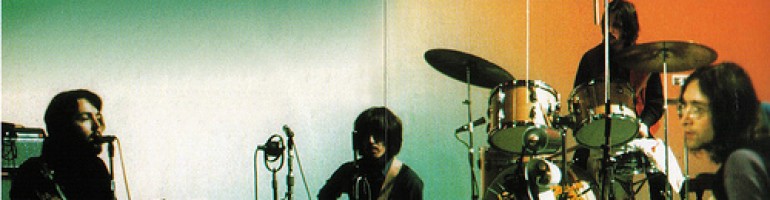
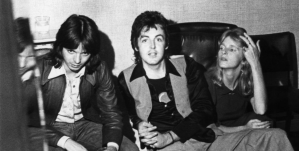
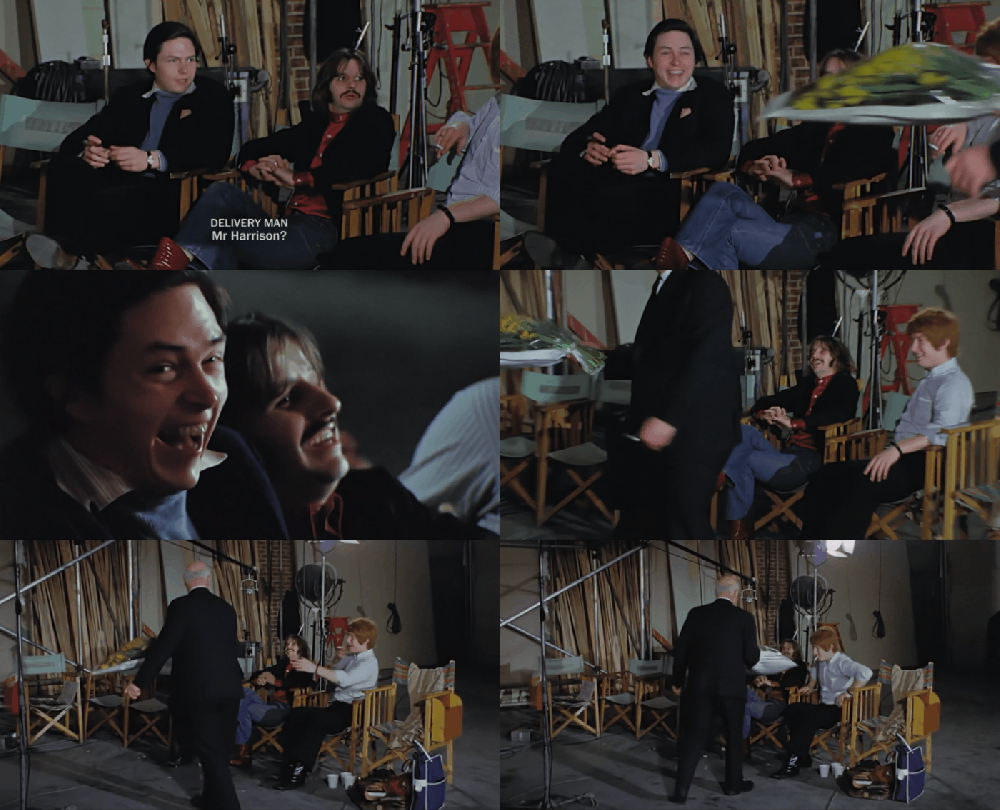
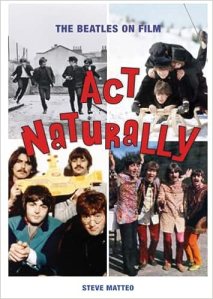
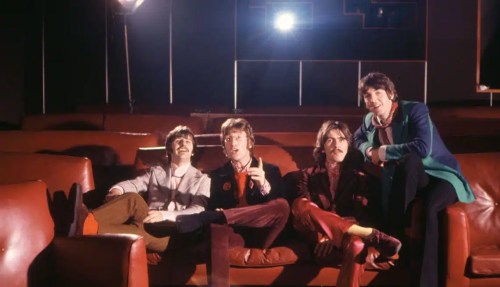
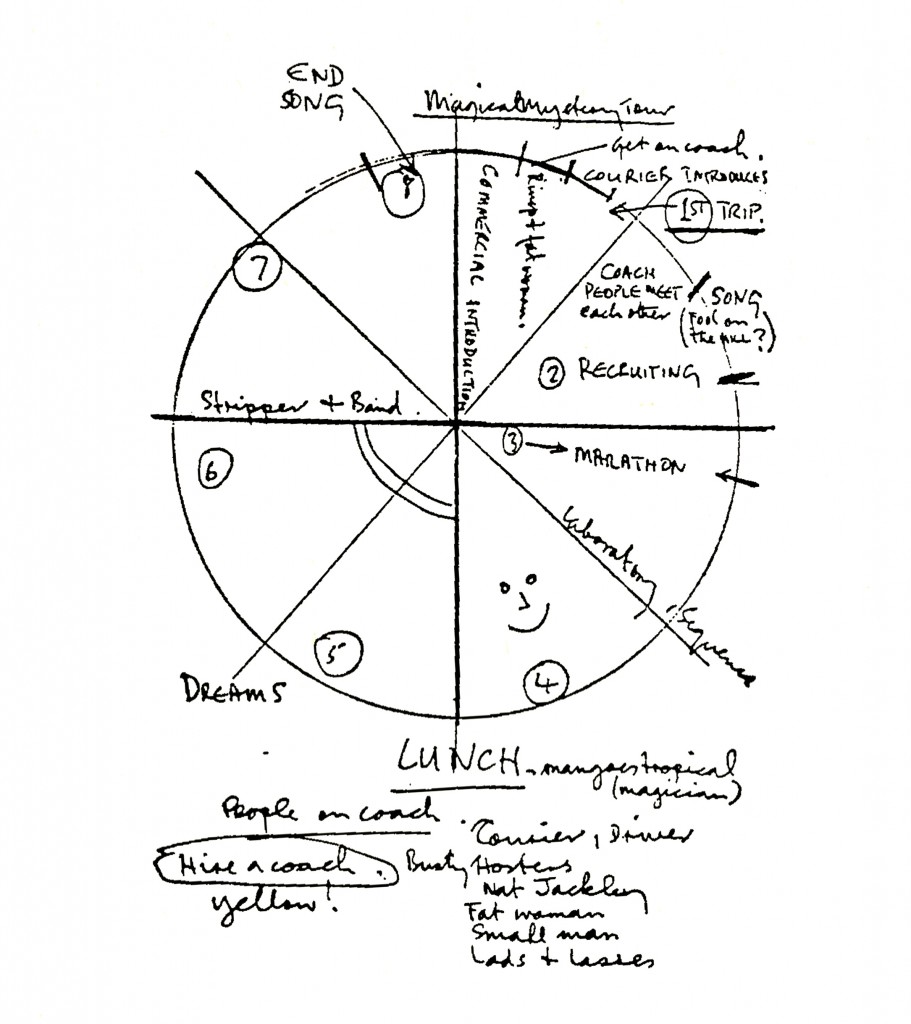
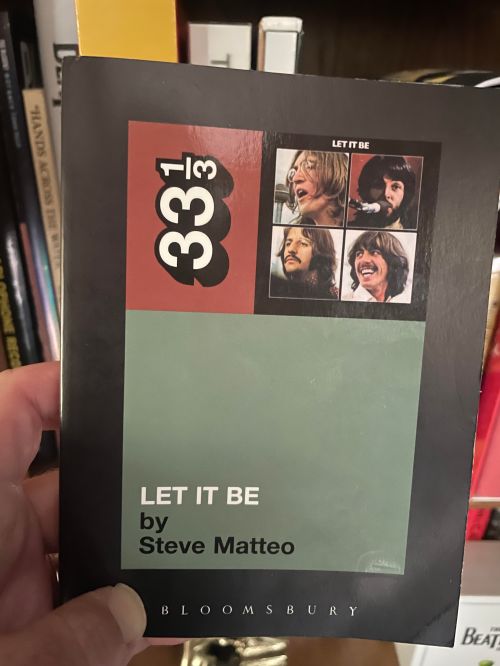
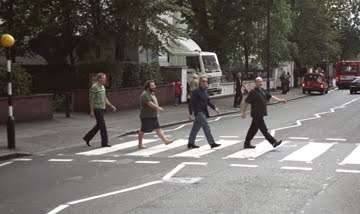
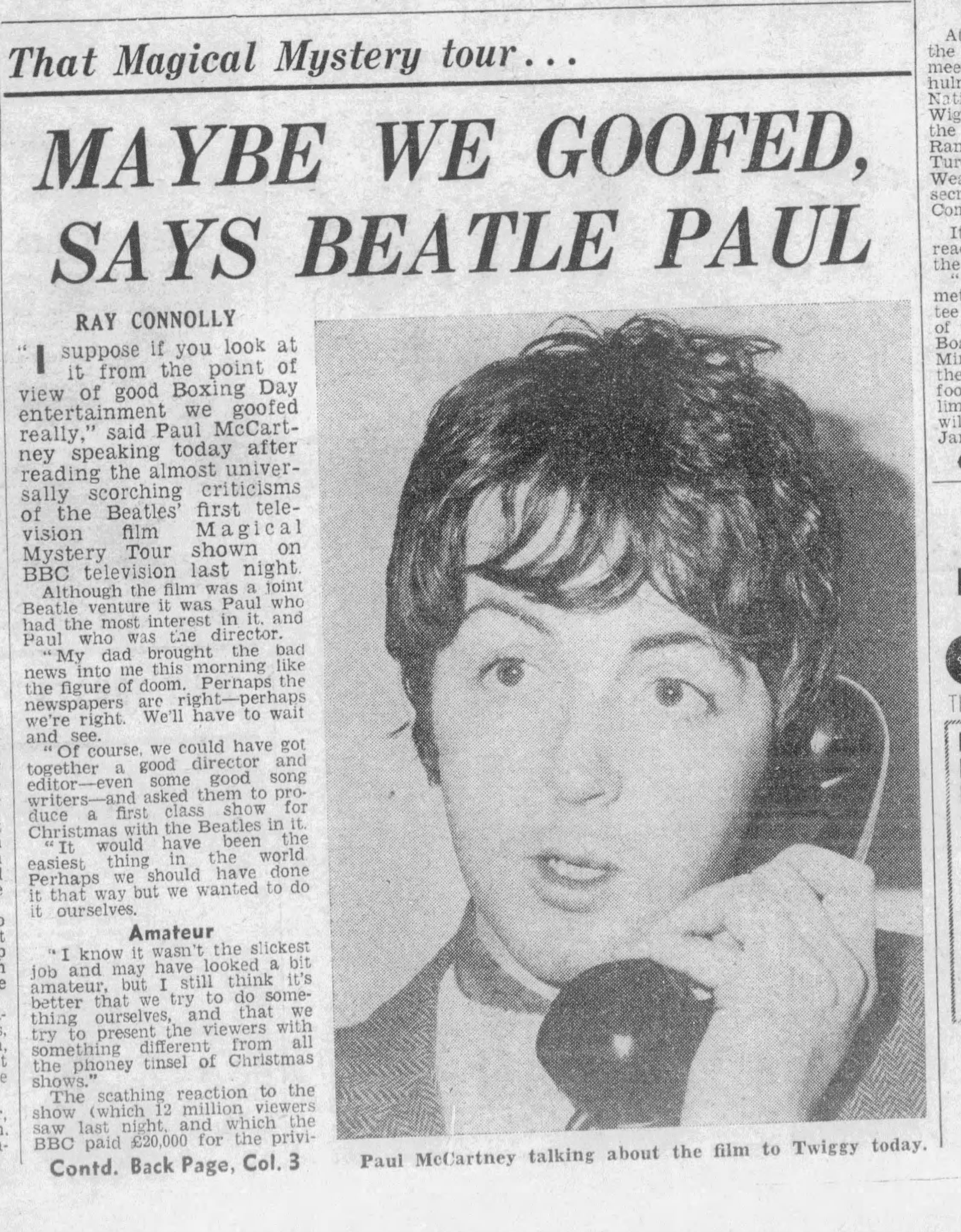

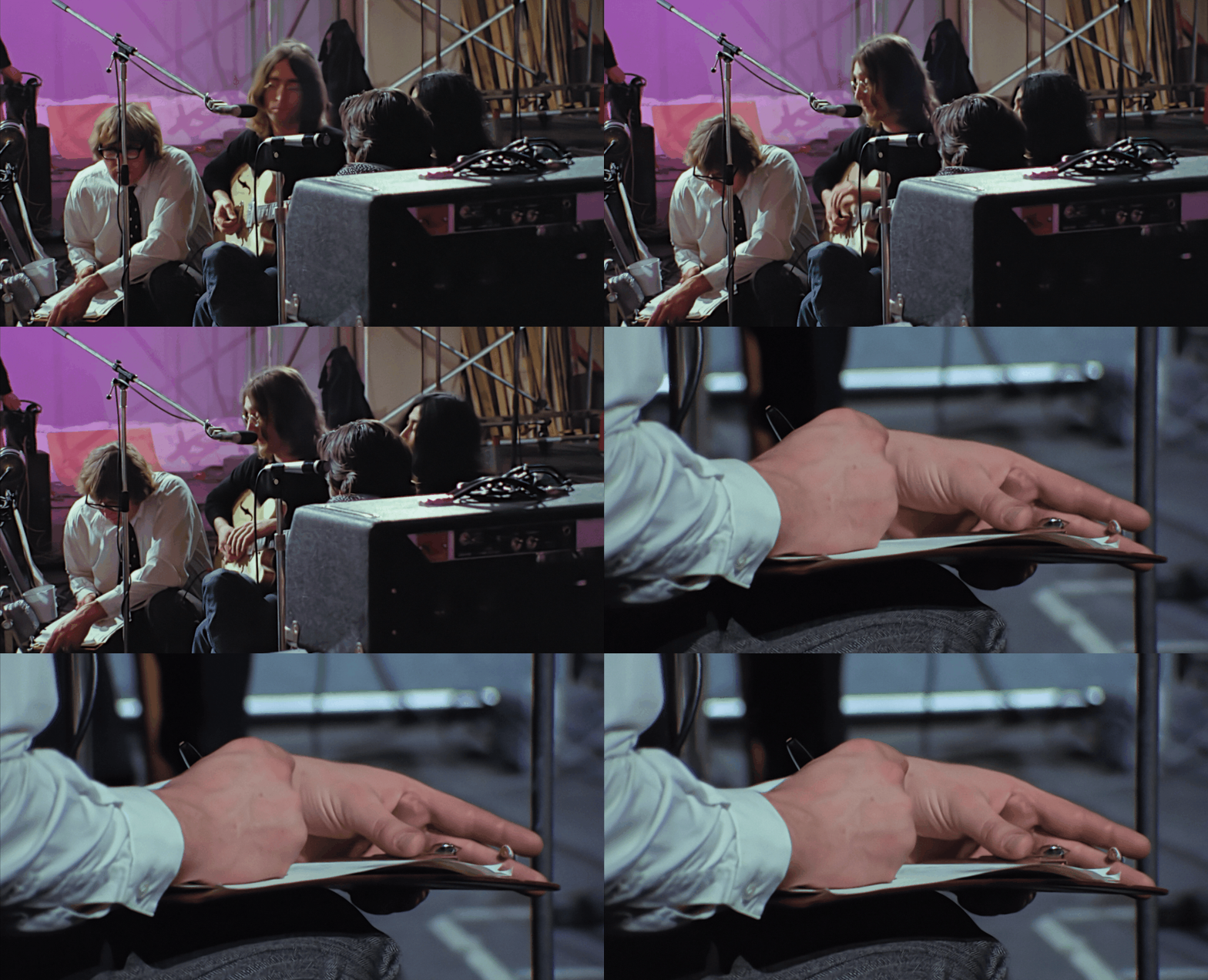
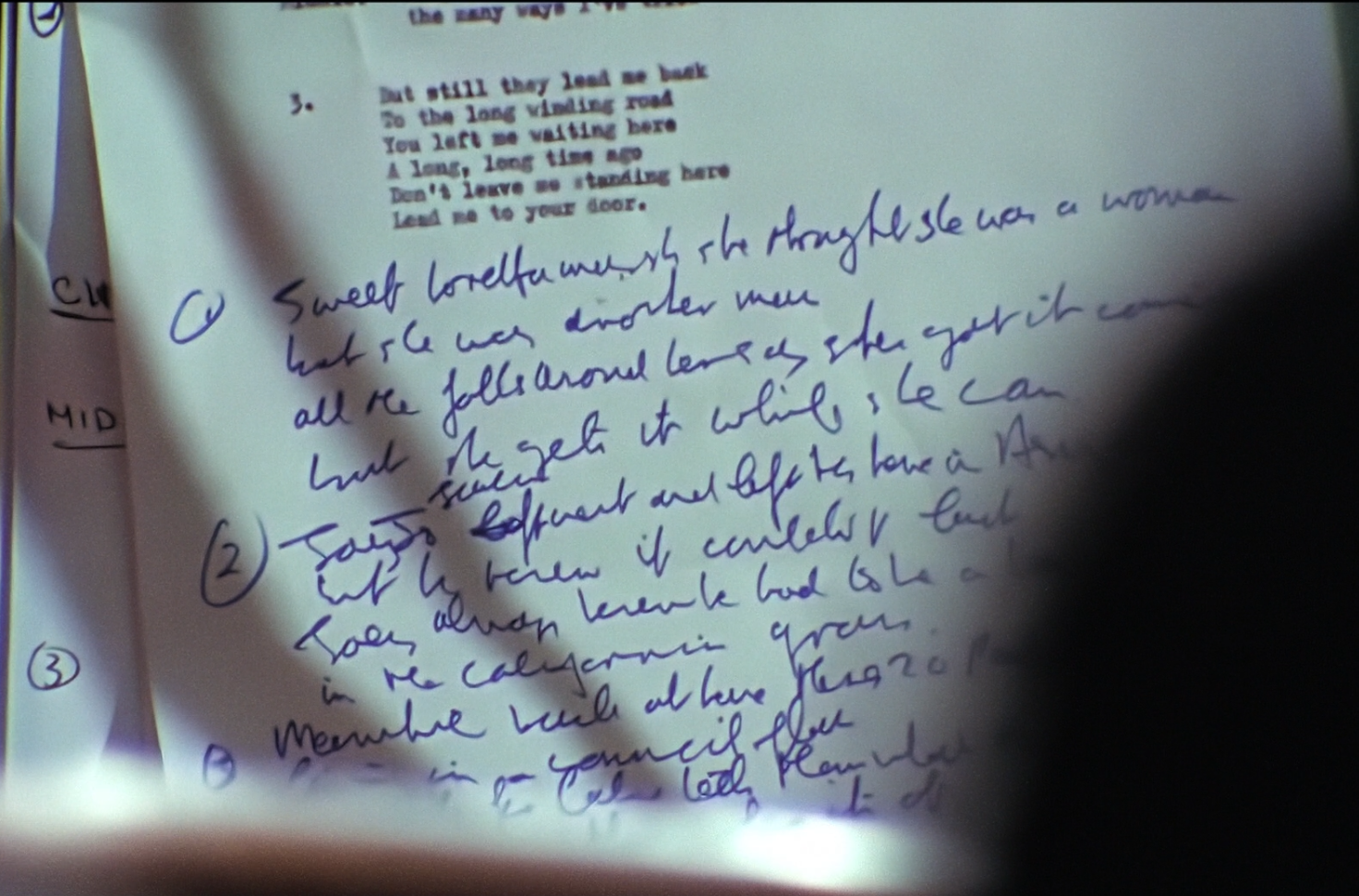
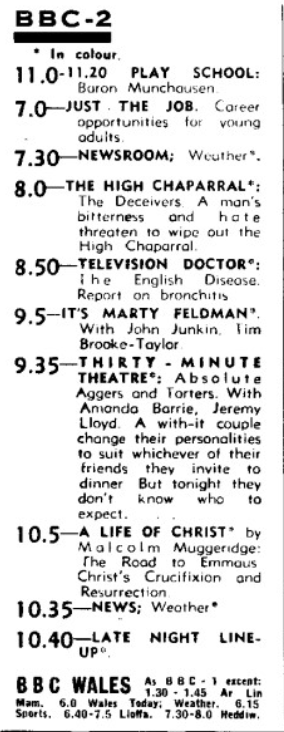
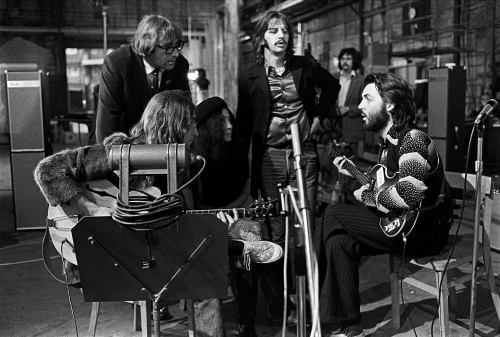

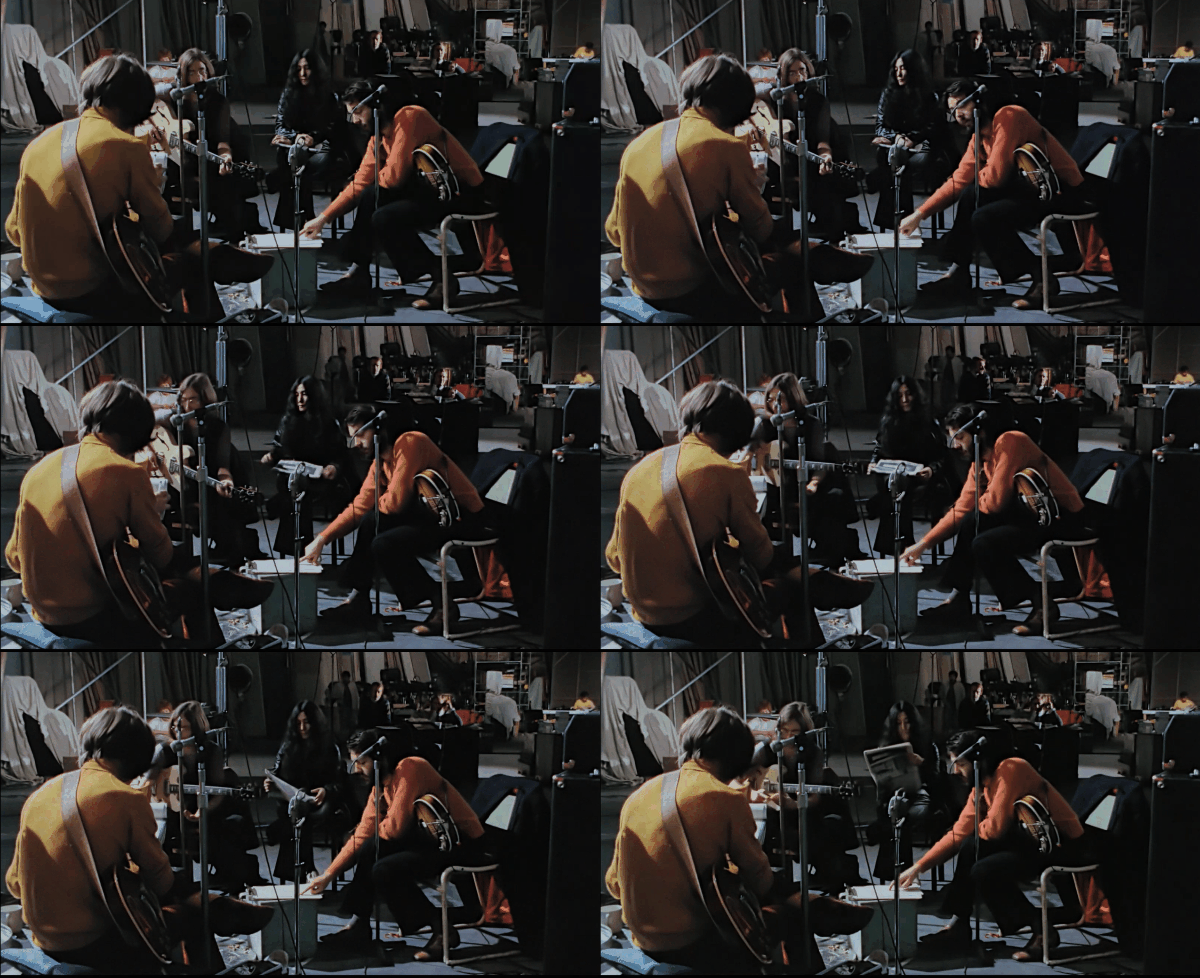
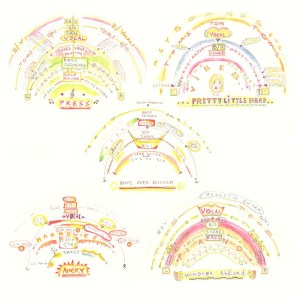
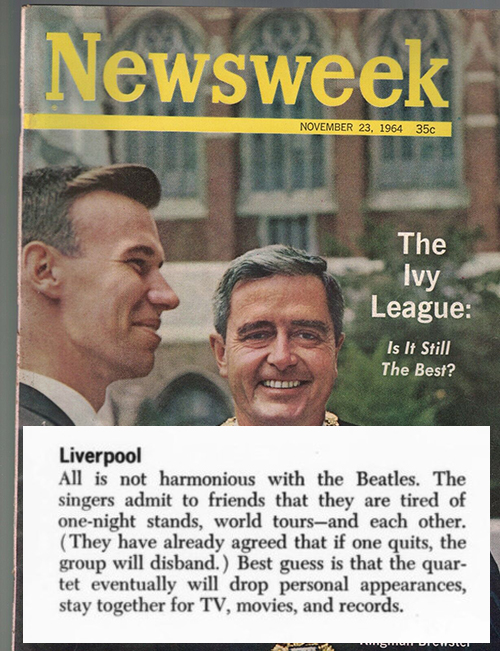
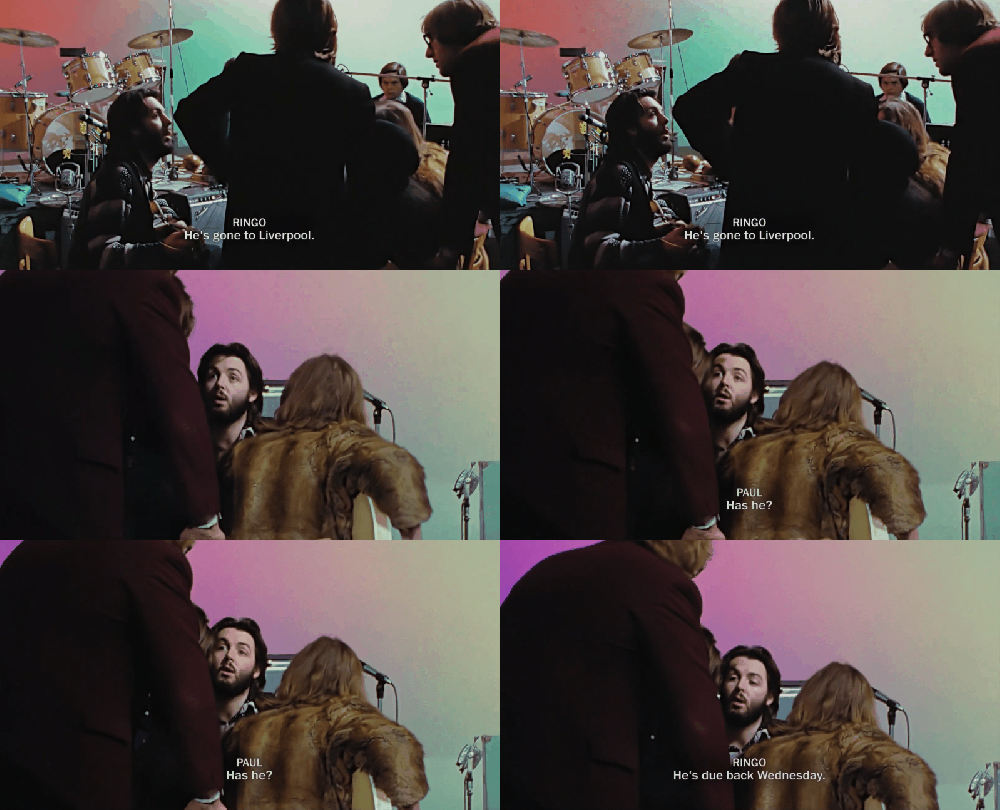
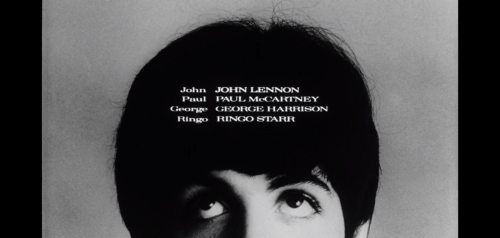
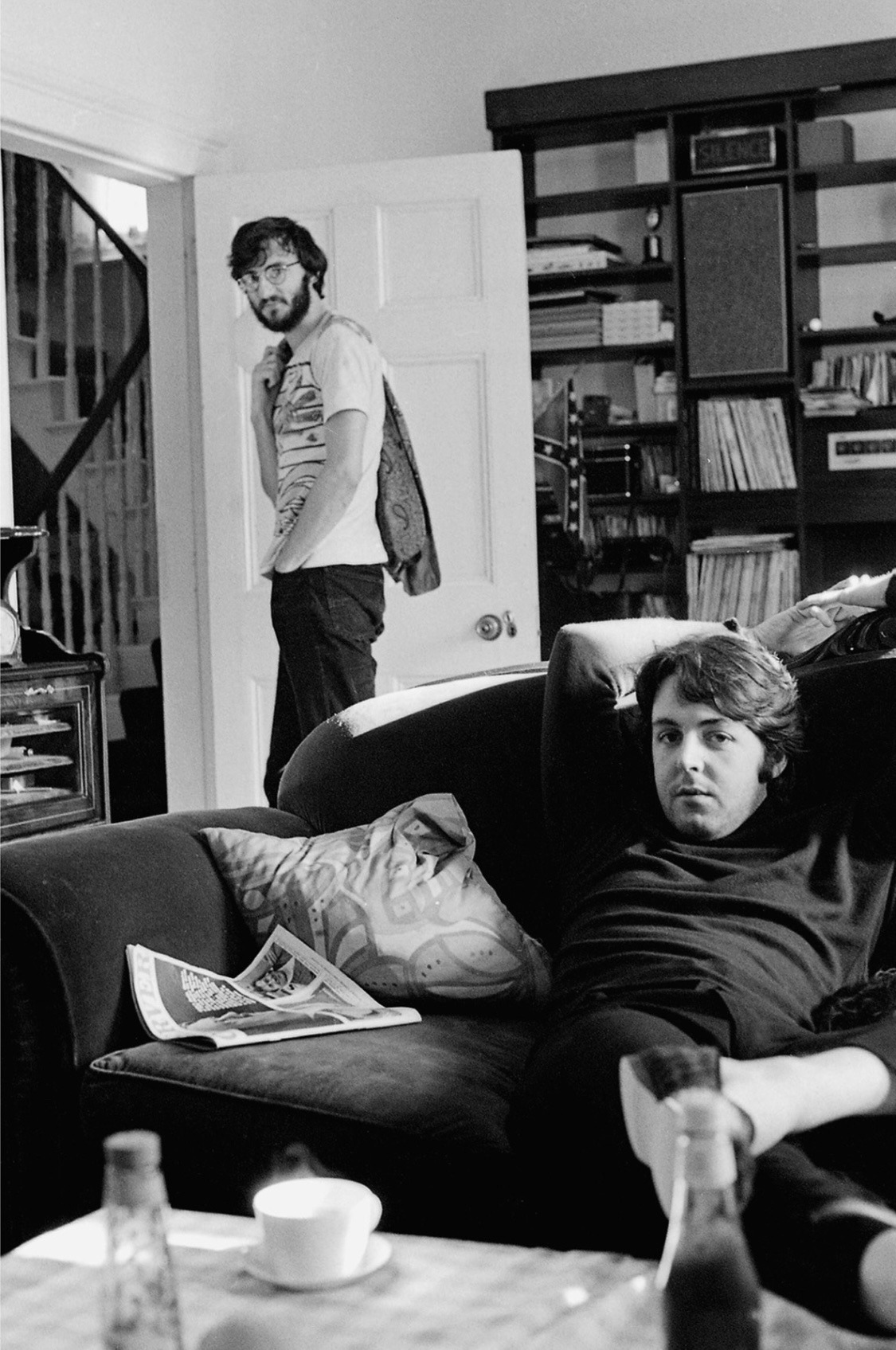
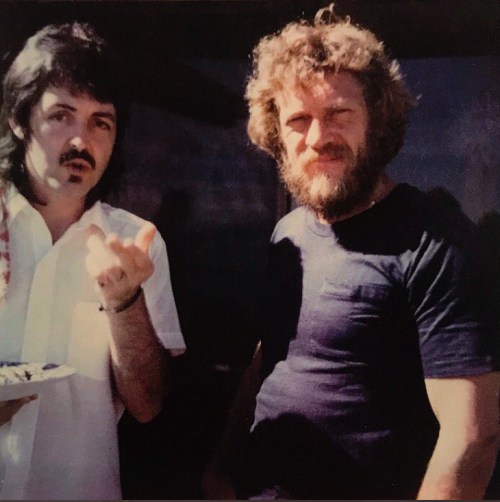
 They May Be Parted