Tag Archives: 1980s

TMBP Extra: Every now and then

The Last Beatles Song

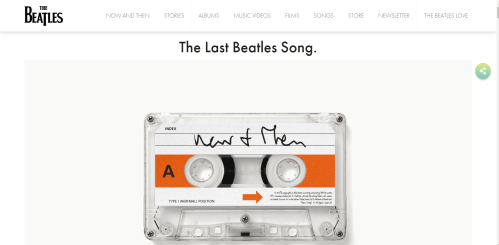
The Beatles website, as captured in the days leading up to the release of “Now and Then.”

The Last Beatles Song.

Let’s be a little more accurate and say with several qualifiers that it’s the last, new officially released Beatles song. The diehards already knew it from bootlegs, of course.

Not now, but back then, it was some other John Lennon vocal — not “Free as a Bird” or “Real Love” but the group’s 1964 recording of “Leave My Kitten Alone” — that qualified as the first last Beatles song.

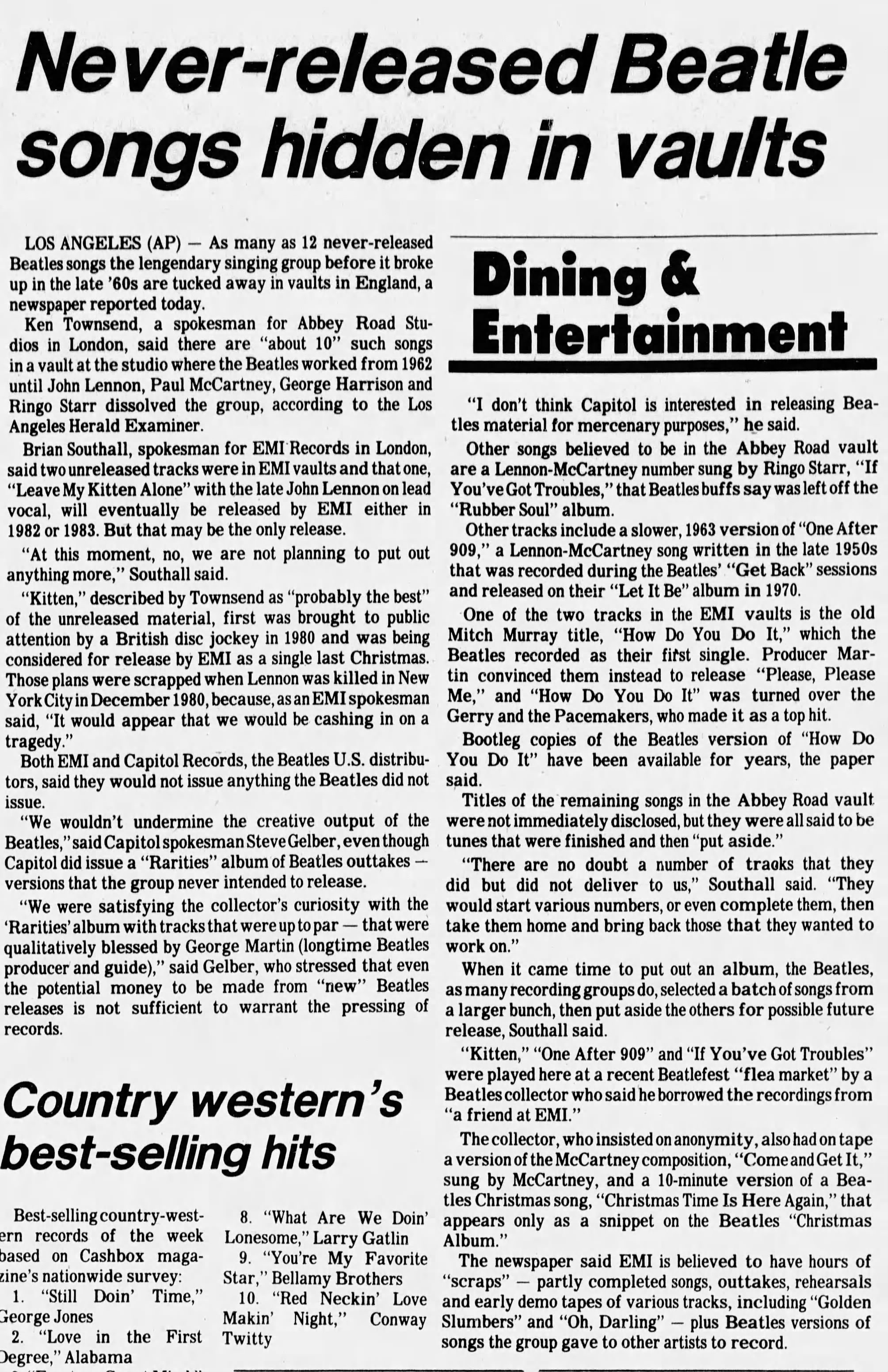
“There is other unfinished recorded material of the Beatles which has never been released but ‘Kitten’ is the only complete track,” an EMI spokesman (presumably Brian Southall) told the Daily Mirror in September 1981. That same story said John’s death derailed initial plans to release the song as a Christmas 1980 single.
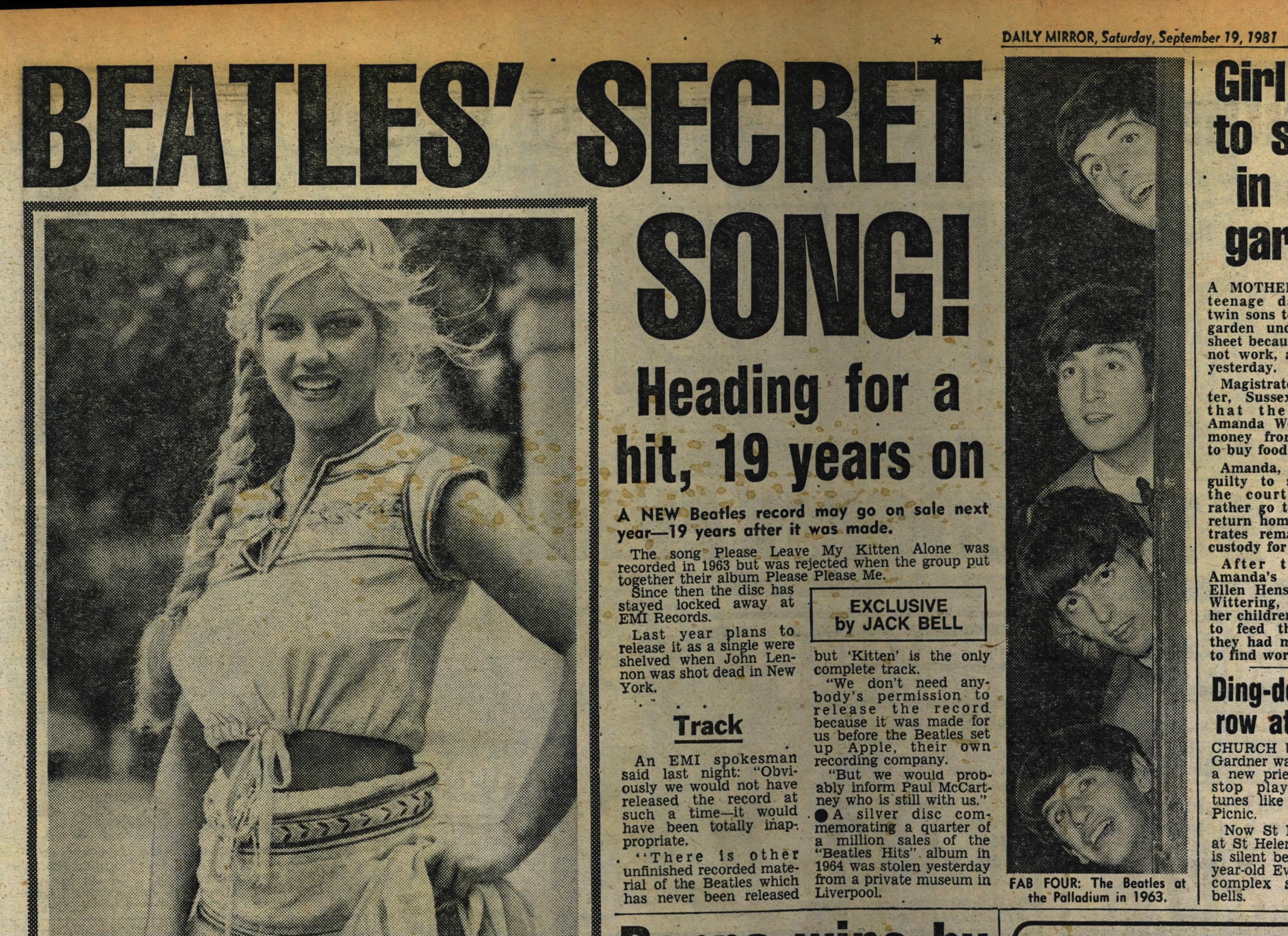
Daily Mirror, Sept. 19, 1981.

If you’re looking for a sign of the times and an indication of how much the coordination between the label and band have changed in 40 years for legal reasons and otherwise, here’s another quote from EMI:

We don’t need anybody’s permission to release the record because it was made for us before the Beatles set up Apple, their own recording company. But we would probably inform Paul McCartney who is still with us.

(George Harrison and Ringo Starr were still with them, too, by the way.)

Further details emerged later in 1981, when an AP report (citing the now-defunct Los Angeles Herald Examiner) said a dozen unreleased Beatles songs were in the vault, but only “Leave My Kitten Alone” would see daylight, probably in 1982 or 1983. Hope we didn’t get too excited back then because …

“At this moment, no, we are not planning to put out anything more.”

Just how do EMI and the Beatles lose a song and recover it years later?  Here’s a quick timeline:

  • August 14, 1964: The Beatles commit their ferocious cover of “Leave My Kitten Alone” — originally recorded by Little Willie John in 1959 and two years later by Johnny Preston — to tape at EMI Studios. It’s done in five takes, including false starts.
  • December 4, 1964: Beatles for Sale is released, and of its whopping six covers, none are “Leave My Kitten Alone.” We don’t hear of the song again in the Beatles career, not even during the Get Back sessions, when they played all kinds of things.
  • August 15, 1970: Apple flack Peter Brown tells Melody Maker that there is no unreleased recorded Beatles material. Even then, everyone knew better as Get Back session outtakes, for instance, were already circulating.
  • 1976: With the Beatles no longer under contract as an entity to EMI, the label began to take stock of what actually was in the Abbey Road archives, a lengthy process.  An in-house EMI compilation of songs that included “Leave My Kitten Alone” eventually made its way into collectors’ hands, and ultimately bootlegs.

This brings us to the early 1980s, and EMI’s admission that the song would ultimately be released.

The emergence of “Leave My Kitten Alone” was tangible and exciting at the time. It wasn’t a fringe bootleg or a brief mention in newspapers anymore. You could hear it on mainstream radio.

Here’s one example: For a solid month in late summer 1984, the song was listed among the “Most Played Singles” on Boston’s WBCN (the same station which happened to be the source of the famed Kum Back bootleg 15 years earlier).
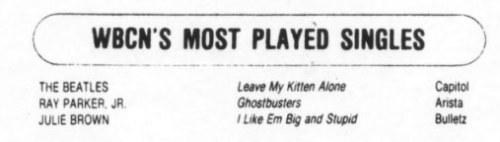
From the Aug. 28, 1984 issue of the Boston Phoenix.

The excitement for the song wasn’t isolated to one market, either. I know because I remember it myself.
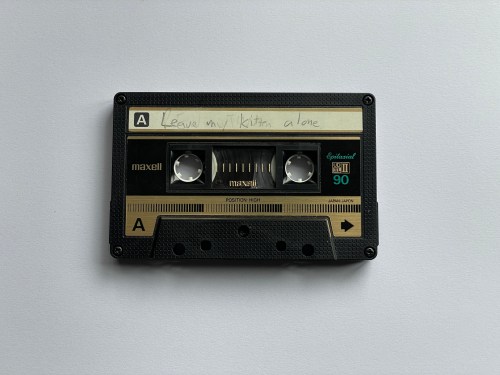
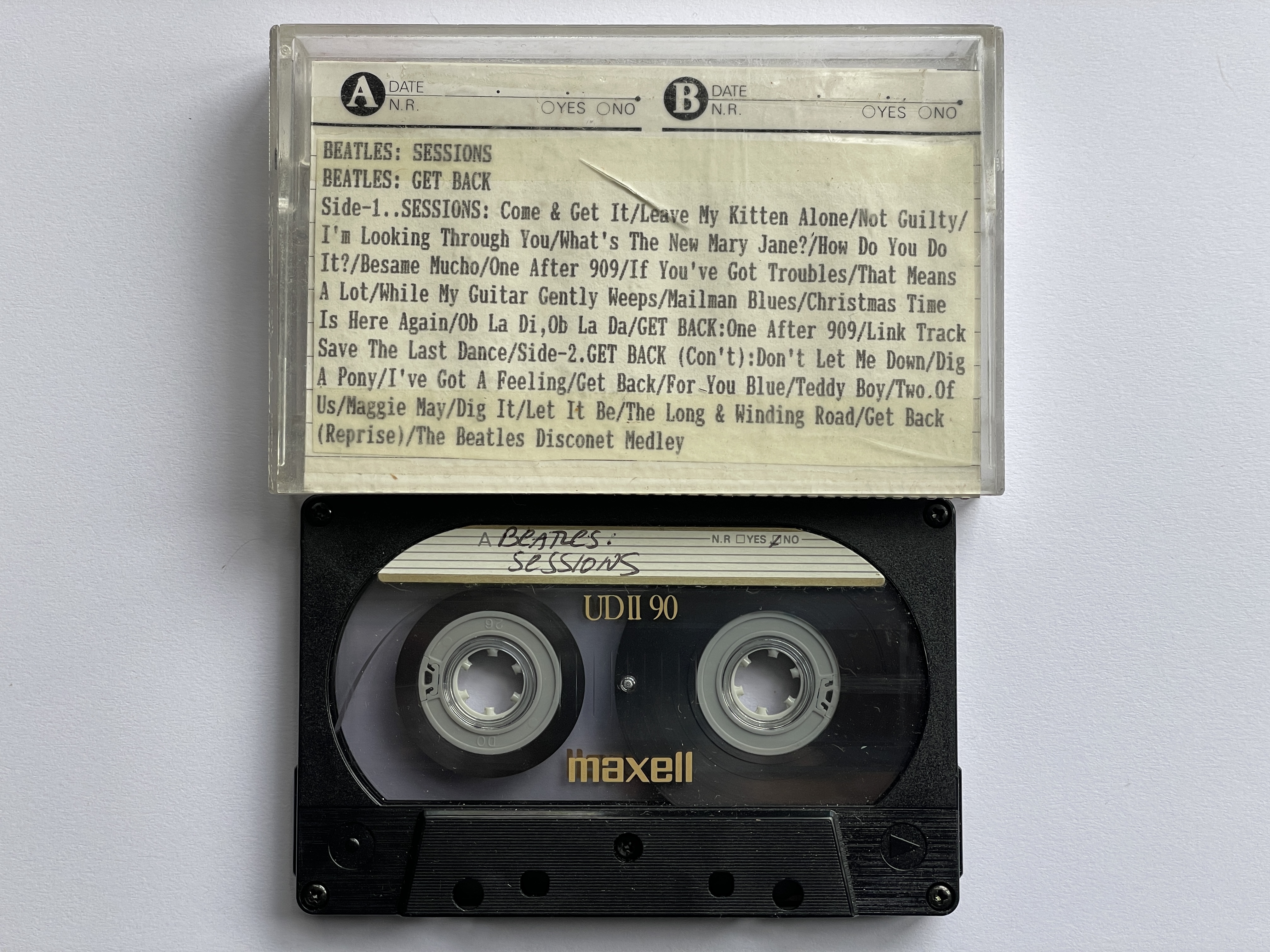
That child is going to miss you: My ’80s dub off the radio here accompanied by elementary-school-era scrawl on the label. As you can tell, I save everything.

It must have been some time in that same period in 1984 that one of the local New York radio stations (WNEW? WAPP?) played the song. I was 10, but already a fully formed Fab Four fan. I remember the station’s promotion was breathless — it was the “new” Beatles song, and I’d never experienced such a thing.

I grabbed a cassette tape not unlike the one central to the 2023 “Now and Then” promotional campaign (mine was Type II though, only the best for the Beatles). I hit play-record a few seconds into the song, and while I thought I was doing myself a favor at the time cutting out commercials, 40 years later, I wish I hadn’t lost the extra context.

By this time, the song’s release dovetailed with that of the compilation, Sessions, which has its own entire backstory. The LP and its lead single, “Leave My Kitten Alone,” had catalog numbers and release dates for early 1985.
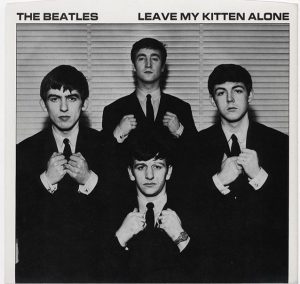
There’s some debate if this is genuine or a fake, but it’s definitely some kind of sleeve for a “Leave My Kitten Alone” single.

Suddenly, the entire project was dead, reportedly because of objections from the three living Beatles and the Lennon estate, as well as the fallout from a new lawsuit between Apple and EMI.  Like so much else, the Sessions LP lived on in bootlegs, almost immediately. (I had mine on cassette, backed with Get Back.)

It took another decade, after all manner of legal issues were resolved, that Yoko Ono handed tapes of four demos by John — “Free as a Bird,” “Real Love,” “Grow Old With Me” and “Now and Then” to Paul in 1994 for the surviving Beatles to adorn for Anthology.

The technical (as well as critical and commercial) success of Natalie Cole’s “Unforgettable” duet with her late father in 1991 made a Beatles recording with John feasible. Until then, every Beatles reunion suggestion centered around a replacement for John. This ensured the irreplaceable would not be replaced.

This “Kitten” had nine lives, finally hitching a ride with the next last Beatles song — “Free as a Bird” — onto Anthology 1, officially becoming canon 31 years after it was recorded.

And it left the door open for another to be the last Beatles song.

6 Comments

Filed under Extra

Jan. 9: Crossroads he’s standing at

During a brief transition immediately preceding the extensive “Let It Be” session late on January 9, 1969, George Harrison opened himself up to significant, retrospective armchair psychoanalysis in just five minutes of music.

He also became a human bootleg.

Everybody’s got somebody to lean on: Lucky and Nelson, November 1968.

Bob Dylan’s Basement Tapes with the Band (a huge influence on the Beatles’ Get Back sessions) had been privately circulating since 1968, and the first true rock bootleg — Great White Wonder, which featured two LPs of his music that stretched back to as early as 1961 — surfaced in record shops starting in July 1969.

But this January 9, George — just a few weeks removed from his first collaboration with Dylan — seized a few moments of spotlight and shared a few of his friend’s songs, and ones that the others in the room hadn’t likely heard.

“I Threw It All Away” was so fresh a cut, Dylan wouldn’t record it for his forthcoming “Nashville Skyline” until Feb. 13, precisely two weeks after the Beatles’ rooftop performance and while George was in a London hospital recovering from a tonsillectomy.

Dylan first shared the song with George and wife Pattie Boyd around Thanksgiving 1968 at his home in upstate New York. George retained quite a bit of the song in performing at Twickenham, injecting intensity in his solo acoustic take.

George didn’t perfectly nail the lyrics, but he captured guts of the chorus and parts of the verses — “No matter what you think about it, you just can’t do without it. Take a tip from one who’s tried … And I threw it all away.”

The performance seamlessly went into “Mama, You Been On My Mind,” written in 1964, but to that point another unreleased Dylan track.

Perhaps it’s the color of the sun cut flat
An’ cov’rin’ the crossroads I’m standing at
Or maybe it’s the weather or something like that
But mama, you been on my mind

When you wake up in the mornin’, baby, look inside your mirror
You know I won’t be next to you

There could be no reason at all George plucked these songs out of thin air this Thursday afternoon, as meaningless as the group’s brief forays into “Tennessee” or “Slippin’ and Slidin‘” within the same hour. He’d been playing Dylan throughout the sessions, after all.

Or …

Maybe the songs reflected George’s mood as he was less than 24 hours from quitting the group. Paul transparently sang the blues about the Beatles in “The Long and Winding Road,” “Let It Be” and “Golden Slumbers,” so why wouldn’t George do likewise? It’s not a significant stretch to consider George was speculating about what he was throwing all away, at these crossroads he was standing at.

Without question, those two Dylan songs did hit home with George.

But …

Maybe it wasn’t necessarily only for the reasons we’ve always supposed.

The January 9 tapes begin with the Paul’s muse, Linda Eastman, visiting the studio. John’s girlfriend, Yoko Ono, had been a Beatles session fixture for months, and this day was no different.

George’s wife, Pattie, was very much not hanging around Twickenham. And when she looked inside her mirror, George wasn’t next to her, because she had walked out on him. But that didn’t mean he was alone at his Kinfauns home.

From Pattie’s autobiography Wonderful Tonight:

I was friendly with a French girl who was going out with Eric Clapton. She was always flirtatious with George, but so were a lot of girls and he, of course, loved it. Then she and Eric broke up — Eric told her to leave — and she came to stay with us at Kinfauns.

It was January 1, 1969, and George and I had seen in the new year at Cilla Black’s house. … We arrived home in good spirits but then everything went swiftly downhill. The French girl didn’t seem remotely upset about Eric and was uncomfortably close to George. Something was going on between them, and I questioned George. He told me my imagination was running away with me, I was paranoid.

Soon I couldn’t stand it so I went to London to stay with Belinda and Jean-Claude. Six days later George phoned me to say that the girl had gone and I went home.

The French girl was 20-year-old Charlotte Martin, and she had been dating Eric for more two years. Eric has since said he left Charlotte because of his growing feelings for Pattie. Why, you can almost say George tried to give her consolation when her old man let her down.

George’s fling was in its final day on January 9 — and after leaving the Beatles the next day, he asked Charlotte to leave Kinfauns, ending the affair.  He would  reconcile with Pattie, and separately, with the rest of the Beatles shortly thereafter.

The two Dylan songs George touched on wouldn’t drift far from his consciousness. Sixteen months after this date, George joined Bob in New York City, where they recorded both “I Threw It All Away” and “Mama, You Been On My Mind,” and the sessions have since surfaced on bootlegs.

George continued to show love for “Mama, You Been on My Mind,” laying down a solo studio version in the 1980s; this was still before Dylan’s first authorized release of the song in 1991. George’s recording would get a proper release in 2012 on Early Takes, Vol. 1.

From Giles Martin, who produced the compilation:

He recorded it at home in Friar Park at some point during the ‘80s, and it originally had programmed drums and loads of keyboards on it, and George had overdubbed himself for a three-part vocal harmony.

I asked [George’s widow] Olivia if it would be OK to break it down a bit, I thought it sounded a lot better stripped to its bones. You can still hear a bit of the drum sound in the background, because there was bleed on the tape — probably coming through from George’s headphones.

George did his own three-part harmonies in the ’80s, but his first vocal partners, John and Paul, were silent on the tapes during George’s brief Dylan set on January 9, 1969.  Walking out on the group, George silenced himself the next day, not only because of his increasingly tense relationship with John and Paul, but with trouble surrounding his marriage, as well.

***

Charlotte Martin remained in rock-and-roll’s inner circle. In a coincidence of the calendar, exactly one year after her last day involved with George, on January 9, 1970,  she met Jimmy Page after a Led Zeppelin concert. The couple would maintain a relationship into the 1980s. Their daughter, Scarlet Page, is a rock photographer of note; she’s shot Paul McCartney and contributed to the Visions of Dylan photo exhibition in 2007.

11 Comments

Filed under Day by day