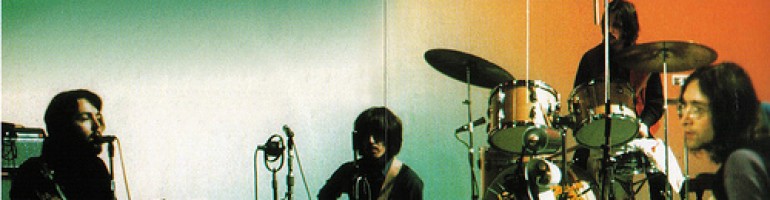
After basically ceding to Yoko his creative role in the band’s decision-making over the live show earlier in the day, John Lennon regains a tiny bit of authority by leading the group through a lengthy rehearsal of “Don’t Let Me Down,” one of the primary songs the band has taken on thus far.
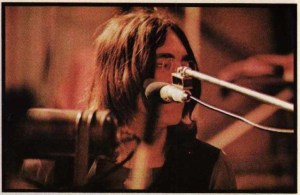 Well, he regains authority at the outset, at least, during a stretch that provides the first real look at the discord between band members that helped define the Get Back/Let it Be sessions.
On the A/B tapes, Jan. 6 rehearsals for “Don’t Let Me Down” run in a straight shot for nearly 90 minutes, easily the longest stretch they spent on any one song this day. The structure of the song is set and doesn’t change from what will eventually be pressed to vinyl. It’s a delightfully simple song, both in lyrics and structure. But they’re not happy to leave well enough alone quite yet.
Things kick in with the song already under way in what’s labeled as Track 6.62. Shortly into things, John asks to work on what he calls “the worst bit” — the song’s bridge. (“I’m in love for the first time…”).
Now, it’s absolutely granted that the band has a hard time working together, and that didn’t just begin on January 2, when they convened at Twickenham. But at least from the relative beginning of the sessions, they’re trying. An example of that comes right here as John wants the help on the bridge, asking openly, “What can we do to that bit, then?”
George says he likes the vocal line and harmony, it’s just lacking in some color as far as the fills in between. He suggests a rhythm change, while John replies, “That’s where the piano would come in.”
Good stuff! Collaboration!
Paul scats some falsetto to alternate with John’s lines, and George fiddles with some guitar fills. It actually sounds kind of nice with John on an acoustic guitar, but overall nothing overly impressive. But hey, it’s a work in progress. There were probably lots of bum attempts at things over the prior decade of Beatles in-studio fiddling, right? We just have these extensive rehearsals on tape, whereas we don’t have a zillion hours and hours of them wrestling with, say, “Nowhere Man.”
Paul takes things a bit more into his own hands, instructing George to join him in the vocals, and telling him just what to do.
Paul offers up his falsetto part, then gives explicit suggestions for the responses.
John: I’m in love for the first time
Paul’s suggestion: Love for the first time in my life
John: Don’t you know it’s going to last
Paul: So don’t you let it get away (he soon changes it to “Not going to let it get away”)
John: It’s a love that lasts forever
Paul: It lasts forever and a day
Paul goes onto explain that “corny’s all right in this one. What he’s [John] doing is corny. That’s the thing that will make it not corny, we sing different different words.”
I’d question the logic (and lyrical interpretation) there, but hey, Paul’s track record in writing hit songs is a lot longer than mine. The last song he referred to as “corny” was “Maxwell’s Silver Hammer” a few days earlier, and I think it’s safe to say they’re quite different birds. I do think he says it affectionately, at least.
George says something that’s not quite on mic, to which Paul, clearly trying to blow him off, says “OK, well, we’ll do that, that comes later. Just sing it straight first.”
The next stab at the bridge has George doing the “part that moves” that Paul had just suggested, sounding a bit Band-ish, which isn’t too much of a surprise at this point. At the same time, there’s a slight “Revolution 1” vibe here, where the “shooby-doo-wops” punctuate the chorus. I guess it works, but it definitely changes the feel of what we know as “Don’t Let Me Down” — John in fact likens the work in progress to “something like the Drifters.” (We’re still a few weeks away from the Beatles actually covering the Drifters).
They continue to run through the bridge, Paul directing.
Paul : The thing is, sing the one I’m doing, and we’ll improve upon it. Start off with a corny one, because the words aren’t that good. (Here, he’s referring to his response vocals, not John’s main ones).
John: I think the words should be corny, because there are no clever words in it.
I guess he’s right — it’s a straight rock song with deeply honest lyrics (and his first song written for Yoko, I believe), no interpretation necessary. This isn’t “I am the Walrus” or “Lucy in the Sky with Diamonds,” lyrically. So I don’t think he meant it as an insult to the song. But I guess I’m surprised John would want to muddy up a song like this.
More run-throughs, and John still isn’t satisfied, at one point saying, “Maybe I should play piano … just to change it.” George talks about using some pedals so it “doesn’t sound like the same old shit,” — but John says “I like the same old shit, if it’s clear.”
“Just think of some riffs,” Paul suggests to George, as we see today’s first real signs of a little bit of the big boys ganging up on the perceived help.
And so they continue, with one of the takes briefly immortalized at the beginning of the “Let it Be” film (it’s taken from 6.67 on the tapes).
Of course, in this edit, the band goes straight into the Jan. 3 Maxwell’s Silver Hammer performance. In reality, they churned on, with Paul thinking the answer to the seemingly busted bridge is to change the rhythm.
“This needs this,” Paul insists. “It needs things to happen.”
Just what does happen? Find out soon in Part 2!
 They May Be Parted