Tag Archives: future solo

Jan. 14: Morning, Paul! Morning, Rich!

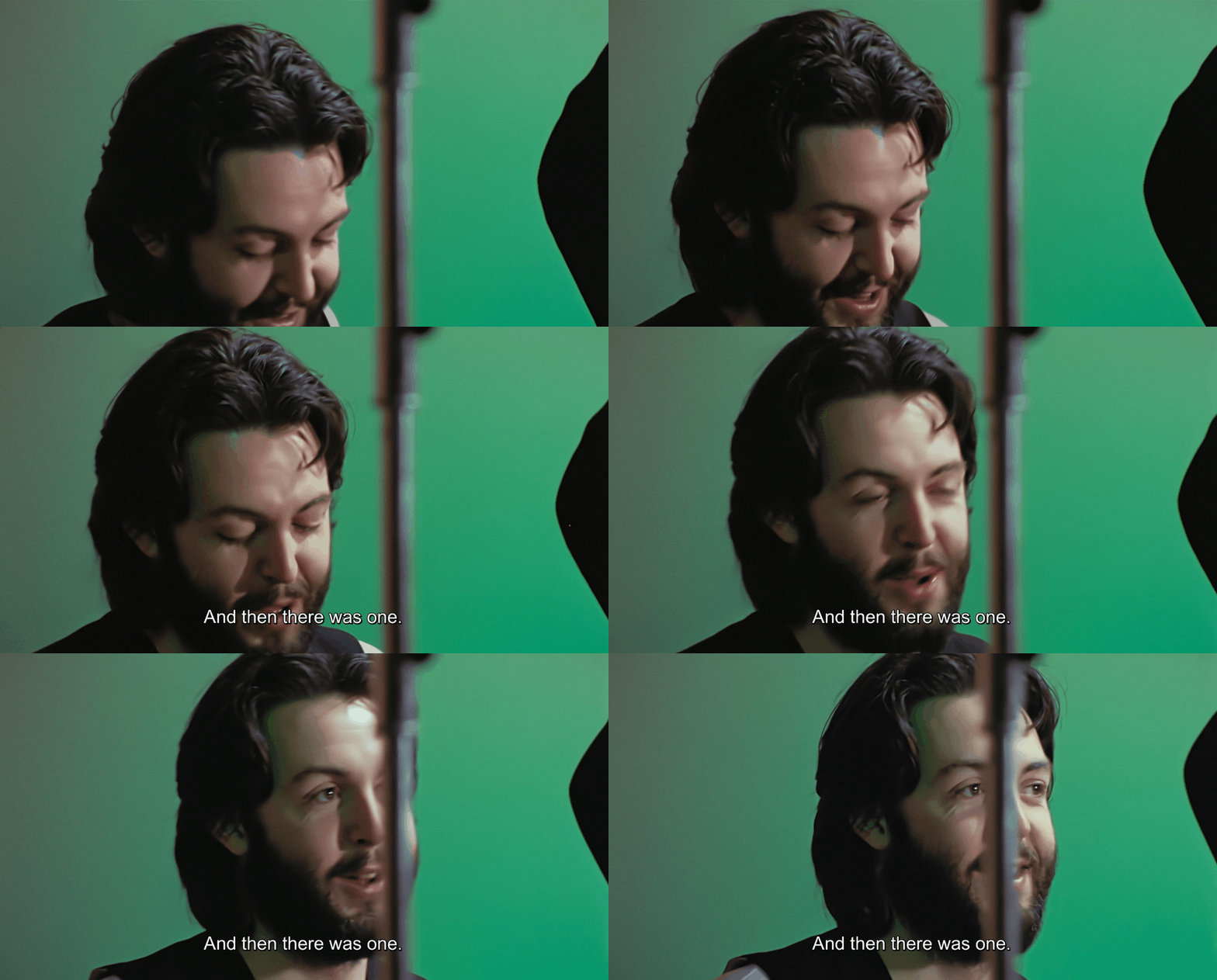
This time, Paul McCartney’s line was delivered with a smile: “And then there was one.”

It was up to the viewers of the 2021 Get Back docuseries more than 50 years later to make out the invisible wink and deliberate nod to Paul’s tearful “and then there were two” from a day before — though in 21st century TV time, it was only 12 minutes earlier.

While there was just one Beatle at Twickenham Film Studios in the early going on January 14, 1969, Paul wasn’t alone for too long, not even 20 minutes on the Nagra reels capturing the sessions’ audio largely in real time.
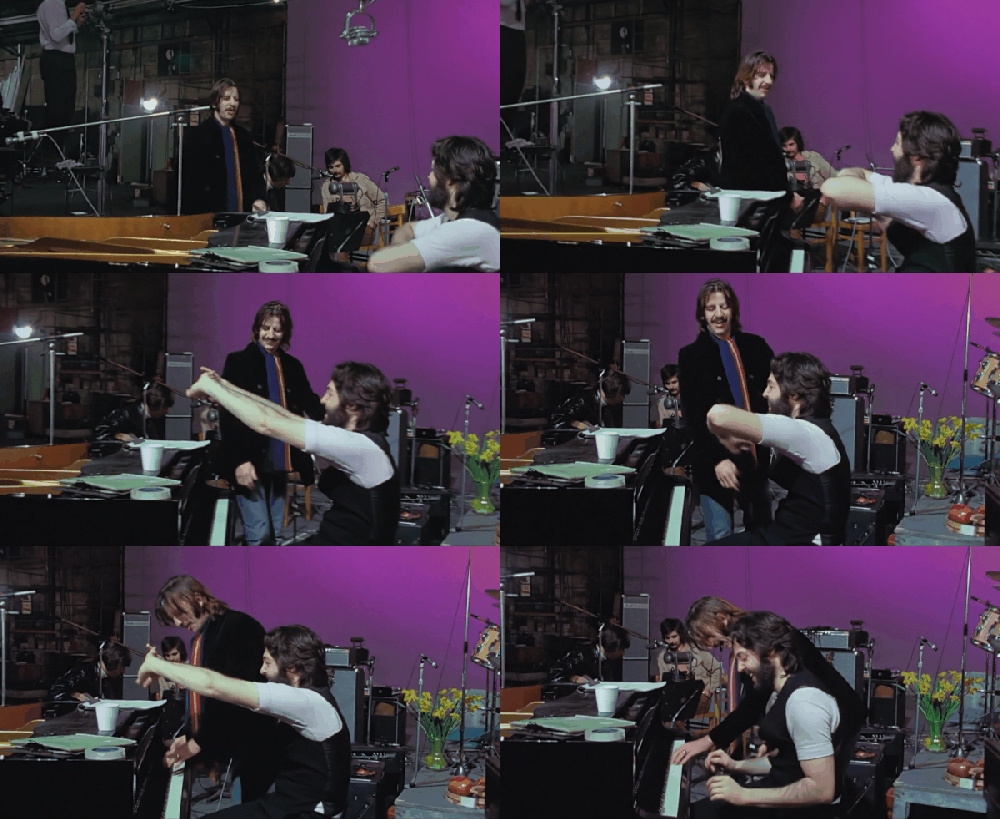
 

Then there were two once again as a sleep-deprived Ringo Starr bounded in, and the Beatles’ rhythm section exchanged exaggerated greetings.

Ringo: “Morning, Paul!”
Paul: “Morning, Rich!”
Ringo: “How are you this morning?
Paul: “OK!”

After a full-arm stretch and crack of the knuckles, Paul – who had been sitting at the piano — struck the keys, and Ringo immediately joined in.

Maybe I’m not giving January 1969 Ringo enough credit as a piano player, but I’ll leave it as an open question if this was a pure improvisation or something specific Paul and Ringo had worked on before.

This is not to say Ringo was a finished product as a piano player. You can see him bracing one hand with another as he slapped out high notes — maybe it was just a gag —  playing the high notes while Paul pounded out the chords.

Paul casually delivered a lyric to their song. A jumpy slice of New Orleans improvisational piano jazz, it lasted all of 70 seconds.

Well, I bought a piano the other day
I didn’t know music to play
You had to play the goddamn thing
Oh, baby!
(Or something close to that)
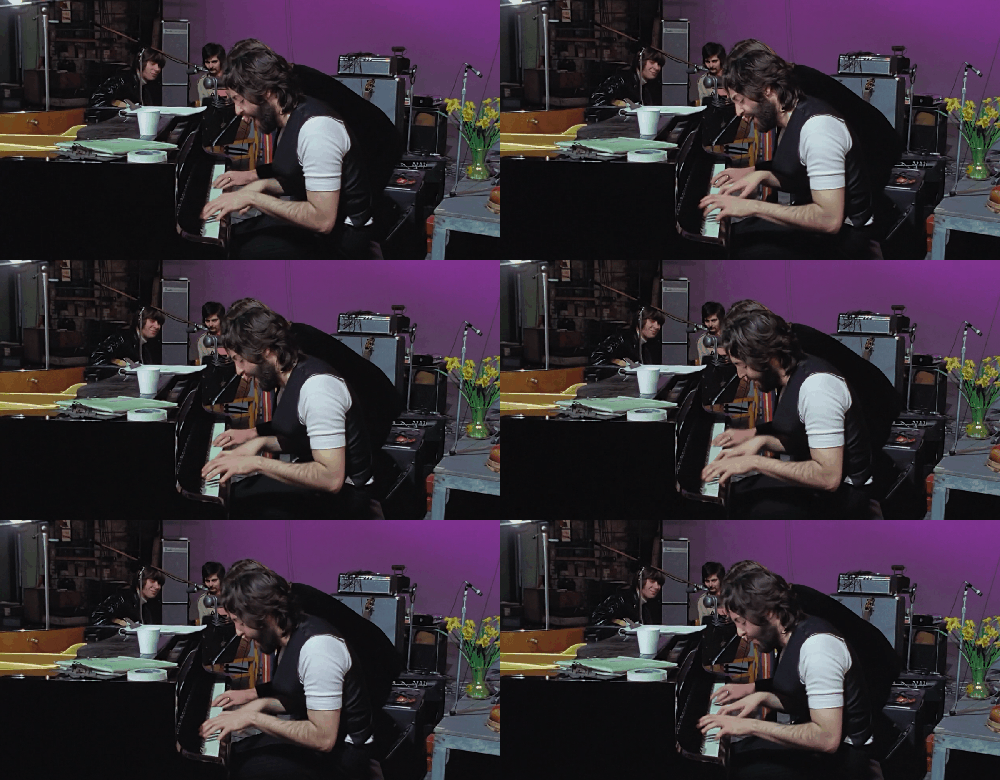
It’s an amusing callback to Ringo’s own “Picasso” from early in the sessions, from the “I bought a Picasso” line down to the closing “oh baby,” which was a signature Ringo closing lyric at this point. Paul and Ringo clearly had a great time playing together, something that was obvious to viewers in 1970 as much as it is to us today.

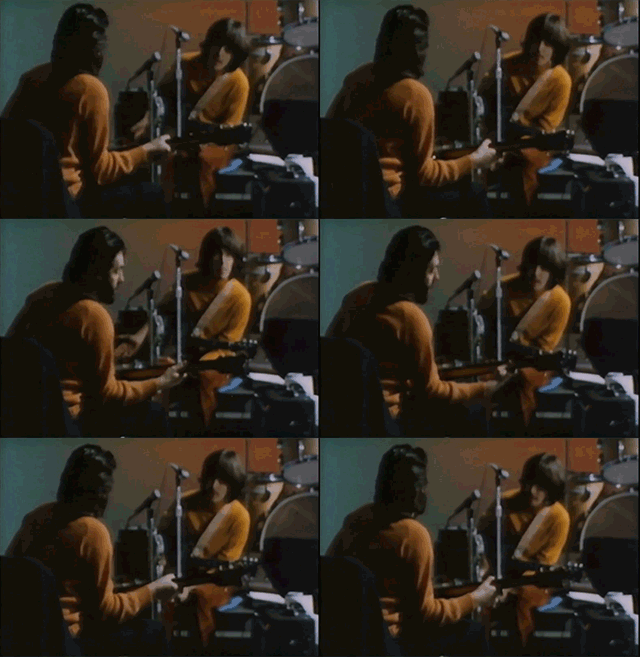
This little slice of life coexists in Let It Be and Get Back in nearly identical presentations. Let It Be’s version lasts all of 5 seconds longer – both are slightly edited down from the original performance.  The differences between the two visuals are purely cosmetic and seem like change for change’s sake, showing the duo’s hands at the piano when the other shows a view from their left, for instance.
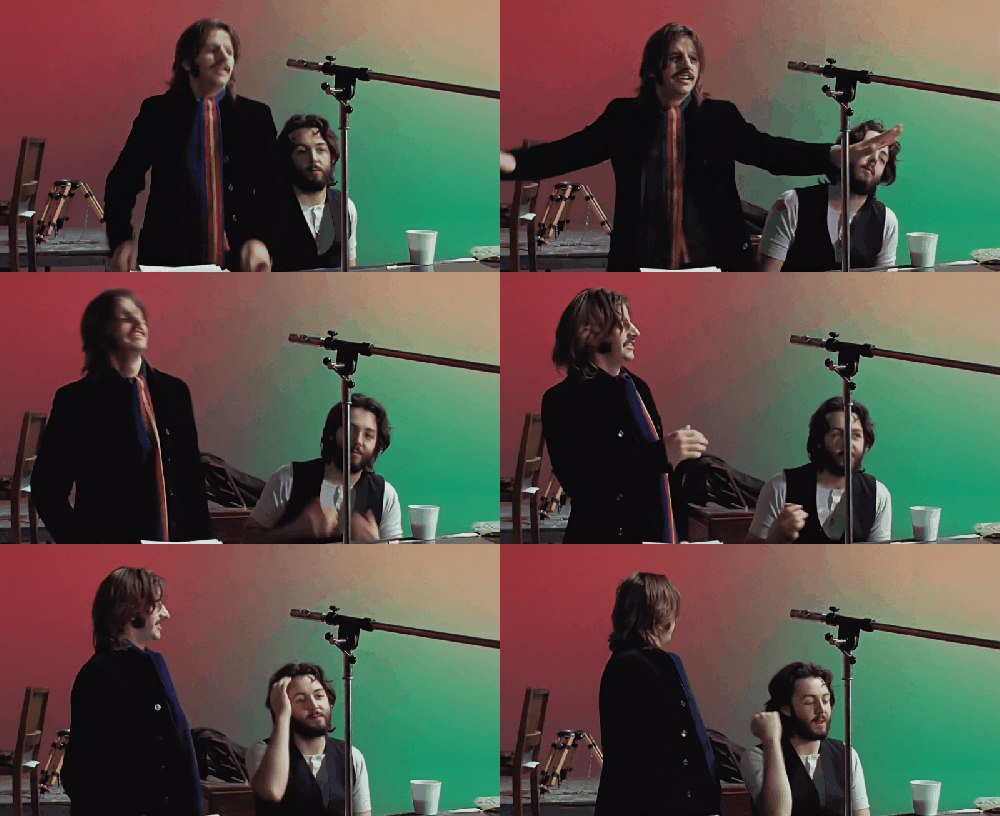
But then there were two (more important differences).

The first is the timeline. In Let It Be, the sequence is preceded by a January 9 version of “One After 909,” appearing about 13 ½ minutes into the film. After the piano jam, Let It Be sends the viewer into a January 6 rehearsal of “Two of Us” that eventually leads to the “I’ll play if you want me to play” argument (Director Michael Lindsay-Hogg uses Paul’s running his hands through his hair at the end of the performance to lead directly to the next scene of ensuing frustration.)
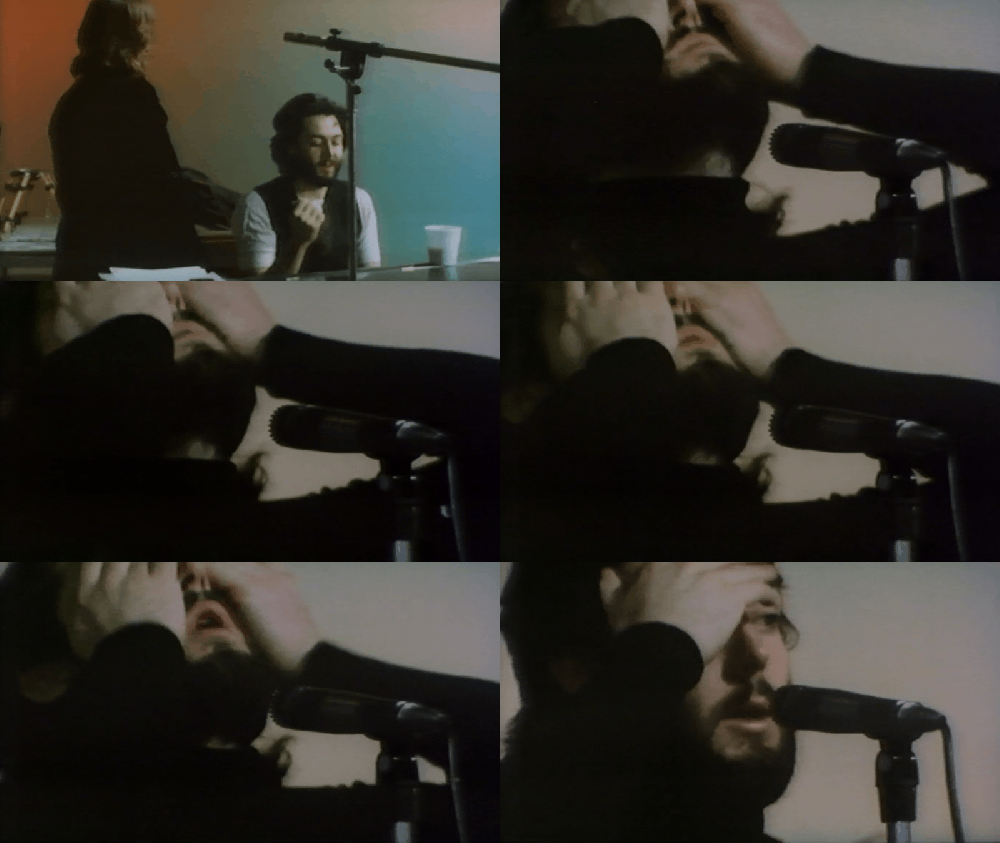
The transition as it appears in Let It Be.

Get Back roughly follows the progression in real time on the morning of January 14. It doesn’t come immediately after clapper loader Paul Bond said he wanted himself to buy a piano as it does in Get Back, but you can certainly see why that narrative device was used, and it was close enough in real time to work.

There’s another very notable divergence between the two films. When it came to the credits in 2021, then there were three (songwriters). Based on that clear first lyric and presumption it was a newly published original, the song was credited on screen as “I Bought a Piano The Other Day,” a Lennon/McCartney/Starkey composition.

Even with John clearly not yet on site, the Lennon/McCartney credit structure was used (as it was elsewhere with similar absent credits – but not future solo songs), with Rich Starkey an obvious contributor.  (Just look at “Piano Piece [Bonding].” That shouldn’t be a Lennon/McCartney song, since it’s probably already a Jesse Fuller original. More on that in the previous post.)

To paraphrase an earlier lyric credited to the Lennon/McCartney/Starkey songwriting trio, they didn’t even think of it as something with a name — or something long-forgotten that already had a name for the last 50 years. After all, it already had a title, and it wasn’t “I Bought a Piano The Other Day.”

Nobody has never spun an official version of “Jazz Piano Song” on a turntable or streamed it on Spotify. But that recording, originally released as part of the Let It Be film but not on the soundtrack LP, is the real thing. “Jazz Piano Song” – admittedly not the most dynamic title — was copyrighted in the U.S. on  July 8, 1970, by Northern Songs and Startling Music, credited to McCartney/Starkey. It’s a matter of semantics if it was really released, but it certainly came out.
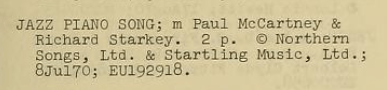
From the July-December 1970 volume of the Library of Congress’ Catalog of Copyright Entries of Music.

Today in 2024, then, there are two (copyrighted versions of the same song): “Jazz Piano Song” and “I Bought A Piano” are one in the same. I can only guess the decision to separately copyright the latter was an oversight, a generic disregard and abandonment of “Jazz Piano Song,” Let It Be and its era. Kudos to the Lennon Estate for sneaking away a few extra dollars and pounds for a song he had absolutely nothing to do with and was already accounted for, credit-wise.

It took more than 25 years for the McCartney/Starkey duo to team up on a follow-up composition. The liner notes to Paul’s 1997 LP Flaming Pie might obliquely reference “Jazz Piano Song,” saying in the description of “Really Love You” that it was “[c]redited to McCartney/Starkey – a first-ever credit for a released tune.” That note could also be referring to “Angel in Disguise,” an early ‘90s Paul demo with an added verse by Ringo, and thus another McCartney/Starkey unreleased track. Or it could just be covering behinds on the assumption there must have been other unrecorded and unreleased McCartney/Starkey tracks from 1962-1997.
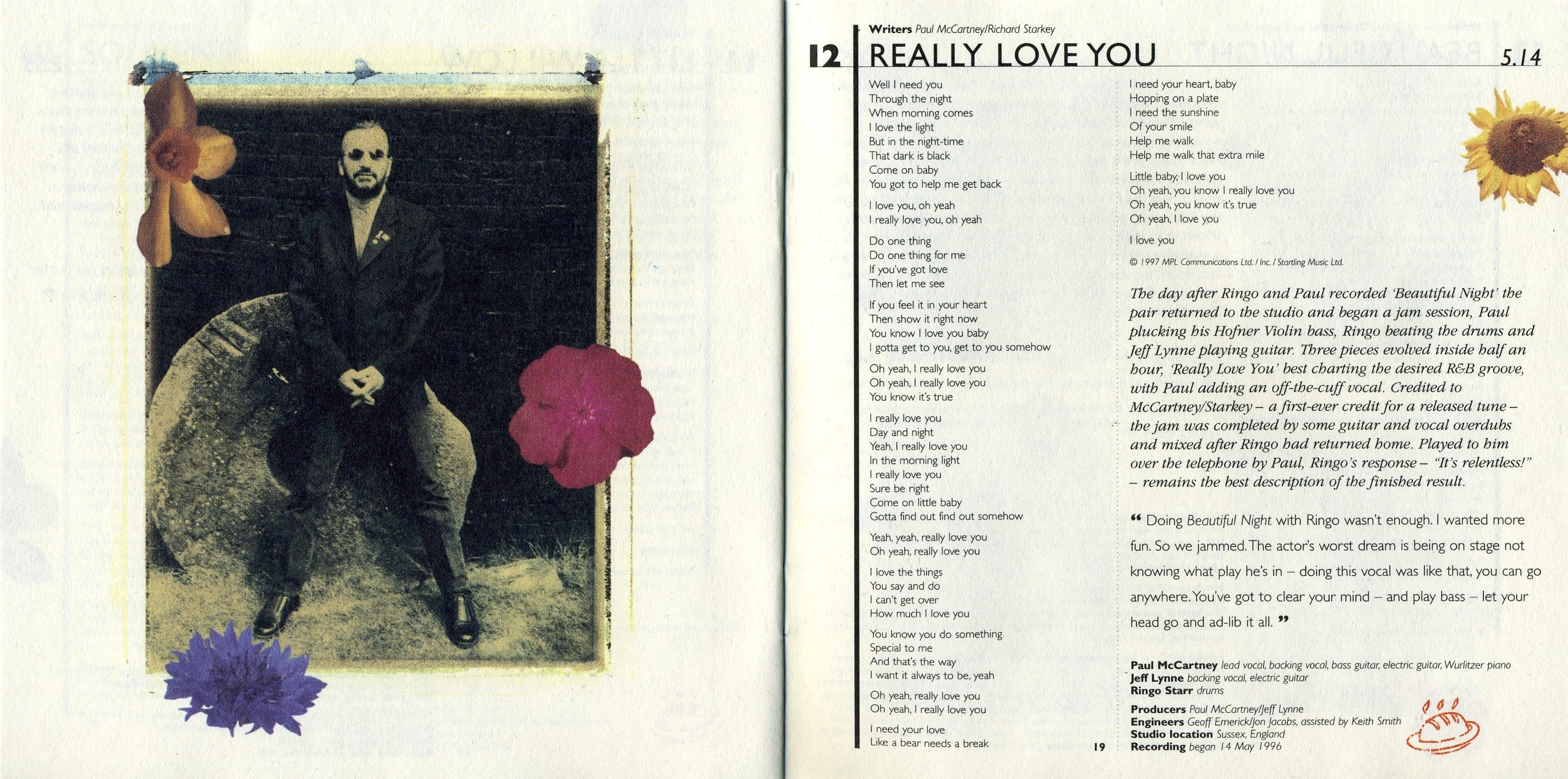
From the 1997 liner notes to Flaming Pie.

It’s at this point on January 14, 1969, the focus shifted from an obscure McCartney/Starkey song credited twice into a modest hit song written by Paul McCartney alone that wasn’t credited to him at all. (Some of this sequence appeared in Get Back, albeit compressed and a little out of order, too, although not in any way that misrepresented the moment.)

“Did you write ‘Woman’ by Peter and Gordon?”  Michael asked. “I loved that song.”

Paul said he did too.

“Woman” was a 1966 single for the since broken-up duo. It was also a deliberate experiment conducted by Paul.

“Bernard Webb, an English law student in Paris, sent this song to the Beatles, who having plenty of their own, passed it on to their old mates,” wrote one representative review of the song, outlining the origin story fed to the press.

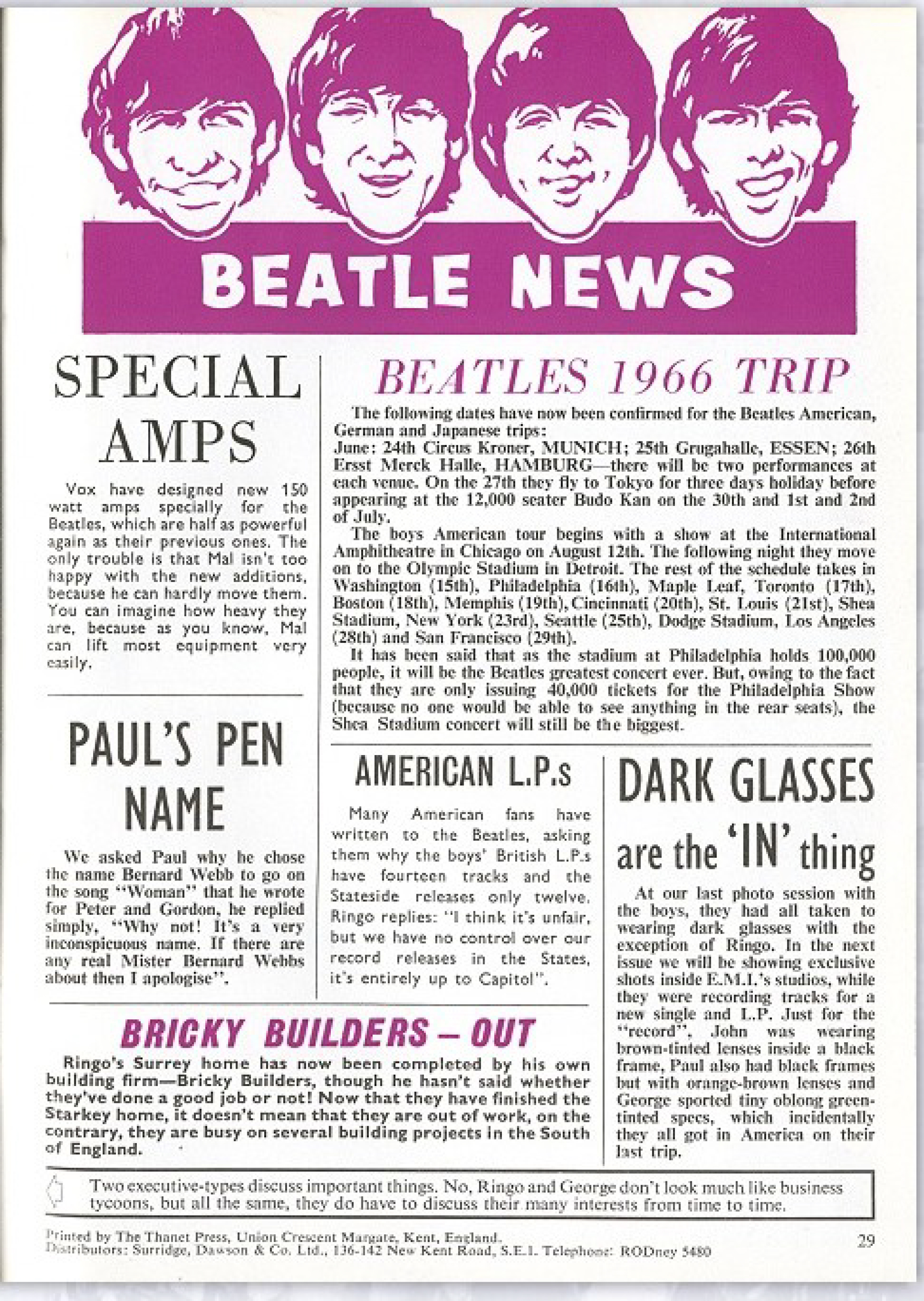
Like Paul Ramon before, and Apollo C. Vermouth and Percy Thrillington to come, Bernard Webb was one James Paul McCartney, this time taking a pseudonym – “a very inconspicuous name,” per Paul in the May 1966 Beatles Book magazine — in a ploy to see how well his song would chart as an anonymous author and not half of the world’s most famous pop songwriting team. The answer was modestly well, with the big production number landing in the top 30 in the U.K. and inside the top 15 in the U.S., although some of the movement up the charts did come after the secret was let out that Paul was behind the curtain.

The “mammoth Peter and Gordon treatment,” as Paul described it, gnawed at the songwriter years later. (Meanwhile, as we learn by watching Get Back, Ringo spent part of this performance mugging for the cameras.)
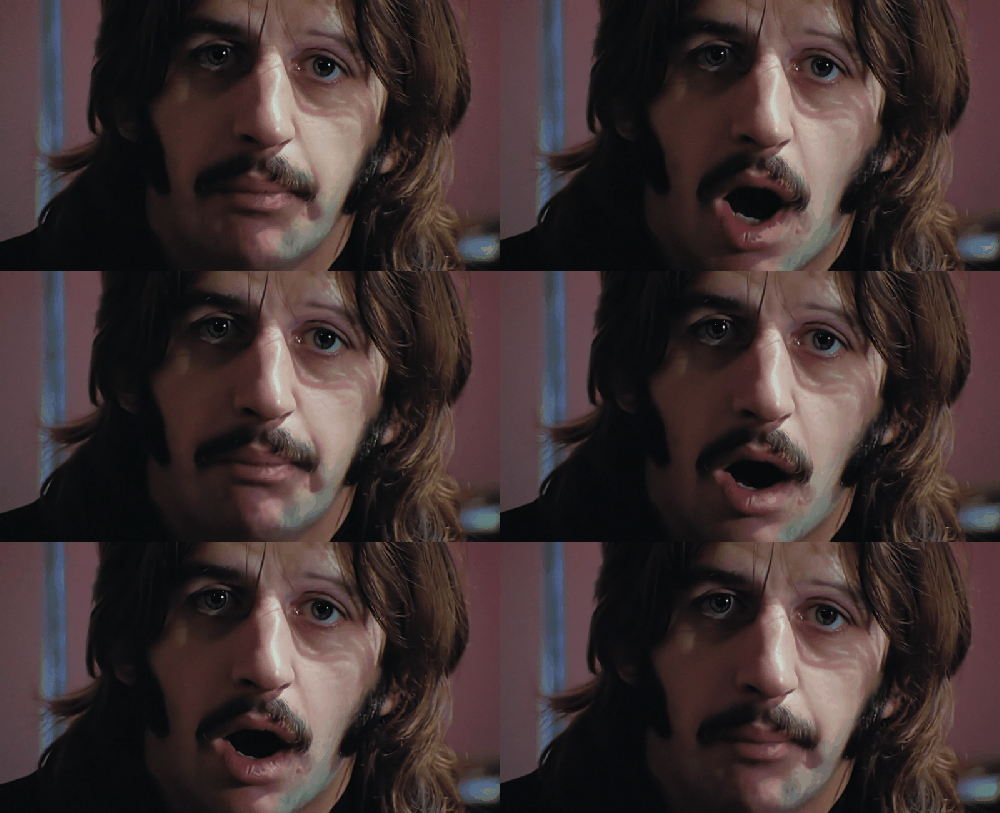
“We did a much better one very first time we ever did it,” Paul said on January 14, after singing the first verse a capella. “It was very dry. Just little. With like about eight violins. …  We were very fussy at the time, didn’t like it, so it got turned into a mammoth ballad.”

Modestly, he concluded, “It’s a great song” before delivering a straightforward performance at the piano, repeating the first verse several times. He later played it again imitating the “great big Gordon bit” to laughter.

I wonder if Peter’s still got the original thing of that, cause we did a great version first time we did it. Only Gordon couldn’t get the high notes. … But it was all right though, it was OK. It’s just we were so fussy we thought “this is the song, this is the one.” And they’re so fussy about it, that we chucked it, jacked it in and just let them go and do it again. But they did it the next time as mammoth Peter and Gordon treatment. It’s too sort of big. The first time we did, it was little, it was great.

An acetate of the “original thing” – purportedly featuring Paul on drums — went to auction in 2013, and quickly founds its way online.

A mammoth treatment isn’t necessarily a disqualifier for Paul, though, who resumed playing the piano after a brief conversation celebrating Johnny Cash (look for that in a future post!). In Get Back, Paul introduces the song saying, “I had one this morning.” In fact, he said that earlier, when playing “The Day I Went Back to School.”  On the Nagras, Paul gave no indication the song was an original or anything beyond something he was improvising.

Paul scatted a few indecipherable lines, although a few are identifiable, sung in an exaggerated fashion: “We’re just busy riding, driving in the back seat of my car.”

Two years before it concluded RAM (and eight years before Thrillington’s “cover”), “The Back Seat of My Car” was new enough Glyn asked if Paul was playing a Beach Boys song.

“It’s just like a skit on them,” Paul replied.

Indeed it played out like a comedy– thankfully, this sequence made Get Back, too – as Paul openly played to his audience, embellishing high and low harmonies and vocalizing brass and percussion as he shared draft lyrics of teenage romance. “Gee, it’s getting late!” drew big laughs, for instance. Mexico City hadn’t been introduced as a destination, and the subjects didn’t yet believe that they can’t be wrong.

Conceived in summer 1968, “The Back Seat of My Car” — which was ultimately credited to Paul alone — wasn’t finished in January 1969, but Paul clearly had scoped out the grand scale of the song, more than two years before he’d ultimately employ an orchestra to perform George Martin’s score for the song.

Having completed his enjoyable reveal of “The Back Seat of My Car,” Paul left the stage to take a call, and the Nagra microphones shifted to a conversation between Ringo and Michael, following a brief appearance by Mal Evans. The roadie himself had just taken a call from John, who for a consecutive day was late to the session.

“What did Mal say? … What’s going to happen this morning?” Michael asked Ringo.

“Nothing,” he replied. But …

“This afternoon, watch out!”
1 Comment

Filed under Day by day

TMBP Extra: Every now and then

The Last Beatles Song

The Beatles website, as captured in the days leading up to the release of “Now and Then.”

The Last Beatles Song.

Let’s be a little more accurate and say with several qualifiers that it’s the last, new officially released Beatles song. The diehards already knew it from bootlegs, of course.

Not now, but back then, it was some other John Lennon vocal — not “Free as a Bird” or “Real Love” but the group’s 1964 recording of “Leave My Kitten Alone” — that qualified as the first last Beatles song.

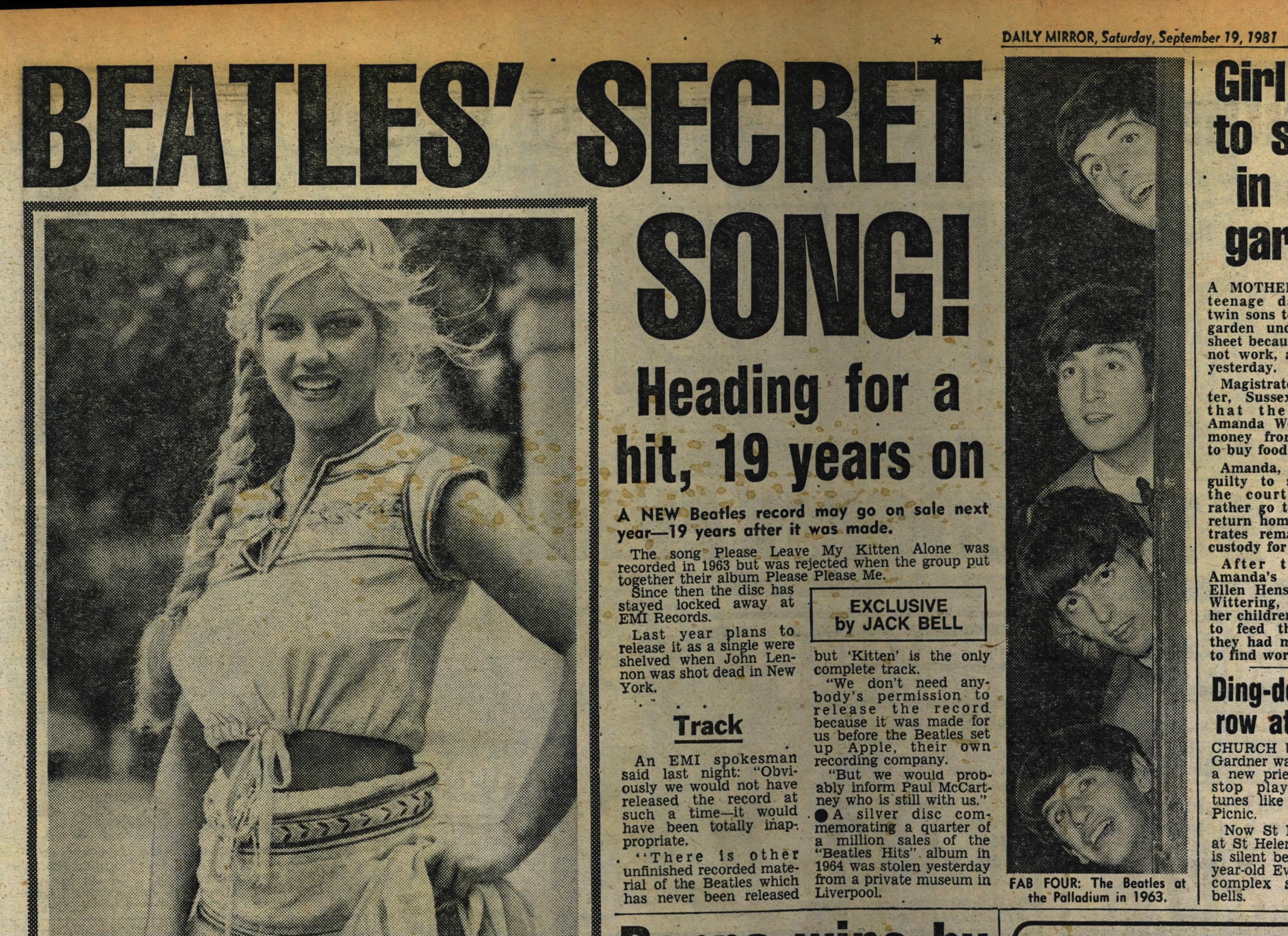
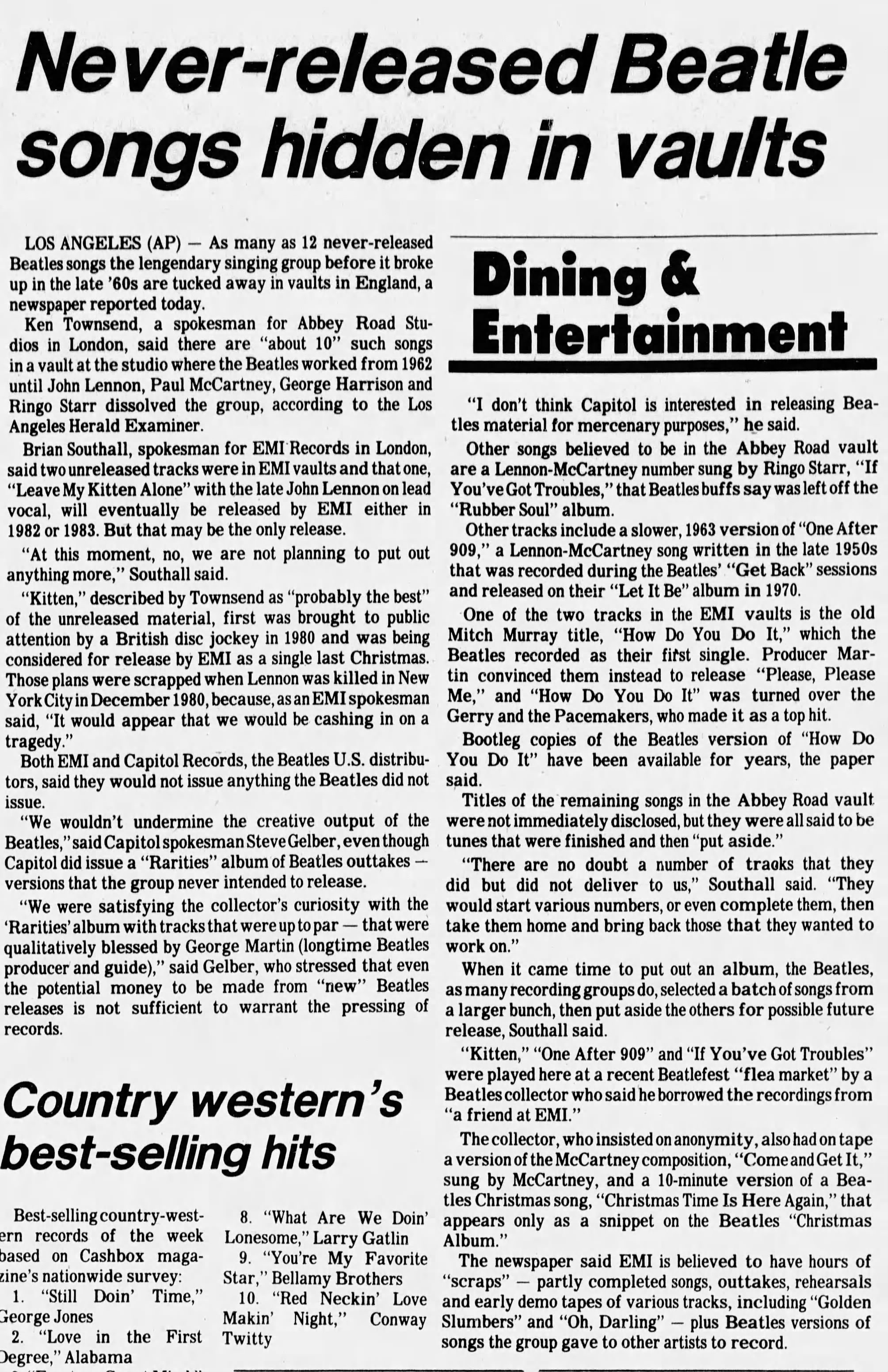
“There is other unfinished recorded material of the Beatles which has never been released but ‘Kitten’ is the only complete track,” an EMI spokesman (presumably Brian Southall) told the Daily Mirror in September 1981. That same story said John’s death derailed initial plans to release the song as a Christmas 1980 single.

Daily Mirror, Sept. 19, 1981.

If you’re looking for a sign of the times and an indication of how much the coordination between the label and band have changed in 40 years for legal reasons and otherwise, here’s another quote from EMI:

We don’t need anybody’s permission to release the record because it was made for us before the Beatles set up Apple, their own recording company. But we would probably inform Paul McCartney who is still with us.

(George Harrison and Ringo Starr were still with them, too, by the way.)

Further details emerged later in 1981, when an AP report (citing the now-defunct Los Angeles Herald Examiner) said a dozen unreleased Beatles songs were in the vault, but only “Leave My Kitten Alone” would see daylight, probably in 1982 or 1983. Hope we didn’t get too excited back then because …

“At this moment, no, we are not planning to put out anything more.”

Just how do EMI and the Beatles lose a song and recover it years later?  Here’s a quick timeline:

  • August 14, 1964: The Beatles commit their ferocious cover of “Leave My Kitten Alone” — originally recorded by Little Willie John in 1959 and two years later by Johnny Preston — to tape at EMI Studios. It’s done in five takes, including false starts.
  • December 4, 1964: Beatles for Sale is released, and of its whopping six covers, none are “Leave My Kitten Alone.” We don’t hear of the song again in the Beatles career, not even during the Get Back sessions, when they played all kinds of things.
  • August 15, 1970: Apple flack Peter Brown tells Melody Maker that there is no unreleased recorded Beatles material. Even then, everyone knew better as Get Back session outtakes, for instance, were already circulating.
  • 1976: With the Beatles no longer under contract as an entity to EMI, the label began to take stock of what actually was in the Abbey Road archives, a lengthy process.  An in-house EMI compilation of songs that included “Leave My Kitten Alone” eventually made its way into collectors’ hands, and ultimately bootlegs.

This brings us to the early 1980s, and EMI’s admission that the song would ultimately be released.

The emergence of “Leave My Kitten Alone” was tangible and exciting at the time. It wasn’t a fringe bootleg or a brief mention in newspapers anymore. You could hear it on mainstream radio.

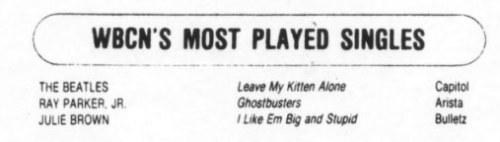
Here’s one example: For a solid month in late summer 1984, the song was listed among the “Most Played Singles” on Boston’s WBCN (the same station which happened to be the source of the famed Kum Back bootleg 15 years earlier).

From the Aug. 28, 1984 issue of the Boston Phoenix.

The excitement for the song wasn’t isolated to one market, either. I know because I remember it myself.

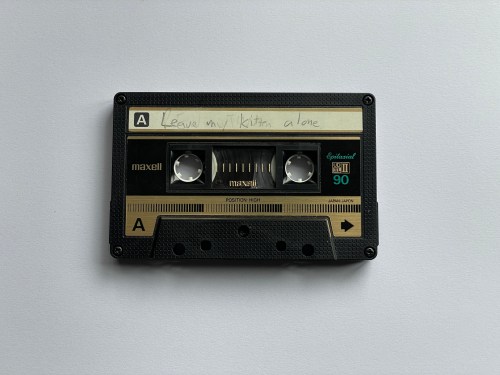
That child is going to miss you: My ’80s dub off the radio here accompanied by elementary-school-era scrawl on the label. As you can tell, I save everything.

It must have been some time in that same period in 1984 that one of the local New York radio stations (WNEW? WAPP?) played the song. I was 10, but already a fully formed Fab Four fan. I remember the station’s promotion was breathless — it was the “new” Beatles song, and I’d never experienced such a thing.

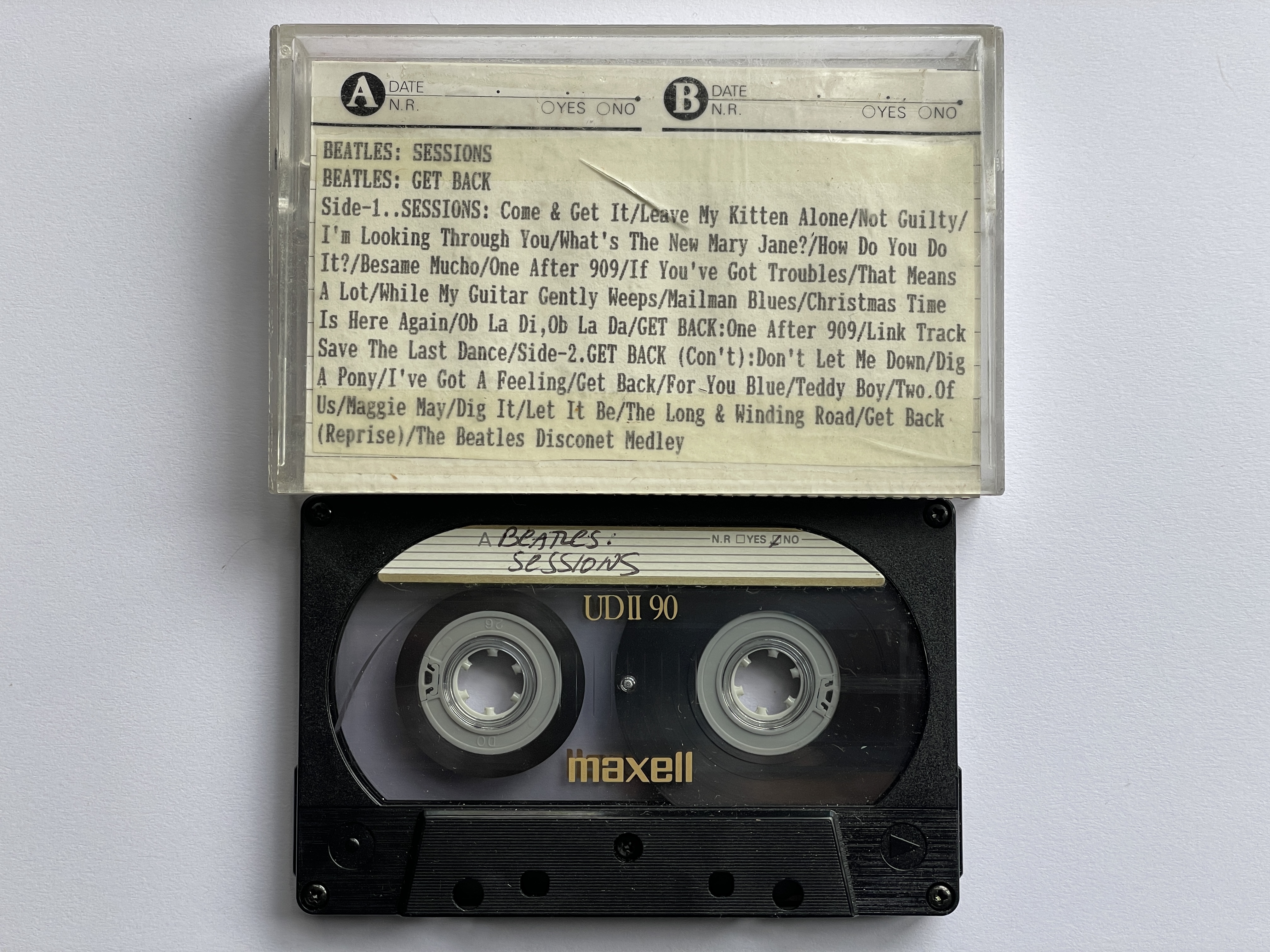
I grabbed a cassette tape not unlike the one central to the 2023 “Now and Then” promotional campaign (mine was Type II though, only the best for the Beatles). I hit play-record a few seconds into the song, and while I thought I was doing myself a favor at the time cutting out commercials, 40 years later, I wish I hadn’t lost the extra context.

By this time, the song’s release dovetailed with that of the compilation, Sessions, which has its own entire backstory. The LP and its lead single, “Leave My Kitten Alone,” had catalog numbers and release dates for early 1985.

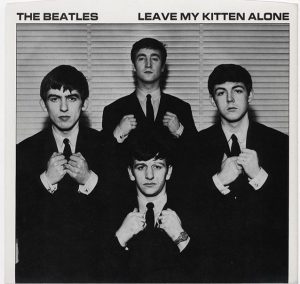
There’s some debate if this is genuine or a fake, but it’s definitely some kind of sleeve for a “Leave My Kitten Alone” single.

Suddenly, the entire project was dead, reportedly because of objections from the three living Beatles and the Lennon estate, as well as the fallout from a new lawsuit between Apple and EMI.  Like so much else, the Sessions LP lived on in bootlegs, almost immediately. (I had mine on cassette, backed with Get Back.)

It took another decade, after all manner of legal issues were resolved, that Yoko Ono handed tapes of four demos by John — “Free as a Bird,” “Real Love,” “Grow Old With Me” and “Now and Then” to Paul in 1994 for the surviving Beatles to adorn for Anthology.

The technical (as well as critical and commercial) success of Natalie Cole’s “Unforgettable” duet with her late father in 1991 made a Beatles recording with John feasible. Until then, every Beatles reunion suggestion centered around a replacement for John. This ensured the irreplaceable would not be replaced.

This “Kitten” had nine lives, finally hitching a ride with the next last Beatles song — “Free as a Bird” — onto Anthology 1, officially becoming canon 31 years after it was recorded.

And it left the door open for another to be the last Beatles song.

6 Comments

Filed under Extra

Jan. 13: Et cetera

For all the storylines and spectacle of the Beatles’ January 13, 1969, there’s even more detail that just didn’t fit into the 20,000 words I’ve already written about this single day. For context, Kafka’s The Metamorphosis checks in around 21,000 words, most about a bug yet not a single one about a Beatle.  Here are some of the delicious leftovers from our Fab Four’s day:

***

It’s the opening theme to the second episode of Get Back:

“You’re my world, you’re my only love,” croons Ringo Starr as the credits roll.

This audio is displaced. In its original context served on the Nagra tapes, the moment comes a good hour after the documentary implies, happening when Ringo is exiting, not entering, the Twickenham Film Studios main stage on January 13, 1969, just before the drummer joins Paul McCartney in meeting John Lennon at the Twickenham canteen.

It’s not obvious what song Ringo’s singing. The vocal could be a misquote from Liverpool pal Cilla Black’s 1964 smash “You’re My World,” a four-week UK chart-topper that was ultimately knocked out of the top spot by Lefty Wilbury.

Years earlier, Ricky Nelson had a hit with “You’re My One and Only Love,” but that doesn’t seem like the inspiration, either.

It could just have been spontaneous on Ringo’s part.

There is another song he could be quoting more directly, though the source is a mystery. A clue could be in a hit song not by Ricky Nelson but Lefty’s brother Nelson Wilbury  — Ringo’s bandmate George Harrison.

George’s “When We Was Fab” paid homage to life as a Beatle, but one line that fit unassumingly in 1987 stands out a little bit more as we revisit January 1969.

“You are my world, you are my only love”

Remember when around the same time, George pulled a largely unknown, decades-old B-side and album track from his memory and record collection and stuck it on his new album?

It sure seems there’s a missing link for “you’re my world, you’re my only love” — maybe it’s something the Beatles’ drunk uncles would sing at the pub in the Dingle or Speke in 1947 — a composition since lost to time that inspired callouts from both Ringo on January 13, 1969, and George, nearly 20 years later.

***

The near(er) future — more like 1974 — was tangible on January 13, 1969, too. Just ask Paul.

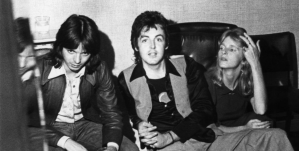
With two future members of Wings in the room at Twickenham Film Studios, a third was an occasional topic of conversation throughout the course of the day. Linda Eastman wasn’t a keyboardist yet, but Jimmy McCulloch, all of 15 years old and more than five years away from joining Wings, already earned status as a sharpshooter guitarist.

In flight: Jimmy McCulloch, Paul and Linda McCartney of Wings

McCulloch’s new band, formed by The Who mastermind Pete Townshend only a few weeks earlier, had barely started recording. Still, word certainly got around in the right circles in early 1969.

“[The Who’s manager] Chris Stamp told me that they’ve got a new group now … the guy (Andy Newman) that works in the GPO (General Post Office),” director Michael Lindsay-Hogg said. “What’s he called? Clapperbell or something. And they’ve got a guitar player who’s 14 [sic], who looks like he’s 6.”

“Plays like he’s 80,” Ringo retorted.

It wasn’t called Clapperbell, instead it was …

“Thunderclap Newman,” Paul said, hours later and out of the blue — perhaps he caught a glimpse of them on the front cover of the most recent issue (January 11) of DISC and Music Echo —  in the closing moments of the day’s Nagra tapes.

“That’s the guitar player they’re telling me about who looks 6, who’s going to be 14,” Michael replied, excitedly.

They may have been formed by the Who’s leader, but Thunderclap Newman’s early biography tied closely to the Beatles, too. The group’s smash debut single “Something in the Air” – originally titled “Revolution” but renamed for obvious reasons – has the distinction of knocking “The Ballad of John and Yoko” from the toppermost of the poppermost in July 1969. The song later appeared on the soundtrack to The Magic Christian which, of course, starred Ringo and was co-headlined by Badfinger’s version of “Come and Get It,” as penned by Paul.

“Something in the Air” was recorded at Townshend’s home studio in Twickenham – precisely one mile from where the Beatles were presently gathered.

***

If it wasn’t enough to dream of future bands, the January 13 Nagras revealed pre-Beatles adventures, too.

On the heels of Linda’s relating a story of a horse stepping on her toes, Ringo described a more catastrophic injury suffered by his previous bandleader, Rory Storm.

“[He was] diving off New Brighton diving stage, going down and down, and he thought, where’s the water? And just as he decided to look up for the water, he slipped, and he broke his nose. So with a broken nose, blood everywhere, he ran right back up and dived off again.”

“He would, yeah, that’s Rory’s thing,” Paul chimed in before saying he recently ran into Rory “in the drive, washing his car.”

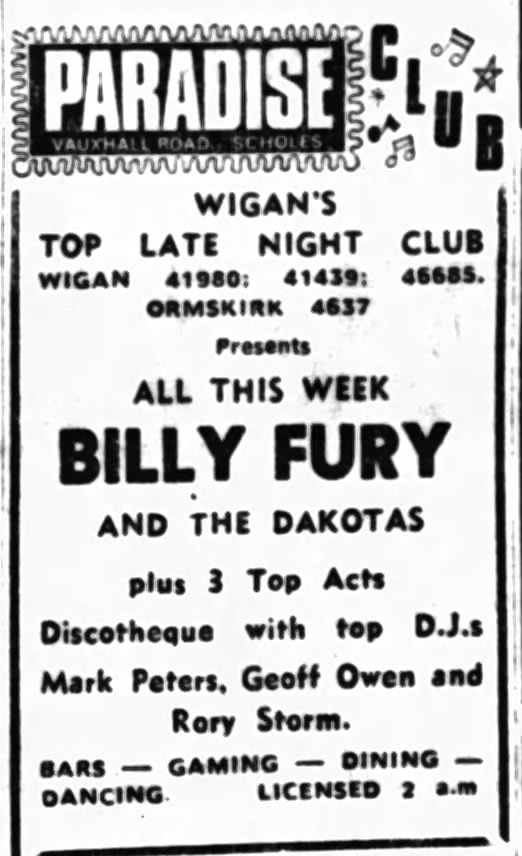
“He’s a swimming instructor when I saw him, and DJing, and trying to put a new group together. He’s great though, Rory, I like him. He’s a hustler.”

***

You’ll remember the sequence as comic relief in an otherwise sobering segment in Get Back.

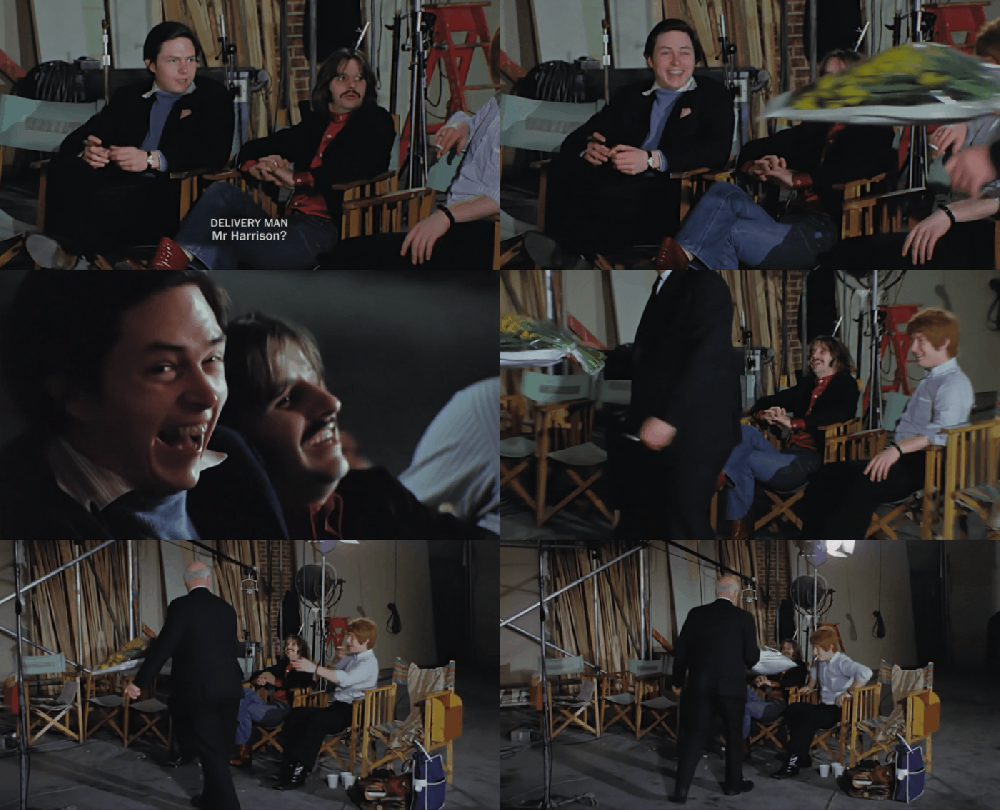
A man delivering flowers to George seemed to be the last man standing who couldn’t recognize the absent Beatle. Doubled over laughing, Michael pulled himself together in time to ask Ringo if he liked the Hare Krishnas, who sent the gift.

“No, not really,” the drummer replied in perfect deadpan.

***

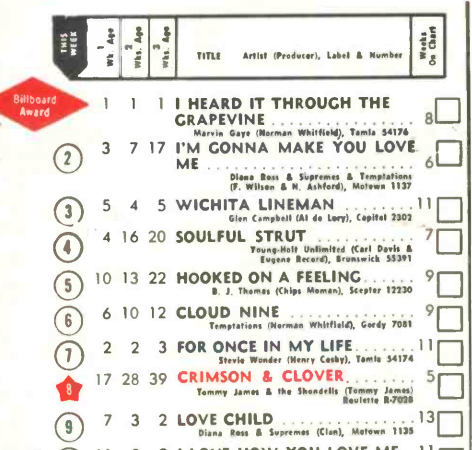
“Have you seen [that of] the top nine records in America, five are Motown?” Michael asked early in the day.

Music was always on everyone’s lips, even as the Beatles’ own production stalled.

“Penny Lane, I think, is one of the greatest songs I’ve heard in my whole life. You like it?” Michael asked later.

“Yes, but I don’t think it’s the greatest song I’ve ever listened to in my whole life,” Ringo replied in earshot of the song’s author.

Conceding how much Penny Lane “moved” him, Paul asked Michael if he was “from suburbia.”

MLH: No, it had to do with nostalgia for me.

Ringo: His father’s a fireman.

MLH: No, nor [worked at a] barbershop. But it’s about nostalgia, which always makes me break up and cry. That’s why Otis Blue is a very big [album] in my life.

We also learned a little trivia about the first records ever bought by some of our protagonists.

For Michael, it was “Quarter to Three” by Gary U.S. Bonds, while Glyn Johns’ first single was Lonnie Donegan’s “Rock Island Line.”

 ***

I mentioned this quote from Ringo in an earlier post somewhat in passing, but I thought it was interesting enough to call out again with greater surrounding detail.

With the time-limited Get Back sessions ongoing as filming for The Magic Christian loomed on the horizon, he was asked by Michael what he enjoyed more, drumming or acting. The answer revealed Ringo’s strong professional motivation. Someone give this guy a raise — and a little more vacation time.

“Well, it’s hard to say, doing so little movies and such a lot of the drums,” Ringo answered. “‘Help!’ and ‘A Hard Day’s Night’ was all right because its the four of us and we played, and did it. The only trouble with those [was] when I didn’t know what I was doing. … So I did ‘Candy‘, which was only two weeks — which was great because I have to do something.” (emphasis mine). 

It wasn’t enough to be a father of two young children and drummer of the biggest band on earth and galaxies beyond. Ringo just had to work and eliminate extended down time. No wonder he got along so well with Paul.

4 Comments

Filed under Day by day

Jan. 13: The Lunchroom Tape (Pt. 2)

The lunchroom discussion on January 13, 1969, winds and turns, overlaps and often overwhelms. It’s sincerely impossible to give a linear rundown of this 30-minute discussion, as it isn’t a linear discussion. So here’s another disclaimer: You may have already read some of the bits below in previous posts, and if you haven’t, you may eventually read some of it again. This isn’t a straight recap — instead I’m trying to follow themes as they developed at different points in the conversation.

Also, please read Part 1 first, if you haven’t already. It’s there I lay out the background of the lunchroom conversation and the key differences between the Nagra tapes and the Get Back docuseries’ portrayal of events. It’s not insignificant.

***

John, Paul, George and Ringo.

From 1962 to this very moment, it’s how we break down the Beatles. It’s the quintessential ordinal.

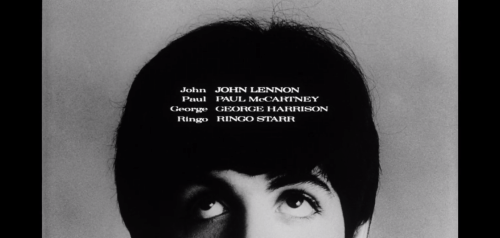
Open up your eyes now, tell me what you see: From the closing credits to A Hard Day’s Night

At once, it’s a simple accounting of tenure in the Beatles dating back to the Quarrymen days, but also a power ranking, a long-term hierarchy openly affirmed during the January 13, 1969, lunchroom tape. Yet at its most elemental, it’s a listing of four ostensibly separate co-workers assigned to the same group project. They’re still individuals with their own names and agendas.

After all, “we have egos,” to quote John Lennon in the opening moments of this recorded conversation.

The full half-hour of audio from the lunchroom reveals periodic contention between John and Paul McCartney, but it’s based in candor not animosity. You can hear it in their spoken tones.

Still, John is constantly raising the subject of ego and individual and collective self to Paul. At this point early in the tapes, it’s in the specific context of wanting the departed George Harrison to return to the band. From around two minutes into the recording, following John’s “ego” declaration and in a sequence omitted from the Get Back docuseries:

Do I want him back, Paul? … [D]o I want it back, whatever it is, enough? Then if it is, you know, I’ve had to smother my ego for you, and I’ve had to smother me jealousy for you to carry on, for whatever reasons there is.

It’s a strong statement, but Paul likely knew as much all along — he didn’t reply. John said he couldn’t be his real self, or who he wanted to be, to partake in the Beatles experience. He didn’t bury Paul; he’s saying he buried himself for the sake of Paul. John’s jealousy could be rooted in a lot of things — later in the lunchroom we hear John and Paul seriously discussing John’s feelings of submission at Paul’s musical direction. We’ll get to that another time.

John continued to unload in a sequence that’s complicated to follow, speaking at times to Yoko Ono and at others directly to Paul. He may even be speaking just to get his thoughts gathered out loud. Part of John’s argument is that Paul only “this year” came to recognize his own shortcomings and took responsibility not just for Paul’s treatment of George but his relationship with John, too. But he also gets into Paul’s interpersonal approach, too.

There’s plenty to unravel. John’s liberal use of pronouns instead of given names and constant shifting from first to third person is dizzying. I want to get this right, but I’m not sure this can be gotten right entirely. (I covered some of this territory earlier, in the recap of the band meeting the day before.)

John: It’s only this year that you’ve suddenly realized, like, who I am, or who he is or anything like that. But the thing is … you realize that like you were saying like George was some other part. But up till then, you had your thing that carried you forward. … I know, I’d deduced it before you … that would make me hipper than you, but I know that I’d deduced it to you before that for selfish reasons and for good reasons, not knowing what I was to do, and for all these reasons I’d adjusted to all these, and allowed you to, if you wanted to let me be that guy, whatever it is.

But this year, you’ve seen what you’ve been doing and what everybody’s been doing, and not only felt guilty about it, the way we all feel guilty about our relationship to each other, is we could do more.

I’m not putting any blame on you for only suddenly realizing it, see. Because this was my game, you know. It might have been masochistic, but me goal was still the same — self-preservation, you know. And I knew what I liked. I know where, even though I didn’t know where I was at, you know, the table’s there, and just let him do what he wants, and George too, you know? …

But this year, see, it’s all happening to you. And you’re taking the blame suddenly as if he’ll say, “Oh yeah, you know I’m a mean guy” as if I’ve never known it. And then I thought, “Fucking hell, I know what he’s like. I know he used to kick people. I know how he connived with Len, Ivan, and I now know, you know? Fuck him.” And then, “Oh, but right, I’ve done such things.” All that.

So you’ve taken the five years … of trouble, this year. So half of me says, “All right, you know I’d do anything so save you, to help you.” And the other half of me goes, “Well, serves him fucking right. I chewed through fucking shit because of him for five years and he’d only just realized what he was doing to me.”

This is a lot, spoken rapidly and emotionally in a little under three minutes. Some takeaways, from John’s perspective, via my own perspective and listening of the discussion:

• Without visuals to help clarify who John is talking to or any body language we can decode, no amount of AI and crisp audio will get us to  understand this sequence satisfactorily, much as we’d like to. It’s in the ear of the beholder whether John was talking about George’s relationship with John and Paul or John is talking about his own dealings with Paul. Or maybe John was projecting! With every repeated listen, I try to convince myself John is complaining about Paul, but if he is, Paul’s reaction (none) is so stark and tame, it forces me to reconsider that it must instead be about George’s relationship with the others after all.

Not guilty? On the contrary! Not only John, but all the Beatles feel guilty about their treatment of each other, and he believes they can improve. This certainly makes sense. George’s departure from the group, the second by a Beatle in 4 1/2 months over real or perceived treatment from the others, could represent a tipping point to John.

• It’s not just guilt, though. Saying it “might have been masochistic,” John admitted to probably finding pleasure in the treatment of George — and in Paul bearing the recent brunt of the conflict with George.

• John’s explicit goal is” self-preservation,” without any elaboration.

• While he said he didn’t want to put any blame on Paul, that’s exactly what he did throughout.

I’m open to the description of George as “some other part” having  a further meaning beyond him simply existing as a separate entity outside the Lennon-McCartney songwriting and social circle. George is literally another part of the Beatles, and wasn’t previously treated as earning that full share.

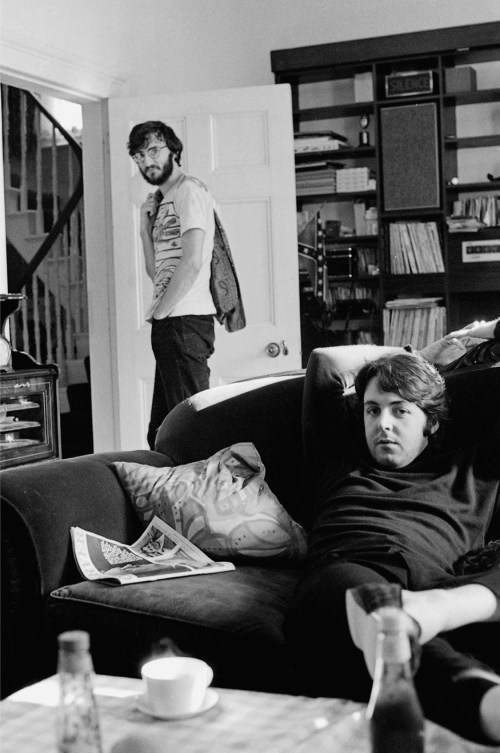
Connivin’ with Ivan: Paul and Ivan Vaughan at Cavendish in 1968 — the year Paul suddenly realized it.

And then there are the remarks about “this year,” when Paul finally started figuring things out. Not yet a fortnight into 1969, “this year” certainly must refer to part, if not all, of 1968. That’s the year of India, the launch of Apple and the recording of the White Album. And personally for Paul, the end of his relationship with Jane Asher and the start of his life with Linda Eastman. In other words, a transitional, emotional year for Paul.

This was, in large part, a few moments of John speaking openly and directly about Paul (which viewers of Get Back were led to believe were the discussion’s only two participants).

That was enough for Yoko to interrupt at one point and plead for John to shift the conversation, without a spoken explanation. Was she uncomfortable by the discussion? Did she just want John to focus? (Why not both?)

“Go back to … talking about George.”

Moments later, she interrupted again to ask, “What about George?”

I’ve written about this next sequence over several other posts. But it’s worth a revisit and recontextualization. (When I eventually ask you all to buy They May Be Parted: The Two-Ton Tome, this will be a more orderly read.)

Paul was an optimist. He didn’t view George’s absence as a problem quite yet. (This moment comes about 5 1/2 minutes into the full recorded conversation, but it in the closing seconds of the Get Back cut).

Paul: See, I’m just assuming he’s coming back, you know? I’ll tell you, I’m just assuming he’s coming back.

John: What if he isn’t?

Paul: If he isn’t, then it’s a new problem.

It’s at this point — when he suggests that “as a policy” they should retain George in the band — ostensible Beatle boss John pitched a corporate reorg that would essentially result in the Plastic Beatles Band (or is it the Plastic Ono Beatles?).

“The Beatles, to me, isn’t just the four of us,” John said with the implicit suggestion Yoko could be a Beatle if the others acquiesced.

“I think that I alone could be a Beatle. I think [Paul] could. I’m not sure whether [Ringo] could. … I’m just telling you what I think. I don’t think the Beatles revolve around the four people.

“It’s like [Ringo] joining instead of Pete [Best]. To me, it is like that.”

Of course, it’s not really like that. (As I wrote previously, going from Pete to Ringo was a crafty personnel decision and musical upgrade, not part of a disruptive strategy or to keep the band fresh by employing a rotating lineup.)

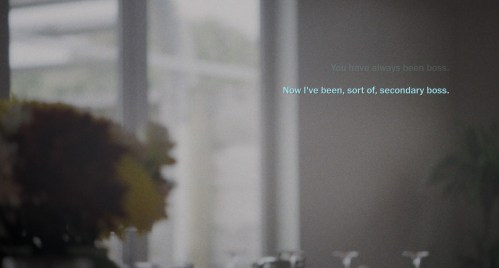
“You have always been boss,” Paul continued, about 6 1/2 minutes into the near 30-minute sequence on the Nagra tapes and about halfway through the four-minutes dedicated to the lunchroom sequence in the Get Back documentary. “Now I’ve been sort of secondary boss. George has been the third boss.” (Previously, I wrote that it sounded like “third rung” — I even found a picture of George on a ladder to highlight the point! — but on fresh listen prompted by the cleaned-up audio in Get Back, I do think it’s “boss.” Regardless of exact wording, the point is the same.)

In a grand comic concession, Ringo admitted, “I’ve been the rabbit.”

The documentary doesn’t include the reference of George’s ranking, much less Ringo’s joke. Instead it ends with Paul’s placement as “sort of, secondary boss.”

John, Paul, George and Ringo. That’s what the Beatles became when Pete was sacked, and that’s the order they had in place at the beginning of these sessions in January 1969. And that’s probably why Paul was pushing for John to step up.

(Interestingly in a 1971 interview that went unpublished until 1984, John explicitly said, “What I think about the Beatles is that even if there had been Paul and John and two other people, we’d never have been the Beatles. It had to take that combination of Paul, John, George and Ringo to make the Beatles.”)

Paul had been very conscious of this concept of band leadership. Just a week earlier, he gave a vague statement about this very point.

I’m scared of that, ‘You be the boss.’ I have been for a couple years. We all have, you know?

It’s unclear if in that January 6 quote Paul meant “for a couple years, he was scared” of taking on a leadership role or if he was acknowledging he had felt he “acted as boss, for a couple years.” If on the lunchroom tape he’s explicitly recognizing John at the alpha, then it sounds like the former.

Later during the lunchroom Nagras — about 18 minutes in and in a sequence ignored in Get Back — Paul evoked cinema’s rebellious, anti-hero “King of Cool,” Steve McQueen.  It didn’t sound like Paul was attempting to fill any power vacuum himself, but instead was giving John the space to fill it again in some fashion.

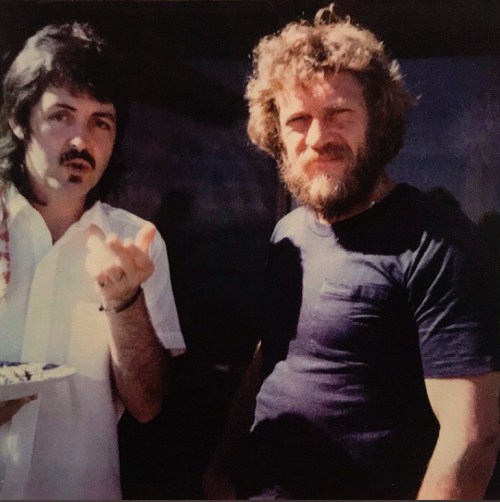
Here’s a separate mini-post snuck inside a caption. I can’t track down the exact source of this photo, although I’ve seen some say it’s one of Linda McCartney’s Polaroids. Anyway, if legit, it’s Paul and Steve McQueen, probably in the LA area around April 1974. Everybody’s hair in his era checks out. John, meanwhile, attended a benefit for actor James Stacy a few weeks earlier in 1974, and seems to to have at least met McQueen there. In 1973, when Paul was vacationing in Jamaica, McQueen and Dustin Hoffman were filming Papillon. That’s when Hoffman challenged Paul to write a song that resulted in “Picasso’s Last Words.”

Rattle the cage. Make a scene. And make a splash — on your own if that’s what it takes.

“You’re unsure because you’re not sure whether to go left or right on an issue,” Paul said to John. “You’ve noticed the two ways open to us. You know the way we all want to go. And you know the way you want to go. Which is positive! … So your positive thing might actually be to kick that telephone box in. It might occasionally be to do that.”

The metaphorical phone booth could be inspired by something in the room, outside the window or simply from thin air.

“Everybody would want to see that, actually,” said Yoko, the first to reply.

“But you don’t want to actually look like you’re kicking the telephone box in,” Paul accused John in this scenario. “So you have to sort of say to everyone, ‘Look at that over there, everyone!’ And while they’re looking, you’ll kick the telephone box in, and sort of [Paul whistles innocently like somebody who’s guilty].”

John laughed and said that wasn’t a fair representation of him.

“But I think the answer is that while you’ve got us all looking at nothing over there, and you’ve thrown us for a minute, we would actually all have dug to see you kick that telephone box in,” Paul said. “Because we wanna see you do it! … We would actually want to watch the Steve McQueen film where he kicks the telephone box in. We all want to see that.”

John: But it must be our own faults that we’ve built it up that I can’t kick the telephone box, apart from it being my fault.

Paul: You can. You could.

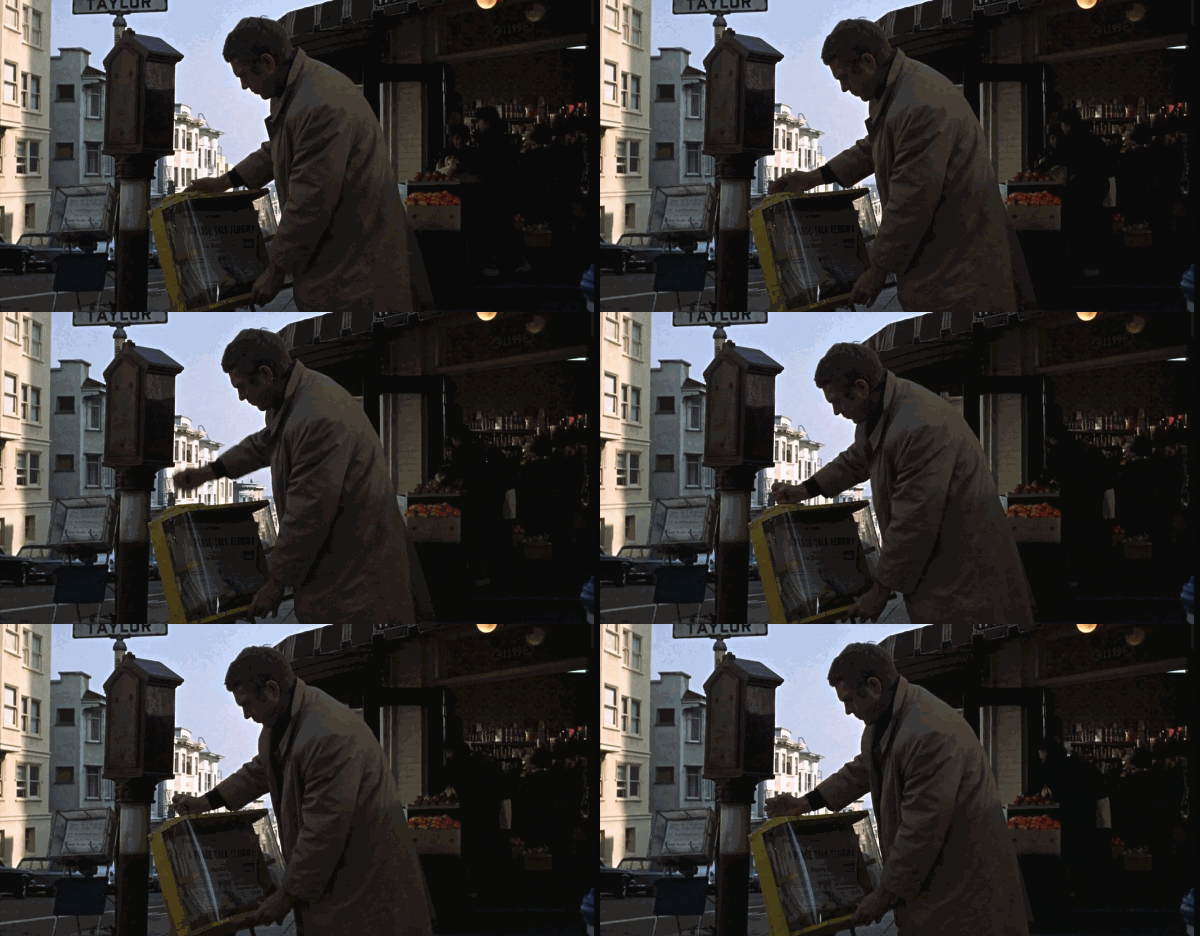
In preparing this post, I watched Steve McQueen’s filmography through the beginning of 1969 and asked around to more educated fans of his, and there doesn’t seem to be a scene where he explicitly kicks a phone booth. There are similar moments, like one in Bullitt (which was playing at the very hour of this discussion at the Warner West End theater, just a 10 minute walk from the Beatles’ Savile Row headquarters). McQueen doesn’t quite kick in a telephone box with no one watching, but he does get a little aggressive with a newspaper box.

McQueen was a metaphor. John’s directionless — or is it multi-directional? — impression was a reality. As Paul put it, John was “unsure if he wants to go left or right on an issue.” That included the issue of George, but really the group as a whole. But the solution — John showing some leadership, even if it’s not necessarily something directly leading the Beatles in a specific direction — was all they needed. It feels like Paul just wanted to believe in John and inspire John to believe in himself. An adjacent Plastic Ono Band, in this scenario, was a greater solution to Paul than some kind of expanded Plastic Beatles Band.

A solo career may have even been the better consequence than a compromised Beatles, and would solve the ego problem. Paul made his case by laying out an imaginary scenario in which at the end of the night, he was drunk and got on the piano just because he felt like it and he would be “singing because I don’t particularly want to show off.” In turn “everyone in that room will dig it, because it’s me really doing it.”

By contrast, when he “half-means” — a complaint that had been leveled already during these sessions, like Paul saying “sometimes [we] blow one of your songs cause we come in in the wrong mood”  — that’s when the problems emerge.

“What I’d like to do is for the four of us … I see it as you go one way, you go one way, George goes one way, and me another.”  Paul worked to continue his point but the conversation veered into a more specific discussion about musical arrangement on recent songs. We’ll get back to that digression in another post.

Sandwiching the invocation of McQueen, Paul and John sounded off on a potential solo project by Ringo, and took opposite points of view in using the LP as a representation for a larger ideal.

“Just you talking about the Stardust album … it isn’t as daft as you sort of find that it might sound,” Paul said.

Still more than a year out from being released, Ringo’s debut solo project was purely in the conceptual phase. (Eventually titled “Sentimental Journey,” the LP wouldn’t begin its recording sessions for nearly 11 months, and ultimately it came out at the end of March 1970, a few weeks before Let It Be.)

“But the great thing is that you singing like you really sing will be it. It will be!”

Ringo: Yes, but the only way is to do it on your own.

Paul:  …Until then … you’ll half-sing. … And it’s probably when we’re all very old, we’ll all sing together.  And we’ll all really sing, and we’ll all show each other … fucking die then, I don’t know.”

Singing how you really sing is a solitary endeavor. And the reunion of John, Paul, George and Ringo — once the solo careers are have concluded and in their twilight when they reassemble in the departure lounge — that is the epilogue.

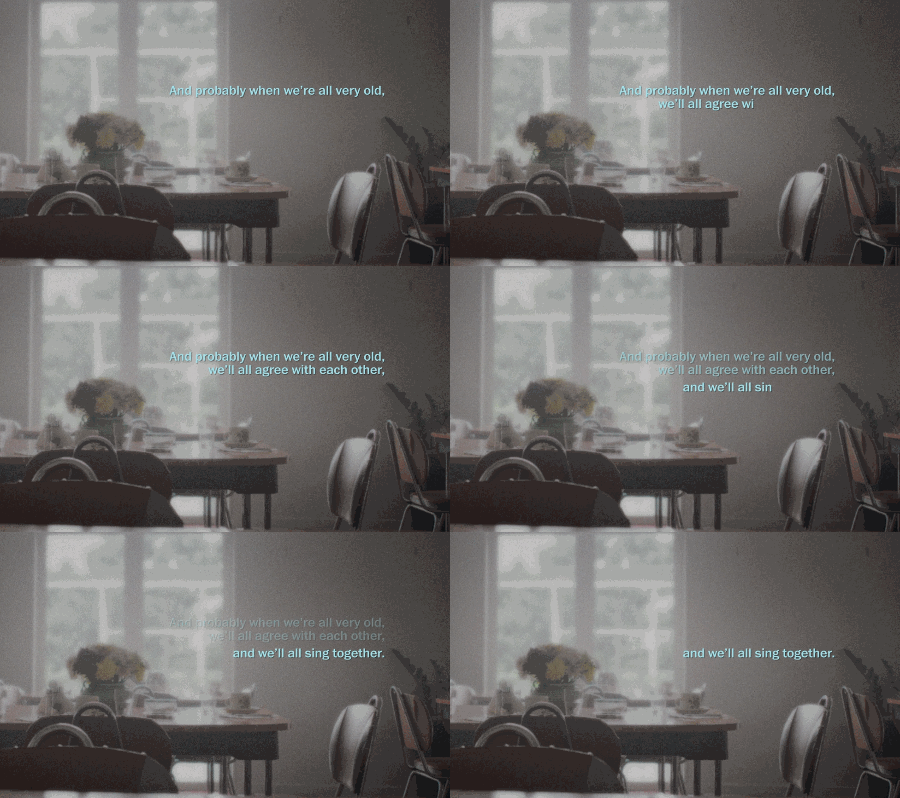
Paul’s advice emerged in Get Back in condensed form, with another mis-transcription and served outside of this context as the final statement of the lunchroom sequence (emphasis is mine):

And probably when we’re all very old, we’ll all agree with each other, and we’ll all sing together.

Needless to say there’s a significant difference in saying an eventual reunion would come after “we’ll all show each other” and “we’ll all agree with each other.”  Paul very clearly predicated his concept on the Beatles requiring a controlled implosion before the individuals operated apart to some degree to reach their full potential, and then — for the sake of their egos, in part — they would prove their strength to each other. Reuniting wasn’t, as the Get Back transcription asserts, something they would simply do based on unanimous consent.

This is all consistent with Paul’s contemporary statements, like the one before the lunchroom gathering when he went as far as suggesting staging the group’s breakup. (And that’s not inconsistent with various statements the four Beatles made in the breakup period regarding solo projects and an eventual reunion).

Still John echoed Ringo’s insecurities, explaining on the heels of the Steve McQueen thread that it must be “our own faults” he couldn’t kick the metaphorical phone box.

“But the feeling that I …” John stammered, “like Ringo said about his album, that what was it, ‘I won’t do it, ’cause I’m gonna let us down or look a fool.'”

This wasn’t a self-centered approach. Letting the group down. Making them look a fool. This was about the Beatles.

Earlier John made his goal explicit: “Me goal was still the same — self-preservation”

That self wasn’t just John Winston Lennon alone. It was John, Paul, George and Ringo, too.

10 Comments

Filed under Day by day

Jan. 10: See you ’round the clubs

On the afternoon of January 10, 1969, seven days into the Get Back sessions and nearly 10 years into his tenure with the band — a term that began when he was 15 years old — George Harrison quit the Beatles.

George: I’m leaving the band now.

John Lennon: When?

George: Now.

After a cut in the Nagra tapes, which captured the exchange, George casually continued: “Get a replacement. [Place an ad] in NME and get a few people.”

While the tapes don’t capture him saying “see you ’round the clubs,” it’s too good a line to be purely apocryphal (and it’s, in fact, alluded to by others on the tapes later in the day). George then briefly shared a few words with Mal Evans and was off, his boots echoing as he departed.

Likewise, for the sake of the complete record, there is simply no indication on the tapes of what happened between the final take of “Two of Us,” and George’s departure, the immediate spark of George’s decision (if there was any). Like the Beatles themselves, the tapes were out to lunch.

Film director Michael Lindsay-Hogg, so proud of his spy microphone hours earlier, had the right instincts and was prepared for this moment, but he probably should have upgraded to a better model.

“My bug had only picked up the sounds of cutlery banging on china plates, obscuring what the muffled voices had said,” Michael wrote in his 2011 autobiography Luck and Circumstance. In his “role as documentarian,” he had asked his sound engineer to mic the flowerpot on the dining room table as George encountered the band at lunchtime. Per Michael, George concluded by saying, “See you ’round the clubs.”

George grabs his coat on his way out of the utter sty that was the studio at Twickenham, as pictured on an earlier day. (Screen capture from Beatles Anthology)

What exactly happened over lunch is a source of legitimate dispute in Beatles history. Dig in — here are varied accounts that span 50 years.

The most contemporary retelling of the events of January 10, 1969, comes from George himself, later that day, in his personal diary.

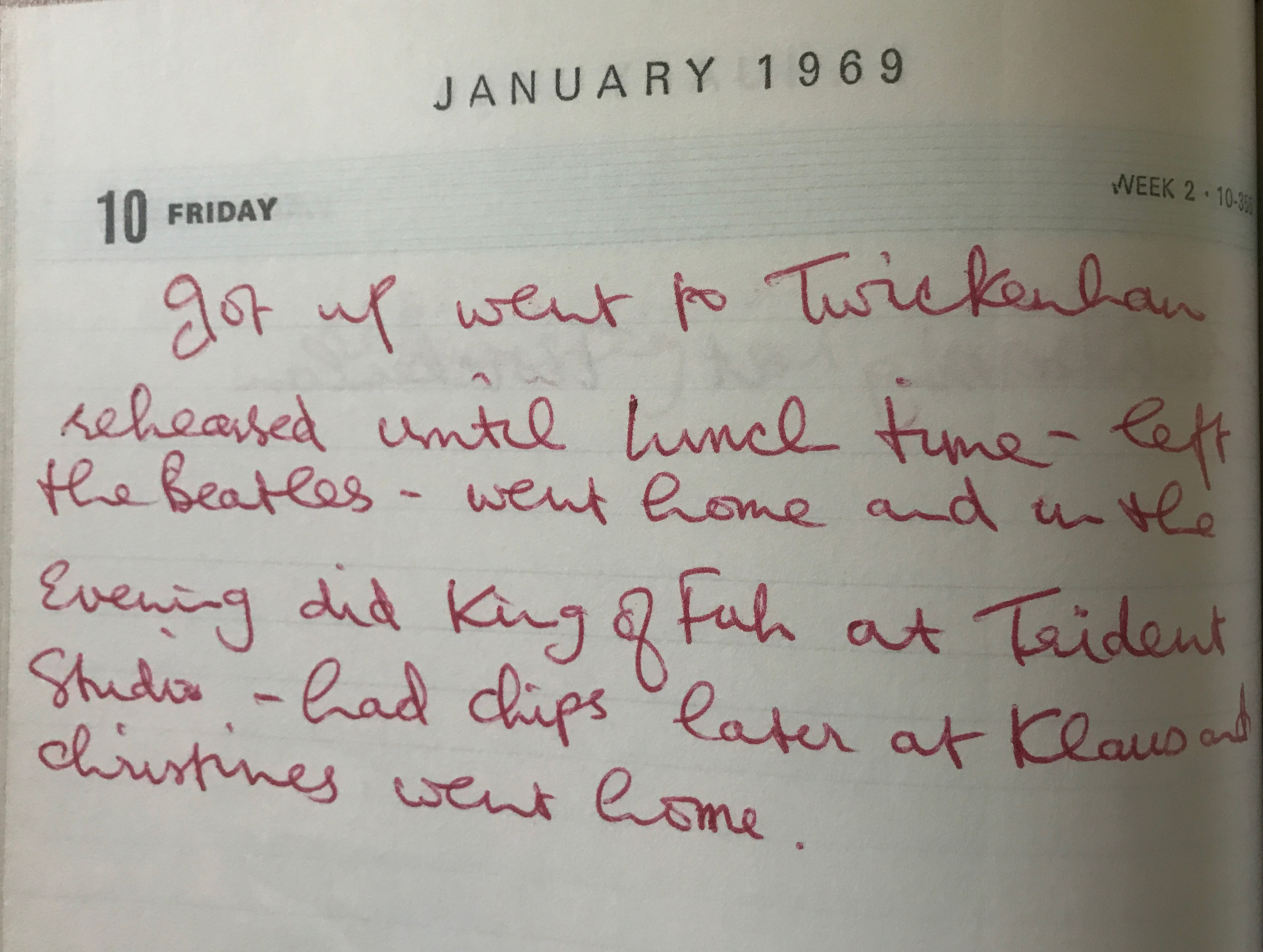
Got up went to Twickenham rehearsed until lunch time – left the Beatles – went home and in the evening did King of Fuh at Trident Studio — had chips later at Klaus and Christines went home.

George’s diary entry for January 10, 1969, as later published in the Living in the Material World book in 2011.

There wasn’t any Twitter in 1969 (although John and Yoko probably would have dominated the platform had it existed), so when George left the Beatles, it didn’t instantaneously go viral. But within days, George’s resignation was widely reported around the world — jumping off an original report by the Daily Sketch (more on their reporting to come in a subsequent post) — though he was already back with the band by the time those reports came out.

It wasn’t just that George left the Beatles. Word was out that that things got violent.

From the Daily Express, January 16, 1969:

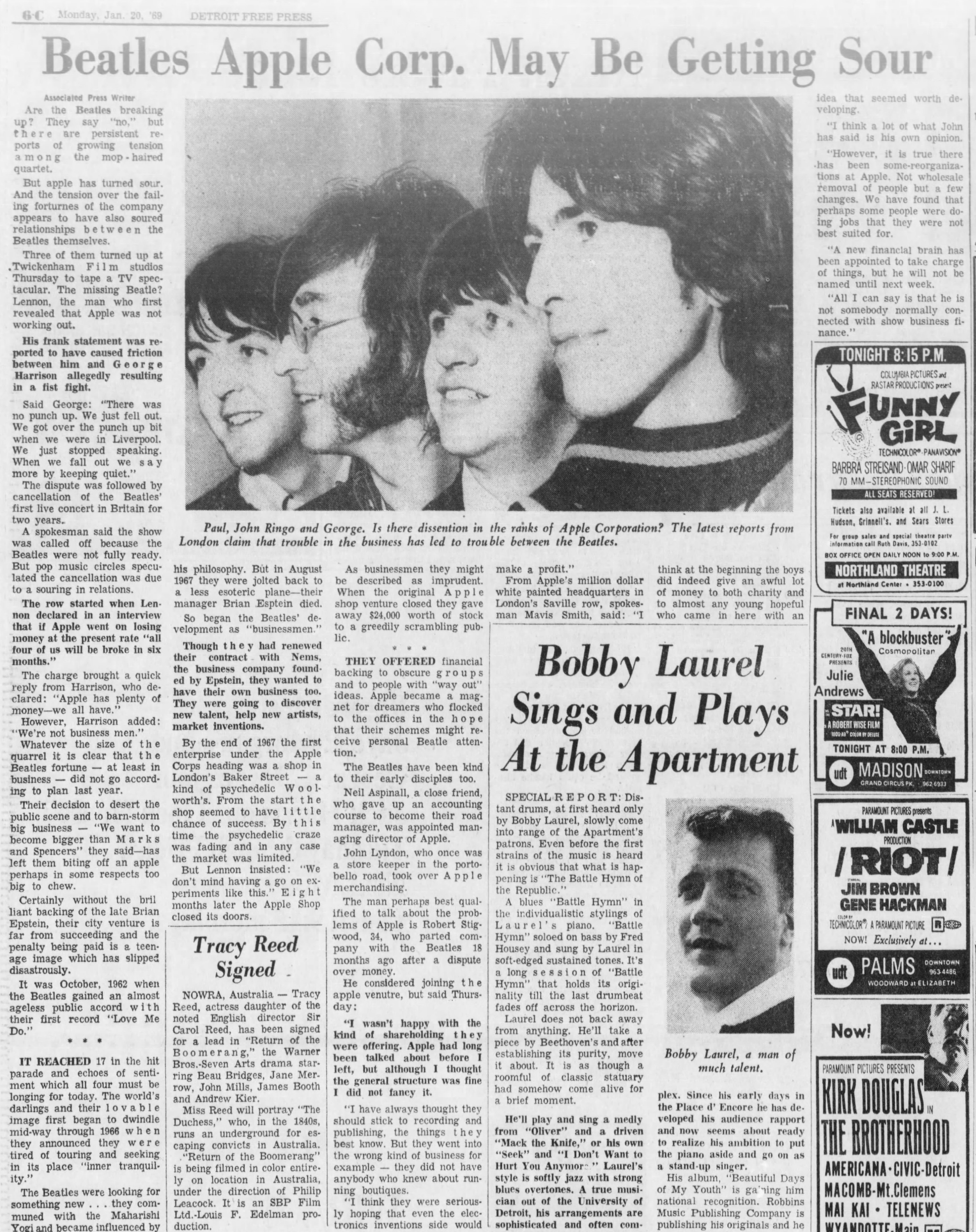
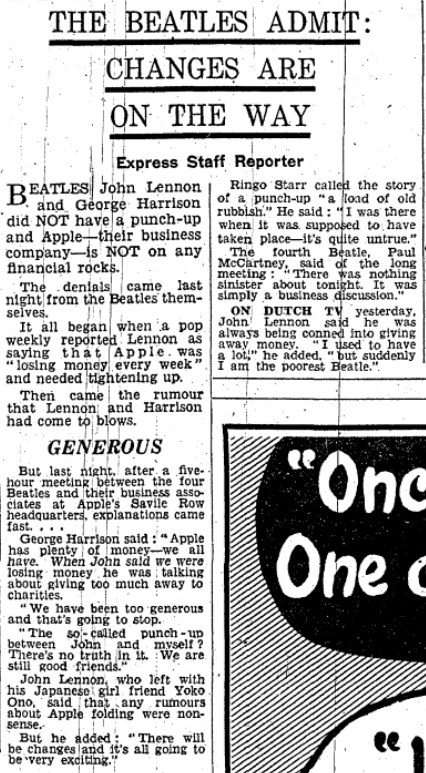
Beatles John Lennon and George Harrison did NOT have a punch-up and Apple — their business company — is NOT on any financial rocks.

The denials came last night from the Beatles themselves.

It all began when a pop weekly reported Lennon as saying that Apple was “losing money every week” and needed tightening up.

Then came the rumour that Lennon and Harrison came to blows.

But last night, after a five-hour meeting between the four Beatles and their business associates at Apple’s Savile Row headquarters, explanations came fast.

“The so-called punch-up between John and myself? There’s no truth in it. We are still good friends.”

Ringo Starr called the story of a punch-up “a load of old rubbish.” He said: “I was there when it was supposed to have taken place — it’s quite untrue.”

A few days later, on January 21, Ringo told BBC’s David Wigg that “there’s that famous old saying, you’ll always hurt the one you love,” when he was asked if the group was still close. But he spoke without any specifics regarding George’s departure, just generic reconciliatory language.

“[W]e all love each other and we all know that,” Ringo said. “But we still sort of hurt each other, occasionally. You know… where we just misunderstand each other and we go off, and it builds up to something bigger than it ever was. Then we have to come down to it and get it over with, you know. Sort it out. And so we’re still really very close people.”

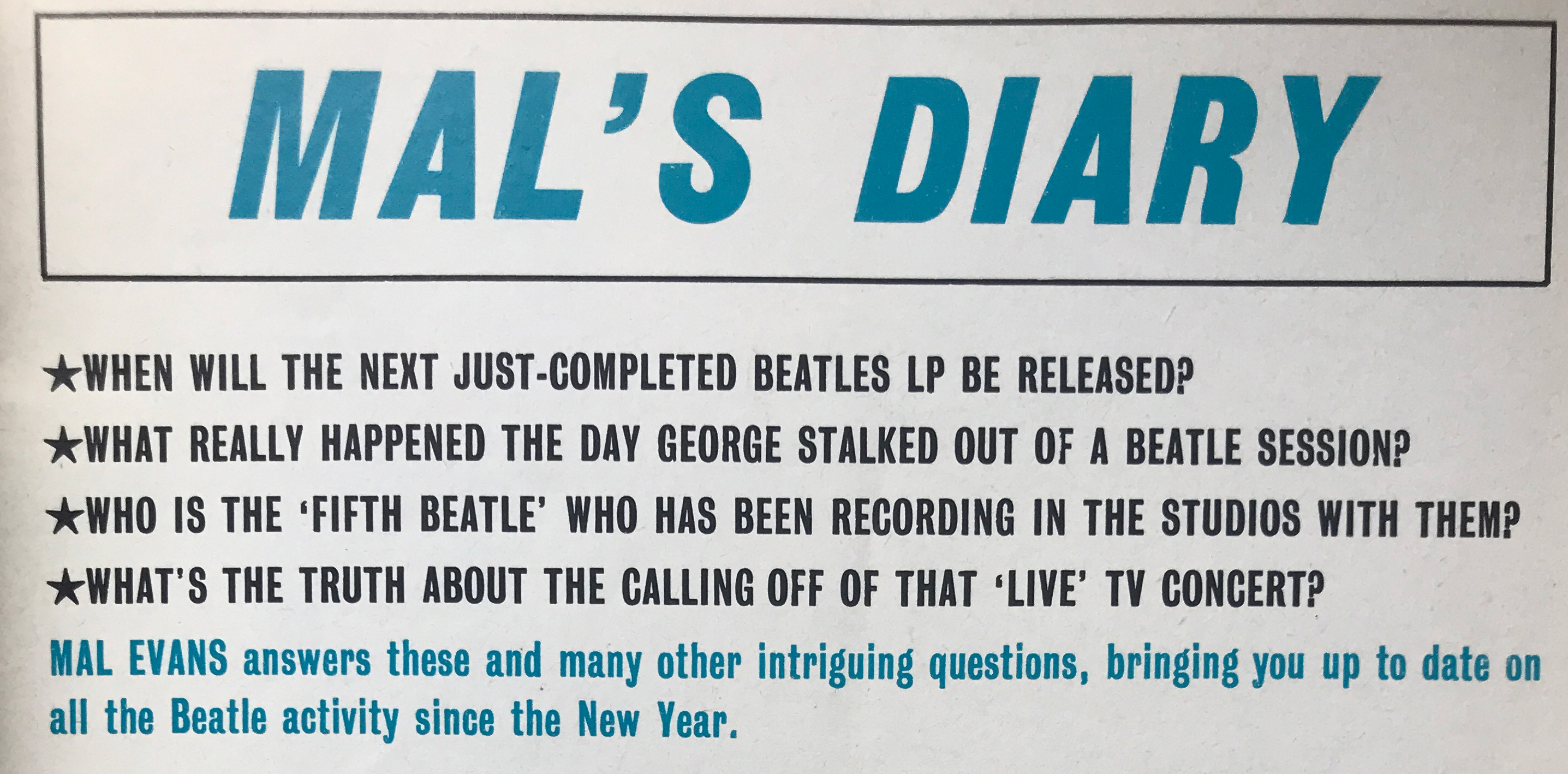
One of the Beatles’ official mouthpieces, the Beatles Book Monthly fan club magazine predictably poured cold water on the idea of a physical altercation in its March 1969 issue. In his diary feature, Mal Evans went as far to write there wasn’t any argument at all when George “stalked” out.

Matching the account on the tapes, Mal said George simply came over during lunch to “quietly” say he was going home. “There WASN’T a fight, physical or verbal,” Mal wrote. “There WEREN’T any tempers or shouting. I just couldn’t believe it when I saw the press afterwards.”

George Harrison maintained in subsequent interviews that no punches were thrown. But another George had another memory.

“They actually came to blows,” George Martin told Phillip Norman in his 2008 biography John Lennon: The Life. “You’d think it would have been with Paul, but it was John. It was all hushed up afterwards.”

Here’s where the retelling of the day’s events descends more deeply into farce.

According to a separate account from EMI engineer Dave Harries, a frazzled Martin only arrived at Twickenham that day as Harrison departed from the studio.

As related in Ken Womack’s Martin biography Sound Pictures:

I remember that George Martin had just backed across the car park in his Triumph Herald and knocked a dent in the door of George Harrison’s Mercedes and he didn’t have time to tell him he’d dented his car before George walked out in a huff and drove off.

Just hours after engaging in passionate car talk, this wasn’t George’s finest hour.

While George Martin was around to some arguable degree that morning (and at the sessions overall), there was no doubt fellow producer Glyn Johns was there on January 10. He was an active participant on the day’s tapes.

Johns, too, wrote of his recollections of that day in his 2014 autobiography Sound Man:

I have a very clear memory of sitting outside in the bleak surroundings of the soundstage at Twickenham on that cold gray afternoon with Denis [O’Dell], the line producer for the film, both of us praying that the elation of being employed for a project with the most successful artist in the world was not about to come to a grinding halt after two days.

It is not my place to discuss any detail of what happened, but it is common knowledge that George left the band and was persuaded to return a couple of days later.

While an implication is there, Glyn wouldn’t spill the beans. Although in Graeme Thompson’s 2015 George Harrison biography Behind the Locked Door, Glyn conceded there may not be too many beans to spill:

When it became apparent that there was going to be a bit of an argument those of us who weren’t in the band left the room. It was clear that it would be intrusive for us to remain. So what actually was said and and what went on I don’t know, but I do know that George left the band that day. The whole thing was very uncomfortable, and it was very embarrassing for me and others who were not in the band to be close by while this was going on — to have to watch this begin and be there in the immediate aftermath. It was very unpleasant and I felt really awkward.

The Beatles pre-enact their January 10, 1969, fistfight more than five months before it probably didn’t happen. (From the Mad Day Out photo session in 1968).

More than 50 years after the fact, what we know with absolute certainty is that George Harrison quit the Beatles the afternoon of January 10, 1969. Everything else — most prominently whether there was a physical altercation — is ultimately speculative.

It’s not just what happened that’s in question, but the why. We’ll never unearth that last straw, the specific reason George quit when and how he ultimately did on January 10. There’s just too much open to interpretation, and as long as the tapes of the day are considered complete, there is simply no smoking gun, no spark that broke George. The conversation with Dick James, the rehearsals of “Get Back” and “Two of Us” — these moments lacked an obvious trigger beyond what were usual pockets of growing frustration.

It’s worth mentioning the other three Beatles openly discussed their feelings and opinions in the wake of George’s departure on the Nagra tapes, directly addressing his growing sense of frustration as a junior member of the group. They were aware of this, and their conclusions were consistent with much of what is discussed below.  I’ll examine those specific conversations, which also touch on off-site meetings, however, in future posts when we reach those days on the blog’s timeline.

Still, by rewinding many of the same sources we examined above in this post to construct what happened, we can put together a loose reasoning as to why George left the Beatles. Notably absent from each of these recollections is the one mentioned specifically in the original flurry of news reports — George’s fury with John over the latter’s comments about Apple’s difficult financial situation. George and John even had light-hearted discussions about business earlier in the day. It seems clear the Apple finances excuse for George’s departure was a leap of faith by the media. Musical and personal differences were responsible.

Back to Mal’s Diary in the March ’69 Beatles Book Monthly:

Singing and playing together would always be fine with [George] and the last thing he was suggesting was any break-up of the Beatles. So that day, January 10, George didn’t want to stay at Twickenham rehearsing for a show he couldn’t believe in.

And what — or who — could make George an such an unbeliever? In published interviews over the subsequent decades, George was at least consistent on why he left: His famed filmed argument with Paul (“I’ll play, you know, whatever you want me to play“) gave him a moment of clarity.

From George’s 1980 memoir I Me Mine:

I remember Paul and I were trying to have an argument and the crew carried on filming and recording us. Anyway, after one of those first mornings I couldn’t stand it. I decided this is it! — it’s not fun any more — it’s very unhappy being in this band — it’s a lot of crap — thank you I’m leaving.

His Anthology interviews, conducted in the early 1990s and first broadcast in 1995, yielded similar memories:

They were filming us having a row. It never came to blows, but I thought, “What’s the point of this? I’m quite capable of being relatively happy on my own and I’m not able to be happy in this situation. I’m getting out of here.’

Everybody had gone through that. Ringo had left at one point. I knew John wanted out. It was a very, very difficult, stressful time, and being filmed having a row as well was terrible. I got up and I thought, ‘I’m not doing this anymore. I’m out of here.’

Paul wanted nobody playing on his songs until he decided how it should go. For me it was like: ‘What am I doing here? This is painful!”

In other words, George’s recollections were colored by the Let It Be movie. He’s just like the rest of us!

George elevated the “I’ll play” argument in a way that other recent encounters, which were also filmed but not included in the final release, did not.

“I’ll play, you know, whatever you want me to play. Or I won’t play at all, if you don’t want me to play. Whatever it is that will please you, I’ll do it.”

Even Paul had the self-awareness to admit his role in George’s departure, saying in the Anthology book with a hilarious parenthetical: “These things had been going down in Let It Be. George leaving because he felt he was being told what to do (I think that’s why he left).”

Ringo was more certain of the reason, going way back. He corroborated George’s accounts in 1971, telling Melody Maker:

George had to leave because he thought Paul was dominating him. [H]e was, because Michael Lindsay-Hogg liked Paul I would think more than the rest of us.

Indeed, George called for a divorce one day after the “I’ll play” argument, but a move to actually leave was delayed. This, as George continued to match Paul in productivity (or come close) during the sessions, certainly lapping a creatively spent John. But it was George’s own songs that were afterthoughts and that treatment deeply affected him.

Paul, though, was not the lone accused party.

Yoko Ono has unjustifiably been blamed for a lot of terrible things over the last half-century. Among the dramatis personae of the Get Back sessions, she was largely out of the spotlight to this point on the tapes, often speaking for John but not fighting for overall attention, certainly not as the group actually made music. And, perhaps by the filmmaker’s design, Yoko was usually off-mic. But since the White Album sessions, she was a disruptive figure to the other three Beatles. While Paul earned his share of the blame, Yoko drove George out of Twickenham, too.

“[S]uperimposed on top of that was Yoko, and there were negative vibes at that time,” George later said in interviews for Anthology. “John and Yoko were out on a limb. I don’t think he wanted much to be hanging out with us, and I think Yoko was pushing him out of the band, inasmuch as she didn’t want him hanging out with us.”

The accusation of bad vibes wasn’t something John quickly forgot. From his famously raw Lennon Remembers interview for Rolling Stone, conducted in December 1970:

George, shit, insulted her right to her face in the Apple office at the beginning, just being ‘straight-forward,’ you know that game of ‘I’m going to be up front,’ because this is what we’ve heard and Dylan and a few people said she’d got a lousy name in New York, and you give off bad vibes. That’s what George said to her! And we both sat through it. I didn’t hit him, I don’t know why.

(Emphasis added.)

George had a stubborn memory, too, to the point of remembering things that didn’t quite happen. From a 1977 interview in Crawdaddy:

There’s a scene [in Let It Be] where Paul and I are having an argument, and we’re trying to cover it up. Then the next scene I’m not there and Yoko’s just screaming, doing her screeching number. Well, that’s where I’d left.

A few years later in I Me Mine, George references “the time in the film where John and Yoko were freaking out screaming.”

There’s only one problem with George’s accounts: There is no scene in Let It Be where Yoko is performing and “freaking out screaming.” She’s hardly in the movie at all, really. But the event in question — Yoko sitting in with the other three Beatles and “doing her screeching number” is an event that did happen.  The original, longer rough cut of the Let It Be film did feature Yoko jamming with the other Beatles, per Peter Jackson, and it appeared in the unreleased pre-Anthology documentary “The Long and Winding Road” (which George was not only aware of, but shared a copy with Eric Idle with as source material for The Rutles).

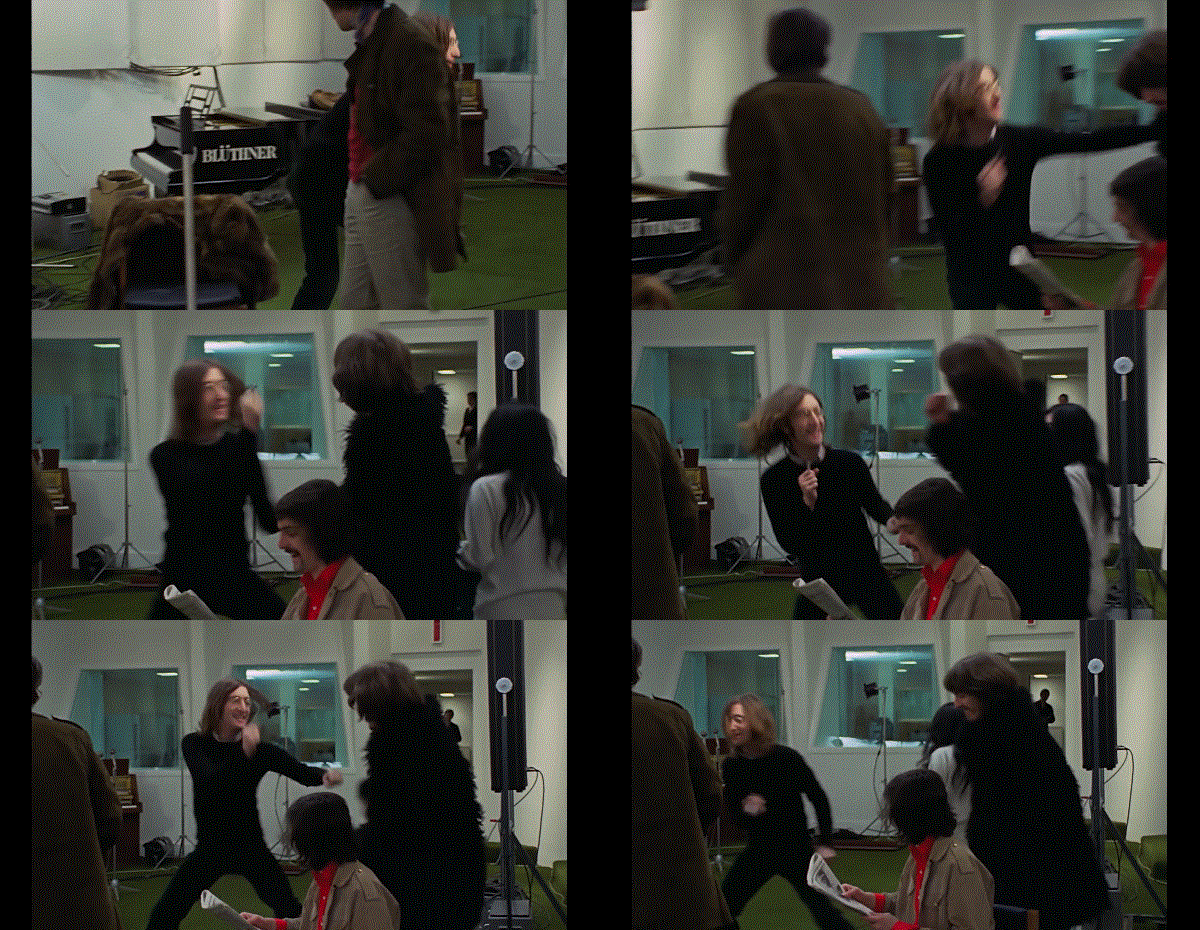
Playful punch-up: John and George at Savile Row after discussing — and denying — any fight between the two. Footage from Peter Jackson’s Get Back.

To the surprise of absolutely nobody who has closely followed the group’s history, the combination of the four Beatles, their associates and the passage of a half century makes for a most compelling but absolutely terrible narrator. Barring the emergence of additional footage or audio, we’ll never know the trigger for George’s departure.  Maybe Yoko did do something specific to put him over the edge (the digestive biscuit episode allegedly happened later, so that wouldn’t be it). Or it could have been something John said — or didn’t say, leaving his opinions to Yoko. Maybe the “I’ll play, you know, whatever you want me to play” argument between George and Paul really did change everything.

Or maybe John had it all figured out for an interview he gave for Earth News in 1976 — a quote later used to great effect in Anthology:

[L]ike people do when they’re together, they start picking on each other. It was like, ‘It’s because of youyou got the tambourine wrong — that my whole life is a misery. It became petty, but the manifestations were on each other because we were the only ones we had.

George’s domestic situation at this precise moment is essential to the story yet is generally ignored. For the duration of the Twickenham sessions, he was estranged from his wife, Pattie, and involved with 20-year-old Charlotte Martin — Eric Clapton’s ex-girlfriend — who was living at Kinfauns with him for the duration of their brief affair.

After George left the Beatles on January 10, 1969, he drove back to his Esher home, ended the affair and began his reconciliation with Pattie. Oddly, those decisions didn’t reach the threshold of snacking with the Voormanns’ to make his diary. It wasn’t a choice of the Beatles or Pattie, but like John suggested, perhaps George’s musical issues were amplified by his marital issues.

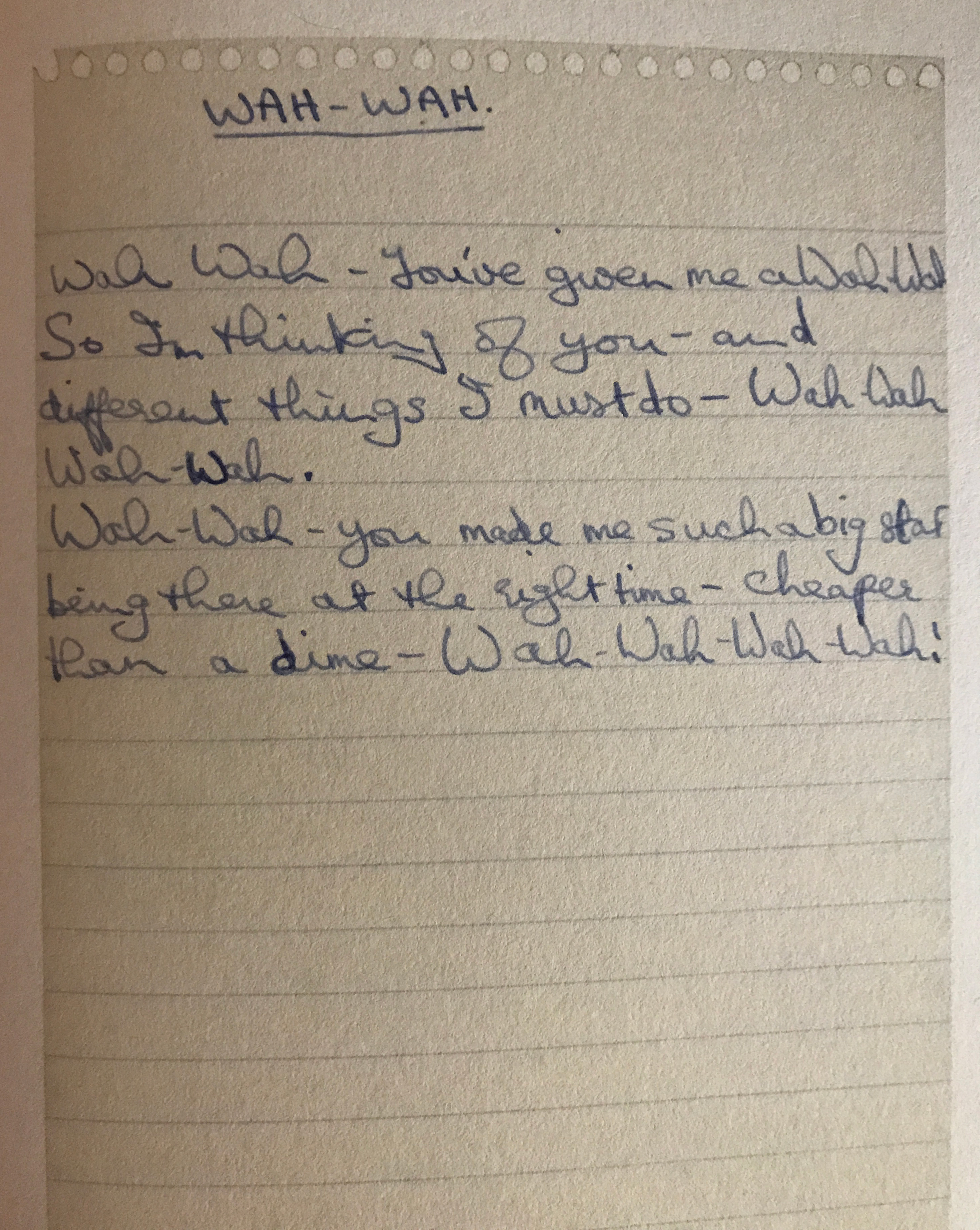
George wasn’t working for the Beatles anymore that afternoon, but he remained on the clock. In his first act as a temporarily liberated solo artist, George played, you know, whatever he wanted to play, and he wrote “Wah-Wah,” which later appeared on the All Things Must Pass LP and was the opener of his first solo performance, at The Concert For Bangladesh. George couldn’t have found  a more symbolic beginning to his stage debut as a solo headliner, opening with a song born from his first independent moment.

“‘Wah-Wah’ was a ‘headache’ as well as a footpedal,” George later wrote in I Me Mine.

George’s hand-written lyrics to “Wah-Wah.” (Published in I Me Mine)

“It had given me a wah-wah, like I had such a headache with that whole argument,” George told Crawdaddy in 1977.

“It was such a headache.”

Professional clashes with Paul, personnel issues with Yoko (and John), personal crises with Charlotte and Pattie — these were all reasons George left the Beatles. If Paul wasn’t so pushy, maybe it would have made dealing with Yoko and the problems at home easier. If Yoko wasn’t so ubiquitous and John withdrawn, maybe George could work more easily with Paul with one less work distraction. If George’s marriage was fine, maybe he could have slogged through the work day, more easily accepted his continued junior role and at least had an opportunity to unwind and unload in a relaxed home.

But each of those factors played off the other. He’s just like the rest of us.

38 Comments

Filed under Day by day