Tag Archives: future solo

TMBP Extra: All that lies ahead

As I write this, it’s Friday, Jan. 31. About three-and-a-half weeks ago was Jan. 7. Check your own personal calendars, news headlines and the like. It’s not that long ago. That matters to me, and this blog, because this is where the Beatles come in.

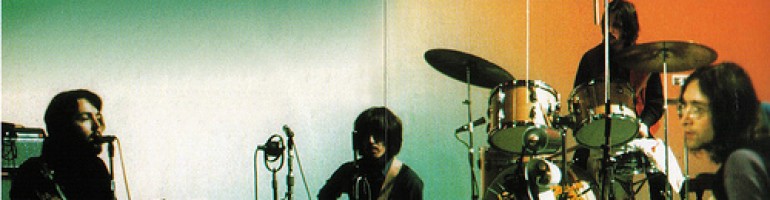
Flip (or click) back several calendar pages – 45 in fact – and we’re at January 1969, dominated by the Get Back sessions. Jan. 31 marked its final day, a short day dedicated to nailing for film and for tape usable takes of Paul’s non-rooftop-suitable “Two of Us,” “Let It Be” and “The Long and Winding Road.” (The clips appeared in the movie prior to the rooftop show, but were in fact filmed the next day).

What of Jan. 7? That’s where we left off last in the session timeline, at a genuine pivot point.  George suggested the group “have a divorce,” Paul said he’d thought about that, too. The Doldrums. It hung over the band.

So what happened between Jan. 7 and Jan. 31, 1969, to recast the sessions? Well, I’m not going to give it all away at once. What else would I blog about, the recording of Sentimental Journey? (That actually seems like an interesting, star-studded, intercontinental story, but I digress.) Three and a half weeks is such a short period of time, in relative terms, and we know that the group was on the brink Jan. 7. By Jan. 31 so much memorable musical output was in the bank and in the works. Factor in that there’s 10 ½ days without George after his walkout and more than a week without any rehearsals at all, and I’m left grasping at superlatives.

To wit: From Jan. 7-13 and Jan. 21-31, 1969 (18 days, and that includes weekends not spent in the studio):

  • Paul wrote the majority of “The Long and Winding Road,” “Let It Be” and “Get Back” and debuted future solo tracks “Another Day,” “Teddy Boy” and “Back Seat of My Car”
  • George wrote: “I Me Mine,” “Old Brown Shoe” and “Something,” as well as “Wah-Wah” at home during his break from the band.
  • Everything you hear on “Let It Be,” plus “Don’t Let Me Down” was recorded.
  • We saw the birth – and if not the birth, than at least the studio debut – of Abbey Road’s “I Want You,”  “Oh! Darling” and “Octopus’s Garden.”
  • We have the rooftop show, too.
  • The Beatles even found time to meet with Allen Klein for the first time.

And I feel like I’m understating what happened.

So, there’s just a little bit of food for thought before I return to the timeline (soon!). Context is everything, and with January here and now gone, it provided the perfect chance to put into focus how much these guys got done throughout the madness they, for the most part, created themselves.
5 Comments

Filed under Extra

Jan. 6: Et cetera

What a day!

Six hours of tapes that inspired 12 posts — and this one makes it a baker’s dozen. Some songs are introduced, others tortuously rehearsed and the proposed live show is discussed at length for the first time.

So before ripping off the desk calendar page and welcoming Jan. 7, 1969, I wanted to tie up some loose ends and look at a few songs and moments that were important enough to mention but not so much to warrant standalone posts.

One After 909” wasn’t the only unlikely John Lennon song resurrected in the first few days of the sessions. “Across the Universe” was recorded 11 months prior — a pre-White Album contemporary with “Lady Madonna,” “The Inner Light” and “Hey Bulldog” — and sat finished but not yet released as of January 1969.

There’s more than enough to say about the song at this point to justify its own post — and it will. Once the song has a more prominent role, in the next day’s session, I’ll do more than offer this brief mention.

While George had introduced other songs,”All Things Must Pass” remained the primary Harrisong to this point the band was rehearsing. Jan. 6 saw just a smattering of takes running about 20 minutes on the tapes, barely memorable. Frankly, the song sounds like a dirge at times thanks in part to John’s unimaginative organ droning.

It’s such a great song, and I keep telling myself — “This is The Beatles doing ‘All Things Must Pass,’ for heaven’s sake” — but I don’t find myself caring, which pretty much puts me on par with the rest of the group. That sentiment was encapsulated in a brief exchange at the end of what would be the day’s final run-through of the song.

Paul: Wanna to do it again, George?

George: Not really.

Simple as that, they moved onto the final properly rehearsed song of the day: “She Came In Through the Bathroom Window.”

This was the song’s introduction to the sessions, and with the day nearing an end, it was a brief one, lasting just 15 minutes on the tapes. The song’s pretty well crafted at this early stage, as far as structure and lyrics. It took only a few takes and just a couple of minutes for the band to pick up the chords and string together a few reasonably decent takes.

It’s nice to hear the voices of George and John deliver harmonies, since we’re used to Paul double-tracked on the recorded Abbey Road version.

Eventual Abbey Road medley mate “Carry That Weight” was a Paul suggestion as a vehicle for Ringo, and he wasn’t alone thinking about giving a song to the drummer. It’s just that Paul was the only one who wrote a song that endured.

John offered up about half a minute of the upbeat “Annie,” which sounds just barely sketched out enough not to be an improvisation. There’s not much meat to the bones, but it’s pleasant enough and very easy to hear Ringo singing it.

Not to be left out, George immediately followed with a new song he likewise said was for Ringo. More fleshed out than “Annie” — or “Carry That Weight,” for that matter — “Maureen” was credited to Bob Dylan, according to George.

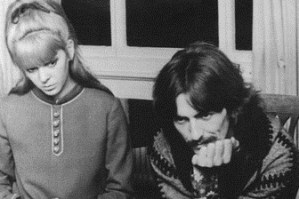
Maureen and George in India, Februrary 1968

Maureen and George in India, February 1968

It’s folky and laid back, and there’s no reason necessarily to think it’s not a product of the November ’68 Harrison-Dylan sessions in upstate New York, if you accept the premise Dylan was writing songs named for Ringo Starr’s wife in George’s style and less his own. As it would happen, George and Maureen did have a lengthy affair, but Pattie Boyd’s autobiography only pins it to the early 1970s. But who knows what was going on before that — I don’t, and I’m drifting badly off-topic in discussing band members’ infidelity.

What the song does do, like so many other random bits of music that passed through Twickenham, is add another curio to sessions replete with such oddities we’d never hear from again.

The group tackled a few covers, but of course they did. It’s a hallmark of these sessions, and a wildly overrated and overstated hallmark to boot.

One of the memorable covers of the day was an oldie they had mastered in the past and was so strongly associated with their live act. Surprisingly, it’s the only time they performed a take of “Dizzy Miss Lizzy” at the sessions, and it apparently happened to be an instrumental (any singing was off-mic, at least). Clunkier and a little slower than the original, if it was ever to be remotely considered for this live show — and there’s no indication it was to be — they’d probably just rely on memory.

The song served as a jumping point for a few other oldies in succession: “Money,” “Fools Like Me,” “Sure to Fall” and “Right String, Wrong Yo-Yo.” (All included in the above clip.)

Perhaps the covers throughout the duration of the sessions could be described as red herrings along with the one-off originals like “Annie” and “Maureen” — interesting merely because they’re rare Beatles recordings, but not nearly as enlightening as seeing the songs we know develop or listening to the fascinating conversation about the live show and the future of the band.

With that, I’ll close the book on Jan. 6, 1969. See you “tomorrow”!

2 Comments

Filed under Day by day

Jan. 6: Here comes the bird king

Maybe all the Cream talk got the band in the mood to jam.

With the third day of rehearsing during Get Back/Let it Be sessions (for the record, we had heard “Let it Be” thus far, but not “Get Back”) under way, once everyone was settled in — and not to long after after George introduced “Hear Me Lord” on the tapes — the Beatles basically started fooling around, tuning and warming up with everyone position. Presumably: Paul on organ, John on bass, George on guitar and Ringo on drums.

And then they jammed.

Jams — and lengthy ones — weren’t unprecedented for the band, certainly — witness “Helter Skelter” and the legendary 27-minute version and various takes of “Revolution 1,” recorded just a few months earlier, or the much shorter  Take 37 of “Something” from a few months later. And pretty soon, we’ll hear the original lengthy version of “Dig It.”

I like my Beatles in 2- to 3-minute increments, for the most part (“Hey Jude” notwithstanding). But hey, it’s the Beatles. I’ll take a 10-minute improv jam by them over one by mostly anyone else.

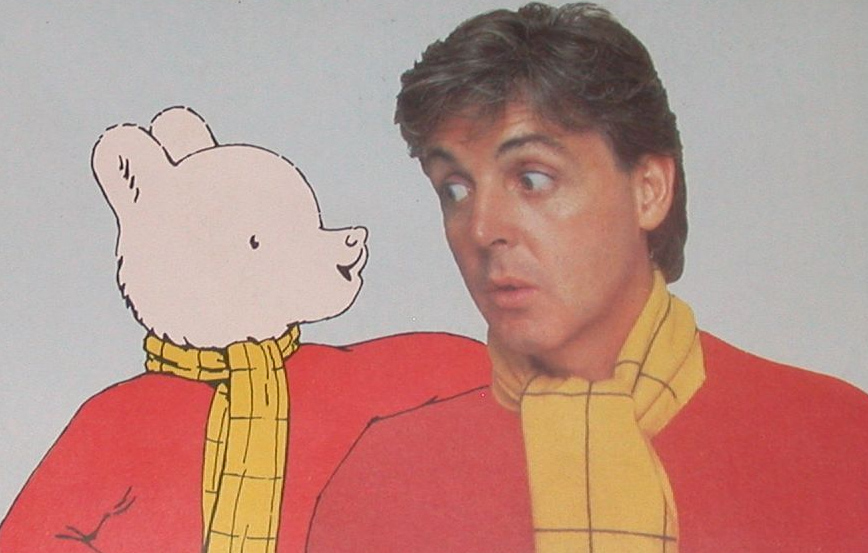
While most serious fans know these sessions birthed songs that would later appear on Abbey Road and multiple solo Beatles albums, one song debuted in these sessions that I didn’t previously know would end up as an outtake on, of all things, Paul’s unreleased (but bootlegged) Rupert the Bear film soundtrack.

So let’s give a very special They May Be Parted welcome to “The Palace of the King of Birds.”

Slowly the group joins in, plodding along for more than 10 minutes. It’s not unpleasant, but it’s probably the kind of thing you’d never deliberately put on a playlist to listen to again. Paul and George spend the first few minutes of the song chatting with each other about equipment. Ringo does his thing. John throws in a riff or two. Paul’s active a little at the start and then a bit at the absolute end.

It’s actually not the last we hear of the song these sessions. But I think it’s the most extensive version. And the Beatles didn’t return to it after January 1969.

Nine years later, Paul would record the song with Wings for a planned Rupert the Bear movie that never came to fruition. By then, it was called “Castle of the King of Birds.” What caused the bird king to be forced to change the location his headquarters from the palace to the castle, I don’t know.

The song is a footnote in Beatles history, for sure, but a neat one from the standpoint of where the song would eventually surface.

Straight out of “…King of Birds,” comes another loose rocking jam, initiated by what sounds like John playing “Louie Louie” on the organ (it’s much more deliberate on the tapes before this below clip starts).

The band then dances around a few set pieces before a few more improvisations. “Across the Universe” is briefly attacked — it was still nearly a year from being released on No One’s Gonna Change Our World, and John is clear he isn’t happy with how the song was last recorded a few months earlier — and the band also teases a version of Bob Dylan’s “I Want You” as their own song of the same name thus far remains unrehearsed (and probably unwritten).

Why Don’t We Do it in the Road” presaged much of what would come next. (In style, that is. The song itself sprang from Paul’s one-man jam).

In the first of a few improvisations that would be at home on McCartney or as a RAM outtake, Paul belts out “You Wear Your Women Out.” This I like. Groovy bassline seems to hold things together nicely. It’s a kindred spirit to an “I’m Down” or “Lady Madonna,” even.

The group makes a pitstop with a full run-through of “I’ve Got a Feeling,” which is coming together pretty decently. Paul’s in full yell on this particular take, which ends with him jokingly claiming, “The downtown rhythm and blues influence in ‘I’ve Got a Feeling’ can be noted by the Aeolian cadences and the Cadaconic clusters,” in a nice old-school Beatles reference.

He then lets his bass kick off the journey into the next improvised jam, “My Imagination,” with a riff borrowed from Bobby Parker’s “Watch Your Step” (the same inspiration for “I Feel Fine” among other things) and vocal stylings that occasionally veered into something that could be called Ono-esque.

Hey, that’s not so bad! Not sure about the vocals, but it’s still relatively catchy.

The fun ends with one more apparently Paul-led jam, “I’m Gonna Pay for His Ride,” thus named for its lyric barked out by McCartney at the end.

The band sounds pretty good, and pretty loose, much like they do while running through covers during the sessions.

While there would be more jamming in these sessions, and “…King of Birds” would eventually nearly make it to release, for the final three songs mentioned here — “My Imagination,” “You Wear Your Women Out” and “I’m Gonna Pay for His Ride” — it would be the last we’d hear of them.

9 Comments

Filed under Day by day

Jan. 6: Hear me

It’s the definition of insane: Doing the same thing over and over again and expecting a different result. God bless George Harrison, but at times during his tenure with the Beatles I think he was insane. (It’s likely I’m an insane blogger, who feels like he’s writing the same post about George over and over again).

To wit:  Every album session, George throws a  number of songs at the wall (the wall also goes by the names of “John” and “Paul”), sees a couple stick for whatever the current record is and reintroduces a couple of the losers along with some new songs again some other time. Repeat until going solo.

Jan. 6 saw a pair of fresh George tunes,  “For You Blue” (which stuck) and “Hear Me Lord” (which did not). Neither was given any significant time. And “Hear Me Lord” wasn’t to be heard again in these sessions or even in  a Beatles context, far as I can tell. Perhaps he finally figured out he was going insane.

Or maybe there was divine intervention.

“Well, I wrote a gospel song over the weekend, lads,” George says in a lull.

“According to St. Who?,” Ringo blithely asks.

“According to the Lord,” George replies. “Hear me Lord, how I corner you,” to laughter.  (At least that last bit sounded like that, it’s almost indecipherable).

A second of silence was followed with Michael Lindsay-Hogg going right into business, suggesting the band discuss the live show soon. George first touches on “High School Confidential,” then  he plays and sings along to “I’ve Got a Feeling” before pivoting right into his new song.

You could hear it in the clip — George is playing background music.  As he played, Paul, Ringo and Michael Lindsay-Hogg discussed “the new Bonzo’s record,” — presumably The Doughnut in Granny’s Greenhouse, which had come out in November, a few weeks earlier.

Soon, the strumming ended and conversation returned to the Cream discussion.

While Paul and Michael continue to chat about some equipment issues, George resumes on his guitar, now debuting “For You Blue,” an eventual survivor on the Let it Be LP. Again, it’s background music.

George cuts himself off to raise a question about Magic Alex‘s latest studio work and attempts at soundproofing the studio after Ringo asks, “Has Alex created his waves yet?” And after a bit of crosstalk about Alex and his “waves,” Paul sings along to George’s early take of “For Your Blue.”

“Those soundproof walls of silence, are ringing in my ears…”

Soon enough, the band — fully ready to play, finally, as John takes to the organ — cuts away, weaving into oldies, improvisations and rehearsing newer songs (topics ripe for subsequent posts).

Nearly an hour and a half  after he first strummed it (on the tapes), George returns to “Hear Me Lord.” Again, it’s primarily a quiet soundtrack to other discussions, among them one in which we finally hear  another George  — Martin —  a figure so absent from the Let it Be tale, here showing up for the first significant time on tape.

Ringo plays a bit of a beat, and John makes a terrible attempt at following along on guitar.

It’s more of the same after extensive rehearsals of “Two of Us” and “Don’t Let Me Down,” among others. Again, it’s just a quick taste before they moved on.

Indifference isn’t strong enough a term for how the song is met. I suppose George could have pressed it a little further as an option.

And that was it for the song. No more rehearsals during the Get Back sessions. If it was brought up during the “Abbey Road” recordings, there’s no record of  it I’ve seen. And we wouldn’t hear it again until we get to the last song on Side 4 of the All Things Must Pass LP, released nearly a year after George first brought it to the Beatles.

28 Comments

Filed under Day by day

Jan. 3, 1969: Hearing things

There wasn’t a heck of a lot of John on the second day of rehearsals at Twickenham.

Nagra has about 13 minutes of Don’t Let Me Down, 30 minutes of I’ve Got a Feeling (which is half-John, at least),  and he led some covers.

But about halfway through the day otherwise dominated by Paul (Two of Us, Maxwell’s Silver Hammer) and George (All Things Must Pass), John pops in to give us a very special minute or so.


“Gimme Some Truth.” A future classic.  Now, still pretty rough. But, certainly recognizable as a tease to what we’d see two years later on Imagine.

The band jumps right in, little preparation for the rehearsal. Indeed, the song dates back to ’68 in India, so there’s at least some familiarity.

Lyrically, it’s certainly not to its final form. Or even if it is, we don’t hear it here. Paul repeatedly makes reference to “son of Gary Cooper” — Richard Nixon, at this point the president-elect — wasn’t yet part of the lyric.

Prior to the brief foray into the song — the lone attempt at it on Jan. 3 — there’s a bit of back and forth as to what to play next. During part of the discussion, Paul (presumably) is playing the bass line to “Money (That’s What I Want).” There’s shuffling of papers as they ask which song to play next.

Paul: If you will all now turn to page 33.

George: “She Came in through the Bathroom Window?”

Paul: “All Things Must Pass?”

George: “Bang Bang, Maxwell’s Hammer?”

John: Is this a Harrisong? … I’ve got one, “Gimme Some Truth,” or something.”

It was, in fact, “Gimme Some Truth.” Not “Something.”

As we hear on vocals, curiously enough, it’s Paul. John sings along harmony and then takes over the lead when singing what would ultimately be the song’s first verse as the rehearsal concludes (the clip above pretty much is all we’d get). Why does Paul lead? Could just be Paul being Paul, taking over and singing while John gets himself acclimated or is otherwise occupied. Interesting, regardless.

However it happened, it’s the last we’d hear of the song for the day (we’d hear it again in a few days).

As quickly as it was introduced, they returned to “All Things Must Pass.”  It was John’s last notable contribution the rest of the day.

8 Comments

Filed under Day by day