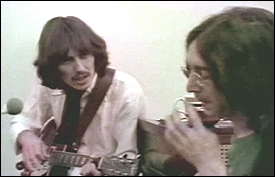
Tag Archives: January 6

Jan. 6: Please, please you (Pt. 1)

It’s a passive-aggressive greatest hit.

And it’s the highlight of the series of posts — which gets under way here — I was most eager to write before I heard a minute of the complete tapes.

George to Paul: I’ll play, you know, whatever you want me to play, or I won’t play at all if you don’t want to me to play. Whatever it is that will please you… I’ll do it.

Having just heard the band make their way through a somewhat torturous rehearsal of “Don’t Let Me Down,” the context is finally here of just why George was ready to snap at Paul. But it’s a long and, well, somewhat direct road to get to “whatever it is that will please you,” and the tension isn’t one-sided as the group pivots to Paul’s “Two of Us,” an ode to his bride-to-be, Linda.

please youIn listening to the entirety of the “Two of Us” tapes, Paul’s ready to jump at anyone, feeling quite on the defensive. John, for one, doesn’t take the bait. And in fact, as the session for the song goes on, John actually attempts a bit of a peacemaker role once things begin to boil between Paul and George. But that comes later. George, on the other hand, is quite ready to share his feelings with Paul.

Musically, the song isn’t too much different than it had been before they broke for the weekend, on Jan. 3. It’s upbeat, and completely electric at this point. But like the final version, it’s a Paul-John duet. The first take of the day, straight from the top after they had moved on from “Don’t Let Me Down,” breaks down seconds in when John asks if he’s supposed to be singing.

Paul: Melody. You’re supposed to remember the words, too.

John: Yes, I’ve got them here.

Paul: But learn ’em.

John: I almost know ’em.

And we’re off and running! Just another 50 or so minutes of remaining rehearsals of “Two of Us” — and arguments — to go. Fasten your seat belts.

The tension never lets up — getting to “whatever it is that will please you” was inevitable.

Paul references past Beatles songs a number of times during the rehearsal, beginning with an early run-through, when he dictates to George that the guitar part during the verses should sound “like that bit in ‘Getting Better All the Time'” (meaning the staccato guitar part opening the song and that plays throughout).

After subsequent noodling around with the song, Paul tries to restore order and get down to actual business, in the orderly, McCartneyesque manner we’ve come to know and love/hate.

“OK, come on, come on,” Paul says to the group with a headmaster’s tone. “Let’s get it so we know it simply, and then we can add. We don’t know any one [song] yet straight. We keep trying to get to the bits.”

This is indeed true through the first few days of the sessions. “Don’t Let Me Down” is dragged down by the bridge. “I’ve Got a Feeling” isn’t quite right yet. “All Things Must Pass” is very much a work in progress. “Maxwell’s Silver Hammer” isn’t finished yet. You get the picture. Only “One After 909” – written more than a decade earlier, despite the slower arrangement, and born in these sessions out of an oldies jam – was in game shape.

Another pass at “Two of Us” and things break down as they enter the first bridge (“You and I have memories…”). So it’s time for a band meeting (Ringo, the passive drumming robot, says nothing throughout).

Paul: We’re going to have to sort of bring it together, because we’re all at odds. We’re doing that thing we did on The Beatles — we’re all playing, you know? Like in this verse, it’s two harmonies singing, trying to say some words, right? So it’s just… (he vocally apes a guitar vamp ). And in the bits when we need bits….

John: I’m just trying to sing it and do this thing (he plays the guitar part played during the “We’re on our way home” line).

Paul: We’ve got to get the riffs when the riffs bits come in.

George: The riffs… There’s no riffs. It’s nice just to get what you’re playing. (George then starts to sing “You and I are memories…”)

Paul: But it’s not together, so that it’s not sounding together.

George: So we keep playing until we…

Paul: Or, we can stop and say it’s not together.

George: Yes, then you’ve got to carry on until you get it together. It’s all right to keep playing until it sounds like it’s blending with the rest.

Paul: I never know what to say to that, you know? ‘Cause what I want to say is, “Now, come on,” and play, but I can’t, I know. You know, and we get into that one. OK.

They’re not talking about what sounds good, what words work or don’t or the like. This is a debate about the philosophy of how to rehearse. We’re in uncharted territory. These four men are writing a record on the spot, under strict time constraints to get these songs in working order for a show that’s going to happen at some unknown locale, and very soon.

You’d think this kind of thing would have been hashed out, but then again, why would it? When they last toured, in 1966, they played about a dozen songs — nothing brand new, and some songs they’d been playing for many years. They knew the songs inside and out, plus they weren’t writing anything special for the tour or struggled under the pressure of the clock. And when they last brought new songs to the table — a few months earlier for the White Album sessions — they didn’t have the pressure of the live show.

There’s a bit of nervous laughter from Paul before he continues to offer a logic he repeats numerous times over the “Two of Us” sessions this day.

Paul: … It’s complicated now. See, if we can get it simpler, and then complicate it where it needs complications, but it’s complicated in the bit.

George: It’s not complicated.

Paul: But, I mean, you know.

George: I’ll play just the chords if you like, and then…

While George is low-key throughout, speaking in completely passive-aggressive tones, Paul grows audibly exasperated.

Paul: No, no, come on. You always get annoyed when I say that. I’m trying to help, you know? But I always hear myself annoying you…

George: No, you’re not annoying. It’s not annoying anymore (or is it “anyone”? Hard to tell).

Paul: … And I get so where I can’t say it. But you know what I mean. Just do this then, and, I don’t know. I can’t do it on film either. I don’t know if we can do it on camera.

Funny, Paul had just said earlier in the day that he didn’t mind being filmed, that the band has ignored the camera from the moment they started filming at Twickenham a few days earlier.

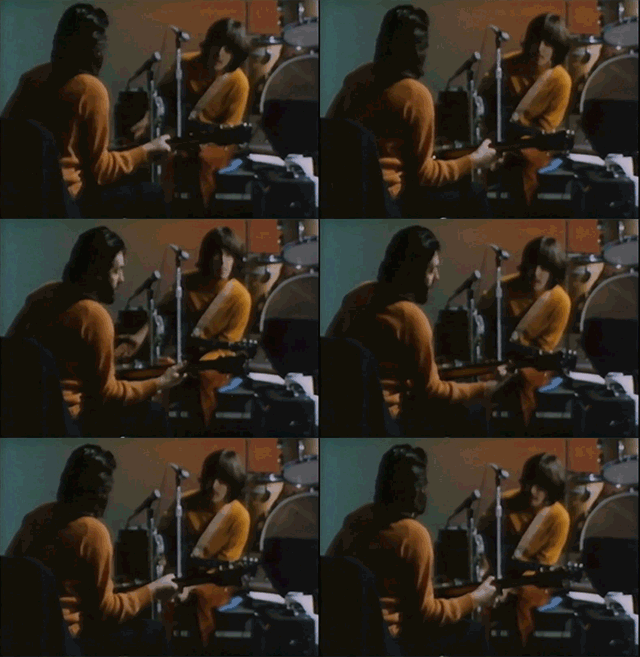
As we see in the 2021 Get Back docuseries, at this point, Paul stands up, and paces around, showing emotion the Nagra tape audio alone doesn’t capture. It’s a clear dovetail between audio only and the audiovisual moment that was very new on first viewing in 2021.
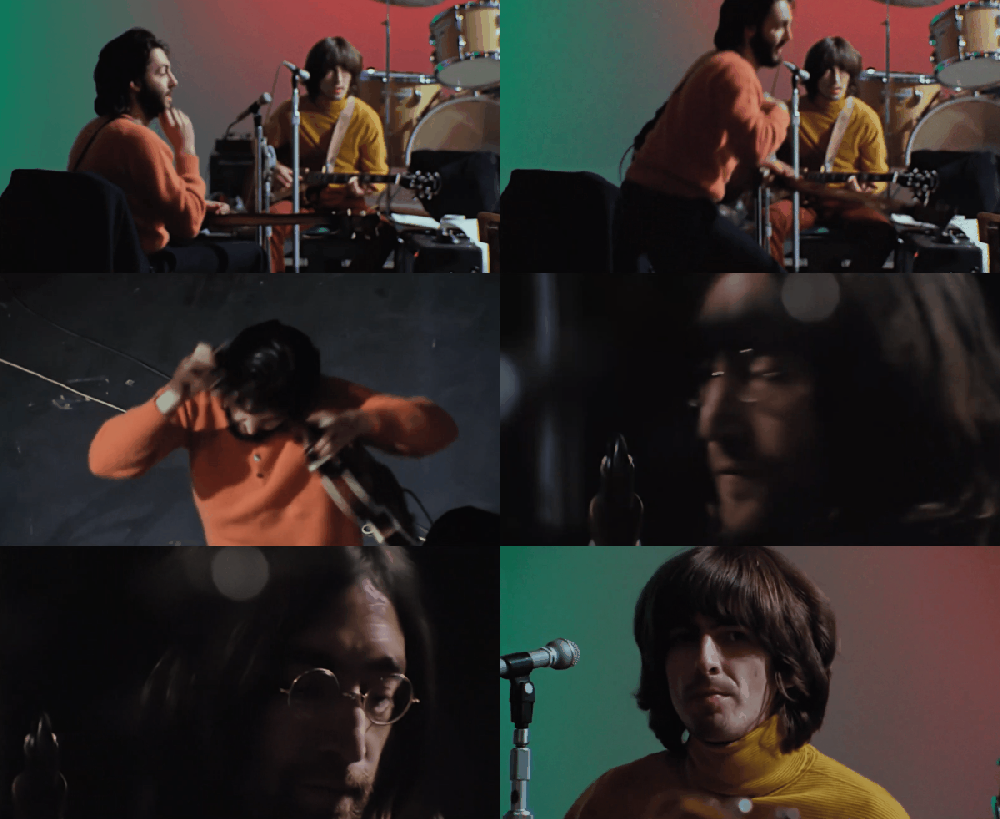
As it would turn out, Paul returned to his seat and would end up having to continue this discussion on camera after all, and it would become one of the iconic moments of the Get Back/Let it Be sessions and the film — behind only the rooftop concert — and truly in the group’s history overall.

The in-depth look at the “Two of Us” sessions on Jan. 6, 1969, will resume in the next post. Coming very soon!
20 Comments

Filed under Day by day

TMBP Extra: Jan. 6, 1969 recap

” I’ll play, you know, whatever you want me to play. Or I won’t play at all, if you don’t want me to play. Whatever it is that will please you, I’ll do it.”

Blogoversary week continues with a look back at my posts about today in Nagra tapes history: January 6, 1969, a truly fascinating and historic one in band history.

  • Icing Cream: As the new work week begins, the band and director Michael Lindsay-Hogg are fixated on how bad the Cream farewell documentary is
  • Hear Me: In which the Quiet Beatle proves he’s possibly insane by introducing another future classic to be met with complete indifference
  • Here comes the bird king: Jam isn’t just for toast for the Beatles on this day at Twickenham as they work on some improvisations including a song that would later appear on, of all things, Paul’s unreleased Rupert the Bear soundtrack
  • Playing to the gods (If there’s a rock show, Pt. 1): It’s the first real talks about the live show to be the sessions’ eventual endgame, and as far as audiences are concerned, Yoko Ono asks who needs ’em?
  • Such a lovely audience? (If there’s a rock show, Pt. 2): Extensive discussion of the eventual live show continues, with exotic – and not quite so – options in the mix
  • Adore your ballroom dancing (If there’s a rock show, Pt. 3): Lengthy midday discussion about the eventual live show concludes with George Harrison asking what The Beatles image should be, and Paul proposing playing a dance as the answer. Or should they all just go home?
  • Cross that bridge (Pt. 1): The session’s legendary discord emerges as the boys battle the bridge in “Don’t Let Me Down”
  • Cross that bridge (Pt. 2): The day’s rehearsals for “Don’t Let Me Down” conclude with tension, but ultimately a progress on the song’s troubling bridge. But mainly tension.
  • Please, please you (Pt. 1): Rehearsals for “Two of Us” begin as the band argues just over how to conduct a rehearsal. We’re on the road to “whatever it is that will please you” in the beginning of a multi-part series on this historic session.
  • Please, please you (Pt. 2): Tensions during “Two of Us” continue to reach a boil as George admits he plain doesn’t care, while Paul evokes the pair’s experience rehearing “Hey Jude.”
  • Please, please you (Pt. 3): George doesn’t mind, he’ll play, you know, whatever you want him to play.
  • That weight and this boy: Paul bookends a rough day of rehearsals with the debut of “Carry That Weight,” and now we know why Ringo is so prominent on the song’s eventual recording on Abbey Road.
  • Et cetera: The day’s coverage is a wrap as I tie up some loose ends — checking on a pair of curios written for Ringo, rehearsals of a couple other songs that managed to endure, a few covers and the briefest of mentions of George’s sex life.

There’s one more post that fits in here, even though it’s not precisely on the timeline.

  • TMBP Extra: Time to leave the capsule:  The members of The Beatles and Bowie have crossed paths several times over the last 40-plus years, but here I dig into what they were doing on January 6, 1969, before they met, just miles away at the same precise moment. Bowie, The Beatles and Apollo 8 all cross paths in one post.

4 Comments

Filed under Extra, General, Recap

Jan. 6: Cross that bridge (Pt. 2)

When we left the Fab Four in the previous post, the band was continuing the wrestle with the bridge in “Don’t Let Me Down.” To Paul, the section “needs things to happen.”

So he proceeds to ask Ringo for a little bit of stop-and-start drumming, some cymbal play and otherwise suggest ways to demolish the pacing of the song.

John seems to like it, or at least not dislike it. There’s a sparseness to it, and maybe I’m nuts, but I almost feel a little Plastic Ono Band thing happening here (“Hold On” maybe?).

excerpt

Excerpt from the Let it Be book

One thing that’s enjoyable to listen to as they work on this is hearing the isolations — Paul’s bass, George’s guitar. Meanwhile, Ringo’s a robot throughout the rehearsals. He literally doesn’t say a word (that you can hear on the tapes, at least), soaks up Paul’s instructions and basically steps in to lay down the same steady beat each of the 2,549 (approx.) times they try to tackle the bridge this day.

Meanwhile, the tapes cut in and out for an undetermined amount of takes, but it couldn’t have been too long, since they’re still wrestling with the same stuff. Now they’re paying a bit more attention to the instrumentation on the bridge over the vocals. Paul’s looking for more from George in the way of a lead guitar line — overall, not just in the bridge. Soon, John tells George, “We’ve got to keep fiddling around with this bit, so you want a guitar bit. … There’s a point where we’ll to have to concentrate on the guitar for each song.”

But maybe it won’t be now. John gives the band a chance to opt out of the “Don’t Let Me Down” after nearly an hour of not exactly getting very far. “Should we do something else ,then?”

Feel like letting go? Not Paul. “Stick with it,” he replies.

So they continue and struggle with the song’s pace, first going too fast, then overcompensating by going too slow. Things just aren’t getting anywhere. George complains they don’t even know what they’re singing during the bridge —  and they don’t. Tape glitches lose some time, but it doesn’t matter. When we’re back, the rehearsals are in the same state. John doesn’t bother singing the lead vocals straight every time — and there’s no point, it’s the same vocals he uses on the final take.

For a moment, they ditch the response vocals and go with simple “aahs” over the bridge, and it didn’t sound too bad. But still a bit superfluous.

So Paul shares what’s on his mind, which is what we all probably figured he’d say anyway.

Let’s do what I said in the first place. Really, just repeat what you’re doing (the response vocals). I think that’s the best. … Not as high as we were doing it.

As we enter the final few minutes of the song’s rehearsals for the day, palpable tension finally arises. George’s general objection is to the weak response vocals and undefined instrumentation in the bridge. Paul replies that “I’m just trying to get a bit we’ll try and sort of go right through. We keep talking about it.”

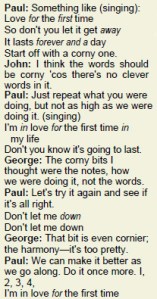
The next take, they do a call-and-response in the bridge, this time repeating John’s lines: “I’m in love for the first time (I’m in love for the first time)/Don’t you know it’s going to last (Don’t you know it’s going to last)…etc.

George still objects, and makes no bones about it, saying,”I think it’s awful. …  it’s terrible.”

Paul and John both fire back, speaking over each other:

John: Well, have you got anything to supplant it?

Paul: OK, you’ve got to come up with something better, then.

George makes a suggestion to the guitar part/harmony (they’re being played together) that Paul calls “just too pretty,” which is interesting on so many levels — although among them that it’s true.

They can’t get through a take of the bridge before things break down. George keeps offering up little tweaks, but Paul doesn’t want to be slowed. Now, at least.

Paul: We make it better as it goes on.  … We’ve just gone around like for an hour with nothing.”

George: [We’ve been just trying different] permutations.

Paul: I know, but let’s sort of move on now.

John: I’d like to hear any of them right once.

More stumbling through takes and Paul and John reach agreement on how the bridge should now sound, at least the lyrical combination. It’s a mixed message to George, too, since literally moments after saying it wasn’t the time to tweak the bridge, he decides it, in fact, is.

Paul: When [John sings] “Don’t you know it’s going to last,” we sing, “It’s a love that has no past.” Then we repeat “It’s a love that lasts forever” exactly, and then when you sing “It’s a love that has no past,” we sing “It’s a love that’s going to last.”

George JohnGot that?  Not sure John did or really cared — he’s let this aspect of the song be managed by Paul all day as it is — but he replied simply “Yes, I agree.”
A pair of broken takes did result, blessedly, in an epiphany and a solution that stuck.

“Forget the last line,” George said right after doing just that and playing the song’s opening riff over where they had been shoehorning in a response vocal.

They repeat this part a few more times. We still have the other extra vocals in the bridge, but the riff sticks.

While Paul’s assuaged for the moment — “So that’s near enough for the time being” — John isn’t.

John: We found out that’s the weak bit [the bridge] so we tried putting voices on it. But it’s still down to the rhythm.

Paul: But it was always weak on your guitar. That’s the weak bit of the song.   (It’s unclear here if he’s talking to John or George, or both).

Shortly after that exchange, we’re back after some kind of gap on the tapes, with a fresh attempt at the song from the top. And we clearly lost some discussion, because the bridge suddenly lacks any response vocals — but does retain George’s riff to end the section. This sounds like the “Don’t Let Me Down” we know and love, for the most part, even down to John not quite getting his own vocals straight.

The next (and final) take, we inch even closer, with Paul and George singing harmonies with John, not as a response to him in the bridge.

And with that, the band ends their 80-plus minutes (on the tapes, it was even more in reality) of “Don’t Let Me Down” rehearsals on a high note. May not have been the classic “eyeball-to-eyeball”  collaborations John and Paul would do — especially with George so deeply involved. But clearly, even though it wasn’t exactly cordial, it worked. “Don’t Let Me Down” was a better song 80 minutes after they started rehearsing.

Paul then announces the next song they’ll try to work on —  “Two of Us Going Nowhere On Our Way Home” — and we’ll find out soon enough just how much George wants to please him.

13 Comments

Filed under Day by day

Jan. 6: Cross that bridge (Pt. 1)

After basically ceding to Yoko his creative role in the band’s decision-making over the live show earlier in the day, John Lennon regains a tiny bit of authority by leading the group through a lengthy rehearsal of “Don’t Let Me Down,” one of the primary songs the band has taken on thus far.

jlWell, he regains authority at the outset, at least, during a stretch that provides the first real look at the discord between band members that helped define the Get Back/Let it Be sessions.
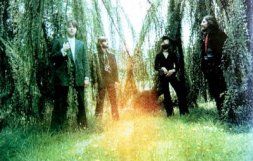
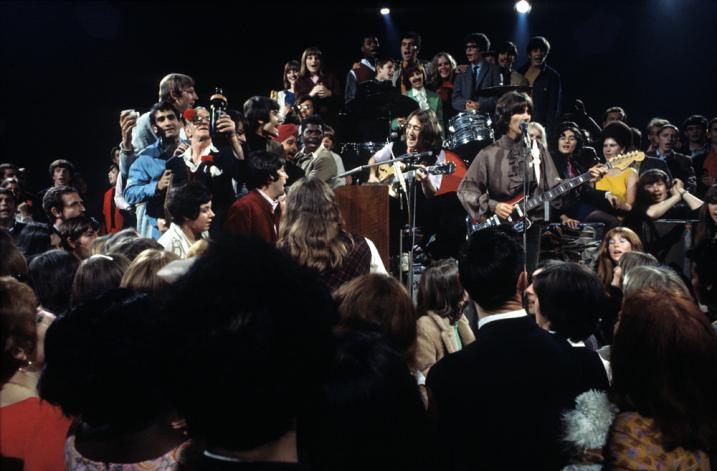
On the A/B tapes, Jan. 6 rehearsals for “Don’t Let Me Down” run in a straight shot for nearly 90 minutes, easily the longest stretch they spent on any one song this day. The structure of the song is set and doesn’t change from what will eventually be pressed to vinyl. It’s a delightfully simple song, both in lyrics and structure. But they’re not happy to leave well enough alone quite yet.

Things kick in with the song already under way in what’s labeled as Track 6.62. Shortly into things, John asks to work on what he calls “the worst bit” — the song’s bridge. (“I’m in love for the first time…”).

Now, it’s absolutely granted that the band has a hard time working together, and that didn’t just begin on January 2, when they convened at Twickenham. But at least from the relative beginning of the sessions, they’re trying. An example of that comes right here as John wants the help on the bridge, asking openly, “What can we do to that bit, then?”

George says he likes the vocal line and harmony, it’s just lacking in some color as far as the fills in between. He suggests a rhythm change, while John replies, “That’s where the piano would come in.”

Good stuff! Collaboration!

Paul scats some falsetto to alternate with John’s lines, and George fiddles with some guitar fills. It actually sounds kind of nice with John on an acoustic guitar, but overall nothing overly impressive. But hey, it’s a work in progress. There were probably lots of bum attempts at things over the prior decade of Beatles in-studio fiddling, right? We just have these extensive rehearsals on tape, whereas we don’t have a zillion hours and hours of them wrestling with, say, “Nowhere Man.”

Paul takes things a bit more into his own hands, instructing George to join him in the vocals, and telling him just what to do.

Paul offers up his falsetto part, then gives explicit suggestions for the responses.

John: I’m in love for the first time

Paul’s suggestion: Love for the first time in my life

John: Don’t you know it’s going to last

Paul: So don’t you let it get away (he soon changes it to “Not going to let it get away”)

John: It’s a love that lasts forever

Paul: It lasts forever and a day

Paul goes onto explain that “corny’s all right in this one. What he’s [John] doing is corny. That’s the thing that will make it not corny, we sing different different words.”

I’d question the logic (and lyrical interpretation) there, but hey, Paul’s track record in writing hit songs is a lot longer than mine. The last song he referred to as “corny” was “Maxwell’s Silver Hammer” a few days earlier, and I think it’s safe to say they’re quite different birds. I do think he says it affectionately, at least.

George says something that’s not quite on mic, to which Paul, clearly trying to blow him off, says “OK, well, we’ll do that, that comes later. Just sing it straight first.”

The next stab at the bridge has George doing the “part that moves” that Paul had just suggested, sounding a bit Band-ish, which isn’t too much of a surprise at this point. At the same time, there’s a slight “Revolution 1” vibe here, where the “shooby-doo-wops” punctuate the chorus. I guess it works, but it definitely changes the feel of what we know as “Don’t Let Me Down” — John in fact likens the work in progress to “something like the Drifters.” (We’re still a few weeks away from the Beatles actually covering the Drifters).

They continue to run through the bridge, Paul directing.

Paul : The thing is, sing the one I’m doing, and we’ll improve upon it. Start off with a corny one, because the words aren’t that good. (Here, he’s referring to his response vocals, not John’s main ones).

John: I think the words should be corny, because there are no clever words in it.

I guess he’s right — it’s a straight rock song with deeply honest lyrics (and his first song written for Yoko, I believe), no interpretation necessary. This isn’t “I am the Walrus” or “Lucy in the Sky with Diamonds,” lyrically. So I don’t think he meant it as an insult to the song. But I guess I’m surprised John would want to muddy up a song like this.

More run-throughs, and John still isn’t satisfied, at one point saying, “Maybe I should play piano … just to change it.” George talks about using some pedals so it “doesn’t sound like the same old shit,” — but John says “I like the same old shit, if it’s clear.”

“Just think of some riffs,” Paul suggests to George, as we see today’s first real signs of a little bit of the big boys ganging up on the perceived help.

And so they continue, with one of the takes briefly immortalized at the beginning of the “Let it Be” film (it’s taken from 6.67 on the tapes).

Of course, in this edit, the band goes straight into the Jan. 3 Maxwell’s Silver Hammer performance. In reality, they churned on, with Paul thinking the answer to the seemingly busted bridge is to change the rhythm.

“This needs this,” Paul insists. “It needs things to happen.”

Just what does happen? Find out soon in Part 2!

15 Comments

Filed under Day by day

Jan. 6: Adore your ballroom dancing (If there’s a rock show, Pt. 3)

Back-garden Beatles (Tittenhurst, 1969)

After a proposed overseas concert in a Roman amphitheater in Libya is scuttled by Paul, citing Ringo’s insistence on staying in England, a suggestion is made to perhaps go small and shoot a Beatles concert in a back garden, presumably somewhere in London.

Director Michael Lindsay-Hogg quickly dismisses the idea, suggesting it would end up like a “little promo film … instead of a Beatles television show.”

Sitting in on the discussion, George Martin cuts to the chase and thinks even smaller, proposing “we just do it in the other studio.”

Paul shifts the focus off the venue and back to the composition of the crowd.

Paul: We’re all prepared to do it with an audience. But what Yoko said is right — we can’t just have the same old scene. If it was the same old audience and we were … all naked when they came in, then that’d be a different scene, you know?

MLH: I think she’s totally right about that, that’s one of my big points.

As the discussion goes in circles, someone in the group asks the simple — but very difficult — question: “What can you do that’s new with them?”

Paul: We shouldn’t really try to do anything with the audience because the audience is the audience, and it’s them, and they’ve come in. It’s us that’s doing the show.

Yoko: Because If I were in New York and I watched the “Hey Jude” [promo on TV] … my interpretation would be that those people around them who are sort of climbing up and starting to sing with were just hired people. If I think that, then it’s OK. But if I thought it was a true audience, then I think, ‘Oh, so now people don’t think of The Beatles as too much’ because all the image that everybody in the world has about The Beatles is that once there’s an audience, they’re going to be frantic and pulling their clothes and tearing it away and all that.

“Hey Jude” promo video

OK, then.  Not so sure I’m on board with Yoko’s assessment of the state of The Beatles’ popularity at this point, but hey, she’s soon to be married to a member of the band and was actually there in the ’60s, whereas this blogger was yet to be born.

But still. It seems a bit out of reach to me to suggest that just because a Beatles audience wouldn’t be in full-tilt 1964-era Beatlemania, pulling out their hair and screaming over the songs, means the band isn’t as “big” anymore.  It’s 1969, not 1964 anymore. The music scene has changed.

But to avoid what Yoko thinks would be an issue, George Harrison says the solution is something The Beatles had done before.

The good thing is that we could completely create another image, reserve the image of your choice. If we could just think of an image we’d like to be and then we make it that one, which could be anything. We could just be a nightclub act, or anything, just the smoochy, low lights and 10 people.

Wheels turning, Lindsay-Hogg says, “Then you’re a little cabaret act,” before he and George Martin agree again that there should be a large audience that’s not necessarily any kind of focal point, just to be used as a sounding board.

But then Paul picks up on George’s idea and gives it a twist.

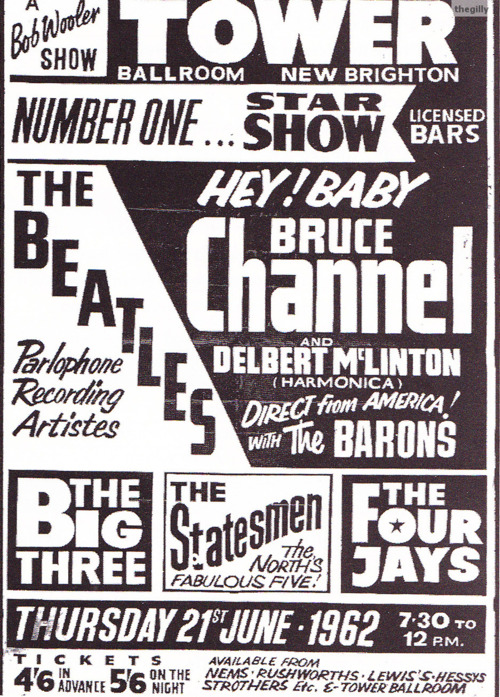
I thought, like, a ballroom. If we did go right back … and did it purely like a dance. “Come to the Tower Ballroom, there’s a dance on. Oh, incidentally, we’ll be the band there.” And we’d go on, play all the numbers and we’d play it like we’d play a dance, without trying to sort of announce anything. There’s a fast one, there’s a slow one, and everyone, like, dances. And there might be a fight or there might be the kinds of things that happened at dances. Or it might be a very sedate, quiet dance.

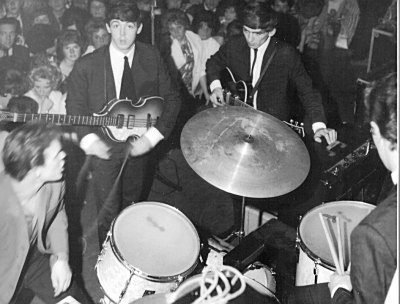
The Beatles, performing at the Tower Ballroom, ca. 1961-62

Presumably, Paul’s referring to the Tower Ballroom of New Brighton — just a ferry ride ‘cross the Mersey from Liverpool — a venue they played numerous times in 1961 and 1962.

I actually sort of love this idea, with the full understanding that it may just take hired hands to get an audience to ignore the fact they’re at a Beatles concert and just go ahead and actually dance.

And to do that, as my wife said to me, they’re really just making a long music video. What’s the point?

Lindsay-Hogg is on board — in essence, he says —  because he likes its simplicity. But that’s where his agreement ends. “What you’re asking for is a really, really simple approach, which I think is right,” the director says. “But I’m not sure just to have an audience dance around you is good that way. I don’t think you are just a local band.”

Paul, and the rest of the group in the conversation, agree. But after digging deeper into the idea, Lindsay-Hogg ultimately thinks it’s a non-starter.

MLH: The only time on TV it didn’t work for you was when you went on … Top of the Pops, and they did dance, do you remember that? And they didn’t really do very much. And that would look so crazy. It looked crazy for four minutes, but it would look lunatic for longer. It would have been in the bad way, it was so sedate, and you all were so sedate back then.

The essence of this idea is the simplest approach possible. The essence is correct —  totally, totally what I believe — but you’re just not the local dance band. Would that you were, but you’re not. So that’s going to be very hard to achieve.

Paul sticks with his newest idea, saying that if they’re going to be artificial and build a set at Twickenham to mirror the Tower Ballroom anyway, why not just go to the Tower itself?

We learn a little bit more about the Let it Be film’s early timeline in Lindsay-Hogg’s response.

MLH: That was one of the reasons we started veering off on these ideas was when we were looking at locations that Friday afternoon after Christmas, and all the locations looked like four steps up from a boutique, you know what I mean? Four years ago everyone was shooting in a boutique, and now it’s a disused sawmill or whatever it is. It just looked like plastic locations.

Everyone agreed it was a phony look, certainly something the group was seeking to avoid.

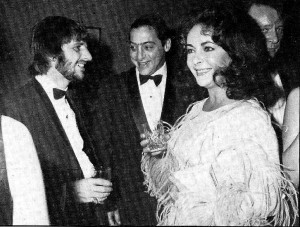
“Candy” co-stars Ringo Starr with Richard Burton — and Liz Taylor in 1968.

Also notable here is that the director was scouting locations on Dec. 27, 1968 — a mere 10 days earlier. Good on Lindsay-Hogg, too, for working hard; he directed “Rock & Roll Circus” just 16 days prior.

Yoko won’t give up on the band staging a show before anything remotely like a conventional audience, comparing the scenario to actor Richard Burton, and saying that people don’t want to see him performing on stage before a “fixed” audience.

No matter what kind of audience, it s going to look crummy. What he is is a legend.  Seeing him on his own private boat or just seeing him shaving is just more dignified than seeing him perform before a fixed audience. Do you see that point? That’s why it’s better to show you in your private home, or George’s home or something. “Oh, this is much better than a fixed audience.”

George and Pattie at home at Kinfauns, their home from 1964-1970

Someone, perhaps Mal or Neil, out-Yokos Yoko by suggesting a performance at The Royal Academy or Tate Gallery — “with nobody there but the pictures.” Naturally, she agrees.

Lindsay-Hogg still wants none of that, saying, “Once you get up to perform as The Beatles, you have to perform to someone, even if it’s going to be this different kind of audience.”

The debate churns on.

MLH: Certainly yes, you play straight at home. But I have a feeling that’s not big enough.

Yoko: But that’s big. See the private home of Paul McCartney or George Harrison.

MLH: We could fit that into the documentary.

George Harrison reflects on a “Bridget” documentary (presumably Bardot),  describing her taking the audience to St. Tropez as she “sings a tune over her front gate and walking around the pool.”

Insisting that kind of minutia can be incorporated in the documentary, Lindsay-Hogg then offers what turns out to be his concluding argument for the day.

If you just get up to perform, you either have to be performing directly to the people at home or to an audience. It’s only two ways. Maybe it would work for the people at home, I just don’t think there’s quite enough scope. And I think the idea’s good, because we have to think about the audience — because you are so riddled with audience. The audience is so much part of the first half of you musically — [under his breath as an aside] says the critic from the Guardian — the audience is so much part of the mystique.

After a mention of mystique, we’re left with a mystery — the tape cuts off abruptly, and the next track is merely a nondescript improvised instrumental, and there’s no return to the discussion this day again.

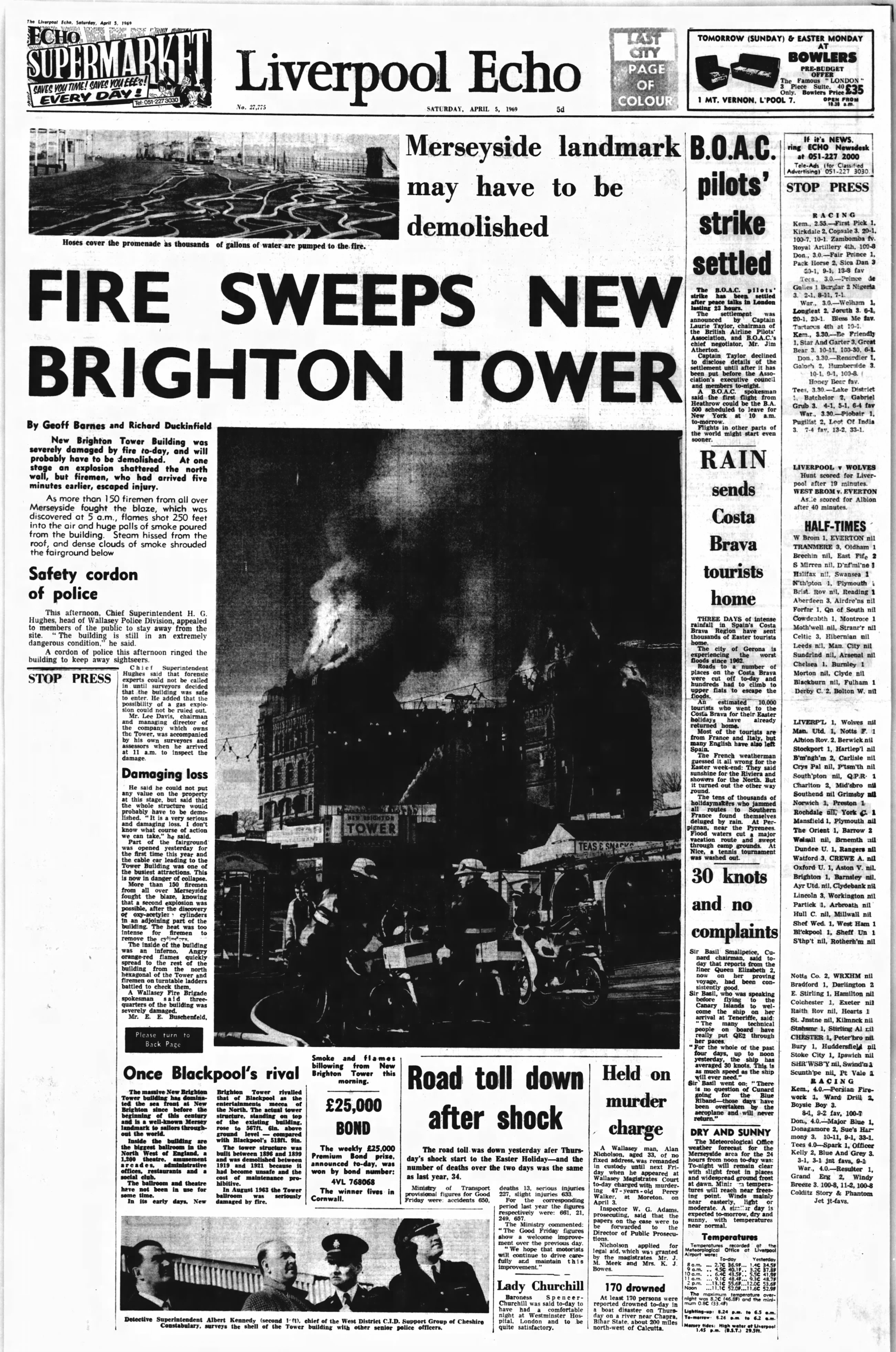
And what of the Tower Ballroom? Had The Beatles performed there, it would have been the last hurrah for the venue. It was destroyed by fire just three months after this discussion.

14 Comments

Filed under Day by day