Tag Archives: John Lennon

TMBP Extra: Let it be first

Like so many of the outtakes on the “sessions” discs unearthed and unleashed on the most deluxe version of the Beatles eponymous double-album, this newest version of “Let It Be” — the oldest recording of the song — is acutely alive and profoundly captivating.

As performed on September 5, 1968 — the day after recording their iconic performance of “Hey Jude” for Frost on Sunday — here’s the world’s greatest tea-room orchestra:

Fifty years in the books, and Beatles history still has room for an edit.

In some ways, this one-minute, 18-second cosmic jam capturing the band in medias resbetween takes of “While My Guitar Gently Weeps” — is just what should be expected, even if its very existence is still something of a minor surprise. A White Album-era version of “Let It Be” felt apocryphal, despite established knowledge rooting it in fact. And so it is that the disjointed, driving performance sounds like it’s out of time — it was.

Let’s dig in on some finer points:
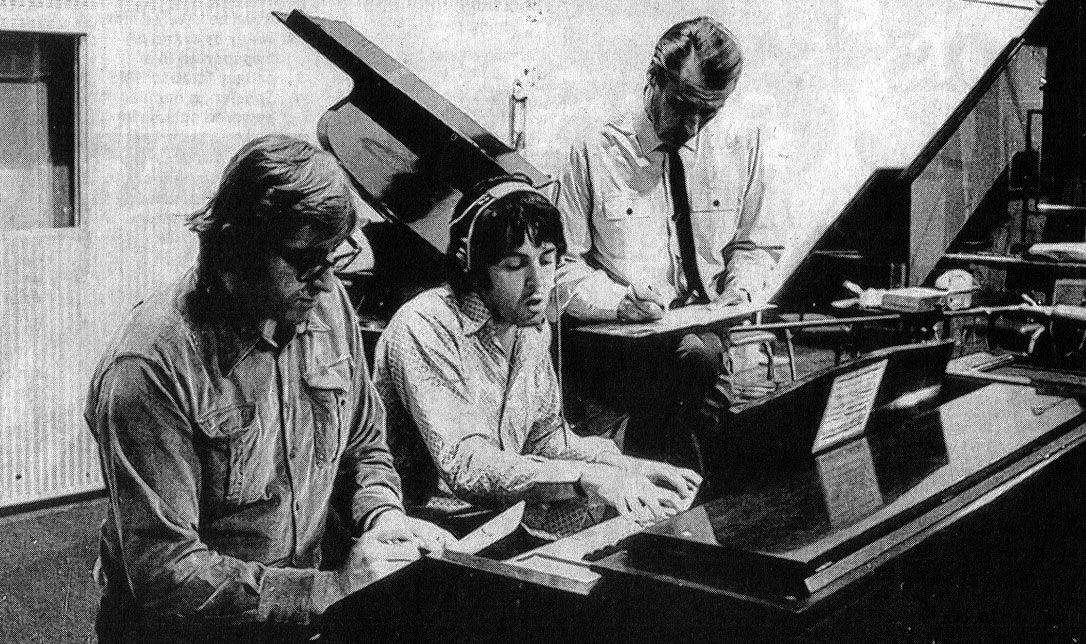
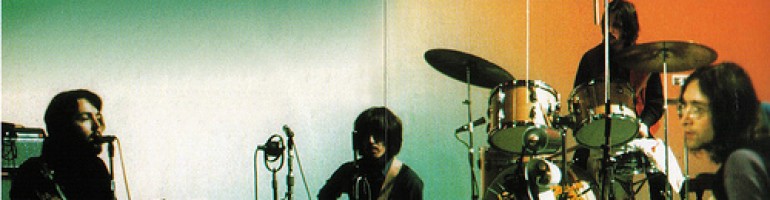
Brother Malcolm, Paul and George Martin during the White Album sessions in 1968

Brother Malcolm, Mother Mary and the lyrics of “Let It Be”
Notably, the lyrics of the song hardly advanced in the three months between September 5, 1968 and January 3, 1969, the first recorded performance of “Let It Be” at the sessions that would ultimately bear its name.

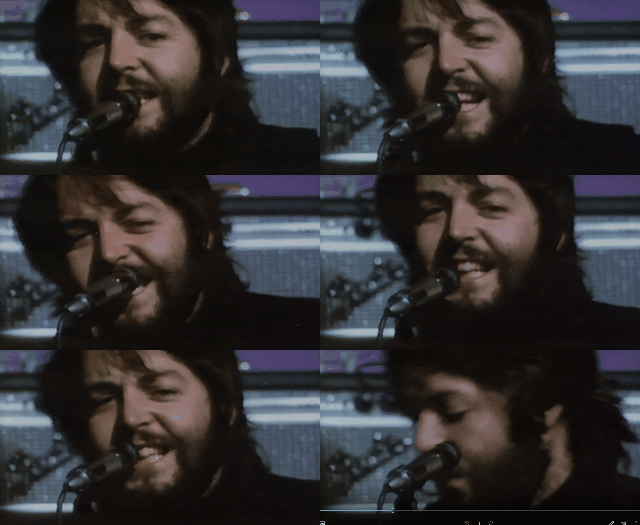
Here’s Paul grooving alone at the piano for the song’s debut on the Nagra tapes:

The lone addition, lyrically: “In my darkest hour, she is standing right in front of me.”

“She,” of course, is Mother Mary, who presumably was in the very original lyric sourced from Paul’s dream about his mother but was absent in the 1968 early attempt. That featured “Brother Malcolm,” a nod to do-it-all assistant Mal Evans. The reference to Mal was inconsistent over January 1969 but endured to the very end of the sessions. Here are the Beatles on the final day of the sessions, January 31, 1969:

It wasn’t until a few days into the sessions at Savile Row, on January 25, 1969, that most of the verses had been added. But Paul started teaching “Let It Be” to others in the band on January 8, when we hear Paul naming chords to the others to learn. That’s also when Paul disclosed that, even at this early stage, he planned to have Aretha Franklin cover the song.

Interludes
Students of the Beatles’ January 1969 sessions have heard this sort of thing several times before, someone in the group veering into an original, a cover, an improvisation between songs, during a transition during a rehearsal or purely as an aside.

Some of these drop-in songs were even the same for the White Album and Get Back/Let It Be sessions:

And just as future songs were sampled and explored during jams in 1968, they were in ‘69 too. And probably long before that as well. A few examples:

Divine intervention
This initial iteration of “Let It Be” may not have had “Mother Mary” but it did feature the hand of “God.”

The September 5 session of “While My Guitar Gently Weeps” was the one that featured Eric Clapton as the Beatles’ guest on lead guitar. That places Eric at the origin of “Let It Be,” and he can be heard adding a few guitar licks to the improvisation. (Listen to the very end and you can hear George close the track imploring his friend to don his headphones: “Cans on, Eric.”)

A full 31 years later Eric would get to play the song again, joining Paul on stage at the 1999 Rock & Roll Hall of Fame inductions. Paul was inducted for his solo career, but the show closed with, naturally, “Let It Be.”

Clapton didn’t take the solo — that’s Robbie Robertson of the Band, the group whose sound the Beatles sought to emulate during the Get Back/Let It Be sessions.

This same induction ceremony honored producer George Martin, who happened to miss the September 5, 1968, session whilst on vacation.

Times of trouble?
Even Paul called the White Album “the tension album.” John said worse in the early ’70s. Ringo literally left the band for a few weeks in the summer of ’68.  Four Beatles, each recording in a separate studio — we all know the stories.

But while history is static, perceptions are variable.

The 2018 reissue’s promotional campaign works to dispense with some of the darker sides of the session, from Giles Martin’s interviews to the numerous dismissals of dysfunction in the lovely hardbound book packaged with the deluxe edition. Indeed, there’s plenty of laughter and carefree spirit throughout the White Album outtakes. The outtake set even begins with laughter among John, Paul and Yoko, as if to hammer the point home.

The Get Back/Let It Be sessions inherit the same sour reputation, yet it would be very easy to compile 50 tracks from January 1969 filled with laughter, chatter and the indication that nothing could ever tear these guys apart. And I bet if and when we do see a formal reissue campaign of Let It Be (which I suspect will be attached to a larger Abbey Road/”Beatles in ‘69” re-release), we’ll see that very recalibration of Beatles history. More “Suzy Parker,” and not quite so many calls for a divorce.

And that’s OK. I’ve long posited that things weren’t necessarily so bad — or at least that much worse — for the Get Back/Let It Be sessions than in the period immediately before and after. Naturally, the reality lies somewhere in between. Neither the White Album nor Let It Be are outliers — that’s just how the group was post-1967.

On January 7, 1969, the day before the rest of the Beatles learned the chords to “Let It Be,” George Harrison made it clear: “Ever since Mr. Epstein passed away, it hasn’t been the same…  [the Beatles had] “been in doldrums for at least a year.” That takes the group to before their trip to India in February 1968.

Together at the beginning of that trip, the individual Beatles returned to England separately. For the final stage of their career, they produced enduring music, though they may be parted.
4 Comments

Filed under Extra

Jan. 9: Another kind of gig

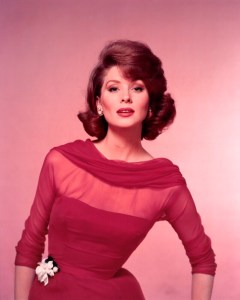
What on earth is “Suzy Parker?”

Red is the color that my baby wore: Suzy Parker, 1969

The person by that name was a seminal American supermodel and actress who on January 9, 1969 was aged 36.

“Suzy Parker” — as performed by the Beatles — requires multiple assumptions to set a complete chronology of the song’s history. What is established, however, is that the only performance made available over the last half-century is one from January 9, 1969.

The song sprung directly out of the day’s lone, solid performance of “Don’t Let Me Down” (discussed a post ago), with John introducing the song in a deliberate, low-key mumble.

“I’d like to change the tempo now a little and move over to another kind of gig, and it’s called ‘Suzy’s Parlour.’”

And with that, John plucked out the opening chords ripped straight from the Chuck Berry playbook. Paul repeated the title as John began to sing in his most shrill voice. This is my best stab at transcribing the lyrics — I listened on headphones multiple times, slowed the song down, the works — but let’s just say they’re pretty fluid and inconsistent, as is John’s wont:

C’mon, Suzy Parker, everybody’s welcome to come
I said come over, Suzy Parker, everybody’s welcome to come
Get to fixing Suzy Parker, everybody gets well done

I said, c’mon, Suzy Parker, everybody’s welcome to come
When you come to Suzy’s parlour, everybody gets well done

After every line, Paul and George supplied “c’mon, Suzy Parker” backup vocals — or something along those lines — and this is the place to note Paul clearly sang “Parker” not “parlour” most of the time. Their delivery is vaguely reminiscent to the “shoo-bee-doo-wop” backup vocals they provide in “Revolution 1.” After the first two verses, we get a machine-gun-style “rat-tat-tat” backup vocal, intensely delivered by Paul and George.

The verses continued, as John did John things, tweaking the lyrics on the fly.

C’mon, Suzy Parker, everybody’s welcome to come
Yeah, c’mon, Suzy parlour, everybody’s welcome to come
When you get to Suzy’s parlour, everybody gets well done

Another repeat of the rat-tat-tats refrain, and that was it, just shy of two minutes. John recapped the lyrics spoken-word, while George and Paul repeated the rat-tat-tats and a little of the instrumentation. Everything is over and done in about two minutes, a delicious respite unleashed before the group heads right into “I’ve Got a Feeling.”

You can — and should — see about half of the performance in the Let It Be film, starting about 19 minutes in. There it’s introduced by John asking, desperately, “Does anybody have a fast one?” on the heels of a lackluster take of “Dig a Pony” from January 7. Movie magic merges these two moments.

So back to the opening question: What on earth is “Suzy Parker”?

It’s a great song! Funny, upbeat, tight. And a little raunchy, even, representing a section of Suzy Parker’s home as a den of iniquity where everybody’s not only welcome to come but they get well done, too. It’s not remotely as provocative as Prince’s ode to a supermodel of his era decades later, but this was enjoyably suggestive nonetheless.

“Suzy Parker,” too, is the flip side of the sessions’ grim reputation, four guys truly enjoying playing music together. Take this and “One After 909,” and the Beatles could have propelled the Get Back experience into a different, retro (and excellent) space.

Yet as spontaneous as was the group’s mood, it feels very difficult to consider this song a one-off, impromptu jam. It’s simply too tight, too good, even if it is boilerplate John Lennon 12-bar blues.

So when and where does the song really come from, and why her? Your Beatles fan fiction is as good as mine.  Parker’s successful modeling career had peaked a decade earlier, and she was nearing her final acting role, so while the members of the band certainly had long memories, she wouldn’t have necessarily been on the tips of their tongues. With plenty of other songs featuring variants of the heroine’s first name across more than a decade, there’s no smoking gun that would place “Suzy Parker” in any particular period in Beatles history if there’s a consideration it was directly inspired by another lyrical Suzy, Suzie or Susie. It could have been influenced by one, none or all of these:

But “Suzy Parker” is not necessarily from January 1969 either. The Beatles are in sync to a degree that seems to belie a completely ad-libbed performance, when we have much sloppier performances of other ad-libbed and established songs from these sessions for comparison. Even the well-rehearsed songs are sloppier. While the Nagra tapes constantly rolled during these sessions, and this specific performance of “Suzy Parker” the only one recorded, there remains non-zero odds the song existed in some form prior.

We can, at least, be assured that it’s not a cover, and it’s not formally titled “Suzy’s Parlour,” either, despite that being the name introduced by John, repeated by Paul and the primary lyric of the the song.

Nobody involved seemingly has ever spoken about “Suzy Parker” in an interview, so most of what people know about it is based solely on years of speculation. But at least one piece of paperwork helps clear up some of the discrepancy.

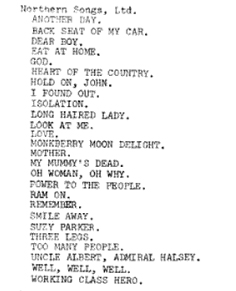
It’s only a Northern Song: “Suzy Parker” listed among John & Paul’s solo efforts at the U.S. Copyright Office.

Even though the song has never appeared on a sanctioned Beatles album or single — I found its absence on Anthology 3 conspicuous — it was an official Beatles release having turned up in the Let It Be film. Therefore, the song had to have its papers. First copyrighted in 1971,  the song in question is indeed titled “Suzy Parker,” a rare (but not unprecedented) Lennon/McCartney/Harrison/Starkey original. Nowadays Northern Songs’ catalog falls under the ownership of Sony/ATV, where the song is registered as “Suzy Parker” — with the defined alternate title of “Suzy’s Parlour” (search the title here, or check this spreadsheet download for the listing).

Should the song be called “Suzy Parker” or “Suzy’s Parlour”? Probably the latter, but it actually doesn’t matter. It is what it is, and formally the song is “Suzy Parker.” And despite an endless library of film, tape and interviews of the band existing for the entirety of their careers, the Beatles’ career still holds lovely pockets of mystery like this song.

7 Comments

Filed under Day by day

Jan. 9: Jokes in between

Let’s run through the ones we know and then learn the [new] one.

This is our format.

Paul McCartney was right. There was a format. At least there was a framework developing as the Beatles rehearsed in their second week at Twickenham.

As covered in the last post, George Harrison would have to wait a few hours for attention to return to his new “For You Blue.” Instead, with the full band ready to go nearly 90 minutes into the January 9, 1969, Nagra tapes, the Beatles tackled “Two of Us” for the fifth time in six days, initiating a sequence in which the group returned to some of the finished, core songs they’d have for their live show. Why, it was their format!

This stretch also clearly exposed the side of the Beatles that everyone (else) usually cites when describing the Get Back sessions. While I’m quick to argue January 1969 at Twickenham was not of itself the downfall of the band as it was filled with harmonious, joyous and highly fruitful moments to match the uglier, fractious component of the sessions, these guys could get pretty petulant and didn’t hide it with the tapes rolling.

A quick, carefree one-off into the song the day before, this day’s “Two of Us” rehearsal stretched about a half-hour, and quite unlike the Rocky and the Rubbers’ version, Paul insisted on serious refinement.

As loose as their run-through was early on the 8th was exactly how tense things emerged on the 9th, with consistent, stuttered efforts to get through a full song.

From the top, the group can’t find the proper pacing of “Two of Us,” with Paul pushing the others to pick it up. “Keep them all quiet, keep your instruments down so we can sort of hear what’s going on.”

They had another go at the song, and “it’s still pathetic,” in Paul’s words. He suggested the issues went beyond just the song’s speed.

As Paul nitpicked what arrangement the song needed entering the bridge, John argued, “We never got into this [part] yet,” defending himself and the others as Paul criticized the group for not knowing what’s in his head.

A fiery example of the strain came during a “Two of Us” take in which Paul barked at John, who wasn’t in perfect rehearsal position, to “get on the mic.”  John, certainly responding to the tone more than the instruction itself snapped back.

“You don’t have to bitch about it, we’ll never get through it.”

The band immediately went into another take, and you can hear John loud and clear — but he came in early. You can hear Paul’s displeasure when he comes in himself at the right time. Still, they championed on.

(This sequence was in the Let It Be film, and led immediately to the “I’ll play, you know, whatever you want me to play” sequence from three days earlier.

A dark moment, for sure, but as usual for these guys, they were able to compartmentalize and still harmonize figuratively and literally. Picking apart “Two of Us” to improve the various “bits” and now focusing on the middle eight, Paul started thinking out loud.

“The two things I think of are both corny, but something better are oohs  … or [a staccato “dit-dit-dit”]”

Never mind that the “oohs” are actually “aahs” when Paul, John and George instantly launch into a demonstration of the vocals, which are proposed to appear supporting the “you and I have memories” lead. This is the Beatles magic, immediate and spontaneous and completely normal, even when it comes a few minutes after one member complains about the other one’s bitchiness. The subsequent stab at the staccato vocalization came off a bit sloppier but still likable.

Concerned the backup line would sound “too thin,” George proposed, “Maybe we get a few Raelettes,” marking yet another time the group evoked Ray Charles’ backup singers. “Get three girls” with some phasing on the mics.

John’s cheeky reply was to bring in three boys instead, and George named the Dallas Boys, Britian’s first boy band (by ’69 they were into their 30s).

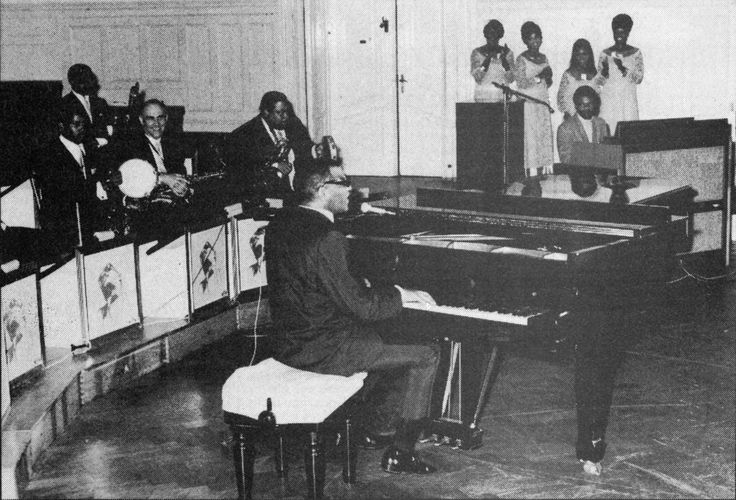
While they never landed the Raelettes, the Beatles would soon enlist the man seated before them, Billy Preston. (Photo from late 1968).

Ultimately, Paul asked the others to “just think of something, then” for the middle eight, and off they went into another take, this one featuring the lovely “aahs.”  The song may not have dramatically improved, but the mood had over the last 25 or so minutes on the tapes.

But Paul still had something to complain about, turning his attention to a frequent (and legitimate) punching bag for the band, the equipment setup at Twickenham. If we think the tapes sound diluted, just imagine how substandard the quality must have been for the musicians on the sound stage. With the proposed show nearing — and despite some pretty ambitious ideas, uh, floated less than 24 hours earlier — improved sound needed to be addressed along with other facets of a finalized live performance.

“Just so that we can all hear, so it sounds really great here,” Paul said. “So that our voices are just as loud as they need to be. ‘Cause then we’ll be able to hear what’s wrong.”

What’s more …

“Everything we’re going to actually do like that, we could get into now. Just where the amps are going to be, and where we stand. It is a bit silly to be rehearsing sitting, facing this way, when we’re actually to be playing standing, facing that way.”

And here’s where we return to a disagreement among the principals, but with a far different result than earlier.

John: I thought we’d get into that when we do a few more.

George: We still have dance steps to learn.

Paul: And the jokes in between.

The esprit de corps resumed as the group advanced to a singular take of “Don’t Let Me Down.” There was no nibbling, no exhausting search for a missing “bit,” and even when there was a screw-up on the lyric, they powered on and completed the song in a tidy 3:10.

Far less concise, and clocking in at nearly 25 minutes of torturous micromanagement, was a brutal run of “I’ve Got a Feeling.” After a perfectly adequate (for this point in the sessions) initial run-through, Paul immediately identified just one specific spot for improvement — the same part of the song that had bedeviled the group on multiple occasions, and the same point that the struggled with in several songs —  “The only bit is the break. Still not sort of dramatic enough.”

This tense sequence was up there among the least listenable parts of the entire month’s worth of tapes. Paul offered several variants on how he wants the guitar part to sound, right after his line, “All that I’ve been looking for is somebody who looks like you!”

Issues:

  • “All the notes are clipped.”
  • “There shouldn’t be any recognizable jumps.”
  • “The notes shouldn’t ring on.”
  • “At the moment, it’s like a riff.”

Solutions:

  • “[The notes should be] just like falling, falling.”
  • “Try to sort of sing it.”
  • “It’s got to be like pain.”
  • “Certainly do anything like it’s crying.”

It’s got to be like pain. What an instruction!

Paul desperately and relentlessly attempted to communicate how he wanted the part to sound — gesticulating, vocalizing, playing it on the bass — but George simply couldn’t or wouldn’t accurately nail the brief solo.

In another editing trick that showed up in the Let it Be film, it was nailed. That’s because the film shows the January 8 “Rocky and the Rubbers” take of the song (where Paul shouts a celebratory “good morning!” after the part is played), and spliced it on both ends of a brief portion of this sequence from January 9.

Ultimately, the part was hit satisfactorily enough for the Paul to continue the group through their core set. The mood rose again for another jubilant effort of “One After 909,” although we don’t get a complete grasp of the rehearsal due to the tape cutting in and out. We can pretty safely assume, though, that like “Don’t Let Me Down,” the band tore through a single take.

As John moved over to the piano, the Beatles practiced their stage patter, in hilariously fake sincere voices.

Paul: “Certainly, it’s a great occasion for us.”

John: “First chance we’ve had to play for you dummies for a long time.”

The playful attitude continued as Paul dabbled in a bit of “Norwegian Wood” on bass, soon to be joined briefly by Ringo on drums and George on guitar and vocals before they immediately launched into, as George called it, “the one about the window.”

It was a straightforward, strong take of “She Came In Through the Bathroom Window,” although we don’t hear the whole thing on the tapes.  Far less straightforward, but wholly enjoyable was a string of takes broken up by tape cuts, including one with John taking the lead vocal with a heavy Cockney accent.

By this point, the mood was entirely loose. The song was given a slow ballad treatment, featuring a lyric referencing the famed celebrity female impersonator Danny La Rue.  Paul completed one take by answering the phone: “Hello, this is Tuesday speaking. Is that Paul? I’d like to have a word with you.”

Now, five minutes past 1 p.m., the group broke for lunch. Paul offered a brief impression of Elvis — who someone mentioned turned 34 the day earlier.

Only a few hours into a temperamental roller-coaster of a day, John replied to the rest of the 20-somethings in the group, “We all seem to be catching up to him.”

11 Comments

Filed under Day by day

Jan. 8: Syndicate any boat

The TV show’s title and tagline could have written itself:

“The Beatles are … ADRIFT.”

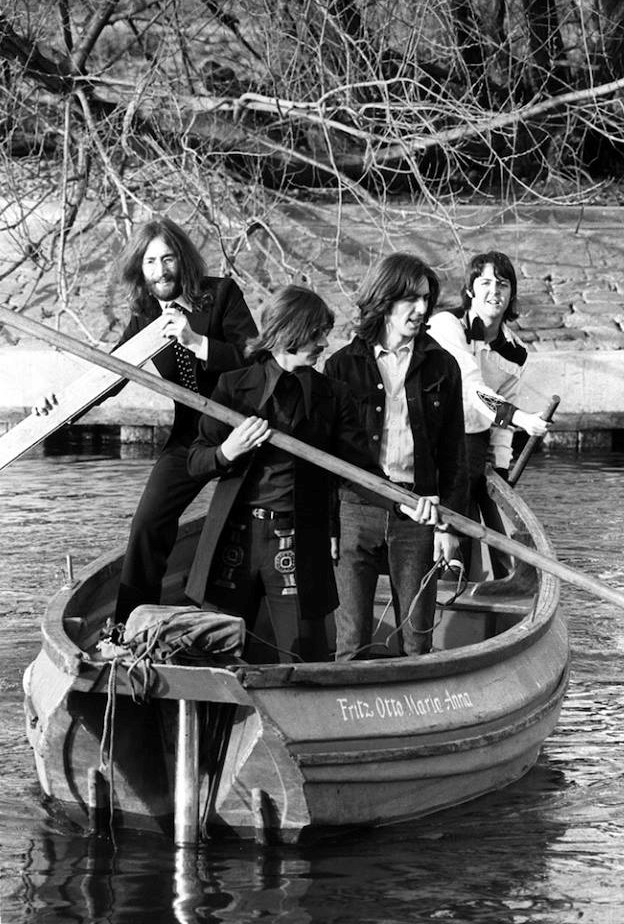
Picture yourself in a boat: The Beatles aboard the Fritz Otto Maria Anna, in the River Thames, on April 9, 1969.

It’s a simplistically obvious metaphor, and a literal description of what the group was seriously considering in the waning moments of their January, 8, 1969, session at Twickenham. If the TV show in production was to be episodic, this sequence would have provided a true cliffhanger.

Ringo Starr, codename “Russia,” wasn’t unwilling to drop his automatic veto, and it was John Lennon spearheading the effort withing the group, resurfacing as the group’s leader after so many years, who worked the sell on the drummer, along with Paul McCartney.

“Just give me one reason to stay here,” John asked.

“For the people,” Ringo answered with complete sincerity.

“All right, we’ll take ‘em with us,” John replied.

Paul McCartney clarified the pitch for a Winter 1969 rock cruise.

Look, we were going to give tickets away at this door here and say the first thousand people who come from Britian — British, white people (said to laughter as Paul was clearly joking; don’t write his reps). No, it’s going to be the first thousand that got here. We give them out, those tickets, but they include a boat ride, as well.

“We take them with us, and that’s the show,” Michael Lindsay-Hogg said.

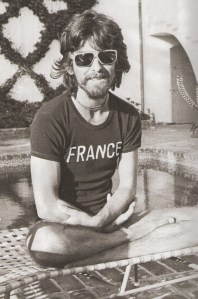
France — aka George Harrison — took a more skeptical view of the potential naval movements than Russia and voiced several specific concerns with the plan:

  • Traveling with fans: “We’re stuck with a bloody big boatload of people for two weeks. At least you can go home from here, you can get away from it all. … It’d have be a bloody big boat, it’ll have to be bigger than the Royal Iris.”
  • Technical logistics: ” It’s just impracticable to lug all those people there and get all that equipment. … Of course it’s our problem.”
  • Cost:  “I think the idea of a boat is completely insane. It’s very expensive and insane.”

While at apparent odds, all the Beatles were deeply engaged in the discussion, and Michael took a straw poll for this proposal. “If we can get the audience and the boat, who votes to go?”

One hand — undoubtedly John’s — shot up immediately. George, despite his vocal objections, would still grudgingly go along with a trip if everyone else was joining. “I just want to get it over with, you know?”

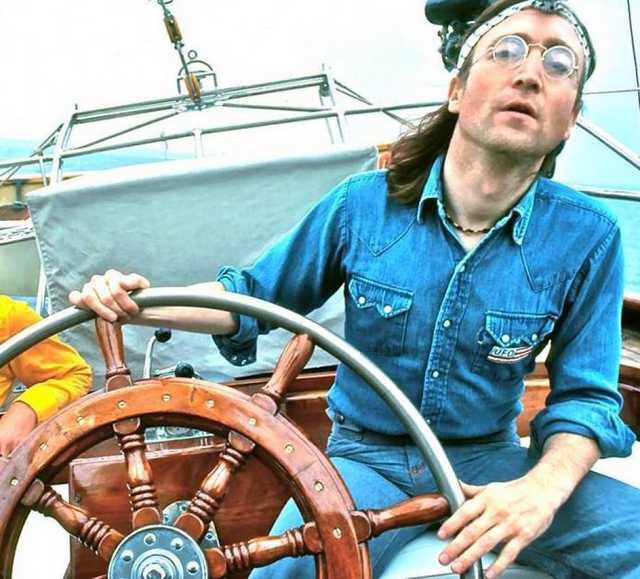
John piloting the ship (in 1975)

It was all coming together for Michael. The boat trip compromise to include a British audience was a bonus for him, an easy way to compile captivating footage for his documentary, another unusual setting — the Beatles not just mingling with fans, but doing it as they sail along the coasts of Western Europe and Northern Africa.  It all would culminate with his deep wish to bring the group to the Sabratha amphitheater: the world’s greatest band making its stage comeback at a spectacular, unique venue.

“See, it’s like having the most fantastic set on earth, but we haven’t made a set, you know? It’s still simplicity itself,” John said.

Ringo still wasn’t sure.

Ringo: But how many’s going to be looking at the set besides us and [Michael]? … [Viewers] want to see what’s on, not what’s around.

John: We’re bound to get something from it.

Ringo: A nice time, get a bit of sun.

Michael: After you’ve had your nine or ten closeups each, we’ve got to have something else to shoot about.

John: It’ll be like being on the roof in India, only we’ll be fully equipped.

The roofs in India were where, not coincidentally, John was at his most prolific in this latter phase of Beatles history.

Even though, as Michael said, “the vibes are very good at the moment,” there was enough obvious dissent in the room to lead John to say that the group will mull it over that night. “We all could say yes now, and somebody could decide no tomorrow.”

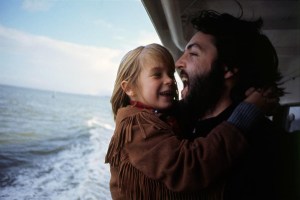
Paul and Heather at sea, 1969. (Photo by Linda McCartney)

As they wrapped up, a final, spirited discussion — as animated as the room has been with no fewer than six people all talking at once (the four Beatles, plus Michael and Apple Films head Denis O’Dell) — emerged over the cost of the boat trip, Ringo and George most concerned.

“We should be able to get the boat for nothing,” John said. “We should be able to get the boat for the publicity they get from it.”  Denis replied to Ringo’s skepticism that he could get a ship “in three hours on the phone.”

John confirmed Denis’ skills, relaying how the producer was able to secure a vessel for How I Won the War. “It was the American Navy making an antiwar film.”

Really, it was all falling into place.

January 8, 1969, was the band’s sixth day back to work at Twickenham, and while most of their new songs were still a work-in-progress, the was actual progress.  One day earlier, George was on the brink of leaving the group. Now, while he was bothered to do so, he was still seemingly willing to get on a boat with the group — and 1,000 fans he wanted little to do with — to go to Africa for a concert he didn’t really want to play.  Ringo was dead-set against going, and now he was willing to bend. Paul was always ready “for an adventure” and as the group’s de facto musical director, he was shaping the material to have ready for the production. As for John, he wasn’t just finally involved — during the final conversation, you heard him speak on the tapes, not Yoko Ono — but he was the group’s leader again.

Days of discussion of where and how to stage the concert had been a distraction from the music-making process, which needed to continue. They were almost ready for a decision.

“Sleep on it then,” said Paul. “I am.”

One question remained as the working day ended: Would the great democracy that was the Beatles agree to this plan for a live show and have a goal they could rehearse toward, or would January 9, 1969, be just another day?

11 Comments

Filed under Day by day

Jan. 8: The Four Powers

In a time of global crisis — isn’t it always, though? — it was the world’s greatest legislative body. OK, maybe the Beatles were the world’s greatest band that also tried to behave like a legislative body, and late in the day on January 8, 1969, it was nearing time for a decisive vote on a lingering issue: Where would the Beatles play their next — and presumably last — concert?

You know his name (look up the nation)

From the band’s outset to its imminent end, the Beatles prided themselves on what they called democracy, but it was really complete consensus. “We had a democratic thing going between us, particularly by 1962,” George Harrison told the high court in 1997 amid a lawsuit to stop the release of a Beatles recording from one of their residencies in Hamburg. “Everybody in the band had to agree with everything that was done.”

Unanimity isn’t necessary to the democratic model, but this model United Nations was extraordinary by nature of its four voting members: John Lennon, Paul McCartney, George Harrison and Ringo Starr. The two serious veto threats earned code names from director Michael Lindsay-Hogg — Russia (Ringo) and France (George, so named “because he smoked some garlic once,” per Paul).

Continuing his earlier conversation with Ringo, and desperate to sell a show overseas, Michael laid out the situation as he saw it in hopes of chipping through the Iron Curtain.

The way it stacks up is, John is happy to go. … Paul is, I gather, in the middle, tending toward either side … and George is swinging more your way. So there’s quite a tough battle. The problem was we couldn’t talk about it because of Russia. And it’s the four powers. And if Russia says no, then the conversation is obviously in the bag and we can’t do anything with it. And I think if we now can talk about it, we may still discard it … or we may come up with something better.

In retrospect, the drama of the group’s incapability of finding agreement on a concert location, despite the suggestion of several intriguing venues, would have made for a captivating documentary for Michael. It would have given a narrative the Let It Be film lacked. But after less than a week of sessions, the director saw things differently.

“My documentary is running out of gas,” Michael admitted to John. “If we were to vote tomorrow, it’s not running out of gas.”

Fine-tuning the group’s intentions would do more than make for better television. “It might make it better again, whatever the wound is,” Michael told John moments earlier.

What octane do documentaries use? (Photo of the Beatles at Weston-super-Mare by Dezo Hoffman, 1963)

“Yeah, that’s what I was thinking,” John replied.

And here you thought John didn’t care about the band anymore. The Beatles were a wounded group before the Get Back sessions started, and salt would soon be added when George quit in two days’ time. But the Beatles were still worth saving in January 1969, even if John himself would call it quits well before the calendar year was out.

The day’s musical session was complete, Paul having walked the group through “The Long and Winding Road” and “Let It Be.” For these final 15 or so minutes on the tapes, all four Beatles are engaged, animated and opinionated concurrently to a degree yet unheard to this point on the Nagra reels.

All the principals immersed, Denis O’Dell makes the sell on Michael’s repeated preferred overseas adventure.

“I really think we could go and shoot a day sequence, a night sequence, a torch-light sequence, out there the sea, desert, in four days. Make it comfortable for everybody.”

Paul’s skepticism remained. But he was willing to keep options open and the live concert plans … uh, afloat.

My major objections to that: Traveling, one. Setting up and everything — I’m sure we can do that. Then, there’s that thing, which may not seem much, but we’re doing a live show, and we’re doing it in Arabia (laughter), and everyone’s waiting to see the lads rocking again. So, like, I’ll tell you what then, I’ll come in with it as long as you can get a couple of boats, the QE2. And then give away the tickets here, as you would have done, but the ticket includes a boat journey as well.

The composition of the audience was a sticking point, especially for Ringo, and there’s something virtuous to be said for the lads’ loyalty and desire to be rocking again before an audience that was with them from the start.

“We’ve got to get the right audience for Russia,” Michael said. “If we can get the right audience over there, which we can get over there.”

George wasn’t easily swayed. “What is the point of doing it abroad… apart from getting a great holiday? I’d much rather do it and then go away.”

Reminding the band of Twickenham’s relatively pedestrian features, Denis replied, presumably waving his hand at the scene around him, “To get away from that, that’s really the answer.”

“It’s ‘Around the Beatles ‘69′,” John acknowledged after a brief exchange about potential set possibilities on the Twickenham stage.

Paul, having had enough at the end of a long day, aggressively presented a compromise.

“I’ll tell you what I’ll offer you. If we’re going away, and we hire a boat to take the audience with you, we’ll do a bloody show on the boat, and then we’ll do a show when we get there, in the moonlight. … Final dress rehearsals on the boat.”

History never stopped chasing the Beatles, and sometimes it caught up to them. They didn’t want to repeat a past accomplishment, whether it was “Around The Beatles” or a stadium show. But Paul’s suggestion would have done just that: Bringing along a select audience to a performance at sea would combine a pair of episodes from the other side of their career.

Feb. 20, 1962, just a month after Brian Epstein formally signed on to manage them, the Beatles — that’s still John, Paul, George and Pete, at this point — performed an important show at Floral Hall in Southport. From Mark Lewisohn’s epic Tune-In:

[Epstein’s] principal involvement in the Floral Hall night was two-fold: to help sell the 1200 tickets and to book the talent that would provide continuous dancing for four hours — five groups headed by POLYDOR RECORDING STARS, THE BEATLES. He circulated typed leaflets among Beatles fans and on the record counters at all three Nems shops, announcing affordable coach trips: fans could pay 8s, 6d for return transportation, admission to the hall and, afterwards, the chance to mingle with the musicians and get their autographs. These special all-in tickets were sold only in the Whitechapel shop, outside which the chartered buses would leave. The Beatles were taking a Liverpool audience with them for a night out up the coast.

Emphasis mine.

Instead of towing British passengers across the Atlantic and Mediterranean, the Beatles brought their fans from their Cavern Club base in Liverpool about 20 miles up the A565.

That was by bus. Six months before the Floral Hall show, the Beatles made the first of four appearances on the Riverboat Shuffle, a concert series on the MV Royal Iris, a ferry cruising in the River Mersey.

For Paul — who would record parts of Wings’ London Town on a boat in the Virgin Islands in May 1977 — the Royal Iris performances made enough of a lasting impact that he referenced them decades later on his 2007 LP Memory Almost Full:

The journey wasn’t as important to Michael as the destination: the Roman amphitheater in Sabratha, Libya.

“I don’t think anything is going to beat a perfect acoustic place, by the water, out of doors, a perfect theater, with perfect acoustics,” he said.

John was on board. “Just singing a number, sunset and the dawn and all that. Gentle, and the moon, and all that for the songs, you know.”

“I think we’re going to do rock and roll at dawn or at night, and we can have the change of day over something like this,” Michael replied. “Because I’m sure we can do the rock and roll there if we get the right audience.”

All-important consensus was building between the two most powerful members of the band, and it was more than wanderlust and closer to finding a way to heal that wound — do something different, but still be together as The Beatles.

“Last year, when we were doing the album, like you said, we suddenly said we don’t need to do it here, in EMI in London,” Paul said. You can listen along to this particular sequence on the “Fly on the Wall” bonus CD packed with Let It Be … Naked.

John excitedly picked up the argument.

“Every time we’ve done an album, we’ve said, ‘Why are we stuck in EMI, we could be doing it in L.A.! We could be in France! And every time we do it, and here we are again, building another bloody castle around us, and this time we [should] do it there. And not only would we be doing it, physically making the album there, but it takes [off] all that weight of, ‘Where’s the gimmick, what is it?’ God’s the gimmick. And the only problem we’ve got now is an audience, you know.”

For a moment, at least, Paul’s skepticism vanished.

“It makes it kind of an adventure, doesn’t it?”

8 Comments

Filed under Day by day