Tag Archives: Let It Be movie

Jan. 6: Cross that bridge (Pt. 1)

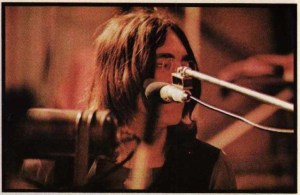
After basically ceding to Yoko his creative role in the band’s decision-making over the live show earlier in the day, John Lennon regains a tiny bit of authority by leading the group through a lengthy rehearsal of “Don’t Let Me Down,” one of the primary songs the band has taken on thus far.
jlWell, he regains authority at the outset, at least, during a stretch that provides the first real look at the discord between band members that helped define the Get Back/Let it Be sessions.

On the A/B tapes, Jan. 6 rehearsals for “Don’t Let Me Down” run in a straight shot for nearly 90 minutes, easily the longest stretch they spent on any one song this day. The structure of the song is set and doesn’t change from what will eventually be pressed to vinyl. It’s a delightfully simple song, both in lyrics and structure. But they’re not happy to leave well enough alone quite yet.

Things kick in with the song already under way in what’s labeled as Track 6.62. Shortly into things, John asks to work on what he calls “the worst bit” — the song’s bridge. (“I’m in love for the first time…”).

Now, it’s absolutely granted that the band has a hard time working together, and that didn’t just begin on January 2, when they convened at Twickenham. But at least from the relative beginning of the sessions, they’re trying. An example of that comes right here as John wants the help on the bridge, asking openly, “What can we do to that bit, then?”

George says he likes the vocal line and harmony, it’s just lacking in some color as far as the fills in between. He suggests a rhythm change, while John replies, “That’s where the piano would come in.”

Good stuff! Collaboration!

Paul scats some falsetto to alternate with John’s lines, and George fiddles with some guitar fills. It actually sounds kind of nice with John on an acoustic guitar, but overall nothing overly impressive. But hey, it’s a work in progress. There were probably lots of bum attempts at things over the prior decade of Beatles in-studio fiddling, right? We just have these extensive rehearsals on tape, whereas we don’t have a zillion hours and hours of them wrestling with, say, “Nowhere Man.”

Paul takes things a bit more into his own hands, instructing George to join him in the vocals, and telling him just what to do.

Paul offers up his falsetto part, then gives explicit suggestions for the responses.

John: I’m in love for the first time

Paul’s suggestion: Love for the first time in my life

John: Don’t you know it’s going to last

Paul: So don’t you let it get away (he soon changes it to “Not going to let it get away”)

John: It’s a love that lasts forever

Paul: It lasts forever and a day

Paul goes onto explain that “corny’s all right in this one. What he’s [John] doing is corny. That’s the thing that will make it not corny, we sing different different words.”

I’d question the logic (and lyrical interpretation) there, but hey, Paul’s track record in writing hit songs is a lot longer than mine. The last song he referred to as “corny” was “Maxwell’s Silver Hammer” a few days earlier, and I think it’s safe to say they’re quite different birds. I do think he says it affectionately, at least.
George says something that’s not quite on mic, to which Paul, clearly trying to blow him off, says “OK, well, we’ll do that, that comes later. Just sing it straight first.”

The next stab at the bridge has George doing the “part that moves” that Paul had just suggested, sounding a bit Band-ish, which isn’t too much of a surprise at this point. At the same time, there’s a slight “Revolution 1” vibe here, where the “shooby-doo-wops” punctuate the chorus. I guess it works, but it definitely changes the feel of what we know as “Don’t Let Me Down” — John in fact likens the work in progress to “something like the Drifters.” (We’re still a few weeks away from the Beatles actually covering the Drifters).

They continue to run through the bridge, Paul directing.

Paul : The thing is, sing the one I’m doing, and we’ll improve upon it. Start off with a corny one, because the words aren’t that good. (Here, he’s referring to his response vocals, not John’s main ones).

John: I think the words should be corny, because there are no clever words in it.

I guess he’s right — it’s a straight rock song with deeply honest lyrics (and his first song written for Yoko, I believe), no interpretation necessary. This isn’t “I am the Walrus” or “Lucy in the Sky with Diamonds,” lyrically. So I don’t think he meant it as an insult to the song. But I guess I’m surprised John would want to muddy up a song like this.

More run-throughs, and John still isn’t satisfied, at one point saying, “Maybe I should play piano … just to change it.” George talks about using some pedals so it “doesn’t sound like the same old shit,” — but John says “I like the same old shit, if it’s clear.”

“Just think of some riffs,” Paul suggests to George, as we see today’s first real signs of a little bit of the big boys ganging up on the perceived help.

And so they continue, with one of the takes briefly immortalized at the beginning of the “Let it Be” film (it’s taken from 6.67 on the tapes).

Of course, in this edit, the band goes straight into the Jan. 3 Maxwell’s Silver Hammer performance. In reality, they churned on, with Paul thinking the answer to the seemingly busted bridge is to change the rhythm.

“This needs this,” Paul insists. “It needs things to happen.”

Just what does happen? Find out soon in Part 2!
15 Comments

Filed under Day by day

TMBP Extra: Lindsay-Hogg catalog

Lindsay-Hogg and Lennon

With the first significant discussion of the potential live show complete, I thought it was as good a time as any to briefly go off timeline to present what the project’s director, Michael Lindsay-Hogg, had already worked on in his career to this point. More than 30 posts in, it’s clear he’s a central character to the Let it Be/Get Back story, even if he doesn’t pick up a guitar or sing a note during the sessions.

After some stage work, the 25-year-old entered the world of music in 1965 as a director on “Ready Steady Go!

And it was his exposure working on the show that caught the eye of Brian Epstein, who drafted Lindsay-Hogg to direct promo films for “Paperback Writer” and “Rain” in 1966.

Certainly foreshadowing the relationship we’ve heard thus far on these Jan. 1969 tapes, the director describes his first meeting with the band to sketch out ideas for the two films in his 2011 autobiography, “Luck and Circumstance“:

But with The Beatles that evening, I found an idea was something to be mauled, like a piece of meat thrown into an animal cage. They’d paw at it, chuck parts of it from one to the other, chew on it a bit, spit it out, and then toss the remnant to me, on the other side of the bars.

Ultimately, the director “was told Mr. Epstein did not want anything ‘unusual, just a video of the boys performing,'” he wrote in his autobiography.

The creative relationship with The Beatles seems much different than the one he developed with the Rolling Stones, a band for which he ultimately directed dozens of videos for into the 1980s, beginning with both sides of the “Jumping Jack Flash” single in 1968.

Not much after the Stones shoots, Lindsay-Hogg was back with The Beatles, this time filming both halves of the uber-single “Hey Jude/Revolution” in September.

Here’s Lindsay-Hogg with a few words on the “Revolution” clip, in an interview published as part of the promotion of the 1+ set.

Iconic Beatles visuals, I dare say, and it showed the potential of a shoot at Twickenham. And it’s partly from the “Hey Jude” experience, in which the band is said to have enjoyed playing live before an audience — not just the songs before the camera, but impromptu performances between takes — that led Paul to hatch the Get Back idea, which began filming nearly four months to the day later.

But first, Lindsay-Hogg got the call from Mick Jagger to direct what was to become the Rock and Roll Circus, with one John Lennon contributing “Yer Blues” to the production, filmed about three weeks before The Beatles commenced rehearsals at Twickenham.

The show was famously shelved until 1996, in part because The Who blew the Stones off the stage. The same Who, incidentally, that Lindsay-Hogg shot the “Happy Jack” promo film for two years earlier after also shooting them for “Ready Steady Go!”

This is the oeuvre the then-29-year-old son of Orson Welles (something he only recently found out was true) brings into his latest gig for The Beatles in January 1969.

4 Comments

Filed under Extra

Jan. 6: Such a lovely audience? (If there’s a rock show, Pt. 2)

Having established earlier in the conversation that there will be two live shows to cap the documentary of which filming is already in progress, the band — primarily Paul — plus Yoko Ono, George Martin, Michael Lindsay Hogg and a few other insiders (probably the likes of Mal Evans, Neil Aspinall and Derek Taylor? I don’t know them as well by voice) — continue their lengthy discussion about the show, potential venues and the composition of an audience.

For a show plan first hatched more than a month earlier, things remain in total flux.

Paul latches onto Yoko’s idea of playing to an empty house, at least for one of the two proposed shows, with the second night’s performance before a conventional audience.

Hey, maybe there will be some traction here! Paul’s on board with Yoko’s ideas up front and early on (and John doesn’t seem to care, not chiming in at all during this chat), so a huge part of the battle here is over, George’s independent streak — which is about to erupt — notwithstanding. And it’s not much of a surprise, really, given Paul’s avant garde leanings.

Alas, Lindsay-Hogg punctures that idea, saying there’s no need to eschew a crowd “partly [because] the documentary is playing in silence. I know it’s not for an audience, but it’s the same thing.”

Paul replies to say that the band has ignored the camera from the moment they started filming at Twickenham a few days earlier, repeating the  “performance might be — should be — two cameras or two audiences …  two something.”

But Yoko pressed on — with Paul again agreeing —  saying the audience isn’t the draw for people watching the film at home, unless it’s something different, like “kings or queens coming to see it.”

The director keeps pressing back.

MLH: What I think is if you got in front of an empty house and played, it makes you look too … rich, in the bad sense. In other words, whats the point? This is the negative aspect of that. What’s the point in you getting up and playing for an empty house when you could be giving people happiness with whatever kind of full house we decided?

Yoko: Nobody’s going to think that. They’re going to think it’s a very poetic situation. And they know the Beatles are rich …

Voice of reason George Martin, as he did earlier in the conversation, again sides with Lindsay-Hogg on just what a waste a live performance to an empty room would be, putting it succinctly:

There’s no point in doing a live performance, it’s like going into a recording studio and doing one take.

He then repeats the point that an audience would give an extra something to the band they wouldn’t get otherwise.

Someone chimes to suggest one of the more exotic venues that had been in the mix, presumably since December,as the band hatched the live-show idea.

You’re going right back to Sabratha, [then].

Sabrathra was alluded to on the first day of filming by the director, promising a scene replete with “snake charmers, holy men … torchlit, 2,000 Arabs and friends around.”

And a beautiful, unique venue the former Roman amphitheater outside Tripoli, Libya, would have been and with such an unusual audience. It’s certainly something that would one-up recent rock films like Cream at the Albert Hall and the recently completed Rolling Stones Rock & Roll Circus.

Paul agrees with a remark that a bit of a focus on the audience (wherever it may be)  isn’t a bad thing — seeing the reaction of people who have seen the band before in the Beatlemania era and how they’d react to the band now, post-1966 and the end of their live era.

Yoko: Then it should be a real scene. You have to announce in the newspaper say that it’s going to be a real alive show. It’ll be a crazy scene, like everybody queuing for it and everything.

Neil? Mal? Derek? Then it should be an Albert Hall scene.

Lindsay-Hogg,  who joked earlier in the day about a Beatles show at “the Albert Hall with those quick cuts,” said a few hours later that he’s not opposed to a show at the nearly 100-year-old stage. But…

MLH: I just think it slightly smells of a few years ago. The Shea Stadiums, wherever it has been.

Yoko: Say anything, and it will slightly smell of a few years ago or slightly less than a few years ago because they topped it.

MLH: I’m not particularly supporting this idea, but it is an idea we can then say no to and go away from if we can top it. But [Sabratha] is a location which is marvelous in itself, by the sea.

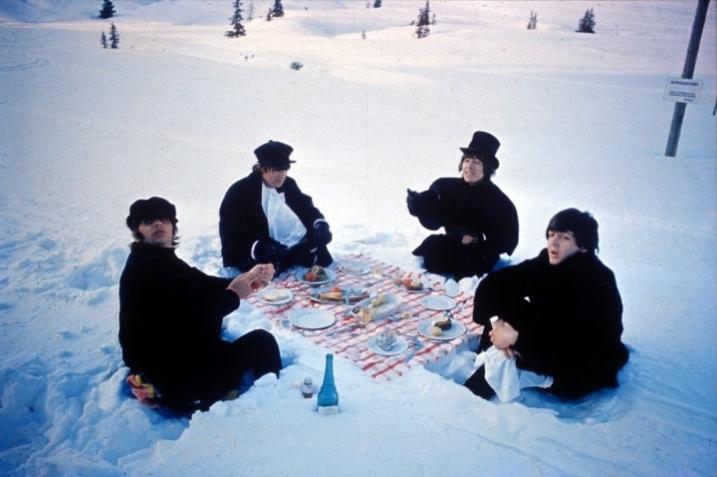
The Beatles faced winter elements before

Perhaps this is just calling Ringo’s bluff.  As Paul said on Jan. 2, “I think you’ll find we’re not going abroad, because Ringo just said he doesn’t want to go abroad. And he put his foot down.”

And calling the drummer’s bluff is something the Get Back book and Let it Be Naked’s “Fly on a Wall” disc proves was done repeatedly. But for the second time this day, Paul shoots down an overseas trip, saying, “Look, it has to be in England. An outdoor scene has to be in England, because we’ve decided we’re not going  abroad.”

To someone responding that a performance under the skies couldn’t be done in wintertime England, which is “too bloody cold,” Paul doubles down, after agreeing to the sentiment.

We have decided, it’s a definite decision, that we’re not going abroad, so we should sort of rule that out. It’s not even to the two-way, should we go abroad, we like, we definitely said no to that.

So as usual these days, they’re back to Square One, crossing the seas and back in just a few minutes, only to end up again home in England — and potential venues therein as the discussion continues.

An odd postscript to the Sabratha flirtation: More than 40 after the Beatles toyed with the idea of playing at Sabratha just eight months before Khadafi led a coup to take over Libya, former Apple exec and Beatles assistant Peter Brown had his PR firm hired to improve the dictator’s image.

Tune in next post, where we resume this Jan. 6, 1969, conversation about the forthcoming show.

24 Comments

Filed under Day by day

Jan. 6: Icing Cream

When the Beatles reconvened at Twickenham Film Studios the morning of Jan. 6, 1969, it was the prior evening’s television that dominated early conversation between the band and director Michael Lindsay-Hogg.

And, hey, why not? Twickenham is their office, and the piano is the water cooler, so what else would the grunts talk about as another work day begins?

Just seconds into the day’s tapes  the discussion goes right into the Cream farewell concert that aired on BBC the evening before. And with it, it’s one of the Beatles’ reference points for their eventual film. Or, at least, a great example of what they didn’t want to do.

The documentary is, in fact, really lousy — I watched the whole damn thing in prepping this post. Cream, as a band, is great. But what a terrible program, from the seizure-inducing cuts to the wildly melodramatic narration and ridiculous band interviews. The camera’s always on the wrong thing, the songs aren’t complete, there’s continuity errors and it’s just an effort to get through.  Try it yourself here!

“Ginger Baker’s was the only interesting interview,” Lindsay-Hogg said to Paul, explaining that he himself is “really uncoordinated” and learned a bit of drum technique from Baker.

“I just thought they were interviewed badly,” Paul said.

Paul likened the interviewer to “a 3-year-old kid” in suggesting Eric Clapton play his parts again on guitar.

The talk shifts to a tangent when Lindsay-Hogg compares the Cream production to the grandiose “Eloise” by Barry Ryan (the song itself, not the promo clip below), a chart-topper from a few weeks earlier.

“All form and no substance,” the director said of the song after using the same term to describe the Cream doc.

“It’s great, I thought,” Paul replied. “I loved it.”

“All form, no substance, I hated it,” Lindsay-Hogg said before again repeating “All form and no substance.”

“That’s too big a put-down,” Paul said. “All form, and not much substance.”

“It was my least favorite record from the last five years,” Lindsay-Hogg insisted before adding under his breath,”I really hate it.”

Paul then sings a bit of “Eloise,” and Lindsay-Hogg is incredulous, although he would admit he liked the musical break.

The conversation wandered a bit, and included a quick take of “Oh Darling!” by Paul solo on the piano. But after Ringo, and then John and Yoko arrived, discussion of the Cream documentary resumed.

“We ought to think this week sometime about the show,” Lindsay-Hogg said to the group. “We could do it at the Albert Hall with those quick cuts.” Paul again expresses his disappointment, especially focusing on those edits.

Paul asked Ringo if he saw the show.

“Bits,” said the drummer.

“That’s all there were! Just bits, terrible quick-cutting,” replied Lindsay-Hogg.

Hard to tell what John or Yoko said as they were well off-mic.

George is the last to arrive. He was already good friends with Clapton — who contributed his part on “While My Guitar Gently Weeps” four months earlier and had played in Lennon’s Plastic Dirty Mac just weeks earlier on the Rock & Roll Circus. Despite the friendship, George doesn’t shy from criticizing his friend’s production.

“There were some nice bits, but … what was … with the photography? You don’t see anything,” George said.

George calls Baker “great,” and Paul asks Ringo if he’s met him “as star drummers.”

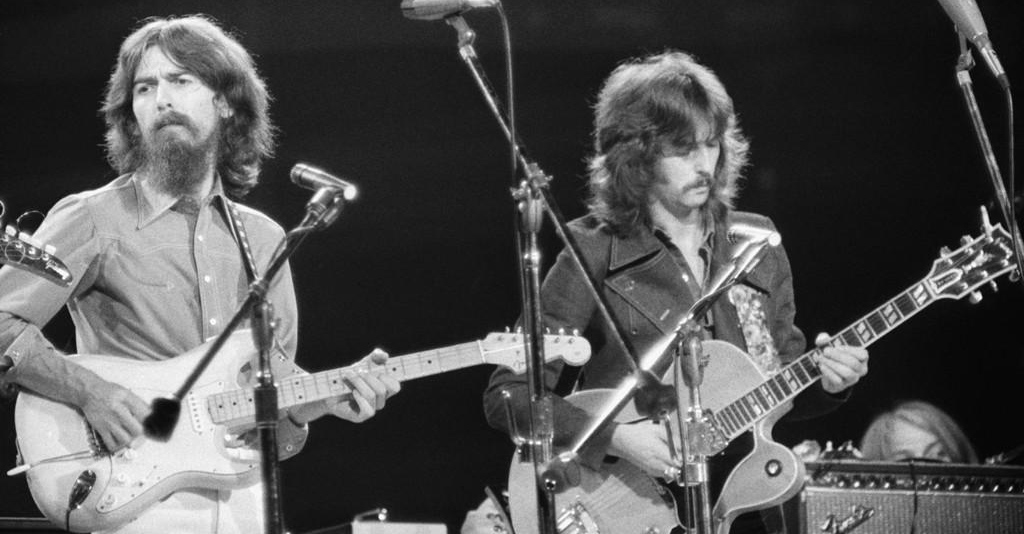
George & Eric

Conversation shifted again, George talks about a new song he wrote (“Hear Me Lord”) and then his equipment arrives at the studio (“like an ambulance for ailing documentaries” according to Lindsay-Hogg).

But they can’t shake talking about Cream’s own doc, again mocking the interviewer.

Then, finally after 40 minutes of the tapes, the band’s finally ready to start the business of making music, and a documentary of their own.

I found it interesting, in retrospect, is they’re discussing a farewell concert, which is what Let it Be ended up being — not planned that way, of course (of course?) —  and that’s what they would spend so much of the sessions attempting to organize. Not that Lindsay-Hogg would end up producing anything that looked like the Cream special — nothing he’d done I’ve seen had given that indication — but Let it Be was certainly not anything like the Cream farewell.

But having that reference point so early in the sessions could only have helped light even the smallest of sparks in encouraging the band to do what they always have done, and that’s do something better than every other band.

21 Comments

Filed under Day by day

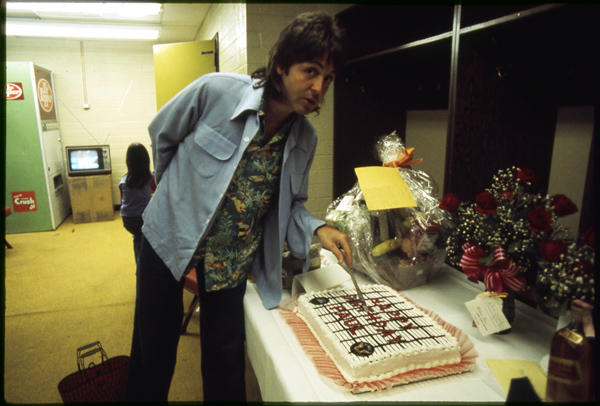
TMBP Extra: They say it’s his birthday

I originally put this post together in 2012, to mark Paul McCartney’s 70th birthday. Since then, I’ve added similar, more extensive birthday posts for John Lennon, George Harrison and Ringo Starr.

Like the many millions of Beatles-focused blogs, of course I need to recognize Paul McCartney’s milestone birthday.

I’ve wrestled with just how. This blog is a niche, focused on January 1969’s Get Back/Let It Be sessions and its reasonable relations (the Let It Be album and movie). June 18 is half a year away from January, so there’s no direct tie to the timeline.

The easy way out is to post a relevant video of Paul from the sessions, pluck out some classic tune, and I just leave it there.

But I got to thinking about June 1969, a few months after the sessions, and just what the band was doing. And the answer was… nothing.

“Get Back” — the single — was already a hit. The Get Back album was alive and being worked on by Glyn Johns.  A couple of songs for Abbey Road were worked on, but not extensively. “The Ballad of John and Yoko” was quickly written and recorded in April and released the end of May.

But June? No studio time.

Come July 1, the full recording sessions for Abbey Road would formally begin. Before September was out, it was in stores. Think about that. It took less than three months for the vast majority of Abbey Road to be recorded. It took me about three months to bang out 10 posts for this blog.

So with nothing going on June 18, 1969, I backed up a year to the same date in 1968. There was no recording session that day, either,  but the band was about three weeks into the White Album sessions, with “Revolution” “Don’t Pass Me By” and “Blackbird” having been worked on to that point.

And yet again, like I always am by the Beatles and keep finding myself as I work on this blog, I’m left marveling at things I already knew but didn’t think much about. Between Paul’s birthday in 1968 and 1969, the band recorded the vast majority of the White Album, the entirety of what would become Let It Be and had gotten Abbey Road under way (with most of the songs already written) — not to mention recording and releasing things like “Hey Jude,” too. Tack on three more months, and over 15 months we had all three albums in the can. Remarkable. (And that’s just what they did on vinyl — they also built Apple, had personal lives, side projects, etc.).

So where does that leave this post? Well, back to the start I think:  Pluck something from the sessions and leave it at that.

So for Paul’s 70th, here’s one of the greatest of them all, and the song from which this blog’s name came from, “Let It Be.”

Happy birthday, Paul!

4 Comments

Filed under Extra