Tag Archives: Mal Evans

Jan. 12: A family outing (Pt. 1)

For all the company’s subsidiaries, history could have used Apple Stenography.

The Nagra tapes so ubiquitous around the Beatles during January 1969 weren’t rolling at Ringo Starr’s Brookfield House estate in Elstead on Sunday the 12th. George Harrison ditched the band midway through the January 10 sessions, and after a brief encounter with John Lennon and Yoko Ono on the 11th, he was back in the company of the entire band as they met to discuss their immediate and long-term future.

Even without minutes of the meeting, we have an excellent idea how it transpired thanks to those very recordings and the candor of others recapping and analyzing the meeting’s fallout the next day back at Twickenham.

For this and the next several posts, I’m going to be jumping between various parts of those January 13 Nagra tapes for the sake of the overall narrative. Specific quotes and certain discussion topics absent here will soon be tied back into the story. There will be redundancies and I may not get to specific points until later. But please trust the process!

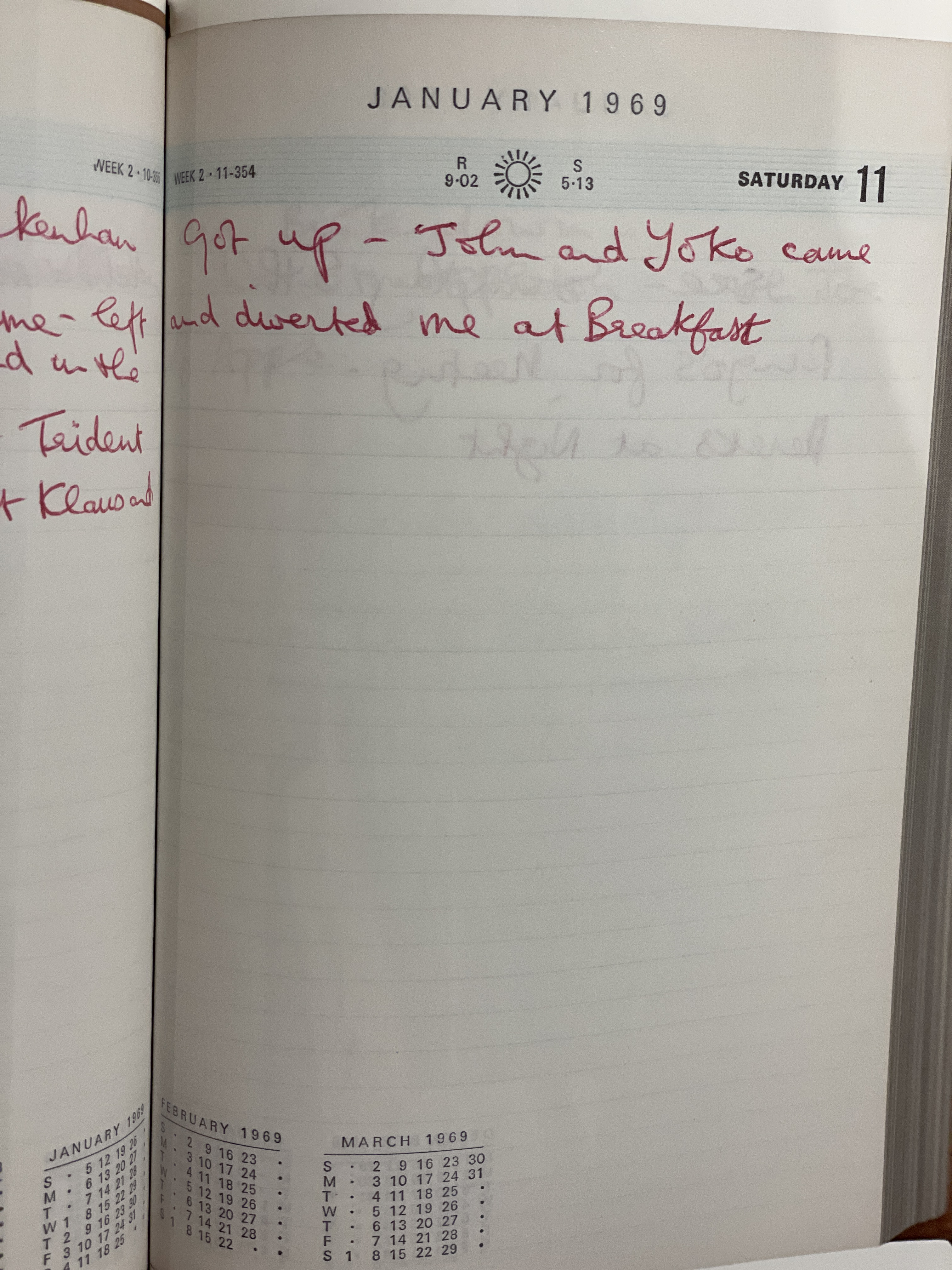
We know nothing about the meeting from George’s perspective except an acknowledgment of its very existence. And we only know that much thanks to 21st century Photoshop trickery, taking his diary entry for the day before (as published in the Living In the Material World book), flipping the image and manipulating the colors to reveal what was on the opposite page.
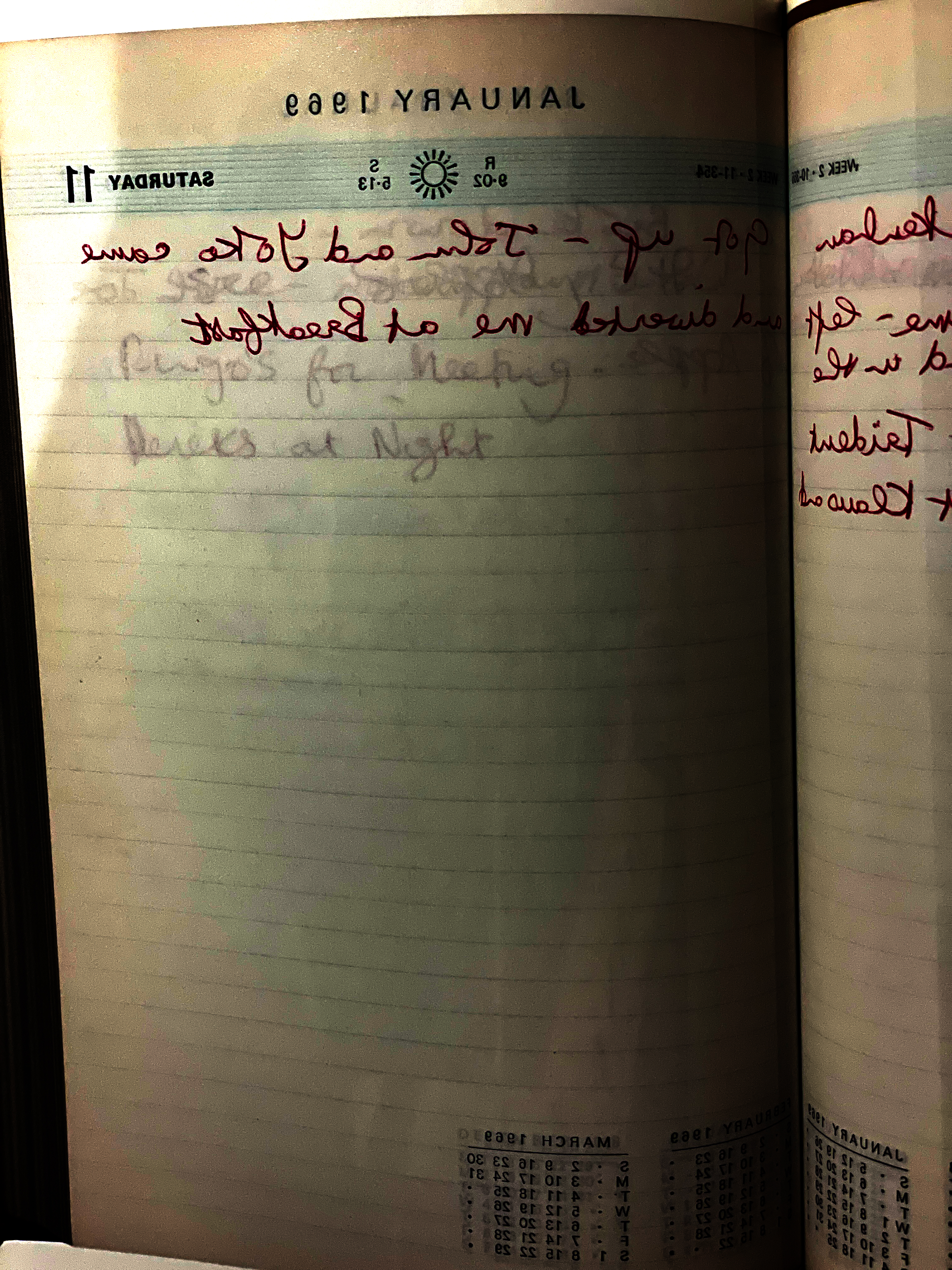
Clearly and without further detail, George wrote: “Ringo’s for Meeting.”

Do-it-all assistant Mal Evans provided another rare written reference to the meeting, merely saying January 12 was the day “the fellows finally gave up all idea of doing the TV show.”

This tidbit was for public consumption, published in the March 1969 Beatle Books fan club magazine, months after the event, with the storm of George’s departure long passed and the group seemingly — at least in public — a unit again, the earliest Abbey Road sessions under way and more to come.

While we have reason to question if this January 12 meeting is exactly when the premise of a Beatles TV documentary was called off, at the very least because cameras were back at Twickenham the next day, remember Mal did keep a diary, so it stands to reason he checked the date.
(From the March 1969 Beatles Book)

Early January 13, the day the Get Back sessions resumed, Ringo summarized the proceedings in a dry voice: “The meeting was fine, a lot of good things. But then, you know, they all sort of fell apart at the end.”

While the meeting was held in the wake of George’s departure, it quickly became clear the missing guitarist wasn’t the group’s greatest concern.

“I love you laconic Liverpudlians,” film director Michael Lindsay-Hogg said on the 13th. “Because I said to [Apple chief] Neil [Aspinall], ‘And then the businessmen left and then there was just the five of you there, right?’ He said, ‘No, that’s the trouble. Six,’ he said with his flat voice.”

***

Sunday’s gathering featured two distinct components:

  • A business meeting, which included John Eastman, Paul McCartney’s soon-to-be brother-in-law, and other accountants
  • A personnel meeting, so to speak, to discuss the Beatles’ near-term future as a viable unit and to hash out issues better left to a modern HR department

There was only passing mention of the business element, with Ringo referring to “John from America” and the “new accountants we just moved with.” (On January 10, George explicitly mentioned John Eastman in the context of an imminent business meeting, a meeting that had Neil very excited and promised to have news that was “so good.”)

It’s feasible the Sunday meeting is when this document — which is only dated “January 1969” — was signed, giving the Eastman & Eastman law firm rights to negotiate contracts on the Beatles’ behalf.  The timing works out — John Eastman was working on a deal for the successor company to NEMS less than a week later.
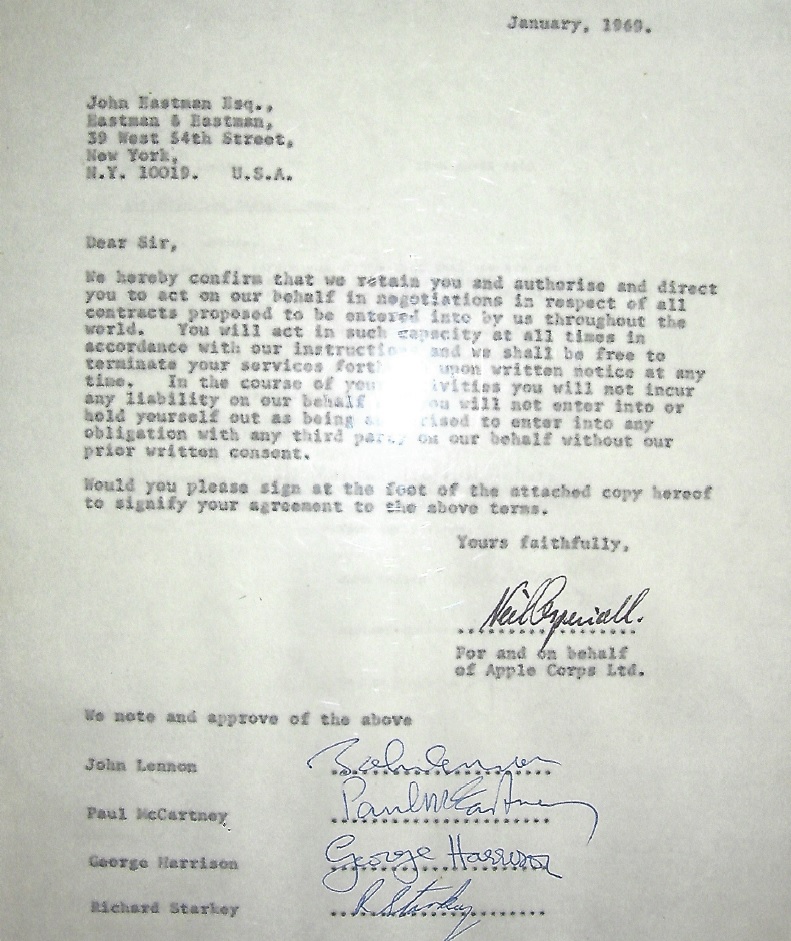
The Eastman & Eastman management contract, January 1969.

If only to justify what Ringo described as “a lot of good things” coming of the meeting, the business aspect must have pointed to a positive development.

Most of the subsequent recollections of the Sunday meeting were about the greatest strain on group.

“[John] looked great yesterday” Linda Eastman said in the open discussion early on the 13th between Paul, Ringo, Neil, Michael and Mal.

“Who was he wearing, the usual?” Michael asked, to laughter, including Paul, who repeated the joke.

To be clear, Yoko wasn’t the only non-Beatle or Beatle employee at Ringo’s on Sunday. Linda was there, and even if she regretted her own presence, Paul’s girlfriend (and the lawyer’s sister) was critical that she — and others — were even welcome to attend.

Linda: It’s harder being at a meeting and everybody putting their two cents in, and none of you all saying anything.
Paul: But that’s the other thing, having the meeting. You came with me, and [Linda’s daughter] Heather came.
Linda: Yeah, I was going to say I shouldn’t go.
Paul: It’s such a temptation going out to Ringo’s for the afternoon. It feels like a family outing. (said to laughter)

Paul: It should have been the four of us.
Ringo: Well you (Linda) were out of the way. It nearly was.
Paul: It’s still that thing.
Linda: When there’s something serious, a few other people talking about it, and you get off the tracks.

Paul would also describe the scene as being like “board meetings of ICI (Imperial Chemical Industries) and all the governors and all the wives, and mates and kids and animals.”

Neil explicitly said that Yoko’s participation undermined any chance for a serious discussion. “Everybody else is like, ‘Fuck it. You know it’s not going to be a board meeting, so let’s make it a party.'”
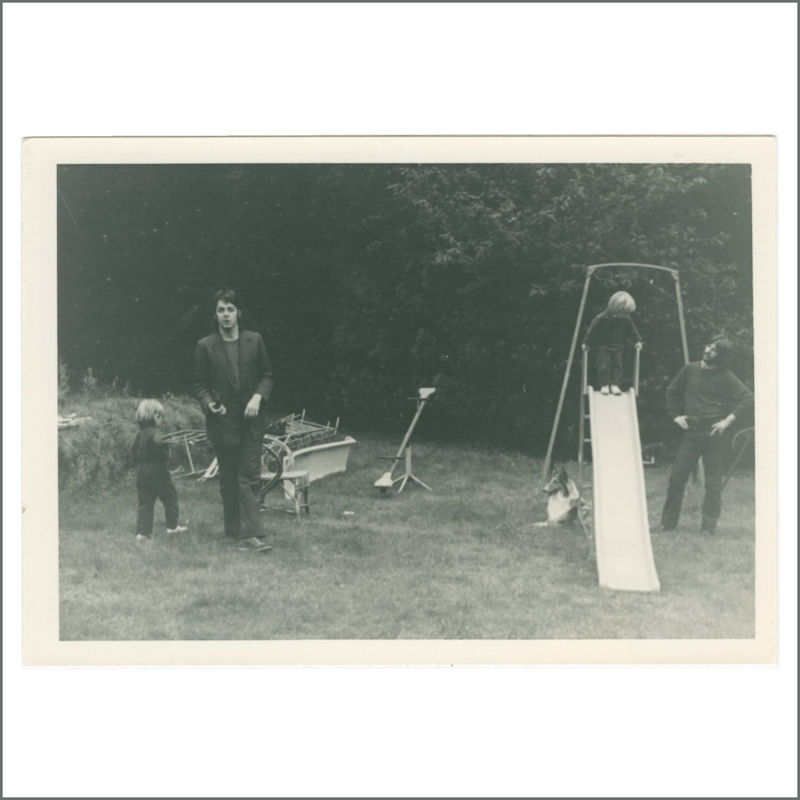
When I get to the bottom I go back to the top of the slide, etc. Beatles and family at Ringo’s in Summer 1969.

Yoko did “so much talking,” Linda bemoaned.

A “key moment,” according to Paul, came when John said he didn’t understand George’s desire for a meeting consisting exclusively of the four Beatles, explicitly excluding Yoko. Twice George told John, ” I don’t believe you,” in reaction to John’s stated confusion.

“I think John knew what he was talking about, too,” Neil said. “It’s like the bullshitting bit where that can go on. It’s silly.”

Paul agreed, but absolved John to a degree.

“John does bullshit. I bullshit. Ringo bullshits. George bullshits. You know, we bullshit.

“With John, you think you can influence it, you think he’s past it. So you start giving him more credit than he’s due for. With Yoko, they mean it.”

Paul consistently placed legitimacy on John’s dedication to Yoko (we’ll see more of this in the coming posts). John alone could be a slippery figure, but here Paul was insisting John really needed Yoko at his side, completely and sincerely.

Paul’s last remark was met with derision from Linda and Neil, especially. Paul’s tone implied maybe he didn’t really believe what he was saying out loud, either.

***

This meeting was scheduled to be about Apple. It would have helped to have been about George. But it became a meeting that revolved around Yoko.

John accused the others of pushing out anyone who threatened the sanctity of the four members of the group, a balance he and Yoko disrupted months earlier. Paul freely admitted as much the next day, describing the Beatles’ conscious decision to maintain a well-defined inner circle.

“The trouble with us, like John said [during Sunday’s meeting], is anything that comes in … with the egos, we try and push out,” Paul said Monday. “It’s always been that. Anybody who’s come in, Like with Michael Braun, with that book, [he] came in for a while, within the circle for a while, and then he gets pushed out cause we don’t want him in the inner circle. And he’s got to stay on the edges.”

Braun’s book — Love Me Do! The Beatles’ Progress —  was published in 1964, and chronicles the group over the course of several months that year and the year prior. John later told Rolling Stone it “was a true book. He wrote how we were, which was bastards. ” Really, the book reads like a draft manuscript of the “A Hard Day’s Night” film, the group enveloped by Beatlemania with supplementary anecdotes of those dismissing the movement. It’s candid, and in the context of its original publication, it had to be a revelation by comparison to other portrayals of the group.

But to Paul’s point in January 1969, the proximity given to Braun, an American journalist who had his own colorful biography, was too much for the group in time. Yoko came in for a while, had been within the circle for a while, but she wasn’t getting pushed out. She was inner circle, with no reason to think she would be forced to the edges.

This wasn’t the only issue. John’s silence, in tandem with Yoko’s new role as his spokesperson, made for the untenable situation. After all, Linda was there too, but she didn’t attempt to speak for Paul.

Still why wouldn’t John talk? One of the greatest wits of his generation, the outspoken and leader of the Beatles — self-proclaimed by this point — silenced himself. John had already forced Yoko into the inner circle. He didn’t need to hand her his voice too. Unless, he didn’t think he needed his voice in the first place.

John openly discussed the Beatles’ ability to communicate non-verbally in Hunter Davies’ 1968 authorized biography.

I think communication all the time like mad, but putting it into words is a waste of time. We talk in code to each other as Beatles. … We understand each other. It doesn’t matter about the rest.

(Listen to the terrific One Sweet Dream podcast for the deepest of dives into this corner – and many others — of the Lennon-McCartney relationship).

If John was silent because he thought he didn’t have to speak at all, Paul cried foul the next day, ultimately mocking John’s telepathic approach.
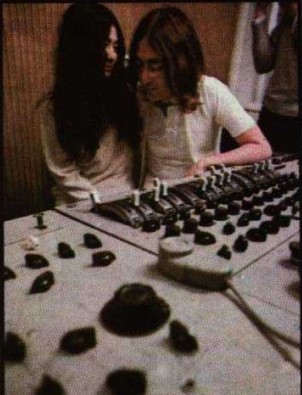
“Who was he wearing?” (From the Get Back book)

“With our heightened awareness, the answer is not to say anything,” Paul said. “But it isn’t! Cause, I mean, we screw each other up totally when we don’t do that. Cause we’re not ready for heightened vows of silence.”

Paul started to laugh before conceding, “We don’t know what the fuck each other’s talking about.”

Paul then shattered the telepathy myth, explaining why he thought Yoko spoke for John.

“There was something the other day, I said, ‘What do you think?’ And he just didn’t say anything. And I know exactly why. … If one of us is talking about it, it’s a drag if the other three aren’t.”

John’s silence only made Yoko’s outspokenness more conspicuous by contrast.

“Yoko was saying yesterday, ‘This is my opinion. This is my opinion how the Beatles should be.’”

There was no indication of what John’s opinion was.

“John didn’t talk,” Paul later said. “Yoko talked for John.”

John, too, was a laconic Liverpudlian.

***

Despite having spent several years working with the band, Michael Lindsay-Hogg was, by simple logic of not being an insider, a Beatles outsider.

He also had a film to make — a film the Beatles hired him to make — and it wasn’t for quite some time into the January 13 session he finally asked about one of his missing stars, who had hardly been mentioned at all that morning.

“Did George stay?”

“Well, in the middle of all that, actually,” Paul answered, “George went. He said, ‘I’ll see you.’”

15 Comments

Filed under Day by day

Jan. 10: See you ’round the clubs

On the afternoon of January 10, 1969, seven days into the Get Back sessions and nearly 10 years into his tenure with the band — a term that began when he was 15 years old — George Harrison quit the Beatles.

George: I’m leaving the band now.

John Lennon: When?

George: Now.

After a cut in the Nagra tapes, which captured the exchange, George casually continued: “Get a replacement. [Place an ad] in NME and get a few people.”

While the tapes don’t capture him saying “see you ’round the clubs,” it’s too good a line to be purely apocryphal (and it’s, in fact, alluded to by others on the tapes later in the day). George then briefly shared a few words with Mal Evans and was off, his boots echoing as he departed.

Likewise, for the sake of the complete record, there is simply no indication on the tapes of what happened between the final take of “Two of Us,” and George’s departure, the immediate spark of George’s decision (if there was any). Like the Beatles themselves, the tapes were out to lunch.

Film director Michael Lindsay-Hogg, so proud of his spy microphone hours earlier, had the right instincts and was prepared for this moment, but he probably should have upgraded to a better model.

“My bug had only picked up the sounds of cutlery banging on china plates, obscuring what the muffled voices had said,” Michael wrote in his 2011 autobiography Luck and Circumstance. In his “role as documentarian,” he had asked his sound engineer to mic the flowerpot on the dining room table as George encountered the band at lunchtime. Per Michael, George concluded by saying, “See you ’round the clubs.”

George grabs his coat on his way out of the utter sty that was the studio at Twickenham, as pictured on an earlier day. (Screen capture from Beatles Anthology)

What exactly happened over lunch is a source of legitimate dispute in Beatles history. Dig in — here are varied accounts that span 50 years.

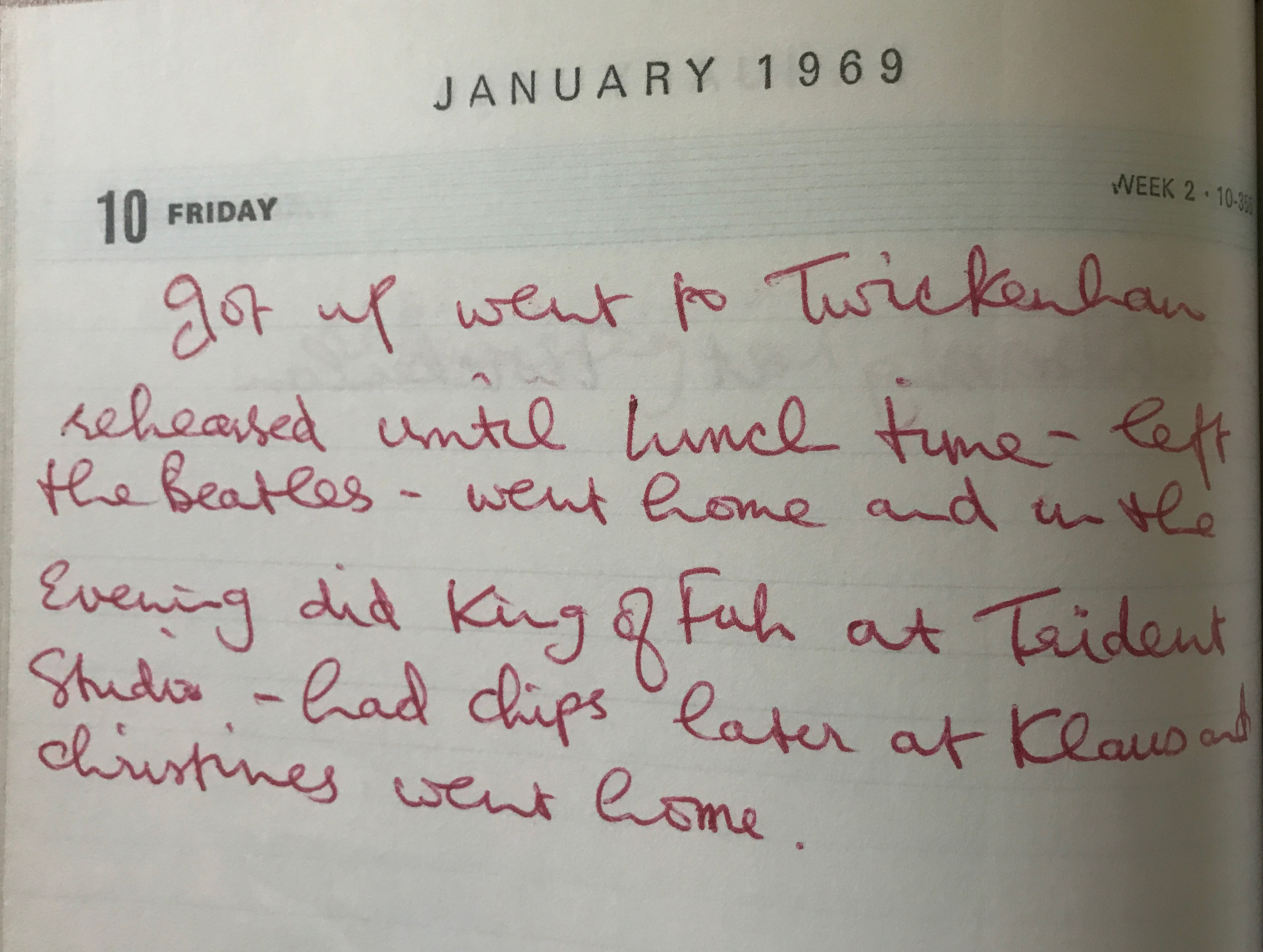
The most contemporary retelling of the events of January 10, 1969, comes from George himself, later that day, in his personal diary.

Got up went to Twickenham rehearsed until lunch time – left the Beatles – went home and in the evening did King of Fuh at Trident Studio — had chips later at Klaus and Christines went home.

George’s diary entry for January 10, 1969, as later published in the Living in the Material World book in 2011.

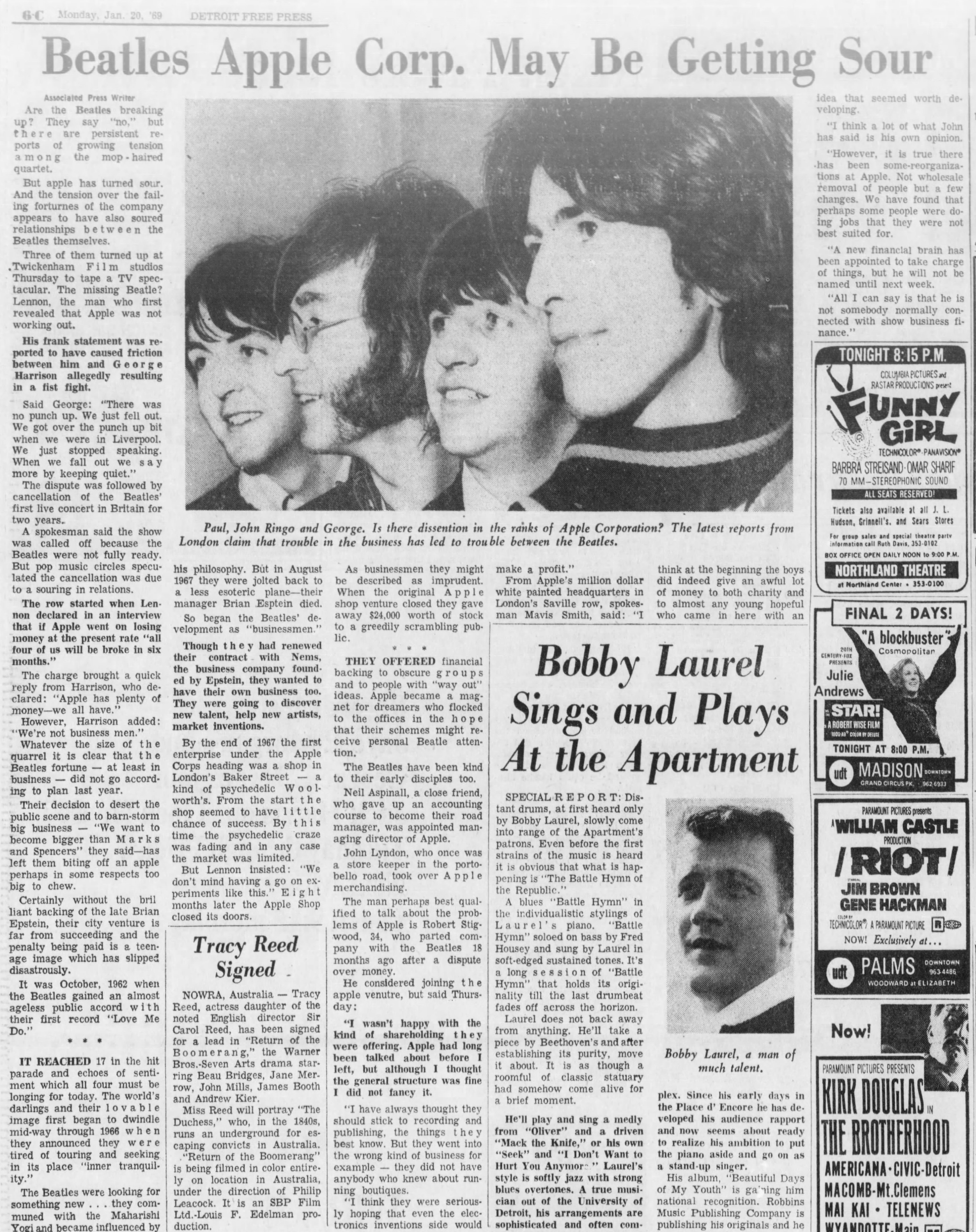
There wasn’t any Twitter in 1969 (although John and Yoko probably would have dominated the platform had it existed), so when George left the Beatles, it didn’t instantaneously go viral. But within days, George’s resignation was widely reported around the world — jumping off an original report by the Daily Sketch (more on their reporting to come in a subsequent post) — though he was already back with the band by the time those reports came out.

It wasn’t just that George left the Beatles. Word was out that that things got violent.

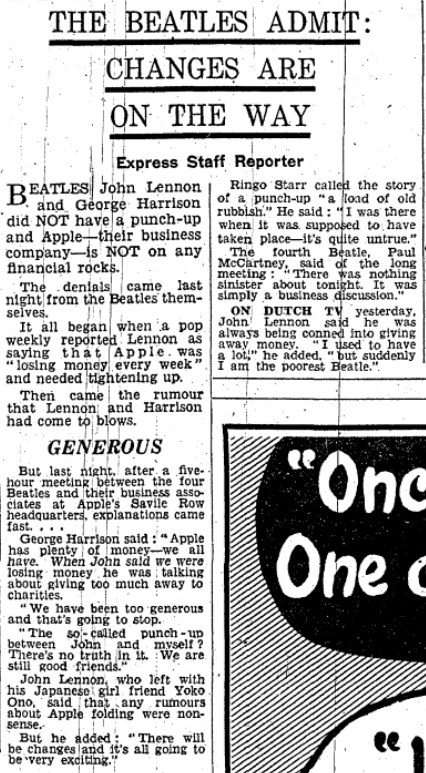
From the Daily Express, January 16, 1969:

Beatles John Lennon and George Harrison did NOT have a punch-up and Apple — their business company — is NOT on any financial rocks.

The denials came last night from the Beatles themselves.

It all began when a pop weekly reported Lennon as saying that Apple was “losing money every week” and needed tightening up.

Then came the rumour that Lennon and Harrison came to blows.

But last night, after a five-hour meeting between the four Beatles and their business associates at Apple’s Savile Row headquarters, explanations came fast.

“The so-called punch-up between John and myself? There’s no truth in it. We are still good friends.”

Ringo Starr called the story of a punch-up “a load of old rubbish.” He said: “I was there when it was supposed to have taken place — it’s quite untrue.”

A few days later, on January 21, Ringo told BBC’s David Wigg that “there’s that famous old saying, you’ll always hurt the one you love,” when he was asked if the group was still close. But he spoke without any specifics regarding George’s departure, just generic reconciliatory language.

“[W]e all love each other and we all know that,” Ringo said. “But we still sort of hurt each other, occasionally. You know… where we just misunderstand each other and we go off, and it builds up to something bigger than it ever was. Then we have to come down to it and get it over with, you know. Sort it out. And so we’re still really very close people.”

One of the Beatles’ official mouthpieces, the Beatles Book Monthly fan club magazine predictably poured cold water on the idea of a physical altercation in its March 1969 issue. In his diary feature, Mal Evans went as far to write there wasn’t any argument at all when George “stalked” out.

Matching the account on the tapes, Mal said George simply came over during lunch to “quietly” say he was going home. “There WASN’T a fight, physical or verbal,” Mal wrote. “There WEREN’T any tempers or shouting. I just couldn’t believe it when I saw the press afterwards.”

George Harrison maintained in subsequent interviews that no punches were thrown. But another George had another memory.

“They actually came to blows,” George Martin told Phillip Norman in his 2008 biography John Lennon: The Life. “You’d think it would have been with Paul, but it was John. It was all hushed up afterwards.”

Here’s where the retelling of the day’s events descends more deeply into farce.

According to a separate account from EMI engineer Dave Harries, a frazzled Martin only arrived at Twickenham that day as Harrison departed from the studio.

As related in Ken Womack’s Martin biography Sound Pictures:

I remember that George Martin had just backed across the car park in his Triumph Herald and knocked a dent in the door of George Harrison’s Mercedes and he didn’t have time to tell him he’d dented his car before George walked out in a huff and drove off.

Just hours after engaging in passionate car talk, this wasn’t George’s finest hour.

While George Martin was around to some arguable degree that morning (and at the sessions overall), there was no doubt fellow producer Glyn Johns was there on January 10. He was an active participant on the day’s tapes.

Johns, too, wrote of his recollections of that day in his 2014 autobiography Sound Man:

I have a very clear memory of sitting outside in the bleak surroundings of the soundstage at Twickenham on that cold gray afternoon with Denis [O’Dell], the line producer for the film, both of us praying that the elation of being employed for a project with the most successful artist in the world was not about to come to a grinding halt after two days.

It is not my place to discuss any detail of what happened, but it is common knowledge that George left the band and was persuaded to return a couple of days later.

While an implication is there, Glyn wouldn’t spill the beans. Although in Graeme Thompson’s 2015 George Harrison biography Behind the Locked Door, Glyn conceded there may not be too many beans to spill:

When it became apparent that there was going to be a bit of an argument those of us who weren’t in the band left the room. It was clear that it would be intrusive for us to remain. So what actually was said and and what went on I don’t know, but I do know that George left the band that day. The whole thing was very uncomfortable, and it was very embarrassing for me and others who were not in the band to be close by while this was going on — to have to watch this begin and be there in the immediate aftermath. It was very unpleasant and I felt really awkward.

The Beatles pre-enact their January 10, 1969, fistfight more than five months before it probably didn’t happen. (From the Mad Day Out photo session in 1968).

More than 50 years after the fact, what we know with absolute certainty is that George Harrison quit the Beatles the afternoon of January 10, 1969. Everything else — most prominently whether there was a physical altercation — is ultimately speculative.

It’s not just what happened that’s in question, but the why. We’ll never unearth that last straw, the specific reason George quit when and how he ultimately did on January 10. There’s just too much open to interpretation, and as long as the tapes of the day are considered complete, there is simply no smoking gun, no spark that broke George. The conversation with Dick James, the rehearsals of “Get Back” and “Two of Us” — these moments lacked an obvious trigger beyond what were usual pockets of growing frustration.

It’s worth mentioning the other three Beatles openly discussed their feelings and opinions in the wake of George’s departure on the Nagra tapes, directly addressing his growing sense of frustration as a junior member of the group. They were aware of this, and their conclusions were consistent with much of what is discussed below.  I’ll examine those specific conversations, which also touch on off-site meetings, however, in future posts when we reach those days on the blog’s timeline.

Still, by rewinding many of the same sources we examined above in this post to construct what happened, we can put together a loose reasoning as to why George left the Beatles. Notably absent from each of these recollections is the one mentioned specifically in the original flurry of news reports — George’s fury with John over the latter’s comments about Apple’s difficult financial situation. George and John even had light-hearted discussions about business earlier in the day. It seems clear the Apple finances excuse for George’s departure was a leap of faith by the media. Musical and personal differences were responsible.

Back to Mal’s Diary in the March ’69 Beatles Book Monthly:

Singing and playing together would always be fine with [George] and the last thing he was suggesting was any break-up of the Beatles. So that day, January 10, George didn’t want to stay at Twickenham rehearsing for a show he couldn’t believe in.

And what — or who — could make George an such an unbeliever? In published interviews over the subsequent decades, George was at least consistent on why he left: His famed filmed argument with Paul (“I’ll play, you know, whatever you want me to play“) gave him a moment of clarity.

From George’s 1980 memoir I Me Mine:

I remember Paul and I were trying to have an argument and the crew carried on filming and recording us. Anyway, after one of those first mornings I couldn’t stand it. I decided this is it! — it’s not fun any more — it’s very unhappy being in this band — it’s a lot of crap — thank you I’m leaving.

His Anthology interviews, conducted in the early 1990s and first broadcast in 1995, yielded similar memories:

They were filming us having a row. It never came to blows, but I thought, “What’s the point of this? I’m quite capable of being relatively happy on my own and I’m not able to be happy in this situation. I’m getting out of here.’

Everybody had gone through that. Ringo had left at one point. I knew John wanted out. It was a very, very difficult, stressful time, and being filmed having a row as well was terrible. I got up and I thought, ‘I’m not doing this anymore. I’m out of here.’

Paul wanted nobody playing on his songs until he decided how it should go. For me it was like: ‘What am I doing here? This is painful!”

In other words, George’s recollections were colored by the Let It Be movie. He’s just like the rest of us!

George elevated the “I’ll play” argument in a way that other recent encounters, which were also filmed but not included in the final release, did not.

“I’ll play, you know, whatever you want me to play. Or I won’t play at all, if you don’t want me to play. Whatever it is that will please you, I’ll do it.”

Even Paul had the self-awareness to admit his role in George’s departure, saying in the Anthology book with a hilarious parenthetical: “These things had been going down in Let It Be. George leaving because he felt he was being told what to do (I think that’s why he left).”

Ringo was more certain of the reason, going way back. He corroborated George’s accounts in 1971, telling Melody Maker:

George had to leave because he thought Paul was dominating him. [H]e was, because Michael Lindsay-Hogg liked Paul I would think more than the rest of us.

Indeed, George called for a divorce one day after the “I’ll play” argument, but a move to actually leave was delayed. This, as George continued to match Paul in productivity (or come close) during the sessions, certainly lapping a creatively spent John. But it was George’s own songs that were afterthoughts and that treatment deeply affected him.

Paul, though, was not the lone accused party.

Yoko Ono has unjustifiably been blamed for a lot of terrible things over the last half-century. Among the dramatis personae of the Get Back sessions, she was largely out of the spotlight to this point on the tapes, often speaking for John but not fighting for overall attention, certainly not as the group actually made music. And, perhaps by the filmmaker’s design, Yoko was usually off-mic. But since the White Album sessions, she was a disruptive figure to the other three Beatles. While Paul earned his share of the blame, Yoko drove George out of Twickenham, too.

“[S]uperimposed on top of that was Yoko, and there were negative vibes at that time,” George later said in interviews for Anthology. “John and Yoko were out on a limb. I don’t think he wanted much to be hanging out with us, and I think Yoko was pushing him out of the band, inasmuch as she didn’t want him hanging out with us.”

The accusation of bad vibes wasn’t something John quickly forgot. From his famously raw Lennon Remembers interview for Rolling Stone, conducted in December 1970:

George, shit, insulted her right to her face in the Apple office at the beginning, just being ‘straight-forward,’ you know that game of ‘I’m going to be up front,’ because this is what we’ve heard and Dylan and a few people said she’d got a lousy name in New York, and you give off bad vibes. That’s what George said to her! And we both sat through it. I didn’t hit him, I don’t know why.

(Emphasis added.)

George had a stubborn memory, too, to the point of remembering things that didn’t quite happen. From a 1977 interview in Crawdaddy:

There’s a scene [in Let It Be] where Paul and I are having an argument, and we’re trying to cover it up. Then the next scene I’m not there and Yoko’s just screaming, doing her screeching number. Well, that’s where I’d left.

A few years later in I Me Mine, George references “the time in the film where John and Yoko were freaking out screaming.”

There’s only one problem with George’s accounts: There is no scene in Let It Be where Yoko is performing and “freaking out screaming.” She’s hardly in the movie at all, really. But the event in question — Yoko sitting in with the other three Beatles and “doing her screeching number” is an event that did happen.  The original, longer rough cut of the Let It Be film did feature Yoko jamming with the other Beatles, per Peter Jackson, and it appeared in the unreleased pre-Anthology documentary “The Long and Winding Road” (which George was not only aware of, but shared a copy with Eric Idle with as source material for The Rutles).

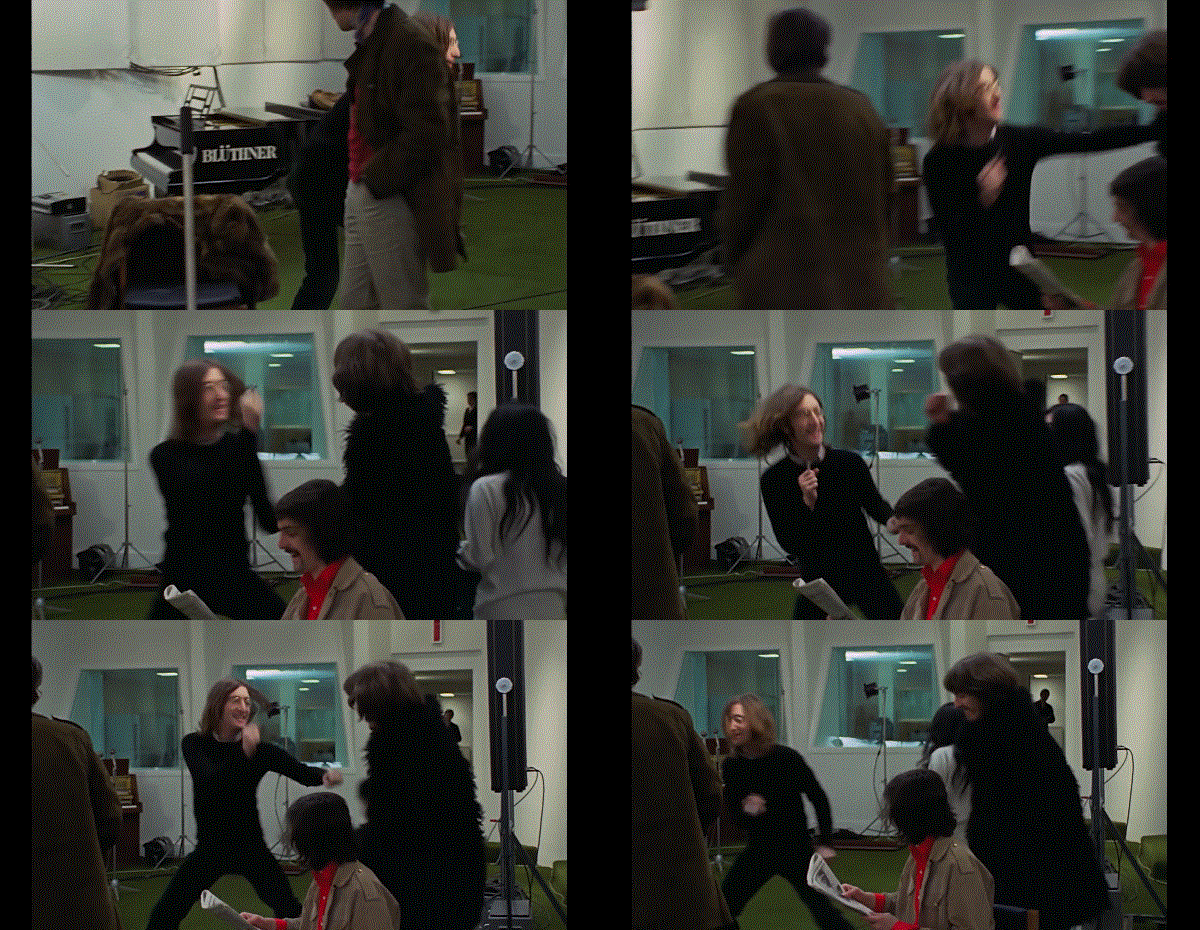
Playful punch-up: John and George at Savile Row after discussing — and denying — any fight between the two. Footage from Peter Jackson’s Get Back.

To the surprise of absolutely nobody who has closely followed the group’s history, the combination of the four Beatles, their associates and the passage of a half century makes for a most compelling but absolutely terrible narrator. Barring the emergence of additional footage or audio, we’ll never know the trigger for George’s departure.  Maybe Yoko did do something specific to put him over the edge (the digestive biscuit episode allegedly happened later, so that wouldn’t be it). Or it could have been something John said — or didn’t say, leaving his opinions to Yoko. Maybe the “I’ll play, you know, whatever you want me to play” argument between George and Paul really did change everything.

Or maybe John had it all figured out for an interview he gave for Earth News in 1976 — a quote later used to great effect in Anthology:

[L]ike people do when they’re together, they start picking on each other. It was like, ‘It’s because of youyou got the tambourine wrong — that my whole life is a misery. It became petty, but the manifestations were on each other because we were the only ones we had.

George’s domestic situation at this precise moment is essential to the story yet is generally ignored. For the duration of the Twickenham sessions, he was estranged from his wife, Pattie, and involved with 20-year-old Charlotte Martin — Eric Clapton’s ex-girlfriend — who was living at Kinfauns with him for the duration of their brief affair.

After George left the Beatles on January 10, 1969, he drove back to his Esher home, ended the affair and began his reconciliation with Pattie. Oddly, those decisions didn’t reach the threshold of snacking with the Voormanns’ to make his diary. It wasn’t a choice of the Beatles or Pattie, but like John suggested, perhaps George’s musical issues were amplified by his marital issues.

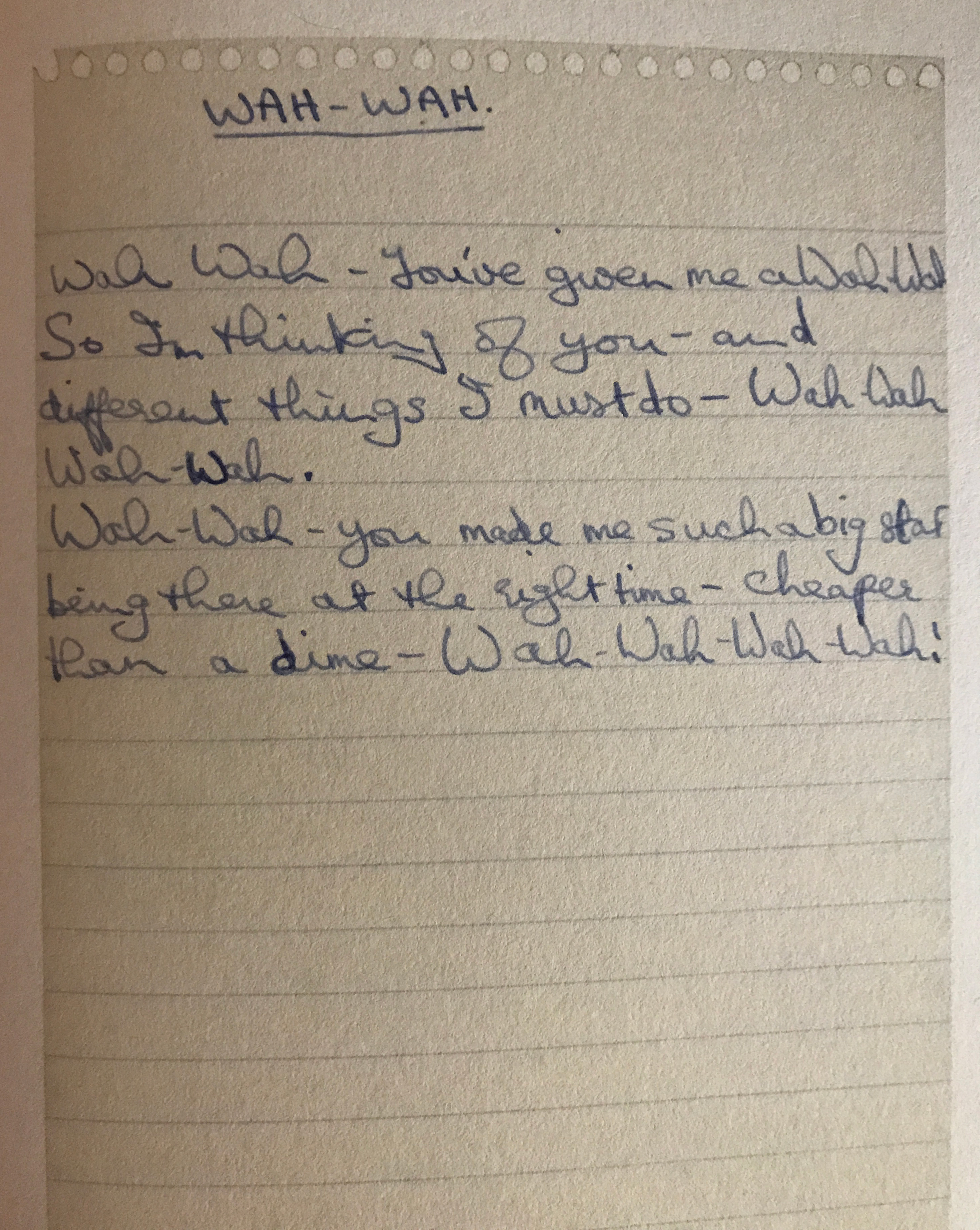
George wasn’t working for the Beatles anymore that afternoon, but he remained on the clock. In his first act as a temporarily liberated solo artist, George played, you know, whatever he wanted to play, and he wrote “Wah-Wah,” which later appeared on the All Things Must Pass LP and was the opener of his first solo performance, at The Concert For Bangladesh. George couldn’t have found  a more symbolic beginning to his stage debut as a solo headliner, opening with a song born from his first independent moment.

“‘Wah-Wah’ was a ‘headache’ as well as a footpedal,” George later wrote in I Me Mine.

George’s hand-written lyrics to “Wah-Wah.” (Published in I Me Mine)

“It had given me a wah-wah, like I had such a headache with that whole argument,” George told Crawdaddy in 1977.

“It was such a headache.”

Professional clashes with Paul, personnel issues with Yoko (and John), personal crises with Charlotte and Pattie — these were all reasons George left the Beatles. If Paul wasn’t so pushy, maybe it would have made dealing with Yoko and the problems at home easier. If Yoko wasn’t so ubiquitous and John withdrawn, maybe George could work more easily with Paul with one less work distraction. If George’s marriage was fine, maybe he could have slogged through the work day, more easily accepted his continued junior role and at least had an opportunity to unwind and unload in a relaxed home.

But each of those factors played off the other. He’s just like the rest of us.

38 Comments

Filed under Day by day

TMBP Extra: Let it be first

Like so many of the outtakes on the “sessions” discs unearthed and unleashed on the most deluxe version of the Beatles eponymous double-album, this newest version of “Let It Be” — the oldest recording of the song — is acutely alive and profoundly captivating.

As performed on September 5, 1968 — the day after recording their iconic performance of “Hey Jude” for Frost on Sunday — here’s the world’s greatest tea-room orchestra:

Fifty years in the books, and Beatles history still has room for an edit.

In some ways, this one-minute, 18-second cosmic jam capturing the band in medias resbetween takes of “While My Guitar Gently Weeps” — is just what should be expected, even if its very existence is still something of a minor surprise. A White Album-era version of “Let It Be” felt apocryphal, despite established knowledge rooting it in fact. And so it is that the disjointed, driving performance sounds like it’s out of time — it was.

Let’s dig in on some finer points:

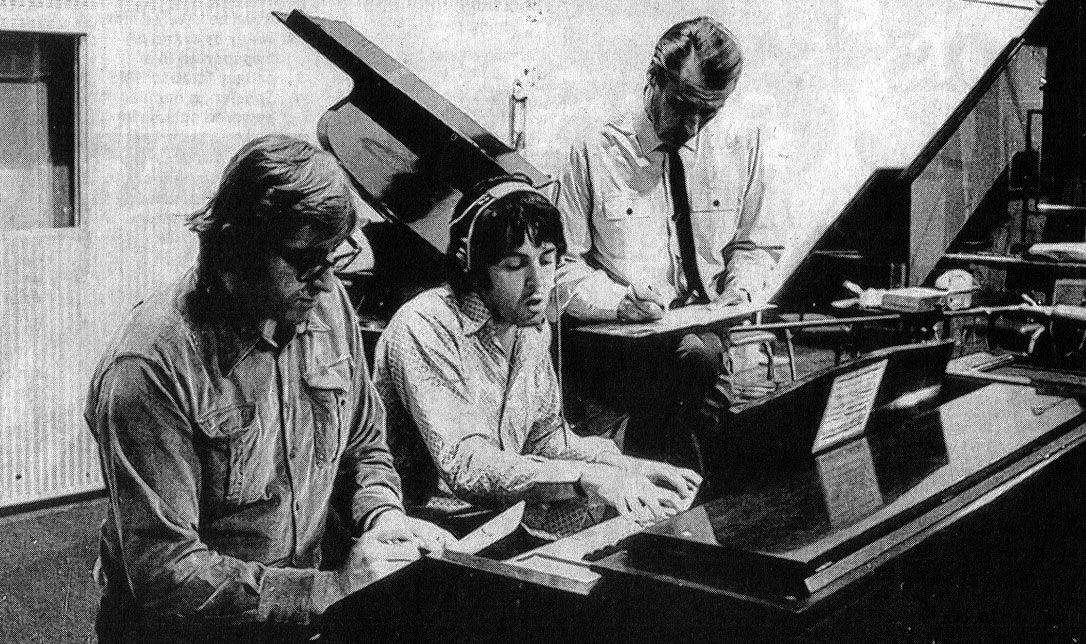
Brother Malcolm, Paul and George Martin during the White Album sessions in 1968

Brother Malcolm, Mother Mary and the lyrics of “Let It Be”
Notably, the lyrics of the song hardly advanced in the three months between September 5, 1968 and January 3, 1969, the first recorded performance of “Let It Be” at the sessions that would ultimately bear its name.

Here’s Paul grooving alone at the piano for the song’s debut on the Nagra tapes:

The lone addition, lyrically: “In my darkest hour, she is standing right in front of me.”

“She,” of course, is Mother Mary, who presumably was in the very original lyric sourced from Paul’s dream about his mother but was absent in the 1968 early attempt. That featured “Brother Malcolm,” a nod to do-it-all assistant Mal Evans. The reference to Mal was inconsistent over January 1969 but endured to the very end of the sessions. Here are the Beatles on the final day of the sessions, January 31, 1969:

It wasn’t until a few days into the sessions at Savile Row, on January 25, 1969, that most of the verses had been added. But Paul started teaching “Let It Be” to others in the band on January 8, when we hear Paul naming chords to the others to learn. That’s also when Paul disclosed that, even at this early stage, he planned to have Aretha Franklin cover the song.

Interludes
Students of the Beatles’ January 1969 sessions have heard this sort of thing several times before, someone in the group veering into an original, a cover, an improvisation between songs, during a transition during a rehearsal or purely as an aside.

Some of these drop-in songs were even the same for the White Album and Get Back/Let It Be sessions:

And just as future songs were sampled and explored during jams in 1968, they were in ‘69 too. And probably long before that as well. A few examples:

Divine intervention
This initial iteration of “Let It Be” may not have had “Mother Mary” but it did feature the hand of “God.”

The September 5 session of “While My Guitar Gently Weeps” was the one that featured Eric Clapton as the Beatles’ guest on lead guitar. That places Eric at the origin of “Let It Be,” and he can be heard adding a few guitar licks to the improvisation. (Listen to the very end and you can hear George close the track imploring his friend to don his headphones: “Cans on, Eric.”)

A full 31 years later Eric would get to play the song again, joining Paul on stage at the 1999 Rock & Roll Hall of Fame inductions. Paul was inducted for his solo career, but the show closed with, naturally, “Let It Be.”

Clapton didn’t take the solo — that’s Robbie Robertson of the Band, the group whose sound the Beatles sought to emulate during the Get Back/Let It Be sessions.

This same induction ceremony honored producer George Martin, who happened to miss the September 5, 1968, session whilst on vacation.

Times of trouble?
Even Paul called the White Album “the tension album.” John said worse in the early ’70s. Ringo literally left the band for a few weeks in the summer of ’68.  Four Beatles, each recording in a separate studio — we all know the stories.

But while history is static, perceptions are variable.

The 2018 reissue’s promotional campaign works to dispense with some of the darker sides of the session, from Giles Martin’s interviews to the numerous dismissals of dysfunction in the lovely hardbound book packaged with the deluxe edition. Indeed, there’s plenty of laughter and carefree spirit throughout the White Album outtakes. The outtake set even begins with laughter among John, Paul and Yoko, as if to hammer the point home.

The Get Back/Let It Be sessions inherit the same sour reputation, yet it would be very easy to compile 50 tracks from January 1969 filled with laughter, chatter and the indication that nothing could ever tear these guys apart. And I bet if and when we do see a formal reissue campaign of Let It Be (which I suspect will be attached to a larger Abbey Road/”Beatles in ‘69” re-release), we’ll see that very recalibration of Beatles history. More “Suzy Parker,” and not quite so many calls for a divorce.

And that’s OK. I’ve long posited that things weren’t necessarily so bad — or at least that much worse — for the Get Back/Let It Be sessions than in the period immediately before and after. Naturally, the reality lies somewhere in between. Neither the White Album nor Let It Be are outliers — that’s just how the group was post-1967.

On January 7, 1969, the day before the rest of the Beatles learned the chords to “Let It Be,” George Harrison made it clear: “Ever since Mr. Epstein passed away, it hasn’t been the same…  [the Beatles had] “been in doldrums for at least a year.” That takes the group to before their trip to India in February 1968.

Together at the beginning of that trip, the individual Beatles returned to England separately. For the final stage of their career, they produced enduring music, though they may be parted.

4 Comments

Filed under Extra

Jan. 9: Road work

He launched the January 9 Get Back sessions with “Another Day,” an ode to the working woman. Paul McCartney followed it by making the most of his own makeshift satellite office in Twickenham.

Paul’s morning piano sessions weren’t simply exhibitions, nor was it just for conditioning as he alluded to director Michael Lindsay-Hogg at the outset of the day’s Beatles business. The Get Back sessions’ most prolific writer, Paul treated the recording studio as a design studio, too, frequently shaping his songs and writing his lyrics while on the clock. This day offered a terrifically vivid window into that process.

After “Another Day,” a revisiting of “The Palace of the King of Birds” and a quick spin of “Let It Be,” Paul dug into “The Long and Winding Road” for a third consecutive day. The first verse is locked in and would be unchanged through its eventual release. “The second verse, leave a space, for the same thing,” Paul sang as filler. As he continued, Paul play-tested the rhyme of “the many times I’ve cried” and “the many ways I’ve tried” — tested to ultimate success, obviously.

Less successful was Paul’s plan to work in the word “pleasure” into the lyric.

I’ve had lots of pleasure, but said better. …
I’ve had many pleasure. …
I’ve had much pleasure. …
I’ve had lots of pleasure from the many ways I’ve tried.

After less than four minutes on “The Long and Winding Road,” Paul moved on. “There’s no more to that yet,” he dictated to Mal Evans, the do-it-all roadie (the group no longer touring, his roads were now long and winding ones). “But if you leave it around, I’ll still know where I’m going to fill in.”

Following a momentary return to “Mother Mary,” i.e. “Let It Be,” Paul unwrapped another new number, this one a song that would eventually find a home at Abbey Road’s terminus.

Paul didn’t know it at the time, but “Her Majesty” was complete. His presentation of music and lyrics was the same as would appear as Abbey Road’s coda, although here Paul would scat a second verse that would never be written. This version’s introduction, especially, evoked the current, bouncy state of “Maxwell’s Silver Hammer,” and would be the lone instance “Her Majesty” could be heard on piano. Paul played the song one more time these sessions, weeks later, on guitar.

“Paul continued his trip across what would become Abbey Road. Evoking Frank Sinatra’s 1956 LP that reinvented pop standards in a more contemporary style, Paul pointed out to laughter that “Golden Slumbers” — unveiled two days earlier — “should be ready for a Songs for Swinging Singles album.”

Paul offered a gentle delivery of “Golden Slumbers,” and pointed out the direction he’d like to take the song. “It really should be like a fairy tale. ‘Once upon a time, there lived a king. Sleep pretty darling, do not cry.’”

Leading into the next line, Paul introduces the original melody that he intended to change: “The bit you might remember: And I will sing a lullaby.”

Paul repeated his experiment merging “Golden Slumbers” and “Carry That Weight.” And as he did three days earlier, likewise in Ringo Starr’s presence, Paul signaled his intention to expand the song beyond its single line we all know. Paul doesn’t have the verses yet, but he knows what he wants them to say.

“Like a story,” he said. “A bit like ‘Act Naturally,’ where the tagline keeps coming up.”

In referencing one of Ringo’s showcase songs, it’s another piece of evidence pointing to the reason Paul opted to give the drummer a prominent voice on “Carry That Weight,” thinking of him for this song months before it was recorded for Abbey Road.

At this point, Paul wanted “Carry That Weight” to evolve into a comedy song featuring verses describing “just the sort of normal kind of troubles that everyone has” before leading into the “carry that weight” chorus. “There might be a verse about, like, ‘I got in trouble with the wife, I got drunk, something, something, something, something. … Woke up the next morning with a weight upon my head, and I found out it was my head. … Boy! You’re gonna carry that weight …’

“It could be one of those things, you know, in those songs where you’ve got everything, and everything is so great. And this morning, one of my eggs broke, (giggling). Just something trivial. The right shoe’s a bit tight. … ‘Boy, you’re gonna to carry that weight!’” Ringo sang along with every chorus.

Paul indeed delivered a wait, and we can close the circle on our story of “Carry that Weight.” The Nagra tapes don’t capture the song again. If he ever pursued the novelty song idea, there’s no record of it. By the time we get to the song’s actual recording for Abbey Road in July, it was exactly as the song was to this point: simply the line: “Boy, you’re gonna carry that weight, carry that weight a long time!”

Still at the piano, and unaccompanied by any other Beatles, Paul took a detour off (the future) Abbey Road and returned to the long and winding one for the second time in less than 15 minutes on the tapes. And again, Paul was very clinical, deliberate and open with his songwriting.

“I was thinking of having a weather obstacle,” he said before taking a stab at a new verse: “The storm clouds and the rain/The clouds disappear.”

The song’s imagery evoked a famed film thoroughfare.

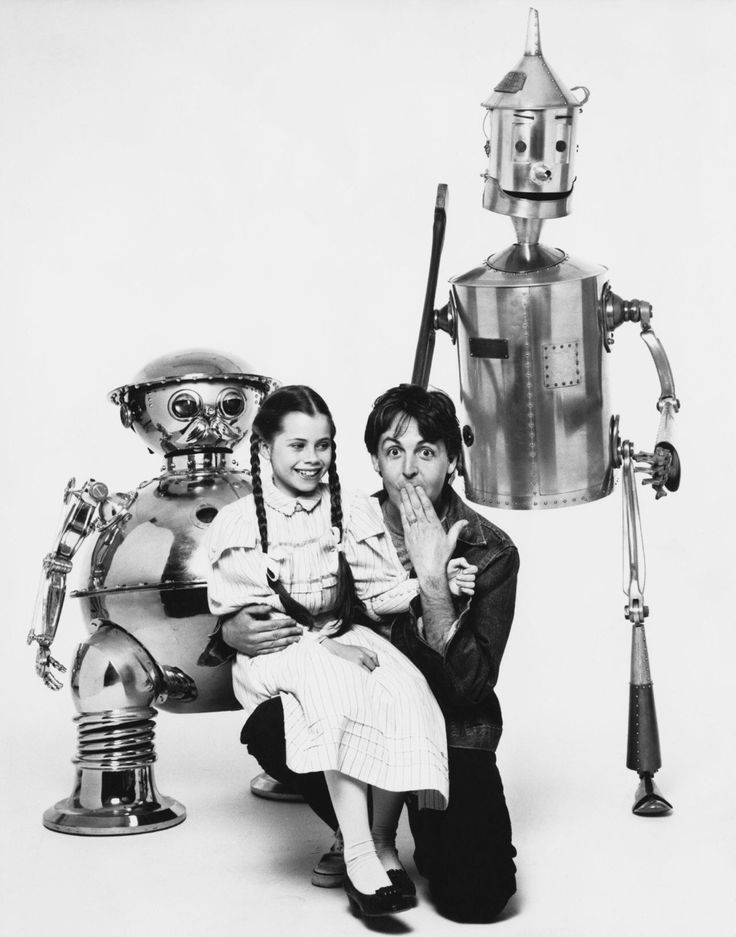
There’s a Beatles-related photo for everything! Here’s Paul with the cast of Return to Oz, for some reason, in 1985.

“It’s sort of like the Wizard of Oz,” Mal said. “Did you ever see the Wizard of Oz?”

“Yeah,” Paul quickly answered, clearly not paying attention at first, before continuing,“No, no, no, I didn’t.”

“The yellow brick road,” Mal said before Michael broke in, “A heartbreaker. Yeah, it’s great.”

Paul returned to the road he was constructing, singing a placeholder verse.

“The thing that’s up ahead/at the end of the road.”

For a lyric, Mal suggested recounting the obstacles on the road, but Paul dismissed that idea, reflecting the pervasive and prevailing uncertainty surrounding the live show. “We have enough obstacles without putting them in the song.”

Much like George asked Paul a week earlier, regarding Maxwell’s, Michael questioned the song’s endgame: “Is it going to end happily or not sure yet?”

Interestingly Paul didn’t address the emotion behind the song’s ending, just that he had an ending. And it was very close to the one that would appear on the record more than a year later:

“And still they lead me back to the long an winding road
You left me waiting here a long, long time ago
Don’t leave me standing here, lead me to your door”

4 Comments

Filed under Day by day

Jan. 7: Bangers and mashups

OK, stick with me here.

Nearly 46 years ago, somewhere between lunch and the resumption of the day’s writing session-cum-rehearsals for “Maxwell’s Silver Hammer,” it sure sounds like Paul McCartney may just have invented the mashup, or at least a rough approximation.

Really!

This is not a medley, sampling, sound collage or musique concrete a la “Revolution No. 9” and others before it. This is turn-of-the-21st century-style mashup: Think The Grey Album, Girl Talk or the Beatles’ own Love with elements of two or more songs layered on top of each other.  The kind of stuff Paul got roped into a few years back before an audience, he and George performed live to tape decades earlier in a little bit of completely obscure history.

That would be 1967’s “When I’m 64” (written a decade earlier as one of Paul’s first songs and described here by Paul as the “beautiful geriatric Beatles song”) sung atop “Speak to Me,” which would ultimately lead off Jackie Lomax’s debut album, as produced by George and released two months later.  We already heard George briefly play a more proper version of “Speak to Me” to John a few days earlier.

As Paul’s “When I’m 64” vocals eventually drop out – and his mouth clicks chime in – we go from a forgotten moment of debatable history to one that would have a lasting impact on wax: the debut of Maxwell’s actual Silver Hammer, the anvil, as ordered before lunch.

The band comfortably eases out of “Speak to Me” with a fun and increasingly polished run through of “Oh! Darling” – polished for this point in the sessions, for sure –  the second time they played the song in a few hours, and with John having rejoined the group back on guitar. The song is essentially complete and by all accounts should have been by now part of the core considered for the live show at this early stage. It doesn’t get any further attention this afternoon as Paul immediately returns to “Maxwell’s” for the better part of another hour. This initial launch into the song is captured in the Let it Be film, spliced in from the point where Mal strikes the anvil.  It’s a truncated slice of the song, and in the film we end up getting thrust into the Shoctric Shocks incident, which actually occurred four days earlier.

Paul doesn’t introduce any new wrinkles yet in this first go-round after lunch. He’s pleased, though. “It’s catchy enough, then,” he says after the first full take. He soon boasts of the dramatis personæ and vibe of the song, “It’s so cartoon … such caricatures.”

Paul remains a delightful caricature of himself, remaining fixated on the whistles that color the song throughout. “We want a mic for John and George on this ’cause the whistle on this,” is Paul’s first and primary direction to the crew. George’s initial concern in the early going of the post-lunch session is getting the song’s timing and cues down, especially for the sake of Mal, who wielded the hammer. Not that George didn’t try to give his drummer an additional bit of work.

“I’m sorry, George, the hammer’s too heavy for me,” Ringo says to laughter.  As it turned out, Ringo would end up carrying that weight after all, striking the anvil in July, when the group properly recorded “Maxwell’s” for Abbey Road.

By Paul’s thinking, the roadie was the man for the job.

Mal’s more like Maxwell, anyway. … He should be very scholarly. Very straight, in a striped tie and a blazer, sort of. Big chrome hammer. That’s how I see him anyway. [He’s] Maxwell Edison, majoring in medicine, in fact.

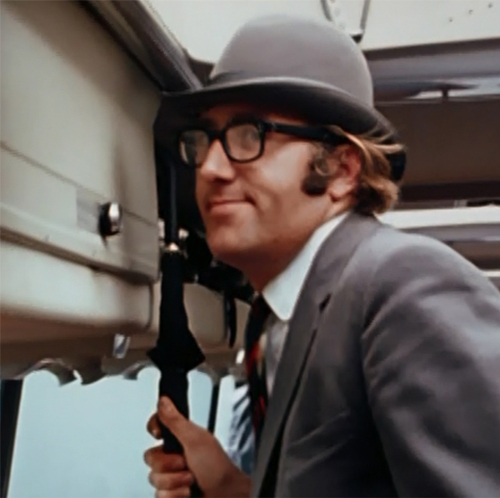
Resplendent in a smart gray blazer and striped tie, Mal Evans is already dressed for the role of Maxwell Edison as he rides the Magical Mystery Tour bus.

Resplendent in a smart gray blazer and striped tie, Mal Evans is already dressed for the role of Maxwell Edison, medical student, as he rides the Magical Mystery Tour bus.

Sparked by a question from George about the repeated of “bang, bang” in the chorus, Paul runs through the song structure again with the usual caveat: “I haven’t written the last bit.”

That’s fine with George, who thinks he knows how the song goes. “I just know it in my head, rather than the words, because the words are not in the right order anyway.”

Loose as he can be, Paul repeats the song structure: “It’s like two verses (scatting and singing) Bang, bang. … Clang, clang. … Whistle. … That’s nice fellas.”

As work continues, George shows a bit of concern with his own instrumentation.

George: To the man that’s producing me, whenever I play bass, because I don’t know anything about it, I don’t know what the sound is. I just plug it in and play it. So if somebody knows how to get the sound or record it. I mean Glyn’ll have to do that if he’s around. So you can mention that to him.

That’s some pretty self-deprecating talk from George, but he really has few bass credits under his belt to this point.

Straight out of the Small Faces’ playbook, John ad libs a narrative introduction to the song, laying out Maxwell Edison’s origin story, with Paul picking up in the middle.

John: Let me tell you the story about Maxwell’s Silver Hammer. He got it from F.D. Cohen, the pawnbroker from Bayswater.

Paul: Maxwell was a young boy just like any other boy, and he might’ve lived a life like any other young boy’s life had it not been for some certain unforeseen circumstances.

And … whistle!

Given that the band spent more than an hour on the song of about five hours of recorded tapes this day, it’s no surprise it was a very early contender for the live act. So much so, George began offering up suggestions on how to stage it, beyond costuming for the band and Mal. There’s a practical side to his suggestions, too.

George: I think we can do it with lots of people singing the chorus, ‘Bang, bang, Maxwell’s Silver Hammer,’ but it’s very difficult for me to whistle and sing and keep in sync. … It should be like the end of [Hey] Jude.

John:  ‘You all know it, join in, gang, because we don’t know it.’

George: We could just project it up, have the chorus projected up there.

We’re not sure what Paul thinks of that idea, since there’s whistling to be done, and no joke whistling, please.  “Really, do it like it’s straight,” he says, telling George how the notes of the chorus solo goes. That’s a whistle solo, not a guitar solo, mind you.  Paul does work on improving the song, spending a few minutes crafting a harmony based on a short, partial climb up a scale “with jumps on the hammer,” in his words. It’s pretty and adds to the carnival-like atmosphere the song has to this point.

For the final takes of the day of the song, the rest of the group still doesn’t have the song’s structure completely down, and Paul resorts to vocal cues to alert when the whistling solos come. John asks Paul to shout out “blow it, boys” at the appropriate time. Paul can’t help but repeat his helpful reminder: “It should be very straight, the whistling.”  He really does keep saying this, to a near obsessive state, and at no point is he kidding about it.

The “Maxwell’s” rehearsals for the day end with a final, full run through. The song’s basic elements are there: new harmonies, whistle solos, the anvil and a full strong structure. What it lacks is a complete set of lyrics, but Paul isn’t sweating it, concluding with a simple, “OK, that’s Maxwell’s.”

While the song did progress with the work on Jan. 7, there was a noticeable missed opportunity shortly after lunch as a lead-in to the mashup sequence. For a few brief moments as the group warms up, a sloppy yet sincere take of “Maxwell’s” features Ringo on vocals, and it sounded like the perfect fit. Paul’s song eventually drove the other three Beatles to fury; giving Ringo an extended vocal role could have changed a little corner of Beatles history.

As the sessions continue, John takes the reins for the next song, one that not only has its lyrics set, but the instrumentation as well.

“Should we do ‘Across the Universe?’ We almost know that, don’t we?”

9 Comments

Filed under Day by day