Tag Archives: Michael Lindsay-Hogg

TMBP Extra: Then and now

It’s spring 2024 A.D., and when we last saw the Beatles, they were vanishing before our eyes in the “Now and Then” video, ascending to Pepperland, probably. In the moment, it was a powerful and tidy conclusion to the clip and the greater arc of their career.

But to paraphrase Paul McCartney, there is no end to what they can do together. Having reclaimed the top spot on the charts in what they trumpeted as their “last song,” the Beatles have chosen to re-audition after all.

The Beatles don’t really do tidy endings. They keep the accidental outtake “Her Majesty” after the majestic “The End.” They break up the band in the most clumsy fashion. And now, after the triumphant back-to-back successes of the Get Back docuseries in 2021 and “Now and Then” last November, the Beatles exhume a movie George Harrison called a “fiasco” and “painful,” John Lennon said made him “sick” and Ringo Starr said had “no joy.” Ringo’s quote is from two weeks ago. Ringo still has issues with Let It Be. Doesn’t he know he’s supposed to promote this thing?

Leave it to me, Ringo. I’m excited, because the return of Let It Be to Beatles canon is critically important, even as it comes off now as the Beatles trying to be completists.

Once I started listening to the full run of Nagra Tapes on my own in 2012, it completely changed my point of view on how the sessions played out. I’ve been writing that story here for 12 years.  And for most of that time – until Get Back premiered — I could only cross-reference the Nagras’ account with what amounts to a late 20th century antique (a video cassette of Let It Be) and nearly 50 years’ worth of public grievances. And that’s precisely why I didn’t think the film should have remained inaccessible for so long and truly feared it would stay buried. Because Let It Be didn’t tell the story of the Beatles breakup, the reaction to it did. This, above all else, is why Let It Be matters.

I first saw Let It Be on VHS in the mid-1980s – we rented it and subsequently pirated our own copy in a nod to the tradition of Let It Be/Get Back bootleging. Of course I bought into the idea that Let It Be showed their breakup – I was an impressionable fan, didn’t dig independently into it (where were the counter-narratives back then anyway?) and if the Beatles themselves said that’s the way to interpret the film, who am I to say otherwise? If it’s in Compleat Beatles, it was gospel. Also, remember we didn’t have the full Nagras leaked at the time, only a few hours of bootleg records, mainly of performances.

That VHS release, along with an edition on Laserdisc (a contemporary technology with the video cassette) and Betamax, represent the most modern formats on which Let It Be exists prior to its  streaming debut. I’ve written this before, but it’s worth repeating: In the time since street-legal Let It Be appeared on store shelves, you could have picked up A Hard Day’s Night on VHS, Betamax, Laserdisc, DVD, Blu-Ray, 4K UHD and streamed it.

The last UK television broadcast of Let It Be came May 8, 1982, according to the Radio Times. The film was screened sporadically in American theaters into the mid-1980s, but then it simply disappeared. Other Beatles productions remained stocked, promoted and upgraded. Magical Mystery Tour (which had its own terrible reputation for a long time) was belatedly released on VHS in October 1988 – like the other Beatle movies, it had its subsequent reissues on modern formats.

Once in a while, Let It Be’s absence was made conspicuous to the general public.

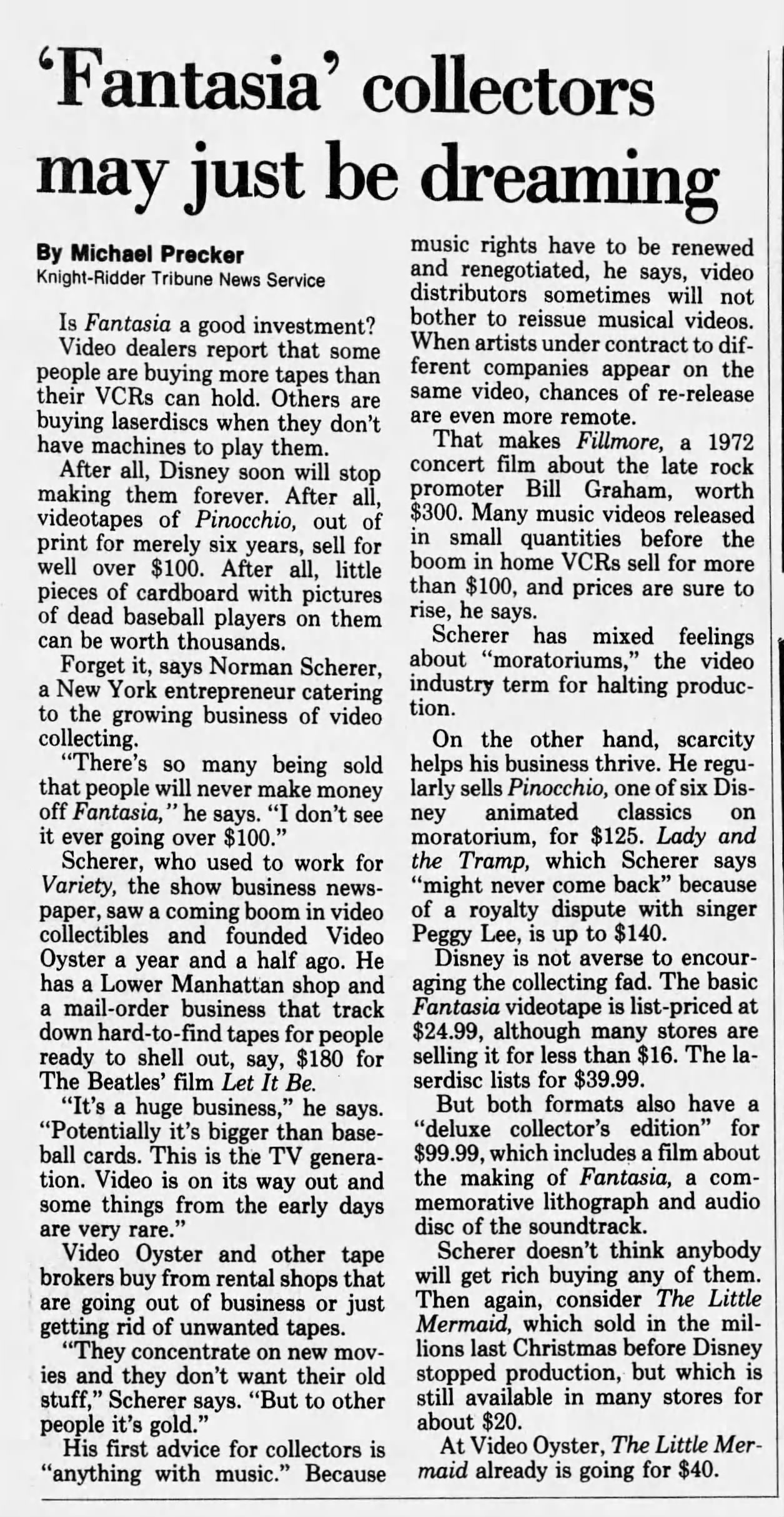
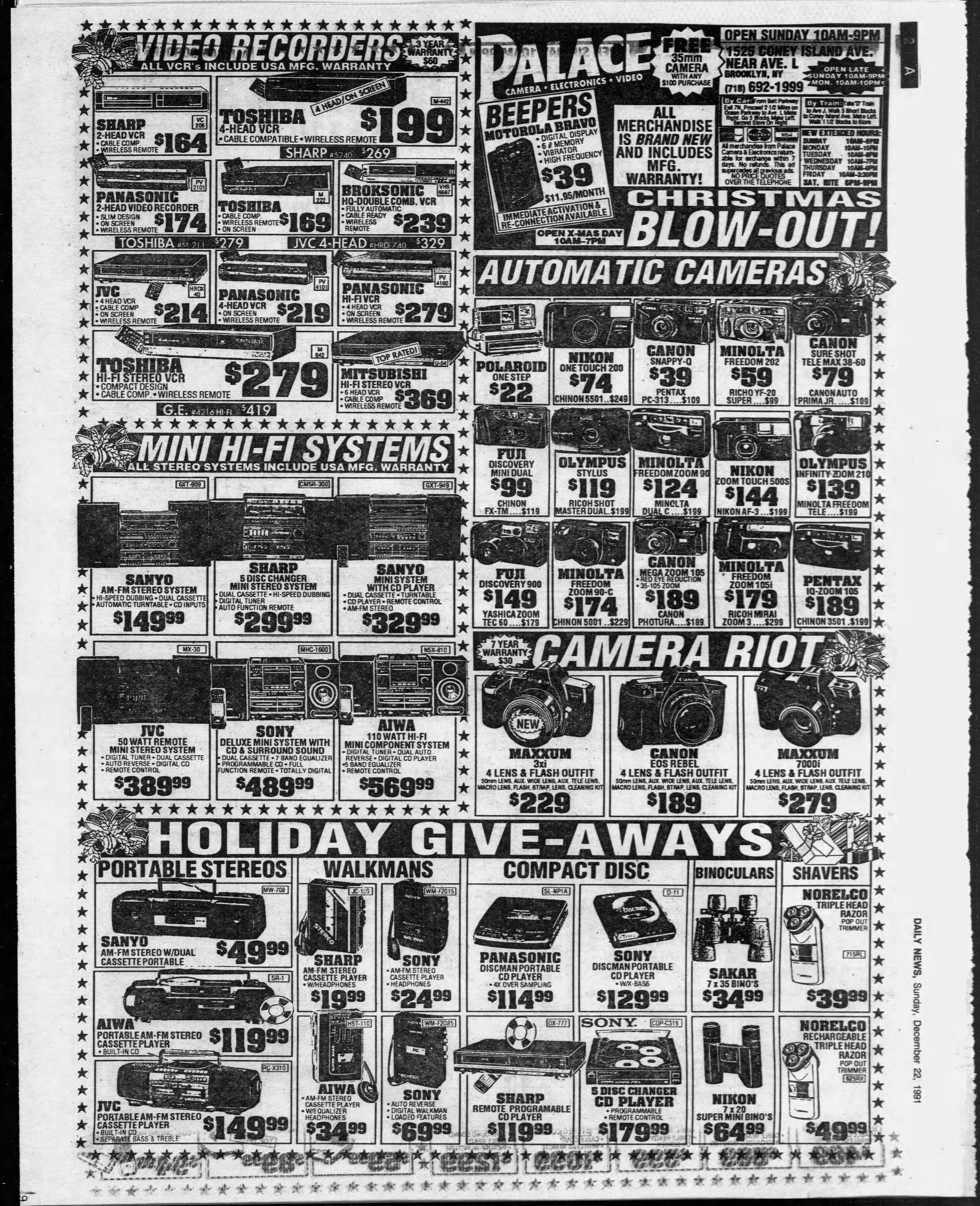
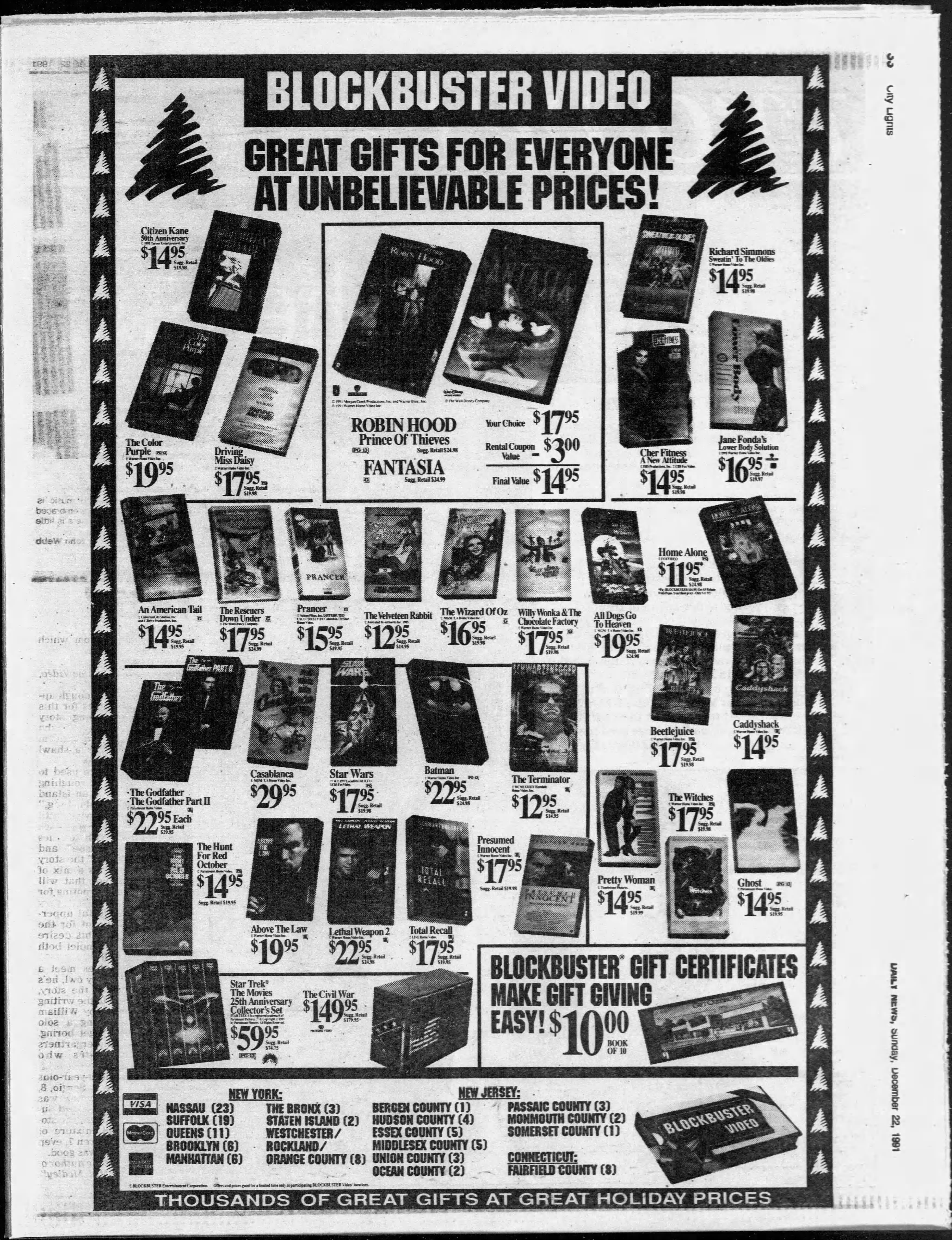
Buried in a 1991 news story about the future collectible value of Disney VHS tapes (which was really a thing, I remember it!), a mail-order video store reported it was tracking down copies of Let It Be videotapes for $180. For context, you could have bought a decent name-brand VCR for that price – or about 10 new copies of “Star Wars” or “Driving Miss Daisy” (or 13 copies of “Sweatin’ To The Oldies”).

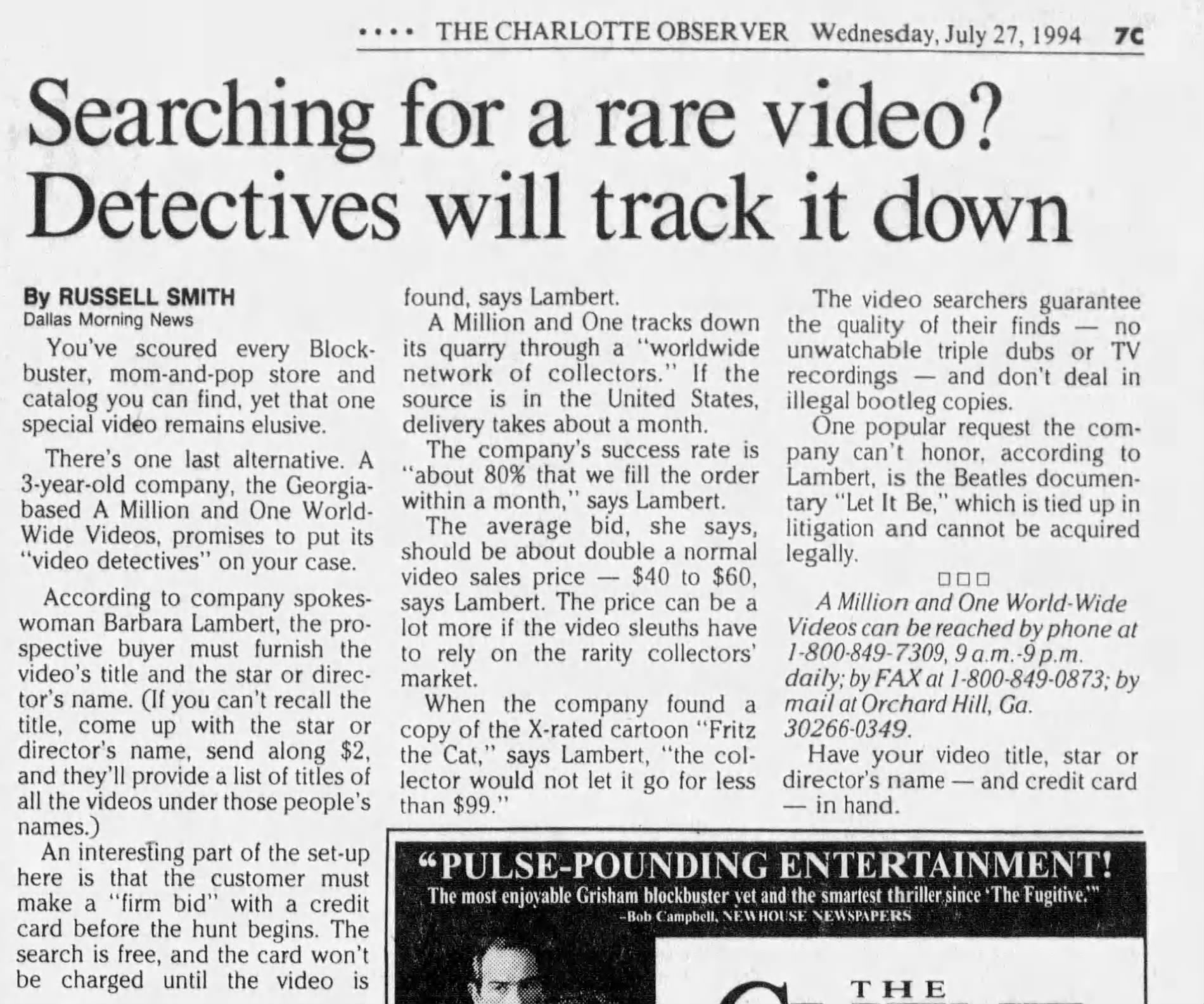
Only three years later, on Anthology Eve, a copy of Let It Be was truly priceless.

“[A]pparently the collectors who own it aren’t willing to part with the title,” said a representative from a different specialty video store in 1994.

That was 30 years ago.

Let it Be is haunted by more than a half century of degradation and denigration as a physical product and a featured work in Beatles history, a ruin by which it’s defined.

If you wanted to watch the movie prior to its Disney+ debut, you were forced to view it on technology that peaked in the 1980s in its native format or on a digital copy ripped from those same 40-year-old analog formats. It’s a bad experience. And even in 1970, the original theatrical release was trashed, including the decision to blow up and crop the original 16mm print to 35mm, and it was hit for poor sound quality too.

(David Bowie deliberately had the Blackstar LP, released days before his death in 2016, physically degrade before your eyes, employing a hard clear plastic sleeve destined to aid in wrecking your record beyond routine wear and tear on the turntable and viewable through a window in the front cover.)
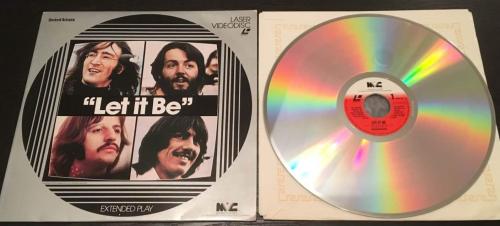
Let It Be on Laserdisc

Before you even slipped your Let It Be Laserdisc (for instance) into your player, you were hit over the head with the breakup story on the back cover:

The Beatles were breaking up. The Beatles were boys becoming men. … One squirms as Paul snips at George and Ringo for not playing their parts correctly, as if the Beatles magic was of a kind that could be whipped into shape. But you can’t blame Paul, because he, like us, saw the Beatles coming to an end.

(Paul said exactly as much during 1990s interviews for Anthology, too: “When we got in there, we showed how the breakup of a group works. We didn’t realize that we were actually sort of breaking up as it was happening.”)

That the film originally reached theaters — a reported 225 in the U.S. alone — a month after the “PAUL IS QUITTING THE BEATLES” headline shattered the music world is critical, but not alone in its importance. Some people still expected the wacky, scripted Beatles to appear on the big screen.

Let It Be followed Help! into theaters by less than five years (to get into that headspace, here are some films that came out in 2019 — it doesn’t feel like too long ago). Magical Mystery Tour, which was considered a misstep in its own time, was shown to British television audiences less than 2 ½ years prior.

Don’t think that matters? To give one example, Variety’s May 20, 1970, review of the film bemoaned “the Beatles’ past togetherness, the chummy camaraderie, the quickness to seize on a line and build a series of gags is no longer there.”
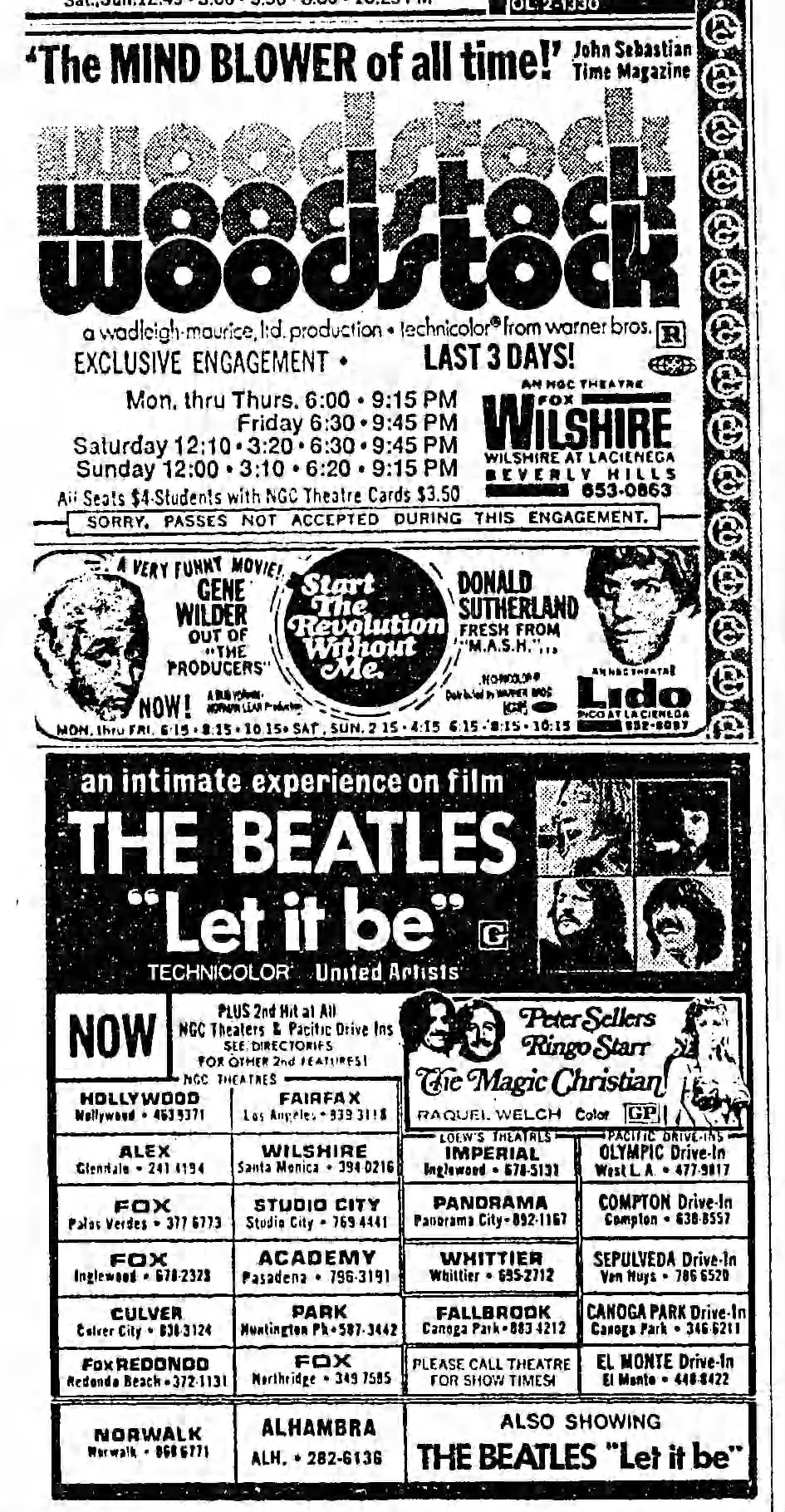
Los Angeles Times movie listings, June 20, 1970

We can nitpick even further and argue that if someone wanted to spend their $1.50 or 6/1 ½, maybe it was better spent on Woodstock, which was in theaters much at the same time (Woodstock was reaching more theaters as Let It Be completely ran out of steam). Running 100 minutes longer than Let It Be, the cinematic release of the concert documentary earned widespread critical and commercial acclaim.

Just a few pages away from the movie listings for Let It Be, reviews and stories touted the Beatles’ recent split, and record store ads promoted Paul’s new solo LP.

Or, as that same Variety review said, “If the film has an air of emptiness and resignation, it is because we know that this is almost certainly the last Beatles picture we are going to see.”

Let’s be clear about the Beatles’ audience, now and then. The younger Beatles fan base that exists today is utterly outstanding, bringing a completely different perspective on the group and, critically, lacking the baggage so many of us had to live with and work to shake free. I’m a second-generation fan, a born in the mid-1970s and too late to be around for Beatles’ first run, but I remember the possibility all four could one day reunite. And I remember hearing on the radio John was killed.

I grew up with The Compleat Beatles, Lennon Remembers, Shout! and later aged with Anthology and Drugs, Divorce and a Slipping Image – so the story was baked in: Let It Be was hell, period.
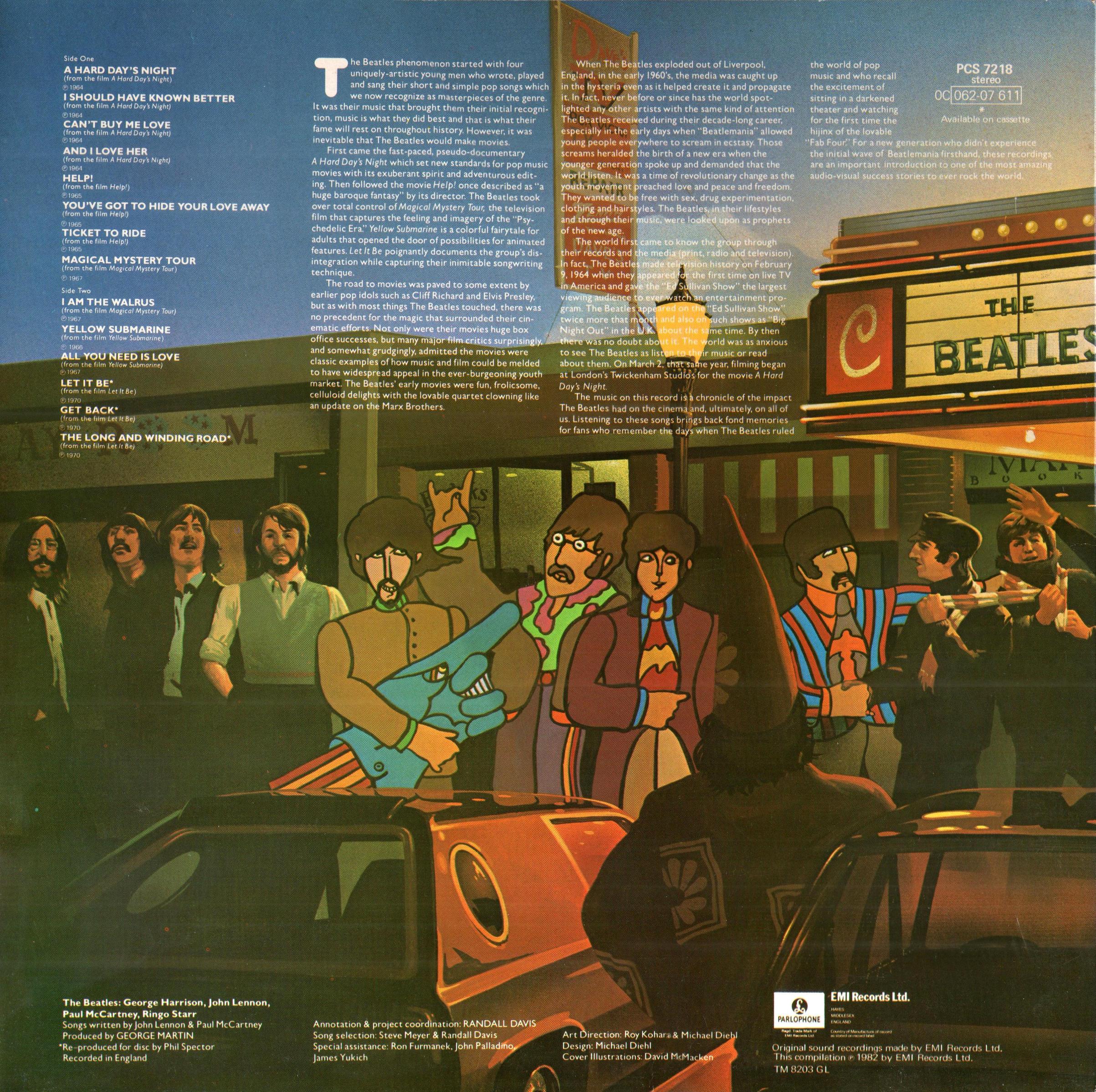
Even the Beatles’ own records promoted that this was a bad time.  The back cover  to Reel Music (1982) said “Let It Be poignantly documents the group’s disintegration while capturing their inimitable songwriting technique,” while the liner notes to Let It Be … Naked nearly 20 years later put it this way:

It is the Twickenham sessions that have characterised the whole Let It Be project as an unhappy one both in the minds of the Beatles themselves and anyone who saw the documentary footage in the movie.

In 1970, Get Back was merely the name of a song and an abandoned LP (and film title) while the Nagras sat securely in Apple Records’ vault. Multiple generations loved the Beatles, but they were all “first-generation” fans who witnessed the group’s evolution and dissolution in real time, not forced to read about it in a book or watching it from a documentary. When Let It Be was promoted in theaters, there wasn’t a new generation of fans to reach.
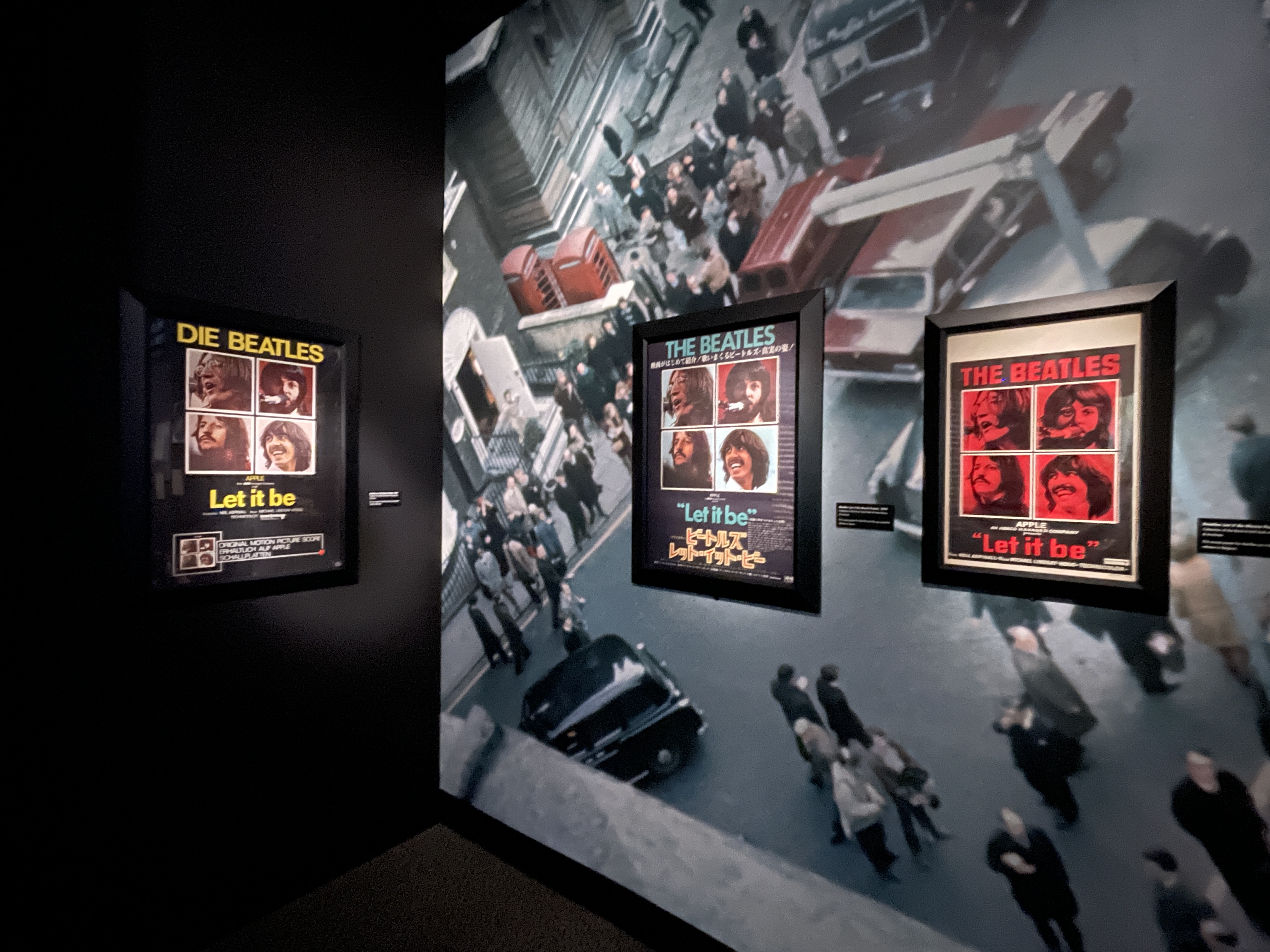
Let It Be movie posters as displayed at the Rock and Roll Hall of Fame in 2022.

Much as the audience mattered, the four most important figures requiring appropriate contextualization are the Beatles themselves. To them, Let It Be wasn’t just a monthlong session in 1969 and a movie premiering after a breakup in May 1970.  The Let It Be experience spanned the 16 months in between too. That’s a long time.

It’s time that included rejected cuts of the film (“Let me put it this way. I’ve had three calls this morning to say [Yoko Ono footage] should come out” is how director Michael Lindsay-Hogg remembered the reaction to an initial screening).

Those 16 months included several rejected Glyn John edits of the soundtrack album, tapes eventually being dumped on Phil Spector and Paul hating much of what Spector did.

It included John saying he wanted a divorce from the Beatles, and later McCartney accepting it, properly beginning the Beatles solo era.

It had all of the Northern Songs drama and the disintegrating Apple. And Allen Klein brooding over everything.

All of that happened to the Beatles as part of their Let It Be-era experience, when a long and lonely “winter of discontent” really spans six calendar seasons. We can separate an 80-minute film from the period, but how could they?

The music wasn’t blackballed the same way the movie was. I always thought it was great, and I never bought John’s complaints about it (“[Phil Spector] was given the shittiest load of badly recorded shit – and with a lousy feeling to it – ever. And he made something out of it … When I heard it, I didn’t puke.”).
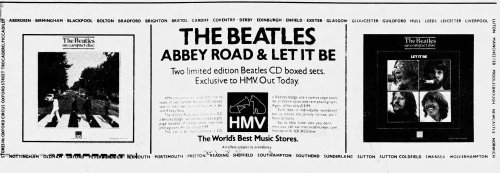
I may not have been in under the lights and in front of the cameras, but I do listen to the music and haven’t puked either. It makes me feel quite good! Let It Be made its CD debut in tandem with Abbey Road to great fanfare in 1987, capping the band’s reissue campaign on the new-ish format. A dozen songs from the sessions appeared on 1996’s Anthology 3.  Seven years later in 2003, a reworked mix emerged as Let It Be … Naked.  We can even throw in Reel Music and the Movie Medley for more examples that they fully incorporated Let It Be’s music into their catalog since its release.

I think the film just sat there as this giant symbolic target. It was harder to pan the companion soundtrack LP when it was such a smash – it had the biggest initial sale of any LP in American history at $26 million in 2 weeks. The movie, on the other hand, was a relative box office failure, pulling in $1.06 million gross. That sounds like a lot of money until you see A Hard Day’s Night made $11 million and Help! pulled in $12 million.

If the music from the same sessions have been tolerated by Beatles Inc. over the last 50 years, what was so damning about Let It Be’s visuals for so long? Was it the scant minutes featuring Yoko in the frame? The “confrontation” between Paul and George. The waltz? We know it wasn’t about Billy Preston, and the rooftop has long been justifiably lionized. The three completed songs performed in the basement (“Two of Us,” “Let It Be” and “The Long and Winding Road”) are perhaps staged a bit too formally, but those have resurfaced at various times in Beatle releases (eg., two of the three on the 2015 “1” DVD).

There is very little in the way of actual dialogue – as in full, extensive conversations — in Let It Be (and in its original print, which is very muddy compared to the MAL-enhanced sounds of the 2020s).

Much of that dialogue fits on one side of a 45, in fact:

George has been quoted multiple times referring to Yoko’s “freakout” with John in Let It Be – but that never made the final cut. An early edit long colored George’s opinion of the film – it wasn’t a first-hand memory, since he wasn’t in the room when Yoko performed with the others. Did George even see the theatrical version of Let It Be?

It’s probably a matter of simple bias: When you listen to Let It Be you can’t see Paul and George bickering, John asking if they can “play a fast one,” Paul yawning, Ringo looking like he’s going through the motions or Yoko just sitting there.
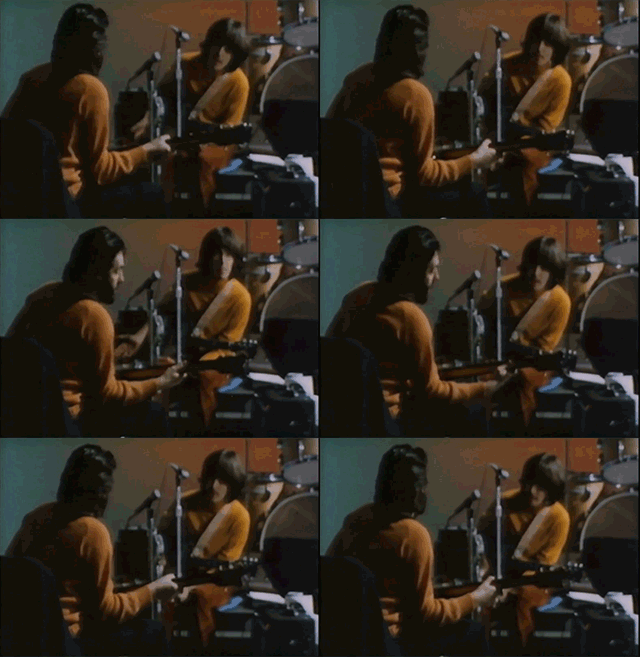
“I’ll play, you know, whatever you want me to play. Or I won’t play at all, if you don’t want me to play. Whatever it is that will please you, I’ll do it.”

The result is actually backed up by science – what we hear isn’t as sticky as what we see.

Paul and George did bicker. Yoko did just sit there. That’s real, even if that’s not all they did.

What is spread out over eight hours in Get Back simply didn’t translate as well over 80 minutes in Let It Be. Some of that was by choice — maybe it could have benefitted by one less oldies cover and one more evolution of an original song — but there was really little wiggle room in the format.

We’re lucky to have Get Back, for its clarity of picture and sound, and all that footage. Normally a recording session wouldn’t have a particular story to tell — group frustrations come to a boil, a member walks out, but they rally and stage a memorable performance, etc. — and in 1969/70, the Beatles never intended to tell anything more than “this is how an album is made, and here we are performing it as the payoff” as the original TV concept.

And to that end – with Get Back as its companion — Let It Be should be considered an honest depiction of the band. Still, it’s always been a struggle to describe what exactly Let It Be is.

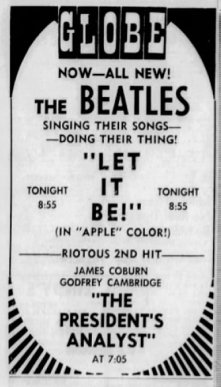
The original movie trailer (which was given an homage in the 2024 Disney+ trailer) asked viewers to view the band “rehearsing, recording, rapping, relaxing, philosophizing, creating.”  One movie ad was more blunt: “The Beatles singing their songs, doing their thing.”

Let It Be appeared on HBO in the late 1970s, and the cable network’s guide described the film on different occasions as “A film to make you smile” and, simply, “McCartney sings Besame Mucho.”

The original movie poster (“an intimate bioscopic experience”) and present-day blurb on Disney+ (“Available for the first time in over 50 years, the original 1970 film about the Beatles”) both tout the plain fact that Let It Be is a movie as it’s main descriptor.

It feels like the original VHS box got the story right, with a positive spin not common at the time:

An exhilarating documentary of the making of an album by The Beatles, the film concentrates on the many recording sessions that went into the production of the “Let it Be” album. It offers a unique glimpse into the creative process of this world-renowned group as well as the subtle relationships among the individual members. There is jamming of old songs and painstaking work on new ones. In search of a new direction, The Beatles play an inspired concert on the roof of their London offices.

In the announcement of the 2024 reissue of Let It Be, Peter Jackson said Get Back and Let It Be “enhance each other.”

 ‘Let It Be’ is the climax of ‘Get Back,’ while ‘Get Back’ provides a vital missing context for ‘Let It Be.’

That first part sounds reversed, but the director is absolutely right. Let It Be isn’t backward compatible because of how it directly influenced the subsequent 50 years of Beatles history. Let It Be owns it’s baggage, period.

Get Back told a specific story, but it was reactionary, too, not simply giving a nod to Let It Be, but deliberately clarifying — and in a sense undermining — some of the original film’s more negative moments.

My favorite example (of several): Paul tries to stifle a yawn in Let It Be,  50-year-old proof that the band is bored. But a drowsy Beatles performance of “I’m So Tired” results in a minute-long sequence in Get Back, with everyone yawning. George yawns his way through Paul’s magical “Get Back” origin story.
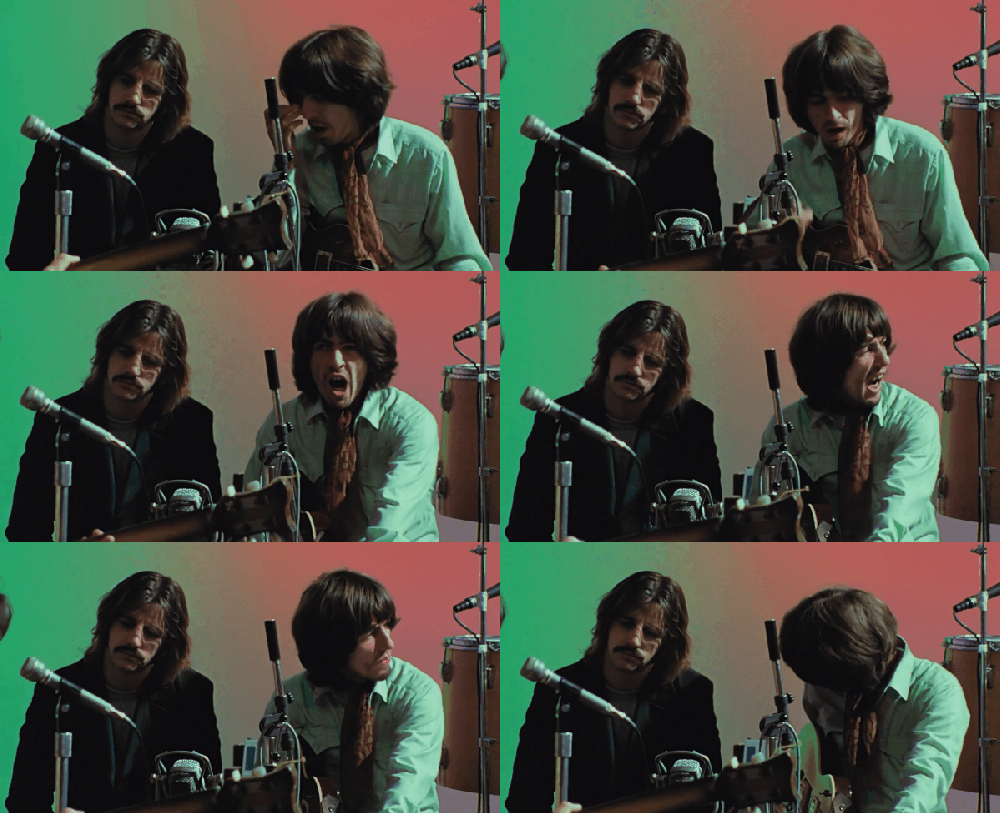
For all the drama in Get Back — agonizing over the band’s future, dealing with walkouts (George) and sit-ins (Yoko) — the only real resolution we get was to the problem of how to stage the show, by going onto the roof. Both films feature the same ending, with Get Back criminally dustheaping the full indoor performances, a robbery rectified with Let It Be’s restoration.

No matter how Michael Lindsay-Hogg edited Let It Be, he was stuck in his time. We all knew what came after the credits in 1970 — it wasn’t a gag reel or sneak preview, but a very public breakup, a breakup that was inevitable whether the January 1969 sessions were in front of cameras or not.

“We filmed the whole thing showing all the trauma we go through,” John said in the April 12, 1969, Melody Maker, which hit newsstands right around the time the “Get Back” b/w “Don’t Let Me Down” single was released and more than a year before Let It Be reached theaters.

Tellingly, there’s more to the quote: “Every time we make an album we go through a hellish trip.” (emphasis mine).

Let It Be was put together  in the Beatles’ time, yet could only reflect the past tense. It’s no accident Michael put Paul’s piano rendition of “Adagio for Strings” —  once voted the ““saddest classical” song — over the opening credits.
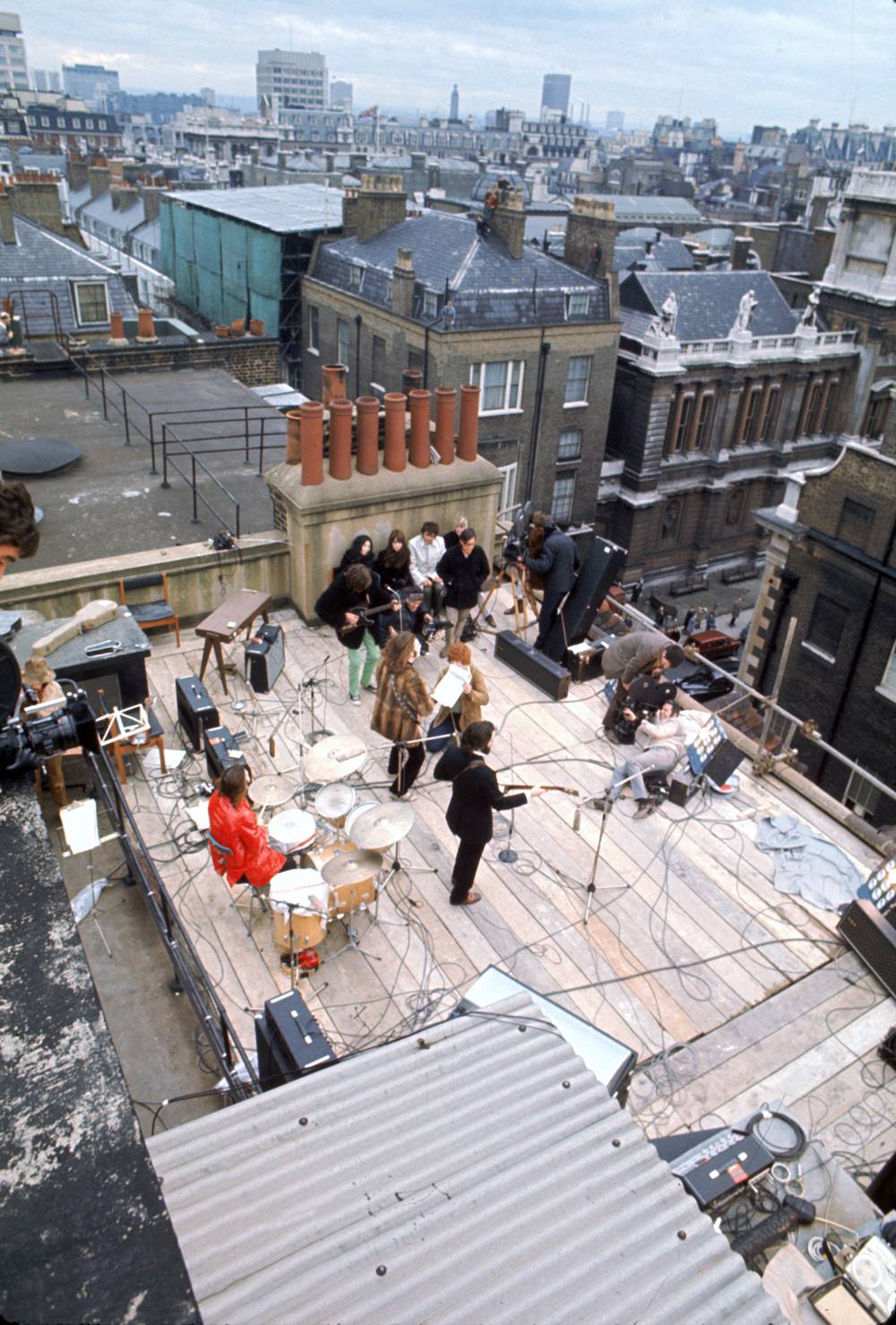
Fifty years later, with a different concept and such a different, wider audience, Get Back allowed — and still allows — us to dream on a future.  It freed the Beatles from the events that came after it. That story, so focused on the friendship of the band, directly set up “Now and Then.” The same rooftop ending delivered an alternate ending.

The existence of Get Back offers the original Let It Be the same liberation. Today, in 2024 and beyond, it’s indeed the climax to Get Back, the scar that healed over, at once an apocryphal footnote and a window into the post-breakup era — if you know to look for it.
Leave a comment

Filed under Extra

Jan. 14: Morning, Paul! Morning, Rich!

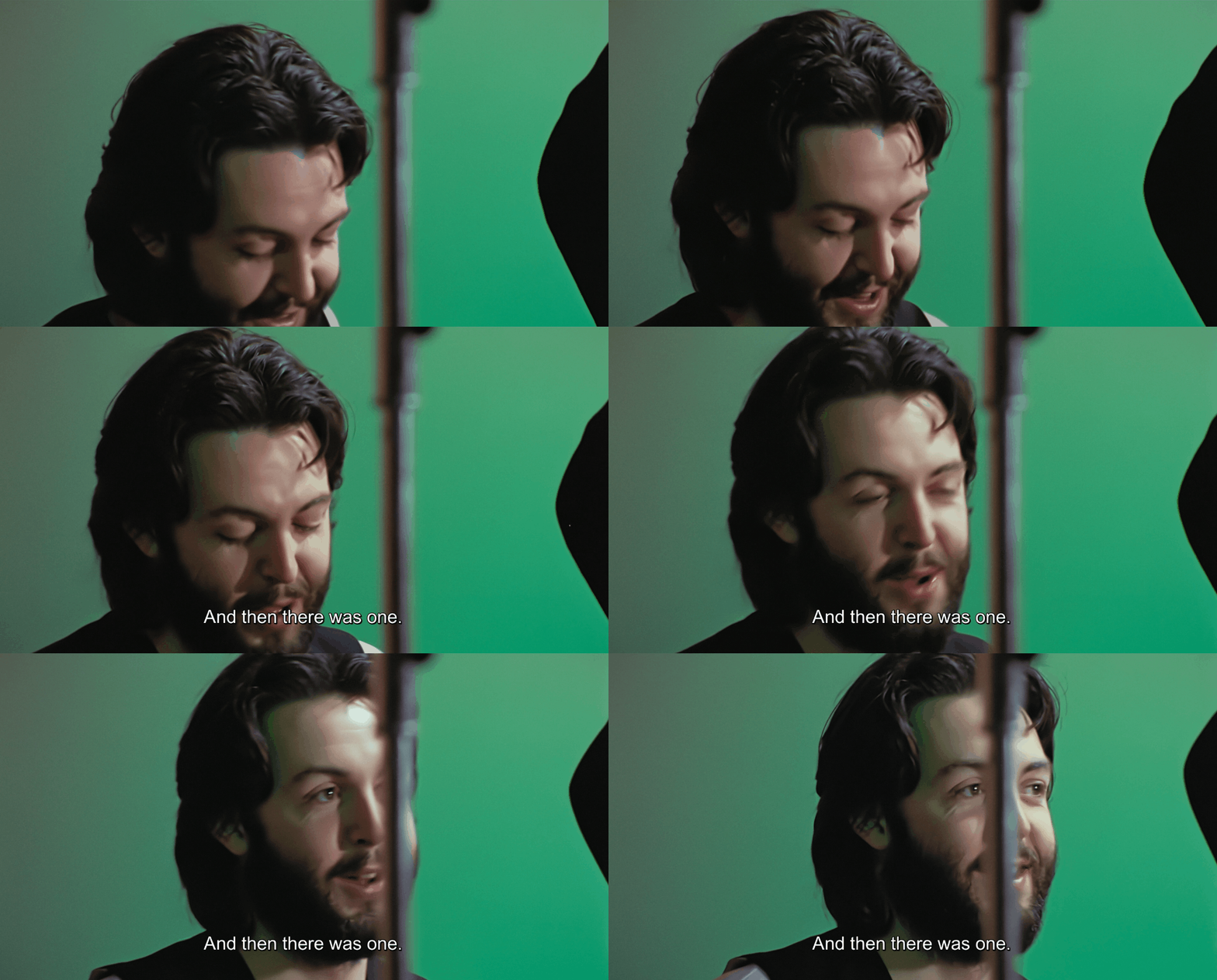
This time, Paul McCartney’s line was delivered with a smile: “And then there was one.”

It was up to the viewers of the 2021 Get Back docuseries more than 50 years later to make out the invisible wink and deliberate nod to Paul’s tearful “and then there were two” from a day before — though in 21st century TV time, it was only 12 minutes earlier.

While there was just one Beatle at Twickenham Film Studios in the early going on January 14, 1969, Paul wasn’t alone for too long, not even 20 minutes on the Nagra reels capturing the sessions’ audio largely in real time.


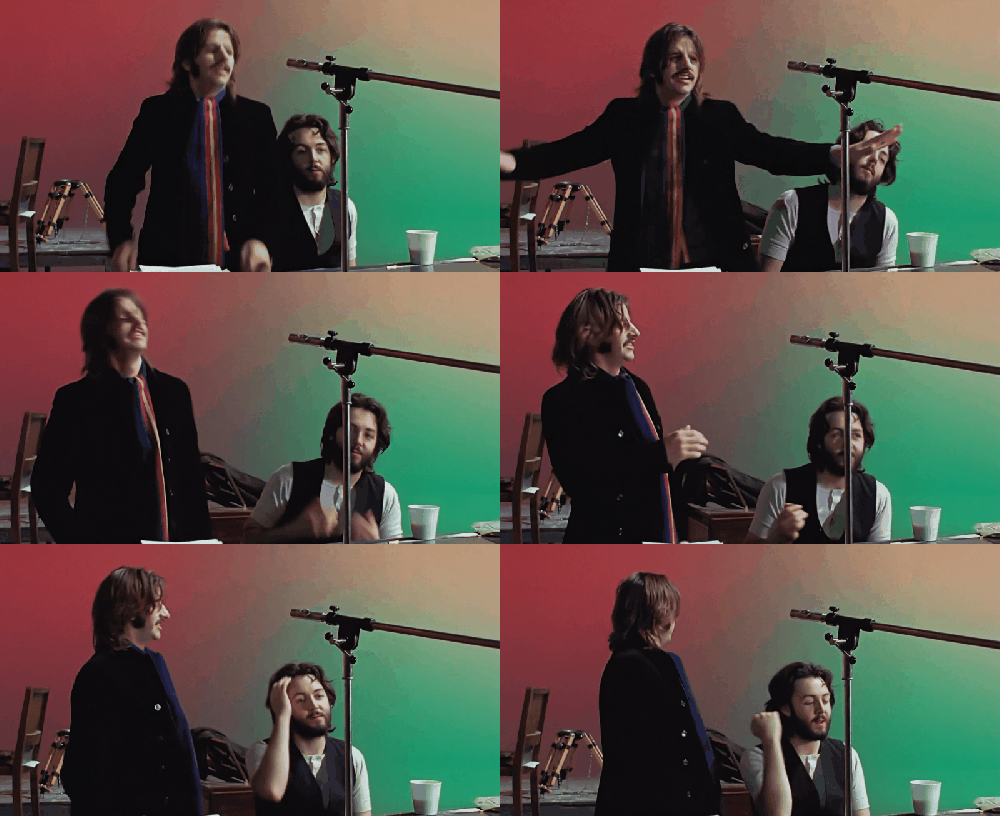
Then there were two once again as a sleep-deprived Ringo Starr bounded in, and the Beatles’ rhythm section exchanged exaggerated greetings.

Ringo: “Morning, Paul!”
Paul: “Morning, Rich!”
Ringo: “How are you this morning?
Paul: “OK!”

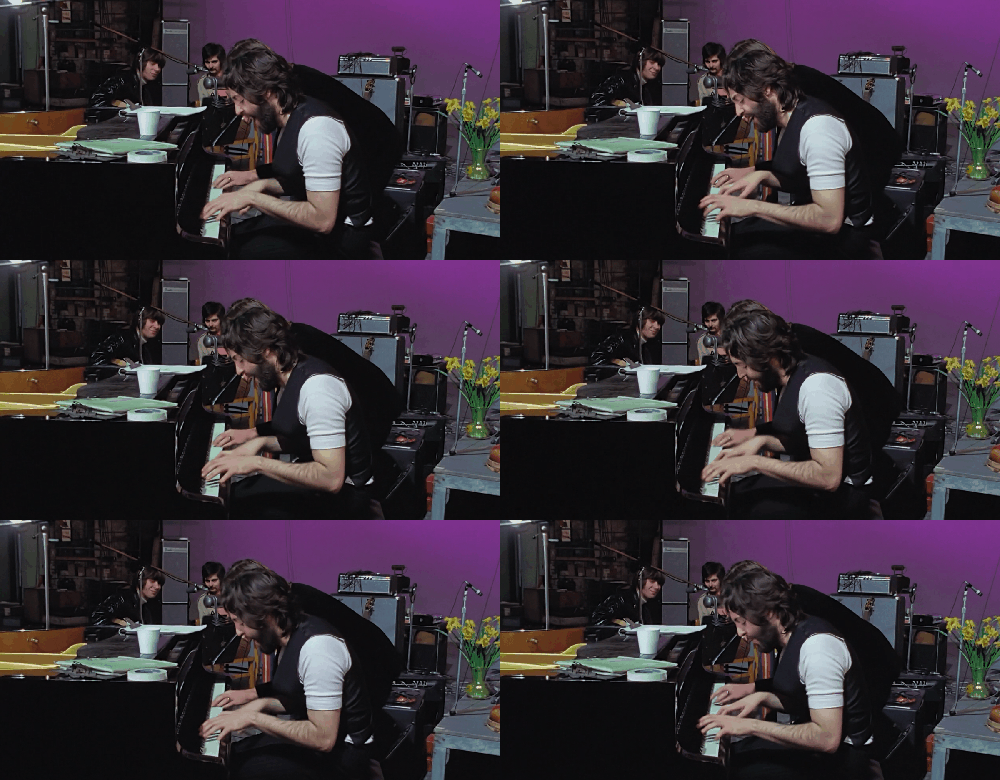
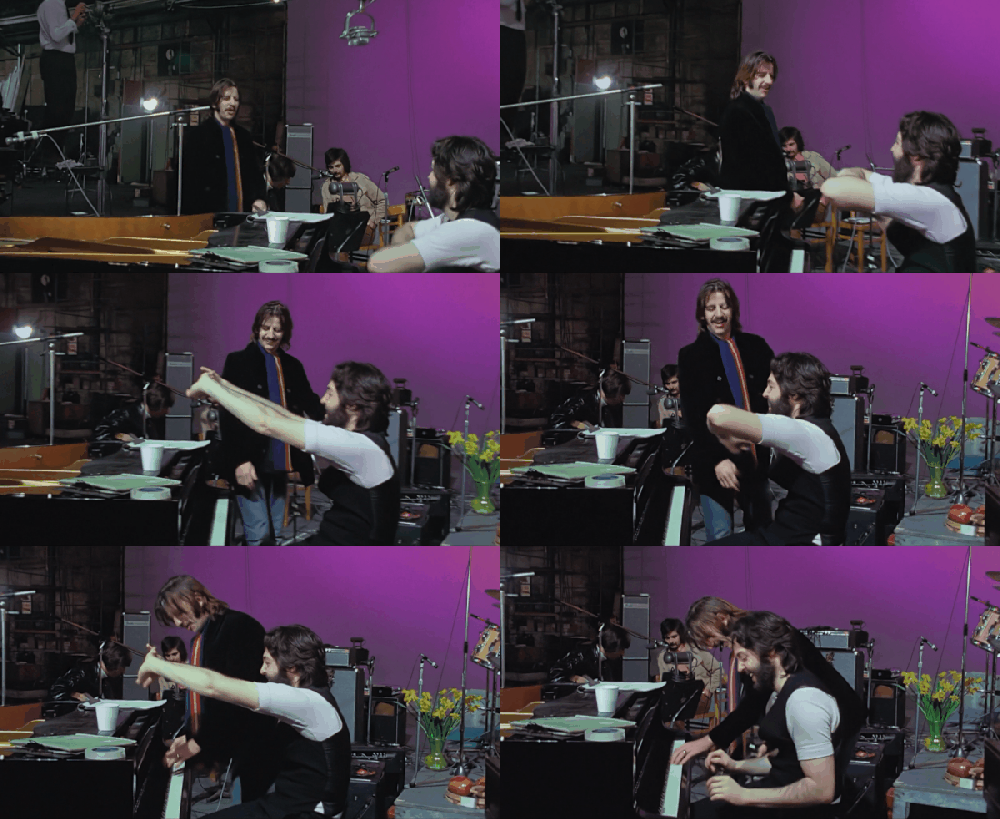
After a full-arm stretch and crack of the knuckles, Paul – who had been sitting at the piano — struck the keys, and Ringo immediately joined in.

Maybe I’m not giving January 1969 Ringo enough credit as a piano player, but I’ll leave it as an open question if this was a pure improvisation or something specific Paul and Ringo had worked on before.

This is not to say Ringo was a finished product as a piano player. You can see him bracing one hand with another as he slapped out high notes — maybe it was just a gag —  playing the high notes while Paul pounded out the chords.

Paul casually delivered a lyric to their song. A jumpy slice of New Orleans improvisational piano jazz, it lasted all of 70 seconds.

Well, I bought a piano the other day
I didn’t know music to play
You had to play the goddamn thing
Oh, baby!
(Or something close to that)

It’s an amusing callback to Ringo’s own “Picasso” from early in the sessions, from the “I bought a Picasso” line down to the closing “oh baby,” which was a signature Ringo closing lyric at this point. Paul and Ringo clearly had a great time playing together, something that was obvious to viewers in 1970 as much as it is to us today.

This little slice of life coexists in Let It Be and Get Back in nearly identical presentations. Let It Be’s version lasts all of 5 seconds longer – both are slightly edited down from the original performance.  The differences between the two visuals are purely cosmetic and seem like change for change’s sake, showing the duo’s hands at the piano when the other shows a view from their left, for instance.

But then there were two (more important differences).

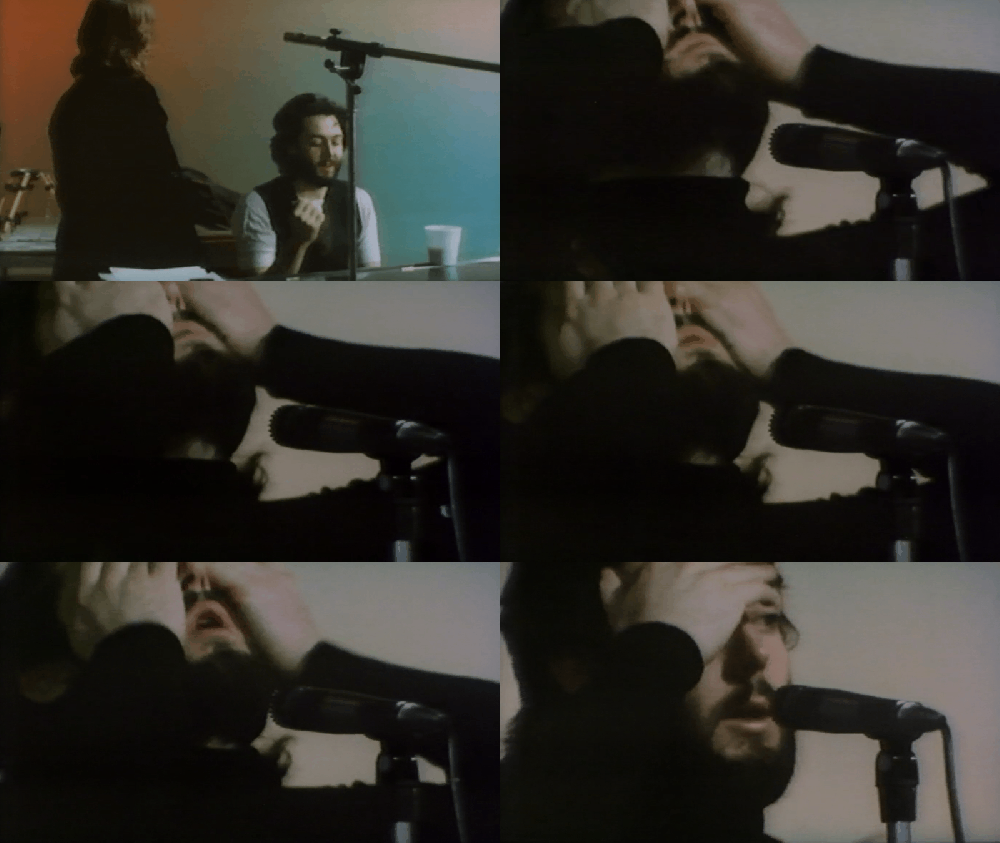
The first is the timeline. In Let It Be, the sequence is preceded by a January 9 version of “One After 909,” appearing about 13 ½ minutes into the film. After the piano jam, Let It Be sends the viewer into a January 6 rehearsal of “Two of Us” that eventually leads to the “I’ll play if you want me to play” argument (Director Michael Lindsay-Hogg uses Paul’s running his hands through his hair at the end of the performance to lead directly to the next scene of ensuing frustration.)

The transition as it appears in Let It Be.

Get Back roughly follows the progression in real time on the morning of January 14. It doesn’t come immediately after clapper loader Paul Bond said he wanted himself to buy a piano as it does in Get Back, but you can certainly see why that narrative device was used, and it was close enough in real time to work.

There’s another very notable divergence between the two films. When it came to the credits in 2021, then there were three (songwriters). Based on that clear first lyric and presumption it was a newly published original, the song was credited on screen as “I Bought a Piano The Other Day,” a Lennon/McCartney/Starkey composition.

Even with John clearly not yet on site, the Lennon/McCartney credit structure was used (as it was elsewhere with similar absent credits – but not future solo songs), with Rich Starkey an obvious contributor.  (Just look at “Piano Piece [Bonding].” That shouldn’t be a Lennon/McCartney song, since it’s probably already a Jesse Fuller original. More on that in the previous post.)

To paraphrase an earlier lyric credited to the Lennon/McCartney/Starkey songwriting trio, they didn’t even think of it as something with a name — or something long-forgotten that already had a name for the last 50 years. After all, it already had a title, and it wasn’t “I Bought a Piano The Other Day.”

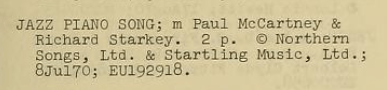
Nobody has never spun an official version of “Jazz Piano Song” on a turntable or streamed it on Spotify. But that recording, originally released as part of the Let It Be film but not on the soundtrack LP, is the real thing. “Jazz Piano Song” – admittedly not the most dynamic title — was copyrighted in the U.S. on  July 8, 1970, by Northern Songs and Startling Music, credited to McCartney/Starkey. It’s a matter of semantics if it was really released, but it certainly came out.

From the July-December 1970 volume of the Library of Congress’ Catalog of Copyright Entries of Music.

Today in 2024, then, there are two (copyrighted versions of the same song): “Jazz Piano Song” and “I Bought A Piano” are one in the same. I can only guess the decision to separately copyright the latter was an oversight, a generic disregard and abandonment of “Jazz Piano Song,” Let It Be and its era. Kudos to the Lennon Estate for sneaking away a few extra dollars and pounds for a song he had absolutely nothing to do with and was already accounted for, credit-wise.

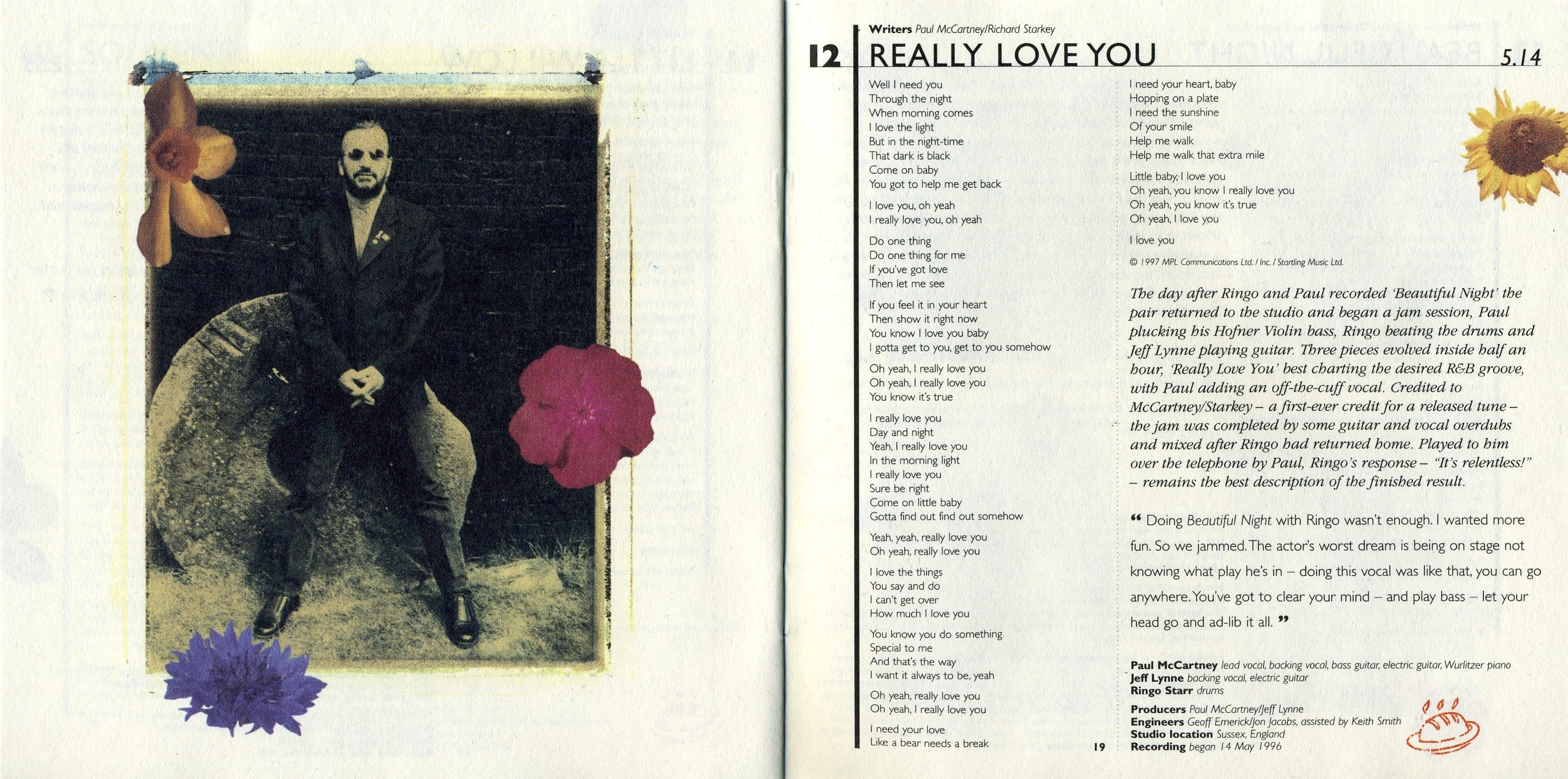
It took more than 25 years for the McCartney/Starkey duo to team up on a follow-up composition. The liner notes to Paul’s 1997 LP Flaming Pie might obliquely reference “Jazz Piano Song,” saying in the description of “Really Love You” that it was “[c]redited to McCartney/Starkey – a first-ever credit for a released tune.” That note could also be referring to “Angel in Disguise,” an early ‘90s Paul demo with an added verse by Ringo, and thus another McCartney/Starkey unreleased track. Or it could just be covering behinds on the assumption there must have been other unrecorded and unreleased McCartney/Starkey tracks from 1962-1997.

From the 1997 liner notes to Flaming Pie.

It’s at this point on January 14, 1969, the focus shifted from an obscure McCartney/Starkey song credited twice into a modest hit song written by Paul McCartney alone that wasn’t credited to him at all. (Some of this sequence appeared in Get Back, albeit compressed and a little out of order, too, although not in any way that misrepresented the moment.)

“Did you write ‘Woman’ by Peter and Gordon?”  Michael asked. “I loved that song.”

Paul said he did too.

“Woman” was a 1966 single for the since broken-up duo. It was also a deliberate experiment conducted by Paul.

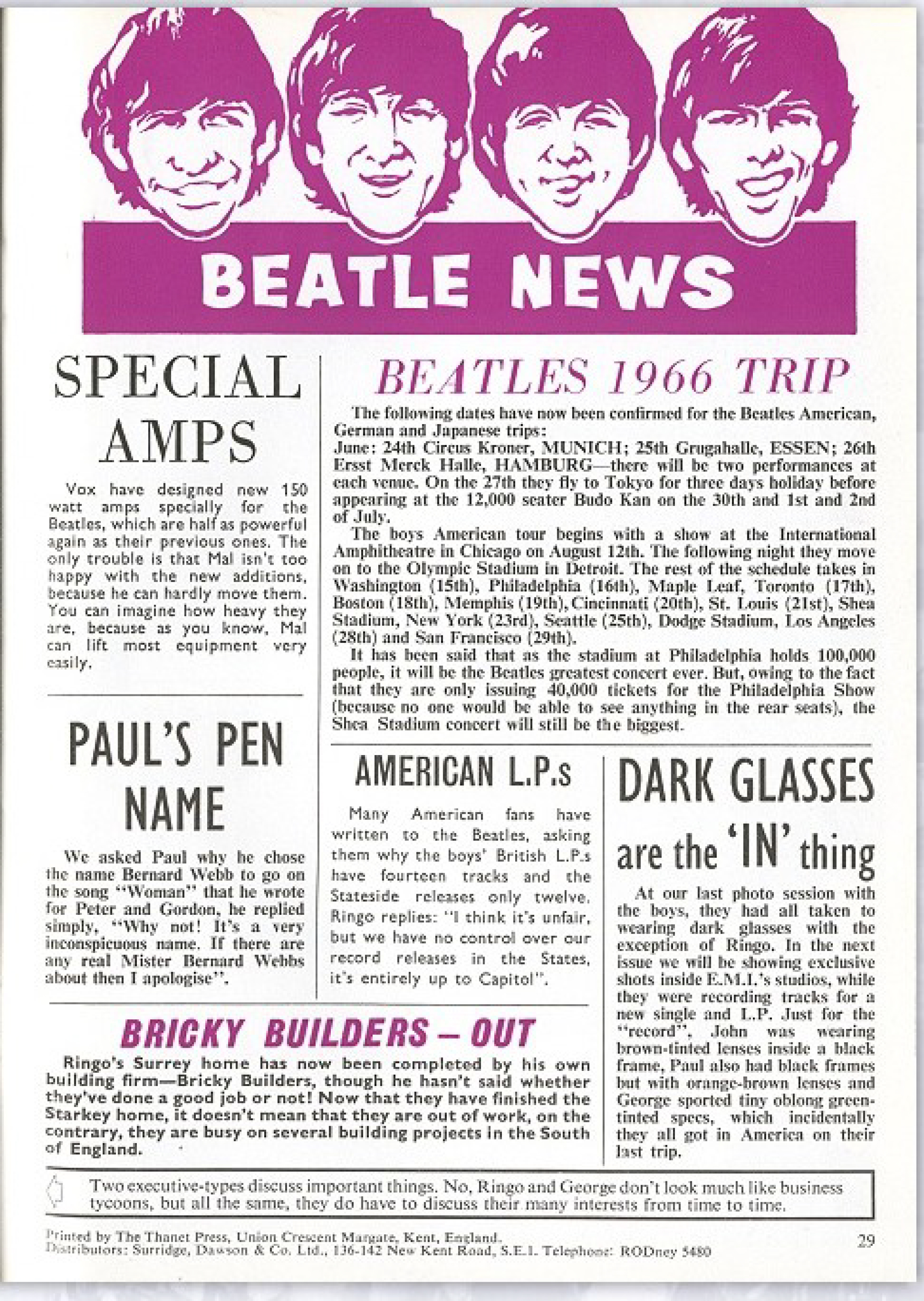
“Bernard Webb, an English law student in Paris, sent this song to the Beatles, who having plenty of their own, passed it on to their old mates,” wrote one representative review of the song, outlining the origin story fed to the press.

Like Paul Ramon before, and Apollo C. Vermouth and Percy Thrillington to come, Bernard Webb was one James Paul McCartney, this time taking a pseudonym – “a very inconspicuous name,” per Paul in the May 1966 Beatles Book magazine — in a ploy to see how well his song would chart as an anonymous author and not half of the world’s most famous pop songwriting team. The answer was modestly well, with the big production number landing in the top 30 in the U.K. and inside the top 15 in the U.S., although some of the movement up the charts did come after the secret was let out that Paul was behind the curtain.

The “mammoth Peter and Gordon treatment,” as Paul described it, gnawed at the songwriter years later. (Meanwhile, as we learn by watching Get Back, Ringo spent part of this performance mugging for the cameras.)

“We did a much better one very first time we ever did it,” Paul said on January 14, after singing the first verse a capella. “It was very dry. Just little. With like about eight violins. …  We were very fussy at the time, didn’t like it, so it got turned into a mammoth ballad.”

Modestly, he concluded, “It’s a great song” before delivering a straightforward performance at the piano, repeating the first verse several times. He later played it again imitating the “great big Gordon bit” to laughter.

I wonder if Peter’s still got the original thing of that, cause we did a great version first time we did it. Only Gordon couldn’t get the high notes. … But it was all right though, it was OK. It’s just we were so fussy we thought “this is the song, this is the one.” And they’re so fussy about it, that we chucked it, jacked it in and just let them go and do it again. But they did it the next time as mammoth Peter and Gordon treatment. It’s too sort of big. The first time we did, it was little, it was great.
An acetate of the “original thing” – purportedly featuring Paul on drums — went to auction in 2013, and quickly founds its way online.

A mammoth treatment isn’t necessarily a disqualifier for Paul, though, who resumed playing the piano after a brief conversation celebrating Johnny Cash (look for that in a future post!). In Get Back, Paul introduces the song saying, “I had one this morning.” In fact, he said that earlier, when playing “The Day I Went Back to School.”  On the Nagras, Paul gave no indication the song was an original or anything beyond something he was improvising.

Paul scatted a few indecipherable lines, although a few are identifiable, sung in an exaggerated fashion: “We’re just busy riding, driving in the back seat of my car.”

Two years before it concluded RAM (and eight years before Thrillington’s “cover”), “The Back Seat of My Car” was new enough Glyn asked if Paul was playing a Beach Boys song.

“It’s just like a skit on them,” Paul replied.

Indeed it played out like a comedy– thankfully, this sequence made Get Back, too – as Paul openly played to his audience, embellishing high and low harmonies and vocalizing brass and percussion as he shared draft lyrics of teenage romance. “Gee, it’s getting late!” drew big laughs, for instance. Mexico City hadn’t been introduced as a destination, and the subjects didn’t yet believe that they can’t be wrong.

Conceived in summer 1968, “The Back Seat of My Car” — which was ultimately credited to Paul alone — wasn’t finished in January 1969, but Paul clearly had scoped out the grand scale of the song, more than two years before he’d ultimately employ an orchestra to perform George Martin’s score for the song.

Having completed his enjoyable reveal of “The Back Seat of My Car,” Paul left the stage to take a call, and the Nagra microphones shifted to a conversation between Ringo and Michael, following a brief appearance by Mal Evans. The roadie himself had just taken a call from John, who for a consecutive day was late to the session.

“What did Mal say? … What’s going to happen this morning?” Michael asked Ringo.

“Nothing,” he replied. But …

“This afternoon, watch out!”

1 Comment

Filed under Day by day

Get Back advent calendar: Countdown to the sessions

The Beatles, as depicted by John Lennon in November 1968, as published in the  December 7, 1968, issue of New Music Express.

In my faith, we count down the 25 days to the start of the Get Back/Let It Be sessions. This is completely normal.

To operate this particular digital advent calendar, simply click the day below and read up on what our boys and their extended circle were doing in these days leading up to their Most Holy Assemblage at Twickenham Film Studios on January 2, 1969.  

10 Comments

Filed under Day by day, Extra

Jan. 13: Et cetera

For all the storylines and spectacle of the Beatles’ January 13, 1969, there’s even more detail that just didn’t fit into the 20,000 words I’ve already written about this single day. For context, Kafka’s The Metamorphosis checks in around 21,000 words, most about a bug yet not a single one about a Beatle.  Here are some of the delicious leftovers from our Fab Four’s day:

***

It’s the opening theme to the second episode of Get Back:

“You’re my world, you’re my only love,” croons Ringo Starr as the credits roll.

This audio is displaced. In its original context served on the Nagra tapes, the moment comes a good hour after the documentary implies, happening when Ringo is exiting, not entering, the Twickenham Film Studios main stage on January 13, 1969, just before the drummer joins Paul McCartney in meeting John Lennon at the Twickenham canteen.

It’s not obvious what song Ringo’s singing. The vocal could be a misquote from Liverpool pal Cilla Black’s 1964 smash “You’re My World,” a four-week UK chart-topper that was ultimately knocked out of the top spot by Lefty Wilbury.

Years earlier, Ricky Nelson had a hit with “You’re My One and Only Love,” but that doesn’t seem like the inspiration, either.

It could just have been spontaneous on Ringo’s part.

There is another song he could be quoting more directly, though the source is a mystery. A clue could be in a hit song not by Ricky Nelson but Lefty’s brother Nelson Wilbury  — Ringo’s bandmate George Harrison.

George’s “When We Was Fab” paid homage to life as a Beatle, but one line that fit unassumingly in 1987 stands out a little bit more as we revisit January 1969.

“You are my world, you are my only love”

Remember when around the same time, George pulled a largely unknown, decades-old B-side and album track from his memory and record collection and stuck it on his new album?

It sure seems there’s a missing link for “you’re my world, you’re my only love” — maybe it’s something the Beatles’ drunk uncles would sing at the pub in the Dingle or Speke in 1947 — a composition since lost to time that inspired callouts from both Ringo on January 13, 1969, and George, nearly 20 years later.

***

The near(er) future — more like 1974 — was tangible on January 13, 1969, too. Just ask Paul.

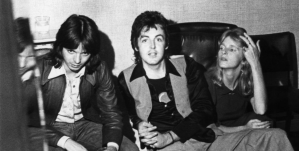
With two future members of Wings in the room at Twickenham Film Studios, a third was an occasional topic of conversation throughout the course of the day. Linda Eastman wasn’t a keyboardist yet, but Jimmy McCulloch, all of 15 years old and more than five years away from joining Wings, already earned status as a sharpshooter guitarist.

In flight: Jimmy McCulloch, Paul and Linda McCartney of Wings

McCulloch’s new band, formed by The Who mastermind Pete Townshend only a few weeks earlier, had barely started recording. Still, word certainly got around in the right circles in early 1969.

“[The Who’s manager] Chris Stamp told me that they’ve got a new group now … the guy (Andy Newman) that works in the GPO (General Post Office),” director Michael Lindsay-Hogg said. “What’s he called? Clapperbell or something. And they’ve got a guitar player who’s 14 [sic], who looks like he’s 6.”

“Plays like he’s 80,” Ringo retorted.

It wasn’t called Clapperbell, instead it was …

“Thunderclap Newman,” Paul said, hours later and out of the blue — perhaps he caught a glimpse of them on the front cover of the most recent issue (January 11) of DISC and Music Echo —  in the closing moments of the day’s Nagra tapes.

“That’s the guitar player they’re telling me about who looks 6, who’s going to be 14,” Michael replied, excitedly.

They may have been formed by the Who’s leader, but Thunderclap Newman’s early biography tied closely to the Beatles, too. The group’s smash debut single “Something in the Air” – originally titled “Revolution” but renamed for obvious reasons – has the distinction of knocking “The Ballad of John and Yoko” from the toppermost of the poppermost in July 1969. The song later appeared on the soundtrack to The Magic Christian which, of course, starred Ringo and was co-headlined by Badfinger’s version of “Come and Get It,” as penned by Paul.

“Something in the Air” was recorded at Townshend’s home studio in Twickenham – precisely one mile from where the Beatles were presently gathered.

***

If it wasn’t enough to dream of future bands, the January 13 Nagras revealed pre-Beatles adventures, too.

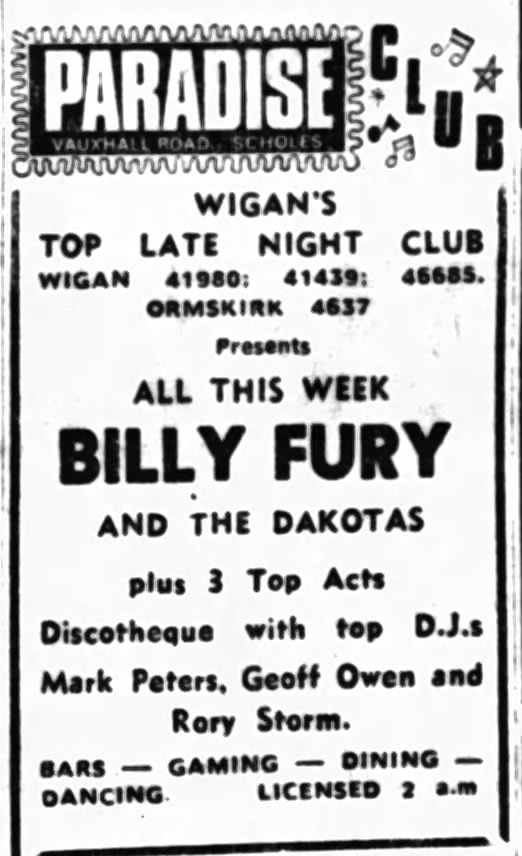
On the heels of Linda’s relating a story of a horse stepping on her toes, Ringo described a more catastrophic injury suffered by his previous bandleader, Rory Storm.

“[He was] diving off New Brighton diving stage, going down and down, and he thought, where’s the water? And just as he decided to look up for the water, he slipped, and he broke his nose. So with a broken nose, blood everywhere, he ran right back up and dived off again.”

“He would, yeah, that’s Rory’s thing,” Paul chimed in before saying he recently ran into Rory “in the drive, washing his car.”

“He’s a swimming instructor when I saw him, and DJing, and trying to put a new group together. He’s great though, Rory, I like him. He’s a hustler.”

***

You’ll remember the sequence as comic relief in an otherwise sobering segment in Get Back.

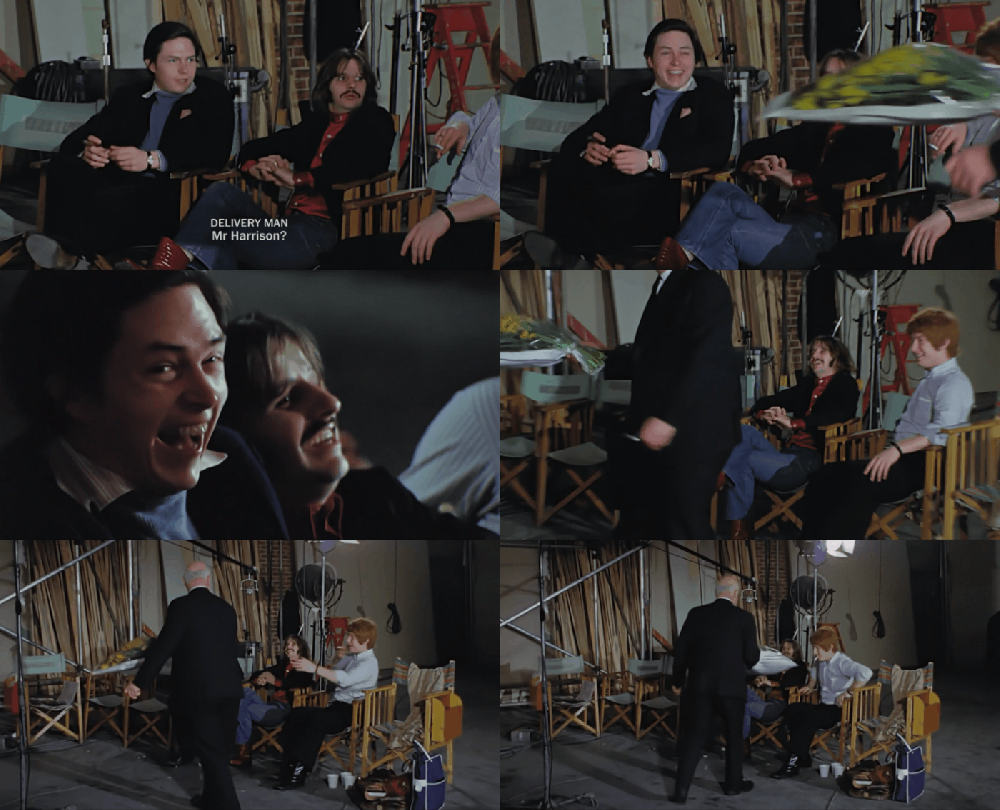
A man delivering flowers to George seemed to be the last man standing who couldn’t recognize the absent Beatle. Doubled over laughing, Michael pulled himself together in time to ask Ringo if he liked the Hare Krishnas, who sent the gift.

“No, not really,” the drummer replied in perfect deadpan.

***

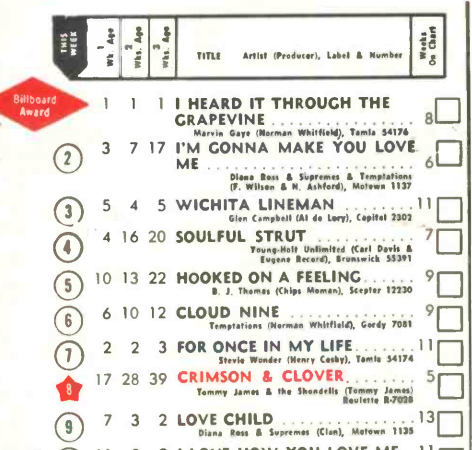
“Have you seen [that of] the top nine records in America, five are Motown?” Michael asked early in the day.

Music was always on everyone’s lips, even as the Beatles’ own production stalled.

“Penny Lane, I think, is one of the greatest songs I’ve heard in my whole life. You like it?” Michael asked later.

“Yes, but I don’t think it’s the greatest song I’ve ever listened to in my whole life,” Ringo replied in earshot of the song’s author.

Conceding how much Penny Lane “moved” him, Paul asked Michael if he was “from suburbia.”

MLH: No, it had to do with nostalgia for me.

Ringo: His father’s a fireman.

MLH: No, nor [worked at a] barbershop. But it’s about nostalgia, which always makes me break up and cry. That’s why Otis Blue is a very big [album] in my life.

We also learned a little trivia about the first records ever bought by some of our protagonists.

For Michael, it was “Quarter to Three” by Gary U.S. Bonds, while Glyn Johns’ first single was Lonnie Donegan’s “Rock Island Line.”

 ***

I mentioned this quote from Ringo in an earlier post somewhat in passing, but I thought it was interesting enough to call out again with greater surrounding detail.

With the time-limited Get Back sessions ongoing as filming for The Magic Christian loomed on the horizon, he was asked by Michael what he enjoyed more, drumming or acting. The answer revealed Ringo’s strong professional motivation. Someone give this guy a raise — and a little more vacation time.

“Well, it’s hard to say, doing so little movies and such a lot of the drums,” Ringo answered. “‘Help!’ and ‘A Hard Day’s Night’ was all right because its the four of us and we played, and did it. The only trouble with those [was] when I didn’t know what I was doing. … So I did ‘Candy‘, which was only two weeks — which was great because I have to do something.” (emphasis mine). 
It wasn’t enough to be a father of two young children and drummer of the biggest band on earth and galaxies beyond. Ringo just had to work and eliminate extended down time. No wonder he got along so well with Paul.

4 Comments

Filed under Day by day

Jan. 13: Looking for the greener grass

Paul McCartney emerged January 13, 1969, as a journalist investigating a story of his own creation, and he spent the back end of his day at Twickenham Film Studios enduring some newsroom drama to sweat a co-byline with John Lennon and attack most of the five W’s of a catchy little tune the world eventually knew as “Get Back.”

True reporters, they worked on a tight deadline.

“OK, let’s try to get words to ‘Pakistani,’” Paul said of the song, which was very much in progress and still politically tinged. “We’ll do an hour,” telling director Michael Lindsay-Hogg “don’t worry,” because the staff will deliver content this afternoon (even if it didn’t last quite as long as promised).

The Beatles didn’t have George Harrison, who fled to Liverpool, but they still had an imminent live show on the schedule and songs to complete. The enduring yet unsettled Lennon-McCartney partnership amounted as the lede of the secretly recorded lunchroom conversation only recently concluded — as well as the lengthy period Paul spent with others before John’s arrival that day — so this songwriting sprint served as a much needed playdate, too.

But before attacking “Get Back” on the Nagra tapes, Paul continued to share what he felt his approach toward George should be right now, as he spoke presumably, to John and Ringo Starr and with the same candor everyone shared in the lunchroom earlier.

‘Look, I once thought the situation was that, and I don’t anymore.’

But I find that the most difficult thing ever to say. Because I hear myself say it, and I haven’t quite said it. I didn’t quite convince him. And as I think that, you think that, he thinks that — blah, blah, blah, it goes on forever.
Paul continued in another instance that’s unclear who he’s addressing, either straight to John or indirectly to George.

We’ve got the same problem that causes you to get on your guitar and wail. It’s the same one over and over. I’m wailing with ya. But I don’t say it right there and then, because I suspect we mightn’t be wailing about the same thing. So I won’t quite say it, and I never have quite said it, but some time I hope to say it. I may never say it, and fuck it if I don’t.

If Paul was speaking to John, he still wasn’t quite saying it. If it was directed to George, it remained theoretical — George was in Merseyside, as Ringo reported.

Mal sticks around, with pencil

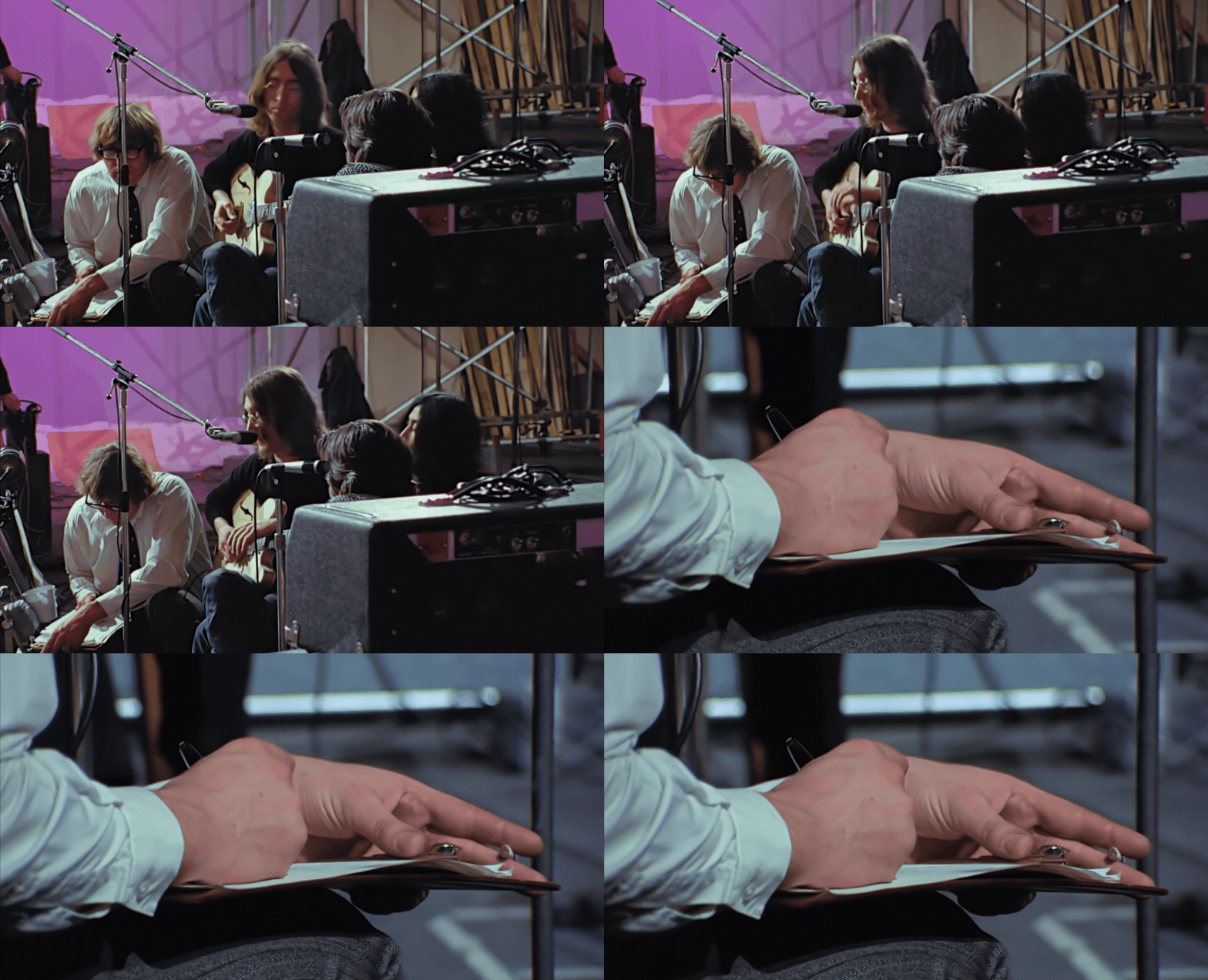
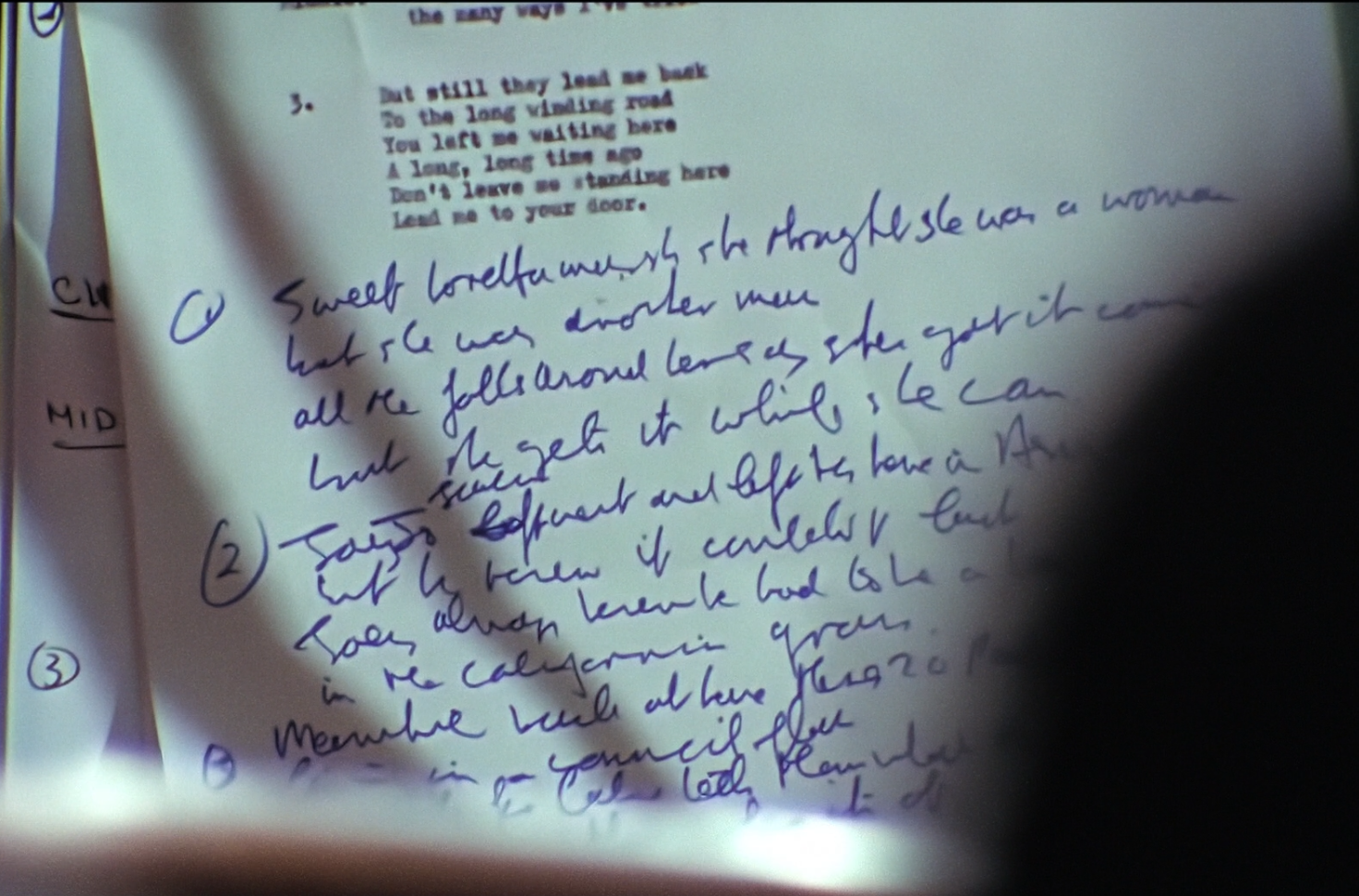
This was a half-hour on the tapes resembling something closer to a vintage McCartney-Lennon writing session. Mal Evans — who Paul implored to “stick around with pencil” — took dictation and, as he did so many times over the past decade (including these sessions), participated uncredited in the songwriting process, too.

Jo Jo Jackson eventually lost his surname, though it stuck for now. Loretta kept her saccharine sobriquet, but her family name was very much up for debate on the 13th, with Paul souring on John’s suggestion: “Marsh.”

“We’re not sure about that, but put it in,” Paul told Mal early in the sequence, though he would quickly revisit that decision. We get to see this next bit in Get Back in an edited fashion.

Paul’s first choice suggests a tapping into the character-rich McCartneyverse.

“Sweet Loretta Mary. it’s got to be a name.” Paul tries out the name a few times, but Mary found her way in only one song from these sessions.

The process continued.

John: Sweet Loretta Marvin.
Paul: It’s got to be a meah [sound]
John: Meatball
Paul: Martin

In other words, “Sweet Loretta Meatball” enjoyed a non-zero chance of being a Lennon-McCartney lyric.

Sweet Loretta Martin was already an option Paul suggested days earlier.

While the surname search continued, it’s notable the established first names — Jo Jo and Sweet Loretta — never encountered debate.

Decades later, Paul maintained Jo Jo had no specific inspiration. From Barry Miles’ 1997 authorized biography Many Years From Now:

Many people have since claimed to be the Jo Jo and they’re not, let me put that straight! I had no particular person in mind, again it was a fictional character, half man, half woman, all very ambiguous. I often left things ambiguous, I like doing that in my songs.

Paul’s 2022 memoir Lyrics reveals no additional information on the people named in the song.

Upon his suicide in 2000, Joseph Melville See, Linda Eastman’s first husband — whom she met and later married in Tucson, Ariz., in 1962 — was commonly referred to as the inspiration of “Jo Jo.” There’s not much to go on beside the name Jo(seph) and the locale — his biography doesn’t otherwise fit the lyric. Moreover, he commonly went by “Mel.” So it’s a nice idea, but he doesn’t seem to be the answer.

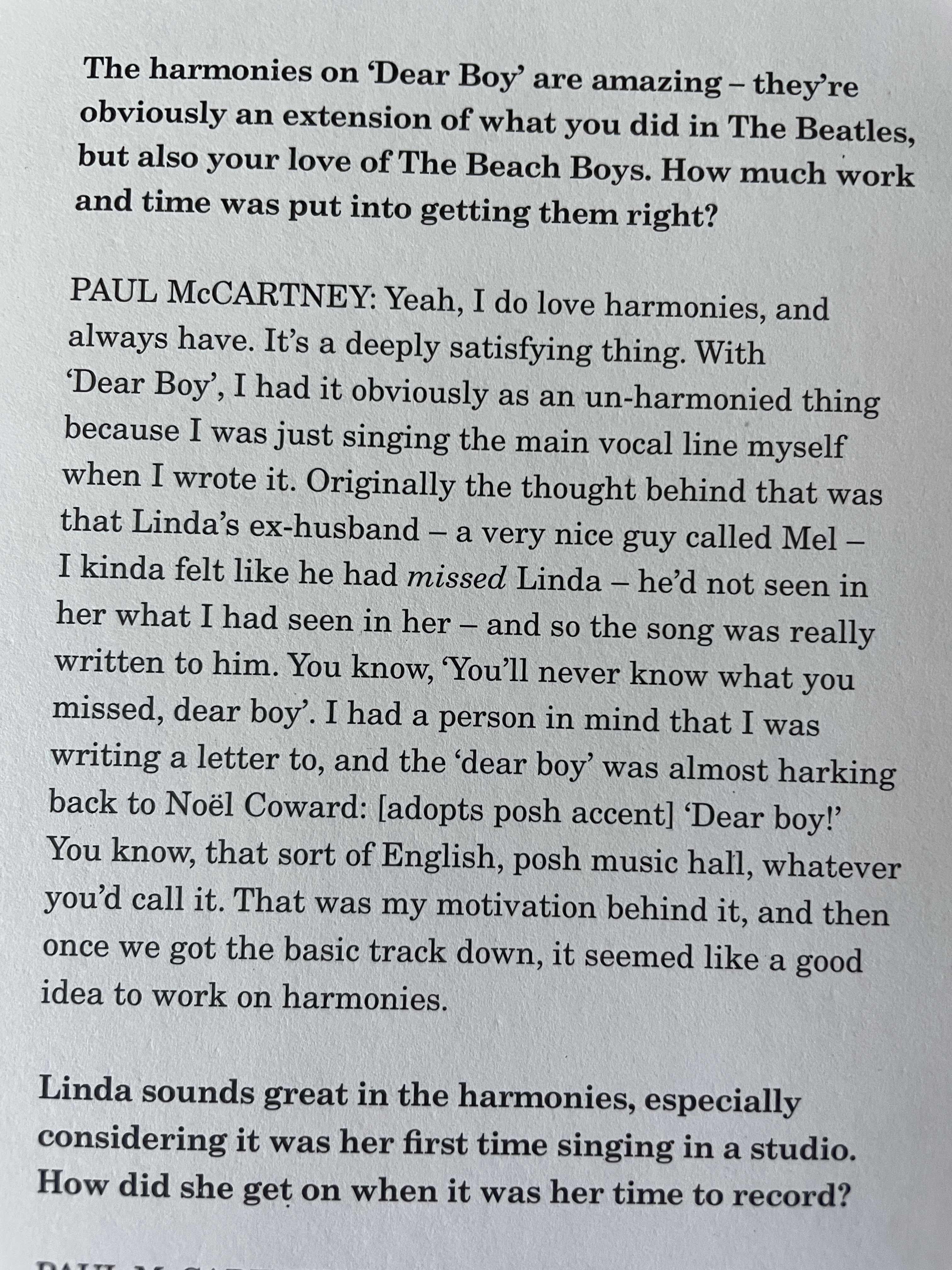
(If Paul sincerely wasn’t writing about his future wife’s ex-husband here, that changed in a couple years. Paul openly claimed “Dear Boy” off 1971’s RAM was about See — and not Lennon, as is commonly suspected.)

Paul conceded to the other Beatles less than 100 hours earlier that ”Get Back” was “not about anything,” so it’s fair to take him at his contemporary word. “Sweet Loretta” doesn’t seem to refer to anyone either. He used “Theresa” in place of “Loretta” at one point as he first started working through the song the previous week. As Paul put it about another lyric earlier on January 13, “It sings all right.”

That same singability informed the where of Get Back, too.

Since the song’s origin, the character in the first verse escaped the same southwestern state, Arizona. On January 9, as that verse developed, Paul sang on a few occasions “I left my home in Arizona.” Subsequently, including on January 13, he toggled between “Northern Arizona” and “Tucson, Arizona” as the point of departure. (Tucson is on the southern end of the state, for those unfamiliar.)

After one of the run-throughs, John fact-checked the lyric.

John: Is Tucson in Arizona?
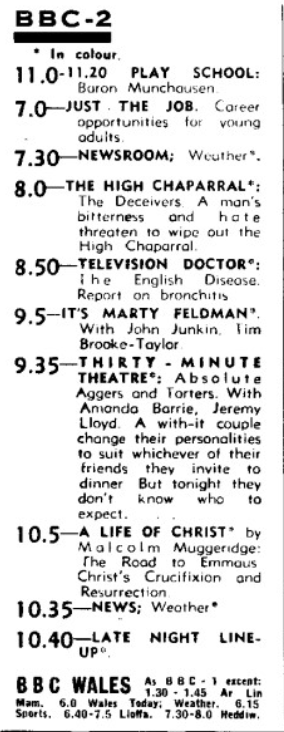
Paul: It’s where they make “[The] High Chaparral.”

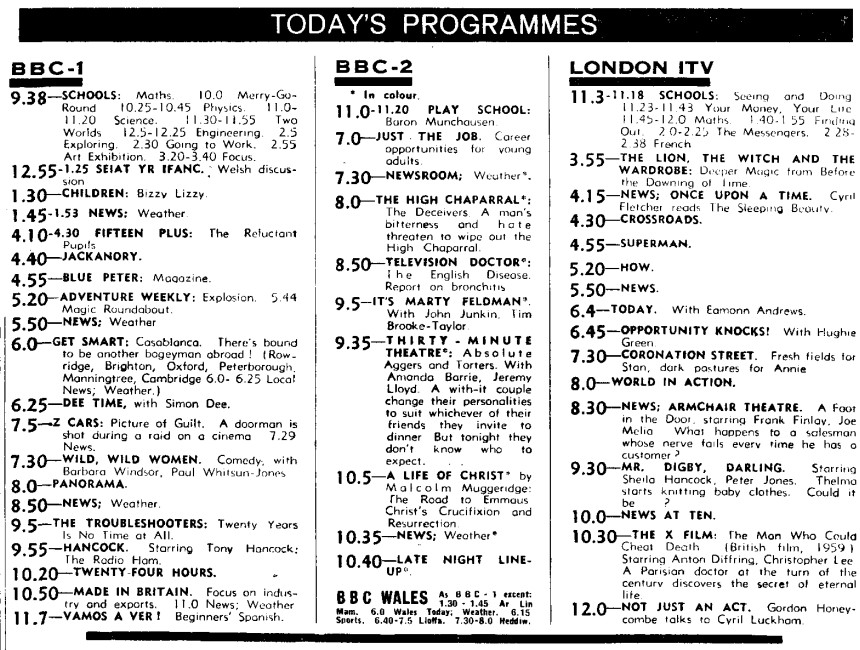
January 13, 1969, BBC-2 listings

January 13, 1969, BBC-2 listings

The American Western was a fixture on BBC-2, broadcast Monday nights, so it made for an obvious benchmark. More relevant to Paul, the second-largest city in the state was the former home of his girlfriend, who studied art history at the main Tucson campus of University of Arizona. Linda’s first child, Heather, was born in Tucson in 1962.

(Paul’s affiliation with that area was only just beginning: A decade after these sessions, the McCartneys purchased a ranch in Tucson.)

Just across Arizona’s western border lies the Golden State, and the line “California grass” predated most of the lyrics in “Get Back” as Paul sang it at the song’s origin on January 7. But the California reference wasn’t finalized, and this led them to work on the what and why of the lyric.

“Joey ran away from his home in Arizona,” Mal said, searching for a line.

Paul: Looking for a … something to last? … Looking for a what? What is it? Looking for a home to last …
Mal: Looking for a love to last?
Paul: Something like that, yeah.

Ringo played the long game, approaching the title of his 1975 greatest hits compilation with “blast from the past.” (This scene, editied, was featured prominently in the official trailer for Get Back.)

Mal jumped off the suggestion and proposed both “looking for his blasted past” and “trying to escape his past.”

At the end of the day, Paul ultimately settled on “looking for the greener grass,” which comes off a little boilerplate and lazy, especially when he already had the more evocative “California grass” lyric in his back pocket for the time being. Paul was sure to this point, however, that he “had to be a loner,” with that lyric, also dated to January 7, remaining in the song today.

Upon the conclusion of the session, Paul settled on the first verse as such:

Jo Jo left his home in Tucson, Arizona, looking for the greener grass
Joey said you had to be a loner, but he knew it couldn’t last

“Leave that verse, exactly as it is,” he told Mal. “And next time it might be better.”

Throughout this 30-minute sprint working on “Get Back”, the power trio thrashed at full throttle. Like their jams following George’s walkout the previous Friday, they’re edgy and loose. Paul and John often share lead vocals, singing in unison.

With the Beatles’ lead guitarist 200 miles northwest, Paul appointed John for a spontaneous solo. He replied with something rudimentary, but the assignment stuck — the solo remained John’s own through the song’s final performance on the roof.

Even with the song unfinished in so many parts and rushing through a brief window this afternoon, Paul remained characteristically mercurial, criticizing Ringo’s drum outro (“you’re doing a bit too long on those breaks”), vocalizing exactly how he wanted it to sound and offering specific instructions.

“So once you go on to the top tom-tom it’s like four from there on,” instructed Paul.

For a band highly conscious of poor focus and squandered studio time — a week earlier, Paul complained, “I think we do waste, physically, waste a lot of time, the four of us together” — this concentrated “Get Back” session was a very efficient use of time. Whether it was because there was one less cook in the lunchroom or a general understanding the three of them had their own reasons to wail, this particular afternoon was not squandered.

Satisfied with their progress, Paul called it a wrap.

“OK, and we’ll go home now,” he said. “We’ll come in tomorrow and try to do a bit more.” They settled on an 11 a.m.-ish Tuesday reunion in the studio.

But was that aspirational? After all, citing the Twickenham facilities crew, Michael said Apple Films head Denis O’Dell “canceled all his stuff for the show.” That decision, made off screen, set off an obvious chain reaction.

Paul: The [show scheduled for January] 18th should be canceled. So we have to be flexible, we’re going to have to be very flexible now. The 18th today has changed to the 19th, cause we lost a day today. Tomorrow it will change to the 20th. The day after it’ll change to the 21st. If George comes back, put it back a full week.

MLH: I think to stay flexible is important.

John stuck an optimistic tone to close out the day in another sequence captured in Get Back. “I’m leaving my favorite guitar here as a sign,” he promised. Paul meanwhile brandished his Hofner bass, replete with the setlist from their final show.

As Paul read song names for the cameras, nobody was certain if that artifact would remain the setlist from the Beatles final live performance. A token from John may not be good enough, and the other Beatles didn’t have time to hang a sign on George.

The new Beatles show would now be pushed to about two weeks out from January 13. While the songs were gradually taking shape, it was a concert that still lacked form otherwise. But even as the producer was canceling “all his stuff,” Michael said in the closing moments of the day’s tapes, “I think at some point we need to talk conceptually about the show.“

With the future fuzzy and Michael clearly feeling the pressure, Paul played for the cameras.

“So I’d like to say to the cast of this whole production, good night, and thank you very much for having us, it’s been wonderful working with you. ‘Cause I know it’s been wonderful working with me, but it’s been wonderful working with you too.”

“Do you think this will help my movie career or not?” Michael asked.

“You know you need this kind of traumatic event,” Paul replied.

***

The Beatles lost a day, but January 13, 1969, wasn’t a lost day. A Beatles ‘69 Comeback Special clearly required George’s participation — otherwise, why put the show off any longer? — but the other Beatles proved they could at least cover the gaps, produce and adapt in his absence. The attention to the lyrics, John’s guitar solo assignment, the care paid to the music are all proof.

Paul’s Monday was exhausting and cathartic. As the workday began, he described the failure to lure George back into the band, detailed the difficulties of his songwriting partnership with John and shared a vision for the breakup of the Beatles. In the lunchroom, the band’s interpersonal relationships were laid more bare in a presumed private setting. And the day at the office ended with a concentrated, successful songwriting session.

The Beatles — minus George and plus Mal and Yoko — at work on January 13. (Photo by Ethan Russell)

John’s day played out differently. We can sketch a scenario in which he probably slept in and deliberately left the phone off the hook — this was when “telephone’s engaged” prior to the “and then there were two” moment — before dragging himself with Yoko to Twickenham in time for the lunchroom discussion. It wouldn’t be any sort of revelation to say drugs may have been involved in his day. In front of the cameras, in the visual we see in 2021’s Get Back, John didn’t look like he was entirely there. But, there he was.

2 Comments

Filed under Day by day