Tag Archives: Ringo Starr

Jan. 10: Knew it wouldn’t last

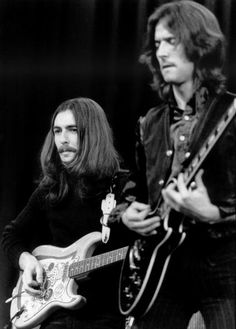
If I needed someone, George Harrison vs. Eric Clapton edition. (Insert Pattie Boyd joke here)

“You need Eric Clapton.”

“No, you need George Harrison.”

As the Beatles worked on the days-old “Get Back,” it was Harrison himself who suggested they call on his friend, the erstwhile Cream sharpshooter, to add an extra line or a solo to the quickly developing song.  John Lennon and Paul McCartney disagreed, trying to prop up George’s confidence and desire — and offer a specific instruction, too, as the band continued work after Dick James departed Twickenham on January 10, 1969.

With George the next to leave the venue and indeed the group, the exchange reads as a tidy — albeit exaggerated and deceptive — emblematic microcosm of the present situation. George was itching to leave, but maybe the rest of the band didn’t know it. Maybe George wasn’t certain just yet either.

The full group worked on “Get Back” and “Two of Us” that Friday, and both songs received a bit of tough love, mainly from its songwriter. But Paul pushed the others, too.

A deep, ongoing concern for Paul was George’s power chord that immediately followed the phrase “Get Back,” a chord he called “passé” in an earlier exchange with session arranger Glyn Johns.

“That suggests something to be, this chord,” Paul said. “We should try to get away from that,” as Paul subsequently refers to the chord as “passé” again, this time directly to George.

Paul: It was a couple of years ago.

George: No it wasn’t, it’s just a chord. … Some chords fit things.

Paul: Chords, like fashions and stuff. But it’s like drainies (drainpipe trousers).

George: Some drainies suit different occasions.

He eventually shrugged off the cross-talk, and the group continued to attack “Get Back,” with George searching for a power chord more in line with the latest trouser fashion.

“For the three of us, that’s good enough for the rock-and-roll thing,” Paul said just prior to George bringing up Clapton as a supplement to the song.

“Just doing simple things until it’s your go,” Paul told George. “Because otherwise you get the guitar conflicting with what you’re singing and all that. And then I’m trying to sing louder to get over the guitar. If you (George) vamp, then it takes away from his (John’s) vamping. It’s like the big, soft, lead guitarist, who just stands there and …”

Little, soft, lead guitarist” interrupted George — who at 5-foot-10 stood the same height as Clapton (who would famously be called on again soon, but that’s for another post).

“No, the big one in our head, who just sort of goes [Paul played straight, staccato power chords]. You can either do that soft or good. I really think it’ll happen better if we’re just keeping it going. A clipped offbeat. ‘She’s a Woman.’ That was just a better rhythm than we have. And ‘Sgt. Pepper’ on the organ.”

Facing this tall order, the group moved into other facets of “Get Back,” including Ringo’s drum pattern, the vocal combinations, guitar solos — including a proposal for both John and George to each have one — and the lyrical content. While “Pakistanis” and “Puerto Ricans” tracked well enough to remain useful to Paul (“Meanwhile back at home there’s 20 Pakistanis living in a council flat”), he didn’t try to further deepen the political discourse.  Instead characters like Sweet Loretta Martin and Jo Jo Jackson were introduced, and while the latter eventually lost the surname, both survived to the rooftop and into posterity.

“It fits — it’s a drag queen. ‘Get back to where you once belonged,’ Paul said.

John chipped in another line that mostly stuck: “But he knew it wouldn’t last.” Paul added the companion rhyme “California grass” although he conceded, “It’s daft, but we’ll straighten it out later.” (He didn’t).

While John and Paul actively hashed out the lyrics as a team, George was uninvolved and clearly disinterested in collaborating beyond defending his guitar parts (and later, making suggestions on a drum pattern to Ringo). Still, there was serious momentum toward building “Get Back,” and John was clearly into the song throughout, delivering a ripping vocal on several takes, at times singing the verses and chorus in unison with Paul or even solo.

Repeated stabs offered positive results, including funky takes featuring a groovy wah-wah solo by George. The song was fast and electric, and a strong example of the Twickenham sessions at their best, genuinely spirited.  

And while John was eager to deepen the arrangement, Paul again tempered the organic enthusiasm. “We still haven’t gotten one straight through yet.” If it wasn’t the guitar part in the chorus, it was the guitar in the verses that nagged him.

Paul also worked to manage a since-discarded introduction that featured the three guitarists playing a “big, long, clear chord” while Ringo was asked to work out an extended arrangement on tom toms, squeezing in as long an introduction as feasible.

“What are you trying to do, jazz?” John laughingly asked Ringo, who’d again be be on the end of a tongue-in-cheek jab when Paul called him “Dave Clark” after a particularly mundane drum part. (It was a running joke, too: John likewise invoked Clark months later during the recording of “Polythene Pam.”)

Despite the work, the mood at the moment was light. The melody line of “Get Back” reminded John of the old Perry Como hit “Catch a Falling Star,” prompting some giggles followed by a verse of that song.  An even more unlikely reference came moments earlier, when — in referencing “Long Tall Sally” — Paul broke into the closing theme to the Beatles cartoon, with Ringo joining in.

As the Beatles wrapped this early-day stab at “Get Back,” the song settled into a defined structure, really starting to resemble the song Paul still trots out in concert a half-century later.

With the group ready to shift to “Two of Us,” John took note of the overall pace of the sessions at Twickenham.

“We’ve never learned this many numbers at once, have we?”

The pace of new material strained John’s attention span. That’s not a surprise. But in the hours before George left the band on January 10, 1969, the message from Paul to the lead guitarist was clear: You need to keep up, too. It wasn’t about handling the quantity of songs, which was John’s problem. It was about keeping up with the quality.

George’s chord selection was “passé.” It was of “a couple years ago.”  George may have been matching Paul in productivity, consistently delivering new songs to the sessions, lapping John’s contributions. But he sill was very much the junior partner in this first month of the band’s final full year.

When George suggested the group bring in Clapton, it wasn’t a genuine dismissal of his own talents. It came from a clear weariness, an exhaustion. How could George not feel completely weary for the position he was put in by Paul, who was quick to call his own lyrics “daft” yet also describe George’s playing as “passé”?

And that only described the most recent hour. Only 72 hours before he called for a divorce. Since that moment, things were no more improved in the studio than they were at home.

The Beatles needed George Harrison, but did George Harrison need the Beatles?
Comments Off on Jan. 10: Knew it wouldn’t last

Filed under Day by day

Jan. 10: Only the Northern Songs, Pt. 2

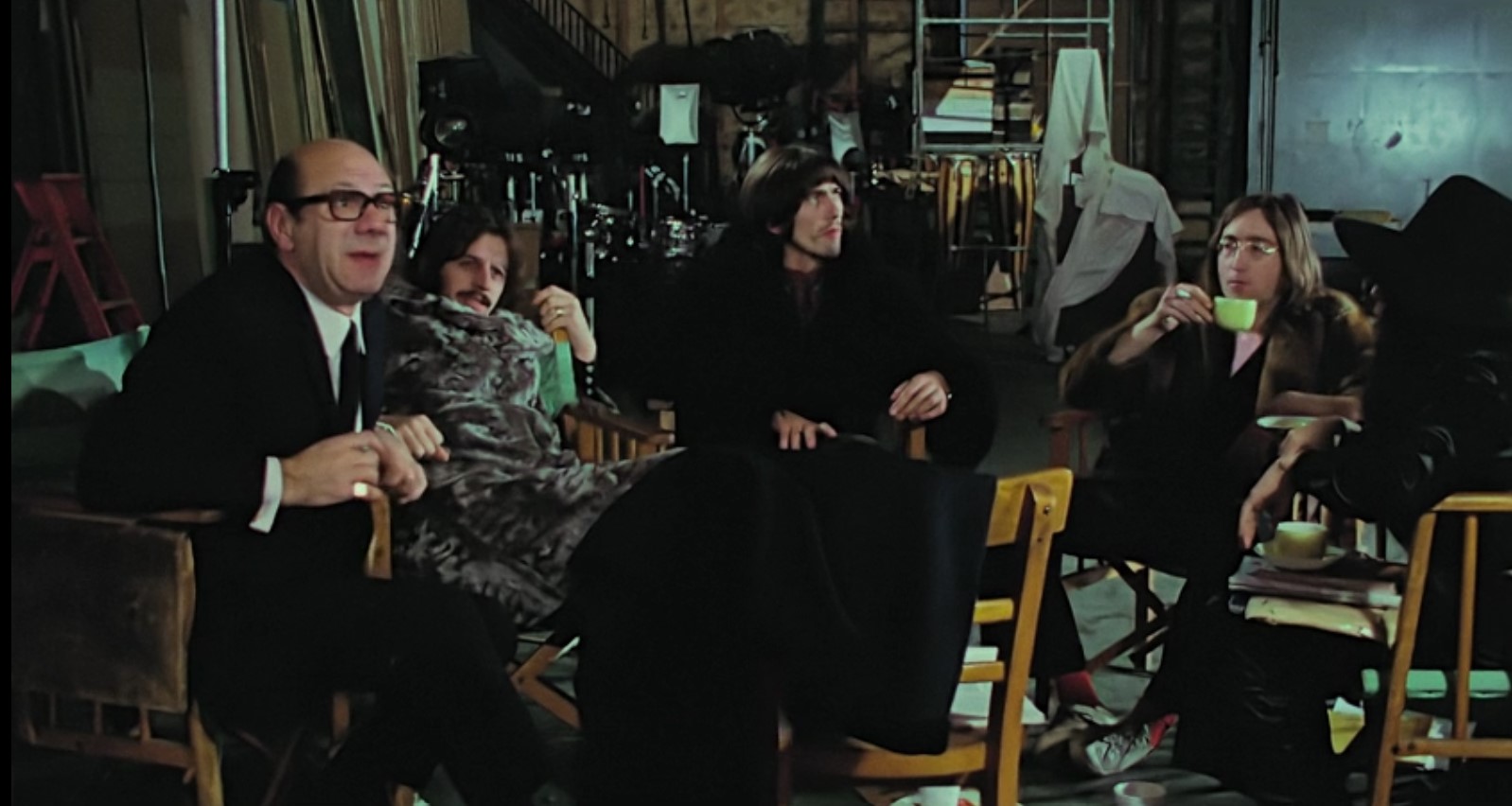
A half-hour or so into the January 10 Nagra tapes, the visiting Dick James finally noticed something unusual at Twickenham.

“Are we interviewing?”

“This is my bug,” film director Michael Lindsay-Hogg answered. “I carry it with me, always.”

Paul McCartney chimed in: “We’re just constantly on film these days.”

“Oh, I see. Something’s happening,” Dick finally concluded.

He was half-right: Something was happening soon.

George Harrison was the third Beatle to arrive at Twickenham on the 10th, continuing a pattern over the first week of the group’s January 1969 sessions. He was the first to leave a few hours later, and he wouldn’t return to this studio again.

Liberal as the members of the band were to speak their minds — or at least not be transparently cagey — with knowledge of film and tapes rolling (including Michael’s not-so-undercover portable mic), the Beatles had a secret they wanted to discuss, but they never went so far as letting the cat out of the bag or into the bug.

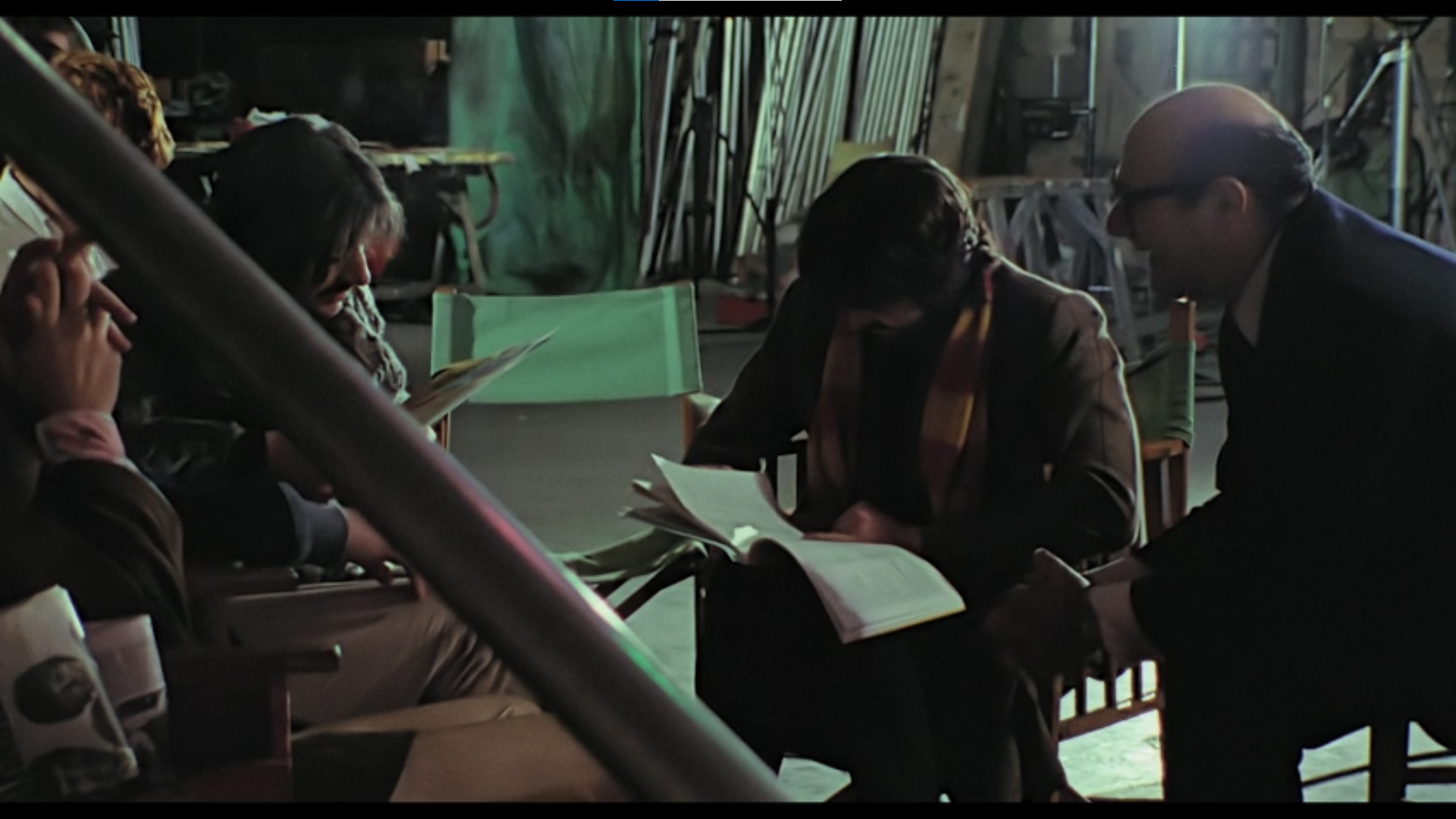
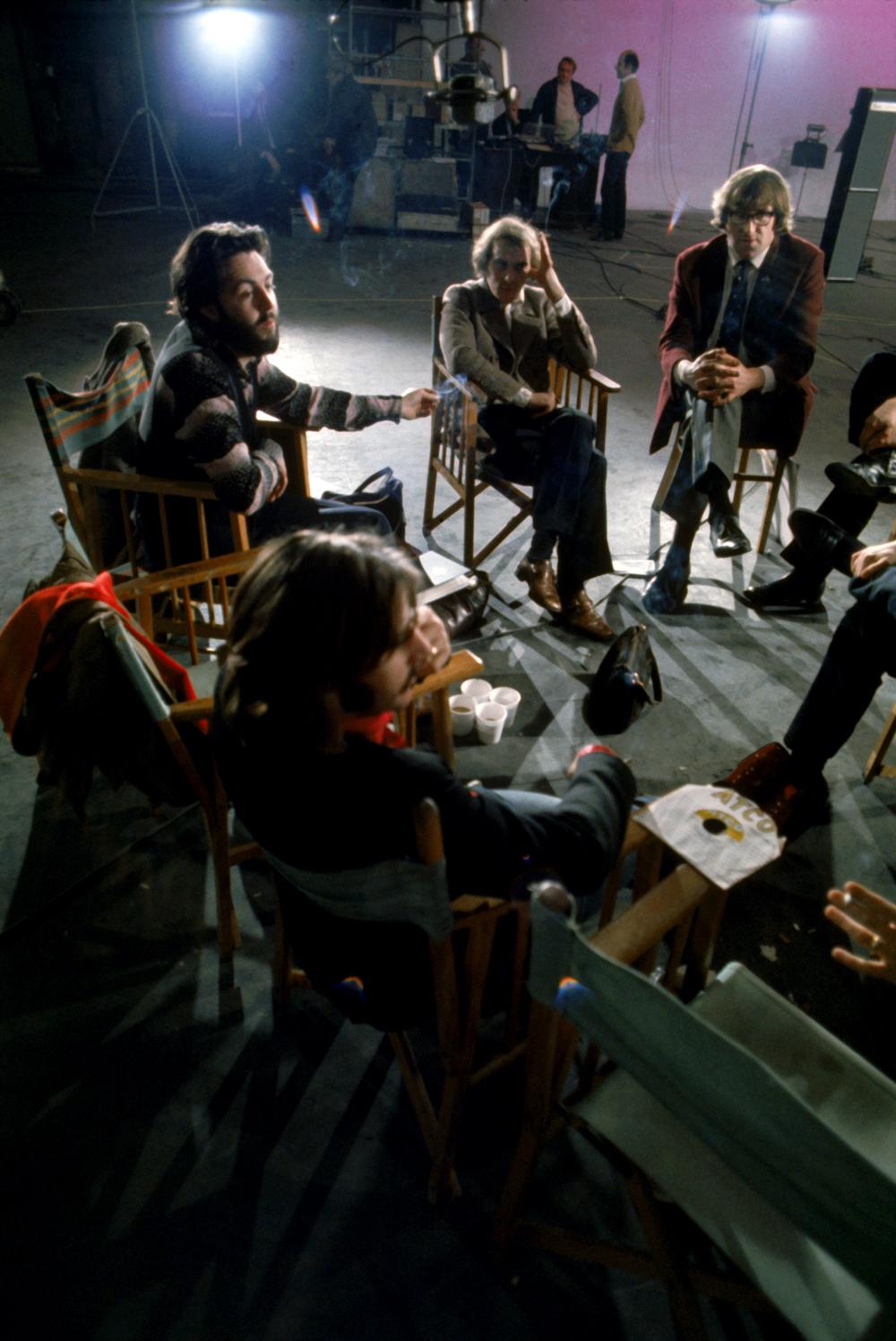
Dick James and the group, January 10, 1969.

“Did Neil [Aspinall] ring you last night?” Paul asked earlier in the day, with Ringo answering in the negative. “Sad news on the wheeling and dealing scene. … I don’t think he wants to say much.”

Later, on John’s arrival, George goes into slightly further detail on the meeting of the Flocculent Four.

“Neil would like us to have a shave tomorrow” — a Saturday — “only because we’re busy every other day.”

George further discussed the upcoming meeting – spinning it as a positive, in contrast with Paul’s interpretation — without other details beyond the hopes of it happening at 8 or 9 in the morning “so we can have the rest of the day to ourselves. Neil was very excited.”

Closer, let me whisper in your ear.

John: Good news?
George: Yes, very. … It’s so good, he just told me briefly what it was. But I’d have to whisper it or write it on a paper and you’d have to swallow it.

Without further detail, George mentions John Eastman by name right as the microphone refocuses on Dick and Paul, clearly suggesting the meeting involved Paul’s future brother-in-law, whose legal counsel the Beatles received at some point in January 1969 regarding NEMS.

****

“Do you think if I paint this brown and put red on top it’ll look like like a cigar?” Michael asked of his spy microphone.

George: You wouldn’t see the red, just the ash.
Ringo: Hide it in one of those film cigars.
MLH: Yes, like Groucho Marx.

Perhaps the inventive director wanted to get his bug in the ear of Apple Electronics’ Magic Alex.

“To change the subject,” Glyn Johns asked as the morning continued, “That phasing device that Alexis [Mardas] has built, have you actually tried it out?” (Glyn  — along with the Beatles — are counted among the pioneers of the technique.)

“He just comes across things as he’s designing,” said George of Alex. “He just designs it and then he says, ‘Oh, yeah, I’ve done this.’ But he hasn’t actually made it because he’s busy building recording studios.”

Everyone would soon learn “building” was a loose interpretation. More on that when the action shifts to 3 Savile Row.

At Michael’s request, George retold the origin story of Alex’s relationship with the Beatles.

“He met John Dunbar — or John Dunbar met him. Alex asked if he could stay and build a light machine for the Stones tour. So he stayed and did that. … And then he met John, and then he met us. And he’s been there ever since.”

“Is that device he’s going to put out on records going to work?” Michael asked. “Where you can’t tape it? Great idea.”

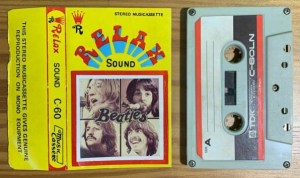
Home taping is(n’t) killing music. (Source: Ebay)

Ringo agreed with Alex’s primitive, unrealized copy-protection scheme, but said John was against it — why would the Beatles want to stop the kids from getting their hands on music? But John held the minority opinion.

“In America they have those cassette tapes,” George said. “That means its easy if somebody buys one and then rolls off their own 4 million and sell it. Everybody loses out on that because people bought it, and yet some cunts made all the money for doing fuck-all except thieving it.”

The idea of an intrusive “This is an Apple Record” messaging dropped into the record was embraced too. “It’s a good idea,” Michael said, “because if you’re rich enough to buy a tape recorder, you’re rich enough to buy a record, really.”

(He certainly wasn’t wrong, they didn’t come cheap. But if the bootleggers were running off 4 million copies, they were aiming too high — in 1968, the Beatles “only” sold 3.47 million records total in the U.S.)

Conversation quickly shifted from Alex — “We should get all his tricks,” George said — and the record business at large to the immediate business at hand. And it gives a clear picture to George’s state of mind in the hours before he quit the Beatles.

“I’m getting tired … just coming here, I’m bored stiff.” Openly frustrated with the directionless situation and feeling trapped at Twickenham, George asked if the group was still planning on rehearsing the next day, which would be their sixth straight at work.

Michael doubted it — he wanted to get rid of a nagging cough, and anyway, “I think we’ve had quite a good week.” This was, remember, the last day of their first full week for these sessions, and just their seventh day in the studio overall.

At this point, John, who was pretty much always the last to arrive to Twickenham, did just that with Yoko. Again, Michael touts his discreet yet disclosed microphone.

“If anyone says anything interesting, will you remember it?”

“Dick James is a fascist bum,” John replied loudly, though clearly out of earshot of the publisher, who was in the midst of another business-related exchange with an inattentive Paul, touting things like “the consistency of earnings.” Referring to Dick as “pig” moments later, John’s feelings were certainly clear, but he also wasn’t confronting him, this morning anyway.

Whether it was playing for the cameras (and microphones) or just trying to keep the darker side of the business out of the studio, John was upbeat and friendly in chatting directly with Dick.

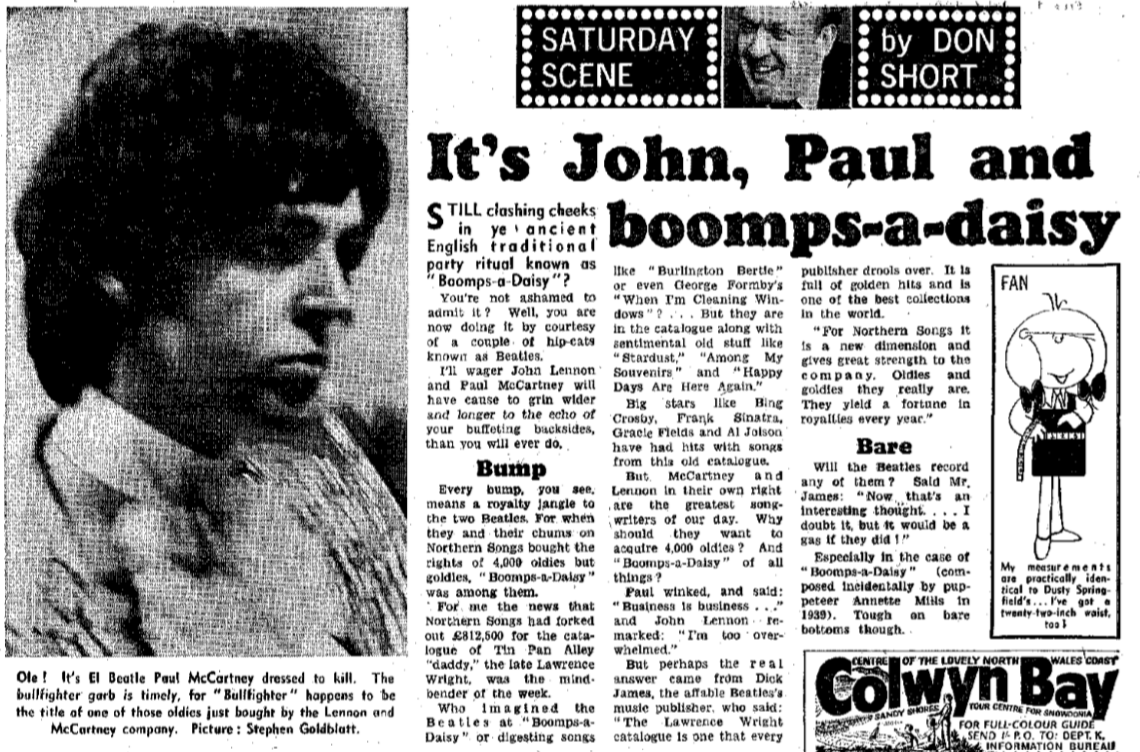
Step on the gas: The Daily Mirror from January 4, 1969.

Having hyped the “tremendous music book trade” and briefly addressing and then downplaying a published quote from the Daily Mirror from the previous weekend — “Will the Beatles record any of [the songs from the Lawrence Wright collection]? Said Mr. James: ” Now, that’s an interesting thought. … I doubt it, but it would be a gas if they did!”  — the conversation turned as at often did, back to television.

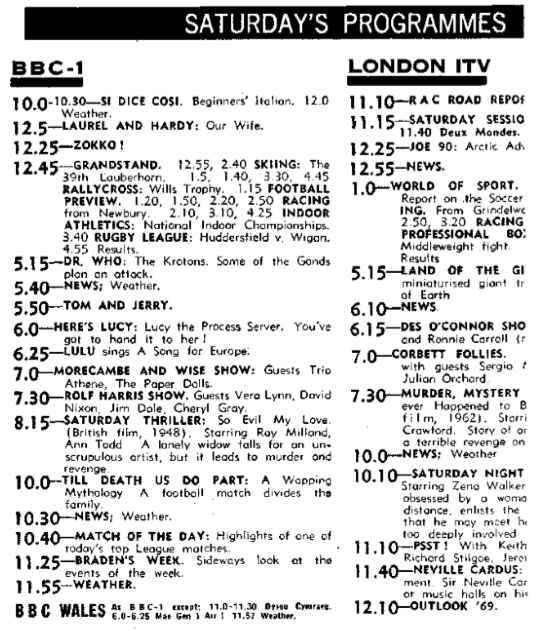
“You likely to be home tomorrow evening, watching television?” Dick asked John. “The Rolf Harris Show, Vera Lynn is on singing ‘Good Night.’

John sounded sincerely charmed his song was getting the prime-time treatment. “Oh, she’s doing that? I thought she did ‘Fool on the Hill’.”

Alas for John, “[‘Good Night’ is the] B-side,” replied Dick. “We put them back to back. … it’s a nice medium waltz. It sounds like “True Love,” that kind of feel, makes it very commercial.  (Because everything in Beatles history ties together, it’s worth nothing seven years after this conversation, George himself recorded “True Love” for his 33 1/3 LP, albeit without the original waltz arrangement.

Another cover, Arthur Conley’s version of “Ob-la-di, Ob-la-da” — as likely pictured in one of the photos from the Get Back Book that accompanied the Let It Be LP (look for the ATCO label) — drew George’s interest. “That’ll be the big American one? … It’s gone 50 now? Great!”

After fishing for a cigarette, Dick steered the conversation with George to a deep shared interest: cars.

“I would never have a Yankee car, not for this country,” Dick said. “They’re just a bit too big. Nineteen-feet long. ”

“And they’re so … rubbish,” George replied.

In particular, they hated the Cadillac Eldorado.

George: You look at it, and there’s all this plastic.
Dick: A load of bull all over the place.
George: Even the wood in it is like wallpaper.

They could hardly find a redeeming characteristic in American cars. “I can’t stand brakes on American cars,” Dick said, with George likewise bemoaning power brakes. “I nearly killed myself,” Dick said of owning a Buick Skylark.

Ultimately, Dick ended up with a four-door Rolls Royce Silver Shadow.

George’s ride at the time was a Mercedes 600, as seen in the Let It Be film.

Not quite the driver and six months away from wrecking his British-made Austin Maxi, John broke to tell Paul, who had finished his piano stint and rejoined the others, the good news: “Vera Lynn’s done ‘Good Night’ and ‘Fool on the Hill.'”

After Dick recapped Lynn’s promotional schedule, Paul was ready to really get to work.

“OK, should we start?”

Dick left the scene having promised Paul to “send some discs down.”

And with that, the group returned to work on what had the potential to be their own next disc and the next batch of Northern Songs.

****

“If you’re listening late at night/You may think the band are not quite right
But they are/They just play it like that”

The second verse of “Only A Northern Song” was written almost two years before the Beatles’ January 1969 sessions; coincidentally, it was released on the Yellow Submarine soundtrack LP 72 hours after the events of this post (in the U.S. — it came out in the U.K. a week later).

The Beatles most definitely were not quite right on January 10, 1969. George Harrison,  John and Paul’s bandmate since 1958, before anyone was a Beatles, would soon the Beatles and there’s nothing right about that. But in a sense, they were quite right, they “just play (it) like that.”

There are multiple reasons George left the Beatles on January 10, but Dick James wasn’t one of them, despite the timing of his visit and the publisher and Northern Songs historically irritating George to the point it inspired a song.  Dick wasn’t a true villain in the Beatles’ story contemporaneously, and he wasn’t a divisive figure to the group until he chose to leave their orbit by selling off Northern Songs to ATV a few months later. To this point relationship may have been deteriorating, but hadn’t in any way collapsed.

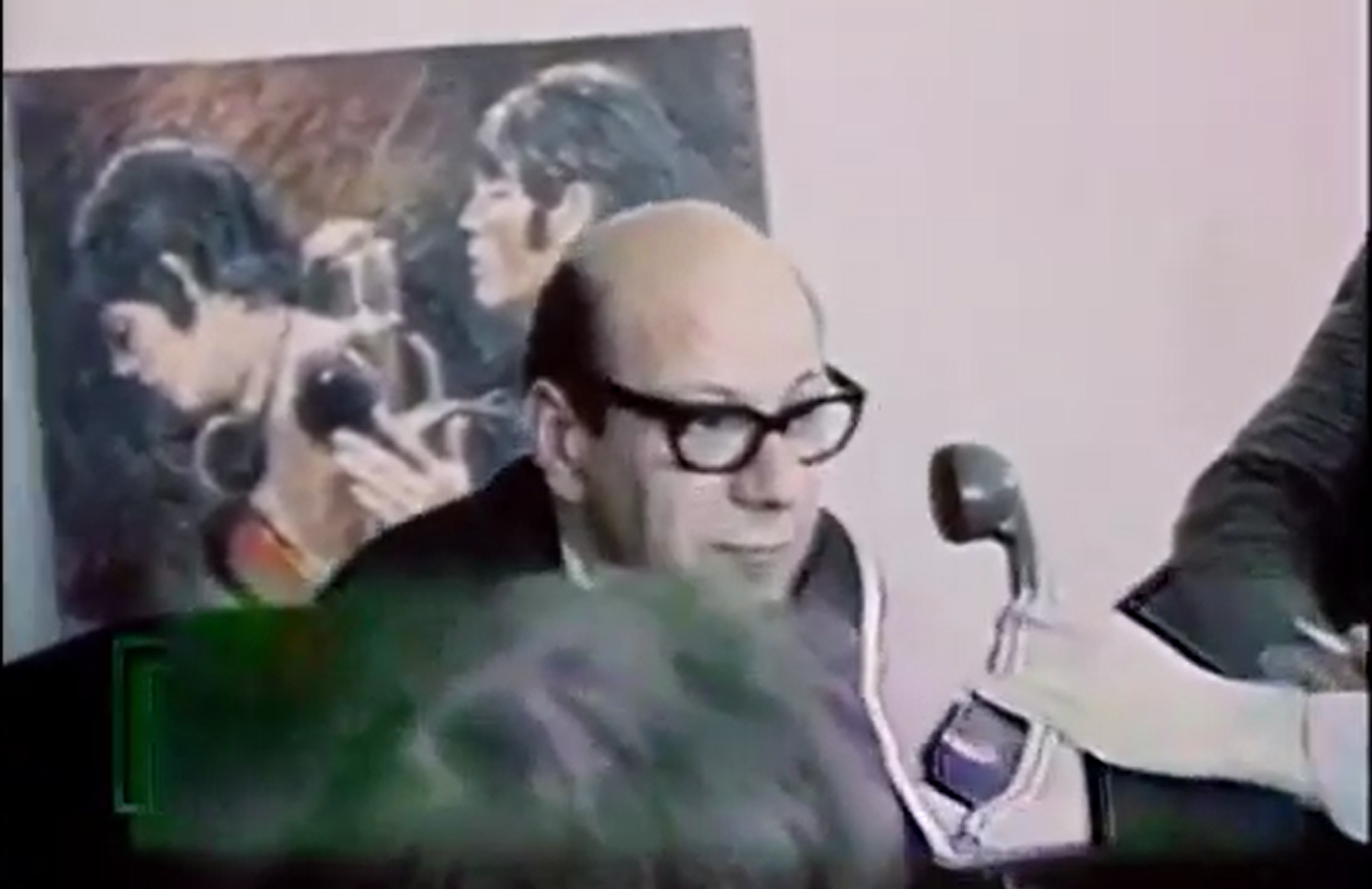
Tuesday’s on the phone to Dick James. 1968 at Savile Row.

Status as “a fascist bum” notwithstanding,  Dick — a generally respected elder like George Martin or Brian Epstein — could still talk music-hall numbers with Paul and Ringo, and cars with George. This visit said more about the Beatles themselves than Dick, reinforcing the group’s innate ability to isolate business from pleasure, whether the pleasure was making music amongst themselves or happily discussing frivolities with a man George later called a con man and thief. And even when talking business — like ownership of “Boomps-A-Daisy” and how “Ob-la-di, Ob-la-da” covers fared on the charts — conversation could easily veer to power brakes or the kids at home.

It may have been in Hunter Davies’ words, but in his authorized biography of the Beatles that was published only a few months earlier, he conceded “they all loved Dick James.”

The same 1968 Apple promotional film touting Magic Alex’s electronics department (as posted above) also serves a glimpse of Paul and John confronting Dick over money, with Paul firmly directing Dick to “go away, and you come back with something which you know won’t start this argument again.” Months later at Twickenham, with Dick not even aware the Beatles were filming their sessions, there was no such encounter. The argument wasn’t started again, but there wasn’t any change in their arrangement, either.

As Derek Taylor wrote in “As Time Goes By“: “Dick never liked rows with the Beatles and I cannot blame him.”

***

The scheduled meeting for the next day that so excited the Beatles didn’t materialize. They ultimately met at Ringo’s house on January 12 under completely different circumstances.

14 Comments

Filed under Day by day

Jan. 10: Only the Northern Songs, Pt. 1

In 1999, George Harrison called “Only a Northern Song” — recorded during the Sgt. Pepper sessions in early 1967 but not released until January 13, 1969, on the Yellow Submarine soundtrack LP — a “piss-take” against his former song publisher, whom he characterized as a con man and thief.

From an interview with Billboard, 30 years after the song’s release:

It was at the point that I realized Dick James had conned me out of the copyrights for my own songs by offering to become my publisher. As an 18- or 19-year-old kid, I thought, ‘Great, somebody’s gonna publish my songs!’ But he never said, ‘And incidentally, when you sign this document here, you’re assigning me the ownership of the songs [Harrison had written as a Beatle],’ which is what it is. It was just a blatant theft. By the time I realized what had happened, when they were going public and making all this money out of this catalog, I wrote ‘Only A Northern Song’ as what we call a ‘piss-take,’ just to have a joke about it.

“Only a Northern Song” has absolutely nothing to do with the Get Back sessions, but the timing of its release does. Just 72 hours before the Yellow Submarine soundtrack LP hit stores, the Beatles convened at Twickenham for a truly climacteric day — not just in these sessions but in the group’s history.

Ringo, Paul (representing Gryffindor) and Dick James discuss the Northern Songs catalog on January 10, 1969.

Three hours (on the Nagra tapes) before George Harrison quit the Beatles on January 10, 1969, the target of his lyrical furor — Dick James — was one of the very first voices heard on the day’s recordings. Starting in 1963, Dick James Music administered Northern Songs, earning the publishing company a fortune and the band’s songwriters a disproportionately scant share of those riches. George’s share was but a fraction of what Paul McCartney and John Lennon managed to earn. Dick sold his majority share of Northern Songs out from under the songwriters about two months after the conclusion of the Get Back sessions, but that’s another story altogether.

Dick James was already on the tip of the Beatles’ tongues during the sessions in the previous days — Paul’s tongue, really, when he joked the publisher would “have the children” if the Beatles would “have a divorce” and break up. And perhaps anticipating the January 10th appearance, John name-checked Dick in the improvised “Shakin’ in the Sixties” just the day before.

But if there was any significant ire toward Dick, from George or mostly anyone else on the day of his visit, it didn’t materialize in the audio, which revealed a lengthy, seemingly cordial encounter (John said some things counter to this, but more on that next post).

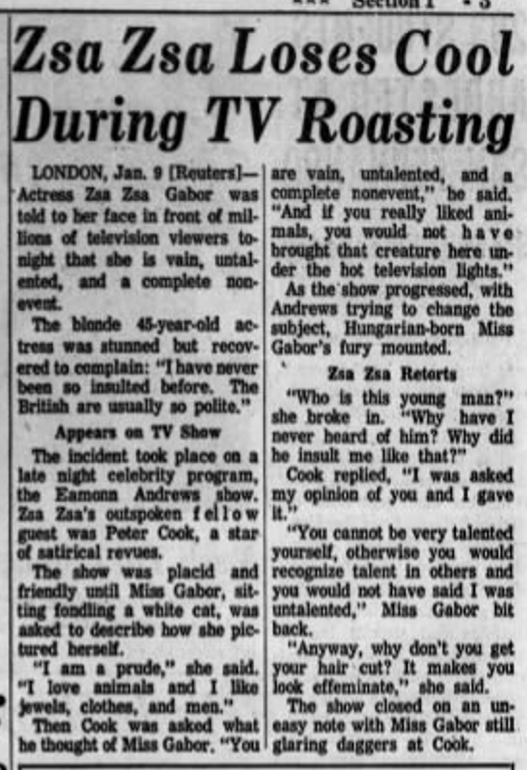
Like so many mornings at Twickenham, the previous night’s must-see TV was the first big subject up for discussion, with Paul, Dick, Ringo Starr, engineer/producer Glyn Johns and director Michael Lindsay-Hogg retelling an astounding confrontation between Peter Cook and Zsa Zsa Gabor in which the comedian referred to the actress as “vain, untalented and a complete non-event.” (John and George hadn’t arrived yet).

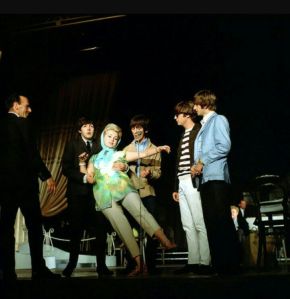
An event: The Beatles with Zsa Zsa Gabor, at rehearsals for the Night of 1,000 Stars in 1964.

Paul did his best/worst Zsa Zsa impression for her reply: “I zink you are the rudest man you’ve ever seen.”

This exchange on Eamonn Andrews’ show was literally international news — here’s a syndicated story by Reuters that appeared in that morning’s Chicago Tribune — but of course all news is local when it comes to the Beatles, who seemed to have crossed paths with everyone and everything.

“She’s very honest,” Paul said of Zsa Zsa. “Quite entertaining. One thing I don’t like her for is — she was with her daughter. Her daughter was always around EMI when we were making our last album. We saw Zsa Zsa with her daughter there … and she makes a sort of ass out of her daughter. She’s so honest, she’s a bit too honest. She sort of said, ‘Don’t wear that sweater, darling, it makes you look fat.’”

(Roger McGuinn of the Byrds later claimed that he introduced George to Ravi Shankar’s music at an “LSD party” at Zsa Zsa’s Los Angeles mansion, which the Beatles rented during their 1965 tour. This proves again, there are no Beatles footnotes, only incredible parenthetical, contextual anecdotes worthy of stories themselves.)

The conversation soon shifted to more proximate family matters, when Dick asked Paul if his father and brother, Mike, received his telegram on the birth of Mike’s daughter, Benna, a few weeks earlier — “More gear to the McGear.”

“Mike had become a Benna-ficiary,” Paul replied with what clearly was already a well-worn joke.

Not much later Dick likewise discussed family with Ringo, almost like he was an elder of the clan himself, needling the drummer about more having more kids.

Dick: How’s Maureen? You haven’t even told me.
Ringo: She’s wonderful. She’ll be here later.
Dick: Zak?
Ringo: He’s wonderful, too, thank you.
Dick: No brother or sister on the way?
Ringo: Not yet.

Dick forgot 16-month-old Jason, but Ringo didn’t seem to mind.

A great deal of the conversation between Dick, Ringo, Paul, Glyn and Michael revolved around the extensive Lawrence Wright Music catalog, which was purchased by Northern Songs a few weeks earlier in late December 1968, but clearly the extent of the collection wasn’t known to the band until this morning.

“Mind boggles with a catalog like this,” Dick said at one point. “’Cause as fast as you remember some, you forget the other titles.”

The massive song inventory was very much in the wheelhouse of Paul and Ringo, who each would occasionally interject a superlative or sing along a line from various titles.

“That’s the greatest one you’ve got,” Ringo said of “Stardust,” which he’d record that November, with Paul arranging.

As Dick aptly noted, “there are some golden oldies in there that are ridiculous.”

Ridiculously classic? Absolutely. Like the aforementioned “Stardust,” the songs included “Home on the Range,” “It Don’t Mean a Thing if it Ain’t Got That Swing,” “Stormy Weather” and “Just a Gigolo.”

And it’s quite ridiculous that the Beatles held an actual financial stake in World War I propaganda songs and other novelties like “Eat Less Bread,” “He’s in the Infirmary Now,” “Don’t Go Down in the Mine, Dad,” “My Yiddishe Momme” and “Nobody Loves a Fairy When She’s 40.

A song like “Carolina Moon” stood out to Paul — “My Uncle Ron’s favorite. Sings at all the parties.” And while George presumably came to “Hard Hearted Hannah” via another source, the Tin Pan Alley-era Northern Song was a jump-off point for the late-1970s Harrisong “Soft-Hearted Hana.”

Of course the most important inventory in the Northern Songs catalog would always be the ones with the “Lennon/McCartney” credit, and those assets were discussed, too.

“They’ll release ‘Ob-la-di, Ob-la-da’ by us on the continent,” Paul said. “Hopefully with ‘While My Guitar Gently Weeps’ on the b-side” (and it was a few weeks later).

“How about the ‘Ob-la-di, Ob-la-da’ covers and things? All right?” Dick asked.

“Yes, doing well,” Paul answered, without mentioning Marmalade’s version had just finished a run at the top of the charts.

“I brought some records over to the flat, just in case you’d like to hear it,” Dick told Paul. “Vera Lynn’s ‘Goodnight’ as a waltz. Stephen [James, Dick’s son] produced it. Done as a 3/4. Sounds beautiful.”

The Beatles had spent the previous six days writing and rehearsing the newest batch of Northern Songs, and nearly 40 minutes into the day’s tapes, the publisher was treated to a sneak peak of five songs. It’s a curious set, featuring Paul solo at the piano, and one that should have been among the clear highlights of every session bootleg. Except, very frustratingly, for much of the half hour he was merely background music.

The Long and Winding Road” and “Let It Be” had become morning standards, so Paul’s performance for Dick wasn’t extraordinary. And to hear Paul tickle the ivories on “Maxwell’s Silver Hammer” was likewise unremarkable. But to hear a piano-based “Don’t Let Me Down” — with Paul alone on vocals with an obvious mastery of and affection for the material — and “I’ve Got a Feeling” are true oddities.

Around the same time Paul headed over to the piano, George arrived at Twickenham for the final time.

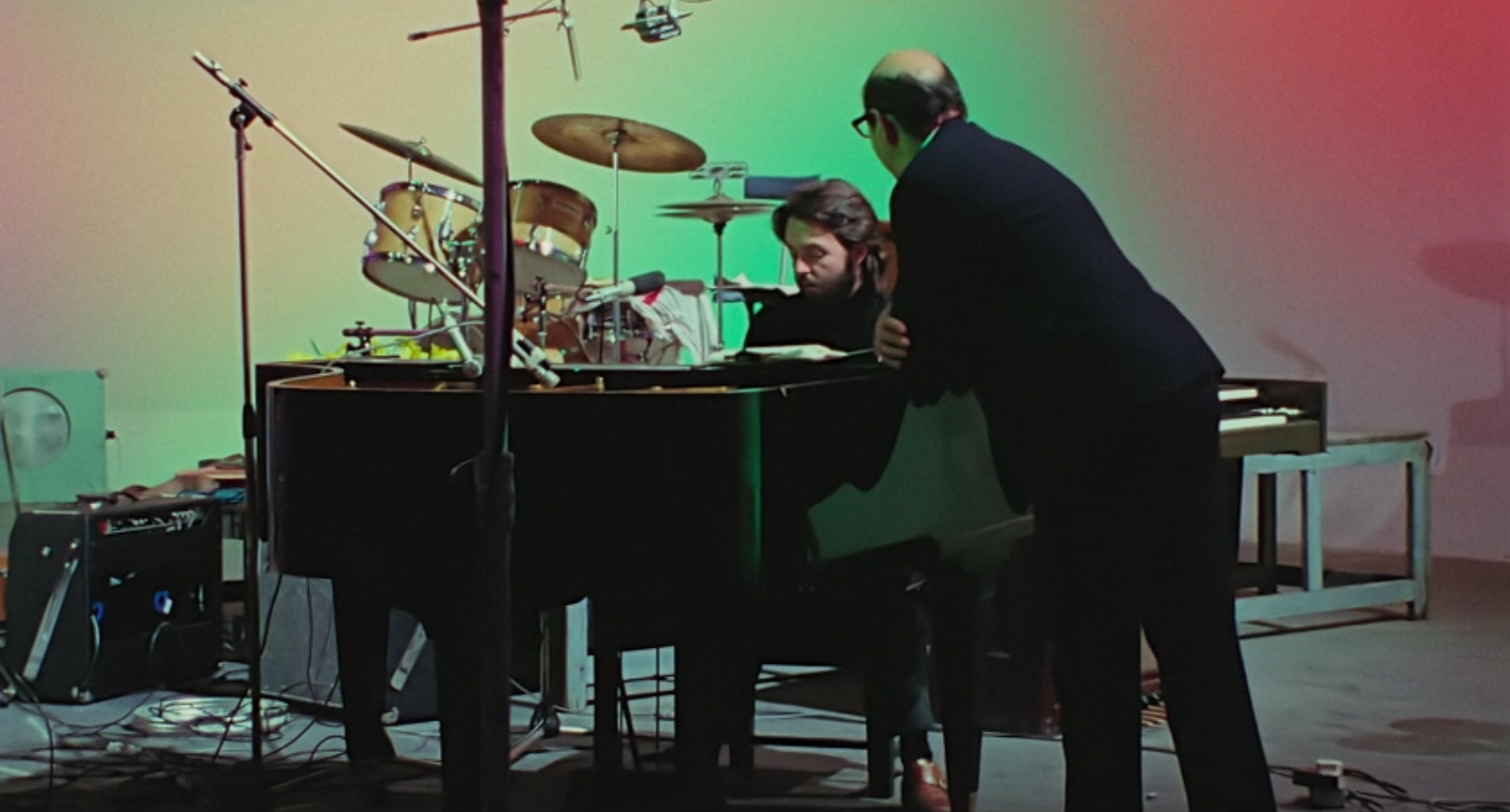
Paul and Dick at the piano, January 10, 1969.

The greeting between George and Dick was warm, with the George offering thanks for a Christmas gift — a set of drinking glasses.

Dick, who most assuredly had no idea George’s wife had walked out on him days earlier, could be excused for his response to the guitarist.

“Useful. Something to drink out of. Or the wife can throw.”

More on Dick James’ visit to Twickenham in the moments before George Harrison left the band coming in the next post, coming soon!

4 Comments

Filed under Day by day

Jan. 9: Homeward bounder

It was becoming clear by the end of January 9, 1969, that the Beatles would end up opting for ad-hoc over adventure.

A lengthy discussion the night before found all four Beatles showing varying levels of willingness to travel by boat to Africa for a one-off show, and some sort of decision seemed imminent. With the planning needed and a schedule to keep before the band lost Ringo Starr to an imminent acting assignment, it had to be.

But after the group slept on it, pinning down a consensus was just a dream. Any momentum to raise anchor dissipated among the members of the band, despite the continued best efforts of director Michael Lindsay-Hogg to ship the group to a Roman-era amphitheater in Libya.

There was no grand discussion about the show on this Thursday, just a series of short conversations sprinkled about the day among the various principles. The Beatles were making musical progress at Twickenham Film Studio, and as the Nagra tapes proved, the overall mood was fine, certainly better than it had been a couple of days earlier. But there was no great enthusiasm for travel, and it often seemed like settling on a venue was a binary choice: Twickenham or outside Tripoli, by boat — the devil (they know) or the deep blue sea.

“If we do it here, then we’ll do it in here,” director Michael Lindsay-Hogg told Paul McCartney’s girlfriend Linda Eastman on her January 9 morning visit to the soundstage. “But if we don’t, it’s on a boat to Tripoli,” said Paul.

“Ordinary people like themselves.” On the Mad Day Out on July 28, 1968, the Beatles mingled with the British crowd at St Pancras Old Church and Gardens. Less than six weeks later, they filmed the “Hey Jude” promo film. (From Meet The Beatles For Real)

“So if you do it, it would be in here?” Linda asked.

“There’s many a story,” Paul replied.

“What will you do with all the equipment?” Linda asked. “Get it on the boat,” replied director Michael Lindsay-Hogg. “That’s what Apple’s for, really, isn’t it?”

Discussions over the show circulated around these unresolved issues: Where would it be staged, what would be its format and who would be the audience. Thus the seventh day of the session was not much different than the first, and it wasn’t even a matter of agreeing to some aspects and then pursuing another. Every aspect of the show was in flux, and every suggestion was repeated.

Airports, apartment houses, cathedrals, the Houses of Parliament — these venues were considered before and mentioned yet again on the 9th, along with a transformed Twickenham. Transformed how? That wasn’t elaborated.

The boat, which was brainstormed at length the night before, was in play. But Ringo, while never issuing his veto, was clear in his distaste for a trip to Northern Africa, much as that was Michael’s preferred and planned choice. A continued sticking point was the his loyalty to a British — or American — audience. Ringo cited long-running talent show Opportunity Knocks as an example to follow in ultimately challenging that mundanity transcends spectacle, obscurity over celebrity — at least when it came to the spectators.

“Just because he had granny on the show, someone’s mother, and they only win because audiences like to watch ordinary people like themselves. That’s one of the things to do it here. Because English people — and Americans — and the two main people, at least they can associate with them and say, ‘I could have gone there.'”

MLH: The only thing is, I really do think it’s going to be for the world.
Ringo: The biggest part of our world is America and [here].
MLH: But funnily enough, I think the way they think of you is not only for themselves but they do think of you as for everybody in the world. That was one of the things things that was good about Jude, the guy in the turban. ….

Unfortunately, the tape cuts off during this dialogue, but we can assume it’s much of the same conversation that we’ve heard before with similarly little resolution.

(For the record, Opportunity Knocks provided Apple Records with one of its greatest success stories: Mary Hopkin’s winning performance in May 1968 directly led to her signing with the Beatles’ label).

Still, Michael was planning as if he could sway Ringo eventually.

“I think we spend till the middle of next week here or til the end of the week, go out on the and the following weekend. That’s eight days,” Michael said.

Ringo: Too long.
MLH: Go out on Sunday and finish it on Sunday.
Ringo: How about Sunday and finish it on Wednesday? Who wants to stay in Tripoli?
MLH: Denis (O’Dell, film producer), isn’t Tripoli a great country?
Denis: It’s the asshole of the world there. (Laughter)
MLH: You didn’t take my feed!
Denis: Look, I have to work with him the next six months and therein after! (More laughter)

Denis next related a story of how Ringo “saved his life” in India, thanks to the drummer’s cache of Western food he left behind when he returned to England. “[I] went back to Ringo’s room and I was rummaging around … found some powdered milk and baked beans, and it was a feast. … The stuff that you and Maureen left, and that’s what I lived on secretly.”

Uncommitted as they were to a destination for a live show, the Beatles comfortably and casually addressed the composition of the gig itself.

Many times I’ve bean alone: Ringo’s diet in India. (From Beatle Photo Blog)

The band discussed staging issues (“It is a bit silly to be rehearsing sitting, facing this way, when we’re actually to be playing standing, facing that way”) and between-song banter (“First chance we’ve had to play for you dummies for a long time”) — see Jan. 9: Jokes in between for more on that.

“Is Michael around?” George asked at one point. “If we are in a groovy location place, and if there’s just people there and we’re just playing anyway, [can] we make the show about different bits and pieces of what we’ve done or [do] we have to do it in one consecutive piece?”

John: We do both, you see. We set one way when we say, ‘This is the show,” But we do, like, a dress rehearsal and another rehearsal.
George: (Laughing incredulously) Dress rehearsal?
John: Well, you know, we do it as is, we try and do it one through. We should do it about three times, and probably the middle one will have the most. And see if there’s anybody around that played piano or anything we just get him up, and let’s have a gig.

John told the future well, unaware at the time Billy Preston would be that piano player. John also didn’t realize that the man he was speaking to would walk away from the group the next day.

3 Comments

Filed under Day by day

Jan. 9: It’s dead easy

It took only a few minutes on January 9, 1969, for Paul McCartney to invoke jazz guitar, classical compositions and swing percussion for a hymnal ballad being written for an R&B singer that would become a classic rock and easy listening staple.

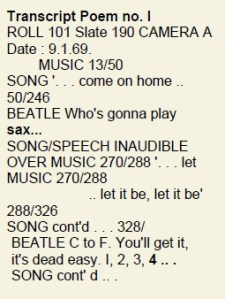
Transcript Poem No. 1, from the Get Back Book

“Let It Be,” lovingly and deliberately crafted during much of this day, spoke clearly to Paul’s boundless musical vocabulary, and on the day’s Nagra tapes we clearly hear the well-defined, rich genetic code buried within the song. No wonder it’s so special.

Dubbed “Mother Mary” by Paul at this point, “Let it Be” received solo piano treatment early in the day’s session per Paul’s daily ritual and a brief engagement, mainly with George Harrison, midday. The full ensemble’s rehearsal treatment later in the working day crafted the song into something both concrete and familiar. But importantly and quite visibly, Paul didn’t arrange it all by himself.

To recap the chronology of “Let It Be” to this point:

September 6, 1968: The earliest-known recording of the song — released in 2018 on the White Album Deluxe — consisted of a snippet of the first verse and chorus. Paul is on piano (the group was in the midst of recording “While My Guitar Gently Weeps”). If there was anything to “Let It Be” beyond this, it’s either buried inside the vaults at Abbey Road, secured in Paul’s private archives or lost amid the echoes of Cavendish Avenue. But there’s no reason to believe there was really much more, because …

January 3, 1969: While the song gained an introduction as the Beatles rehearsed in their first full day at Twickenham, Paul hadn’t advanced “Let It Be” beyond the first verse and chorus, exactly what he had in 1968.

January 8, 1969: After the weekend and a couple extra days, the song appeared on the tapes again, as Paul disclosed he wrote the song for Aretha Franklin — but he wanted the Beatles to record it, too. Paul instructed a faster pace on the drum pattern and shared the chord structure with George. The musical tag was borrowed from the introduction and applied to the song’s conclusion, as the day’s session wrapped.

On January 9, the song was a significant focal point, with rehearsals of “Let It Be” alone taking up a good 20 percent of the day’s recorded sessions on the tapes. An initial midday discussion of the tag — “just at the end of ‘Mother Mary,’ there’s, like, a riff,” as described by Paul — was nestled between rehearsals of “Get Back” and “Across The Universe,” just prior to the “Penina” origin story.

At once, Paul had an unfinished song — musically, it was sharp, but the lyrics were quite incomplete — and he solicited advice and allowed the song to evolve, while at the same time explicitly mapping out musical parts for the others.

(Ignore the subtitles in the below clip, for everyone’s sake. But enjoy the audio from this part of the session)

The first phase of the hour-plus sequence that concludes the day’s tapes has Paul walking the others through the song in a deliberate fashion.

To Ringo Starr: Play the drums “like swing.”

To John Lennon, who was on bass: “C … G … A … F,” Paul instructed, vocalizing the bass part with piano accompaniment and working his way through the verse and chorus. “You’ll get it, it’s dead easy.”

Paul continued to work the group through the song, repeating the verse-chorus sequence, methodically taking stock of every element. After the primer, the song’s iconic harmonies were casually introduced to the chorus. “It’s like ‘aahs,'” instructed Paul, who suggested harmonies that were to be delivered “very simply.”

Moments later, the former rejected choir boy evoked both church as well as a man who wrote music for it — Johann Sebastian Bach — as a further inspiration (it wasn’t the first time Paul drew from the Baroque-era composer).

There’s a lot of things with these chords. See that harmony there – it’s like church harmony. There’s all that bit of sustained. … it’s like Bach, just holding the notes. Can you hear it?

With the harmony in strong development, Paul shifted to broader aspects of the song, like “how should we start it?” (Days earlier, John asked the same thing of “Don’t Let Me Down,” unsure how to arrange the various elements of the song).

There was a go at opening “Let It Be” with the chorus, but that idea was scrapped quickly, with the song’s soon-to-be established format taking hold early on.

“OK, the first two choruses, just the piano,” Paul said. “Then the second thing to come in is your two voices on the ‘let it be.’ And then [it] builds. So maybe bass isn’t in till, like, halfway.”

While the harmonies were framed around a centuries-old inspiration, Paul invoked a contemporary to George for his guitar part.

“If you could just somehow hold the one note on guitar without making it sort of corny,” Paul said. “Like Wes Montgomery, the octaves.”

Too bad we don’t get to hear a complete picture of what happens next, because … cats.

Michael-Lindsay Hogg: “I don’t like dogs, I like cats.”

Ringo: “We’ve got a poodle, as well.”

With the tapes’ camera and microphone shifting to a conversation between the film’s director and drummer, we’re deprived of a clear listen to the continued development of the song for a few moments. But the instructional continued in the background, as John added a grating, deep baritone harmony that was thankfully abandoned ultimately, but was retained throughout most of the day.

As Ringo continued his conversations away from the rest of the band, including a chat with Denis O’Dell about the Magic Christian, Paul and John alone casually delivered a rendition of Buddy Holly’s “That’ll Be The Day” — which was the first song recorded by the Quarrymen (to an acetate) more than 10 years earlier.

Following John’s cheeky order — “Come on you gits, get on your fucking instruments!” — the rest of the group indeed followed their leader, enthusiastically launching into an full-band Little Richard medley, “Slippin’ and Slidin'” (as later covered by John) into “Jenny Jenny,” before Paul applied the breaks in a return to “Let It Be.”

As a nod to his muse, Paul swapped in “Oh, Aretha Franklin” where he would normally sing “speaking words of wisdom” at one point.

Resuming the song-crafting process, Paul sought to integrate the musical tag he mentioned earlier to George.

Paul:  I was thinking
John: You’ve been thinking again.
Paul: After we’ve done the “let it be, let it be,” done the whole thing through, we might make something of [played the riff]. … Like, without rhythm, but with you [John] and me doing it.

Upon Ringo questioning when the various instruments come in throughout the song, Paul begins make suggestions before stopping himself.

Enter Glyn Johns. Well, not really “enter” — he’d been with the group the entirety of the sessions in a somewhat nebulous production role.

“He seems to be arranging this, come on,” Paul said to laughter. “That’s good, come on.”

From his 2014 memoir, Sound Man, Glyn recalled his first days working for the Beatles:

After they had finally run through the first song a couple of times, Paul turned to me and asked what I thought they should do for an intro. I nearly fell over in shock. I thought I had been employed to just engineer and here I am in the first hour of rehearsals being asked for my input into the arrangement. I responded as quickly and confidently as I could and suggested a way of playing the intro, which they liked, and we were off. I was amazed at how quickly and easily I was accepted, each guy individually making an attempt to put me at ease and make me feel part of the team.  …

On the second day, things came to a head among the band. …

I have a very clear memory of sitting outside in the bleak surroundings of the soundstage at Twickenham at on that cold gray afternoon with Denis, the line producer for the film, both of us praying that the elation of being employed for a project with the most successful artist in the world was not about to come to a grinding halt after two days.

It is not my place to discuss any detail of what happened, but it is common knowledge that George left the band and was persuaded to return a couple days later.

Glyn’s timeline isn’t precise; he wrote that the arrangement request was on the session’s first day (which was January 2) and George would quit the band the next day, but Paul was a late arrival on the first day at Twickenham and George’s departure happened on January 10, the day after the events of this post. Still, the recollection is valuable to get an idea of Glyn’s mindset early in the sessions regarding his role.

Glyn with the Beatles, from Glyn’s autobiography, Sound Man.

With Paul handing him the reins, Glyn was confident and direct in dictating his plan — based on Paul’s original idea — to a very receptive band.

“Absolutely nothing except the piano and voice the first time around,” said Glyn. “And then the voices, right? … Then you [George] come in where you come in. And you [John] come in the next time round.

“So it goes: Piano and voice.  Backing added [to the chorus], then it goes back to the top [the sound of high-hat is played]. George is in then. John comes in when John comes in. Then the the next chorus, you’re [Ringo] back in on your thing, and back on your [swinging drum pattern]”

Paul gave very simple approval — “that’s it” — before leading the group into a demonstration and subsequent instructions, like building up the percussion without any snares — “It’s like jazz,” George remarked —  and adding “big drums” on Ringo’s fill before the second round of the chorus.

The writer and arranger disagreed on when John and George should come in — Paul proposed they should join together, while Glyn thinks otherwise. “It’s all happening a little bit too quickly with the bass coming in at the same time, that’s all,” Glyn said. Paul deferred, and instructed George to come in for a solo after the “big” chorus, and to base it after the verse’s chords.

“Do it to your own discretions and sort of come in so it builds up, just so you’re not all in at the one time,” Paul said. “Let those two [Ringo and John] get in before you [George] come in.”

The group returned to a run-through as it was drawn up with George entering into the riff, after the second chorus. But it didn’t click and the placement of the riff becomes the next segment receiving attention.

“It’s very corny, really — the down, down, down, down [sang by Paul].” George quickly compares the riff to the end of the chorus in Janis Joplin’s “Piece of My Heart.”

Glyn suggested back-to-back plays of the riff after the second chorus, an idea Paul jumped on.

Paul: See, then that can lead into the solo, ’cause I think it’ll be time by then.

John: Just use that riff into the solo and the end [of it] for the end.

Paul: It’s going to be a short one, anyway.

Paul ordered up “two lengths of solo,” while he and John added harmonies over the second one. The conclusion of “Let It Be” was then sketched: the guitar solo, another chorus and two plays of the riff, with the second one coming in slow.

A first full run of the complete song structure clocked in at barely more than two minutes, with no additional verses after the solo. That is, what we know now as the “And when the night is cloudy…” verse — that section didn’t exist yet.

“Want to do it again? George asked. “It’s quite short, isn’t it?”

“Yes, it is a little bit,” Paul conceded. “It does need something else. It may be sort of ‘oohs’ though the second verse or something else when the cymbals come in. It sounds a bit sort of bare with just piano there.”

“Organ. I could play organ for that and drop it for the bass,” John suggested, forecasting Billy Preston’s eventual arrival without calling for additional personnel, for now, anyway.

Now in the final phases of the day’s rehearsals, the group put further attention on getting into and out of the riff. And in its final moments, George purposely hacked his way through the solo, building the framework of what would later appear on record. Paul gave further bass instruction to John, while George went over the drum pattern with Ringo.

Having logged more than an hour on the song at the end of the day’s session, exhaustion finally set in after a few more competent attempts of the song.  A suggested short break became a request from George to quit for the day entirely, which they all did following a final take.

As they gathered to leave, a debriefing showed the band still found room for improvement in “Let It Be”:

Paul: It should have more bits, should be more complicated.

George: I just feel [the ending] needs something really sustaining.

John: Or even some words … a big all-together.

Any further collaborative work on the “Let It Be” was going to have to wait. Paul touched on the song in a brief solo version the next morning, but later that day, George left the group.

Still, the Beatles — led by Paul but with significant help from others in the room — got through much of the musical dirty work in “Let It Be” in relatively effortless fashion on January 9.

3 Comments

Filed under Day by day