Tag Archives: Yoko Ono

Jan. 6: Adore your ballroom dancing (If there’s a rock show, Pt. 3)

Back-garden Beatles (Tittenhurst, 1969)

After a proposed overseas concert in a Roman amphitheater in Libya is scuttled by Paul, citing Ringo’s insistence on staying in England, a suggestion is made to perhaps go small and shoot a Beatles concert in a back garden, presumably somewhere in London.

Director Michael Lindsay-Hogg quickly dismisses the idea, suggesting it would end up like a “little promo film … instead of a Beatles television show.”

Sitting in on the discussion, George Martin cuts to the chase and thinks even smaller, proposing “we just do it in the other studio.”

Paul shifts the focus off the venue and back to the composition of the crowd.

Paul: We’re all prepared to do it with an audience. But what Yoko said is right — we can’t just have the same old scene. If it was the same old audience and we were … all naked when they came in, then that’d be a different scene, you know?

MLH: I think she’s totally right about that, that’s one of my big points.

As the discussion goes in circles, someone in the group asks the simple — but very difficult — question: “What can you do that’s new with them?”

Paul: We shouldn’t really try to do anything with the audience because the audience is the audience, and it’s them, and they’ve come in. It’s us that’s doing the show.

Yoko: Because If I were in New York and I watched the “Hey Jude” [promo on TV] … my interpretation would be that those people around them who are sort of climbing up and starting to sing with were just hired people. If I think that, then it’s OK. But if I thought it was a true audience, then I think, ‘Oh, so now people don’t think of The Beatles as too much’ because all the image that everybody in the world has about The Beatles is that once there’s an audience, they’re going to be frantic and pulling their clothes and tearing it away and all that.
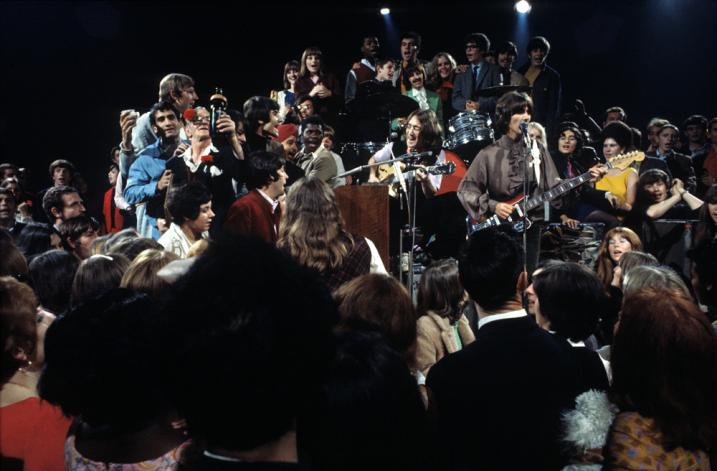
“Hey Jude” promo video

OK, then.  Not so sure I’m on board with Yoko’s assessment of the state of The Beatles’ popularity at this point, but hey, she’s soon to be married to a member of the band and was actually there in the ’60s, whereas this blogger was yet to be born.

But still. It seems a bit out of reach to me to suggest that just because a Beatles audience wouldn’t be in full-tilt 1964-era Beatlemania, pulling out their hair and screaming over the songs, means the band isn’t as “big” anymore.  It’s 1969, not 1964 anymore. The music scene has changed.

But to avoid what Yoko thinks would be an issue, George Harrison says the solution is something The Beatles had done before.

The good thing is that we could completely create another image, reserve the image of your choice. If we could just think of an image we’d like to be and then we make it that one, which could be anything. We could just be a nightclub act, or anything, just the smoochy, low lights and 10 people.

Wheels turning, Lindsay-Hogg says, “Then you’re a little cabaret act,” before he and George Martin agree again that there should be a large audience that’s not necessarily any kind of focal point, just to be used as a sounding board.

But then Paul picks up on George’s idea and gives it a twist.

I thought, like, a ballroom. If we did go right back … and did it purely like a dance. “Come to the Tower Ballroom, there’s a dance on. Oh, incidentally, we’ll be the band there.” And we’d go on, play all the numbers and we’d play it like we’d play a dance, without trying to sort of announce anything. There’s a fast one, there’s a slow one, and everyone, like, dances. And there might be a fight or there might be the kinds of things that happened at dances. Or it might be a very sedate, quiet dance.
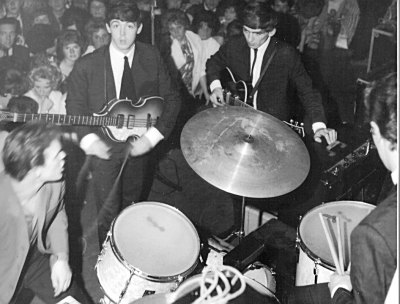
The Beatles, performing at the Tower Ballroom, ca. 1961-62

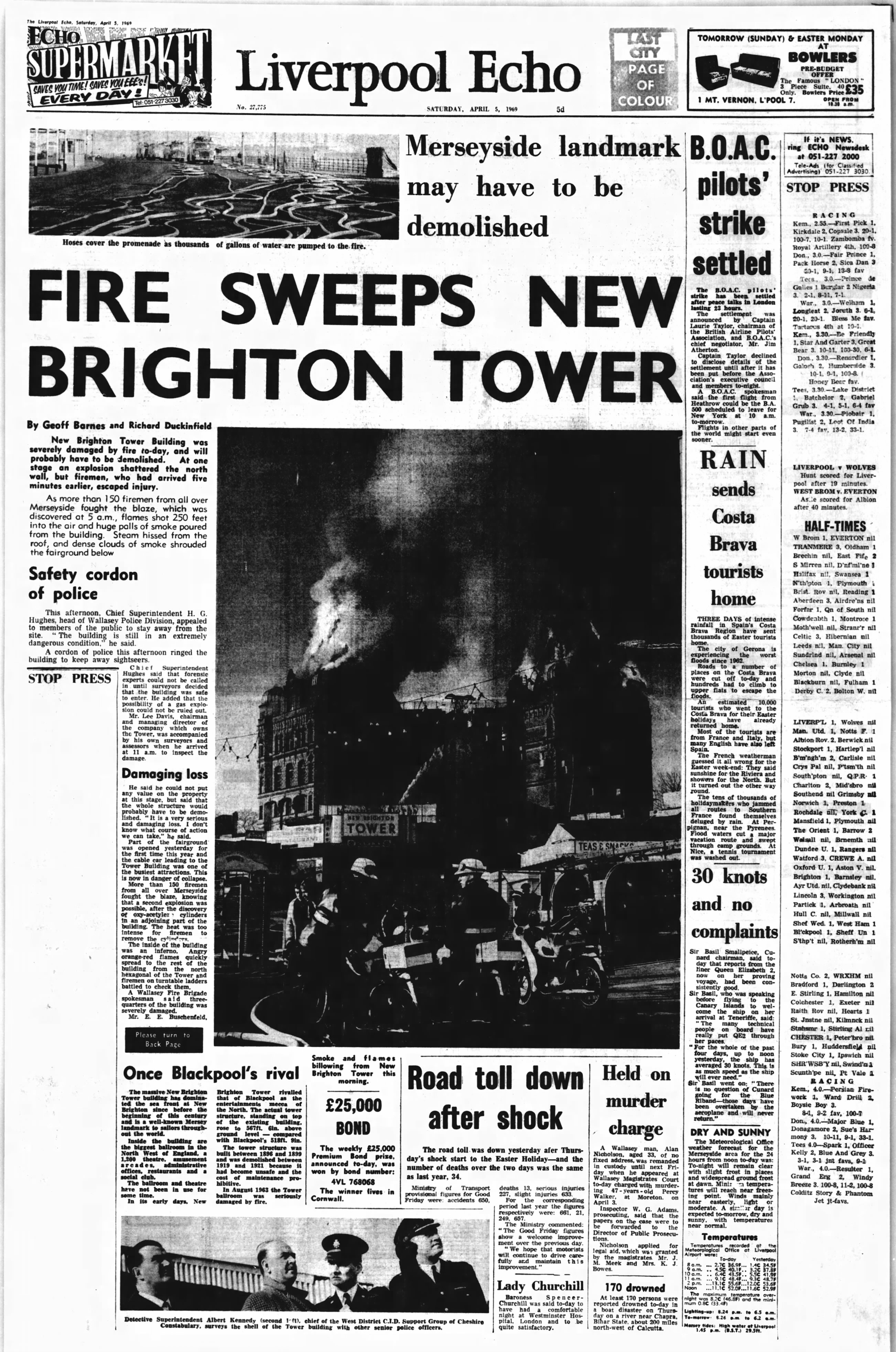
Presumably, Paul’s referring to the Tower Ballroom of New Brighton — just a ferry ride ‘cross the Mersey from Liverpool — a venue they played numerous times in 1961 and 1962.
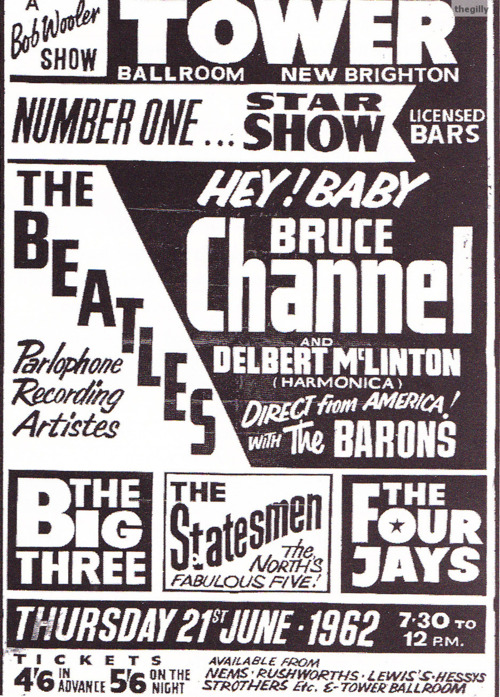
I actually sort of love this idea, with the full understanding that it may just take hired hands to get an audience to ignore the fact they’re at a Beatles concert and just go ahead and actually dance.

And to do that, as my wife said to me, they’re really just making a long music video. What’s the point?

Lindsay-Hogg is on board — in essence, he says —  because he likes its simplicity. But that’s where his agreement ends. “What you’re asking for is a really, really simple approach, which I think is right,” the director says. “But I’m not sure just to have an audience dance around you is good that way. I don’t think you are just a local band.”

Paul, and the rest of the group in the conversation, agree. But after digging deeper into the idea, Lindsay-Hogg ultimately thinks it’s a non-starter.

MLH: The only time on TV it didn’t work for you was when you went on … Top of the Pops, and they did dance, do you remember that? And they didn’t really do very much. And that would look so crazy. It looked crazy for four minutes, but it would look lunatic for longer. It would have been in the bad way, it was so sedate, and you all were so sedate back then.

The essence of this idea is the simplest approach possible. The essence is correct —  totally, totally what I believe — but you’re just not the local dance band. Would that you were, but you’re not. So that’s going to be very hard to achieve.

Paul sticks with his newest idea, saying that if they’re going to be artificial and build a set at Twickenham to mirror the Tower Ballroom anyway, why not just go to the Tower itself?

We learn a little bit more about the Let it Be film’s early timeline in Lindsay-Hogg’s response.

MLH: That was one of the reasons we started veering off on these ideas was when we were looking at locations that Friday afternoon after Christmas, and all the locations looked like four steps up from a boutique, you know what I mean? Four years ago everyone was shooting in a boutique, and now it’s a disused sawmill or whatever it is. It just looked like plastic locations.

Everyone agreed it was a phony look, certainly something the group was seeking to avoid.
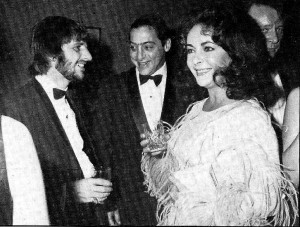
“Candy” co-stars Ringo Starr with Richard Burton — and Liz Taylor in 1968.

Also notable here is that the director was scouting locations on Dec. 27, 1968 — a mere 10 days earlier. Good on Lindsay-Hogg, too, for working hard; he directed “Rock & Roll Circus” just 16 days prior.

Yoko won’t give up on the band staging a show before anything remotely like a conventional audience, comparing the scenario to actor Richard Burton, and saying that people don’t want to see him performing on stage before a “fixed” audience.

No matter what kind of audience, it s going to look crummy. What he is is a legend.  Seeing him on his own private boat or just seeing him shaving is just more dignified than seeing him perform before a fixed audience. Do you see that point? That’s why it’s better to show you in your private home, or George’s home or something. “Oh, this is much better than a fixed audience.”
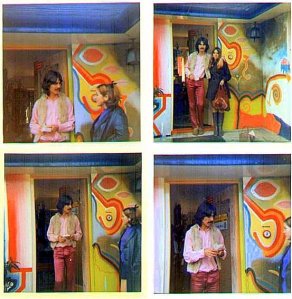
George and Pattie at home at Kinfauns, their home from 1964-1970

Someone, perhaps Mal or Neil, out-Yokos Yoko by suggesting a performance at The Royal Academy or Tate Gallery — “with nobody there but the pictures.” Naturally, she agrees.

Lindsay-Hogg still wants none of that, saying, “Once you get up to perform as The Beatles, you have to perform to someone, even if it’s going to be this different kind of audience.”

The debate churns on.

MLH: Certainly yes, you play straight at home. But I have a feeling that’s not big enough.

Yoko: But that’s big. See the private home of Paul McCartney or George Harrison.

MLH: We could fit that into the documentary.

George Harrison reflects on a “Bridget” documentary (presumably Bardot),  describing her taking the audience to St. Tropez as she “sings a tune over her front gate and walking around the pool.”

Insisting that kind of minutia can be incorporated in the documentary, Lindsay-Hogg then offers what turns out to be his concluding argument for the day.

If you just get up to perform, you either have to be performing directly to the people at home or to an audience. It’s only two ways. Maybe it would work for the people at home, I just don’t think there’s quite enough scope. And I think the idea’s good, because we have to think about the audience — because you are so riddled with audience. The audience is so much part of the first half of you musically — [under his breath as an aside] says the critic from the Guardian — the audience is so much part of the mystique.

After a mention of mystique, we’re left with a mystery — the tape cuts off abruptly, and the next track is merely a nondescript improvised instrumental, and there’s no return to the discussion this day again.

And what of the Tower Ballroom? Had The Beatles performed there, it would have been the last hurrah for the venue. It was destroyed by fire just three months after this discussion.
14 Comments

Filed under Day by day

Jan. 6: Such a lovely audience? (If there’s a rock show, Pt. 2)

Having established earlier in the conversation that there will be two live shows to cap the documentary of which filming is already in progress, the band — primarily Paul — plus Yoko Ono, George Martin, Michael Lindsay Hogg and a few other insiders (probably the likes of Mal Evans, Neil Aspinall and Derek Taylor? I don’t know them as well by voice) — continue their lengthy discussion about the show, potential venues and the composition of an audience.

For a show plan first hatched more than a month earlier, things remain in total flux.

Paul latches onto Yoko’s idea of playing to an empty house, at least for one of the two proposed shows, with the second night’s performance before a conventional audience.

Hey, maybe there will be some traction here! Paul’s on board with Yoko’s ideas up front and early on (and John doesn’t seem to care, not chiming in at all during this chat), so a huge part of the battle here is over, George’s independent streak — which is about to erupt — notwithstanding. And it’s not much of a surprise, really, given Paul’s avant garde leanings.

Alas, Lindsay-Hogg punctures that idea, saying there’s no need to eschew a crowd “partly [because] the documentary is playing in silence. I know it’s not for an audience, but it’s the same thing.”

Paul replies to say that the band has ignored the camera from the moment they started filming at Twickenham a few days earlier, repeating the  “performance might be — should be — two cameras or two audiences …  two something.”

But Yoko pressed on — with Paul again agreeing —  saying the audience isn’t the draw for people watching the film at home, unless it’s something different, like “kings or queens coming to see it.”

The director keeps pressing back.

MLH: What I think is if you got in front of an empty house and played, it makes you look too … rich, in the bad sense. In other words, whats the point? This is the negative aspect of that. What’s the point in you getting up and playing for an empty house when you could be giving people happiness with whatever kind of full house we decided?

Yoko: Nobody’s going to think that. They’re going to think it’s a very poetic situation. And they know the Beatles are rich …

Voice of reason George Martin, as he did earlier in the conversation, again sides with Lindsay-Hogg on just what a waste a live performance to an empty room would be, putting it succinctly:

There’s no point in doing a live performance, it’s like going into a recording studio and doing one take.

He then repeats the point that an audience would give an extra something to the band they wouldn’t get otherwise.

Someone chimes to suggest one of the more exotic venues that had been in the mix, presumably since December,as the band hatched the live-show idea.

You’re going right back to Sabratha, [then].

Sabrathra was alluded to on the first day of filming by the director, promising a scene replete with “snake charmers, holy men … torchlit, 2,000 Arabs and friends around.”

And a beautiful, unique venue the former Roman amphitheater outside Tripoli, Libya, would have been and with such an unusual audience. It’s certainly something that would one-up recent rock films like Cream at the Albert Hall and the recently completed Rolling Stones Rock & Roll Circus.

Paul agrees with a remark that a bit of a focus on the audience (wherever it may be)  isn’t a bad thing — seeing the reaction of people who have seen the band before in the Beatlemania era and how they’d react to the band now, post-1966 and the end of their live era.

Yoko: Then it should be a real scene. You have to announce in the newspaper say that it’s going to be a real alive show. It’ll be a crazy scene, like everybody queuing for it and everything.

Neil? Mal? Derek? Then it should be an Albert Hall scene.

Lindsay-Hogg,  who joked earlier in the day about a Beatles show at “the Albert Hall with those quick cuts,” said a few hours later that he’s not opposed to a show at the nearly 100-year-old stage. But…

MLH: I just think it slightly smells of a few years ago. The Shea Stadiums, wherever it has been.

Yoko: Say anything, and it will slightly smell of a few years ago or slightly less than a few years ago because they topped it.

MLH: I’m not particularly supporting this idea, but it is an idea we can then say no to and go away from if we can top it. But [Sabratha] is a location which is marvelous in itself, by the sea.

The Beatles faced winter elements before

Perhaps this is just calling Ringo’s bluff.  As Paul said on Jan. 2, “I think you’ll find we’re not going abroad, because Ringo just said he doesn’t want to go abroad. And he put his foot down.”

And calling the drummer’s bluff is something the Get Back book and Let it Be Naked’s “Fly on a Wall” disc proves was done repeatedly. But for the second time this day, Paul shoots down an overseas trip, saying, “Look, it has to be in England. An outdoor scene has to be in England, because we’ve decided we’re not going  abroad.”

To someone responding that a performance under the skies couldn’t be done in wintertime England, which is “too bloody cold,” Paul doubles down, after agreeing to the sentiment.

We have decided, it’s a definite decision, that we’re not going abroad, so we should sort of rule that out. It’s not even to the two-way, should we go abroad, we like, we definitely said no to that.

So as usual these days, they’re back to Square One, crossing the seas and back in just a few minutes, only to end up again home in England — and potential venues therein as the discussion continues.

—

An odd postscript to the Sabratha flirtation: More than 40 after the Beatles toyed with the idea of playing at Sabratha just eight months before Khadafi led a coup to take over Libya, former Apple exec and Beatles assistant Peter Brown had his PR firm hired to improve the dictator’s image.

Tune in next post, where we resume this Jan. 6, 1969, conversation about the forthcoming show.

24 Comments

Filed under Day by day

Jan. 6: Here comes the bird king

Maybe all the Cream talk got the band in the mood to jam.

With the third day of rehearsing during Get Back/Let it Be sessions (for the record, we had heard “Let it Be” thus far, but not “Get Back”) under way, once everyone was settled in — and not to long after after George introduced “Hear Me Lord” on the tapes — the Beatles basically started fooling around, tuning and warming up with everyone position. Presumably: Paul on organ, John on bass, George on guitar and Ringo on drums.

And then they jammed.

Jams — and lengthy ones — weren’t unprecedented for the band, certainly — witness “Helter Skelter” and the legendary 27-minute version and various takes of “Revolution 1,” recorded just a few months earlier, or the much shorter  Take 37 of “Something” from a few months later. And pretty soon, we’ll hear the original lengthy version of “Dig It.”

I like my Beatles in 2- to 3-minute increments, for the most part (“Hey Jude” notwithstanding). But hey, it’s the Beatles. I’ll take a 10-minute improv jam by them over one by mostly anyone else.

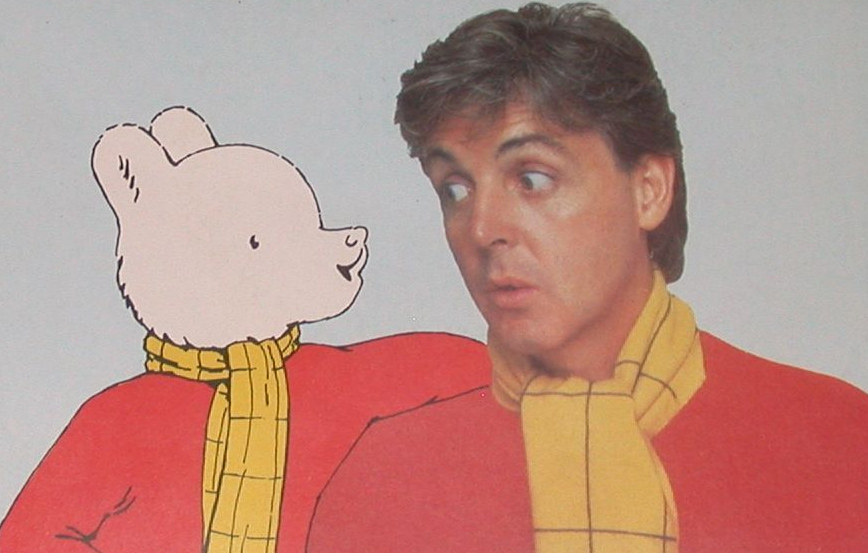
While most serious fans know these sessions birthed songs that would later appear on Abbey Road and multiple solo Beatles albums, one song debuted in these sessions that I didn’t previously know would end up as an outtake on, of all things, Paul’s unreleased (but bootlegged) Rupert the Bear film soundtrack.

So let’s give a very special They May Be Parted welcome to “The Palace of the King of Birds.”

Slowly the group joins in, plodding along for more than 10 minutes. It’s not unpleasant, but it’s probably the kind of thing you’d never deliberately put on a playlist to listen to again. Paul and George spend the first few minutes of the song chatting with each other about equipment. Ringo does his thing. John throws in a riff or two. Paul’s active a little at the start and then a bit at the absolute end.

It’s actually not the last we hear of the song these sessions. But I think it’s the most extensive version. And the Beatles didn’t return to it after January 1969.

Nine years later, Paul would record the song with Wings for a planned Rupert the Bear movie that never came to fruition. By then, it was called “Castle of the King of Birds.” What caused the bird king to be forced to change the location his headquarters from the palace to the castle, I don’t know.

The song is a footnote in Beatles history, for sure, but a neat one from the standpoint of where the song would eventually surface.

Straight out of “…King of Birds,” comes another loose rocking jam, initiated by what sounds like John playing “Louie Louie” on the organ (it’s much more deliberate on the tapes before this below clip starts).

The band then dances around a few set pieces before a few more improvisations. “Across the Universe” is briefly attacked — it was still nearly a year from being released on No One’s Gonna Change Our World, and John is clear he isn’t happy with how the song was last recorded a few months earlier — and the band also teases a version of Bob Dylan’s “I Want You” as their own song of the same name thus far remains unrehearsed (and probably unwritten).

“Why Don’t We Do it in the Road” presaged much of what would come next. (In style, that is. The song itself sprang from Paul’s one-man jam).

In the first of a few improvisations that would be at home on McCartney or as a RAM outtake, Paul belts out “You Wear Your Women Out.” This I like. Groovy bassline seems to hold things together nicely. It’s a kindred spirit to an “I’m Down” or “Lady Madonna,” even.

The group makes a pitstop with a full run-through of “I’ve Got a Feeling,” which is coming together pretty decently. Paul’s in full yell on this particular take, which ends with him jokingly claiming, “The downtown rhythm and blues influence in ‘I’ve Got a Feeling’ can be noted by the Aeolian cadences and the Cadaconic clusters,” in a nice old-school Beatles reference.

He then lets his bass kick off the journey into the next improvised jam, “My Imagination,” with a riff borrowed from Bobby Parker’s “Watch Your Step” (the same inspiration for “I Feel Fine” among other things) and vocal stylings that occasionally veered into something that could be called Ono-esque.

Hey, that’s not so bad! Not sure about the vocals, but it’s still relatively catchy.

The fun ends with one more apparently Paul-led jam, “I’m Gonna Pay for His Ride,” thus named for its lyric barked out by McCartney at the end.

The band sounds pretty good, and pretty loose, much like they do while running through covers during the sessions.

While there would be more jamming in these sessions, and “…King of Birds” would eventually nearly make it to release, for the final three songs mentioned here — “My Imagination,” “You Wear Your Women Out” and “I’m Gonna Pay for His Ride” — it would be the last we’d hear of them.

9 Comments

Filed under Day by day

TMBP Extra: George quits the group

Author’s note from September 2020: Eight years later, and I finally got to the point in the tapes where George quit the Beatles. So stop reading this post, and instead read my comprehensive retelling of this moment here. 

The original post remains below.

—

Continuing to interrupt regular programming to offer up a quick one while he’s away. He, being George Harrison, who quit the band this very day in 1969, marking the second Beatle to leave the group in five months (Ringo having left briefly during the White Album sessions).

A comprehensive post on this moment will come in the future, but wanted to mark the occasion on the actual anniversary.

Director Michael Lindsay-Hogg describes the incident, which happened at lunch, in his 2011 autobiography, “Luck and Circumstance.”

George was usually with us, joining in the conversation, affable and friendly and interested in the give- and- take, but on the day of the Tunisian discussion, he wasn’t with us as the meal started. At the morning rehearsal, I could tell by his silence and withdrawal that something was simmering inside him, and so in my role as documentarian, I’d asked our soundman to bug the flower pot on the lunch table.

We’d finished the first course when George arrived to stand at the end of the table.

We looked at him as he stood silent for a moment.

“See you ’round the clubs,” he said.

That was his good-bye. He left.

John, a person who reacted aggressively to provocation, immediately said, “Let’s get in Eric. He’s just as good and not such a headache.”

Paul and Ringo would not be drawn in, and after lunch we went back to the studio where Paul, John, and Ringo improvised a ferocious riff, half an hour of anger and frustration expressed with guitars and drums. Yoko sat on the edge of the rostrum on the blue cushion which had been George’s and howled into his mike.

Part of the jam was The Who’s “A Quick One, While He’s Away” — just one sliver of the song. And he indeed would “soon be home” — he was back with the group 11 days later when they moved the sessions to Savile Row, which was a condition of his rejoining.

George, meanwhile, was pretty productive once he got to his actual home.

From his autobiography, “I Me Mine”:

…[A]fter one of those first mornings — I couldn’t stand it; I decided this is it! — it’s not fun anymore — it’s very unhappy being in this band — it’s a lot of crap — thank you I’m leaving. Wah Wah was a ‘headache’ as well as a footpedal. It was written during the time in the film where John and Yoko were freaking out screaming — I’d left the band, gone home — and wrote this tune.

“Wah Wah” would never see life as a Beatles song, joining “All Things Must Pass,” “Hear Me Lord,” “Let it Down” and “Isn’t it a Pity” — four Harrisongs brought to the Get Back sessions for the Beatles to work on — on his solo debut instead.

12 Comments

Filed under Extra