Category Archives: Day by day

Jan. 3, 1969: The Band plays on

Robbie Robertson and George Harrison, November 1968

The Beatles had been Bob Dylan, The Byrds, Elvis Presley, the Beach Boys  and others. And on January 3 for the rehearsals of “All Things Must Pass,” George said, “We’re pretending to be The Band for this one.”

These are genuine rehearsals, the band learning chords, harmonies and the song in general.

(I embedded this last post about the song, but worth repeating.)

They sound mostly not good, beset by some technical woes, a lack of focus and generally sloppy play. If this was how John and Paul treated George’s songs during rehearsals for all their other albums, we’re lucky to only have recordings available for these sessions to spare him the indignity.

As the rehearsals continue, George elaborates on the sought-after vibe.

“The thing that I feel about the emotion of it is very Band-y. Rick [Danko], this one, the one who wrote really the best ones. It’s like…” [plays the first verse]

He begins to describe how he wants the backup vocals during the chorus to sound.

“If there’s people joining in, I’d appreciate it,” George says.

After a few takes, Paul offers a suggestion. “If John sings what you’re singing, and I sing harmony that’ll be the Raelettes [Ray Charles’ backup singers].

But it’s The Band that George wants the inspiration drawn from.

“The reason all their people are singing different lines is they all want to be the singer. … [And] there’s discipline where nobody’s crowding anybody else out. But it’s really great.”
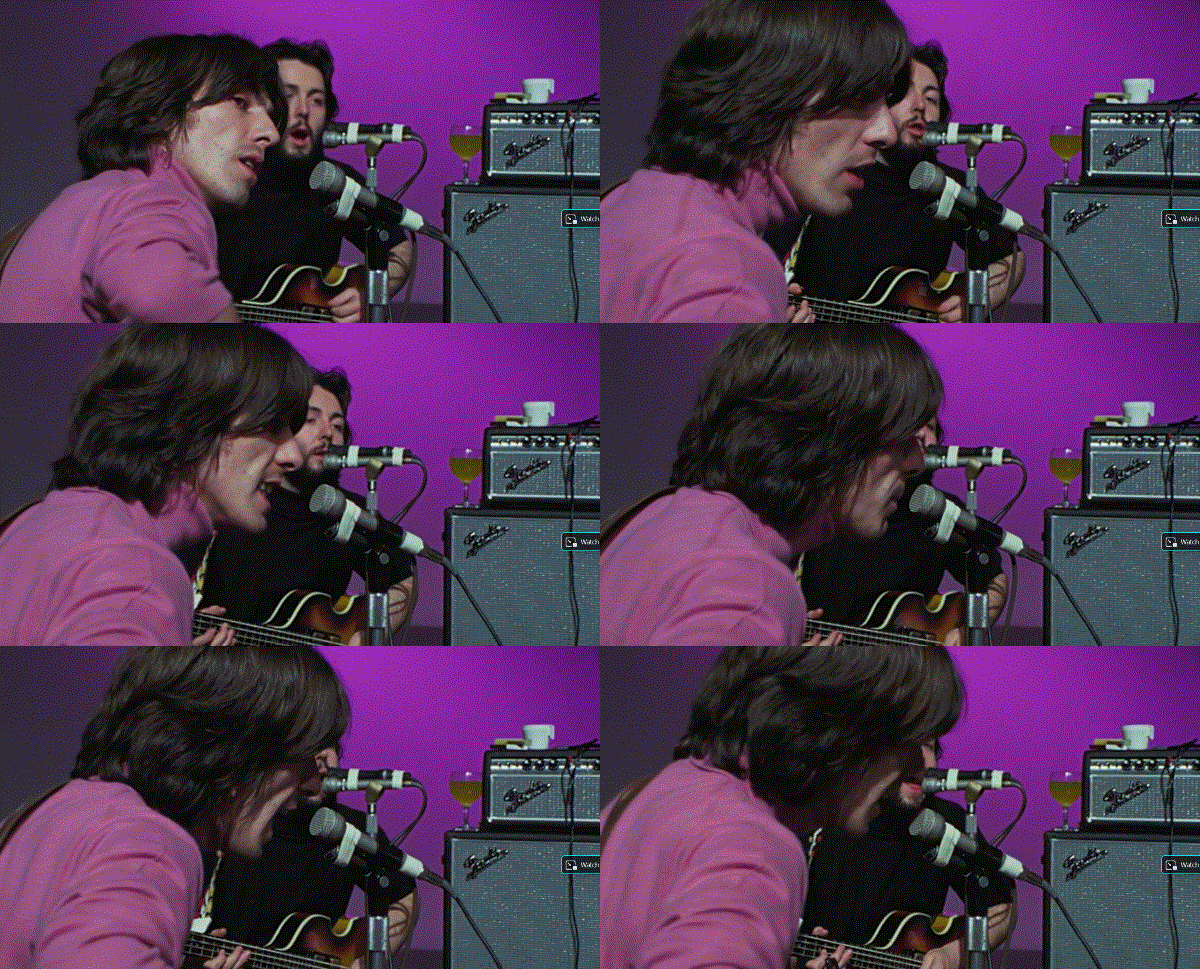
January 3 “All Things Must Pass” harmonies, from the Get Back docuseries.

As the harmonies continue to be worked out as they wrap up the day’s rehearsals of the song, John at one point remarks, “It’s getting like gospel.” But it also gets pretty sloppy. These kinds of harmonies do work for The Band, but it’s not quite working for George, Paul and John. Ultimately, some of the suggestions George had for the harmonies would show up in altered form when the song finally was released by George himself.

(First minute or so is from the Jan. 3 sessions)

George also wanted John’s organ sound to ape The Band.

“This guy Paul is looking a bit like from The Band who’s the organist [Garth Hudson], he’s really fantastic. And he’s into that so much. And it sounds a bit like a synthesizer, because the notes bend.”

So The Band gets the credit for the song’s sound. What about the lyrics? George explains to John:

“It’s Timothy Leary, I suppose.  In his ‘Psychedelic Prayers’ he had one. I remember just from years ago. … That gave me the idea for the thing.

“Apart from life.”

There indeed is the first verse, nearly verbatim, in Chapter 23 of Leary’s book.

In fact, George summarizes nearly all the above quite neatly in his 1980 tome I Me Mine, without giving quite the level of direct credit to Leary, at least for the song’s first few lines.

When I wrote “All Things Must Pass” I was trying to do a Robbie Robertson-Band sort of tune and that is what it turned into. I think the whole idea of “All Things Must Pass” has been written up by all kinds of mystics and ex-mystics including Timothy Leary in his psychedelic poems.

Near the end of the day’s rehearsals during a break, John’s misreading of the lyric sheet — he sees “wind” as “mind” — ends up as a suggestion.

“A mind can blow these clouds away. … There’s a bit of psychedelia in it, you know? Social-comment like. “

28 Comments

Filed under Day by day

Jan. 3, 1969: Four guys and four amps

Musical equipment, and not necessarily significant advances in songs themselves, characterized much of the Jan. 3 rehearsals, and certainly so during All Things Must Pass, from the shoctric shocks that actually made the film for the song’s only cinematic “appearance” to the more significant discussions about more macro points that occurred between takes — and during them —  as well.

During one particular take — 3.106, if you’re keeping score at home — there’s extended crosstalk that begins as the song is still being played between Paul and Glyn Johns regarding bringing in a mobile eight-track to properly record the Twickenham sessions.

“What about Wally Heider?  You know Wally Heider, ” Glyn says to Paul, and he replies, no.  “Wally Heider is the mobile guy in America. He’s got a studio on Cahuenga. It’s the Beach Boys’ studio. They have a fucking great truck.

[It’s a] big truck, does eight-track mobile. Did the Cream live album and all that. We could get that, I suppose.”

Mind you, Cream had back-to-back records with live portions, and would later have a full-live album that came out post-breakup. So really, it could be referencing any of those.

Paul replies: “Telephone America… get it here next week, that quick.”

When told EMI only had a four-track mobile, Paul quickly snapped back: “No they haven’t. They took a fucking eight-track out to the Beach Boys. They really do [have an eight-track], because I had to use the studio, and they said, ‘We’re moving the eight-track tonight.’  And that was one of the excuses they used. Really.”

Paul continues to George: “If you wanted to to get eight-track stuff to record all this, you wanted to get the greatest equipment, where would we get it? Because apparently it hasn’t been… (recording trails off).

“We lend it to ourselves,” George says. “But EMI should do it. It’s like if Benjamin Britten wants to do an album in Paris, EMI has to fucking get all that shit over to him.”

“And they do it of course,” Paul adds, disgusted.

“Seeing as we subsidize EMI, then get it out of there,” George replies.


After a break in the tape, Paul continues.

“The answer is to get here before the end of this week the best console they possibly have here. Really, the end of the week. And what’s the hangup? Is it the expense? Japan and America, they’re both very together. Germany? Germany’s very together. … See, we should hust have a mixer and everything.

“If it was America, they’d be there with 48 eight-tracks,” George later adds.  “And it’s a live album, they’re the company they get to charge on it , they have to supply it.”

The band returns to All Things Must Pass. But they weren’t done talking.  After a few more takes, the band goes back to discussing essence of the sessions (3.138).

“You know,” George begins, “the idea of doing this thing so it’s just us doing it and there’s no overdubs or you can’t get out of it , is much better, really. Because you know all the time recording you think, it’s all right, we can do that later. So you never get even the most out of that [indecipherable]… really.

John finally chimes in after briefly asking about the song’s lyrics with further ruminations on the live performance with the band just two years and four months removed from their final live show.

People who are doing live shows now, they take so much gear on stage with them like echoes, phasing, tapes. And they do it live — they do their overdubs. And we’re still thinking of it in terms of the four guys and four amps.

Before returning to playing, George talks of getting a Leslie guitar pedal for the show and then of Magic Alex working on their studio that week before the band ultimately pivots to Maxwell’s Silver Hammer.

Fascinating are the politics involved with EMI and the issues they apparently had domestically in the UK.

And again, I can’t get over the question of why they even have started the sessions given the questions they still had over recording and getting equipment.

More All Things Must Pass talk in the next post.

Many, many thanks to @TheLilacTime and commenters @trainman74 and anonymous for helping clear up some of the details in the above bit of dialogue, including Wally Heider’s identity, Glyn’s voice and the location of Cahuenga. 

15 Comments

Filed under Day by day

Jan. 3, 1969: Shoctric shocks

Before I begin, thanks to all the new followers who found me from the spectacular Hey Dullblog and the superlative Kenwood. Glad to have you here!

The hour and a half spent listening to the Beatles rehearse “All Things Must Pass” (that includes their chatter before and after playing)  on the second day of the Twickenham sessions are interesting (and aggravating) enough to  warrant multiple posts. Count this as post No. 1.

Like Let it Be’s opening sequence, there was a bit of symbolism in the film’s portrayal of the “All Things Must Pass” rehearsals.

Feedback

Don’t remember hearing the song in the movie? Well, they never quite got to the song itself.

About 5 1/2 minutes in — after a performance of “Maxwell’s Silver Hammer” from a different day — there’s a sequence lasting just under a minute of George getting a load of feedback speaking from his microphone, and the crew working to fix it.

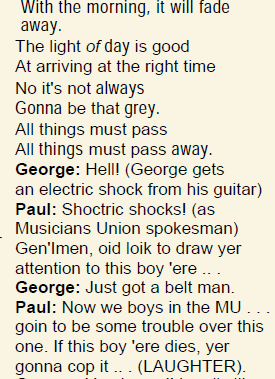
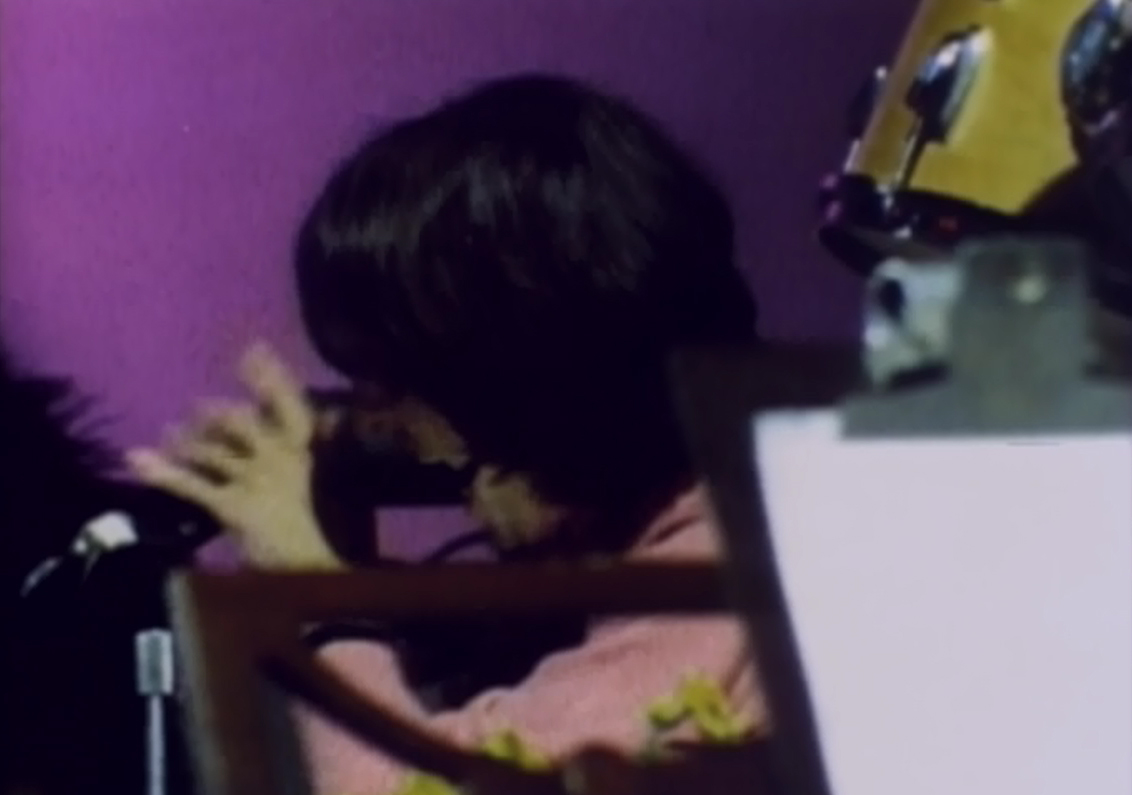
Hilarity ensues after George exclaims, “Fucking hell… shocktric shocks.” He  insists “I’ve just got a belt, man” as far as what could possibly be causing the feedback. “I’ve got rubber shoes as well,” he says before Michael Lindsay-Hogg (I believe) chimes in, “And you’re made of wood” to laughter.

Naturally George tries again to touch the mic only to get shocked again.

Paul wraps the scene by looking into the camera and saying, “If this boy dies, you’re going to cop it.” And we’re off to a later take of “Two of Us.”

So here we have the lone moment in the movie of “All Things Must Pass” and it’s simply aborted, merely comic relief.

One of the film’s “touching” moments

In the movie, it was truly just a blip between songs. In reality, the technical problems lasted…  well, I don’t know how long it lasted. But based on the remainder of that take in the tapes (“All Things Must Pass 3.101, for those keeping score), there was more feedback, more mic maneuvering for more than two minutes, more poking fun at George, then the tapes cut off. We’re back as they begin a subsequent take of the song, immediate issues already resolved.

The scene was edited for the film, as the dialogue didn’t quite happen in the order it was presented.

Knowing now what the song is actually being attempted — and we never do actually get to it in the film (or recorded for the album) — is an awful, awful tease. But that was really just part and parcel of the rehearsals of the song on Jan. 3 (and, I suppose, of how John and Paul treated the song overall, showing it little urgency).

The shock sequence also appears in the 2021 Get Back docuseries.

George has a really difficult time teaching the band how he wants the “All Things Must Pass” to sound (“Tell us the bits of which you’re most unsure of it,” he asks the band. “Or all of it.”). They sound clumsy and distant.

From the “Get Back Book” — find it here: http://www.beatlesource.com/bs/mains/audio/GetBack/GetBackBook.pdf

You hear phones ringing in the background at times. The equipment doesn’t work.  The band is distracted — Paul argues about recording equipment with Mal Evans during one of the takes.  There’s plenty of this throughout the sessions at Twickenham, I’m sure (I’m just on Day 2).  but this is, in the immortal words of Paul years later, a drag, isn’t it?

After hearing a few songs sound close in pretty good shape (“Don’t Let Me Down,” “I’ve Got a Feeling,” and “One After 909” — that last one is cheating, I know) and other new songs with more polish (“Two of Us” and “Maxwell’s Silver Hammer”) in those first two days, I hoped for more from the initial rehearsals for “All Things Must Pass,” some remote acknowledgement that this song was a keeper and should be thrown in the pile of songs for the performance and album they were working on.

Instead, it’s an aggravating listen, kind of the classic Beatles “with their trousers down” that the sessions were always labeled as.  I do know the song gets better, having heard rehearsals from later in the sessions.  I just got greedy wanting more early. And it’s made worse with the hindsight that ultimately, the song wouldn’t end up going much further than it already was.

More on the song — and the discussions the band had during rehearsals of it — in the next few posts.

16 Comments

Filed under Day by day

Jan. 3, 1969: Traveling on that line

When we last left you on the Nagra Tapes timeline, George wondered aloud whether it was practical for the Beatles to perform a concert consisting only of new songs, without throwing the audiences — especially the American one — a bone with an “oldie but goldie.”

They had, in fact, rehearsed such a song a few hours earlier. Well, it may not have been a goldie, but it was an original Beatles oldie dating all the way back to the days of the Quarrymen.

And while they did in fact record “One After 909” in 1963 — in fact, it was 49 years ago today, on March 5, 1963 (the same day they cut “From Me To You”) — that original recording didn’t see an official release until Anthology in 1995.

The band attacked their first take of the song (in presumably five-plus years) with much of the same gusto they gave covers of the same era during the sessions. How do we know they enjoyed playing it? They actually finished the song.

Following that first run-through, which was replete with stumbles but seemed to have John and Paul remembering all the words, the band — especially Paul — collectively marveled at the simplicity of the lyrics.

“I always meant to just change the words a bit,” John said. Paul chimed in that “it’s great,” before giving a spoken-word run-through of first verse, to George’s laughter. Then George, ever eager still to actually have a focus here, asks if the band should rehearse the song more.

A bit of that dialogue appeared in the Let It Be film, and decades later, on a podcast promoting the Let It Be … Naked release on iTunes.

“Or maybe we should do it without practicing. You know, practicing will fuck it up,” George said.

The band in fact, did return to the song — after first running through a take of the presumed John oldie “Wake Up in the Morning/Because You Love Me So.” And like the prior run-through, this take of “One After 909” was closer in spirit and pacing to the Quarrymen version than the 1963 recording.

Also like the prior take, the band continues to poke fun at the lyrics once the song is over. John bemoans, “We always thought it wasn’t finished.”  And George goes further, suggesting “Most people don’t give a shit what the words are
about, as long as it’s popping along.”

It’s rock and roll, and it’s a song, written in 1957, that is indeed seminal rock. It was a Beatles song, not a John song/Paul song/George song as the bandmates had been bringing to the sessions otherwise — and you can hear the harmony (literally and figuratively) while they play.  Really, it’s the perfect song for what they were trying to achieve during these sessions: developing a loose, off-the-cuff presentation of their songs.

13 Comments

Filed under Day by day

Jan. 3, 1969: No little thing

Just as the band was trying to find an agreeable venue for the concert that would cap the sessions, they likewise were searching for a setlist.

The new songs they were rehearsing were a given — at this early point, it was obvious “I’ve Got a Feeling” and “Don’t Let Me Down” were being worked on to reach that payable point and passed the generally accepted bar of “fast” ones good for a live show.

In a curious admission, George expresses his worry about putting on a TV show of all new songs. Of course, by that point,  the critical failure Magical Mystery Tour (the film) was a little over a year old, and it wouldn’t be seen in the United States until 1974, supposedly because of the negative criticism surrounding it.

But they’re still the Beatles! The White Album was in the middle of a nine-week run atop the charts in the U.S., en route to becoming their best-selling record (each sale counted as two). “Hey Jude” was the No. 1 song in the U.S. as recently as six weeks earlier after spending nine atop the Billboard charts, and it was still sitting at No. 15.

Also, they’re the Beatles.

Yet George was still concerned about how new songs would be received.

So of all the songs, George suggests an album track from 1964’s Beatles For Sale.

“We’re not going to do any oldies but goldies for the show?” George asks.

“Dunno, could be” says Paul.

“Cuz I’d like to do it,” George continues, agreeing with someone who says “it would be nice.”

“And also from the selling point of view, in America … maybe it’s all new, or maybe… If they had the album and then saw it, [the concert]  a week after. But just to hit… the first initial thing of us singing all completely new … they need something to identify with apart from us. It would be nice to start the show or end the show with a couple of… (then he either cuts himself off of the sound cuts out.)

I’ll tell you which is a good one..

Then George starts playing the beginning to “Every Little Thing.” Paul, the song’s author, joins in with little gusto. We get to see some of this sequence in the 2021 Get Back docuseries.

So of all songs George suggests would be a good kick-start — or capper — to the big concert, it’s not “Hey Jude,” not “Back in the USSR” — which George had been riffing on leading into this suggestion — not his own recent classic “While My Guitar Gently Weeps”  or slightly older “Taxman.”  He could have suggested “All My Loving,” which opened up the first Ed Sullivan appearance and won over the United States instantly. Or for the idea of going full circle, the first song off their first album in “I Saw Her Standing There.”

But instead it was “Every Little Thing.” A great song! But probably just a tick more familiar as the other new songs they’d debut.

I don’t question the choice from a standpoint of quality. It’s just surprising. And I wonder if it would have done anything to “ease” American audiences.

As it happened, the Beatles would, in fact, find an oldie of theirs to play at the concert that ended the sessions, and they dusted it off earlier in the day on Jan. 3. But while it was an old Beatles song, it wasn’t something that would be at all familiar to fans…

7 Comments

Filed under Day by day