Paul McCartney began January 9, 1969, at the piano sketching out “Another Day,” but it was anything but for the sixth day of the Beatles’ sessions at Twickenham, where things started to get a little testy, while musically it remained deeply compelling.
Just another day: The Beatles begin their second week at Twickenham with Paul at the piano and his muse by his side as he debuts an important future solo classic.
Road work: Twickenham is Paul’s songwriting lab as the morning’s tapes reveal his effort to put lyrics to several works-in-progress, like “Carry That Weight” and “The Long and Winding Road,” among others.
Last-night song: George Harrison lifts the veil on a proper version of “For You Blue,” but are the other Beatles eager to bite on another George original?
Jokes in between: Harmony and discord, joy and petulance. It’s a roller-coaster of moods for the members of the Beatles as they continued work on their core set at Twickenham.
Another kind of gig: Get yourself well done with the backstory of the Beatles’ lively and perpetually mysterious “Suzy Parker.”
Love from Paul: Take an exceedingly deep dive into Paul McCartney’s “Penina,” one of the most obscure originals from the Beatles era and a “£20,000 holiday tip.”
No Pakistanis: Inspired by current events, Paul McCartney works on a set of satirical, racially charged — and later misunderstood — lyrics to “Get Back.” Putting this Beatles’ session into appropriate context 50 years later.
Power politics: “This racial business over in England” inspires a suite of upbeat, satirical improvisations. This is the story of The Beatles’ “Commonwealth” and “Get Off.”
Subconscious sabotage: To his death, John Lennon hated the recording of “Across the Universe.” But with a chance to make it anew during The Beatles’ Get Back sessions, instead of changing his world, the song would slip away.
It’s dead easy: An inspired Paul McCartney & Co. raid the toolbox to effortlessly shape “Let It Be” into a more coherent, familiar song. Here’s the origin story of the riffs, harmonies and arrangement with far more detail than you likely asked for.
Homeward bounder: After flirting the night before with the idea of a sea cruise to Libya, The Beatles’ enthusiasm for show-boating waned as Ringo Starr preached mundanity over spectacle for a planned live performance.
Crossroads he’s standing at: How a pair of covers of yet-to-be-released Bob Dylan songs sheds light on George Harrison’s disposition the afternoon before he’d walk out on The Beatles.
Et cetera: Putting a bow on The Beatles’ busy January 9, 1969. Featuring “Junk” and “Teddy Boy” from Paul, some proto-punk from John, bugs that aren’t Beatles and more.
I’ve been sharing my insights on the Beatles’ Get Back sessions on this blog for the last seven years, and it’s been with great joy that recently I’ve been able to share my voice as well at some other fine locations online.
Deep thanks to Robert Rodriguez for engaging me in a terrific, lengthy discussion on the Something About the Beatles podcast on the occasion of the 50th anniversary of the January 1969 sessions. Log onto your favorite podcast app (here it is on iTunes) or just click below. Perhaps do both!
Additionally, a huge thank you to the FabFourArchivist for having me on for a couple of cameos on his YouTube series about the road to the rooftop.
Greetings to all the new readers and followers who have found this site thanks to the above! We’re now more than 50 years removed from the Get Back sessions — and with this one, 100 posts on this blog — and we can’t stop talking about it. And why would we?
The Beatles wanted to make a Lord of the Rings movie, going back more than 50 years. A half century later, they’ve got director Peter Jackson aboard, but for an entirely different film. Will this end up a fantasy, too?
Having maintained a monthlong silence on the 50th anniversary of the Get Back/Let It Be sessions, the Beatles raised the Dead Men of Dunharrow (that’s the Army of the Dead if you only saw the film) on the anniversary of the rooftop concert.
Quick takeaways here:
• The selection of Jackson was no accident. He obviously has a masterful storytelling ability while working within the constraints of very detailed and very iconic source material, as well as film restoration. While I don’t anticipate him to introduce Tauriel to, say, sit in on saxophone, I’m expecting something we’re not expecting.
Jackson’s a superfan, too, which can only be a good thing.
• I don’t believe having an “upbeat” Let It Be film is necessarily revisionist history — or fantasy, for that matter. I’ve long maintained there was plenty of sugar to along with the medicine when considering January 1969. It would be disingenuous not to include the tension, the arguing, the passive-aggressive relationships between the band members, and I think Jackson’s quote saying there was “none of the discord this project has long been associated with” is an overstatement. To whitewash that aspect of the sessions would be problematic (though not surprising, given the promotional work recasting of the White Album sessions 50 years later). But it would be likewise false to resissue the film as merely their “winter of discontent,” not that we should expect that.
Paul McCartney and Michael Lindsay-Hogg (right) “on the set” of Let It Be. (Via IMDB)
• Make no mistake: Let It Be is Michael Lindsay-Hogg‘s film. He wasn’t just behind the scenes, he was an active participant in the sessions. Listen to the tapes (or leave it to me and read this fine blog instead), and you can hear MLH’s voice more than anyone else who’s not in the band. I’m very curious to see how Jackson works with MLH’s ubiquity — he’s central to every discussion about the live show, and perhaps he’ll retroactively get his first acting credit, that’s how much screen time he could get, in theory.
• And about that live show. I’ve written it before, but clearly the film’s arc should be (and have been) the sort of near-comedy of the greatest group in the world wondering what to do next and how — and that includes debating their own future — throwing out every idea they can think of, only to have someone argue against it. Finally, after ups and downs (George quitting), the villian (Twickenham Film Studios) is vanquished, a bit player from their past (Billy Preston) emerges out of nowhere to help return order, and everyone realizes the simplest solution (rooftop show) is what they were looking for all along. The farther one travels, the less one knows, so find the answer at home.
• I won’t call this a buried lede, but not even mentioned in the social media blitz — only the Beatles’ press release — is this news:
Following the release of this new film, a restored version of the original Let It Be movie directed by Michael Lindsay-Hogg will also be made available.
Quite the “oh, by the way …”
This is, of course, good news. Let It Be is a critical document, too, despite it’s obvious flaws, and we haven’t seen an official release since it the days of LaserDisc and VHS.
• The 140 hours of audio cited by Jackson is quite a bit more — in excess of 50 hours or so — than we’ve already have heard leaked and bootlegged over the years. It could be 24 more hours of discussions about a live show (I’m hoping) or 24 more hours of Maxwell’s Silver Hammer outtakes (I’m expecting). Reality, as usual, will likely be somewhere in between. I can’t see anything that changes the direction of history, but maybe we do get a few more specifics on locations. And I’m sure we get some improvisations or clipped covers we never heard.
“It’s funny, uplifting and surprisingly intimate.” – Peter Jackson
• I’ll admit I was wrong about something — but I’ll bury it at the bottom of this post. I never thought the Beatles would release Let It Be while Paul, Ringo and Yoko were still with us. And I thought, once Paul announced several months ago that some new version of the film was to be released, we’d probably just get Let It Be content lumped in as part of an Abbey Road deluxe set — “Beatles ’69.” But I was wrong there, too. Mea culpa.
• That said, we didn’t hear a thing about getting some of the audio outtakes — Nagra or otherwise — finally released. I’m still not expecting any sort of sweeping set — do you really think they’re going to put out tapes of Paul calling a newspaper “cunts” or, more relevantly, acknowledging how negative they are and doubting their future? — but maybe we will get a disc or two of some January 1969 upbeat highlights — “Suzy Parker,” “Oh Julie, Julia,” “Commonwealth,” etc. And there’s certainly enough terrific material to fill several Abbey Road “demo” discs, too.
The most disappointing part of the announcement is the timeline: It hasn’t been announced yet. But simply to get news of a new (and old) Let It Be is reason enough to celebrate with an unexpected party.
Like so many of the outtakes on the “sessions” discs unearthed and unleashed on the most deluxe version of the Beatles eponymous double-album, this newest version of “Let It Be” — the oldest recording of the song — is acutely alive and profoundly captivating.
As performed on September 5, 1968 — the day after recording their iconic performance of “Hey Jude” for Frost on Sunday — here’s the world’s greatest tea-room orchestra:
Fifty years in the books, and Beatles history still has room for an edit.
In some ways, this one-minute, 18-second cosmic jam capturing the band in medias res — between takes of “While My Guitar Gently Weeps” — is just what should be expected, even if its very existence is still something of a minor surprise. A White Album-era version of “Let It Be” felt apocryphal, despite established knowledge rooting it in fact. And so it is that the disjointed, driving performance sounds like it’s out of time — it was.
Let’s dig in on some finer points:
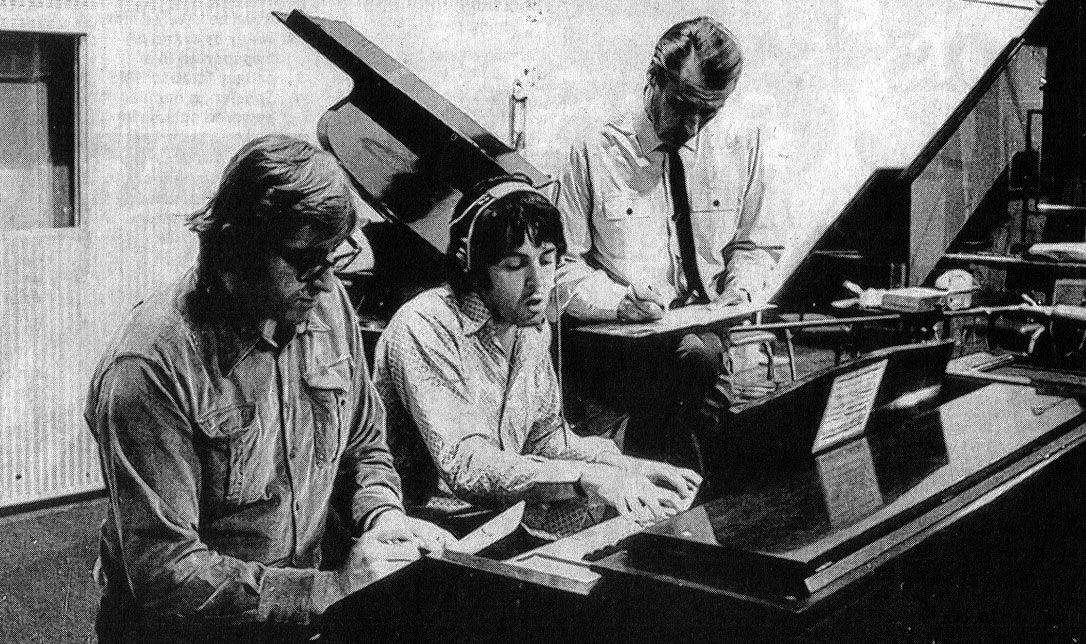
Brother Malcolm, Paul and George Martin during the White Album sessions in 1968
Brother Malcolm, Mother Mary and the lyrics of “Let It Be”
Notably, the lyrics of the song hardly advanced in the three months between September 5, 1968 and January 3, 1969, the first recorded performance of “Let It Be” at the sessions that would ultimately bear its name.
Here’s Paul grooving alone at the piano for the song’s debut on the Nagra tapes:
The lone addition, lyrically: “In my darkest hour, she is standing right in front of me.”
“She,” of course, is Mother Mary, who presumably was in the very original lyric sourced from Paul’s dream about his mother but was absent in the 1968 early attempt. That featured “Brother Malcolm,” a nod to do-it-all assistant Mal Evans. The reference to Mal was inconsistent over January 1969 but endured to the very end of the sessions. Here are the Beatles on the final day of the sessions, January 31, 1969:
It wasn’t until a few days into the sessions at Savile Row, on January 25, 1969, that most of the verses had been added. But Paul started teaching “Let It Be” to others in the band on January 8, when we hear Paul naming chords to the others to learn. That’s also when Paul disclosed that, even at this early stage, he planned to have Aretha Franklin cover the song.
Interludes
Students of the Beatles’ January 1969 sessions have heard this sort of thing several times before, someone in the group veering into an original, a cover, an improvisation between songs, during a transition during a rehearsal or purely as an aside.
Some of these drop-in songs were even the same for the White Album and Get Back/Let It Be sessions:
And just as future songs were sampled and explored during jams in 1968, they were in ‘69 too. And probably long before that as well. A few examples:
Divine intervention
This initial iteration of “Let It Be” may not have had “Mother Mary” but it did feature the hand of “God.”
The September 5 session of “While My Guitar Gently Weeps” was the one that featured Eric Clapton as the Beatles’ guest on lead guitar. That places Eric at the origin of “Let It Be,” and he can be heard adding a few guitar licks to the improvisation. (Listen to the very end and you can hear George close the track imploring his friend to don his headphones: “Cans on, Eric.”)
A full 31 years later Eric would get to play the song again, joining Paul on stage at the 1999 Rock & Roll Hall of Fame inductions. Paul was inducted for his solo career, but the show closed with, naturally, “Let It Be.”
This same induction ceremony honored producer George Martin, who happened to miss the September 5, 1968, session whilst on vacation.
Times of trouble?
Even Paul called the White Album “the tension album.” John said worse in the early ’70s. Ringo literally left the band for a few weeks in the summer of ’68. Four Beatles, each recording in a separate studio — we all know the stories.
But while history is static, perceptions are variable.
The 2018 reissue’s promotional campaign works to dispense with some of the darker sides of the session, from Giles Martin’s interviews to the numerous dismissals of dysfunction in the lovely hardbound book packaged with the deluxe edition. Indeed, there’s plenty of laughter and carefree spirit throughout the White Album outtakes. The outtake set even begins with laughter among John, Paul and Yoko, as if to hammer the point home.
The Get Back/Let It Be sessions inherit the same sour reputation, yet it would be very easy to compile 50 tracks from January 1969 filled with laughter, chatter and the indication that nothing could ever tear these guys apart. And I bet if and when we do see a formal reissue campaign of Let It Be (which I suspect will be attached to a larger Abbey Road/”Beatles in ‘69” re-release), we’ll see that very recalibration of Beatles history. More “Suzy Parker,” and not quite so many calls for a divorce.
And that’s OK. I’ve long posited that things weren’t necessarily so bad — or at least that much worse — for the Get Back/Let It Be sessions than in the period immediately before and after. Naturally, the reality lies somewhere in between. Neither the White Album nor Let It Be are outliers — that’s just how the group was post-1967.
Together at the beginning of that trip, the individual Beatles returned to England separately. For the final stage of their career, they produced enduring music, though they may be parted.
January 8, 1969, started with George Harrison unveiling “I Me Mine” and ended with the Beatles ready to work in conjunction, seemingly ready to finally reach consensus on a plan for an overseas concert. Along the way, the group recounts Beatles history back to their days in Liverpool and through the decade.
All through the day: The “I Me Mine” origin story is brought to you by George Harrison, LSD, TV, a waltz and a dare. The longest post in this blog’s history (to this point), It’s everything you ever needed to know about The Beatles’ final song, but never thought to ask.
Take a lesson from Jude: Could James Brown prove to be an inspiration for a Beatles live show?
Rocky and the Rubbers: The Beatles get serious in deed, if not demeanor, in a run-through that was, in large part, eventually featured in the Let It Be film.
No blue moon in history: The Beatles travel down Memory Lane with a stop at 20 Forthlin Lane as they shine light on the very first two Lennon/McCartney compositions (with a detour to 1966).
An hors d’oeuvre. George Harrison’s future solo classic “All Things Must Pass” reaches its apex as a song performed by the The Beatles. Would opportunity knock for George Harrison of Liverpool?
Two for the Road: It’s Twickenham as a demo venue for Abbey Road, as John Lennon re-introduces “Mean Mr. Mustard” and Paul McCartney leads The Beatles in another go at “She Came in Through the Bathroom Window.”
Look Around – An old TV show by The Beatles serves as inspiration for their new one. but will the discussion go round in circles? Features special appearances by Elvis Presley and pastry cooks from Walton-on-Thames.
Let it Be hers: Paul McCartney brings his future anthem to the rest of The Beatles and shares whom he wants to cover yet another of his new gospel-flavored songs.
Nothing is real: The Beatles consider pairing their “honest sound” with an artificial set for a final live show. Featuring Denis O’Dell.
The Four Powers: It’s The Beatles, fully engaged and animated as a model UN, negotiating terms for a live show. “Russia” and “France” threaten vetos, but Paul comes through with an offer inspired by a pair of incidents from 1962.
Syndicate any boat: The Beatles seem to approach some consensus on the terms of traveling to Africa for a one-off concert, with 1,000 fans tagging along on a boat ride.
TMBP Extra- Time to leave the capsule: Hey, January 8 is David Bowie’s birthday! Bowie and members of the Beatles crossed paths several times starting in the ’70s, but here I dig into what they were doing in 1969, before they met, just miles away at the same precise moment on January 6. Bowie, the Beatles and Apollo 8 cross paths.
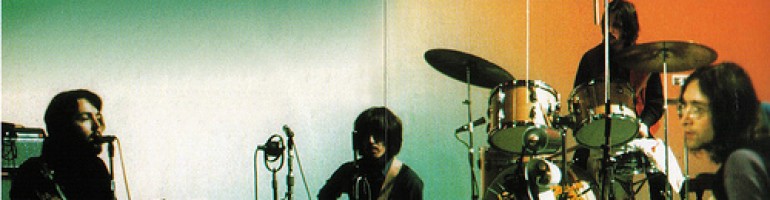
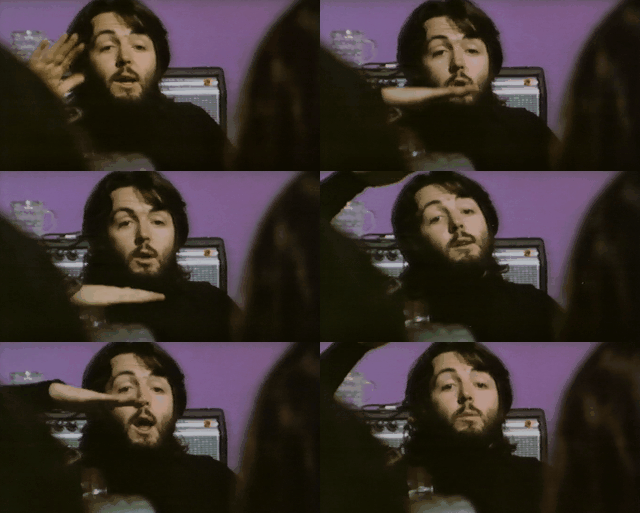 Paul McCartney began January 9, 1969, at the piano sketching out “Another Day,” but it was anything but for the sixth day of the Beatles’ sessions at Twickenham, where things started to get a little testy, while musically it remained deeply compelling.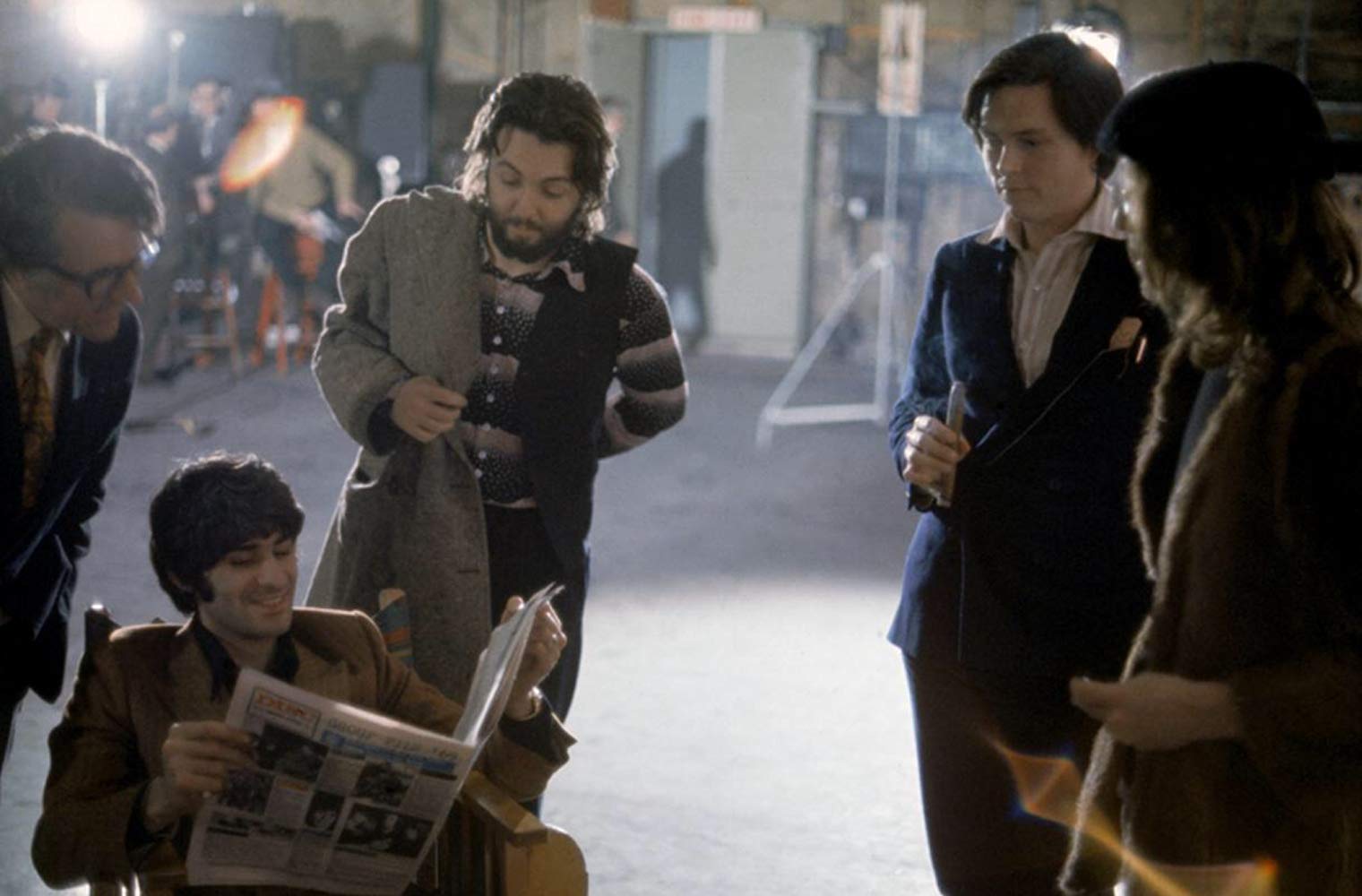
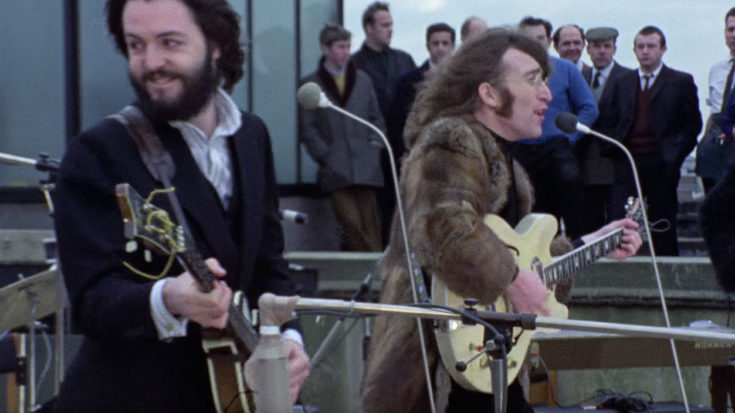
 They May Be Parted