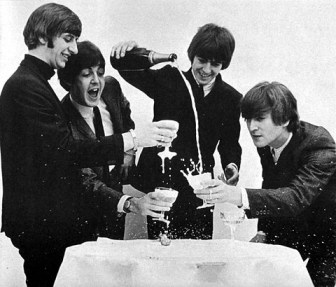
TMBP Extra: Everybody had a good year — 1st Blogoversary

champagne

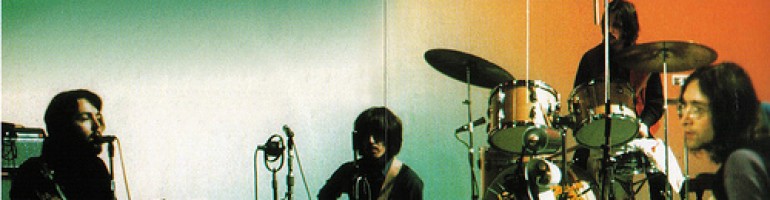
Today — Jan. 2, 2013 —  marks the 44th anniversary of the beginning of what would ultimately be known as the Get Back (or Let it Be) sessions. And for me, it’s exactly one year since I began this labor of love.

So with another year over and a new one just begun,  I wanted to quickly look back at a year of posts and share a little bit of what I’ve discovered through 40 posts that have covered 14 hours of music and conversation thus far.

  • Wait — Just 14 hours in?! That’s it? I’m amazed, too (maybe). When I started this blog, I didn’t think after a year’s worth of posts I’d still be on January 6, the third day of the sessions with another 83 hours of tapes (nearly three-and-half-days’ worth) remaining.  Beyond the fact that life indeed is what happens when you’re busy making other plans, I found my interest in what I was listening to increase with every post. I started out planning on a couple of posts per session day, but I’ve eventually found myself writing multiple posts about a single song or even a conversation.
  • And about those conversations… So far, I’m finding them more interesting than the song rehearsals. Not that it should surprise anyone that two-plus hours of “Don’t Let Me Down” (in just these 14 hours) gets a bit old . But the decades-old bootlegs that first exposed me (and I’m sure many of you) to the sessions really only featured the band’s wacky covers and oddball originals (in addition to the more definitive and unique takes of the songs to eventually surface on the record and in the movie).  Getting to hear George tell Paul he’ll play if he wants him to play is great. But being able to get the entirety of the context plus the rest of the conversation is gold (that specific example is subject of my next original post, in fact). The discussion they had about Cream plus the lengthy discussion about the potential live show just fascinated me (and, hopefully, you!).
  • Run from, not for, cover: Maybe it’s just because they’re old news by now. But the covers they “play” (so far there haven’t been too many full run-throughs) aren’t all that compelling. Maybe it’s personal taste, but I just don’t care all that much. Although at times they clearly enjoyed performing those more than their originals when it’s the entire band actually playing together. But for something that has long defined these sessions, I’m eager to just get through them.
  • Traffic bait

    Clickbait

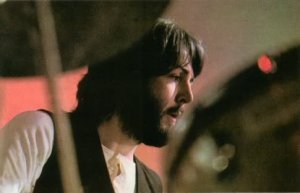
    I’ve just seen a face.  I don’t pay too much attention to site stats, since the blog is purely for fun, not profit. But in a very inexact study of search terms people use to find the blog, people just love searching for Paul’s beard. And I’m happy to oblige.

I have plenty of more observations, but I’ll leave them to this next year’s posts themselves. I do seem to have a tendency to ramble.

So with this blog entering its second year, I simply want to thank you all so much for reading. This is just so much fun to be able to have the chance to virtually talk about such a specific thing with so many knowledgeable people as enthusiastic as I am.  Can’t wait for another year of Beatle posts/tweets/chatter.

—

As we enter the first few days of January, I’ll be unearthing links to my posts about those days in 1969 on the tapes, starting below with Jan. 2. After we’re caught up with my posts through Jan. 6,  I’ll pick up where I left off on the timeline (that same Jan. 6) with a look at “Two of  Us” and the iconic George-Paul argument that happened within.

Posts about Jan. 2, 1969:

  • Different Feelings: On the first day of the sessions, the band runs down a few different new numbers, with Paul taking charge
  • Revelation 1: Exploring the shared origins of “Don’t Let Me Down” and “Sun King”
  • Tell me why: In their rush to begin recording at Twickenham, nobody seems to have an exit strategy.

 A little disclaimer. I’m in the process of a little bit of cleanup. Anywhere that I change content of any substance, or fix a fact, I’ll make that clear. But I won’t waste anyone’s time denoting when I found  better video clip or replaced a dead link, etc.
12 Comments

Filed under Extra, General, Recap

TMBP Extra: Christmas time is here again

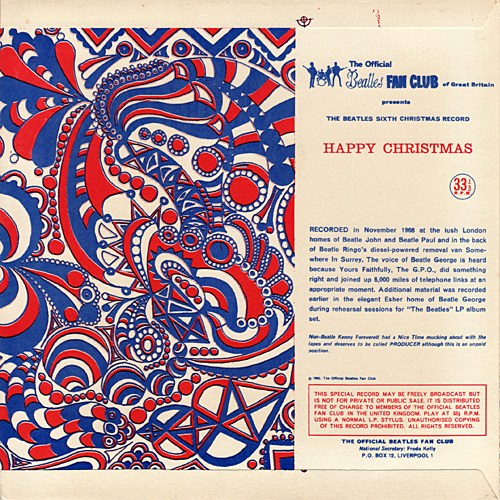
1968_sleeve_back

Quick quiz: When the Beatles convened Jan. 2, 1969, at Twickenham for the Get Back/Let it Be sessions, what was their most recent record release?

It wasn’t the “Hey Jude” single, which was still on the charts , but came out the end of August 1968. It’s not the White Album either — that came out at the end of November.  The soundtrack to the Yellow Submarine film was released nearly two weeks into the January 1969 sessions, with songs that had long been recorded.

Check the solo discographies, even, and you come close —  but not close enough. Two Virgins — cut in May — came out a week after the White Album. John also participated in the Rock & Roll Circus on Dec. 11, 1968, but that recording wasn’t released until 1996. George’s Wonderwall Music was close, too, released Nov.1, 1968 in the U.K. and Dec. 1 in the U.S.

The answer, a giveaway by now thanks to the post title and above image, is the Beatles’ Sixth Christmas Record, recorded post-White Album sessions in November 1968 and released Dec. 20, 1968, less than two weeks before the band assembled at Twickenham in Jan. 1969, and while the band was in active discussions planning out the film and potential shows.

There’s no need for a play-by-play breakdown of the recording, since if you’re at this blog, you either already have heard it or, if not, you really should just click and listen — it’s less than eight minutes long.

Does it portend anything musically for the band? Well, no, not at all.

It’s odd and experimental in (most) places. But perhaps more relevant, this is the first of the fan-club-only Christmas releases, which date back to 1963, in which the group wasn’t actually a  group, with each of the four members submitted their own message for inclusion. How separate were they? It was an international affair with George literally phoning it in from L.A., while the rest of the band put their respective pieces together from their homes.

Alas, they were forced back together again days later at Twickenham, but by the time their following (and last) Christmas album came out in Dec. 1969, they’d be done recording as The Beatles, separately or together, altogether (one exception aside).

1 Comment

Filed under Extra

Jan. 6: Cross that bridge (Pt. 2)

When we left the Fab Four in the previous post, the band was continuing the wrestle with the bridge in “Don’t Let Me Down.” To Paul, the section “needs things to happen.”

So he proceeds to ask Ringo for a little bit of stop-and-start drumming, some cymbal play and otherwise suggest ways to demolish the pacing of the song.

John seems to like it, or at least not dislike it. There’s a sparseness to it, and maybe I’m nuts, but I almost feel a little Plastic Ono Band thing happening here (“Hold On” maybe?).

excerpt

Excerpt from the Let it Be book

One thing that’s enjoyable to listen to as they work on this is hearing the isolations — Paul’s bass, George’s guitar. Meanwhile, Ringo’s a robot throughout the rehearsals. He literally doesn’t say a word (that you can hear on the tapes, at least), soaks up Paul’s instructions and basically steps in to lay down the same steady beat each of the 2,549 (approx.) times they try to tackle the bridge this day.

Meanwhile, the tapes cut in and out for an undetermined amount of takes, but it couldn’t have been too long, since they’re still wrestling with the same stuff. Now they’re paying a bit more attention to the instrumentation on the bridge over the vocals. Paul’s looking for more from George in the way of a lead guitar line — overall, not just in the bridge. Soon, John tells George, “We’ve got to keep fiddling around with this bit, so you want a guitar bit. … There’s a point where we’ll to have to concentrate on the guitar for each song.”

But maybe it won’t be now. John gives the band a chance to opt out of the “Don’t Let Me Down” after nearly an hour of not exactly getting very far. “Should we do something else ,then?”

Feel like letting go? Not Paul. “Stick with it,” he replies.

So they continue and struggle with the song’s pace, first going too fast, then overcompensating by going too slow. Things just aren’t getting anywhere. George complains they don’t even know what they’re singing during the bridge —  and they don’t. Tape glitches lose some time, but it doesn’t matter. When we’re back, the rehearsals are in the same state. John doesn’t bother singing the lead vocals straight every time — and there’s no point, it’s the same vocals he uses on the final take.

For a moment, they ditch the response vocals and go with simple “aahs” over the bridge, and it didn’t sound too bad. But still a bit superfluous.

So Paul shares what’s on his mind, which is what we all probably figured he’d say anyway.

Let’s do what I said in the first place. Really, just repeat what you’re doing (the response vocals). I think that’s the best. … Not as high as we were doing it.

As we enter the final few minutes of the song’s rehearsals for the day, palpable tension finally arises. George’s general objection is to the weak response vocals and undefined instrumentation in the bridge. Paul replies that “I’m just trying to get a bit we’ll try and sort of go right through. We keep talking about it.”

The next take, they do a call-and-response in the bridge, this time repeating John’s lines: “I’m in love for the first time (I’m in love for the first time)/Don’t you know it’s going to last (Don’t you know it’s going to last)…etc.

George still objects, and makes no bones about it, saying,”I think it’s awful. …  it’s terrible.”

Paul and John both fire back, speaking over each other:

John: Well, have you got anything to supplant it?

Paul: OK, you’ve got to come up with something better, then.

George makes a suggestion to the guitar part/harmony (they’re being played together) that Paul calls “just too pretty,” which is interesting on so many levels — although among them that it’s true.

They can’t get through a take of the bridge before things break down. George keeps offering up little tweaks, but Paul doesn’t want to be slowed. Now, at least.

Paul: We make it better as it goes on.  … We’ve just gone around like for an hour with nothing.”

George: [We’ve been just trying different] permutations.

Paul: I know, but let’s sort of move on now.

John: I’d like to hear any of them right once.

More stumbling through takes and Paul and John reach agreement on how the bridge should now sound, at least the lyrical combination. It’s a mixed message to George, too, since literally moments after saying it wasn’t the time to tweak the bridge, he decides it, in fact, is.

Paul: When [John sings] “Don’t you know it’s going to last,” we sing, “It’s a love that has no past.” Then we repeat “It’s a love that lasts forever” exactly, and then when you sing “It’s a love that has no past,” we sing “It’s a love that’s going to last.”

George JohnGot that?  Not sure John did or really cared — he’s let this aspect of the song be managed by Paul all day as it is — but he replied simply “Yes, I agree.”
A pair of broken takes did result, blessedly, in an epiphany and a solution that stuck.

“Forget the last line,” George said right after doing just that and playing the song’s opening riff over where they had been shoehorning in a response vocal.

They repeat this part a few more times. We still have the other extra vocals in the bridge, but the riff sticks.

While Paul’s assuaged for the moment — “So that’s near enough for the time being” — John isn’t.

John: We found out that’s the weak bit [the bridge] so we tried putting voices on it. But it’s still down to the rhythm.

Paul: But it was always weak on your guitar. That’s the weak bit of the song.   (It’s unclear here if he’s talking to John or George, or both).

Shortly after that exchange, we’re back after some kind of gap on the tapes, with a fresh attempt at the song from the top. And we clearly lost some discussion, because the bridge suddenly lacks any response vocals — but does retain George’s riff to end the section. This sounds like the “Don’t Let Me Down” we know and love, for the most part, even down to John not quite getting his own vocals straight.

The next (and final) take, we inch even closer, with Paul and George singing harmonies with John, not as a response to him in the bridge.

And with that, the band ends their 80-plus minutes (on the tapes, it was even more in reality) of “Don’t Let Me Down” rehearsals on a high note. May not have been the classic “eyeball-to-eyeball”  collaborations John and Paul would do — especially with George so deeply involved. But clearly, even though it wasn’t exactly cordial, it worked. “Don’t Let Me Down” was a better song 80 minutes after they started rehearsing.

Paul then announces the next song they’ll try to work on —  “Two of Us Going Nowhere On Our Way Home” — and we’ll find out soon enough just how much George wants to please him.

13 Comments

Filed under Day by day

Jan. 6: Cross that bridge (Pt. 1)

After basically ceding to Yoko his creative role in the band’s decision-making over the live show earlier in the day, John Lennon regains a tiny bit of authority by leading the group through a lengthy rehearsal of “Don’t Let Me Down,” one of the primary songs the band has taken on thus far.

jlWell, he regains authority at the outset, at least, during a stretch that provides the first real look at the discord between band members that helped define the Get Back/Let it Be sessions.
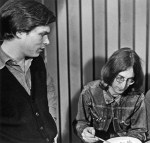
On the A/B tapes, Jan. 6 rehearsals for “Don’t Let Me Down” run in a straight shot for nearly 90 minutes, easily the longest stretch they spent on any one song this day. The structure of the song is set and doesn’t change from what will eventually be pressed to vinyl. It’s a delightfully simple song, both in lyrics and structure. But they’re not happy to leave well enough alone quite yet.

Things kick in with the song already under way in what’s labeled as Track 6.62. Shortly into things, John asks to work on what he calls “the worst bit” — the song’s bridge. (“I’m in love for the first time…”).

Now, it’s absolutely granted that the band has a hard time working together, and that didn’t just begin on January 2, when they convened at Twickenham. But at least from the relative beginning of the sessions, they’re trying. An example of that comes right here as John wants the help on the bridge, asking openly, “What can we do to that bit, then?”

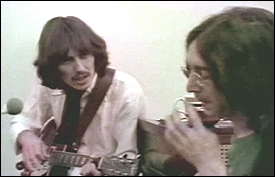
George says he likes the vocal line and harmony, it’s just lacking in some color as far as the fills in between. He suggests a rhythm change, while John replies, “That’s where the piano would come in.”

Good stuff! Collaboration!

Paul scats some falsetto to alternate with John’s lines, and George fiddles with some guitar fills. It actually sounds kind of nice with John on an acoustic guitar, but overall nothing overly impressive. But hey, it’s a work in progress. There were probably lots of bum attempts at things over the prior decade of Beatles in-studio fiddling, right? We just have these extensive rehearsals on tape, whereas we don’t have a zillion hours and hours of them wrestling with, say, “Nowhere Man.”

Paul takes things a bit more into his own hands, instructing George to join him in the vocals, and telling him just what to do.

Paul offers up his falsetto part, then gives explicit suggestions for the responses.

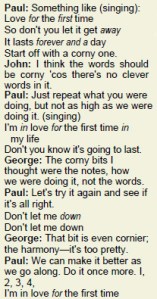
John: I’m in love for the first time

Paul’s suggestion: Love for the first time in my life

John: Don’t you know it’s going to last

Paul: So don’t you let it get away (he soon changes it to “Not going to let it get away”)

John: It’s a love that lasts forever

Paul: It lasts forever and a day

Paul goes onto explain that “corny’s all right in this one. What he’s [John] doing is corny. That’s the thing that will make it not corny, we sing different different words.”

I’d question the logic (and lyrical interpretation) there, but hey, Paul’s track record in writing hit songs is a lot longer than mine. The last song he referred to as “corny” was “Maxwell’s Silver Hammer” a few days earlier, and I think it’s safe to say they’re quite different birds. I do think he says it affectionately, at least.

George says something that’s not quite on mic, to which Paul, clearly trying to blow him off, says “OK, well, we’ll do that, that comes later. Just sing it straight first.”

The next stab at the bridge has George doing the “part that moves” that Paul had just suggested, sounding a bit Band-ish, which isn’t too much of a surprise at this point. At the same time, there’s a slight “Revolution 1” vibe here, where the “shooby-doo-wops” punctuate the chorus. I guess it works, but it definitely changes the feel of what we know as “Don’t Let Me Down” — John in fact likens the work in progress to “something like the Drifters.” (We’re still a few weeks away from the Beatles actually covering the Drifters).

They continue to run through the bridge, Paul directing.

Paul : The thing is, sing the one I’m doing, and we’ll improve upon it. Start off with a corny one, because the words aren’t that good. (Here, he’s referring to his response vocals, not John’s main ones).

John: I think the words should be corny, because there are no clever words in it.

I guess he’s right — it’s a straight rock song with deeply honest lyrics (and his first song written for Yoko, I believe), no interpretation necessary. This isn’t “I am the Walrus” or “Lucy in the Sky with Diamonds,” lyrically. So I don’t think he meant it as an insult to the song. But I guess I’m surprised John would want to muddy up a song like this.

More run-throughs, and John still isn’t satisfied, at one point saying, “Maybe I should play piano … just to change it.” George talks about using some pedals so it “doesn’t sound like the same old shit,” — but John says “I like the same old shit, if it’s clear.”

“Just think of some riffs,” Paul suggests to George, as we see today’s first real signs of a little bit of the big boys ganging up on the perceived help.

And so they continue, with one of the takes briefly immortalized at the beginning of the “Let it Be” film (it’s taken from 6.67 on the tapes).

Of course, in this edit, the band goes straight into the Jan. 3 Maxwell’s Silver Hammer performance. In reality, they churned on, with Paul thinking the answer to the seemingly busted bridge is to change the rhythm.

“This needs this,” Paul insists. “It needs things to happen.”

Just what does happen? Find out soon in Part 2!

15 Comments

Filed under Day by day

TMBP Extra: Lindsay-Hogg catalog

Lindsay-Hogg and Lennon

With the first significant discussion of the potential live show complete, I thought it was as good a time as any to briefly go off timeline to present what the project’s director, Michael Lindsay-Hogg, had already worked on in his career to this point. More than 30 posts in, it’s clear he’s a central character to the Let it Be/Get Back story, even if he doesn’t pick up a guitar or sing a note during the sessions.

After some stage work, the 25-year-old entered the world of music in 1965 as a director on “Ready Steady Go!”

And it was his exposure working on the show that caught the eye of Brian Epstein, who drafted Lindsay-Hogg to direct promo films for “Paperback Writer” and “Rain” in 1966.

Certainly foreshadowing the relationship we’ve heard thus far on these Jan. 1969 tapes, the director describes his first meeting with the band to sketch out ideas for the two films in his 2011 autobiography, “Luck and Circumstance“:

But with The Beatles that evening, I found an idea was something to be mauled, like a piece of meat thrown into an animal cage. They’d paw at it, chuck parts of it from one to the other, chew on it a bit, spit it out, and then toss the remnant to me, on the other side of the bars.

Ultimately, the director “was told Mr. Epstein did not want anything ‘unusual, just a video of the boys performing,'” he wrote in his autobiography.

The creative relationship with The Beatles seems much different than the one he developed with the Rolling Stones, a band for which he ultimately directed dozens of videos for into the 1980s, beginning with both sides of the “Jumping Jack Flash” single in 1968.

Not much after the Stones shoots, Lindsay-Hogg was back with The Beatles, this time filming both halves of the uber-single “Hey Jude/Revolution” in September.

Here’s Lindsay-Hogg with a few words on the “Revolution” clip, in an interview published as part of the promotion of the 1+ set.

Iconic Beatles visuals, I dare say, and it showed the potential of a shoot at Twickenham. And it’s partly from the “Hey Jude” experience, in which the band is said to have enjoyed playing live before an audience — not just the songs before the camera, but impromptu performances between takes — that led Paul to hatch the Get Back idea, which began filming nearly four months to the day later.

But first, Lindsay-Hogg got the call from Mick Jagger to direct what was to become the Rock and Roll Circus, with one John Lennon contributing “Yer Blues” to the production, filmed about three weeks before The Beatles commenced rehearsals at Twickenham.

The show was famously shelved until 1996, in part because The Who blew the Stones off the stage. The same Who, incidentally, that Lindsay-Hogg shot the “Happy Jack” promo film for two years earlier after also shooting them for “Ready Steady Go!”

This is the oeuvre the then-29-year-old son of Orson Welles (something he only recently found out was true) brings into his latest gig for The Beatles in January 1969.

4 Comments

Filed under Extra