Tag Archives: Anthology

TMBP Extra: Threetles’ Paradox

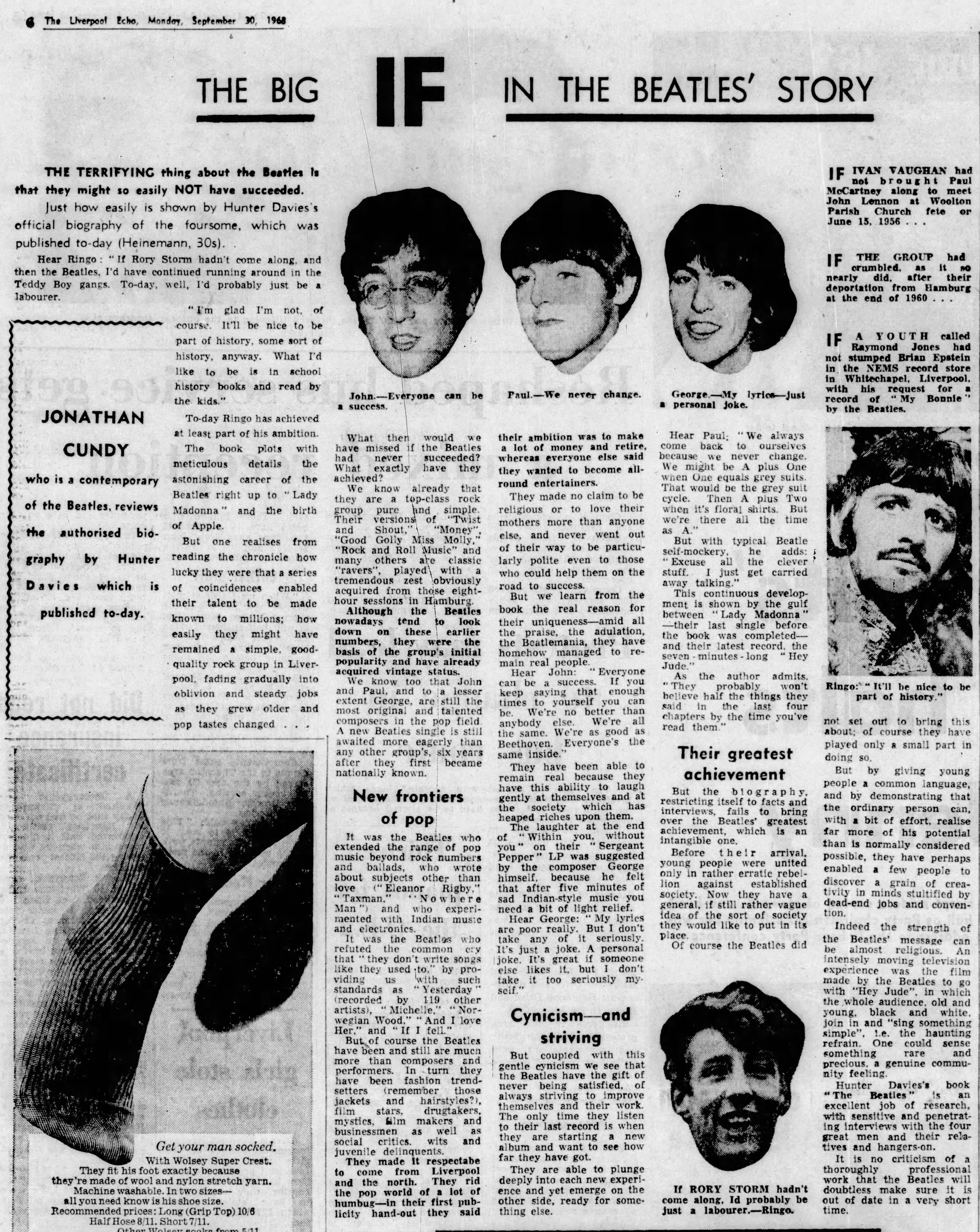
“It is no criticism of a thoroughly professional work that the Beatles will doubtless make sure it is out of date in a very short time.”

Writing for the Liverpool Echo on Sept. 30, 1968, Jonathan Cundy pointed to the velocity of the Beatles’ lives and musical innovation in reviewing Hunter Davies’ authorized biography that came out the same day.
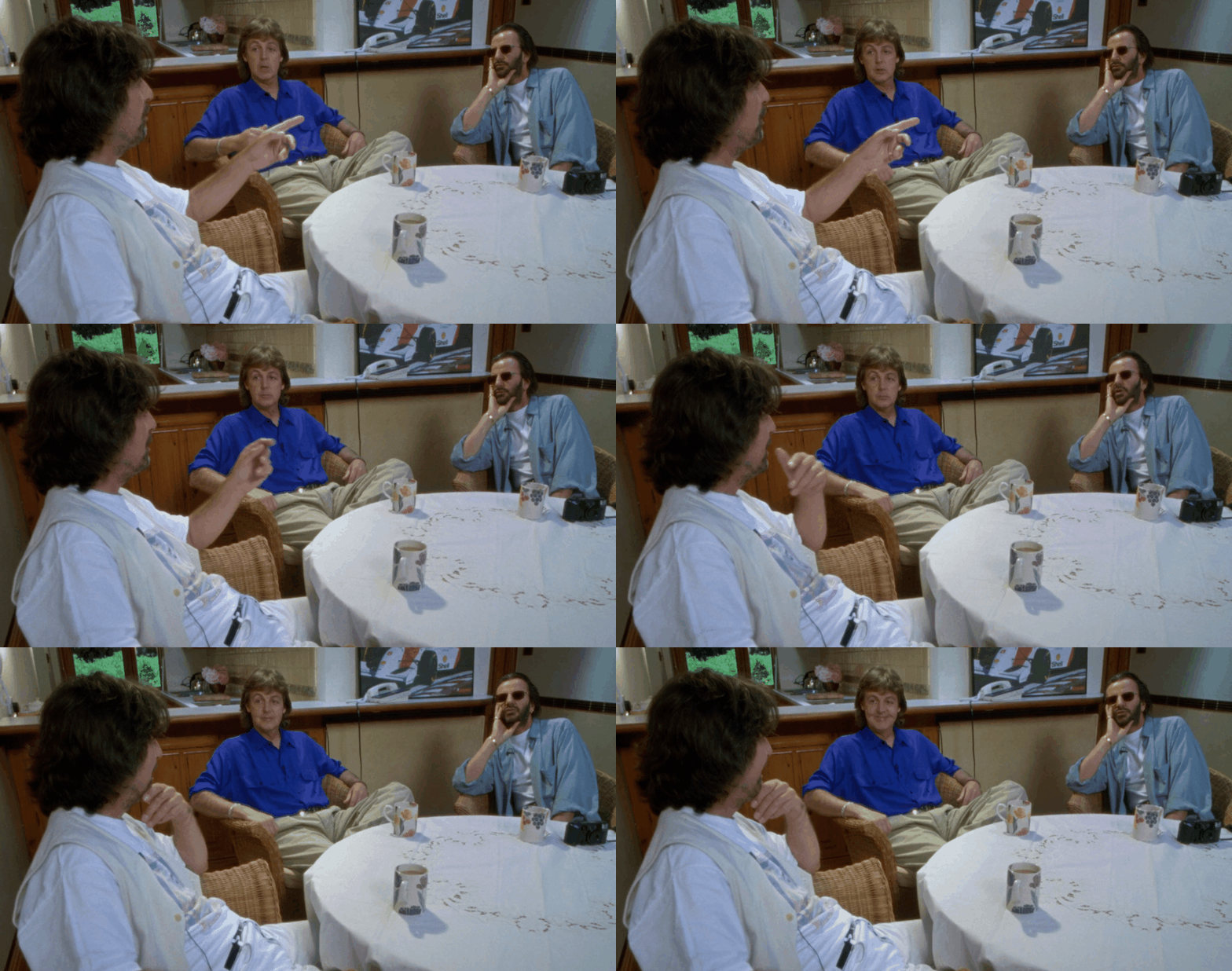
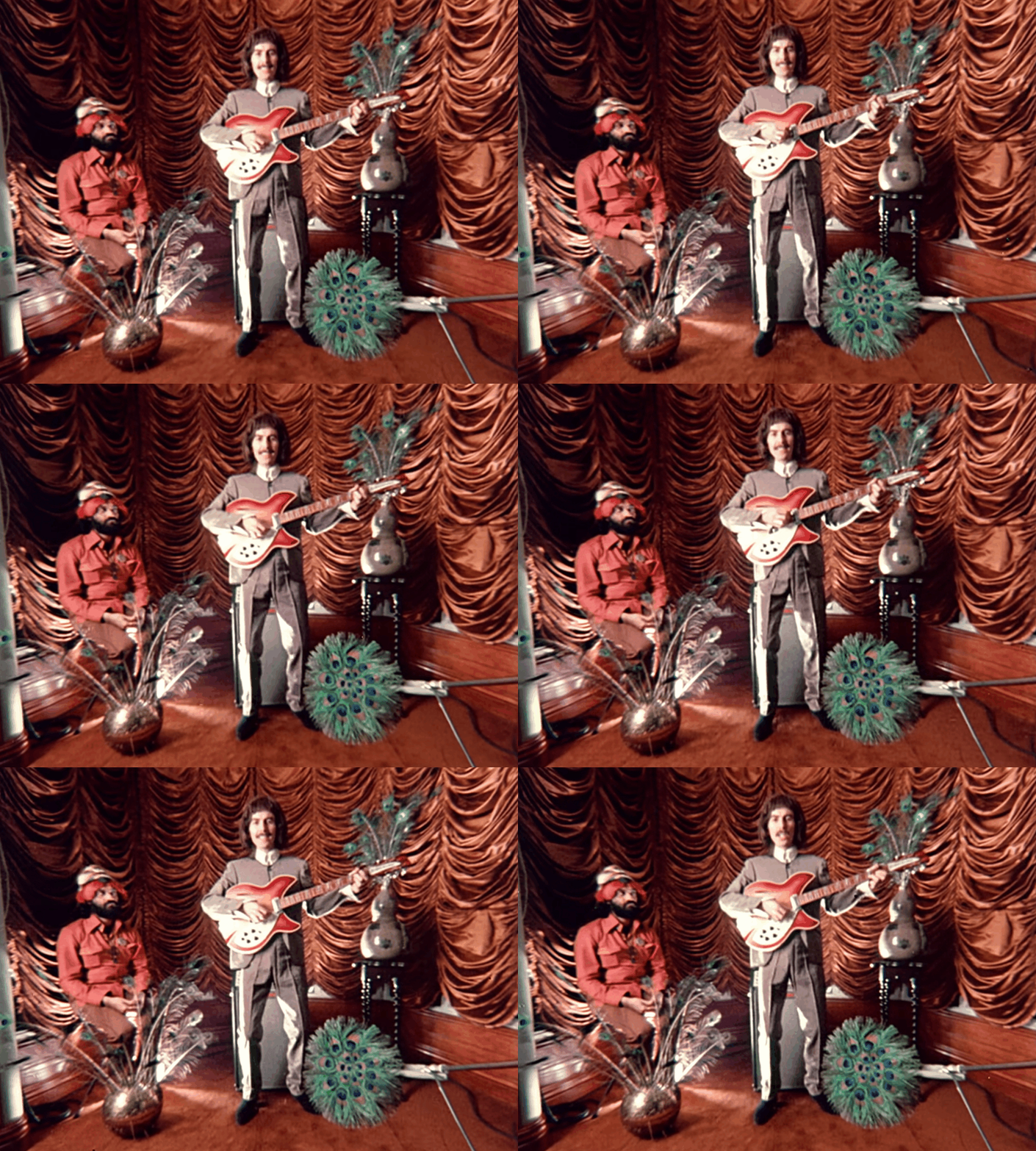
No matter where they serve their guests, they seem to like the kitchen best: The Threetles in Anthology.

In real-time, the Beatles soared at the speed of light. Together or apart, across the 20th or 21st century, the history of the Beatles is fluid usually by their own design. And here we are talking about that again, nearly 60 years on. It wasn’t just their music and style that was constantly reinvented, so has their history in their own telling. Chisel Jonathan Cundy’s line in stone, it stands as an eloquent, evergreen statement on the Beatles biography business.  Tomorrow really never knows.

I’m grateful we were served a new iteration of Anthology on Disney+ at the end of November 2025, grateful for enhanced visuals (clunky AI bits aside) and sound, because the more people are exposed to the Beatles and their history, the better. I wanted to weigh in and offer my immediate and subsequent impressions after watching Anthology ‘25. (I’m mainly writing here about the documentary, not the album set or book, although I will refer to both at times). In preparing for this post, I rewatched a broadcast version of the 1995 Anthology on the Internet Archive, my own DVD copies of the 2003 version and the 2025 streaming Disney+ cut. I also used this excellent resource documenting the changes across ’03 and ’25.

Watching the new Anthology exposed some issues in the original Anthology that I hadn’t really internalized after all this time. So I’m here to stare a hole through that version, too.

No time is a good time for a broad Beatles history. It’s always out of date in a relatively short time, even for a band that hasn’t worked as a quartet since 1969. We — the researchers, the curious, the informed — along with the somewhat fickle nature of the surviving members, estates and Apple itself, will always make that the case.

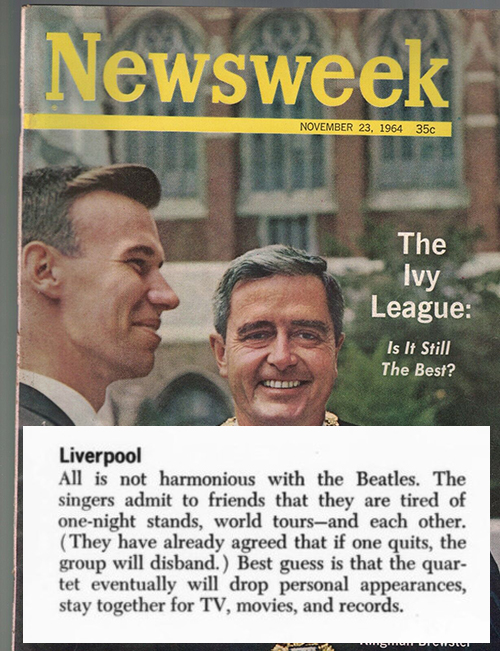
At least they acknowledge the problem. Here’s Paul as quoted in the Oct. 23, 1995, issue of Newsweek, in advance of Anthology’s release (I’ve held that magazine in my basement for decades, knowing I’d need it for this post one day):

I don’t know if you ever understand anything. That’s what happened at the end of the ‘Anthology’: I don’t understand it all any better than I ever did. But it’s all in one place now. That’s the thing.

I love the Beatles Anthology, it’s a critical document. I watched it on broadcast TV (for me it was ABC in the United States) during its first run 30+ years ago. Before that I learned the ropes as a teenager watching The Compleat Beatles all the time, usually starting at the “Strawberry Fields Forever” segment but often consuming the whole thing. That was my Beatles baseline when it came to history entering into the Anthology era. I read plenty of books, owned all the albums and a few bootlegs. I considered The Compleat Beatles as unimpeachable Beatles history, even if it wasn’t directly from Henry the Horse’s mouth. I think it influenced Anthology in various subtle ways, too.

I recorded Anthology off TV, explaining why I never bought the official VHS release in 1996. But I did get the DVDs when they came out in 2003, and it’s been a valuable research tool especially in tandem with the companion book that came out in 2000. A Beatles opinion may be mutable, but at the same time it’s gospel.

Paul, George and Ringo conducted interviews for Anthology in a narrow early-1990s period, and what they said for Anthology ’95 was drawn from the same interview inventory used in Anthology ’96 (VHS/Laserdisc), Anthology ’03 (DVD) and Anthology ’25 (Disney+), even if what was selected varied.
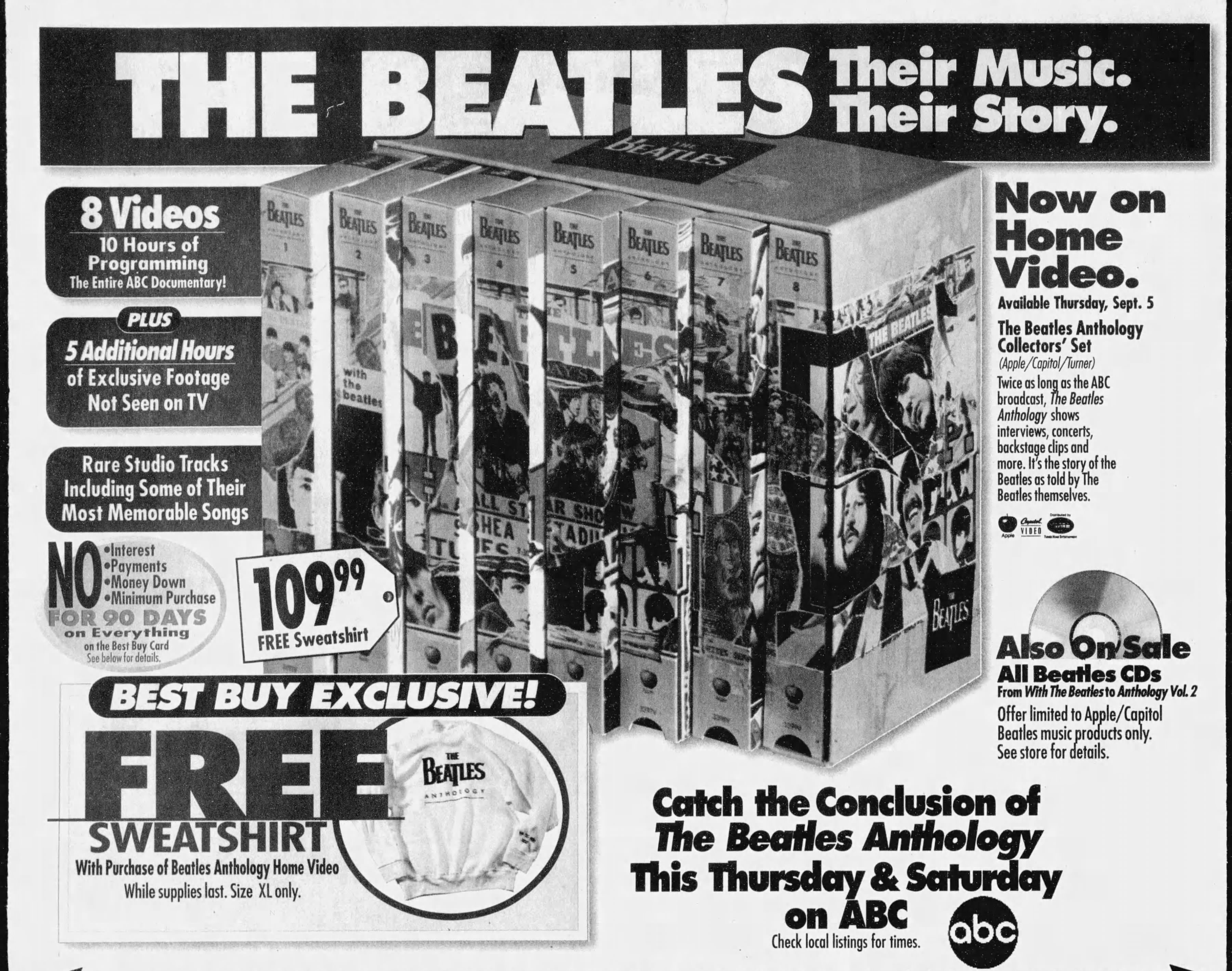
A newspaper ad for Best Buy in 1996 promoting the VHS release of Beatles Anthology.

I hadn’t internalized how gone – like far gone — John Lennon comes off in Anthology until carefully rewatching it in Winter 2025. His absence is really contrasted by George Harrison, who isn’t with us either, but is vibrant and contemporary in Anthology. George was the youngest one interviewed in the 1990s, after all. He reminisces along with Paul McCartney and Ringo Starr over decades gone by. He can directly debate the others.

“We’d all had enough time to breathe,” George said in Episode 9. “And I think it’s much easier to look at it now from a distance.”

John’s memories are airdropped in, and I can’t see past that anymore with the added distance we have from those clips. John’s contributions feel slight, relatively and understandably.

Obviously, John’s Anthology recollections are forced to come from decades earlier, culled from copious interviews, but those spanned a larger period of time and a wide band of moods. Jools Holland, who interviewed the other Beatles for Anthology, didn’t get to ask John a single thing, leaving his reactions shoehorned in, speaking to different media at different times via different prompts. John was never afforded the luxury of being relaxed for these interviews – he didn’t pilot a boat or sit poolside whilst reminiscing. And he didn’t have the distance that helped George. John’s moments come off lonely.
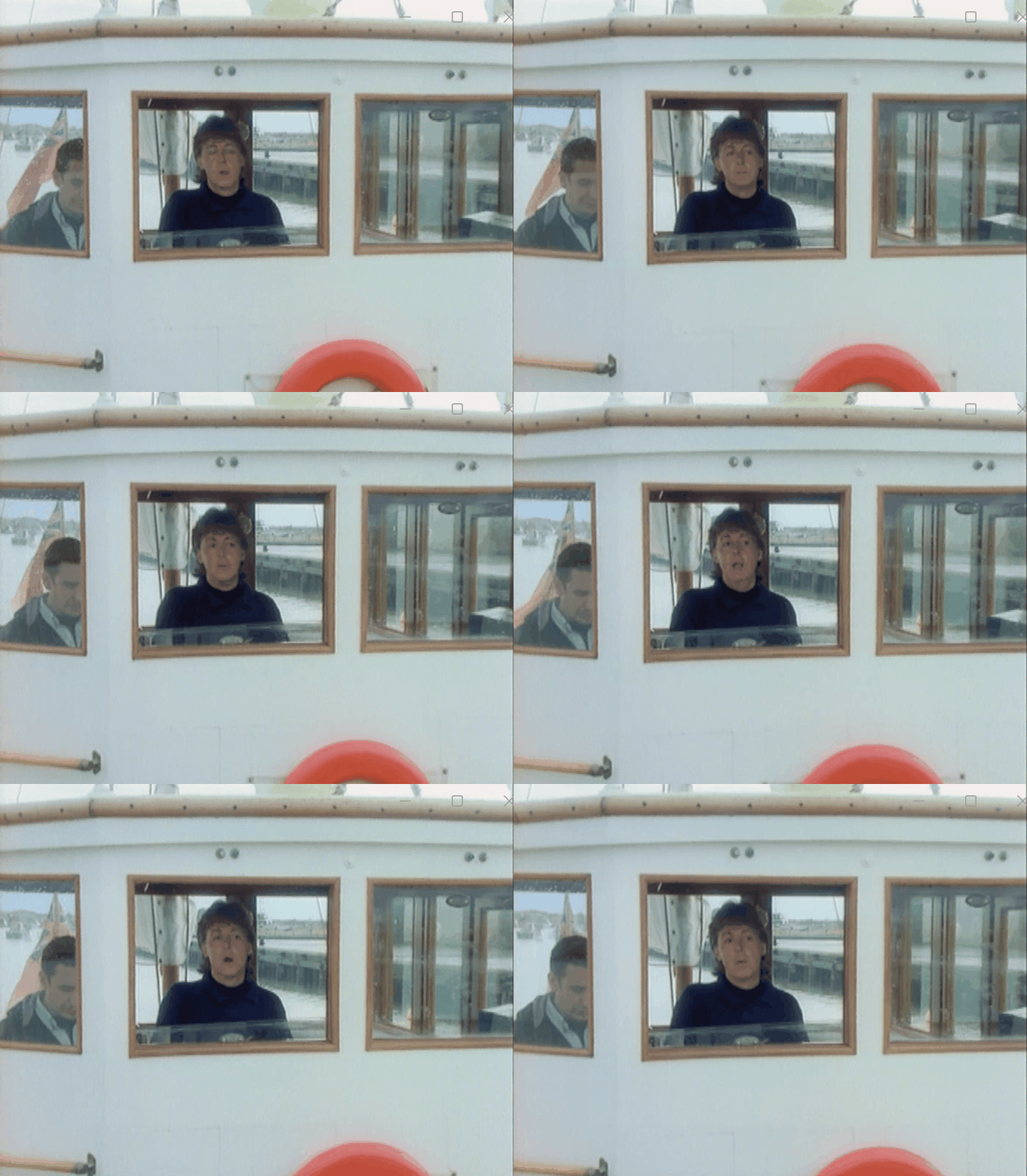
Ahoy! Jools Holland takes his place starboard alongside Sailor Sam in Anthology.

(Facing the same dilemma, the producers of last year’s Becoming Led Zeppelin used a similar approach to Anthology, mixing new interviews for the film with the three living members with archival clips from the late John Bonham. But at certain points they showed Jimmy Page, Robert Plant and John Paul Jones listening and reacting to Bonzo’s quotes, humanizing the moment and bringing the drummer just a little bit more into the conversation.)

Across every release and in subsequent marketing, the Anthology brand held strict that the story was almost exclusively in the Beatles’ own words (e.g., look again at the above Best Buy ad). It’s even in big letters on the back of the Anthology book.  The only new interviews outside the Threetles came from the deep inner sanctum of Neil Aspinall, Derek Taylor and George Martin. That meant hearing nothing from the five wives (Cynthia Lennon, Yoko Ono, Linda McCartney, Pattie Boyd and Maureen Starkey). Nothing from sympathetic figures like Billy Preston or Astrid Kirchherr, much less villains Allen Klein or Magic Alex.

Even a genuine Beatle was forbidden to retell the Beatles’ story, with Pete Best silenced in Anthology. All the above were alive and available to be interviewed in the early 1990s (Maureen died late December 1994). But if this is “their” story, the omission can be justified.

(Cynthia’s manager at the time disagreed, telling Newsweek, “They’ve made the be-all and end-all of the Beatles story without her! As if she wasn’t there! It’s ridiculous!”

Notably, according to multiple contemporary accounts, Yoko was offered the chance to be interviewed, but she turned it down. Would her inclusion have opened the door to the others and steered the entire documentary in a different direction? Would she purely have been a one-for-one surrogate for John as a relaxed 1990s interview? Or was it simply for a first-person perspective on her offering John’s demo tape to the band in the early 1990s, only? We’re left to guess.

The snapshot of the six contemporary interviews are memories based after nearly a quarter-century of post-breakup reflection.  It’s the same kind of snapshot we’re left with reading Davies’ biography, which ends with John “happily married” to Cynthia. When the book came out on the last day of September 1968, the Lennons had already been to divorce court. Yoko isn’t mentioned in the original edition.

Davies was conscious of his book’s obsolescence, concluding it with this passage:

Doing a biography of living people has the difficulty that it is all still happening. It is very dangerous to pin down facts and opinions because they are shifting all the time. They probably won’t believe half the things they said in the last four chapters by the time you’ve read them.

Jools took the task of interviewing the Threetles with the appropriate attitude of a serious journalist. From his enjoyable 2007 memoir, Baldfaced Lies and Boogie Woogie Boasts:

The first person I went to interview was Paul … I then moved on to George, and then Ringo. At one point all of them individually mentioned a van they all hated travelling in, but each of them remembered the make and colour of the van differently. I brought this up with Chips Chipperfield, the producer, and he said, ‘Silly detail. Doesn’t matter.’ But my policeman’s mind had already gone to work and I was thinking, ‘Well, it might be a silly detail to you but, if they’re not remembering the same facts about this one horrid van, it might cast a shadow over their memories of other matters?’ And this was borne out throughout the course of the Anthology.

Occasionally I would say, ‘Can I just compare your evidence to the evidence put forward by your co-members?’ But they all found their differing memories amusing.

It was a feature not a bug. It’s who they are.

I can be as skeptical as anyone, but the Beatles controlled their narrative from the moment they were able to, and I think they should have — it’s their own history. And that narrative was everything from what they said in radio interviews to the clothes they wore to how they picked the running order of their albums. It’s how they chose to present themselves. Just like they chose the content for Anthology.
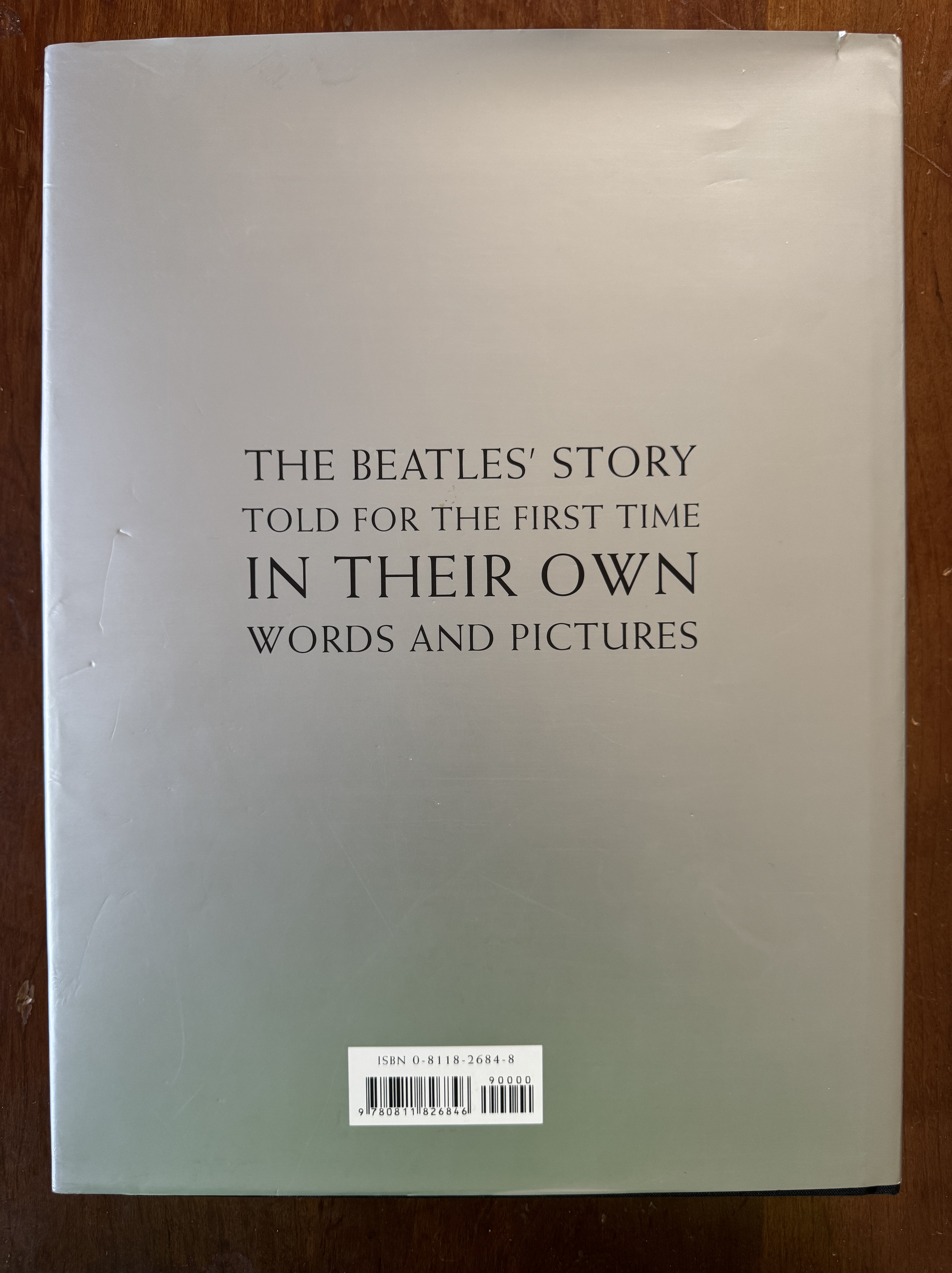
The back cover of the Anthology book sets the mission statement.

We’ve been in the Anthology era nearly as long as the pre-Anthology era existed. Why shouldn’t they update it where they see fit, attract a new audience and take advantage of the better technology? No disrespect to those who are, but I’m not a purist. Stream away, repackage and resell deluxe editions, scrape the bottom of the barrel and I’m on board.

So I have no issues conceptually with the many revisions applied to the new Anthology, from a libertarian angle. Also, I like change, and I’m not stubborn in my day-to-day life (I recommend it!). That said, they should not sell Anthology in 2025 as the same product that existed previously. This isn’t the same as restoring A Hard Day’s Night for Blu-ray or putting the 2009 remastered Rubber Soul on Spotify.

Let the Beatles tell their story, and at the same time, we can tell their story too, on blogs, podcasts, books, everywhere we can communicate.

Given that it’s my home turf, I want to dig a little bit into the Let It Be/Get Back sequences (primarily) for demonstrative purposes, but I’m sure whatever points I make translate across eras and the documentary.
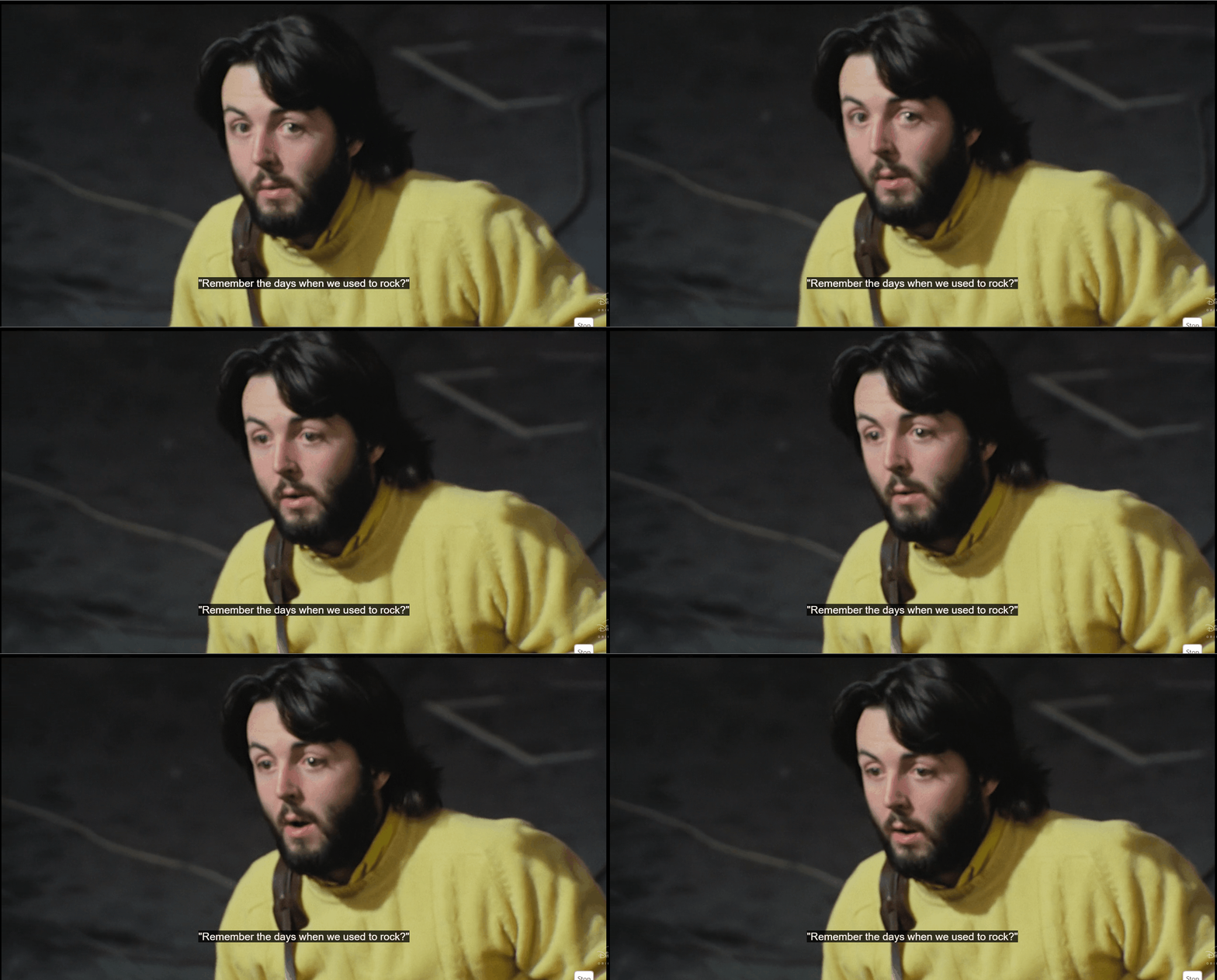
Paul looks into the crystal ball on January 7, 1969, as seen in Get Back.

For those keeping score, the Get Back segment clocks in 5-6 minutes longer on Disney+ vs. the DVDs and the original ABC broadcast. So for a series that was shortened from the DVDs for streaming, this period is actually longer.

Here’s what’s NEW in ’25:

  • The big add was the January 10 jam with Yoko, post-George’s walkout. At least through the late-70s, George was under the impression this segment made the final cut of Let It Be, referring to Yoko’s “screeching number” in the film in a 1977 interview. Why now, and not in 1995/2003? Maybe George stood in the way then, and its use in Get Back broke the seal for its use here. Whatever the reason, it definitely is a positive addition, reflecting the chaos of George’s departure and dovetailing with the section on Yoko’s relationship with John and the band.
  • Another excellent, important addition was the “final bulletin” segment, Paul’s fake news show that would break the Beatles’ split. Enveloped by other 1990s-era quotes about a breakup in the air, this concrete and contemporary discussion really ties the room together as a weather forecast for the Winter of Discontent. If you’re keeping track like me, you’ll note the end of this sequence slightly differs from what is in Get Back. This Anthology edit is the real deal, what you hear on the Nagras.
  • Even though George walked out and Yoko sang from his cushion, George still said it was “a lot of water went under the bridge” and “everyone’s good friends and has an understanding of the past.”  George said this in the 1990s, but it was not included in the first passes of the series. It certainly fits the “story of friendship” the Beatles have sold as the brand in recent years.
  • Paul’s concern that once the sessions ended John would be “off in a black bag” instead of following up with the band was another good addition. More fuel to the argument that the breakup was inevitable.
  • Also fitting the concept that the four of them could be the only ones who could understand each other is Paul’s worry Billy was joining the band. He was worried in Get Back — we heard his concerns then — and he didn’t change his tune come the Anthology interviews.
  • Incredibly, one of the greatest moments in filmed Beatles history — “I hope we passed the audition” — was not in any previous iteration of Anthology. So this is a layup, a must-add. The mind boggles how this wasn’t in there before.
  • As the segment neared conclusion, George said the group became stifling and restrictive and that “it had to self-destruct.” It’s not an earth-shattering line, but just adds to the inevitable breakup.

I found a few significant modifications, too:

  • George describing the Get Back sessions as his “Winter of Discontent” — such an amazing, biting line, still — was shifted from before the “I’ll play if you want me to play” argument to after it. I don’t see this as anything other than improving the flow of the story. I’m on board.
  • While the Beatles play “Don’t Let Me Down” on the rooftop, the DVD shifted to street-level audio while the camera showed the audience on Savile Row.  Disney+ restored the rooftop audio for those scenes — and that matches the original broadcast. It’s a superficial change, but worth noting.
  • Paul’s fireside Army buddies story was moved to immediately before the wedding segment, another logical change for story flow.
  • “Can we giggle in the solo?” The addition of John’s one-liner prior to Let It Be is another way to lighten the mood (as it was when he first said it in 1969).

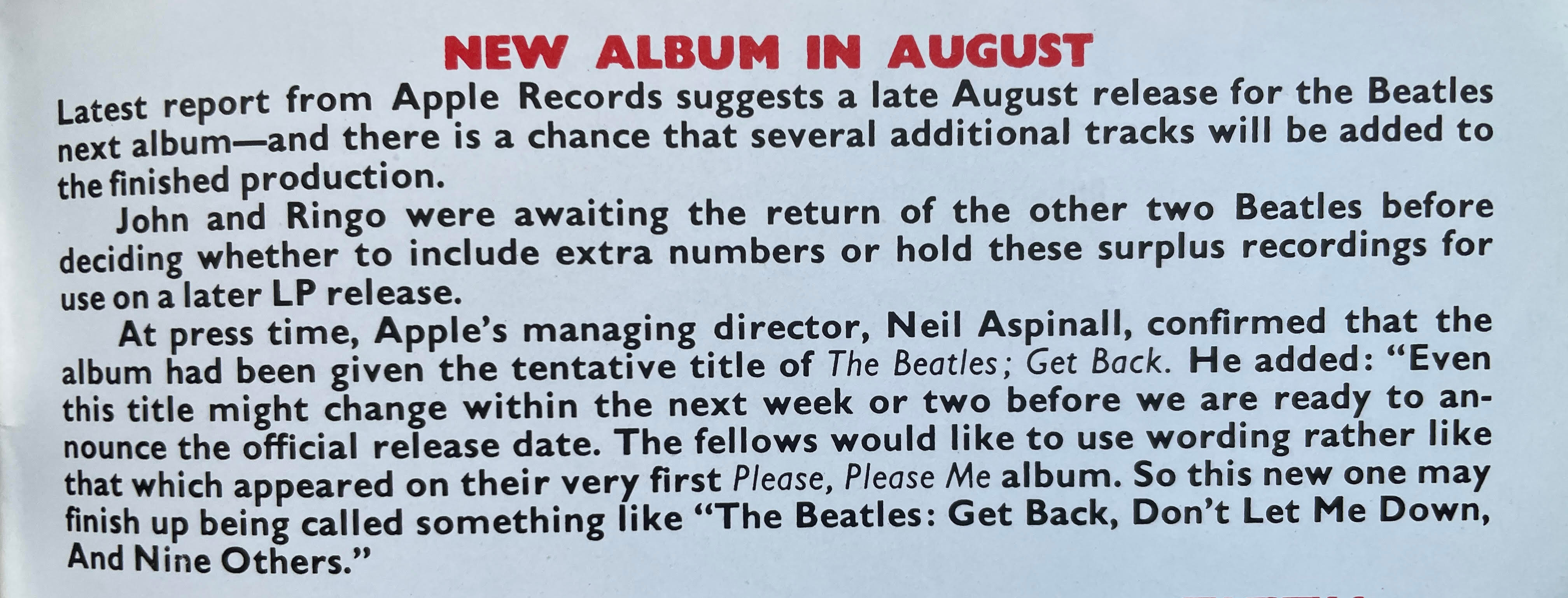
Looking at those lists, a lot was changed! On balance, I think the updates to this segment are positive, but it’s only positive in the context of Anthology as it had existed. Here’s the real problem: The story Anthology tells of the January 1969 period is really convoluted, especially on the heels of 2021’s Get Back documentary, which now is a well-known quantity for the Beatles community, old and young, immersed and casual. Yet Anthology tells the “original” story of the January 1969 sessions, which was never really right.

I wrote about this at length. Let It Be (the film) dictated opinions for half a century, influencing idiots like me to actual living, breathing non-idiot Beatles. I think it’s clear that Let It Be as an artifact influenced Anthology’s production in the 1990s. The “I’ll play if you want me to play” argument was the deliberate showcase of the Get Back sessions’ dysfunction in Anthology, the jump-off for the breakup conversation, and a reinforcement of what was said otherwise for decades. It continued to define the period until the Get Back documentary era.
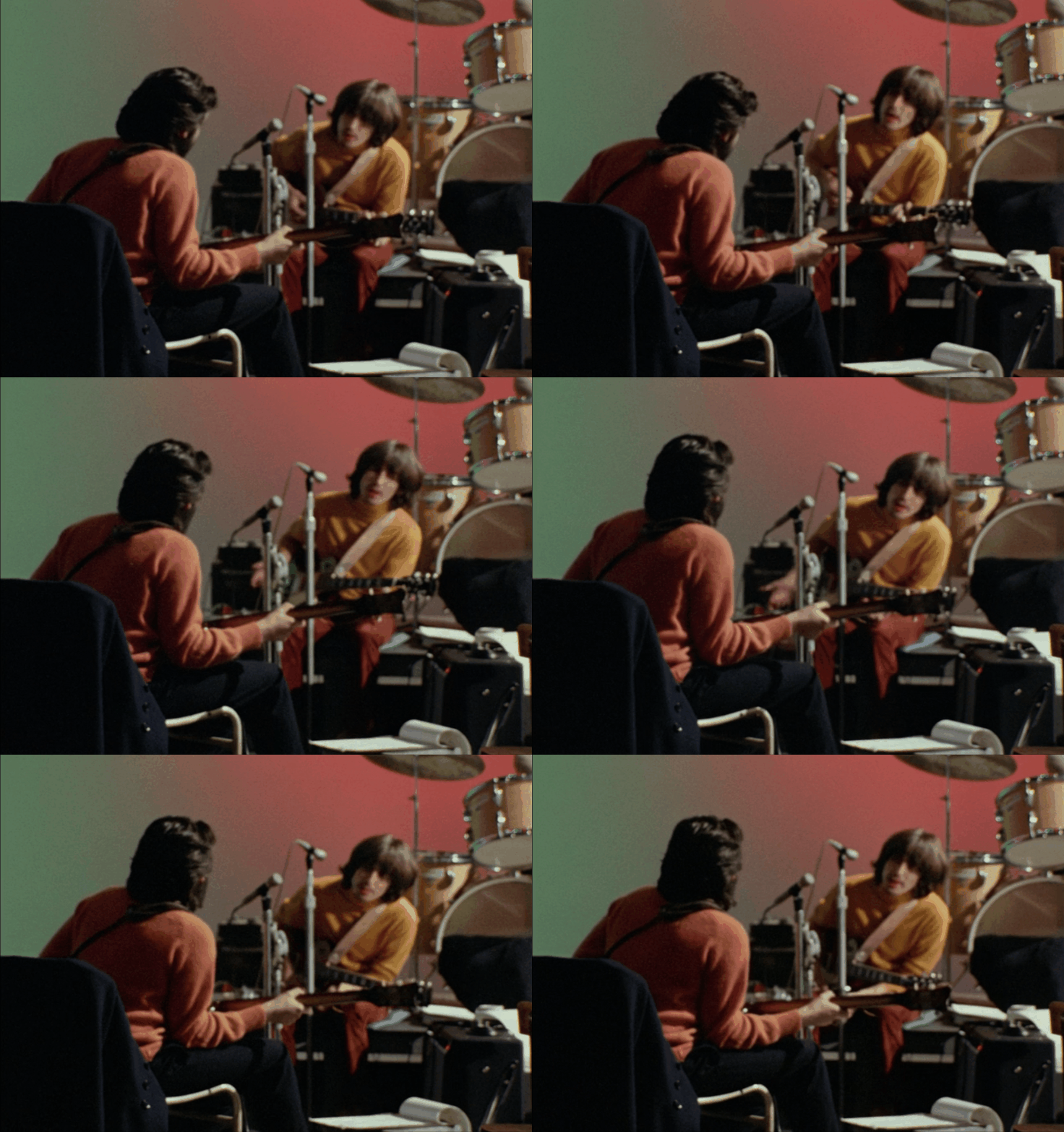
I think that “row,” as George describes it, stays as a centerpiece in the new Anthology simply because it’s the one specific incident he comments on directly.  We’re tied up because of the resistance to expand beyond the 1990s interview inventory.

Why not also show George suggesting the group “have a divorce” on January 7, 1969? Or saying he could work on a solo record January 29? Both segments were in Get Back and ready to load into Anthology, and either scene (or both!) would be better confirmation of the breakup vibes in January 1969 than a fleeting argument that happened to make the Let It Be film.

The changes to January 1969/breakup sequences went halfway in Anthology ’25, and I think shifting focus off the “I’ll play if you want me to play” scene would have been seen as tearing apart original production, even if, like some of the other changes, it would have proved clarifying.

Here’s Paul in August 2021, in advance of the release of the Let It Be LP reissue, shortly before Get Back came out, too:

I had always thought the original film Let It Be was pretty sad as it dealt with the break-up of our band, but the new film shows the camaraderie and love the four of us had between us. It also shows the wonderful times we had together, and combined with the newly remastered Let It Be album, stands as a powerful reminder of this time. It’s how I want to remember The Beatles.

Great news, even if we didn’t get the reissue of the Let It Be film until 2 1/2 years after this statement. I have something in common with Paul McCartney: This era is how I want to remember the Beatles, too! But it’s also the same period Paul describes in all the Anthology versions as “showing how a breakup works,” and you wouldn’t think that’s how he wanted to “remember the Beatles.”

This wasn’t Paul speaking off the cuff. All four Beatles maintained for a long time that January 1969 was toxic, two of them until their death. So let’s call them mercurial.

If you check the Anthology VHS and DVD liner notes, Derek Taylor concluded the text on the final episode by describing the Beatles’ career arc as “scarcely credible.” The band we’ve known for all these years conceded what we’ve known for all these years.
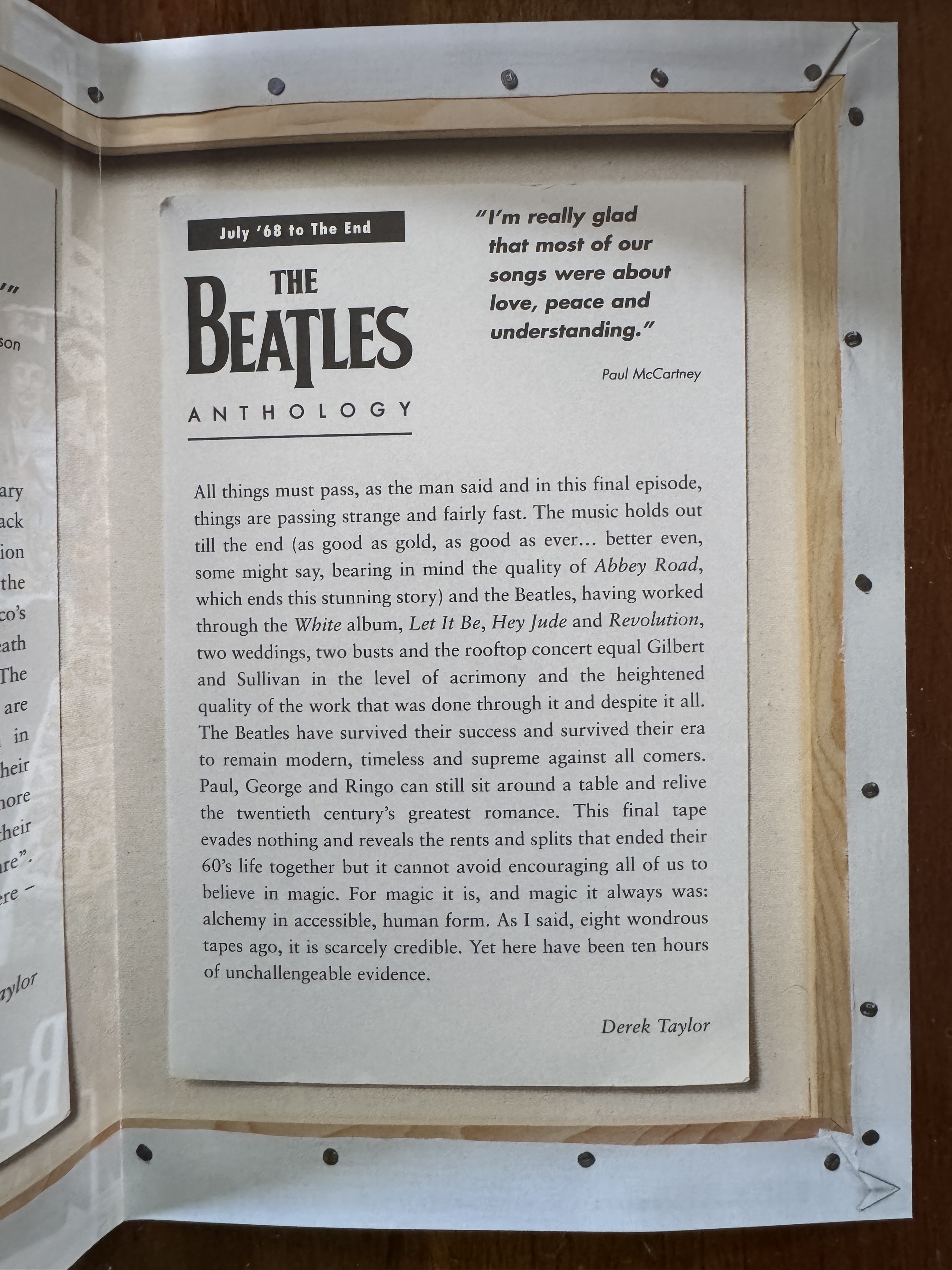
Derek Taylor’s liner notes for the final chapters of the Anthology DVD set.

“Yet,” he continued, “here have been ten hours of unchallengeable evidence.”

The number of hours fluctuated with every release of Anthology – a point of contention nowadays — but the concept holds true: Beatles history borders on the unreal. And we have to admit at the same time the storytellers can sometimes be, to use his words, scarcely credible.

(By the way, one other thing we lose with the streaming-only focus is the beauty of liner notes as a medium. But that’s another, frankly sad, story.)

Deliberately, I only studied in detail the Get Back and surrounding sections for this post, but I’d imagine that if I did the same for another period, I’d reach similar conclusions. I know all about the  “cripples” bits and Hamburg condom story being pulled. I took note of the addition of ’90s Ringo saying he and Barbara are inseparable like John and Yoko, and all the extra smiles now in the final Tittenhurst clips. The addition of John’s original “Yellow Submarine” work tape from Revolver deluxe is great and exactly sort of thing we should have after its discovery a few years ago.

I like a lot of the changes! Still … if you’re going to change, really commit to the changes.

I think Apple should have torn it all down produced a completely new Beatles documentary rather than present 2025 Anthology as the unimpeachable, singular career-spanning Beatles documentary. Davies’ biography was obsolete the day it was released. And that’s OK! Beatles Anthology ’95 is obsolete too. And that, likewise, is OK. If we think it can be better, let’s give it a shot. Anthology can be the Beatles’ history circa the turn of the century. Why do we have to work in that documentary’s template alone?

I think it’s been nice for us and the public to forget about the Beatles for a while, let the dust settle and now come back to it with a fresh point of view.

That’s George speaking in Episode 9 again, and making my case.

I haven’t seen a quote from Peter Jackson, whose team restored Anthology, but I did see Oliver Murray, the Episode 9 director, say this, which makes me think it was an overall strategy across Anthology ’25:

It was important to me that the pool of material we were working from had a time and a place. It was made in 2025, but the world that we’re absorbed in is from anywhere between ‘91 and ‘95.

And this is where I’ll plant my flag. Why did this world have to be from 1991-95? I know, it’s because it’s part of Anthology, a product of 1995. But this doesn’t have to be.
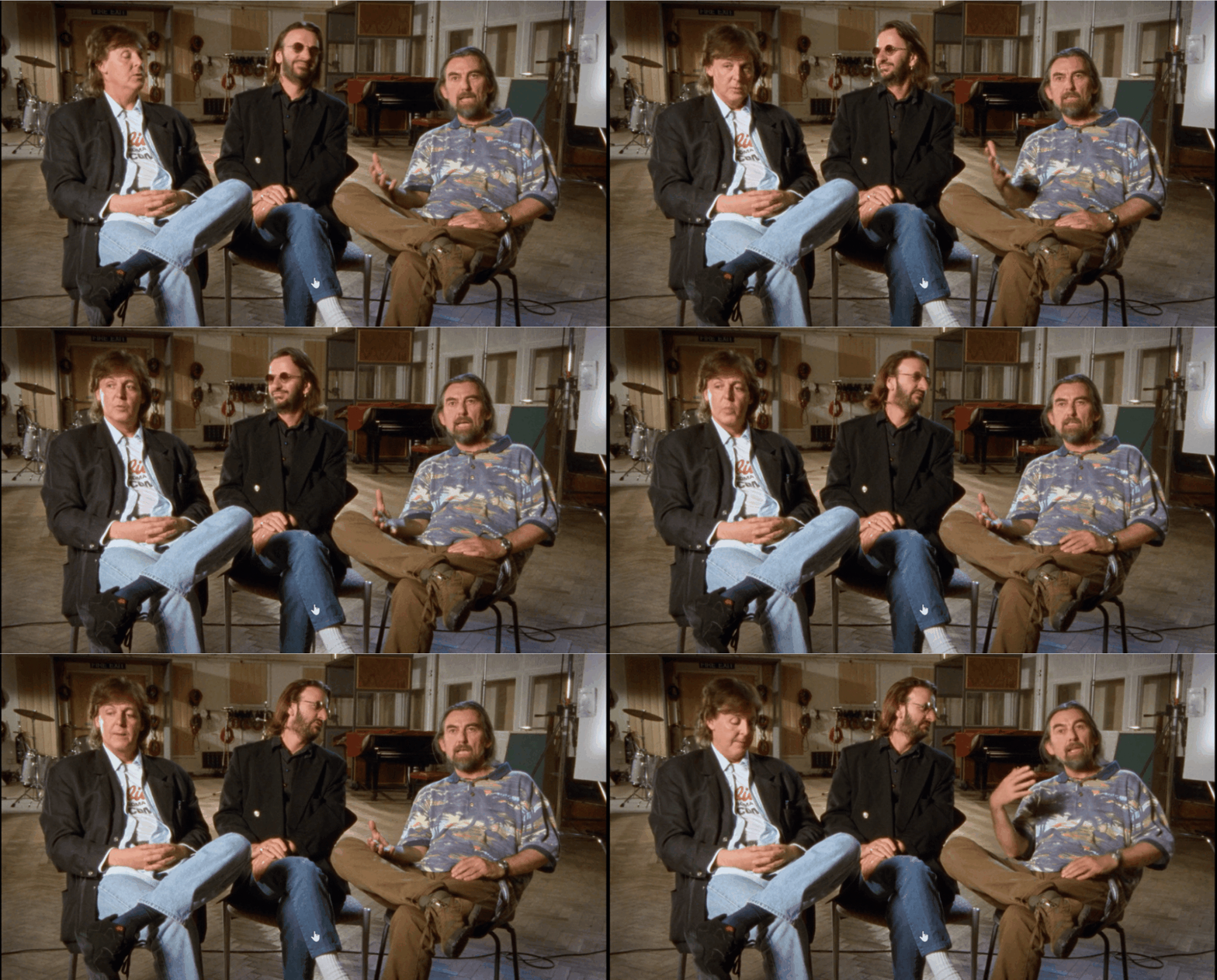
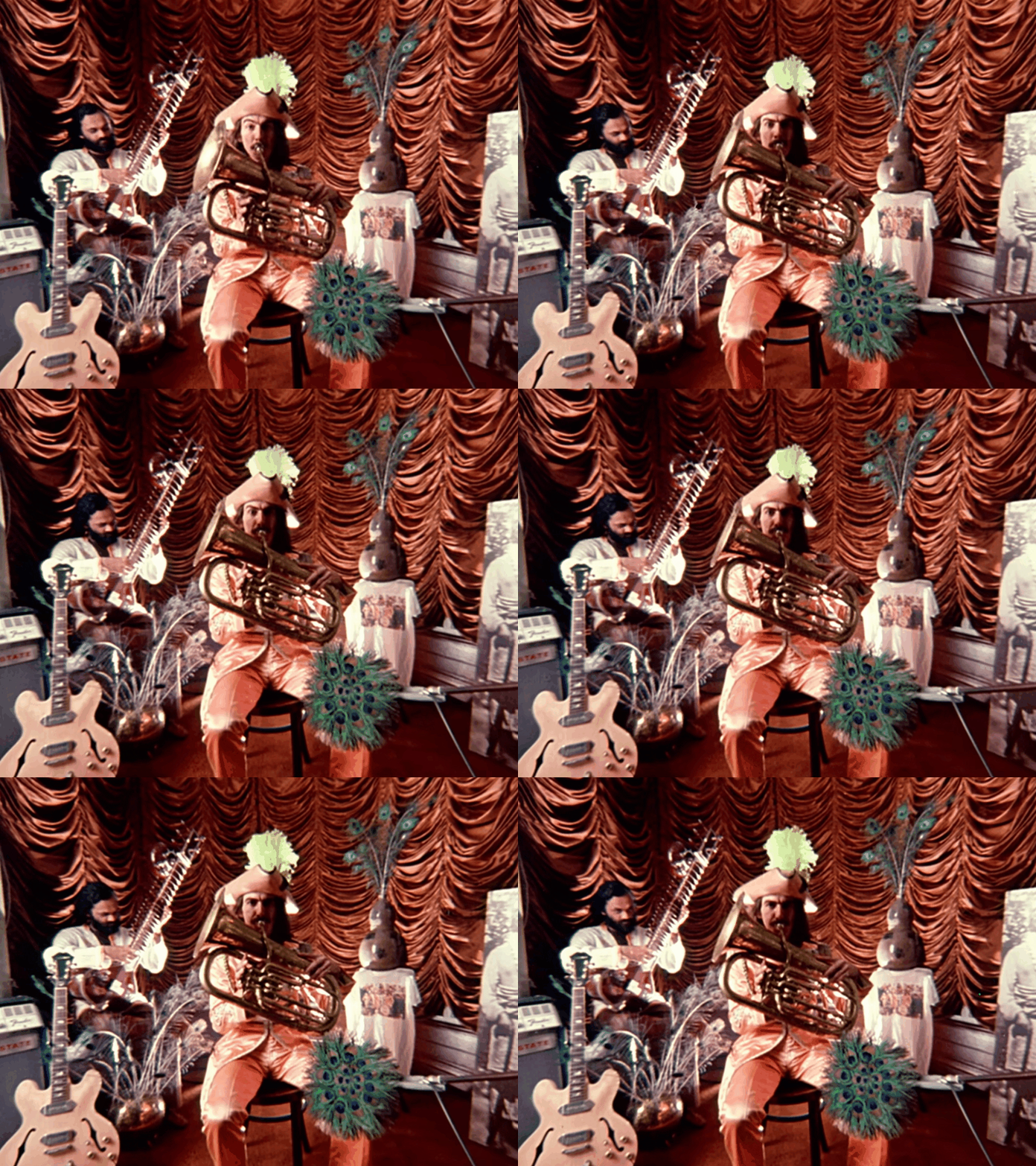
The Threetles in Episode 9

We’re in Theseus’ Paradox, if I can overdramatize this. How many pieces of the Beatles’ ship need to be replaced for it not to be the Yellow Submarine anymore, so to speak? Add this clip, shorten this other one, reorder something else — after how many revisions is it not the same documentary?

They promised the “ultimate form” of the product. I think we just got “another” form of it. I can wrap my head around removing some of the more PC-related issues, and I understand killing the Apple Boutique segment (for instance) because it doesn’t flow well or loom large in their legacy. (They could have at least put something like the Apple Boutique segment as a little bonus extra on Disney+ — it already was produced, is pretty harmless and is still part of the history.)

Anthology doesn’t cover anything between April 10, 1969, and 1994, the Threetles sessions. And then nothing after teasing the aborted “Now and Then” session in Episode 9. John Lennon doesn’t die in Anthology (neither does Stu Sutcliffe, for that matter).  I get it – it’s not the John-Paul-George-Ringo Anthology. It’s the Beatles Anthology, and John is alive when the Beatles split. In Anthology’s world, the Beatles reunite, but without any context how or why.

“Having not done it for so long, you become an ex-Beatle,” Paul said in Episode 9. “But of course, getting back in the band and working on Anthology, you’re in the band again.”

But then he wasn’t in the band again. They chose not to finish the third song in the 1990s. We know  how “Now and Then” turned out. Is this new Anthology for posterity or not? If it is, why end on a cliffhanger?  Davies had an excuse when his book came out saying John and Cynthia were happily married, and with no mention of Yoko: He had to send his manuscript to the publisher. “Now and Then” came out two years ago, and this isn’t print.  It’s another example of the new Anthology going halfway with that ending.

Maybe a new documentary can be honest about that too: If the Beatles are still together today, then we’re still in its history, and 1970-2026 is part of their history. Embrace it. I don’t mean have a segment on Flowers in the Dirt or John’s immigration case.

Paul said “we were at war” in Episode 9 — so show it. The lawsuits. “Too Many People” and “How Do You Sleep?” Show the collaborations, too. The Ringo LP. Clapton’s wedding.  Even if they still don’t want to explicitly mention the deaths of John and George, present “All Those Years Ago” and Paul and Ringo (and Billy, and so many others) at The Concert For George.  The Beatles enjoyed shared history after 1970 that gives important background.
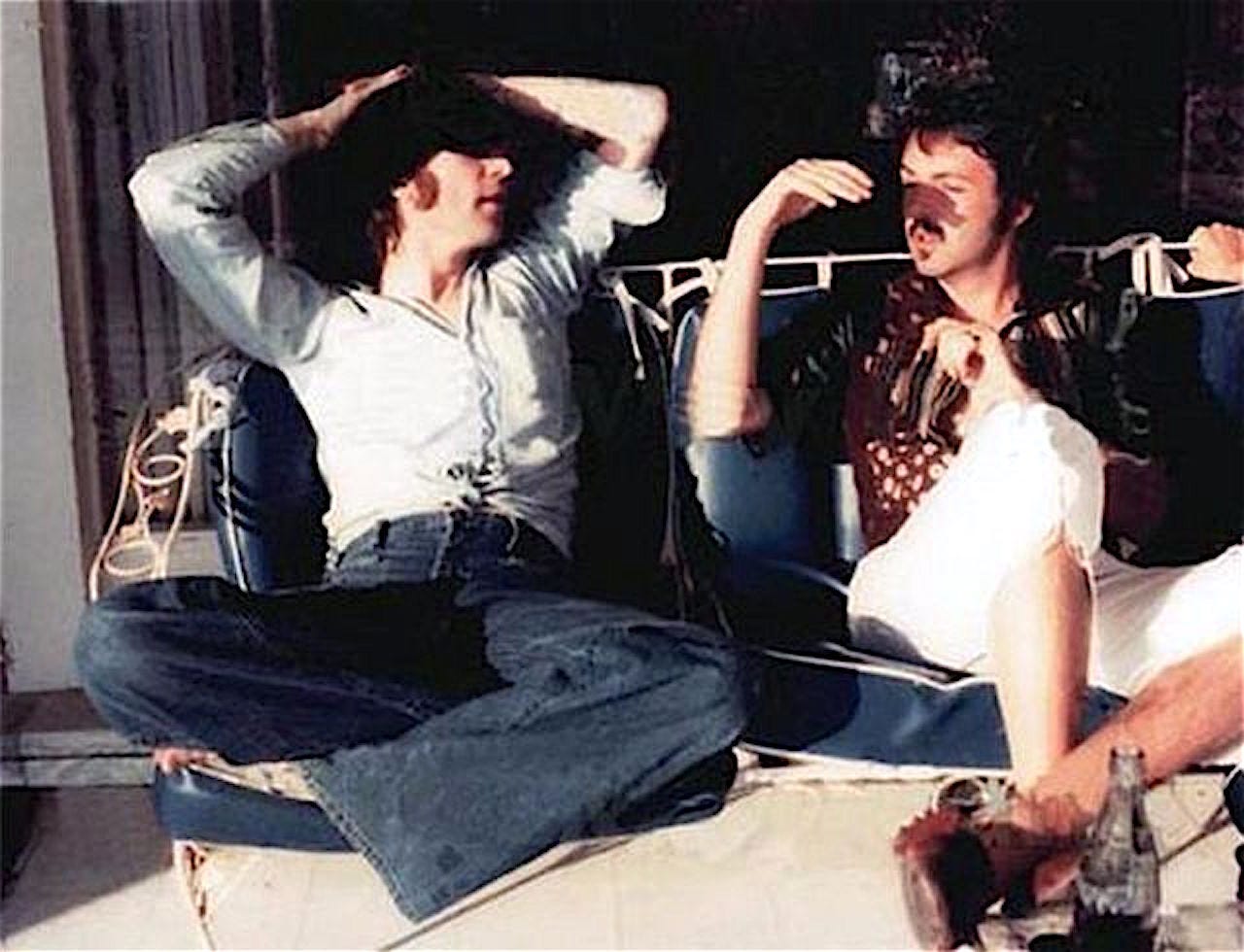
John and Paul in ’74, as captured for posterity by May Pang. Beatles history was happening all the time!

Beatles history doesn’t have to be viewed perpetually from 1995, and that’s how Anthology as it stands is presented. It’s an arbitrary endpoint now.

Fly in post-breakup clips from the other Beatles, not just John.  Paul in ’76 or Ringo in ’77 or George in ’71 – any of those clips (for instance) would have helped ‘70s John not come off like such a remote figure who didn’t get to have the same closure the other three had.  No one could bring John to the 1990s, but they could have brought Paul, George and Ringo back to John’s ‘70s. Isn’t that what they did for “Free as a Bird,” “Real Love” and “Now and Then” anyway? The Threetles played John’s songs and were constrained by his limitations, not the other way around.

(Note that Paul took this very approach with his new Wings memoir, using a wide range of quotes over decades for the oral history.)

Peter Jackson and the technology he’s brought injected incredible life into the Beatles history, and also some questions. Do we want a Beatles history taking advantage of the advances, or improvement to the already existing Anthology? I personally don’t want an original-flavor Anthology that’s altered beyond whatever would qualify as “cleaning up” to account for today’s mediums (streaming, Blu-ray, etc.)  I’m fully contented to have it be a product of its time, like Let It Be — which was indeed just cleaned up in 2024 — was as a complement to Get Back (and vice versa). But moving around quotes, removing some and adding others, leaving a bit of old history in and generally shortening the experience isn’t presenting the original document. Knowing the history I know, this feels incomplete.

I think a new Beatles history documentary could play a part in another revitalization of the group in the way the first Anthology did and how Get Back did, while also respecting the fact we’ve lost half of the band too. We may need to wait awhile until only estates are left to have a say. But it could take a replacement of every piece of the ship to truly rebuild and create clarity in their history.  
2 Comments

Filed under Extra

TMBP Extra: Stay till it’s time to go

“The world is still spinning and so are we and so are you. When the spinning stops – that’ll be the time to worry. Not before. Until then, The Beatles are alive and well and the Beat goes on, the Beat goes on.”

These were the instructions Apple publicist Derek Taylor articulated April 10, 1970, the marker for the end of the greatest pop music group there ever will be, the day the papers blared “PAUL QUITS THE BEATLES.”

That was more than 53 years ago, and it’s still not time to worry.

I felt compelled to write about “Now and Then,” the Beatles’ new single, and “last song,” even though I generally keep my focus to the Get Back sessions of a half-century earlier. One of the reasons I started researching and writing They May Be Parted in 2012 is because I thought I was investigating the endgame of the Beatles, and I wanted to understand that ending. Listening to the Nagra tapes of the sessions themselves, the January 1969 sessions weren’t what we were led to believe, a revision to history that now is mainstream opinion since the release of the Get Back docuseries.

I’ve posted some takes on “Now and Then” on social media and voiced a few others as a podcast guest, but since I have this permanent platform, I wanted to post here for posterity, too.  Maybe this is more for me than anyone else. I tried to keep my thoughts in some kind of order, but this is certainly a brain-dump of high order. 

“Now and Then” was released just over a week before I published this post, and today hit No. 1 on the U.K. charts. My feelings on the song and the accompanying video evolved in that short time, and may continue to, I’m sure. 

There simply won’t be and can’t be consensus on any aspect of “Now and Then.” Contemporary critics routinely called Beatlemania a fad. One writer famously said Sgt. Pepper was “ultimately fraudulent.” Abbey Road was described by another as “an unmitigated disaster.” So from the jump, we can abandon any thought of a common opinion and there doesn’t need to be. It only matters what it means to you, if anything. It’s like attending a funeral — you go because you feel compelled to mourn for your own personal reasons. 

Assuming we all know the original backstory – John Lennon committed the idea to cassette in the late 1970s and widow Yoko Ono handed the tapes of this and three other songs to Paul McCartney in 1994 for use as potential new Beatles songs – let’s pick things up in 2023 with the song’s rollout.

One basic truth to have any “Now and Then” discussion: We simply have to accept the fact this song and video exist in order for us to have a reasonable conversation about it. Whether the song should or shouldn’t exist never was our call. It was up to the two living Beatles and the two estates.  In the 1990s, the decision was made to break the seal and reopen the Beatles as an active unit. This is just a continuation of that act in the 1990s. 

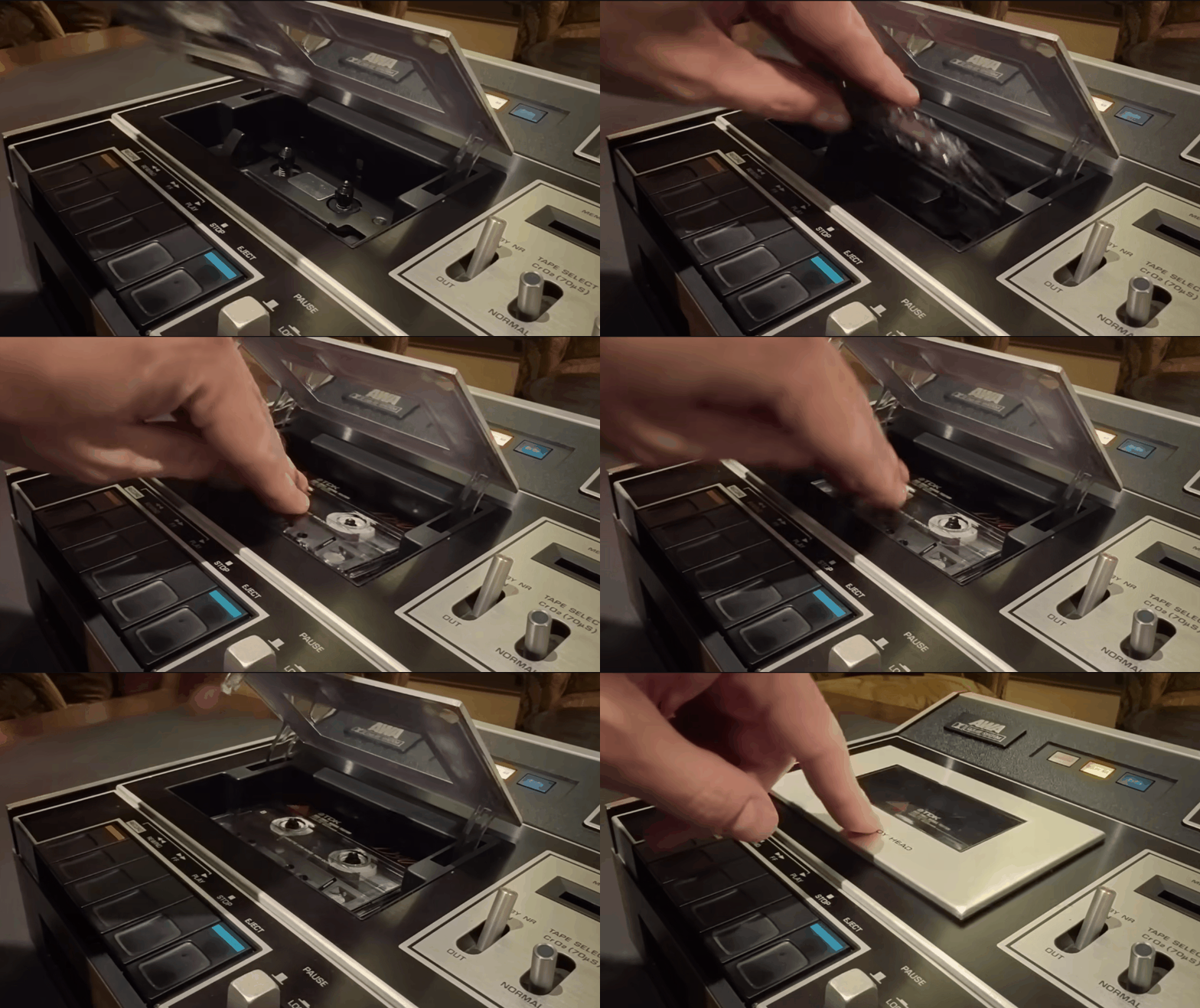
Is it real, or is it TDK?

George Harrison left explicit instructions to his son, Dhani, and Jeff Lynne outlining how he wanted Brainwashed, his posthumous 2002 LP, to be finished after his death. John didn’t leave behind anything except for the music itself.  If the tape of “Now and Then” actually said “For Paul” in John’s writing, we just don’t know if that meant it was dedicated to him, meant to give to him to listen to or something else altogether.  It could imply there were tapes that said “For May” or “For Sean.” Maybe there were and no one else has seen them.

Since I’m picking up the story in 2023 via 1995, I’m not really going to get into John’s original intent or inspiration in writing the song, the deeper Lennon-McCartney relationship, the Carl Perkins “My Old Friend” stuff or anything along those lines. There are some terrific voices in the Beatles-sphere who can offer their opinions on that. But ultimately, the most important interpreter is Paul. If we all (myself included) can hyper analyze every word and every note the Beatles play and find deeper meaning, certainly Paul McCartney has the right to decode and determine how a song by his longtime songwriting partner and dear friend spoke to him.

The 2023 rollout window for “Now and Then” was highly compact, and it allowed for knee-jerk takes and then knee-jerk reactions to those initial takes.

Straight away, Paul stumbled into the first step of the rollout in June, saying AI was key to completion of the song. Really, the blame goes to the person who wrote the BBC headline: “Sir Paul McCartney says artificial intelligence has enabled a ‘final’ Beatles song.”

The clumsy description spoiled the promotion of project from the outset, even if the actual use of the the technology wasn’t anything wrong. If he just said “we’re using same gadgets Peter Jackson used to clean up the Get Back tapes” it wouldn’t have put the rollout on the back foot from the start.

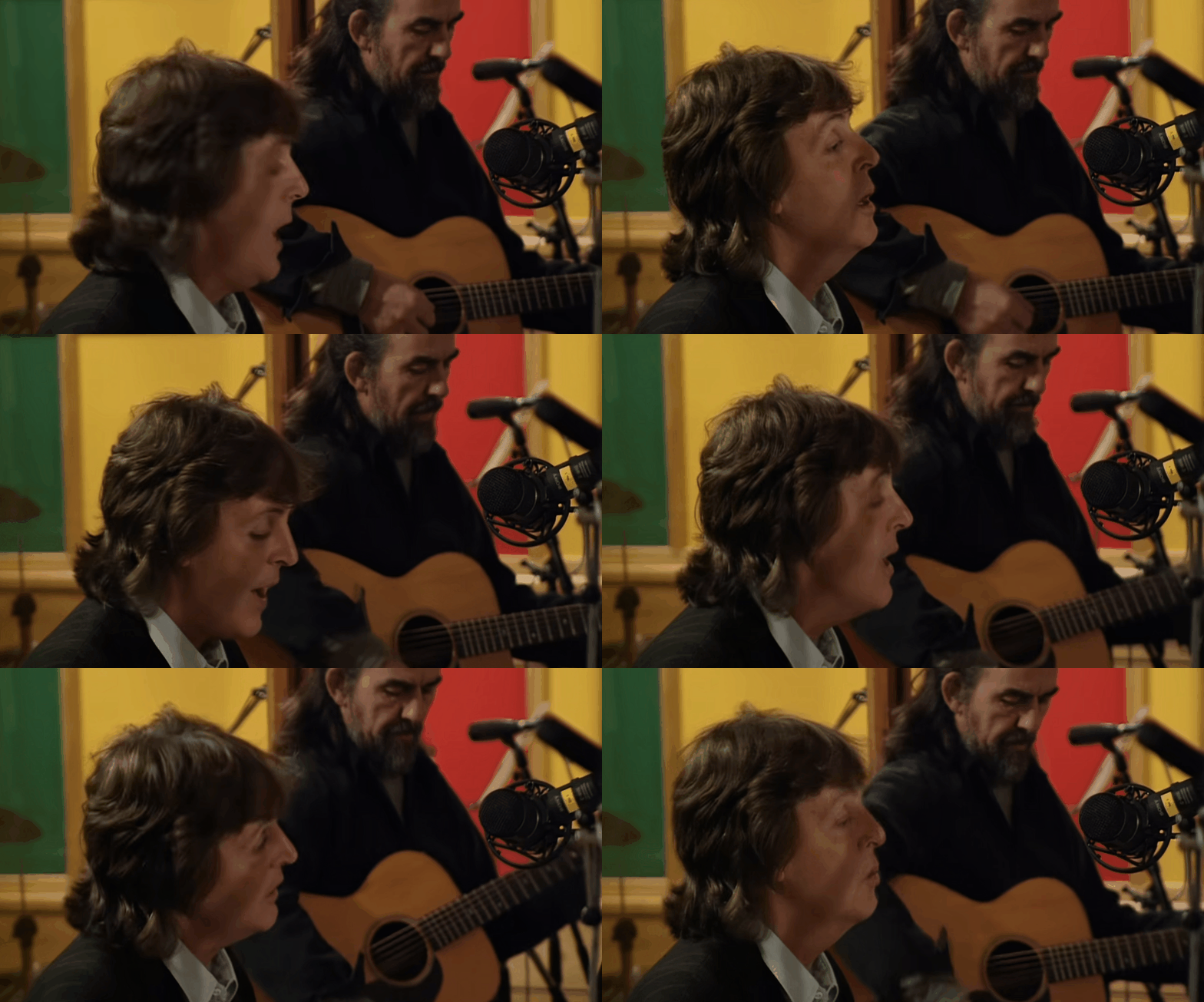
Jackson put together the magnificent making-of documentary, unveiled the day before the song’s actual release, on November 1, pulling together unseen home movies of John and Anthology-era footage of George. How remarkable it was to be able to enjoy them both so alive again. Watching Paul singing along to “Now and Then” in the 1990s was extremely moving. 

Regardless of whether the musical performances of “Now and Then” in the documentary were a solid sync job or authentic, the sequence made a straight-line link between the ’90s and now, pulling “Now and Then” into the Anthology era as second-act Beatles song and doing everything it could to ensure George was part of this story. Utilizing the Yellow Submarine time travel and timeline was deft, and little easter eggs like using Magic Alex’s sound “technology” was clever and really gave a deep nod and wink to let even the most diehards know, “We’re with you, and this new song can speak to you too.”

It’s entirely anecdotal, from social media, but people started to weep once they heard John Lennon’s voice in isolation. It took me until a few seconds later, when Paul joined him in harmony.

To me, that’s one of the most important and enjoyable features of “Now and Then,” which was officially released on November 2  — Paul owns his “old-man voice,” which he really hasn’t done during his solo career as it’s become more prominent. He’s treating his Beatles work separate from his solo work, which often takes him out of his realistic vocal range.  But for this final Beatles track, he leans into that feature of his singing voice as a complement to John, who in his mid-to-late 30s when he recorded “Now and Then” was about 40 years Paul’s junior at his current age. It would have been like John singing with an 81-year-old George Burns in 1977.

I think the strings do a great deal of heavy lifting. Superficially, this is the biggest difference with whatever they would have worked on in the ’90s, when they didn’t employ strings at all on “Free as a Bird” and “Real Love.” I found the arrangement lovely and not overwhelming, evocative enough of “I Am the Walrus” and “Eleanor Rigby” without overwhelming the listener.  

I’ll say the same for the harmonies that were sampled from “Because,” “Eleanor Rigby” and “Here, There and Everywhere.” Giles Martin applied them tastefully and subtly enough into the fabric of the song it sounded completely natural. 

Ringo was typically fab on the kit, and his added color on vocals were welcome. But it’s too bad surviving guitar parts were mixed low as they were. Much has been said about Paul’s slide solo in tribute to George — it did make you miss George, and it probably would have had a little more flavor and guts to it had he been around.

I do really feel like they were playing together, instead of this cross-generational, cross-dimensional, analog-digital hybrid. It’s all very tidy, under four minutes, not at all ponderous and conscious of overstaying its welcome. 

I thought John’s original recording was a little slight — I didn’t love any of the original piano sketches as they were taped, to be completely honest.  Certainly they were never meant to be release-ready or anything close to it. 

In contemporary interviews from the Anthology era, Paul himself didn’t pull any punches when it came to the quality of the content itself. On what was clearly “Now and Then,” from the November-December issue of Beatlefan:

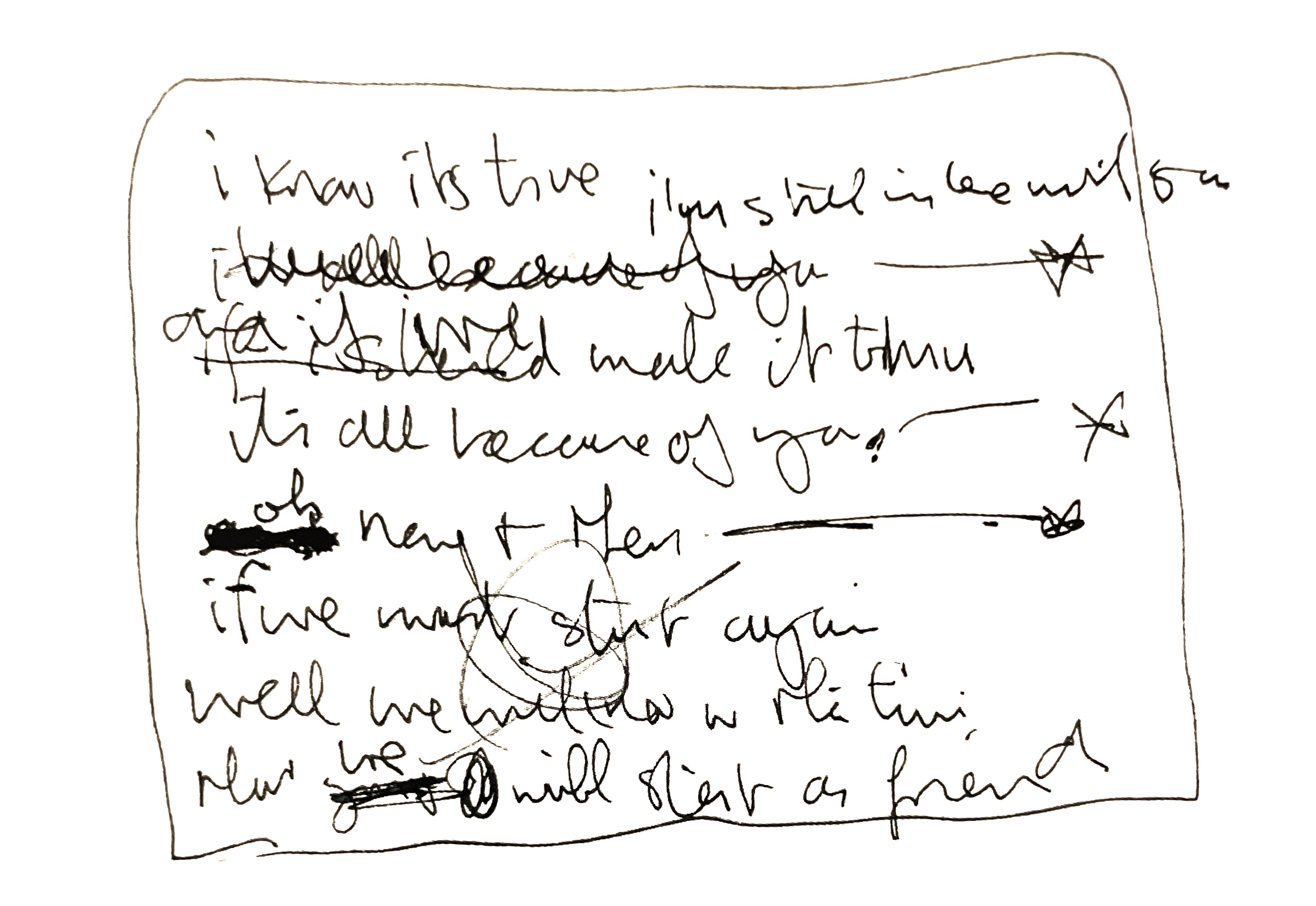
Yeah, what’s it called – I don’t know, it didn’t really have a title [Sings: “You know/it’s true; it’s up to you…] That beginning bit’s great and then it just goes a bit crummy. We all decided that it’s not one of John’s greatest songs. So that we’d have to manipulate all of that, which is just a little bit more difficult.

I think it’s worth considering how different a 1995 version of the song would have been. We can be assured the overall sound would be different with Jeff Lynne at the helm as originally planned. Would the song have been adjusted, arranged and edited the same way? At the minimum, George would have had a say in the song’s writing and arrangement, probably in a 50-50 manner with Paul (minus some percentage offered to Ringo Starr, to be fair).  This is in no way meant to come off crass, but without George’s presence, it freed Paul to fully arrange “Now and Then” with complete freedom. 

Even if every now and then he’d feel so insecure, Paul had the confidence to open up the door to collaborate with John as an equal partner, as he felt he had every right to do and had done so many times. If Paul thought the song’s original bridge was clunky, extraneous and “crummy,” he was justified in killing it. I know it seems insane to say “No, we don’t want to hear any more unreleased John Lennon,” but the Beatles were always great editors. Paul McCartney is a magnificent song fixer, and this is the ultimate, final fix.  

And this returns me to Get Back. I long heard on the Nagras and everyone has since seen in the series that the others explicitly trusted Paul with their songs. He led the way, whether it was John letting him arrange “Don’t Let Me Down” or George welcoming input to “I Me Mine.” That’s just two small examples in a career of such collaboration.

Does “Now and Then” sound like it belongs on a Beatles LP? Of course not, and why should it?  Not quite a mashup, but think of it like the single version of a compilation album. It’s pieces from four of the last six decades woven in under four minutes, I think quite seamlessly. At times “Now and Then” sounds natural in any of those decades, though without fitting comfortably in any of them, either.

What is the essence of a Beatles song? Is it the personnel or the sound? The Beatles didn’t always record as a quartet, certainly not as the years went on. You only needed one Beatle to make Beatles song sometimes. “I Me Mine” was written and rehearsed with no input from John in 1969, and then recorded with him out of the country and having quit the band in 1970. Yet it’s undeniably a Beatles song.

Paul and Ringo got together recently for lunch, but had to send each other files of “Now and Then” — they couldn’t even bother to record the last song in the same room. Maybe there’s something calculated to that: If they couldn’t be in the same room as John and George, then they wouldn’t record without them as a unit. They’d all be apart, together.

The Beatles’ wild variety of styles defines the group’s music. So if it’s not the personnel or sound that makes a Beatles song a “Beatles song,” maybe the essence of a Beatles song rests in its original time — the 1960s. But, as George and John sang in response to “you say stop” in “Hello Goodbye,” they can stay till it’s time to go. And they decided it wasn’t time to go.

In the last 30 years, since the Threetles first attempted “Now and Then,” we lost George Harrison, Linda McCartney, George Martin, Neil Aspinall, Geoff Emerick and so many others, people close to the Beatles, their story and their music. John wasn’t the only one missing anymore, and each of these people to some degree must have been on Paul’s mind as he worked on “Now and Then,” this song of memories and loss. 

And to that end, it’s also quite clearly a song of closure. The promotion — so actively screaming that it’s the “last” Beatles song — leans completely into that. But the music does too. I’m not any kind music theorist, but I have two operational ears, and this is what I hear:

“Now and Then” is the only one with a conclusive ending. 

I love the concept of the butterfly effect, so let’s apply it here. There’s no answer, but what if “Free as a Bird” had the poor demo tape recording and “Now and Then” ended up salvageable in 1995? Maybe the quote I shared earlier, where Paul said it was “not one of John’s greatest songs” would have meant “Real Love” would have been the lone reunion song? We’re left to guess.

And that brings us to the video. It’s divisive and a little insane. 

There’s a lot to unpack. My initial reaction was that it was too contrived, too scattered. The 1990s Anthology outtakes were outstanding, as it was in the making-of film — images of George we hadn’t seen before and the Threetles at work. But my overall first impression was that this video was the kitchen sink, trying to stuff so much in four minutes: present-day performances, ’90s video, archival footage and photos. 

I would imagine that if they didn’t do the “Free as a Bird” video already, that would have been an apt solution. 

That’s one way to go, when there’s a member of the band who’s not around anymore, a creative film that had few images of the Beatles as they had been and none of the surviving members pictured in the ’90s. “Real Love” took a more straightforward approach, compiling moments from throughout their career with 1990s footage. But there’s no narrative.

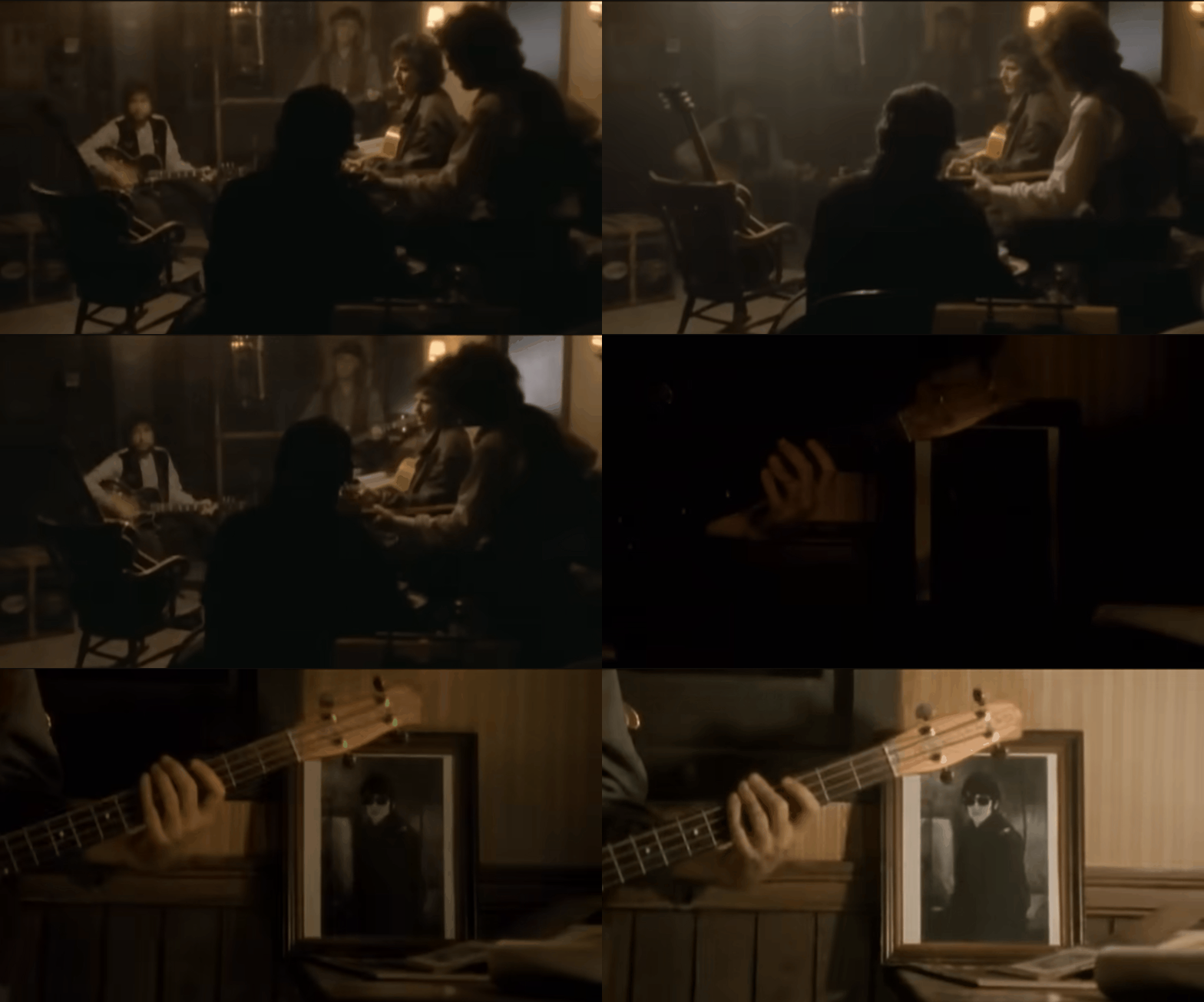
Roy Orbison died shortly after the first Traveling Wilburys album came out in 1988, and in the “End of the Line” video, released a few months later, he was represented by a rocking chair with a guitar and a photograph shown during his vocal lines. It was moving and sad, but I don’t think it was an approach that would have worked for the Beatles, with half the band gone. It would have come off maudlin, and completely against the idea that “Now and Then” was a full-group effort. (Mind you, I don’t think “End of the Line” was maudlin — it was still in the early phases of mourning Orbison.)

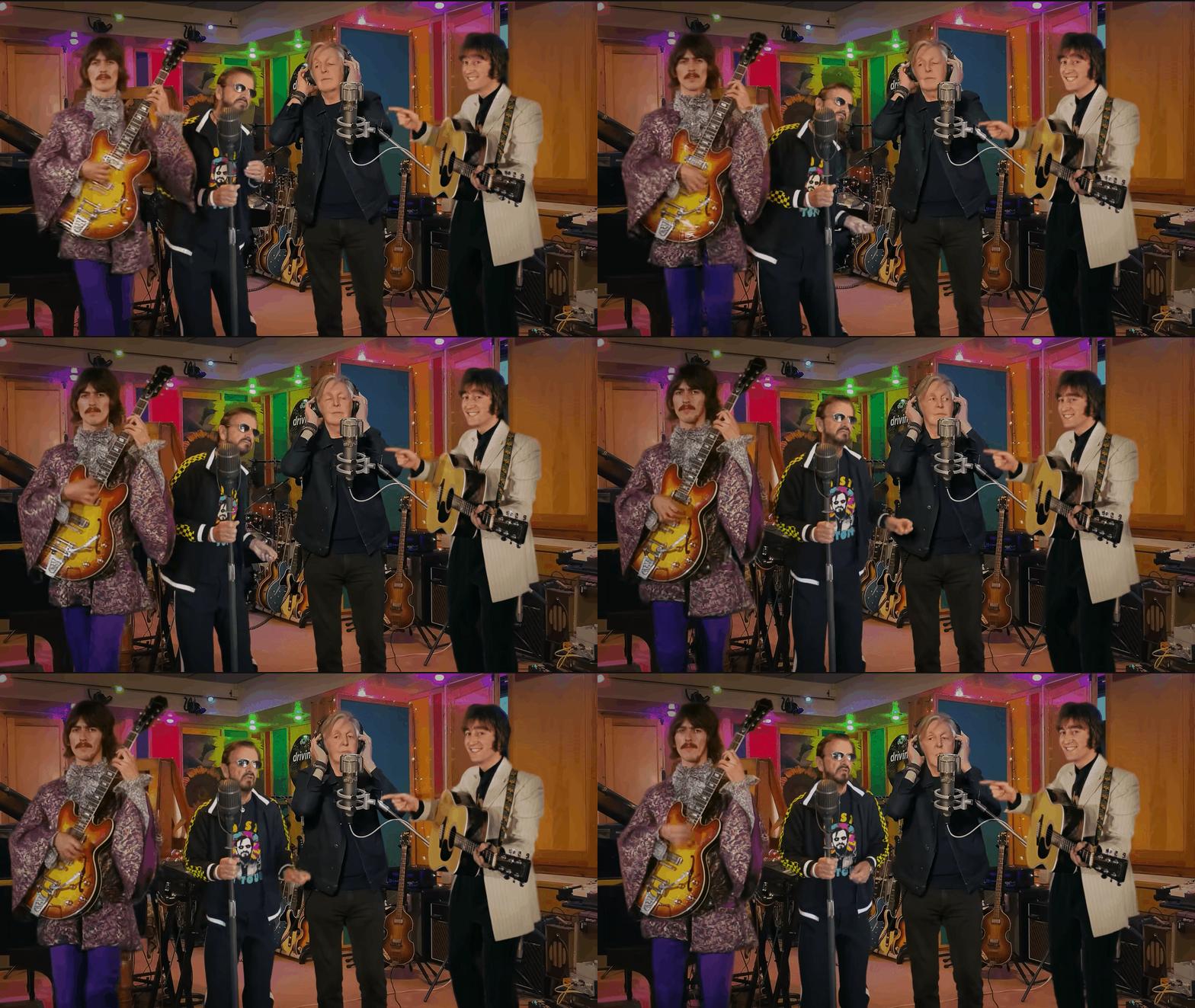
I was completely skeptical when I first saw 1967-era “Hello, Goodbye” John and George intermingling with 2023 Paul and Ringo. The word “cringe” was thrown around a lot on social media, and I get that. My thinking on the video quickly evolved from the first to second viewing — your milage may vary. 

We’re faced with two issues: Would the departed Beatles want to be represented this way? And if so, should it be as silly as presented? 

Paul as Beatle Paul (above) in 1980 and George as Beatle George (below) in 1974.

Let’s not pretend George and John didn’t revisit their Fab Four period in their solo years. Putting aside the many callouts in songs, either cryptic or overt, George did things like dress in the same Sgt. Pepper costume he wore in “Now and Then” and elsewhere, and John literally had the Beatles on the cover of a solo record. Complicated feelings they may have been, they never wrote off that time.

St. Pepper George in the 1974 “Ding Dong” video, one of many Beatle guises he employed as he tried to “ring out the old.”

In their day, the Beatles embraced comedy in their films and promos, and beyond into the solo years (George was the funniest of all, with his estate keeping that flame alive). Even with a wistful lyric at play, it wouldn’t be the Beatles’ way to match it with a bleak visual. 

One way they could have gone would have been to make multiple videos, something the Beatles did themselves over their career and when they went solo. Build out a full video of the ’90s sessions co-mingled with appropriate ’70s Lennon home or studio footage. The Beatles at work on their last song.

Another direction would be a more direct clip/highlight reel, something they added to the video for “Real Love,” but now with another 30 years of memories added, and earlier footage cleaned up.

Finally in the last video, they could have really owned the time-travel element and gone completely bananas. Stick Paul into the “How Do You Sleep” sessions. Put 60 years of Ringos into one room. Get the 1980 Paul pretending to be the 1960s Paul and put him on stage with the Plastic Ono Band in Toronto. You get the idea. Really play into the fact these four guys were always together, even when we can document they weren’t.

Those were my knee-jerk impressions of the video, kind of a mixed bag. Then I watched the video again, this time with my wife, who helped me open my eyes to a better interpretation.

A lot of people really don’t like the video, and I get it. It’s jarring, uncomfortable and the technology — as impressive as it is — still isn’t perfect. 

Peter Jackson described the concept as “Ringo and Paul in 2023 trying to work on a song and they get invaded by the 1967 Beatles,” but I think there’s much more to it than that. 

It’s Ringo and Paul deliberately surrounding themselves with the John and George they knew so well. At a funeral, wake, shiva – this is when we remember and talk of the vibrant life of the person we’re remembering, sharp and in color, not memories of their weakness or death. These days are filled with silly memories and pictures from all across their lives, laughter among the tears. I don’t think there’s any doubt Paul and Ringo vividly remembered a vitalized John and George — and even their own former vigorous selves — when they were in the studio last year working on “Now and Then.”  It’s just the Beatles and their closest associates:  George Martin was embodied through his son, and Mal Evans through the MAL technology used to extract John’s voice. 

This part of the video isn’t meant for us, it’s for them. We just get to be voyeurs. 

As the video nears the end, their life literally flashes before their eyes. Again, the animation is awkward in spots, but I’ll argue in favor of the concept. When I look at a photo of people I’ve lost in my life, their memory isn’t stuck in that 4×6 print. They live, they move. Every time I see their face, it reminds me of the places we used to go, a concept Ringo and George certainly understood.  

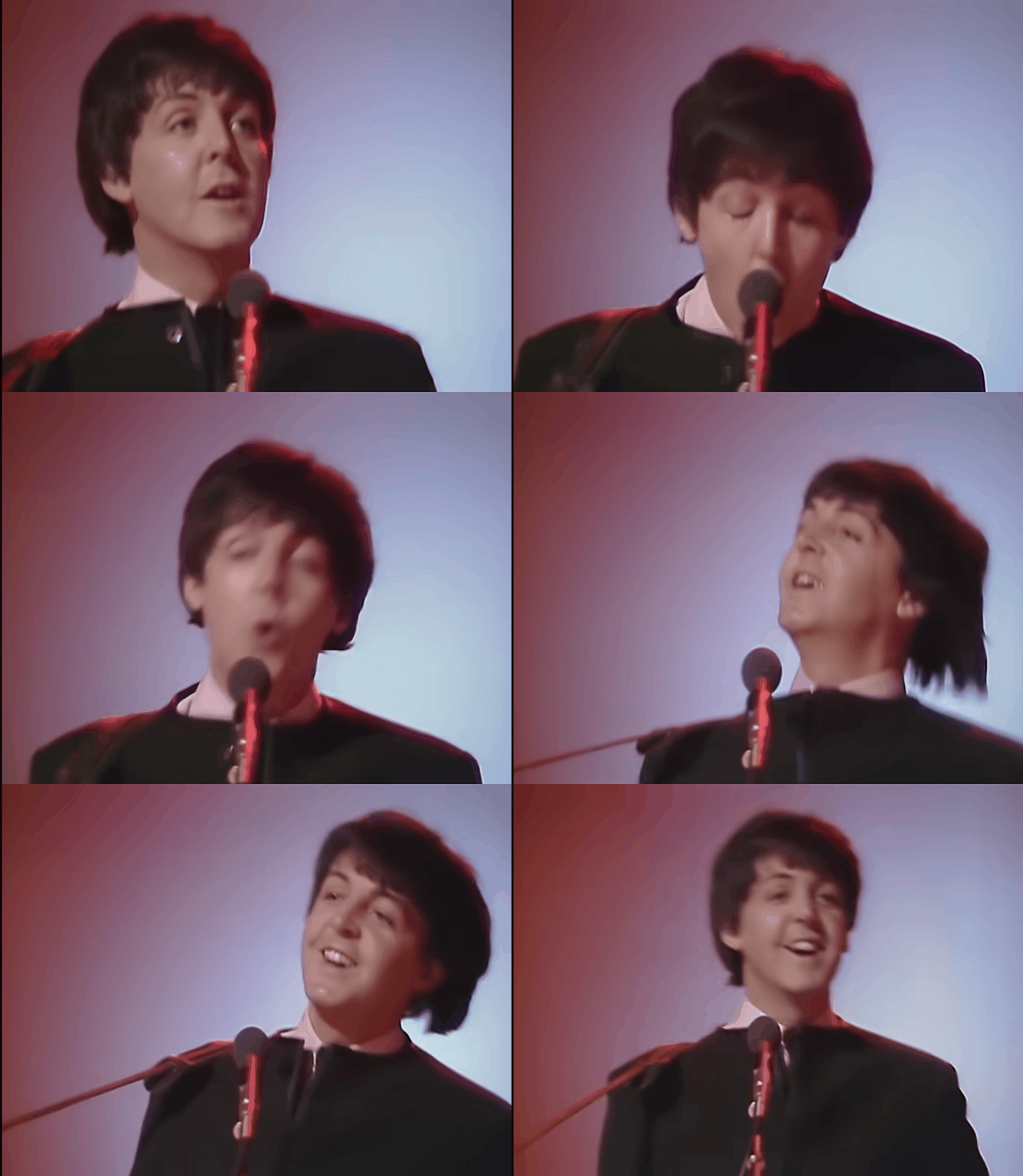
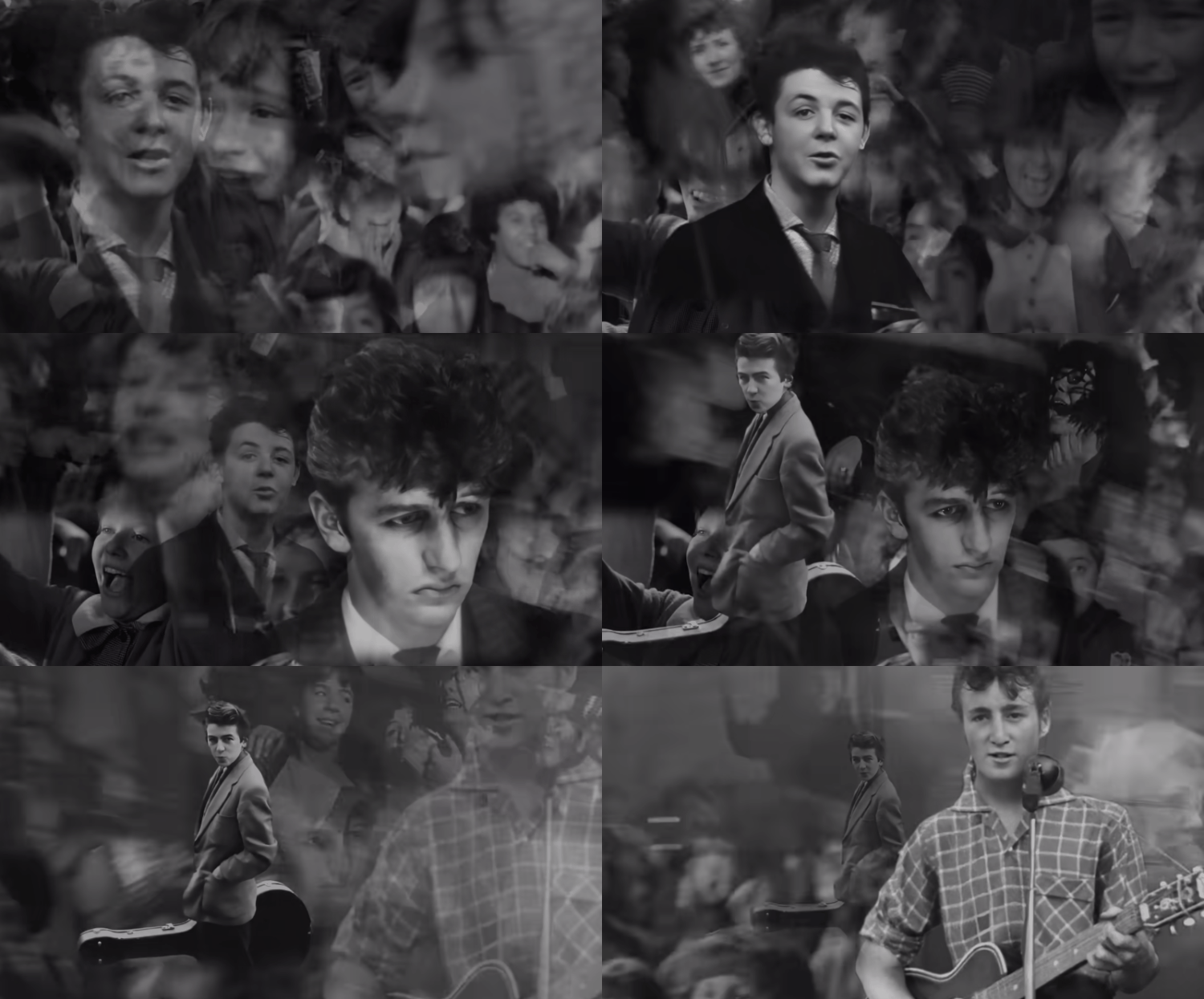
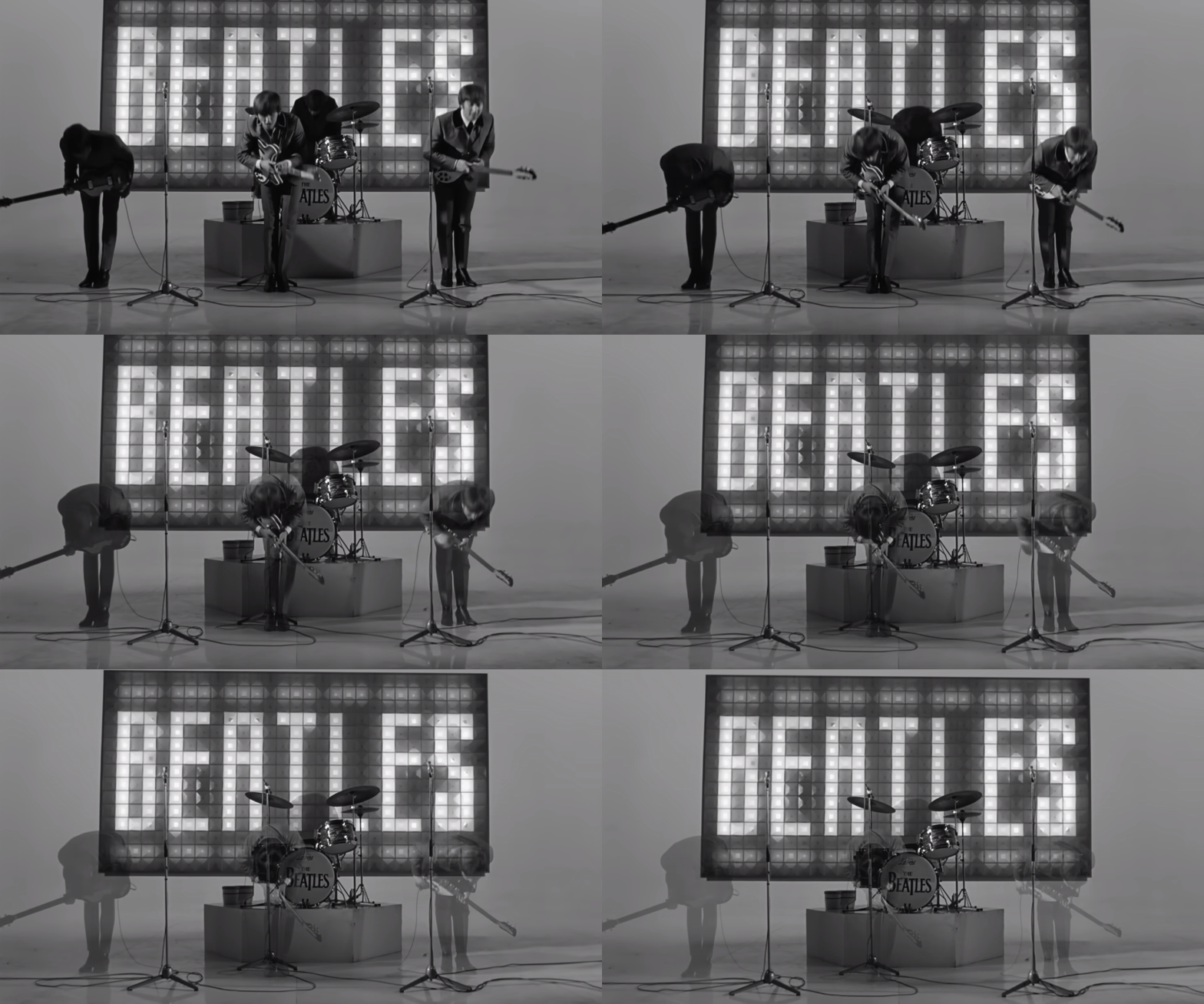
And then we were snapped back into reality, the reality of 1964, and the Beatles all together in a single time and place. With their concluding bow, taken from their performance of “She Loves You” in the “A Hard Day’s Night” film, the Beatles vanish before our eyes, and the lights spelling out their name burn out. That was the point in the video I lost it. 

If the rest of the video was for the surviving Beatles, this ending was for us, the Beatles fan, the rest of the world. They were singing to us now, not each other. 

Deliberate or not, this ending evokes a dramatic sequence in The Compleat Beatles, an unauthorized but highly valuable biography of the band from 1982. In the sequence on the breakup of the band, we see the iconic black-and-white photos of the band from April 1969, with George, Ringo, John and Paul vanishing, in sequence, as “I’m So Tired” plays in the background, the aggressive lyric, “I’d give you everything I’ve got for a little peace of mind.” 

In the “Now and Then” video, that tone has changed. Go to the source in “A Hard Day’s Night,” and you can hear the valedictory statement they give prior to their bow: “With a love like that, you know you should be glad.” See, it does work both ways: If Paul McCartney and Peter Jackson can search for deep meaning in these kinds of things, so can I.

The Beatles have said “Hello, Goodbye” many times. Breakup rumors started in 1964, and continued until they actually broke up. Until their partial reunions. The only endings that ultimately matter are John Lennon’s death in 1980 and George Harrison’s in 2001.

I’ll bring things back one more time to Get Back, Let It Be and original breakup, with these points: No living Beatles (out of four) approved the Get Back edit by Glyn Johns in 1969 (it later came out packaged with the Let It Be reissue in 2021). That’s two fewer Beatles that approved “Now and Then.”

I don’t think they could have sold “Now and Then” as a genuine cosmic reunion of friends, not merely co-workers, without the Get Back docuseries coming first. That set the stage to a mainstream audience that the the Winter of Discontent was much milder than forecast. 

And thus ends the Beatles’ final act. Or does it?  Paul offered this relevant remark to his fan club magazine, Club Sandwich, in the Winter 1995 issue, when asked if Anthology was the “last word” on the group:

I don’t know. That’s the difficult thing. In the electronic press kit we all enigmatically said, “Where does the circle end and where does it begin? An end is a beginning, of sorts.” But to me, for now, it’s an end.

An entire new generation of fans had the experience of hearing the “last” new Beatles song as their first new Beatles song, something some of us got to experience in the 1990s, in the 1980s, in the 1970s and all the time in the 1960s. Where does the circle end and where does it begin?

There is no end to the Beatles, as long as they occupy our lives, our ears, our eyes. Don’t take it from me. Just ask Derek Taylor, who said this on April 10, 1970: 

“The Beatles have changed so many lives, that the need for them still exists. The hope that they represent still exists. And as long as that exists, then they have to exist. They’ve got to be there to fulfill that need, and who are they to take themselves away, to say ‘OK kids, that’s it’? …

“If the Beatles don’t exist, you don’t exist.”

5 Comments

Filed under Extra

TMBP Extra: Every now and then

The Last Beatles Song

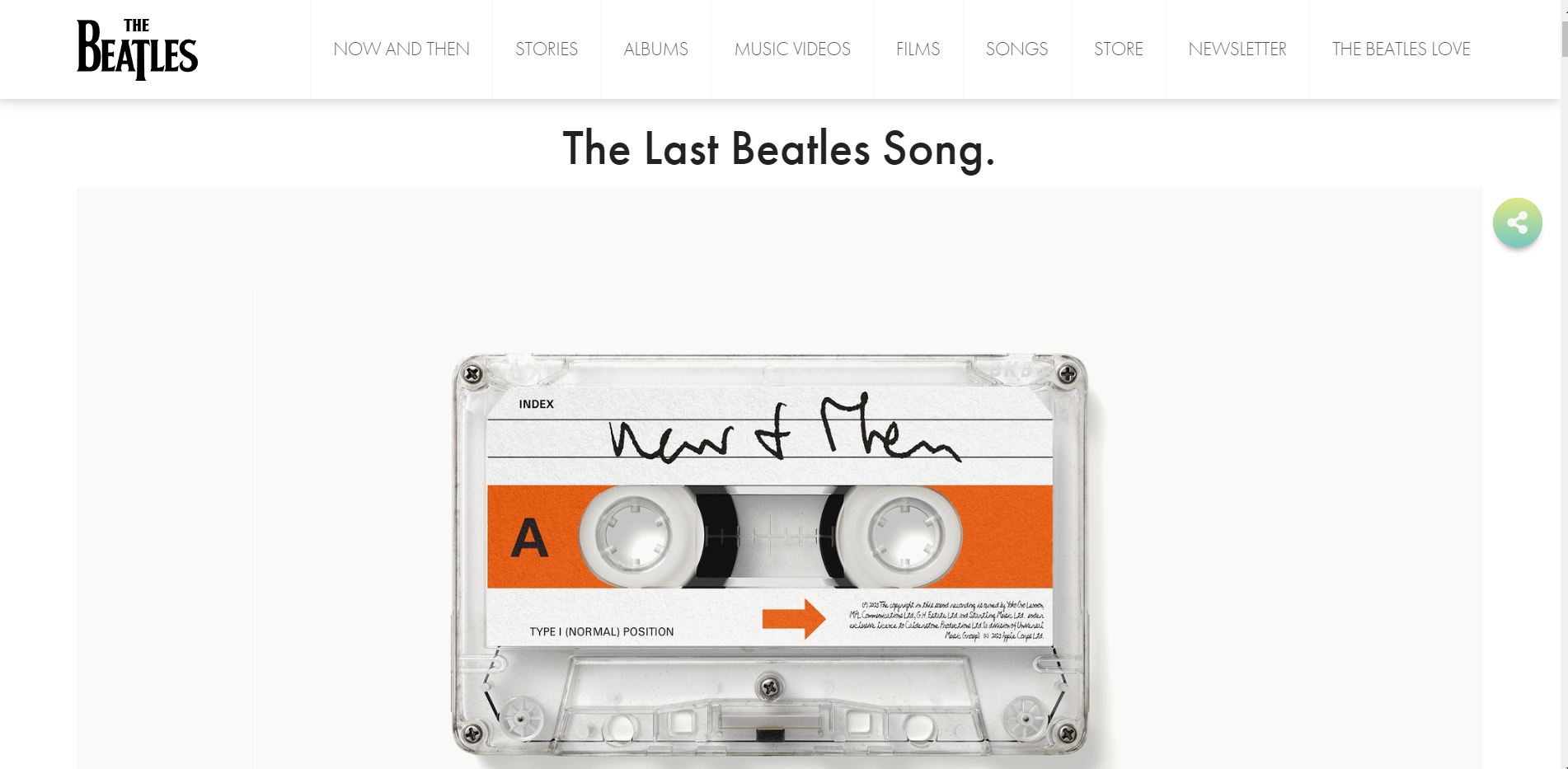
The Beatles website, as captured in the days leading up to the release of “Now and Then.”

The Last Beatles Song.

Let’s be a little more accurate and say with several qualifiers that it’s the last, new officially released Beatles song. The diehards already knew it from bootlegs, of course.

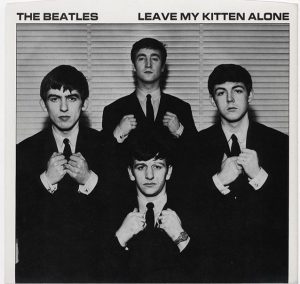
Not now, but back then, it was some other John Lennon vocal — not “Free as a Bird” or “Real Love” but the group’s 1964 recording of “Leave My Kitten Alone” — that qualified as the first last Beatles song.

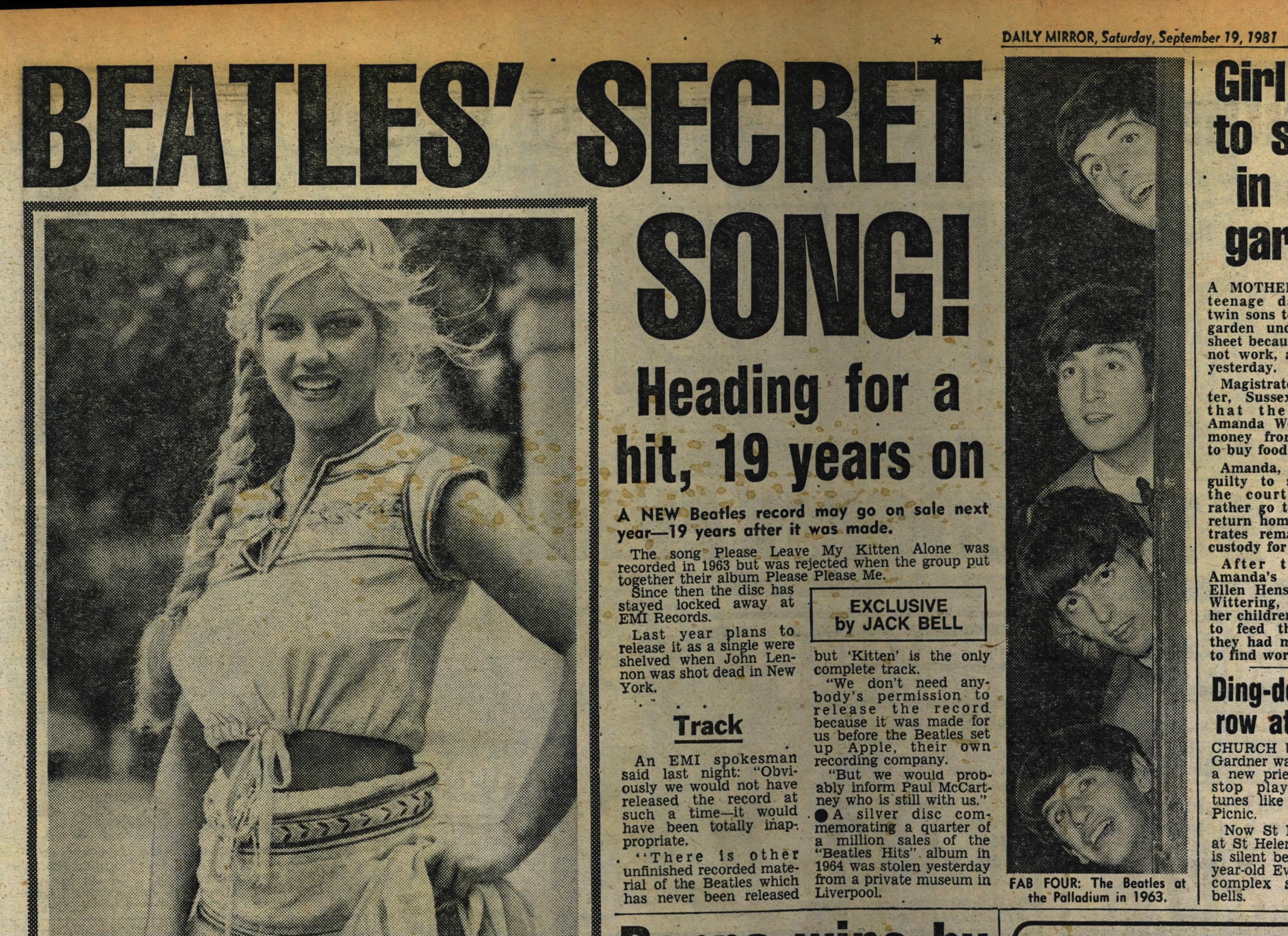
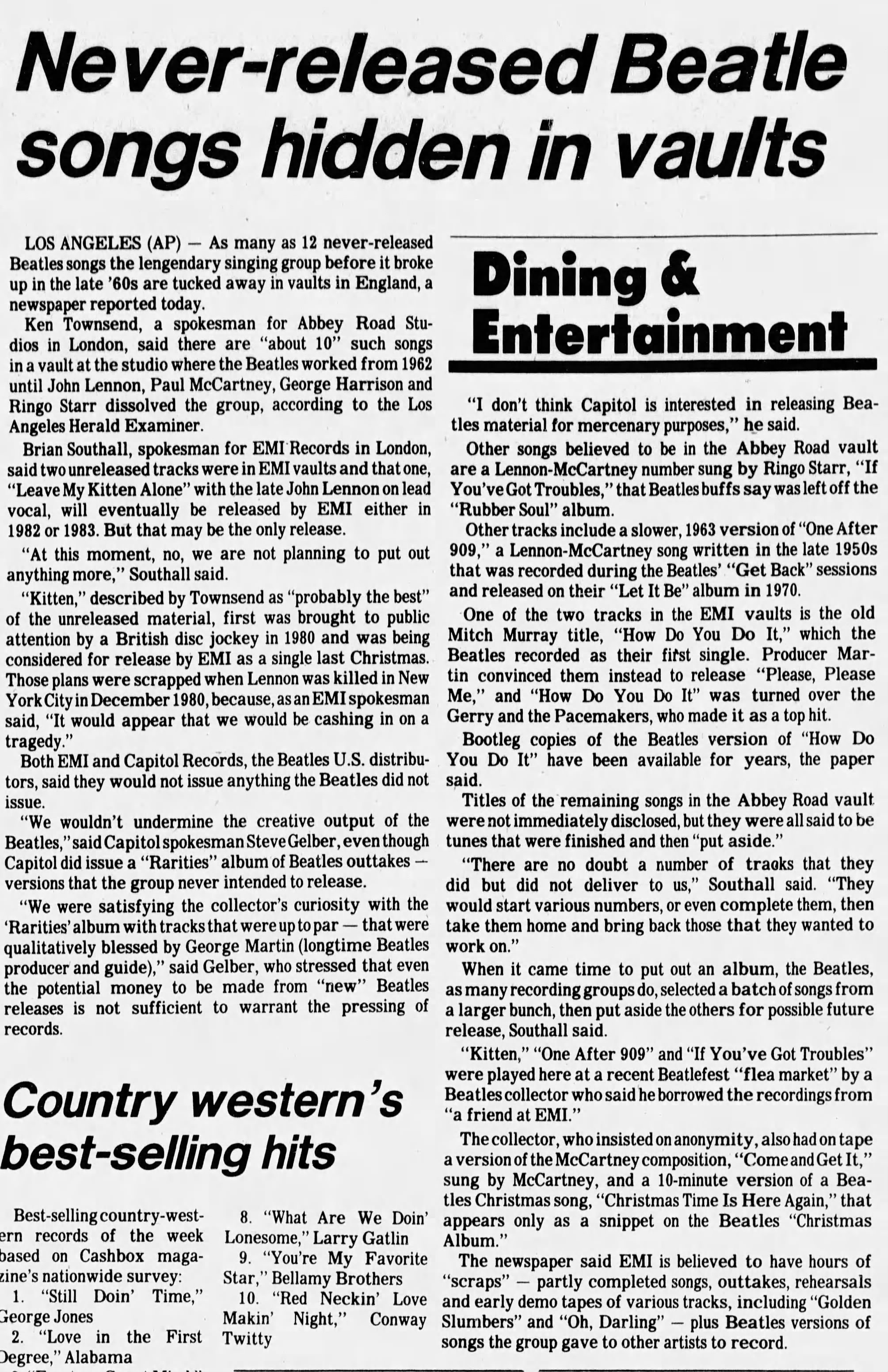
“There is other unfinished recorded material of the Beatles which has never been released but ‘Kitten’ is the only complete track,” an EMI spokesman (presumably Brian Southall) told the Daily Mirror in September 1981. That same story said John’s death derailed initial plans to release the song as a Christmas 1980 single.

Daily Mirror, Sept. 19, 1981.

If you’re looking for a sign of the times and an indication of how much the coordination between the label and band have changed in 40 years for legal reasons and otherwise, here’s another quote from EMI:

We don’t need anybody’s permission to release the record because it was made for us before the Beatles set up Apple, their own recording company. But we would probably inform Paul McCartney who is still with us.

(George Harrison and Ringo Starr were still with them, too, by the way.)

Further details emerged later in 1981, when an AP report (citing the now-defunct Los Angeles Herald Examiner) said a dozen unreleased Beatles songs were in the vault, but only “Leave My Kitten Alone” would see daylight, probably in 1982 or 1983. Hope we didn’t get too excited back then because …

“At this moment, no, we are not planning to put out anything more.”

Just how do EMI and the Beatles lose a song and recover it years later?  Here’s a quick timeline:

  • August 14, 1964: The Beatles commit their ferocious cover of “Leave My Kitten Alone” — originally recorded by Little Willie John in 1959 and two years later by Johnny Preston — to tape at EMI Studios. It’s done in five takes, including false starts.
  • December 4, 1964: Beatles for Sale is released, and of its whopping six covers, none are “Leave My Kitten Alone.” We don’t hear of the song again in the Beatles career, not even during the Get Back sessions, when they played all kinds of things.
  • August 15, 1970: Apple flack Peter Brown tells Melody Maker that there is no unreleased recorded Beatles material. Even then, everyone knew better as Get Back session outtakes, for instance, were already circulating.
  • 1976: With the Beatles no longer under contract as an entity to EMI, the label began to take stock of what actually was in the Abbey Road archives, a lengthy process.  An in-house EMI compilation of songs that included “Leave My Kitten Alone” eventually made its way into collectors’ hands, and ultimately bootlegs.

This brings us to the early 1980s, and EMI’s admission that the song would ultimately be released.

The emergence of “Leave My Kitten Alone” was tangible and exciting at the time. It wasn’t a fringe bootleg or a brief mention in newspapers anymore. You could hear it on mainstream radio.

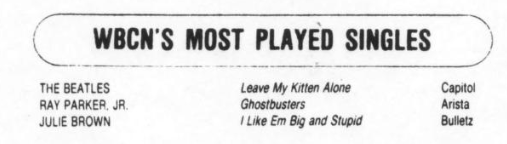
Here’s one example: For a solid month in late summer 1984, the song was listed among the “Most Played Singles” on Boston’s WBCN (the same station which happened to be the source of the famed Kum Back bootleg 15 years earlier).

From the Aug. 28, 1984 issue of the Boston Phoenix.

The excitement for the song wasn’t isolated to one market, either. I know because I remember it myself.

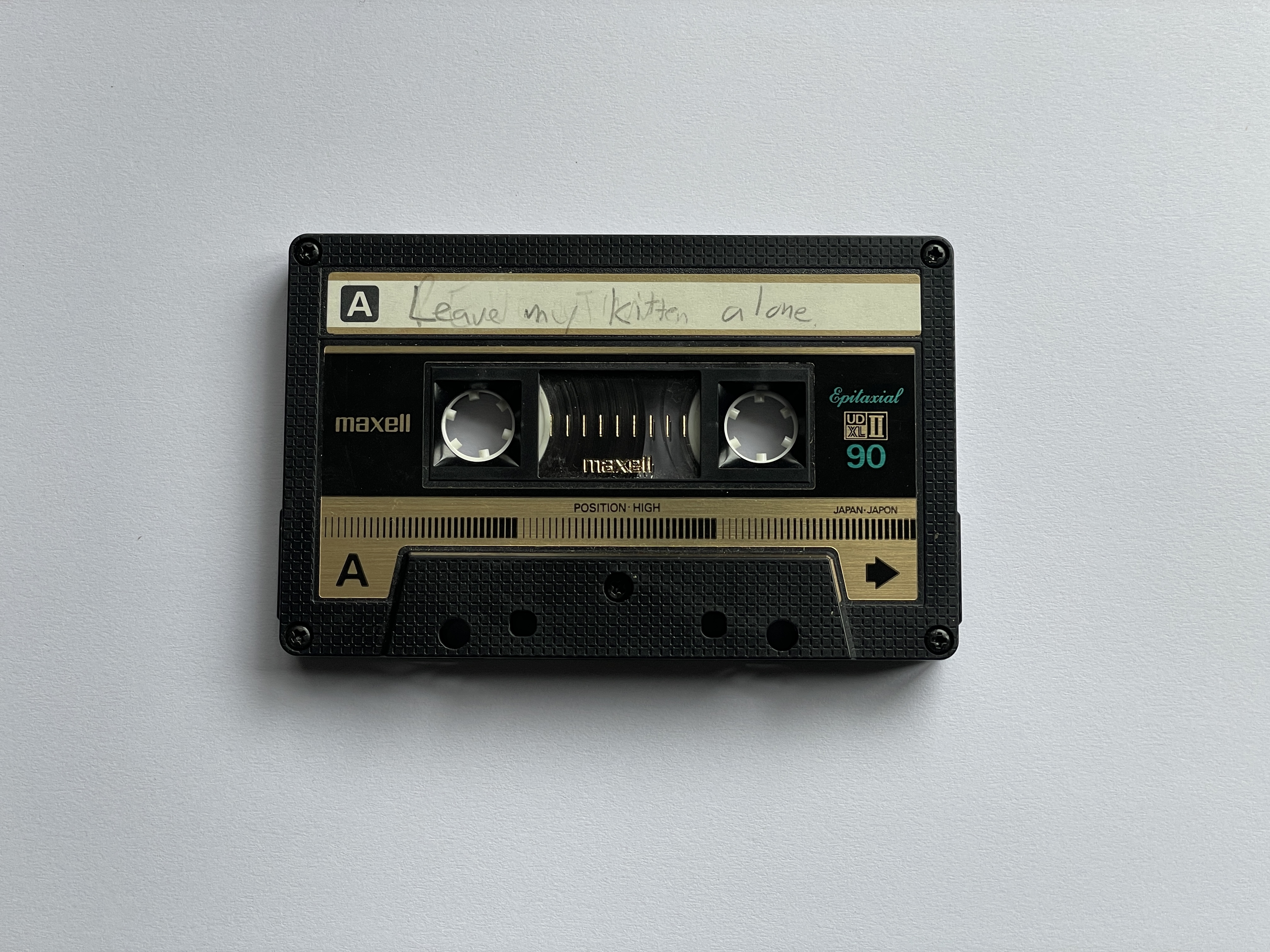
That child is going to miss you: My ’80s dub off the radio here accompanied by elementary-school-era scrawl on the label. As you can tell, I save everything.

It must have been some time in that same period in 1984 that one of the local New York radio stations (WNEW? WAPP?) played the song. I was 10, but already a fully formed Fab Four fan. I remember the station’s promotion was breathless — it was the “new” Beatles song, and I’d never experienced such a thing.

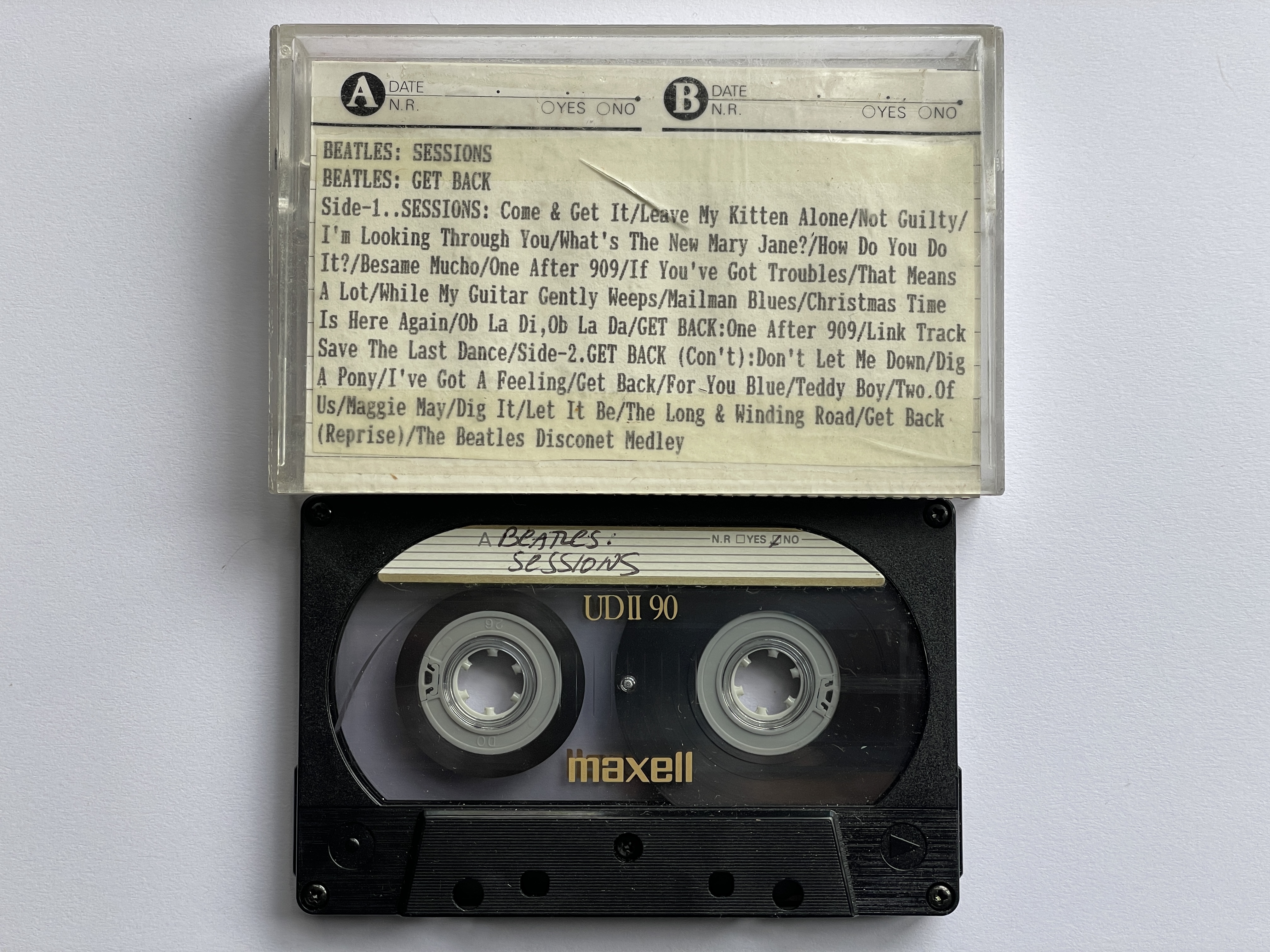
I grabbed a cassette tape not unlike the one central to the 2023 “Now and Then” promotional campaign (mine was Type II though, only the best for the Beatles). I hit play-record a few seconds into the song, and while I thought I was doing myself a favor at the time cutting out commercials, 40 years later, I wish I hadn’t lost the extra context.

By this time, the song’s release dovetailed with that of the compilation, Sessions, which has its own entire backstory. The LP and its lead single, “Leave My Kitten Alone,” had catalog numbers and release dates for early 1985.

There’s some debate if this is genuine or a fake, but it’s definitely some kind of sleeve for a “Leave My Kitten Alone” single.

Suddenly, the entire project was dead, reportedly because of objections from the three living Beatles and the Lennon estate, as well as the fallout from a new lawsuit between Apple and EMI.  Like so much else, the Sessions LP lived on in bootlegs, almost immediately. (I had mine on cassette, backed with Get Back.)

It took another decade, after all manner of legal issues were resolved, that Yoko Ono handed tapes of four demos by John — “Free as a Bird,” “Real Love,” “Grow Old With Me” and “Now and Then” to Paul in 1994 for the surviving Beatles to adorn for Anthology.

The technical (as well as critical and commercial) success of Natalie Cole’s “Unforgettable” duet with her late father in 1991 made a Beatles recording with John feasible. Until then, every Beatles reunion suggestion centered around a replacement for John. This ensured the irreplaceable would not be replaced.

This “Kitten” had nine lives, finally hitching a ride with the next last Beatles song — “Free as a Bird” — onto Anthology 1, officially becoming canon 31 years after it was recorded.

And it left the door open for another to be the last Beatles song.

6 Comments

Filed under Extra

TMBP Extra: Leave me waiting here

Had the phrase been in vogue in May 1970, a record review would have called Let It Be a “hot mess.”  I absolutely love the record, but I get how it’s a little off-kilter, off-putting and, frankly, a little bewildering. 

Apple Corps announced the 51st anniversary reissue of the Beatles’ final LP on Thursday, and befitting the record’s legacy, it’s complicated and conflicted. 

I say this as a sincere apologist of the original Let It Be. It’s a bizarre compilation album that’s nothing like anything they had done previously: Part-live, part-studio. Re-recorded and remixed older tracks, and songs written on the spot during the sessions. Novelty songs sequenced adjacent to their deepest statements. A rich overproduction of a loose session that wasn’t initially meant to be an album at all.  Packaged along with a rich book of photos and dialogue and in conjunction with the film, Let It Be was a true, albeit helter-skelter multimedia experience.

Before getting to 2021, let’s first take a quick spin at the long and winding road (ugh, sorry) that got us here, just for the sake of background. It’ll be fun!

After spending January 1969 split between Twickenham Film Studios and Apple Studio at 3 Savile Row (see this fabulous blog for more on that history), the Beatles themselves were never unanimously satisfied with the record pulled together over the subsequent months. Glyn Johns, ostensibly the producer/arranger at the sessions, mixed and sequenced multiple versions of a Get Back LP throughout 1969, and told the story of his first compilation in his 2014 memoir Sound Man, outlining what became the “concept” of the album.

Having no real end in sight for the album, one evening after our session at Savile Row, I took it upon myself to take the multitrack recordings I had made during our rehearsals to Olympic Studios to mix and edit what I thought could be an idea for the album. This was to show in an audio documentary what I had witnessed in the previous days, as a “fly on the wall” insight to the four of them interacting, having fun, jamming, taking the mickey, stopping and starting and creating some wonderful music, warts and all. I had five acetates cut the following morning and gave one each to the band, keeping one for myself, saying it was just an idea and and asking them to take a listen. The next day I got a resounding NO from each of them, which I completely understood and had fully expected.

By May 1969, the Beatles reconsidered, delivering Johns a pile of multitrack tapes from the sessions, asking him to create a mix from their recordings at Savile Row on his own, without the group’s input. He wrote that he “soon realized that the real reason had to be that they had lost interest in the project.”  

“We let Glyn Johns mix it,” John Lennon said in 1970. “We didn’t want to know.”

From the June 1969 Beatle Book

After multiple postponements and revisions to the mix — delays in part because of film delays — the Get Back LP (d)evolved into the Let it Be album as John and George Harrison tasked Phil Spector to produce the final version of the record in late March 1970. 

We all have opinions on Phil Spector’s Let It Be, and I’m not here to judge.

John said Spector “worked like a pig” on the production, which used Glyn Johns’ mix as a starting point. “When I heard it, I didn’t puke,” John said.  Ringo Starr likewise kept in his lunch, going as far as saying in the Anthology book, “I like what Phil did, actually.”

Paul McCartney, meanwhile, literally sued the other Beatles over Spector’s production of “The Long and Winding Road” (among other things, of course) on the last day of 1970.  Macca has since made a cottage industry of rerecording and reissuing non-Spector versions of the song at every opportunity. 

Bootlegged since before Let It Be was even released, the first raw recordings from the sessions were officially released in 1996 on Anthology 3, with a somewhat randomly selected 12 tracks culled for the collection.

Glyn Johns (as pictured in the Peter Jackson’s Get Back trailer)

By the time Let It Be … Naked was released in 2003, half the band was dead (although George had previously given his approval to the project). Its existence is primarily owed to Paul’s wishes to avenge Spector’s production (although the addition of “Don’t Let Me Down” to the rest of Let It Be is welcome and it sounds great, even if the collection completely lacks the occasional humor of the original, stripping it of the between-song banter). It’s other saving grace is the addition of the “Fly On the Wall” disc, a little starter set for the Nagra-curious, compiling all manner of song and conversation snippets from the sessions.

And that pretty much brings us to this very glorious day, when we formally learned what would be on the “Special Edition” of Let It Be. 

This is a great time to be a fan of this era, with the Get Back book of photos and dialogue coming out October 12, the album coming out just three days later and the new six-hour Get Back documentary series by Peter Jackson streaming  November 25-27. That’s a lot of product for a period that the Beatles couldn’t stop bashing for several decades, and that we see from the start was something they weren’t really enthusiastic to release in the very first place.

The transformation of the Beatles’ Winter of Discontent in the upcoming Fall of Rehabilitation seems built around the documentary, the apparent centerpiece of the revival. 

We can guess what will be in the film (and I tried to guess — check out the above!) but now we know for sure what a Let It Be deluxe entails. Beyond the Giles Martin/Sam Okell remixed version of the original album — “guided” by Phil Spector’s version — the box will contain:

  • Glyn Johns’ mix of the Get Back LP (looks like his third compilation) 
  • An EP featuring two unreleased 1970 Johns mixes (“Across the Universe” and “I Me Mine”) and two 2021 remixes (“Let It Be” and “Don’t Let Me Down” singles) 
  • 27 “previously unreleased outtakes, studio jams, rehearsals” 

It’s easy to welcome the release of the Glyn Johns mix, a historic document and true “lost album.” It’s a natural and expected addition to the set, even if all four Beatles nixed it more than half a century ago.  The two lost 1970 Johns mixes make sense as add-ons. As for the 2021 remixes … sure, why not. 

That leaves the outtakes.  Oh, the outtakes. While a microscopic fraction of what was captured at Twickenham and Savile Row, it could well be representative in a remarkably scaled down fashion. But until we hear more selections, read more reviews or get dates, even, of some of the tracks, they’ll be a bit of a mystery until we put the record on. What’s in mono (sourced from the Nagras) and what’s in stereo (recorded on multitrack) gives a hint where certain tracks were recorded, but that’s one of the very few clues for you all. 

The track list

For instance, what is “I Me Mine (rehearsal)”? The Nagra reels have more than an hour of the song being rehearsed, over more than 40 tracks.  

Every track that ultimately appeared on the original Let It Be is represented by at least one outtake/rehearsal version.  That’s not a bad thing. Some songs that dominated the sessions did not surface — like “Maxwell’s Silver Hammer,” a significant Twickenham work-in-progress. “All Things Must Pass” seems to be represented by one of these early takes, but only this one.  That’s not a good thing.

It’s nice to have the origin story of “Something” and “Octopus’s Garden” (as seen in the Let It Be film) as links to Abbey Road and an early working rehearsal of “Gimme Some Truth” as a tie to their future solo career. This is a great introduction to a wider audience to the concept that the January 1969 sessions were creatively sprawling and carried a legacy beyond Let It Be alone.

All of this needs to be in there. But every track draws attention to missed opportunities of every scale. The tapes record Paul debuting “Golden Slumbers” and “Carry That Weight” on separate occasions and then later linking them together alone at the piano, but these are left to the bootlegs alone. George and Paul introduce numerous future solo tracks during these sessions, but we don’t get “Here Me Lord” or “Another Day,” to name just two examples.

The set features two Savile Row versions of “Get Back,” but the signature song of the sessions and its 2021 reboot was written while the cameras were rolling over the course of early January 1969. We hear the song spring from a jam and later become a foray into politics (“No Pakistanis”)  before Paul and John work together to finalize the lyrics we know today. To those who know the takes, those earlier, nascent versions are conspicuous by its absence.

To me the development of these songs represent the essence of the January 1969 sessions. It’s what makes this collection have the potential to stand out from the others (Sgt. Pepper, White Album, Abbey Road), in which the songs arrived in the studio mostly formed. The songwriting build should be central to the bonus content, but it doesn’t appear to be. 

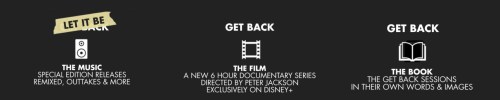
Over the course of the Peter Jackson documentary, I would guess we’ll get such moments. And maybe this is where Let It Be and Get Back separate after 50 years of sharing the same exact space.  You almost get a sense that’s what the group is doing, when you look at the Beatles’ homepage, and the image promoting the set: “LET IT BE” is “taped” over “GET BACK,” making clear this thing is different.


To its credit, this box feels too narrow to be seen as revisionist. There’s just not enough material to redefine any narrative (barring whatever’s in the accompanying book). That job will likely be left to the documentary.

I know I’m spoiled. I’ve heard 80-something Beatles hours from January 1969. I want it all, with better sound, in a fancy box I can put on my shelf and not let my kids touch until they wash their hands twice. That beats having of a partition on my hard drive filled with MP3s.

(I’m also spoiled as a Prince fan and have been using the incredible Sign O’ The Times deluxe reissue as a point of reference, too. That had 45 unreleased studio tracks in addition to singles, remixes and different concerts on two CDs and one DVD. It’s a sexy beast of a box set.)

The thing is, how do you compile a widely satisfactory version of the Get Back/Let It Be sessions?

Obviously, it’s impossible to market and widely release dozens of takes of “Maxwell’s Silver Hammer” or nine hours of “Get Back” (the song) sessions. I may like to hear George kvetch about having to be on a boat with Beatles fans or Paul tell John to sing louder or Ringo discuss his dog, but it’s hardly a selling point to a mainstream audience and it’s most certainly not re-listenable (unless you’re literally me or a few other dozen people doing this kind of thing).  I’m not convinced what we’re getting is sufficient either, though.

So what would have been the right way to do this? 

At one point I posited that a “Beatles ’69” super-duper deluxe would have been a possible out-of-the-box box-set approach, combining Let It Be with Abbey Road, something that makes quite a bit of sense when you see how many songs from the latter were essentially demoed at the former’s sessions.

But one gigantic box was never going to happen, the Abbey Road and Let It Be “brands” would never be — and probably shouldn’t be — diminished. I get that. But we’re left with something a little halfway right now. Disc 3 of this set has five eventual Abbey Road numbers. Yet there are another seven that could have been included, but weren’t, and I’m not sure what the rationale was to select which made the cut. 

• Further, if the original Let It Be film is to be dead and buried, this box should have been its final resting place. Mark it up another $20, that’s fine, lots of us will pay it. 

And that would be another way to delineate Let It Be from the forthcoming Get Back, identical twins who finally grew up to lead separate lives. At some point, on one of my appearances on Something About the Beatles, I suggested perhaps the Get Back series should get an actual soundtrack. That would be another — albeit confusing way, to less dedicated fans — to get us to buy another box set with more of what’s missing here.

• We really could have used the originals and curios that they never did anywhere else: “Suzy Parker,” “Oh Julie, Julia,” “Because You Know I Love You So,” “Penina,” “Taking a Trip to Carolina,” “Watching Rainbows,” “There You Go, Eddie,” “Maureen” — that’s half a disc there, and I’m stopping myself from listing more.

• Likewise, there’s more than enough material to have stuffed a CD or two of oldies (beyond the medley on the Glyn Johns mix). These sessions are known for those oldies performances, and that’s something Mal Evans even broached in 1969, writing as much in Beatles Book 72, published that June.

• Given the consistent on-site song building, they could have easily taken the same approach used on the Sgt. Pepper deluxe with several songs, tracing the progression of “Get Back,” “I Me Mine,” “Don’t Let Me Down” and beyond. It’s very easy to sequence tracks to show these songs’ evolutions. This was so unique for this period, where we can literally hear in the studio, a song’s origin as a piano vamp or a guitar jam, and follow it to the end.  

• If they insisted on having an EP, one of George playing Dylan songs throughout the sessions would have been lovely.

• It pains me there’s no recorded document of the “fast” version of “Two of Us.” But that is one of the drawbacks of many of the outtakes from throughout January 1969: Not everything recorded is a complete take of a song. In fact, quite the opposite.

• We need more Billy Preston, but we always need more Billy Preston. The Beatles certainly were better for it.

The addition of Billy Preston just improved this post.

• I don’t know if we need more Yoko Ono, but I was hoping — though not necessarily expecting — her jams with the group on January 10, 1969, after George walked out. It’s a piece of history, too, regardless of what you think of Yoko’s voice.

• A dozen songs already appeared on Anthology 3. Like the other recent box sets there are a few redundancies. I credit the new set for having something different the January 1970 Threetles session, but it would have been something to have more than just the single track.

• One of the great oddities of the Beatles catalogue, “You Know My Name, Look Up the Number” needed to have a home on this set. It’s timeline was split between Sgt. Pepper and Abbey Road, but as the B-side to “Let It Be,” this is where it belongs (especially as it’s not packaged with either of those deluxes).

• The definitive musical moment of the sessions — the rooftop performance — is featured raw on only one track in the new set. This would have been the obvious spot to offer the whole collection for the completist and as a companion to the Get Back documentary, which includes the whole thing.

***

So to ask again, how do you compile a widely satisfactory version of the Get Back/Let It Be sessions? I don’t think you can. There’s really no suitable middle ground. I — and many others like me — crave everything, a horrible idea for a mainstream audience. I feel the new box goes partway in the right direction with the addition of the Glyn Johns mix and some of the outtake tracks, but it doesn’t go as far as it should as a historic resource. 

That puts some pressure on the documentary, but six hours of unreleased Beatles is a long time. And like the original record, it’s only fair to treat the entire package — records, documentary, books — as a singular, albeit helter-skelter, multimedia unit.  

And in true Beatles tradition, we don’t have to agree on it anyway.

2 Comments

Filed under Extra