Tag Archives: John Lennon

Jan. 7: Have a divorce

A wandering discussion ostensibly about the staging of a Beatles live concert prior to the full-band session on Jan. 7, 1969, was light-hearted no longer as the conversation eclipsed the half-hour mark.

The pressure of the clock and calendar is very real if this thing was going to pull together the way it’s being planned — insomuch as it’s being planned at all — and Paul makes clear to everyone else just how dire the situation is.

Start caring. Now.

Paul: If we’re going to do the show here, we’re going to have to decide today. …If we’re going to do these songs, we’re going to have to learn the chords.  … We’ve got to learn the words, certain basic things we’ve just got to do if we’re going to do it.

There’s only two ways. And that’s what I was shouting at the last meeting we had. We’re going to do it, or we’re not going to do it.  And I want a decision, because I’m not interested enough to spend my fucking days farting around here while everyone makes up their minds whether they want to do it or not.

I’ll do it. If everyone wants to, then all right. It’s just a bit soft. It’s like a school, you’ve got to be here. And I haven’t. We’ve all left school, and we don’t have to come. But it to a scene where you do have to come.

Michael Lindsay-Hogg: The first thing to get together is yourselves totally. And then we all follow with our kit bags and our cameras.

It’s not the first time this conversation Paul compared the experience to school. And as made clear in the Beatles’ biography, we know how much these four men cared for their responsibility to the classroom.

Things are right back where the discussion started out the “Get Back” introduction earlier that hour. Paul loves this band and doesn’t think anyone else has nearly the level of commitment anymore.  And he’s right.

Keeping the Beatles as a performing unit, much less determining how their live show would come off, is not a small issue here, but a minor mystery —  the band’s initial, planned timetable for a live show – does become clear in this exchange as Paul continues.

“Five days before [the show] is a week from now,” Paul says, “and that means by the time a week from now comes, all these songs we’ve got we’ve got to know perfectly. And then five days, we really, really get us to know them.”
calendarBeautiful! The early timeline is clarified and confirmed: Five days from this is Jan. 12, a week before Jan. 19. Falling within the estimate drawn from their discussion the prior day — Jan. 18-22 —   this pinpoints the original plan for concert day.

Flash forward to the rooftop, when they ended up playing just five complete songs. Do the math, and the Beatles end up on the same timeline originally proposed here.

(Turns out they already know those five songs by Jan. 7 — the just-written “Get Back,” “Don’t Let Me Down,” “I’ve Got a Feeling,” “One After 909” and “Dig a Pony.”)

A conversation between Georges Harrison and Martin about a Jackie Lomax session is held as Paul and Lindsay-Hogg’s continuing discussion on the urgency of the schedule.

As far as the director is concerned, the session’s first day  – the abbreviated gathering on Jan. 2 – was the best musical day yet. So at least to him, the entirety of the sessions so far as been a study in deterioration.

“If people aren’t interested, I lose interest,” Paul says.” We can’t blame our tours … and so on and so on.”

“The past couple of months, its been this. The [White] album was like this. The album was worse.”

“What, agony?” Lindsay-Hogg asks.

“Just the whole idea of, “Do you want to do it?’” Paul says.
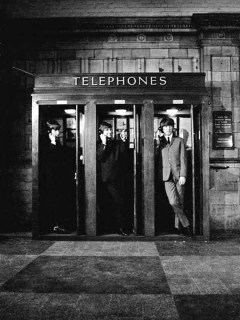
“And that’s the whole joke of it. After it all came about we all phoned [Neil Aspinall] individually, saying things like, ‘Could you get them together.'” — Paul McCartney, Jan. 7, 1969

Paul relates a story of every Beatle phoning Neil Aspinall individually, with each asking the Apple Records manager and band confidant to reassemble the group.

“Instead of asking each other, we went to Neil asking what are the lads doing. You know, we should just have it out.”

It’s a damning indictment of where the band’s interpersonal communication — a reflection of their desire — stood post-White Album in late 1968, before the sessions at Twickenham would even begin.

George steps back into the conversation with a key admission and seemingly parameters for an endgame for the Beatles.

George: Like you said, ‘Well I’d like to do this, this and that. And I’d like to do this … and I’d like to do that, and I’d like to do that. And we end up doing something, again, that nobody really wants to do.

Paul: If this turns into that, it should definitely be the last for all of us. Because there just isn’t any point.

MLH: That would be sad, as an audience.

Paul: It’s stupid. But it’s even more stupid the other way. To go through it.

George: ‘Cause this time you could using for what you want to be doing: creating, instead of doldrums, which it always is.

The word struck a nerve with Lindsay-Hogg, who was keeping a diary of his recent experiences.  “‘Doldrums’ is the word I used. The doldrums have been coming like to a ship on a calm sea.”

“The Beatles have been in doldrums for at least a year,” George says.

Thus, at least to George – and no one disagrees – The Doldrums include the launch of Apple, the trip to India and the entirety of the White Album sessions, and could well stretch back into late ’67. How about Aug. 27, 1967, when Mr. Epstein died, as the genesis?

Today, Lindsay-Hogg – only seven months John’s senior — opts to step into that vacuum as manager/father figure.

“We all need you,” Lindsay-Hogg says as George cheekily accompanies him with an off-the-cuff rendition “What the World Needs Now is Love” in the background. “And it is communication. If you all can’t get it together, that’s really very sad. Maybe what we should do now is let you play a little and you all have lunch together.

“So should we leave you for a while?”

(The lengthy discussion leading up to this point, as covered in the last few posts, was distilled down to a few minutes in the 2021 Get Back docuseries in the January 7 segment).

With Lindsay-Hogg gone, the group fiddles around, seemingly ready to begin the day’s work, musically. Then George steps in and steps up for himself.

“What I was saying about the songs is … I’ve got about 20 songs from 1948, because I knew very well at the moment I’d bring them into the studio that [splat sound] there its gone. And slowly I can bring a couple out because I can get it more like how it should have been then.”

“It doesn’t matter what’s going wrong as long as the four of us notice it,” Paul says as George, now incredulous, sure thinks it does matter what is going wrong as he’s so often wronged.

“And instead of just noticing it, to turn it to put it right,” Paul finishes.

But George is done.

“We should have a divorce.”

Paul admits he’s almost done.

“Well, I said that at the last meeting. But it’s getting near it.”

A deadpan John — mostly silent in the exchange so far — injects a laugh line, asking in the context of the divorce, “Who’d have the children?”

“Dick James,” answers Paul, referring to Northern Songs’ co-owner. (The music publisher would, coincidentally, make an in-person appearance at Twickenham about 72 hours later, immediately before George left the group).

Paul gets in one final point, and directs it squarely at John. He would have liked more input beyond the well-timed zinger.

Just because it’s so silly of us at this point in our lives to crack up. It’s just so silly, because there’s no point. We’re not going to get anywhere we want to get by doing that. The only possible direction is the other way from that. But the thing is, we’re all just theoretically agreeing with it, but we’re not doing it.

You’re doing it with your thing with you and Yoko. But it’s silly to come in and [be] talking down to us, when actually your way out is not to talk — rather than talk down to us, which you’d have to do. And you wouldn’t. And remember, I think I’m talking down to you, too. … We’re sort of talking down to each other.

George wants a divorce. Paul is desperate for John to show up. Nobody wants to be there and they’re running out of time to salvage what time they’ve already spent working on their product at Twickenham.

This moment, right here on Jan. 7, would be the moment that would make the most sense for the Beatles to break up, go on hiatus, something, anything. Everyone’s tugging at the band-aid. But no one is willing to provide the last rip.

All the arguing, backbiting, rash decisions they would be so well known for in their eventual breakup wasn’t second-nature yet. So they do the only thing that really is: play music together.

“OK,” Paul continues, and picking the song most obvious to begin with. “‘I’ve Got a Feeling.’ One-two-three-four…”

And John immediately goes into “She Came in Through the Bathroom Window,” as the take quickly breaks down in laughter.

“How does it go?” John asks.

And then, astoundingly, the day’s sessions begin in full, starting with about 20 minutes (on tape) of “I’ve Got a Feeling.”

What on earth to make of all of this?

Having “compared it to a marriage a million times” (John, from 1976, as quoted in the “Anthology” book), it stands that the band’s ultimate split would be a “divorce.” George asked for it Jan. 7, 1969, and eight-plus months later John would ask for the same thing.

“I want a divorce, like my divorce from Cynthia,” John is famously quoted as saying late September 1969 in Phillip Norman’s “Shout!”  “It’s given me a great feeling of freedom.”

The Beatles were Paul’s band, by the time they were at Twickenham, after first being John’s. The Beatles weren’t George’s — as critical and brilliant he was — and thus it wasn’t his place to ask for a divorce. He could just leave — which he would a few days later — and in that way he absolutely held sway over the band’s future, engineering Billy Preston’s arrival and the shift into cozy 3 Savile Row. Conceding to George things nobody else was wed to but having him in the Beatles beat not having George in the Beatles. But there was no getting around his junior membership, in a sense.

Even in suggesting a divorce, George was immediately met with Paul basically saying, “Me too.” But since Paul wasn’t ready and John was silent on the issue, the divorce wasn’t going to happen.

It’s clear the group’s momentum and motivation as things stand on Jan. 7  is founded on nothing. It sounds as if getting anything done post-Sgt. Pepper was a miracle.  Epstein is missed, and it’s become plainly obvious. Based on their brutal descriptions of the White Album sessions, it’s amazing, in retrospect, they finished the LP, much less recorded as many songs as they did for as many months as they did.

Paul’s right — these guys are indeed “on their own at the holiday camp.” They’re four men pushing 30 who don’t know life beyond the extremes of childhood and being a Beatle.  A day earlier, in the wake of the “I’ll play if you want me to play” argument, it sounded like it was an option for the group to remain as one in name, at least. Now, even that seemed out of reach.

The Beatles reached a pivot point on Jan. 7 to commit or bust, and, against all reason based on their arguments, they chose to commit.  To what, nobody seemed to know.

28 Comments

Filed under Day by day

Jan. 7: On their own at the holiday camp

Some time passed on the morning of Jan. 7 between when “Get Back” made its debut and when Paul McCartney, George Harrison and Ringo Starr — plus director Michael Lindsay-Hogg and John Lennon, who had just arrived for the day’s sessions — returned to the much-needed discussion of what exactly they were doing at Twickenham Film Studios.

The arguments of the day before that culminated in George’s “just want to please you” line may be the moment etched in cultural history of these sessions, but the next 45 or so minutes did far more to define the vibe at Twickenham.

The tapes pick up the discussion already in progress, but the message and motive is clear: There’s a serious movement to abandon the documentary and live show, and, by extension, these sessions, which are only just beginning its fourth day.

From the Get Back book.

From the Get Back Book.

“If we cancel the show now, we’d still be throwing it away,” Paul said. “That’s the way we tend to do (it)… that’s where all the money goes.”

Lindsay-Hogg tries to rally the troops, suggesting the worst-case scenario is the group is left with a documentary, which is something the group could still sell, since money is being made something of an issue here by George.  John agrees, saying a documentary of the group making an LP isn’t the worst if they can’t find a gimmick for a show.

With big dreams of an African adventure still flickering, Lindsay-Hogg continues to insist there should be a show anyway. He’s not crazy about the term “gimmick,” either.

Very quietly, George shares something every Beatles fan knows in retrospect when we look back and put the pieces together.

George: Ever since Mr. Epstein passed away, it hasn’t been the same.

Paul: We’ve been very negative since Mr. Epstein passed away. That’s why all of us,  in turn, have been sick of the group, you know? There’s nothing positive in it.  It is a bit of a drag. But the only way for it to not be really a drag, is for the four of us to say, “Should we make it positive? Or should we fuck it?”  There’s only two alternatives, innit?

It’s a fascinating exchange for several reasons, starting with how they refer to their former manager. Both Paul and George still call him Mr. Epstein, not Brian, nearly a year and a half after his death. The formality of the business relationship never broke.

More of note is not only the ease at which they’re willing to discuss their current state and lack of motivation, but how severely Paul views the band’s state. There’s “nothing” positive in it. And so we’re at the group’s climacteric moment.  These four men seem ready to walk away from at least their present phase as a four-piece. Now’s the time to find a new way of continuing as a band, return to the old way they would record and perform together or just walk away. It’s a distillation of the same conversation they had the day before, but spoken with more urgency.

It bears repeating — this strife and breakup talk isn’t at the end of a grueling, unhappy month, or after a several weeks of early mornings on the cold Twickenham soundstage, as the fable of the Get Back sessions relates. This is after the group has been back together in January for a period that can be measured in hours.

John — lacking sleep, sobriety or both — simply suggests the group just needs a little incentive.

“All the things that we do, the whole point of it is communication. And to be on TV is communication. We have a chance … to smile at people, like (in the broadcast for) “All You Need is Love.”  So that’s my incentive for doing it.”

With John referencing another Beatles television production, the director’s wheels begin to turn.

MLH: Both “All You Need is Love” and  (his own production) “Hey Jude” did communicate.

Paul: Of course, they did, course they did.

John: We need to think of an incentive, the inventive is to communicate.

Paul: You know, there really is no one there now to say: Do it.

And thus we return to Mr. Epstein’s ghost. No one is there to make them get up at 8 a.m. now, Paul says. They have to get themselves up at 8.  And this is part of growing up.

These men range in age from 25 to 28 at the time of these sessions and have been professional musicians since their teens.

“Your daddy goes away at  certain point of your life, and you stand on your own feet,” Paul continues. “And that’s all we’ve been faced with. Daddy’s gone away now, and we’re on our own at the holiday camp. And I think we’d rather go home.

“Or,  we do it.”

So it’s crystal clear to Paul here, he’s fighting uphill. The fresh lyrics of “The Long and Winding Road” are playing out moments after he introduces the song. This here is one of the many times he’s been alone.  And he’s still waiting by his bandmates’ door.

Paul continues.

It’s discipline we like. We all agree — for everything you do, if you want to do it well, you got to have discipline, we all think that. But for this, we’ve never had discipline. A slight, symbolic discipline by Mr. Epstein. And he sort of said, ‘Get suits on,’ and we did … And so we were sort of always fighting that discipline a bit.

But now it’s silly to fight the discipline because its our own self-imposed, these days. So we put in as little as possible. But I think we need  bit more if we are going to get on with it.

Lindsay-Hogg acknowledges the decision to work at all is the group’s, not his own, but that they have indeed started work and should maximize it.  Paul, meanwhile, equates what Lindsay-Hogg is dealing with to his own work on the Jackie Lomax LP.

“Any other director in the world would say, ‘Fuck off. Get off my set, you cunt.’ I mean, wouldn’t you?” Paul asks. “I couldn’t operate. … if Jackie in the middle of the album said he won’t do it, (we) wouldn’t have the album.”

Paul suggests to George that the group used to “do it,” be “fully switched on.”  And he hearkens back to their feature film career.

“Those films, look at it, that was us doing it.”

“Well, if that’s what doing it is, that’s why I don’t want to do it,” George retorts. “I never liked that.”

Like the day before, George’s matter-of-fact, deflating response draws a pause followed by nervous laughter and a stammered response.

Paul (talking over George):  See nowadays, you’ve grown up and you don’t have to do that anymore. You don’t have to put the pancake on and go out in front and sweat and shake our heads because we’re not that anymore. We’ve grown up a bit.

George: And we’ve done that anyway.

Paul:What I mean is, we did it, the but it doesn’t mean to do it again means to do all that. For him (John) to do it, he has to do a thing in a black bag with Yoko. And you’re doing it.

Several voices correct Paul.

“White bag,” he says.

“You know you’re doing it then, on this level.”

Paul’s argument, that doing something is tantamount to doing “it” isn’t flying. Lindsay-Hogg changes course and questions just what the Beatles are, circa January 1969 and what is it, since we’re talking about “doing it,” that  they really want to do?

“But do you still want to perform to an audience?” he asks. “Or  do you just see yourselves as a recording group.”

That’s a simple enough question that really does cut into their motivation, not only for these sessions but for their own reason for existing at this late stage in their career.

And its a question we hope to answer next time here at They May Be Parted!

15 Comments

Filed under Day by day

TMBP Extra: Fête accompli

Author’s note from July 6, 2017: I originally wrote this several years ago. Unlike the other posts on this blog, to which I try to limit any changes, I’ve come back to this one a few times, rewritten some parts, tweaked others, in an effort to more clearly bring things into a fuller circle.  

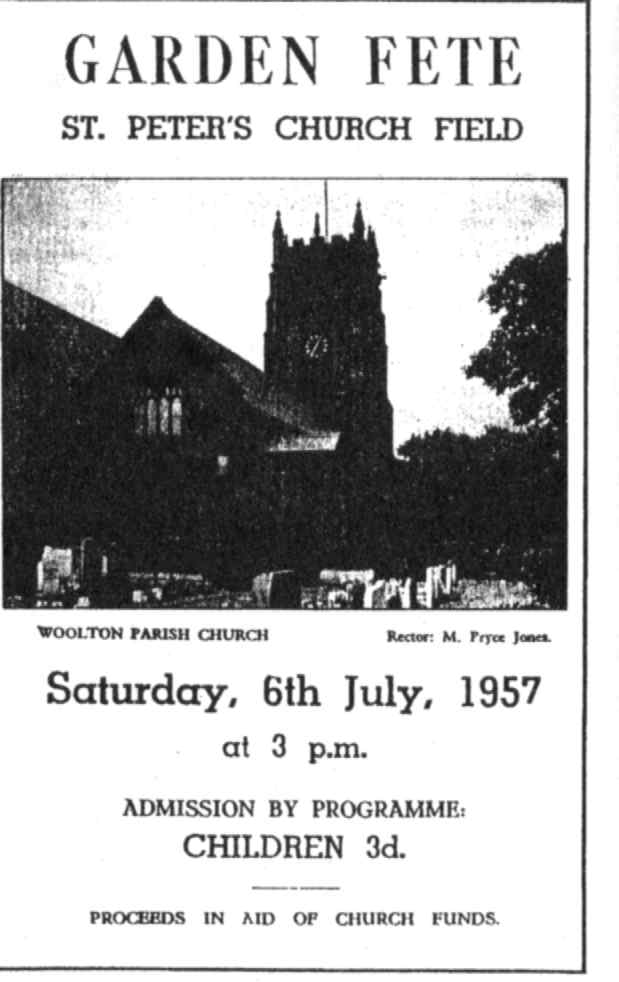
There’s obviously no need to overstate the importance of July 6, 1957, to any reader of this blog. It’s the day John Lennon and Paul McCartney met after John’s Quarrymen played the Garden Fête in Woolton, and thus, everything changed in this world, and for the better.

First, a quick recap of that day, via the Beatles Anthology DVD. Take it, Paul!

For fun, here’s the story as portrayed in Nowhere Boy:

Let’s get back to reality and what the Quarrymen really sounded like that day, from authenticated tapes recovered decades after the fact:

There simply can’t be a more important moment in Beatles history than the birth of the Lennon-McCartney partnership. Everything came from that, not the least of which was Paul soon introducing George Harrison to John. But that’s another story.

Mark Lewisohn dedicates an entire short chapter to July 6, 1957, in his indispensable extended edition of his Beatles biography Tune In, vastly expanding upon any basic retelling of the Lennon-McCartney origin story and going so far as to tease the possibility the two actually first met — without any guitars — prior to the fête.  But no matter what happened before that day, Paul taking the initiative and confidently performing “Twenty Flight Rock” for John was the moment that mattered.

And it wasn’t merely that Paul could play “Twenty Flight Rock.”

“The thing I think that impressed him most was I knew all the words,” Paul said in the above Anthology clip.

The Beatles never covered “Twenty Flight Rock” — Paul eventually would on numerous occasions solo and with Wings — but they did give it a nod amid the Get Back sessions, on Jan. 23, 1969, by which point the recording had moved to Apple HQ at Savile Row.

More than 11 years after Paul played the song for John — impressing him enough to begin their partnership —  and some months from the last time John and Paul would work together again, Paul couldn’t quite remember the words. At all.

Alas, the elevator’s indeed broken down. There’s not too much magic to the light-hearted clip, although it’s nice to hear Billy Preston, and George’s solo is pretty good. But no longer is Paul playing the song to impress John. In so many ways, it was Paul’s group at least as much as John’s by then.

1 Comment

Filed under Extra

Jan. 6: Et cetera

What a day!

Six hours of tapes that inspired 12 posts — and this one makes it a baker’s dozen. Some songs are introduced, others tortuously rehearsed and the proposed live show is discussed at length for the first time.

So before ripping off the desk calendar page and welcoming Jan. 7, 1969, I wanted to tie up some loose ends and look at a few songs and moments that were important enough to mention but not so much to warrant standalone posts.

One After 909” wasn’t the only unlikely John Lennon song resurrected in the first few days of the sessions. “Across the Universe” was recorded 11 months prior — a pre-White Album contemporary with “Lady Madonna,” “The Inner Light” and “Hey Bulldog” — and sat finished but not yet released as of January 1969.

There’s more than enough to say about the song at this point to justify its own post — and it will. Once the song has a more prominent role, in the next day’s session, I’ll do more than offer this brief mention.

While George had introduced other songs,”All Things Must Pass” remained the primary Harrisong to this point the band was rehearsing. Jan. 6 saw just a smattering of takes running about 20 minutes on the tapes, barely memorable. Frankly, the song sounds like a dirge at times thanks in part to John’s unimaginative organ droning.

It’s such a great song, and I keep telling myself — “This is The Beatles doing ‘All Things Must Pass,’ for heaven’s sake” — but I don’t find myself caring, which pretty much puts me on par with the rest of the group. That sentiment was encapsulated in a brief exchange at the end of what would be the day’s final run-through of the song.

Paul: Wanna to do it again, George?

George: Not really.

Simple as that, they moved onto the final properly rehearsed song of the day: “She Came In Through the Bathroom Window.”

This was the song’s introduction to the sessions, and with the day nearing an end, it was a brief one, lasting just 15 minutes on the tapes. The song’s pretty well crafted at this early stage, as far as structure and lyrics. It took only a few takes and just a couple of minutes for the band to pick up the chords and string together a few reasonably decent takes.

It’s nice to hear the voices of George and John deliver harmonies, since we’re used to Paul double-tracked on the recorded Abbey Road version.

Eventual Abbey Road medley mate “Carry That Weight” was a Paul suggestion as a vehicle for Ringo, and he wasn’t alone thinking about giving a song to the drummer. It’s just that Paul was the only one who wrote a song that endured.

John offered up about half a minute of the upbeat “Annie,” which sounds just barely sketched out enough not to be an improvisation. There’s not much meat to the bones, but it’s pleasant enough and very easy to hear Ringo singing it.

Not to be left out, George immediately followed with a new song he likewise said was for Ringo. More fleshed out than “Annie” — or “Carry That Weight,” for that matter — “Maureen” was credited to Bob Dylan, according to George.

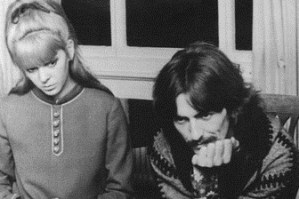
Maureen and George in India, Februrary 1968

Maureen and George in India, February 1968

It’s folky and laid back, and there’s no reason necessarily to think it’s not a product of the November ’68 Harrison-Dylan sessions in upstate New York, if you accept the premise Dylan was writing songs named for Ringo Starr’s wife in George’s style and less his own. As it would happen, George and Maureen did have a lengthy affair, but Pattie Boyd’s autobiography only pins it to the early 1970s. But who knows what was going on before that — I don’t, and I’m drifting badly off-topic in discussing band members’ infidelity.

What the song does do, like so many other random bits of music that passed through Twickenham, is add another curio to sessions replete with such oddities we’d never hear from again.

The group tackled a few covers, but of course they did. It’s a hallmark of these sessions, and a wildly overrated and overstated hallmark to boot.

One of the memorable covers of the day was an oldie they had mastered in the past and was so strongly associated with their live act. Surprisingly, it’s the only time they performed a take of “Dizzy Miss Lizzy” at the sessions, and it apparently happened to be an instrumental (any singing was off-mic, at least). Clunkier and a little slower than the original, if it was ever to be remotely considered for this live show — and there’s no indication it was to be — they’d probably just rely on memory.

The song served as a jumping point for a few other oldies in succession: “Money,” “Fools Like Me,” “Sure to Fall” and “Right String, Wrong Yo-Yo.” (All included in the above clip.)

Perhaps the covers throughout the duration of the sessions could be described as red herrings along with the one-off originals like “Annie” and “Maureen” — interesting merely because they’re rare Beatles recordings, but not nearly as enlightening as seeing the songs we know develop or listening to the fascinating conversation about the live show and the future of the band.

With that, I’ll close the book on Jan. 6, 1969. See you “tomorrow”!

2 Comments

Filed under Day by day

Jan. 6: Please, please you (Pt. 2)

Rehearsals on January 6 — just the third day of the Get Back/Let it Be sessions — deteriorated to the point where The Beatles were arguing about the very nature of rehearsals and the extent to which a song need be complete in order to have a member bring it to the full band to actually bother with run-throughs.

paul-gb-bookWith takes of “Two of Us” under way, Paul’s already defensive, George is already passive-aggressive. And John? Seems like he just wants to run out the clock and get the hell out of there. But at least he’s not showing any desire to have confrontation at this very specific moment in time.

When we last left things, the song — while sounding great to these ears more than 40 years later — was hung up in the intro, outro and bridge (I guess that doesn’t leave a lot, does it?). Paul had just accused George of being annoyed by him and he bemoaned the presence of the cameras. After some silence and noodling by the group, and another remark by John about the opening riff that continues to torture him, Paul repeats his preferred rehearsal style.

Paul: Doesn’t everyone agree that it’s confused at the moment? So all I’m trying to say is, let’s get the confusion, unconfuse it, then confuse it.

It’s what we’ve been doing all afternoon — this is why we’re not getting anything done. We’ve just got [to get] rolling on with it. We’ve only got 12 more days, so we’ve really got to do this methodically, this one. Unconfused, then a bit more confused, then a bit more. “Now try this drumming here, try this drumming there. Now, OK, let’s stop and look into this bit.”

Well, there’s another nice, little revelation. As of Jan. 6, it seems it’s locked in that the sessions will end Jan. 18 — or, if we’re adding in weekends, make it the 21st or 22nd (depending on whether the 6th counts against that 12 days). Presumably this is how long they’ve booked Twickenham. Talk about ambitious. As history would eventually prove, The Beatles would be out of Twickenham much earlier than that, on Jan. 14 – but that would be a direct result of George leaving the band before rejoining on a condition they abandoned the soundstage for Savile Row.

After Paul’s repeated plea to simplify first, John jumps in, almost as comic relief, continuing his complete fixation on getting out of playing the opening galloping part on guitar.

“I’ve got an idea,” John graciously offers. “I should vamp, because I’ve got to sing, and it’s hard going. But it’s annoying” (and he plays the opening riff).

George fools around on guitar over a bit, making dialogue hard to pick up, until things get clearer in this next exchange.

Paul: I’m trying to stop us all playing until we know what we are playing.

George: But you got to play in order to find out which fits and what doesn’t.

Paul: I’m thinking … we’re improvising the solos, but we play strict chords and strict rhythms around the vocals… I don’t want to say, ‘cause I really just hear myself the only one saying it. All this time…I don’t, don’t get any support or anything…you know its right, and you know its right. (He’s presumably talking to George and John).

John: OK, so I just don’t know what to do about it.

George: I’ll wait until you get your bits and then work my part out if you like. It’s like a matter of working it out with you while you’re working your bit out. You know if you got your bass bit, you know… it will take even longer.

Paul: I’m not trying to say to you, you’re doing it again as though I’m trying to say, and what we said the other day, I’m not trying to get you. What I really am trying to just say is, “Look lads” — the band, you know — “should we try it like this,” you know?

George: It’s funny now how I don’t even care.

It’s amazing honesty from George. He, for one, doesn’t seem to care at all about the cameras capturing the proceedings.  But alas, the tone he spoke in was somewhat mild (and who knows what the visual was) so I can see how this didn’t end up becoming the killer line chosen for the film, like “whatever it is that will please you” became.

Meanwhile, Paul’s showing no hesitation in calling out George and John, both, in saying he’s alone in keeping things afloat. Really, for all of Paul’s flaws, he’s kind of right here about the situation. There does seem to be a bit of cart-before-the-horse when it comes to running through the songs.

And as Paul continues, not skipping a beat after George’s dismissive comment, he goes back at George, reminding him of a recent exchange the two had over a song.

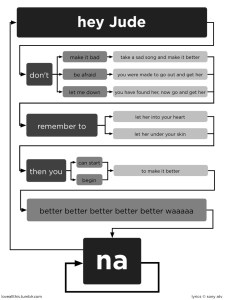
Paul: This one, it’s like, “Should we play guitar through ‘Hey Jude’? No, I don’t think we should.”

(loveallthis.tumblr.com)

(loveallthis.tumblr.com)

More than 40 years later as I write this, it almost seems like “Hey Jude” was from a different generation of Beatles than the ones arguing their way through the Get Back/Let it Be sessions. But on Jan. 6, 1969, where we are today in this blog’s current timeline, it was a song recorded less than six months prior, released a little over four months earlier and had just dropped out of the UK Top 40 three weeks prior.

It’s a funny thing how prevalent the ghost of “Hey Jude” was at the time of the Twickenham sessions. The song’s sessions were easy, with rehearsals beginning July 29, ending Aug, 1. The experience of the song’s video shoot – done at the same Twickenham — helped encourage the band that the time was right to perform in front of live audiences. And like these sessions, “Hey Jude” was ultimately recorded away from the safe and familiar confines of EMI Studios at Abbey Road (where they recorded what turned out to be more rehearsals than real takes), and instead at Trident.  And if outtakes are any indication, it was a pretty upbeat affair.

Thus, the experience recording the song — which happened smack in the middle of the White Album sessions — was fresh at the time of the Get Back/Let it Be sessions. Paul and George had just been discussing how much they liked Wilson Pickett’s cover version just three days prior.

So what was Paul’s beef with George on “Hey Jude”? Here’s what he has to say sometime in the 1990s, as captured to print in the Anthology book:

On “Hey Jude”, when we first sat down and I sang ‘Hey Jude…’, George went ‘nanu nanu’ on his guitar. I continued, ‘Don’t make it bad…’ and he replied ‘nanu nanu’. He was answering every line – and I said, ‘Whoa! Wait a minute now. I don’t think we want that. Maybe you’d come in with answering lines later. For now I think I should start it simply first.” He was going, ‘Oh yeah, OK, fine, fine.’ But it was getting a bit like that. He wasn’t into what I was saying.

In a group it’s democratic and he didn’t have to listen to me, so I think he got pissed off with me coming on with ideas all the time. I think to his mind it was probably me trying to dominate. It wasn’t what I was trying to do – but that was how it seemed.

This, for me, was eventually what was going to break The Beatles up. I started to feel it wasn’t a good idea to have ideas, whereas in the past I’d always done that in total innocence, even though I was maybe riding roughshod.

I did want to insist that there shouldn’t be an answering guitar phrase in ‘Hey Jude’ – and that was important to me – but of course if you tell a guitarist that, and he’s not as keen on the idea as you are, it looks as if you’re knocking him out of the picture. I think that it was like, ‘Since when are you going to tell me what to play? I’m in The Beatles too.’ So I can see his point of view.

But it burned me, and I then couldn’t come up with ideas freely, so I started to have to think twice about anything I’d say – ‘Wait a minute, is this going to be seen to be pushy?’ – whereas in the past it had just been a case of, ‘Well, the hell, this would be a good idea. Let’s do this song called “Yesterday”. It’ll be all right.’

What we see here is pretty obvious: The Get Back/Let it Be sessions have been tarnished — demonized even — in part, because we actually can hear everything that happens thanks to voluminous bootlegs. Good luck finding a recording George and Paul arguing over the “Hey Jude” extra guitar part.

So in the Anthology excerpt (among other places, like in Barry Miles’ “Many Years From Now”), Paul does a pretty good job here giving what seems like an honest presentation of what was happening in 1968-69. And nearly 30 years after the fact , he was still able to run through the specifics.

And it was Paul’s reflection — This one, it’s like, ‘Should we play guitar through ‘Hey Jude’? No, I don’t think we should.'” — is what directly prompted George to spew “I’ll play, you know, whatever you want me to play.”

More from the “Two of Us” rehearsals, including George finally uttering that line I keep on going on about, coming up in the next post!

23 Comments

Filed under Day by day