Tag Archives: John Lennon

Jan. 6: Please, please you (Pt. 1)

It’s a passive-aggressive greatest hit.

And it’s the highlight of the series of posts — which gets under way here — I was most eager to write before I heard a minute of the complete tapes.

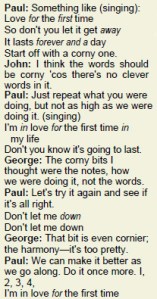
George to Paul: I’ll play, you know, whatever you want me to play, or I won’t play at all if you don’t want to me to play. Whatever it is that will please you… I’ll do it.

Having just heard the band make their way through a somewhat torturous rehearsal of “Don’t Let Me Down,” the context is finally here of just why George was ready to snap at Paul. But it’s a long and, well, somewhat direct road to get to “whatever it is that will please you,” and the tension isn’t one-sided as the group pivots to Paul’s “Two of Us,” an ode to his bride-to-be, Linda.

please youIn listening to the entirety of the “Two of Us” tapes, Paul’s ready to jump at anyone, feeling quite on the defensive. John, for one, doesn’t take the bait. And in fact, as the session for the song goes on, John actually attempts a bit of a peacemaker role once things begin to boil between Paul and George. But that comes later. George, on the other hand, is quite ready to share his feelings with Paul.

Musically, the song isn’t too much different than it had been before they broke for the weekend, on Jan. 3. It’s upbeat, and completely electric at this point. But like the final version, it’s a Paul-John duet. The first take of the day, straight from the top after they had moved on from “Don’t Let Me Down,” breaks down seconds in when John asks if he’s supposed to be singing.

Paul: Melody. You’re supposed to remember the words, too.

John: Yes, I’ve got them here.

Paul: But learn ’em.

John: I almost know ’em.

And we’re off and running! Just another 50 or so minutes of remaining rehearsals of “Two of Us” — and arguments — to go. Fasten your seat belts.

The tension never lets up — getting to “whatever it is that will please you” was inevitable.

Paul references past Beatles songs a number of times during the rehearsal, beginning with an early run-through, when he dictates to George that the guitar part during the verses should sound “like that bit in ‘Getting Better All the Time'” (meaning the staccato guitar part opening the song and that plays throughout).

After subsequent noodling around with the song, Paul tries to restore order and get down to actual business, in the orderly, McCartneyesque manner we’ve come to know and love/hate.

“OK, come on, come on,” Paul says to the group with a headmaster’s tone. “Let’s get it so we know it simply, and then we can add. We don’t know any one [song] yet straight. We keep trying to get to the bits.”

This is indeed true through the first few days of the sessions. “Don’t Let Me Down” is dragged down by the bridge. “I’ve Got a Feeling” isn’t quite right yet. “All Things Must Pass” is very much a work in progress. “Maxwell’s Silver Hammer” isn’t finished yet. You get the picture. Only “One After 909” – written more than a decade earlier, despite the slower arrangement, and born in these sessions out of an oldies jam – was in game shape.

Another pass at “Two of Us” and things break down as they enter the first bridge (“You and I have memories…”). So it’s time for a band meeting (Ringo, the passive drumming robot, says nothing throughout).

Paul: We’re going to have to sort of bring it together, because we’re all at odds. We’re doing that thing we did on The Beatles — we’re all playing, you know? Like in this verse, it’s two harmonies singing, trying to say some words, right? So it’s just… (he vocally apes a guitar vamp ). And in the bits when we need bits….

John: I’m just trying to sing it and do this thing (he plays the guitar part played during the “We’re on our way home” line).

Paul: We’ve got to get the riffs when the riffs bits come in.

George: The riffs… There’s no riffs. It’s nice just to get what you’re playing. (George then starts to sing “You and I are memories…”)

Paul: But it’s not together, so that it’s not sounding together.

George: So we keep playing until we…

Paul: Or, we can stop and say it’s not together.

George: Yes, then you’ve got to carry on until you get it together. It’s all right to keep playing until it sounds like it’s blending with the rest.

Paul: I never know what to say to that, you know? ‘Cause what I want to say is, “Now, come on,” and play, but I can’t, I know. You know, and we get into that one. OK.

They’re not talking about what sounds good, what words work or don’t or the like. This is a debate about the philosophy of how to rehearse. We’re in uncharted territory. These four men are writing a record on the spot, under strict time constraints to get these songs in working order for a show that’s going to happen at some unknown locale, and very soon.

You’d think this kind of thing would have been hashed out, but then again, why would it? When they last toured, in 1966, they played about a dozen songs — nothing brand new, and some songs they’d been playing for many years. They knew the songs inside and out, plus they weren’t writing anything special for the tour or struggled under the pressure of the clock. And when they last brought new songs to the table — a few months earlier for the White Album sessions — they didn’t have the pressure of the live show.

There’s a bit of nervous laughter from Paul before he continues to offer a logic he repeats numerous times over the “Two of Us” sessions this day.

Paul: … It’s complicated now. See, if we can get it simpler, and then complicate it where it needs complications, but it’s complicated in the bit.

George: It’s not complicated.

Paul: But, I mean, you know.

George: I’ll play just the chords if you like, and then…

While George is low-key throughout, speaking in completely passive-aggressive tones, Paul grows audibly exasperated.

Paul: No, no, come on. You always get annoyed when I say that. I’m trying to help, you know? But I always hear myself annoying you…

George: No, you’re not annoying. It’s not annoying anymore (or is it “anyone”? Hard to tell).

Paul: … And I get so where I can’t say it. But you know what I mean. Just do this then, and, I don’t know. I can’t do it on film either. I don’t know if we can do it on camera.

Funny, Paul had just said earlier in the day that he didn’t mind being filmed, that the band has ignored the camera from the moment they started filming at Twickenham a few days earlier.

As we see in the 2021 Get Back docuseries, at this point, Paul stands up, and paces around, showing emotion the Nagra tape audio alone doesn’t capture. It’s a clear dovetail between audio only and the audiovisual moment that was very new on first viewing in 2021.
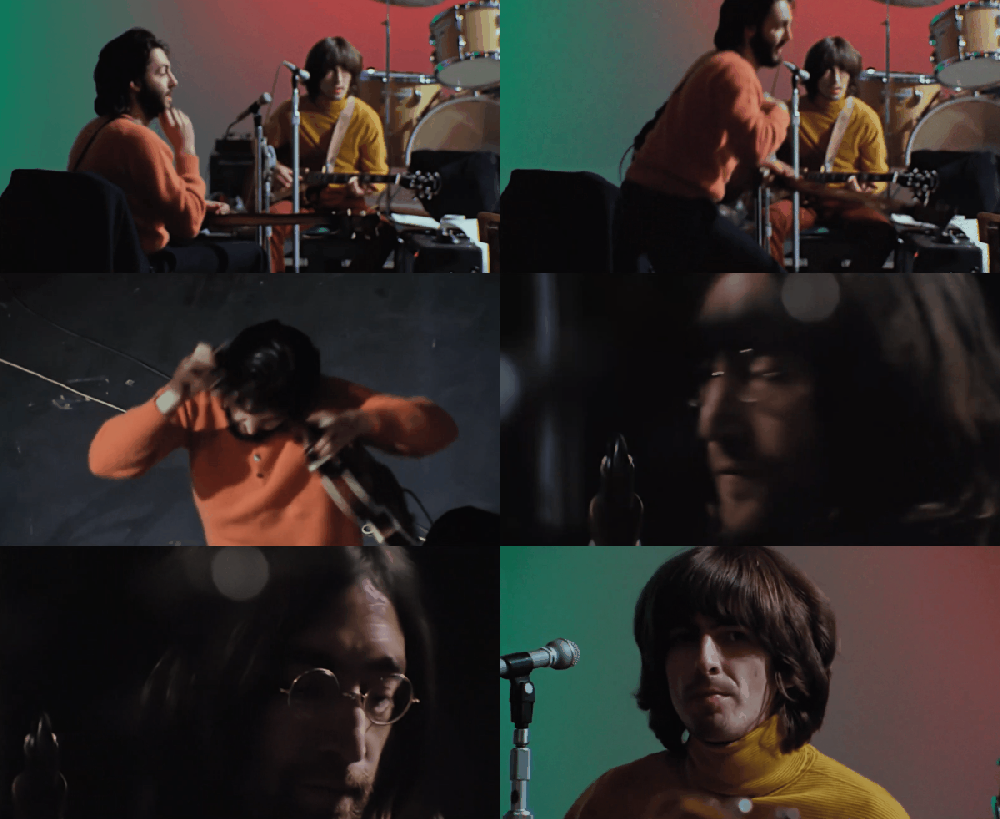
As it would turn out, Paul returned to his seat and would end up having to continue this discussion on camera after all, and it would become one of the iconic moments of the Get Back/Let it Be sessions and the film — behind only the rooftop concert — and truly in the group’s history overall.

The in-depth look at the “Two of Us” sessions on Jan. 6, 1969, will resume in the next post. Coming very soon!
21 Comments

Filed under Day by day

Jan. 6: Cross that bridge (Pt. 2)

When we left the Fab Four in the previous post, the band was continuing the wrestle with the bridge in “Don’t Let Me Down.” To Paul, the section “needs things to happen.”

So he proceeds to ask Ringo for a little bit of stop-and-start drumming, some cymbal play and otherwise suggest ways to demolish the pacing of the song.

John seems to like it, or at least not dislike it. There’s a sparseness to it, and maybe I’m nuts, but I almost feel a little Plastic Ono Band thing happening here (“Hold On” maybe?).

excerpt

Excerpt from the Let it Be book

One thing that’s enjoyable to listen to as they work on this is hearing the isolations — Paul’s bass, George’s guitar. Meanwhile, Ringo’s a robot throughout the rehearsals. He literally doesn’t say a word (that you can hear on the tapes, at least), soaks up Paul’s instructions and basically steps in to lay down the same steady beat each of the 2,549 (approx.) times they try to tackle the bridge this day.

Meanwhile, the tapes cut in and out for an undetermined amount of takes, but it couldn’t have been too long, since they’re still wrestling with the same stuff. Now they’re paying a bit more attention to the instrumentation on the bridge over the vocals. Paul’s looking for more from George in the way of a lead guitar line — overall, not just in the bridge. Soon, John tells George, “We’ve got to keep fiddling around with this bit, so you want a guitar bit. … There’s a point where we’ll to have to concentrate on the guitar for each song.”

But maybe it won’t be now. John gives the band a chance to opt out of the “Don’t Let Me Down” after nearly an hour of not exactly getting very far. “Should we do something else ,then?”

Feel like letting go? Not Paul. “Stick with it,” he replies.

So they continue and struggle with the song’s pace, first going too fast, then overcompensating by going too slow. Things just aren’t getting anywhere. George complains they don’t even know what they’re singing during the bridge —  and they don’t. Tape glitches lose some time, but it doesn’t matter. When we’re back, the rehearsals are in the same state. John doesn’t bother singing the lead vocals straight every time — and there’s no point, it’s the same vocals he uses on the final take.

For a moment, they ditch the response vocals and go with simple “aahs” over the bridge, and it didn’t sound too bad. But still a bit superfluous.

So Paul shares what’s on his mind, which is what we all probably figured he’d say anyway.

Let’s do what I said in the first place. Really, just repeat what you’re doing (the response vocals). I think that’s the best. … Not as high as we were doing it.

As we enter the final few minutes of the song’s rehearsals for the day, palpable tension finally arises. George’s general objection is to the weak response vocals and undefined instrumentation in the bridge. Paul replies that “I’m just trying to get a bit we’ll try and sort of go right through. We keep talking about it.”

The next take, they do a call-and-response in the bridge, this time repeating John’s lines: “I’m in love for the first time (I’m in love for the first time)/Don’t you know it’s going to last (Don’t you know it’s going to last)…etc.

George still objects, and makes no bones about it, saying,”I think it’s awful. …  it’s terrible.”

Paul and John both fire back, speaking over each other:

John: Well, have you got anything to supplant it?

Paul: OK, you’ve got to come up with something better, then.

George makes a suggestion to the guitar part/harmony (they’re being played together) that Paul calls “just too pretty,” which is interesting on so many levels — although among them that it’s true.

They can’t get through a take of the bridge before things break down. George keeps offering up little tweaks, but Paul doesn’t want to be slowed. Now, at least.

Paul: We make it better as it goes on.  … We’ve just gone around like for an hour with nothing.”

George: [We’ve been just trying different] permutations.

Paul: I know, but let’s sort of move on now.

John: I’d like to hear any of them right once.

More stumbling through takes and Paul and John reach agreement on how the bridge should now sound, at least the lyrical combination. It’s a mixed message to George, too, since literally moments after saying it wasn’t the time to tweak the bridge, he decides it, in fact, is.

Paul: When [John sings] “Don’t you know it’s going to last,” we sing, “It’s a love that has no past.” Then we repeat “It’s a love that lasts forever” exactly, and then when you sing “It’s a love that has no past,” we sing “It’s a love that’s going to last.”

George JohnGot that?  Not sure John did or really cared — he’s let this aspect of the song be managed by Paul all day as it is — but he replied simply “Yes, I agree.”
A pair of broken takes did result, blessedly, in an epiphany and a solution that stuck.

“Forget the last line,” George said right after doing just that and playing the song’s opening riff over where they had been shoehorning in a response vocal.

They repeat this part a few more times. We still have the other extra vocals in the bridge, but the riff sticks.

While Paul’s assuaged for the moment — “So that’s near enough for the time being” — John isn’t.

John: We found out that’s the weak bit [the bridge] so we tried putting voices on it. But it’s still down to the rhythm.

Paul: But it was always weak on your guitar. That’s the weak bit of the song.   (It’s unclear here if he’s talking to John or George, or both).

Shortly after that exchange, we’re back after some kind of gap on the tapes, with a fresh attempt at the song from the top. And we clearly lost some discussion, because the bridge suddenly lacks any response vocals — but does retain George’s riff to end the section. This sounds like the “Don’t Let Me Down” we know and love, for the most part, even down to John not quite getting his own vocals straight.

The next (and final) take, we inch even closer, with Paul and George singing harmonies with John, not as a response to him in the bridge.

And with that, the band ends their 80-plus minutes (on the tapes, it was even more in reality) of “Don’t Let Me Down” rehearsals on a high note. May not have been the classic “eyeball-to-eyeball”  collaborations John and Paul would do — especially with George so deeply involved. But clearly, even though it wasn’t exactly cordial, it worked. “Don’t Let Me Down” was a better song 80 minutes after they started rehearsing.

Paul then announces the next song they’ll try to work on —  “Two of Us Going Nowhere On Our Way Home” — and we’ll find out soon enough just how much George wants to please him.

13 Comments

Filed under Day by day

Jan. 6: Cross that bridge (Pt. 1)

After basically ceding to Yoko his creative role in the band’s decision-making over the live show earlier in the day, John Lennon regains a tiny bit of authority by leading the group through a lengthy rehearsal of “Don’t Let Me Down,” one of the primary songs the band has taken on thus far.

jlWell, he regains authority at the outset, at least, during a stretch that provides the first real look at the discord between band members that helped define the Get Back/Let it Be sessions.
On the A/B tapes, Jan. 6 rehearsals for “Don’t Let Me Down” run in a straight shot for nearly 90 minutes, easily the longest stretch they spent on any one song this day. The structure of the song is set and doesn’t change from what will eventually be pressed to vinyl. It’s a delightfully simple song, both in lyrics and structure. But they’re not happy to leave well enough alone quite yet.

Things kick in with the song already under way in what’s labeled as Track 6.62. Shortly into things, John asks to work on what he calls “the worst bit” — the song’s bridge. (“I’m in love for the first time…”).

Now, it’s absolutely granted that the band has a hard time working together, and that didn’t just begin on January 2, when they convened at Twickenham. But at least from the relative beginning of the sessions, they’re trying. An example of that comes right here as John wants the help on the bridge, asking openly, “What can we do to that bit, then?”

George says he likes the vocal line and harmony, it’s just lacking in some color as far as the fills in between. He suggests a rhythm change, while John replies, “That’s where the piano would come in.”

Good stuff! Collaboration!

Paul scats some falsetto to alternate with John’s lines, and George fiddles with some guitar fills. It actually sounds kind of nice with John on an acoustic guitar, but overall nothing overly impressive. But hey, it’s a work in progress. There were probably lots of bum attempts at things over the prior decade of Beatles in-studio fiddling, right? We just have these extensive rehearsals on tape, whereas we don’t have a zillion hours and hours of them wrestling with, say, “Nowhere Man.”

Paul takes things a bit more into his own hands, instructing George to join him in the vocals, and telling him just what to do.

Paul offers up his falsetto part, then gives explicit suggestions for the responses.

John: I’m in love for the first time

Paul’s suggestion: Love for the first time in my life

John: Don’t you know it’s going to last

Paul: So don’t you let it get away (he soon changes it to “Not going to let it get away”)

John: It’s a love that lasts forever

Paul: It lasts forever and a day

Paul goes onto explain that “corny’s all right in this one. What he’s [John] doing is corny. That’s the thing that will make it not corny, we sing different different words.”

I’d question the logic (and lyrical interpretation) there, but hey, Paul’s track record in writing hit songs is a lot longer than mine. The last song he referred to as “corny” was “Maxwell’s Silver Hammer” a few days earlier, and I think it’s safe to say they’re quite different birds. I do think he says it affectionately, at least.

George says something that’s not quite on mic, to which Paul, clearly trying to blow him off, says “OK, well, we’ll do that, that comes later. Just sing it straight first.”

The next stab at the bridge has George doing the “part that moves” that Paul had just suggested, sounding a bit Band-ish, which isn’t too much of a surprise at this point. At the same time, there’s a slight “Revolution 1” vibe here, where the “shooby-doo-wops” punctuate the chorus. I guess it works, but it definitely changes the feel of what we know as “Don’t Let Me Down” — John in fact likens the work in progress to “something like the Drifters.” (We’re still a few weeks away from the Beatles actually covering the Drifters).

They continue to run through the bridge, Paul directing.

Paul : The thing is, sing the one I’m doing, and we’ll improve upon it. Start off with a corny one, because the words aren’t that good. (Here, he’s referring to his response vocals, not John’s main ones).

John: I think the words should be corny, because there are no clever words in it.

I guess he’s right — it’s a straight rock song with deeply honest lyrics (and his first song written for Yoko, I believe), no interpretation necessary. This isn’t “I am the Walrus” or “Lucy in the Sky with Diamonds,” lyrically. So I don’t think he meant it as an insult to the song. But I guess I’m surprised John would want to muddy up a song like this.

More run-throughs, and John still isn’t satisfied, at one point saying, “Maybe I should play piano … just to change it.” George talks about using some pedals so it “doesn’t sound like the same old shit,” — but John says “I like the same old shit, if it’s clear.”

“Just think of some riffs,” Paul suggests to George, as we see today’s first real signs of a little bit of the big boys ganging up on the perceived help.

And so they continue, with one of the takes briefly immortalized at the beginning of the “Let it Be” film (it’s taken from 6.67 on the tapes).

Of course, in this edit, the band goes straight into the Jan. 3 Maxwell’s Silver Hammer performance. In reality, they churned on, with Paul thinking the answer to the seemingly busted bridge is to change the rhythm.

“This needs this,” Paul insists. “It needs things to happen.”

Just what does happen? Find out soon in Part 2!

15 Comments

Filed under Day by day

Jan. 6: Here comes the bird king

Maybe all the Cream talk got the band in the mood to jam.

With the third day of rehearsing during Get Back/Let it Be sessions (for the record, we had heard “Let it Be” thus far, but not “Get Back”) under way, once everyone was settled in — and not to long after after George introduced “Hear Me Lord” on the tapes — the Beatles basically started fooling around, tuning and warming up with everyone position. Presumably: Paul on organ, John on bass, George on guitar and Ringo on drums.

And then they jammed.

Jams — and lengthy ones — weren’t unprecedented for the band, certainly — witness “Helter Skelter” and the legendary 27-minute version and various takes of “Revolution 1,” recorded just a few months earlier, or the much shorter  Take 37 of “Something” from a few months later. And pretty soon, we’ll hear the original lengthy version of “Dig It.”

I like my Beatles in 2- to 3-minute increments, for the most part (“Hey Jude” notwithstanding). But hey, it’s the Beatles. I’ll take a 10-minute improv jam by them over one by mostly anyone else.

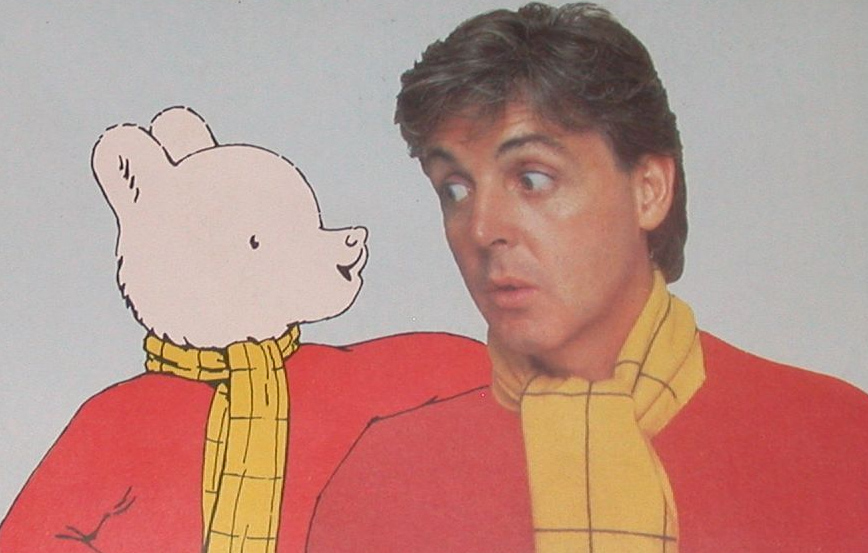
While most serious fans know these sessions birthed songs that would later appear on Abbey Road and multiple solo Beatles albums, one song debuted in these sessions that I didn’t previously know would end up as an outtake on, of all things, Paul’s unreleased (but bootlegged) Rupert the Bear film soundtrack.

So let’s give a very special They May Be Parted welcome to “The Palace of the King of Birds.”

Slowly the group joins in, plodding along for more than 10 minutes. It’s not unpleasant, but it’s probably the kind of thing you’d never deliberately put on a playlist to listen to again. Paul and George spend the first few minutes of the song chatting with each other about equipment. Ringo does his thing. John throws in a riff or two. Paul’s active a little at the start and then a bit at the absolute end.

It’s actually not the last we hear of the song these sessions. But I think it’s the most extensive version. And the Beatles didn’t return to it after January 1969.

Nine years later, Paul would record the song with Wings for a planned Rupert the Bear movie that never came to fruition. By then, it was called “Castle of the King of Birds.” What caused the bird king to be forced to change the location his headquarters from the palace to the castle, I don’t know.

The song is a footnote in Beatles history, for sure, but a neat one from the standpoint of where the song would eventually surface.

Straight out of “…King of Birds,” comes another loose rocking jam, initiated by what sounds like John playing “Louie Louie” on the organ (it’s much more deliberate on the tapes before this below clip starts).

The band then dances around a few set pieces before a few more improvisations. “Across the Universe” is briefly attacked — it was still nearly a year from being released on No One’s Gonna Change Our World, and John is clear he isn’t happy with how the song was last recorded a few months earlier — and the band also teases a version of Bob Dylan’s “I Want You” as their own song of the same name thus far remains unrehearsed (and probably unwritten).

Why Don’t We Do it in the Road” presaged much of what would come next. (In style, that is. The song itself sprang from Paul’s one-man jam).

In the first of a few improvisations that would be at home on McCartney or as a RAM outtake, Paul belts out “You Wear Your Women Out.” This I like. Groovy bassline seems to hold things together nicely. It’s a kindred spirit to an “I’m Down” or “Lady Madonna,” even.

The group makes a pitstop with a full run-through of “I’ve Got a Feeling,” which is coming together pretty decently. Paul’s in full yell on this particular take, which ends with him jokingly claiming, “The downtown rhythm and blues influence in ‘I’ve Got a Feeling’ can be noted by the Aeolian cadences and the Cadaconic clusters,” in a nice old-school Beatles reference.

He then lets his bass kick off the journey into the next improvised jam, “My Imagination,” with a riff borrowed from Bobby Parker’s “Watch Your Step” (the same inspiration for “I Feel Fine” among other things) and vocal stylings that occasionally veered into something that could be called Ono-esque.

Hey, that’s not so bad! Not sure about the vocals, but it’s still relatively catchy.

The fun ends with one more apparently Paul-led jam, “I’m Gonna Pay for His Ride,” thus named for its lyric barked out by McCartney at the end.

The band sounds pretty good, and pretty loose, much like they do while running through covers during the sessions.

While there would be more jamming in these sessions, and “…King of Birds” would eventually nearly make it to release, for the final three songs mentioned here — “My Imagination,” “You Wear Your Women Out” and “I’m Gonna Pay for His Ride” — it would be the last we’d hear of them.

9 Comments

Filed under Day by day

Jan. 3: Et cetera

With Maxwell’s Silver Hammer, the band wrapped the second day of the sessions at Twickenham. This blog is ready to move onto Jan. 6, the next day the band assembled after the weekend, but first, I wanted to tie up a few loose ends and address a few items that didn’t quite merit their own separate posts.

•  After being introduced the day before, the band continued to work on “Two of Us” in a matter that totally didn’t distinguish itself. The song had the familiar architecture and same lyrics as would be eventually released, while the tune was a little bit quicker than we’d hear. Just ordinary runthroughs churned with nothing groundbreaking and no remarkable dialogue or discussion.

•  With the exception of his introduction of a pair of never-to-be-released originals, Ringo was the real quiet Beatle on Jan. 3. Totally invisible except for his drumming, which was characteristically steady.

•  As they famously did throughout the sessions, the band covered “oldies” (by this point, we’re talking some songs that in 1969 were less than a decade old, of course).  George, Paul and John each led the way at different points. And while they seemed happy — or at least not bored — they weren’t necessarily very good.

To me, this is a hallmark of what these sessions were about prior to beginning to listening to the complete tapes, when I all would see/hear were compilation bootlegs of the sessions. “The Beatles cover all these songs!” OK, great, but they’re not particularly listenable. Or at least re-listenable.


Interesting to note just how many of these songs would eventually see release by these guys on solo records (John and Paul, at least).

This environment of the oldies, however, did at least bring to the forefront their oldies, like “One After 909.”

•  Plus they touched upon a number of contemporary  songs, but “touching” is even too strong a term. Often it was just for a few seconds, and often it was mere mockery. And even then, it’s completely disingenuous to call it covering. In some cases, like “I’m a Tiger” by Lulu, Paul sings the chorus while George tunes up  (That song, incidentally, appeared on No One’s Gonna Change Our World, the record that first debuted “Across the Universe.”).

Dylan got his due with “All Along the Watchtower,” “Blowin’ in the Wind” and “Please Mrs. Henry.”


Paul shows his love for Canned Heat at one point in a hilarious exchange with George and Michael Lindsay-Hogg.

“That Canned Heat number, I love that new one. It’s cornier than the last one, not quite as good. ‘Up the Country‘ is it?”

Paul proceeds to sing the first verse before continuing.

“It’s just got flutes playing. It’s a bit of a fruity thing they do. … Almost no soul.”

“Almost no what?” George asks.

“Soul,” says Paul. “They don’t bend the flutes or anything. But it’s great because they don’t. It’s sort of a … “

Paul offers the flute part in falsetto “doo-doo-doos” and continues..

“The end is great. They do, like, a false end.”

More “doo-doo-doos.”

“They keep going with the flute!”

After some laughs, George does a few-second quote of Canned Heat’s other hit, “On the Road Again,” before the band completely changes course and reintroduces “One After 909”.

As the band departed the session, the last point of discussion caught on tape was George and Mal picking up the discussion they had about equipment earlier in the day, during the “All Things Must Pass” rehearsals. Then with the goodbyes, the day’s tapes are done.

9 Comments

Filed under Day by day