Tag Archives: Let It Be

TMBP Extra: Sound Man

Glyn Johns’ resume is so impressive, his work with The Beatles could be considered a footnote.

Just take the next 24 hours, and check out a fraction of songs he worked on as producer, engineer and/or was tasked with mixing on this playlist I put together. I tried to attach as many full albums as I could find on YouTube. Otherwise, I drew just a few tracks to sample. To any classic rock radio program directors reading, feel free to use this playlist to do your job for you.

Alternately, take less than a full day, but more than a few minutes and enjoy the discography posted on his website. It’s staggering, and truly touches on “the biggest names in rock” (spoken in radio promo voice).

But as impressive as his work with the likes of Zeppelin, the Stones, Kinks, Who, Dylan, Eagles and so many others (The Clash! Jools Holland!! Paul on Red Rose Speedway!!!) as well as innovating a technique for recording drums, what matters most here at They May Be Parted International HQ is Glyn’s involvement with The Beatles in January 1969. As engineer for the sessions and later producer for the aborted Get Back album that ultimately became Phil Spector’s Let It Be, Glyn is part of the fabric of the story we’re telling here, even if his actual work isn’t present on the Nagra Tapes itself that we’re listening through.  He was a brief part of Abbey Road’s story, too, having worked on “I Want You (She’s So Heavy)” and “Something.”  But that’s another post.
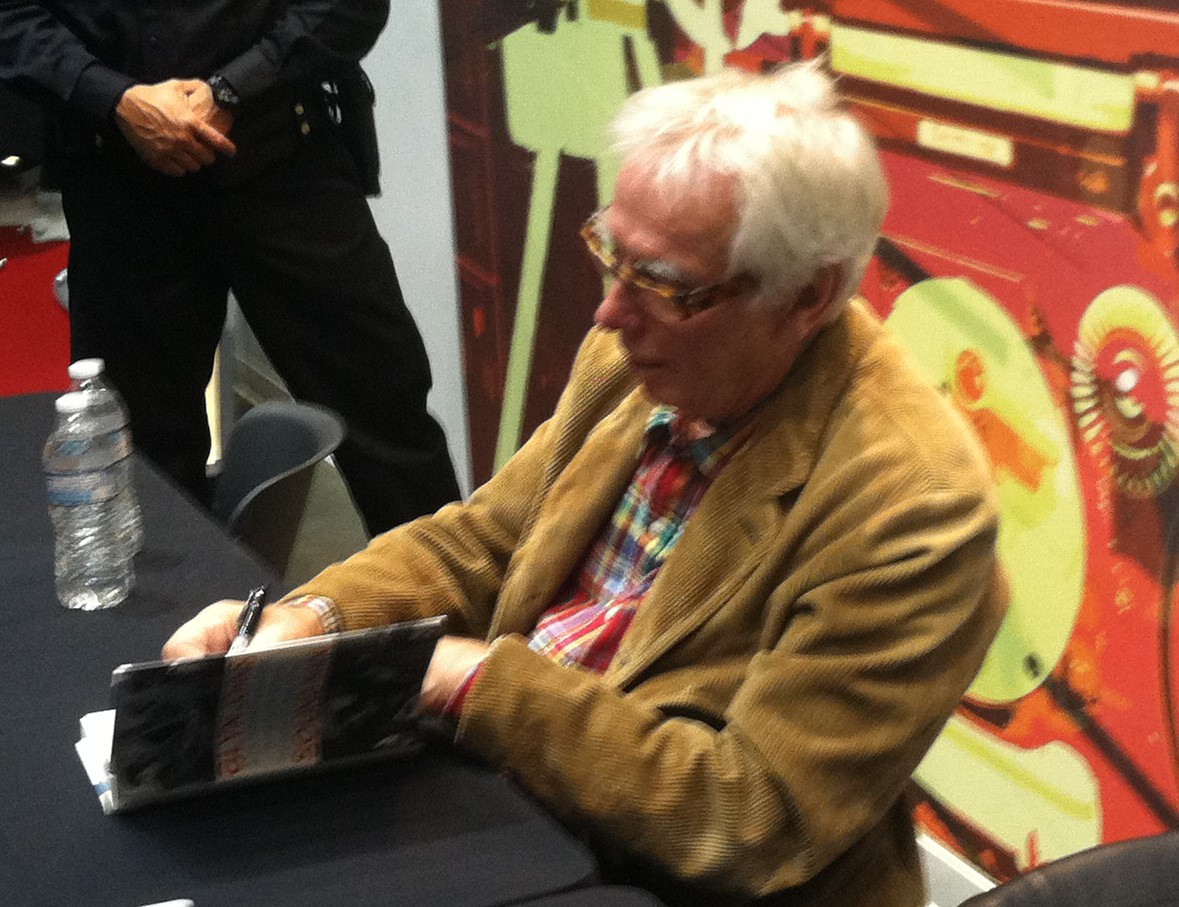
Glyn Johns autographs a book at Saturdays Rock Hall event.

Glyn Johns autographs a book at Saturday’s Rock Hall event.

Glyn, inducted into the Rock and Roll Hall of Fame two years ago, was among the few to be present for the duration of the Get Back sessions, and thanks to whatever combination of good living, good genetics and good luck, he’s among the even fewer still with us in 2014. He just released a memoir, “Sound Man,” and I was lucky enough to see him at a promotional Q&A hosted by the Rock and Roll Hall of Fame and Museum’s Library and Archives in Cleveland on Saturday.

The briskly paced event covered specifics of his start in the recording industry at IBC, his pioneering role as a freelance engineer and his views on production today (he hates it, with the move to digital the culprit) with some short anecdotes peppered throughout.  There was a bit of discussion on the Stones (he helped them from the start and worked with them throughout the ’60s and ’70s, plus he lived with keyboardist Ian Stewart), and a he made a few one-off, matter-of-fact mentions that brought into context just how monumental his career has been (“When I was producing Jimi Hendrix” … “Oh, that was on ‘Won’t Get Fooled Again'” … “I worked on ‘Exile” later on,” etc.). But his biggest raves were for Led Zeppelin, whose debut he engineered in October 1968 before its release three months later during the period of George Harrison’s walkout at Twickenham.  Glyn is still clearly moved by the music Zeppelin made in the studio as he was recording them for the first time.

George, however, was unimpressed (and he wasn’t alone).

Glyn — who in perfect deadpan answered that Zep drummer John Bonham’s most remarkable achievement in the studio was to “turn up” — told the same tale about George’s dismissal of Zeppelin in the book.

Glyn offered his first-hand observations of the Get Back sessions in pretty straightforward fashion in the memoir, although he does take credit for having the idea to play on the roof, the origin of which has been in dispute for 45 years. But per his style, Glyn doesn’t air any dirty laundry. For instance, when it comes to George’s walkout, he writes:

It is not my place to discuss any detail of what happened, but it is common knowledge that George left the band and was persuaded to return a couple of days later. Once that was over and done with we carried on and it seemed that all was quickly forgotten.

Glyn does contest the notion he was picked by The Beatles to produce the session over George Martin because he had a union card to work on a movie. But per the official written Beatles story — Anthology — Georges Martin and Harrison are both quoted saying that Glyn was selected just for a change of pace.

As an elite engineer, Glyn’s descriptions of Magic Alex’s famed “work” at the Apple Studio are a fun read.

The console looked like something out of a 1930s Buck Rogers science fiction movie. Above it on the wall were eight loudspeakers that were about the size and thickness of a large ham and cheese sandwich.

Glyn’s overall involvement in the Get Back sessions is illustrative of how unusual January 1969 was for the Beatles compared to how they did everything else throughout their career, before and for the brief time after that they were together. The Beatles weren’t just altering how they wrote and rehearsed songs, working in a foreign studio with cameras in their faces, they went an extra step to hire a man they’ve never worked with them to capture that sound. It all ultimately came to an disappointing end for Glyn, who after the sessions made several attempts at creating the Get Back album for naught as the project was bumped back and later supplanted by Abbey Road. As he told the Rock Hall audience in 2012, “I go off thinking I’m pretty hot stuff, [but] I’m not at all. I’m sweeping up, really.”
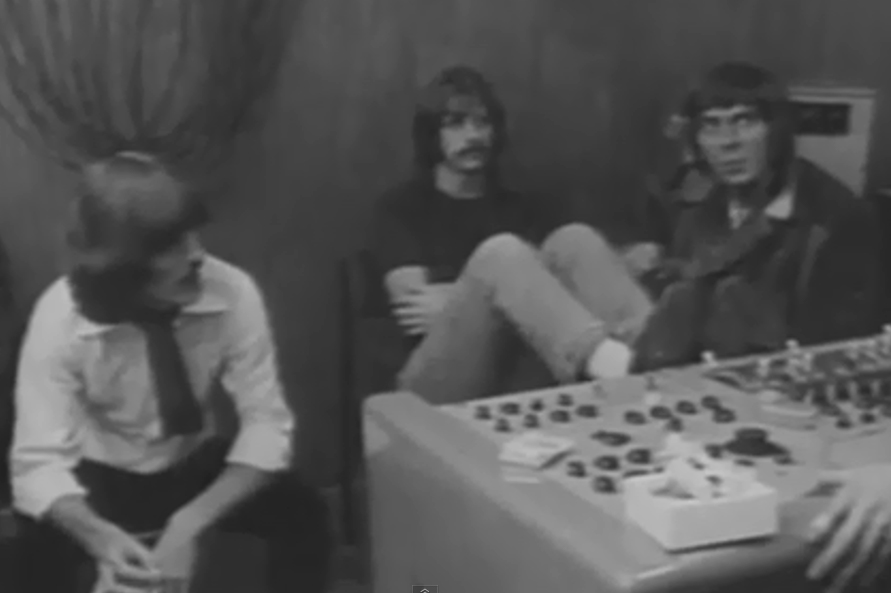
George, Ringo and Glyn at Savile Row, late January 1969

George, Ringo and Glyn at Savile Row, late January 1969

His thoughts on the Let It Be LP, on which he has a mere “thanks to” mention on the back cover? Glyn doesn’t mince words on his opinion of the Spector version of the record, writing in Sound Man that “Phil Spector … puked all over them, turning the album into the most syrupy load of bullshit I ever heard.”  His opinion hasn’t softened over time — two years ago he told the Rock Hall audience that “shame he wasn’t locked up earlier, really, wouldn’t have played with my record.”

All told, Glyn — who wrote that “I felt like I’d won the lottery” when he got the job to work the Get Back sessions —  spent about 25 pages of his book’s 286 pages on working with The Beatles (including a couple on his first experience working with the group, as second engineer on the 1964 TV special “Around the Beatles”).  That’s nearly 10 percent of an autobiography written about a product he never saw officially released. So perhaps the Beatles weren’t quite a footnote after all for Johns.

———-

This, however, IS a footnote: After the Q&A, I purchased Sound Man and got it autographed by the author. I let Glyn know about this blog and he gave me the wordless impression that I must be a madman to immerse myself in these tapes for pleasure (and perhaps I am). Still, he said he’d check out the blog, so if you find your way here, Glyn, welcome! And to everyone, I’m working on the next post, a continuation of Jan. 7 “Maxwell’s” session with “Across the Universe” coming up on its heels. I intend on having both out before the end of the month. As always, stay tuned for updates at twitter.com/theymaybeparted.
 

7 Comments

Filed under Extra

TMBP Extra: All that lies ahead

As I write this, it’s Friday, Jan. 31. About three-and-a-half weeks ago was Jan. 7. Check your own personal calendars, news headlines and the like. It’s not that long ago. That matters to me, and this blog, because this is where the Beatles come in.

Flip (or click) back several calendar pages – 45 in fact – and we’re at January 1969, dominated by the Get Back sessions. Jan. 31 marked its final day, a short day dedicated to nailing for film and for tape usable takes of Paul’s non-rooftop-suitable “Two of Us,” “Let It Be” and “The Long and Winding Road.” (The clips appeared in the movie prior to the rooftop show, but were in fact filmed the next day).

What of Jan. 7? That’s where we left off last in the session timeline, at a genuine pivot point.  George suggested the group “have a divorce,” Paul said he’d thought about that, too. The Doldrums. It hung over the band.

So what happened between Jan. 7 and Jan. 31, 1969, to recast the sessions? Well, I’m not going to give it all away at once. What else would I blog about, the recording of Sentimental Journey? (That actually seems like an interesting, star-studded, intercontinental story, but I digress.) Three and a half weeks is such a short period of time, in relative terms, and we know that the group was on the brink Jan. 7. By Jan. 31 so much memorable musical output was in the bank and in the works. Factor in that there’s 10 ½ days without George after his walkout and more than a week without any rehearsals at all, and I’m left grasping at superlatives.

To wit: From Jan. 7-13 and Jan. 21-31, 1969 (18 days, and that includes weekends not spent in the studio):

  • Paul wrote the majority of “The Long and Winding Road,” “Let It Be” and “Get Back” and debuted future solo tracks “Another Day,” “Teddy Boy” and “Back Seat of My Car”
  • George wrote: “I Me Mine,” “Old Brown Shoe” and “Something,” as well as “Wah-Wah” at home during his break from the band.
  • Everything you hear on “Let It Be,” plus “Don’t Let Me Down” was recorded.
  • We saw the birth – and if not the birth, than at least the studio debut – of Abbey Road’s “I Want You,”  “Oh! Darling” and “Octopus’s Garden.”
  • We have the rooftop show, too.
  • The Beatles even found time to meet with Allen Klein for the first time.

And I feel like I’m understating what happened.

So, there’s just a little bit of food for thought before I return to the timeline (soon!). Context is everything, and with January here and now gone, it provided the perfect chance to put into focus how much these guys got done throughout the madness they, for the most part, created themselves.

5 Comments

Filed under Extra

TMBP Extra: They say it’s his birthday

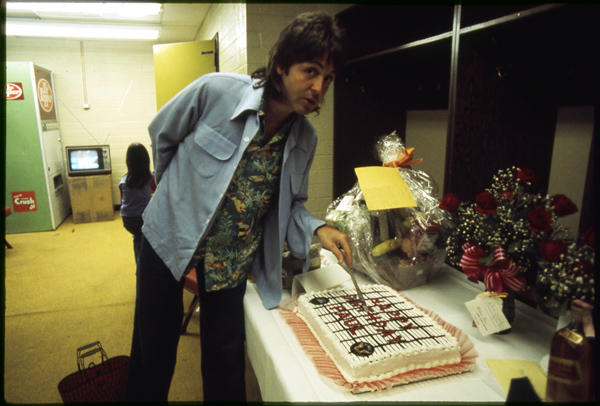
I originally put this post together in 2012, to mark Paul McCartney’s 70th birthday. Since then, I’ve added similar, more extensive birthday posts for John Lennon, George Harrison and Ringo Starr.

Like the many millions of Beatles-focused blogs, of course I need to recognize Paul McCartney’s milestone birthday.

I’ve wrestled with just how. This blog is a niche, focused on January 1969’s Get Back/Let It Be sessions and its reasonable relations (the Let It Be album and movie). June 18 is half a year away from January, so there’s no direct tie to the timeline.

The easy way out is to post a relevant video of Paul from the sessions, pluck out some classic tune, and I just leave it there.

But I got to thinking about June 1969, a few months after the sessions, and just what the band was doing. And the answer was… nothing.

“Get Back” — the single — was already a hit. The Get Back album was alive and being worked on by Glyn Johns.  A couple of songs for Abbey Road were worked on, but not extensively. “The Ballad of John and Yoko” was quickly written and recorded in April and released the end of May.

But June? No studio time.

Come July 1, the full recording sessions for Abbey Road would formally begin. Before September was out, it was in stores. Think about that. It took less than three months for the vast majority of Abbey Road to be recorded. It took me about three months to bang out 10 posts for this blog.

So with nothing going on June 18, 1969, I backed up a year to the same date in 1968. There was no recording session that day, either,  but the band was about three weeks into the White Album sessions, with “Revolution” “Don’t Pass Me By” and “Blackbird” having been worked on to that point.

And yet again, like I always am by the Beatles and keep finding myself as I work on this blog, I’m left marveling at things I already knew but didn’t think much about. Between Paul’s birthday in 1968 and 1969, the band recorded the vast majority of the White Album, the entirety of what would become Let It Be and had gotten Abbey Road under way (with most of the songs already written) — not to mention recording and releasing things like “Hey Jude,” too. Tack on three more months, and over 15 months we had all three albums in the can. Remarkable. (And that’s just what they did on vinyl — they also built Apple, had personal lives, side projects, etc.).

So where does that leave this post? Well, back to the start I think:  Pluck something from the sessions and leave it at that.

So for Paul’s 70th, here’s one of the greatest of them all, and the song from which this blog’s name came from, “Let It Be.”

Happy birthday, Paul!

4 Comments

Filed under Extra

Jan. 3: Fifteen minutes of fame

The second day of sessions at Twickenham on A/B Road clock in at close to 5 1/2 hours, more than two hours of which was spent solely on “All Things Must Pass” and “Maxwell’s Silver Hammer” (a song to a post coming soon).

For sure, much of the time that falls under a certain song’s track was actually dialogue. But ultimately, there wasn’t a lot of new material introduced.

When we did get new stuff, it was a taste of some classic songs.

Indeed, the entire day’s session begins with Paul tickling at the ivories with an incredible one-two punch that lasted just over a minute and a half. “The Long and Winding Road,” right into “Oh! Darling.”  Another future Abbey Road Side 1 track — “Maxwell’s  Silver Hammer,” which wasn’t actually new, but new to the sessions — gets the solo piano treatment next. Enjoy that sequence here:

Paul continues to play, and caps an incredible 15-plus-minute stretch with one more new song, and one that eventually defined the sessions overall: Let It Be.

John, as he was throughout the entirety of the sessions, only brought in the one new track — “Gimme Some Truth” — that day. And again, it wasn’t actually new to the band.

Outside of a pair of Ringo songs we’ve covered previously and seminal songs like “One After 909,” “Because I Know You Love Me So” or “Thinking of Linking,” the balance of originals on Jan. 3 were brief tastes, and in some cases presumably improvised jams.

8 Comments

Filed under Day by day

In which Doris gets her oats (An introduction)

Like so many Beatles fans, I was born after the band broke up. It’s a mixed blessing. I’ve had their music pretty much baked into life’s soundtrack. But I didn’t have the excitement and anticipation of a new record or bit of news. And I lacked context.

And to that end, for me, Let it Be (the movie and the album) has always been as much of the band’s catalog — and identity — as anything else they did, whether it was Please Please Me, Rubber Soul, Sgt. Pepper’s or Abbey Road — or Something New, Beatles ’65 or Yesterday… and Today for that matter, having become a fan before the CDs standardized the US and UK releases.

I love Let it Be — more than just the record (which while I do love, it’s not among my favorites of theirs), but the whole experience. The movie, the sessions, the bootlegs from those sessions. I love what Let it Be … is.  The awkwardness, the edginess, the overall chaotic nature of what the sessions were and the steps that led up to the album and movie’s eventual release brings a wonderful realism to everything, real fresh air.

I know it’s been described as watching your parents get divorced (I could have sworn it was Ringo saying that in the Anthology, but now I can’t find the quote). John Lennon called the recording experience “dreadful.” George Harrison said it was “unhappy and unhealthy” (both of those quotes WERE from Anthology).

But I don’t care. I wasn’t dating Yoko and going through a divorce. I didn’t just spend the fall expanding my horizons writing with Bob Dylan and was returning to the “winter of discontent.” I wasn’t desperately trying to figure out how to save a band that the other three members either had or would soon quit. I wasn’t feeling like a waste behind the kit. I didn’t — still don’t! — have the baggage they did sitting there as the band fell apart under the various personal pressures they were under.

And thus, I question the usual description of the sessions as a disaster, as insiders and outsiders alike tend to say. And here’s where the lack of context helps.

Let it Be, while not 11 perfect songs by any remote measure — and this band has certainly strung together 11 perfect songs in a row before — still gave us songs that have stood the test of time in the title track, Get Back and The Long and Winding Road. And that’s just what you’ll hear at the bank, in commercials, etc. Turn on a classic rock radio station, should such things still exist, and you’ll hear the rest of the songs.

And the rest of the output from the sessions? Only more than half of Abbey Road, what I’d argue is the best rock album, period. Only a number of songs that would later appear on the remaining Beatles singles, plus solo songs that would end up on All Things Must Pass, Imagine, McCartney and RAM (shout out to RAM).

If hundreds of mediocre covers and other useless snippets are the price to pay for that, I’m in.

And because they were the Beatles, the above disaster took one day short of a month — Jan. 2-31, 1969.

So that brings me to why we’re all here — or at least why I’m here writing to myself.  I think there’s beauty in the Beatles with their warts, without pants and the like. The movie is a joy in its depression, for me. Out of such distress they produced such eternal music.

I’ve always tried to listen here and there to outtakes from the sessions for the pure fun of it — the Beatles covering Canned Heat, mocking their own back catalog, and hatching the most barebones takes of songs that I pine to listen to every day. But the sound on some of the bootlegs was so bad as to make it truly an experience that couldn’t be enjoyed. Plus, it would be prohibitive as far buying everything.

But we live in special times, no? One download (lasting many, many, many days) and you can have what’s known as the Nagra Tapes (aka the A/B Road boot). It’s more than 97 hours of the sessions, sourced, quite illicitly I believe, from the camera’s audio recorders on site at Twickenham and Savile Row during the recording of the film.

Nagra III recorder

And, quite simply, when I finally downloaded the 5.3 GB monstrosity, I thought it would be fun to write about what I’m hearing after I had poked at this track and that and finding among some of the banality many revelatory moments. I’m a fan of the niche, and this seems as niche a project as it gets.

Initially, I thought the idea of a limited, January-only blog tackling the sessions day-by-day in “real time” 43 years later was the way to go. But you know,  I’m not sure I can commit six hours on Jan. 6 to listening to 28 versions of “Don’t Let Me Down.”

But I will listen to those 28 versions from Jan. 6, along with the other 84 takes of the song, the 141 takes of “I’ve Got a Feeling,” 68 takes of “All Things Must Pass,” 33 takes of “She Came in Through the Bathroom Window,”  30 of “One After 909,” four tries at “Gimme Some Truth,” two at “Her Majesty” and their lone stab at Hava Nagila (I kid you not). And everything in between.

Multiple books have been written about these sessions, and none by myself. But I’m a fan who will find pleasure in the discovery and the song-building process of numbers that have been part of my life since before I knew it.

While I may chime in with the occasional non-Get Back/Let it Be sessions post, I’ll try to limit such chatter to the Twitter feed.  But it’ll always be, at worst, barely off-topic, and always certainly Beatle-related.

Please join in the discussion in the comments. Otherwise, it’ll just be me saying, “Oh, man, another killer take of Maxwell’s Silver Hammer. What is that, 34 so far today?”

Thanks for checking this out and being along for the ride.

-Dan

9 Comments

Filed under General