Tag Archives: Live show

Jan. 12: The final bulletin

Here’s that disclaimer again. For this series of posts recounting the Beatles’ private January 12, 1969, board meeting, I’m going to jump between various parts of the January 13 Nagra tapes that directly (and indirectly) address January 12, for the sake of the overall narrative.  Specific quotes and certain discussion topics conspicuously absent here will soon be tied back into the story.  I swear!

****

The Beatles were facing a rupture; at best they were simply in another crisis. George Harrison first walked out on the group January 10, 1969, and then from an Apple Corps board meeting at Ringo Starr’s house two days later.

Through — and despite — the tumult, Paul McCartney continued to consider the big show that would serve as the finale of Michael Lindsay-Hogg’s documentary TV show, the grand closing statement. Paul conceived the grandest statement of all, and he shared it with Apple head Neil Aspinall the evening of the 12th. It’s not clear if he told him at Ringo’s or after at a different location, but it was Neil himself who “really finished the idea off, which made it sensational,” per Paul on the Nagra tapes recorded the morning of January 13.

While we were rehearsing the show ourselves, we should have alongside us someone sort of near, so that we’re getting the same kind of buzz but completely independent. We should get, say, the editor of the Daily Mirror. You’d have to get someone as good as him, a real hard news nut, rehearsing a team of really hard, incredible newsmen. With films, writing … so that on the night of the show, in between all our songs is news. But the fastest and hottest, from every corner of the earth.

Paul continued, attempting to sound like a serious news anchor in a breaking news environment, gravity in his voice and mimicking contemporary newsroom sounds, like a reporter tearing copy off a teletype machine.

‘We just heard there’s been an earthquake and so-and-so [makes exploding noise]’. You know, just like incredible news in between each thing, so it’s like a red-hot news program.

And at the end, the final bulletin is:

The Beatles have broken up.

So much for centering a show around 2,000 torch-lit Arabs or a boat ride. Michael is impressed by Paul’s pitch, presumably for its dramatic effect, calling it “nice” after a moment of reflection.

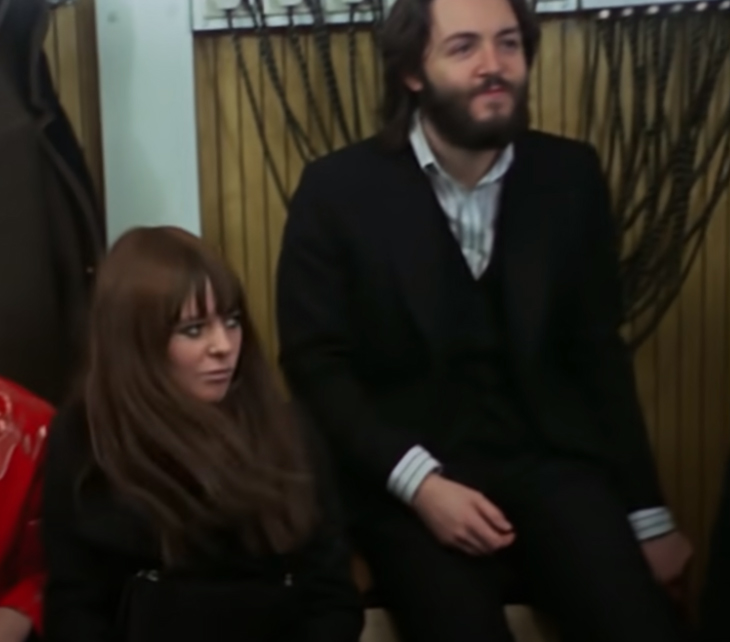
“Nice, but who wants to hear that?” asked Paul’s girlfriend Linda Eastman, who was present both at the meeting the day before and the recap at Twickenham.
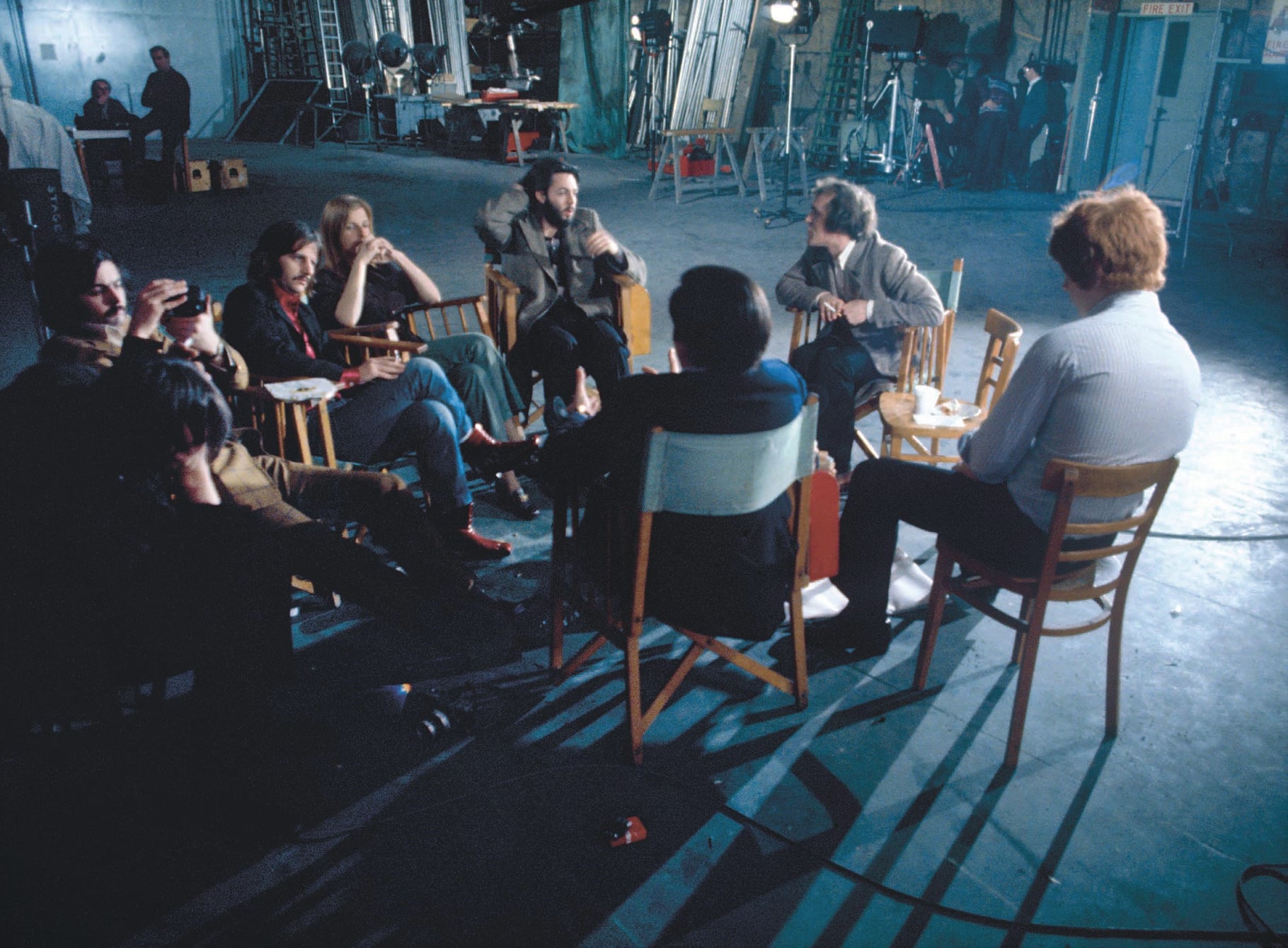
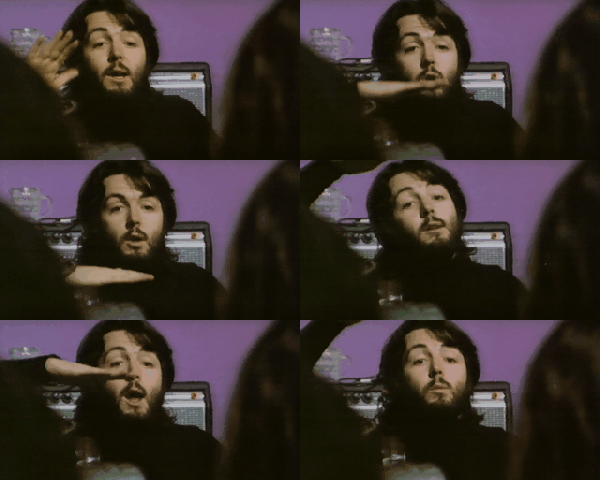
This photo captures around the time Paul was discussing the breakup show concept, on January 13, 1969. (Photo by Ethan Russell from the new Get Back book)

“But, I mean, it would be an incredible show,” Paul said.

Cover all the earthquakes and explosions you want. It was the final implosion that would inflict the most harm to this audience. Immediately before Paul’s pitch, Michael called it “dispiriting” if the Beatles couldn’t find a way to save themselves from a breakup.

“God, it’s an event when a Beatles album comes out,” an exasperated Linda replied to Michael. “Or even a single. People listen more to that than when [President Lyndon] Johnson gives a speech.”

It was the better halves who cared more to see the the group whole.

“It’s like Maureen [Starkey] was saying [presumably at Saturday’s meeting]: We’re fans. The Beatles are it. Musically, I still think that way.”

It continued to be the problem, for at least half the group. During lunch, in a discussion secretly recorded shortly after this conversation on January 13, John decried the Beatles’ “myth” in an echo of George, who said something along those lines a few days earlier.

A mythological concept to John, the sincere fans did believe in Beatles.

Paul’s suggestion of the surprise farewell in the wake of the meeting at Ringo’s came off more for shock than true consumption — it wasn’t discussed on the tapes again, and may never have reached the ears of John or George. But Paul did show a sincere willingness for the group to stand solo in the sun, saying that he himself wasn’t completely satisfied as just a Beatle only.  He wasn’t busting any myths, only suggesting there were even more opportunities for them, and not by simply growing the number of Beatles, as John had previously suggested.

Ringo was already contemplating what would eventually become his Sentimental Journey LP a year later, and Paul pressed him to move forward with the idea of this “Stardust” album, despite the drummer’s fear of singing on a record by himself.

From the lunchroom tape on the 13th, in a remarkable exchange:

Paul: It isn’t as daft as you were sort of frightened it might sound.  … The great thing is that you singing how you really sing will be it.

Ringo: Yes, but the only way to do it is on your own.

Paul: Until then, yeah, sure. Until then, until you reach how you really sing, you’ll sing your half-soul.

And it’s probably when we’re all very old that we’ll all sing together.

And we’ll all really sing, and we’ll all show each other how good we are, and in fact we’ll die then, I don’t know. Probably something sappy or soft like that. I don’t know.

But really, I mean, it’s really down to all those sort of simple, silly things to me.

Yoko Ono: But those are the important things, you know?

This part of the lunchroom conversation covered much of the same ground as the “divorce” discussion on January 7, but with a softer, more optimistic and accepting posture. A few extra days and George’s actual absence — not merely a threat of one —  created a clear difference in the vibe.

Through this John sounded sincerely unsure of himself and the path he’d like to take. It can only be assumed that the lack of cameras or visible recorders allowed him to speak more fearlessly.

While Paul worked to reassure John — “You’ve noticed the two ways open to us. You know the way we all want to go, and you know the way you want to go. Which is positive!” — John’s insecurity overwhelmed his outsized abilities.

“Like Ringo said about his album … I won’t do it cause I’m gonna let us down or look like a fool.”

Days after pushing back on George’s concern that his songs “come out like a compromise,” Paul adjusted his stance. Maybe it’s re-positioning with George gone or maybe it’s a result of the departure and any responsibility he had in it, but Paul showed a retreat on the group micromanaging their respective songs, including his own role in doing so, at least now while they were still together.

What I’d like to do is for the four of us — and you know, we’ve all have done that things to different degrees — I think is if you [Ringo] go one way, you [John] go one way, George one way and me another. But I know it will apply to all of us, if one day you can all be singing like you’re singing, [Ringo] can be drumming like you’re drumming. George can be really playing, I mean like he plays, not like as if I’m trying to make him play. But I keep trying to make him play like that.

This dynamic reached beyond just George and Paul.

“You try and make George play competently because you’re afraid that how he’ll play won’t be like you want him to play,” John replied. “And that’s what we did, and that’s what you did to me. …

“I got to a bit where I thought it’s no good me telling you how to do it, you know? All I tried to do on [the White Album] was just sing it to you like I was drunk, you know? Just did me best to say , ‘Look, this stands up on its own.’ … It wasn’t the arrogance of  [saying,] ‘Listen, this is it, baby.’ It isn’t that I can’t tell you what to do because you won’t play here like think you should play. And I’m not going to tell you what to play.”

The differing approaches John and Paul took to arranging their songs are pretty evident on the Nagra tapes and to readers here. At this point in the lunchroom conversation, John admited he’s just too scared to stop Paul from micromanaging parts to the detail and degree he does.

John continued:

Apart from not knowing, I can’t tell you better than you have, what grooves you’d play on it. … But when you think of the other half of this, just think how much more have I done towards helping you write. I’ve never told you what to sing or what to play.

You know, I’ve always done the numbers like that. Now the only regret, just for the past numbers, is that when because I’ve been so frightened, I’ve allowed you to take it somewhere where I didn’t want. And then my only chance was to let George … take over, or interest George in it.

“‘She Said She Said‘?” Paul asked.

Of all their songs to name, it’s a notable discussion point and not accidental. The final song recorded for Revolver (and one they played in passing earlier in the week at Twickenham), Paul walked out during its sessions in June 1966, a link from that moment to this one, with a Beatle missing.

Paul, as quoted in Barry Miles’ Many Years from Now:

I’m not sure but I think it was one of the only Beatles records I never played on. I think we had a barney or something and I said, “Oh, fuck you!” and they said, “Well, we’ll do it.” I think George played bass.

Without Paul’s interference, John could let the others just play their parts as originally, and simply, arranged. “[George would] take it as is, you know?” John recalled before backhandedly crediting Paul’s management style. “It’s George, you know, if there’s anything wrong with it, because I don’t want your arrangement on it. … If you give me your suggestions, let me reject them or in the case there’s one I like, it’s when we’re writing songs.”

The situation wasn’t reciprocal, as John reminded Paul — who agreed — “there was a period where none of us could actually say anything about your criticisms, ’cause you’d reject it all.” (Still, John conceded Paul’s musical decisions would often be the correct ones.)

If this line of conversation sounds familiar, it’s because exactly a week before this lunchroom chat, Paul and George debated this very issue in the quintessential tension-filled moment of the Let It Be film. Ultimately, George wasn’t too excited to take things “as is” and Paul wasn’t necessarily insistent he do so. So the situation is characteristically blurry.
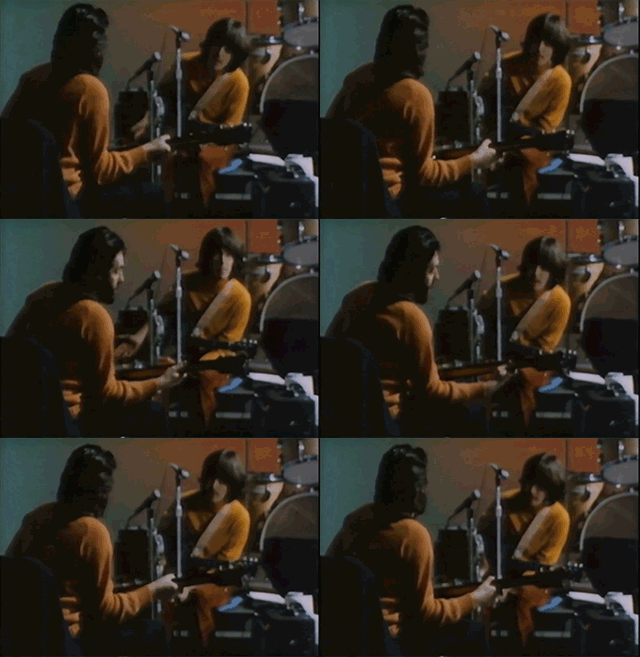
“I’ll play, you know, whatever you want me to play. Or I won’t play at all, if you don’t want me to play. Whatever it is that will please you, I’ll do it.”

Still, George will play, you know, whatever you want him to play, but at this point he’s not playing anything at all, to general displeasure.

Assuming nobody noticed the hidden microphone in the flower pot at the canteen — a phrase as ridiculous for me to type as it is for you to read — we can be certain none of the parties on the lunchroom tape were playing for the cameras and a larger degree of posterity. (Whether they were being sincere with each other in this private moment is a completely separate question.)

Without the this recording, however, we wouldn’t know just how far Paul was encouraging the others to experience outlets outside the band’s restraints, and just how warmly he spoke of what would be an eventual reunion “when we’re all very old.” It would be a return in which they all can show off how much they’ve grown as artists outside of the limitations and restrictions they posed upon each other, and this reunion would serve as their very final act. It’s sweet and in retrospect very sad, even if Paul backs off a little calling it “silly.” Two Beatles never advanced past middle age, must less having a chance to be “very old.” Thankfully Yoko appreciated Paul’s line of thinking.

Around the context of their conversations and at the precise moment these sessions — and collective future — were in question, Paul’s support for and active, repeated urging of the group to go their separate ways very much complemented his grand statement to end their proposed TV show.

Their ultimate reunion would have made a most spectacular sequel.

7 Comments

Filed under Day by day

Jan. 10: Go on, as if nothing’s happening

“It seems highly unlikely we’d be on,” the guitarist told the director.

With a member of the band unexpectedly AWOL, he was justifiably skeptical the Beatles could stage the big concert to end the film.

“I mean, the law of averages are against it,” he continued. “I think if you could get the juggler on with a couple more clubs, that’d fill in a bit of time.”

That guitarist speaking was George Harrison, and the production was A Hard Day’s Night, the Beatles’ first feature, filmed Spring 1964. On the afternoon of Friday, January 10, 1969, it wasn’t a self-deprecating Ringo Starr who was missing, it was a self-reliant George himself, having sprung Twickenham during his “Winter of Discontent.” This left the remaining Beatles and director Michael Lindsay-Hogg juggling ideas for how to close what would become “Let It Be,” their final film, and who else would be on stage playing lead guitar.  

Michael and Ringo, January 1969. From Peter Jackson’s Get Back.

More than a week into the Get Back sessions, Michael continued making similar iterations of the same pitch for the show.

“One of my ideas is if we go to, like, anywhere, that we mightn’t just announce any times for the concert at all,” he said to Paul McCartney later in the day on the 10th. “We’ll set them (the Beatles) up in whatever desert we do it in, and they start to play. And one by one, and ten by ten, people will come in.”

Inane, I’d call that,” Paul replied with a comedic aggression. “Straight off the top of my head. … Imbecilic. Salacious.”

(Like in his songwriting, at times, Paul sometimes spoke words that simply sounded good, even if they didn’t make sense in context.)

Michael deflected the response, saying “‘imbecilic’ sounded like a bad bug you get the flu from.”

Regaining focus, he invoked the show’s target date, 10 days hence: “I though that could make a very kind of groovy, trendy opening. Seriously, like: January 20, 1969.”

Moments later, the director and the others in the room — which extended beyond just the band — discussed the issue of visas and difficulties several of the Beatles’ peers (Donovan, Mick Jagger and Keith Richards) faced getting into the United States. They were open to several options, including Mexico, the Virgin Islands and other Caribbean destinations.

“And Catalina, which George said wasn’t very nice,” Michael said.

Not that it mattered what George thought then, he’d quit the group almost an hour earlier.

“So what’s our next move?” Michael asked the others. 

“We split George’s instruments,” John Lennon said to laughter.

It was clear in the immediate they were not considering splitting the band, though. If the Beatles were going to be on the move, it would just be in a different iteration. Abandoning the project wasn’t a consideration at present.

The conversation would shortly return to locations, with the Roman amphitheater at Sabratha in Tunisia remaining at the forefront, all other contenders just conversation pieces to keep the group engaged. Michael’s long-preferred destination, he enlisted a “reconnaissance team” that included Beatles assistant Mal Evans and producer Denis O’Dell slated to scout the venue the upcoming Monday.

“There has to be someone to say, ‘The weather’s fine, come on in,’” Michael said.

Paul repeated familiar, feasible suggestions (The Cavern Club, Tower Ballroom) along with new nearby options (the Underground) and  more distant, outlandish and outrageous ones (“the mouth of a volcano near Ecuador”). 

“I think we should do it for more than 500 people,” Michael added.

It was a tough time to think big. This was an afternoon and evening of distractions and interruptions.

In the wake of George’s departure, there were several coincidental arrivals at Twickenham: A package arrived for Paul (marked “‘handle tenderly”); several “EMI heavies” wandered around the soundstage; a CBC interviewer prepped John and Yoko for an infamous interview that would come a few days later.

Rather than return to a full rehearsal, the group joined Michael in telling several imbecilic (and salacious) knock-knock jokes. Of more interest was Michael discussing his career and relationship with Orson Welles, whom decades later he would discover was his father. One lengthy anecdote (which was also detailed in his 2011 autobiography, “Luck and Circumstance”) described Michael acting in Welles’ 1960 stage production of “Chimes of Midnight” when Welles briefly stormed out of the production in anger. 

“See you ’round the clubs!” Glyn Johns reacted, laughing — and confirming George’s earlier valedictory statement, which wasn’t caught on tape. 

An afternoon replete with nostalgia would soon continue after Paul returned to the piano (you can hear “The Long and Winding Road” and “Adagio for Strings” clearly on the tapes in the background). After quizzing the band on whether they had endured any scuffles with their fans (Ringo recalled being kicked in the head), Michael asked if they looked back fondly on their frenzied touring period.

John replied with an affected accent, the voice of a ragged bluesman looking back on a lifetime, not merely a few years earlier:

Why, I think of it every day. I think what fun we had when we was [sic] the Beatles, playing and rocking with the group around the world. I said, ‘Richard, you remember that?’ He says, ‘No, I hadn’t joined you then.’

One of the not-so-fond memories: “Having eggs thrown at us in Australia was one of my big moments,” John said.

Reminded by Ringo he had missed part of the 1964 Australian tour (although he was there for the egging in Brisbane), John evoked the name of the rare Beatle stand-in. 

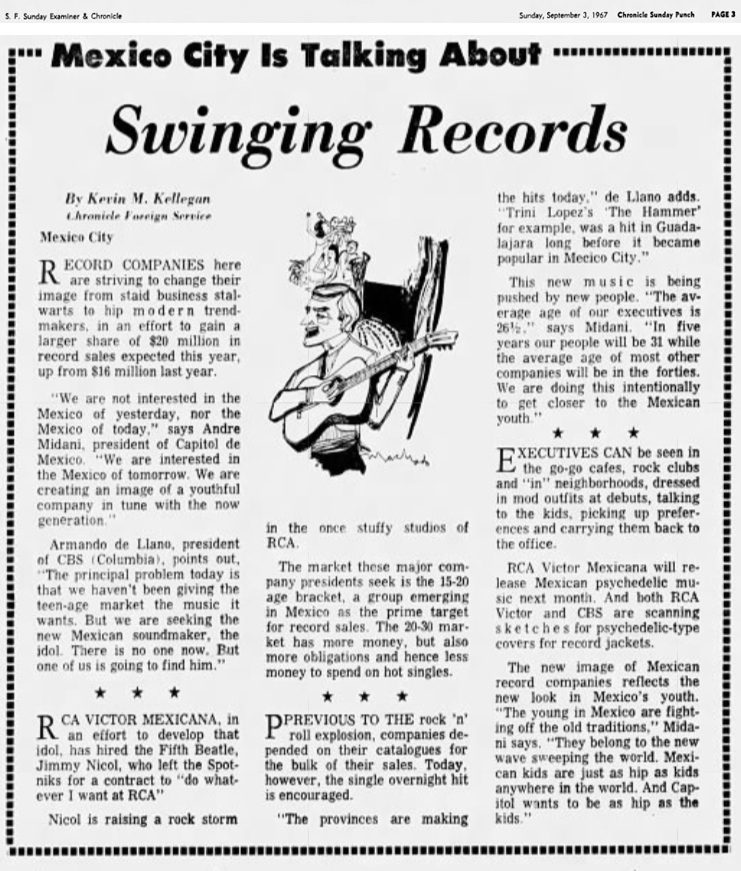
Jimmie Nicol: Now making a living as the 29th Beatle in New Mexico,” John said of the fill-in drummer, who was actually in old Mexico at the time.  

Now with the band facing a new vacancy, would they soon get to Beatle No. 30?

As if on cue, moments later, Michael barked an instruction for additional equipment: 

“Glyn, Yoko wants a mic.” 

She was back, but the music was hardly intense, with Paul having moved onto his White Album ode “Martha My Dear.”  Now, her vocals were largely calm and controlled, more comedic than anything.

While Yoko once again wailed, John — in conversation with Michael — laid out his plans to replace George. He didn’t suggest Yoko. 

A few hours earlier, George told the other Beatles, “You need Eric Clapton.” The time had come for John to heed the advice, sharing it with Michael. 

“I think if George doesn’t come back by Monday or Tuesday, we ask Eric Clapton to play, ” John said. “Eric would be pleased. He left Cream because they’re all soloists. … The point is, if George leaves, do we want to carry on as Beatles?”

Harsh feedback shortly overwhelmed the room, obscuring some of the conversation on the tapes. But the discussion continued, as Yoko again passionately called out John’s name.

MLH: Maybe for the show, you would just say George is sick.

John:  (Sincerely): No, I mean, if he leaves, he leaves.

MLH: But what’s the consensus, do you want to go on with the show and the work?

John: Yeah. If he doesn’t come back by Tuesday, we get Clapton.

Yoko: John!

John: Whaaaaat? (laughter) 

John and Yoko continued to repeat each other’s names, but this was the couple playing for laughs.  Meanwhile, John and Michael’s discussion continued through the call-and-response, bringing together the issue of show location with locking down a replacement guitarist.

MLH: And what about the venues? … If George comes back we go away, and if Clapton comes in we stay here.

John: We should just go on, as if nothing’s happening.

MLH: I think we should go away.

So eager to get the show on the road, Michael had the potential logistics lined up in his head, proposing the group spend the following week at Twickenham and the week after abroad, all conforming to the group’s timetable, which was in part defined by Ringo’s filming schedule for The Magic Christian. 

“What I’ve always thought is we leave here next weekend (January 18-19) and do the show the following weekend (January 25-26) there, if we decide to go there,” Michael said. “And then come back on Monday (January 27), which is just inside Ringo’s seven days.”  (The January 20, 1969, date floated previously must have only applied to a domestic show or an alternative, abbreviated schedule.)

Michael’s plans to this point were more extensive than expected, implying there really was no option, at least that he was eager to prepare, other than Sabratha. 

“We’ve arranged everything food-wise to come in from Germany,” Michael said, adding for the skeptics, “I do not joke. It’s the same food from the American [military] base.”

Eric Clapton and John Lennon, from the Rock & Roll Circus, December 1968.

And if it wasn’t enough John was trying to enlist Eric Clapton to join the Beatles, Michael casually suggested a near reunion of Cream, if it meant just getting Paul and John to Libya for rehearsals, and Ringo — who was least receptive to travelling — to be minimally overseas.

“We can get out a session man for a couple days,” Michael said. “Or Ginger Baker can come for a few days. Just to kind of routine it.”

The discussion between John and Michael petered out as John joined Paul and Yoko on another jam. Unlike earlier, when the Beatles played hard blues rock out of rage, this improvisation was more subdued, a more gentle and at times an arguably pleasant performance, containing elements of “Castle of the King of Birds.” Paul was on piano, John on guitar and Ringo on tambourine with Yoko providing another disruptive vocal — although not quite as consistently intense than earlier in the day.

Soon, Paul shifted to the drums — and it’s a noticeable drop in quality from Ringo to Paul, as strong as the latter is as a multi-instrumentalist. More importantly, it freed up Ringo, who returned to conversing with Michael. But first, he played up for the cameras (and tapes).

Yeah, rock it to me baby, that’s what I like. You may think this is a full orchestra, but if you look closely you can see there’s only two people playing and one person singing. I know it sounds like Benny Goodman, but don’t worry. It’s the big sound of 1969! You bet your life. Oh, sock it to me, sock it to me. (Laughter)

Interested in the filmmaking, Ringo asked Michael precisely what he was doing — “I thought what we should do is the first sessions when you came back, make it very hand-held looking,” Michael said, pulling the curtain behind the sausage-making. More importantly, Michael shared his first-hand view on what he saw after George walked out. 

“And the interesting thing is, Paul went to his amp. … I don’t know if you knew what you did, psychologically, after lunch. You (addressing Paul, who joined them) went at your amp like you shut the door into a closet. … And you (Ringo) were playing very hard. … And John was doing whatever he was doing.”

Ringo, Paul and Michael continued their conversation, as John provided background music — “Sun King” and “Dear Prudence.”

MLH: Have you ever had coverage when you were doing a whole album?

Ringo: No. 

MLH: Have you ever wanted it?

Ringo: No.

Like it or not, the Beatles — what presently remained of them — were getting blanket coverage, and the real drama was happening in the studio, not on location.

“Are we meeting again Monday?” Michael asked hopefully in the waning moments of the day’s session.

“Yeah, I’ll have Eric, Jimi (Hendrix, although it could feasibly be Jimmy Page) and Tommy (Evans of the Iveys, perhaps?) lined up,” John replied, with varying and low degrees of sincerity.

Paul’s set his bar much lower. 

“A7, D7, G7,” he instructed Maureen Starkey, who was visiting Twickenham that afternoon. “Get ’em off over the weekend and you’re in.”

(Ironically, armed with those chords, Maureen would have been able to fill in for George on his For You Blue.)

Paul with guitar protégée Maureen Starkey. From the Get Back trailer.

Before splitting for the day, Michael made sure to capture the scene. “We have this well-documented. And a lot of shots of the empty cushion.” We’ll see what Peter Jackson shows us in Get Back ’21, but this footage was left on the cutting-room floor of the final cut of Let It Be.

“And I guess that’s it,” wrapped up Michael, who wished the others luck in their planned weekend business meeting, which would include George. “And I hope everything really goes swell. I’d like to say, I’ve enjoyed our week together, hope one day we have another one like it.”

“Surely,” Paul replied. “Why not?”

And thus ended the first full work week of the Get Back sessions.  While George was kicking Eric Clapton’s ex-girlfriend out of his own house, John pushed the concept of welcoming Eric into the Beatles’ office. 

As you certainly know, Clapton never joined the Beatles, and John didn’t bring him in the following Tuesday, even though George wasn’t back. There clearly wasn’t an actual offer anyway.

Here’s Paul, from the Anthology book:

After George went we had a meeting out at John’s house, and I think John’s first comment was, ‘Let’s get Eric in.’ I said, “No!” I think John was half-joking. We thought, “No, wait a minute. George has left and we can’t have this — it isn’t good enough.’

For his part, Clapton repeatedly downplayed the idea he was an actual fallback option for the Beatles. In modern parlance, Clapton thought John used him as clickbait, and the friendship he had with George would have been a blocker anyway. 

Eric, from the April 1998 issue of Mojo

There may have been [a suggestion the Beatles would ask him to join]. The problem with that was, I had bonded or was developing a relationship with George — which was exclusive of them. I think it fitted a need of his and mine, that he could elevate himself by having this guy, that I could be like a gun-slinger to them. Lennon would use my name every now and then for clout, as if I was the fastest gun. So I don’t think I could have been brought into the whole thing, because I was too much a mate of George’s.

Several years later, after George’s death, Clapton literally laughed at the idea of joining the Beatles when he was interviewed for Martin Scorsese’s 2011 documentary “Living in the Material World”.

As he said in the clip, the Beatles could be the most close-knit quartet, but at the same time, “the cruelty and the viciousness was unparalleled.” 

The latter led the Beatles to this moment. After their first full day at Twickenham, on January 3, George described with envy The Band‘s ability to blur their domestic and working lives, something he witnessed first-hand when he visited the group and Bob Dylan six weeks prior.  “They’ve got all that gear there, but … they’re just living, and they happen to be a band as well.”

His relationships with his wife and his band in distress, George had neither element 10 days into January 1969 — he wasn’t living properly, and he didn’t feel like a useful member of the Beatles.  

While he’d join John Lennon as a member of the Dirty Mac before and the Plastic Ono Band later, Eric Clapton was neither asked, nor was he seemingly willing to accept an assignment with the Beatles.

The Beatles didn’t need Eric Clapton, a gunslinger for hire. They needed George Harrison. 


5 Comments

Filed under Day by day

Jan. 9: Homeward bounder

It was becoming clear by the end of January 9, 1969, that the Beatles would end up opting for ad-hoc over adventure.

A lengthy discussion the night before found all four Beatles showing varying levels of willingness to travel by boat to Africa for a one-off show, and some sort of decision seemed imminent. With the planning needed and a schedule to keep before the band lost Ringo Starr to an imminent acting assignment, it had to be.

But after the group slept on it, pinning down a consensus was just a dream. Any momentum to raise anchor dissipated among the members of the band, despite the continued best efforts of director Michael Lindsay-Hogg to ship the group to a Roman-era amphitheater in Libya.

There was no grand discussion about the show on this Thursday, just a series of short conversations sprinkled about the day among the various principles. The Beatles were making musical progress at Twickenham Film Studio, and as the Nagra tapes proved, the overall mood was fine, certainly better than it had been a couple of days earlier. But there was no great enthusiasm for travel, and it often seemed like settling on a venue was a binary choice: Twickenham or outside Tripoli, by boat — the devil (they know) or the deep blue sea.

“If we do it here, then we’ll do it in here,” director Michael Lindsay-Hogg told Paul McCartney’s girlfriend Linda Eastman on her January 9 morning visit to the soundstage. “But if we don’t, it’s on a boat to Tripoli,” said Paul.

“Ordinary people like themselves.” On the Mad Day Out on July 28, 1968, the Beatles mingled with the British crowd at St Pancras Old Church and Gardens. Less than six weeks later, they filmed the “Hey Jude” promo film. (From Meet The Beatles For Real)

“So if you do it, it would be in here?” Linda asked.

“There’s many a story,” Paul replied.

“What will you do with all the equipment?” Linda asked. “Get it on the boat,” replied director Michael Lindsay-Hogg. “That’s what Apple’s for, really, isn’t it?”

Discussions over the show circulated around these unresolved issues: Where would it be staged, what would be its format and who would be the audience. Thus the seventh day of the session was not much different than the first, and it wasn’t even a matter of agreeing to some aspects and then pursuing another. Every aspect of the show was in flux, and every suggestion was repeated.

Airports, apartment houses, cathedrals, the Houses of Parliament — these venues were considered before and mentioned yet again on the 9th, along with a transformed Twickenham. Transformed how? That wasn’t elaborated.

The boat, which was brainstormed at length the night before, was in play. But Ringo, while never issuing his veto, was clear in his distaste for a trip to Northern Africa, much as that was Michael’s preferred and planned choice. A continued sticking point was the his loyalty to a British — or American — audience. Ringo cited long-running talent show Opportunity Knocks as an example to follow in ultimately challenging that mundanity transcends spectacle, obscurity over celebrity — at least when it came to the spectators.

“Just because he had granny on the show, someone’s mother, and they only win because audiences like to watch ordinary people like themselves. That’s one of the things to do it here. Because English people — and Americans — and the two main people, at least they can associate with them and say, ‘I could have gone there.'”

MLH: The only thing is, I really do think it’s going to be for the world.
Ringo: The biggest part of our world is America and [here].
MLH: But funnily enough, I think the way they think of you is not only for themselves but they do think of you as for everybody in the world. That was one of the things things that was good about Jude, the guy in the turban. ….

Unfortunately, the tape cuts off during this dialogue, but we can assume it’s much of the same conversation that we’ve heard before with similarly little resolution.

(For the record, Opportunity Knocks provided Apple Records with one of its greatest success stories: Mary Hopkin’s winning performance in May 1968 directly led to her signing with the Beatles’ label).

Still, Michael was planning as if he could sway Ringo eventually.

“I think we spend till the middle of next week here or til the end of the week, go out on the and the following weekend. That’s eight days,” Michael said.

Ringo: Too long.
MLH: Go out on Sunday and finish it on Sunday.
Ringo: How about Sunday and finish it on Wednesday? Who wants to stay in Tripoli?
MLH: Denis (O’Dell, film producer), isn’t Tripoli a great country?
Denis: It’s the asshole of the world there. (Laughter)
MLH: You didn’t take my feed!
Denis: Look, I have to work with him the next six months and therein after! (More laughter)

Denis next related a story of how Ringo “saved his life” in India, thanks to the drummer’s cache of Western food he left behind when he returned to England. “[I] went back to Ringo’s room and I was rummaging around … found some powdered milk and baked beans, and it was a feast. … The stuff that you and Maureen left, and that’s what I lived on secretly.”

Uncommitted as they were to a destination for a live show, the Beatles comfortably and casually addressed the composition of the gig itself.

Many times I’ve bean alone: Ringo’s diet in India. (From Beatle Photo Blog)

The band discussed staging issues (“It is a bit silly to be rehearsing sitting, facing this way, when we’re actually to be playing standing, facing that way”) and between-song banter (“First chance we’ve had to play for you dummies for a long time”) — see Jan. 9: Jokes in between for more on that.

“Is Michael around?” George asked at one point. “If we are in a groovy location place, and if there’s just people there and we’re just playing anyway, [can] we make the show about different bits and pieces of what we’ve done or [do] we have to do it in one consecutive piece?”

John: We do both, you see. We set one way when we say, ‘This is the show,” But we do, like, a dress rehearsal and another rehearsal.
George: (Laughing incredulously) Dress rehearsal?
John: Well, you know, we do it as is, we try and do it one through. We should do it about three times, and probably the middle one will have the most. And see if there’s anybody around that played piano or anything we just get him up, and let’s have a gig.

John told the future well, unaware at the time Billy Preston would be that piano player. John also didn’t realize that the man he was speaking to would walk away from the group the next day.

3 Comments

Filed under Day by day

Jan. 9: Jokes in between

Let’s run through the ones we know and then learn the [new] one.

This is our format.

Paul McCartney was right. There was a format. At least there was a framework developing as the Beatles rehearsed in their second week at Twickenham.

As covered in the last post, George Harrison would have to wait a few hours for attention to return to his new “For You Blue.” Instead, with the full band ready to go nearly 90 minutes into the January 9, 1969, Nagra tapes, the Beatles tackled “Two of Us” for the fifth time in six days, initiating a sequence in which the group returned to some of the finished, core songs they’d have for their live show. Why, it was their format!

This stretch also clearly exposed the side of the Beatles that everyone (else) usually cites when describing the Get Back sessions. While I’m quick to argue January 1969 at Twickenham was not of itself the downfall of the band as it was filled with harmonious, joyous and highly fruitful moments to match the uglier, fractious component of the sessions, these guys could get pretty petulant and didn’t hide it with the tapes rolling.

A quick, carefree one-off into the song the day before, this day’s “Two of Us” rehearsal stretched about a half-hour, and quite unlike the Rocky and the Rubbers’ version, Paul insisted on serious refinement.

As loose as their run-through was early on the 8th was exactly how tense things emerged on the 9th, with consistent, stuttered efforts to get through a full song.

From the top, the group can’t find the proper pacing of “Two of Us,” with Paul pushing the others to pick it up. “Keep them all quiet, keep your instruments down so we can sort of hear what’s going on.”

They had another go at the song, and “it’s still pathetic,” in Paul’s words. He suggested the issues went beyond just the song’s speed.

As Paul nitpicked what arrangement the song needed entering the bridge, John argued, “We never got into this [part] yet,” defending himself and the others as Paul criticized the group for not knowing what’s in his head.

A fiery example of the strain came during a “Two of Us” take in which Paul barked at John, who wasn’t in perfect rehearsal position, to “get on the mic.”  John, certainly responding to the tone more than the instruction itself snapped back.

“You don’t have to bitch about it, we’ll never get through it.”

The band immediately went into another take, and you can hear John loud and clear — but he came in early. You can hear Paul’s displeasure when he comes in himself at the right time. Still, they championed on.

(This sequence was in the Let It Be film, and led immediately to the “I’ll play, you know, whatever you want me to play” sequence from three days earlier.

A dark moment, for sure, but as usual for these guys, they were able to compartmentalize and still harmonize figuratively and literally. Picking apart “Two of Us” to improve the various “bits” and now focusing on the middle eight, Paul started thinking out loud.

“The two things I think of are both corny, but something better are oohs  … or [a staccato “dit-dit-dit”]”

Never mind that the “oohs” are actually “aahs” when Paul, John and George instantly launch into a demonstration of the vocals, which are proposed to appear supporting the “you and I have memories” lead. This is the Beatles magic, immediate and spontaneous and completely normal, even when it comes a few minutes after one member complains about the other one’s bitchiness. The subsequent stab at the staccato vocalization came off a bit sloppier but still likable.

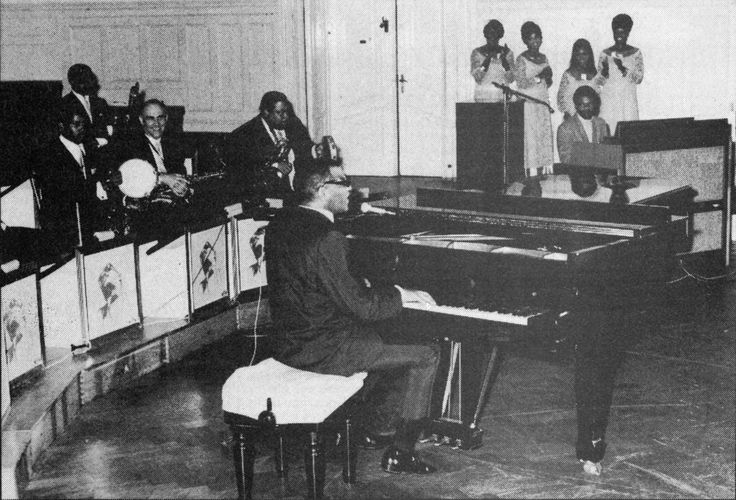
Concerned the backup line would sound “too thin,” George proposed, “Maybe we get a few Raelettes,” marking yet another time the group evoked Ray Charles’ backup singers. “Get three girls” with some phasing on the mics.

John’s cheeky reply was to bring in three boys instead, and George named the Dallas Boys, Britian’s first boy band (by ’69 they were into their 30s).

While they never landed the Raelettes, the Beatles would soon enlist the man seated before them, Billy Preston. (Photo from late 1968).

Ultimately, Paul asked the others to “just think of something, then” for the middle eight, and off they went into another take, this one featuring the lovely “aahs.”  The song may not have dramatically improved, but the mood had over the last 25 or so minutes on the tapes.

But Paul still had something to complain about, turning his attention to a frequent (and legitimate) punching bag for the band, the equipment setup at Twickenham. If we think the tapes sound diluted, just imagine how substandard the quality must have been for the musicians on the sound stage. With the proposed show nearing — and despite some pretty ambitious ideas, uh, floated less than 24 hours earlier — improved sound needed to be addressed along with other facets of a finalized live performance.

“Just so that we can all hear, so it sounds really great here,” Paul said. “So that our voices are just as loud as they need to be. ‘Cause then we’ll be able to hear what’s wrong.”

What’s more …

“Everything we’re going to actually do like that, we could get into now. Just where the amps are going to be, and where we stand. It is a bit silly to be rehearsing sitting, facing this way, when we’re actually to be playing standing, facing that way.”

And here’s where we return to a disagreement among the principals, but with a far different result than earlier.

John: I thought we’d get into that when we do a few more.

George: We still have dance steps to learn.

Paul: And the jokes in between.

The esprit de corps resumed as the group advanced to a singular take of “Don’t Let Me Down.” There was no nibbling, no exhausting search for a missing “bit,” and even when there was a screw-up on the lyric, they powered on and completed the song in a tidy 3:10.

Far less concise, and clocking in at nearly 25 minutes of torturous micromanagement, was a brutal run of “I’ve Got a Feeling.” After a perfectly adequate (for this point in the sessions) initial run-through, Paul immediately identified just one specific spot for improvement — the same part of the song that had bedeviled the group on multiple occasions, and the same point that the struggled with in several songs —  “The only bit is the break. Still not sort of dramatic enough.”

This tense sequence was up there among the least listenable parts of the entire month’s worth of tapes. Paul offered several variants on how he wants the guitar part to sound, right after his line, “All that I’ve been looking for is somebody who looks like you!”

Issues:

  • “All the notes are clipped.”
  • “There shouldn’t be any recognizable jumps.”
  • “The notes shouldn’t ring on.”
  • “At the moment, it’s like a riff.”

Solutions:

  • “[The notes should be] just like falling, falling.”
  • “Try to sort of sing it.”
  • “It’s got to be like pain.”
  • “Certainly do anything like it’s crying.”

It’s got to be like pain. What an instruction!

Paul desperately and relentlessly attempted to communicate how he wanted the part to sound — gesticulating, vocalizing, playing it on the bass — but George simply couldn’t or wouldn’t accurately nail the brief solo.

In another editing trick that showed up in the Let it Be film, it was nailed. That’s because the film shows the January 8 “Rocky and the Rubbers” take of the song (where Paul shouts a celebratory “good morning!” after the part is played), and spliced it on both ends of a brief portion of this sequence from January 9.

Ultimately, the part was hit satisfactorily enough for the Paul to continue the group through their core set. The mood rose again for another jubilant effort of “One After 909,” although we don’t get a complete grasp of the rehearsal due to the tape cutting in and out. We can pretty safely assume, though, that like “Don’t Let Me Down,” the band tore through a single take.

As John moved over to the piano, the Beatles practiced their stage patter, in hilariously fake sincere voices.

Paul: “Certainly, it’s a great occasion for us.”

John: “First chance we’ve had to play for you dummies for a long time.”

The playful attitude continued as Paul dabbled in a bit of “Norwegian Wood” on bass, soon to be joined briefly by Ringo on drums and George on guitar and vocals before they immediately launched into, as George called it, “the one about the window.”

It was a straightforward, strong take of “She Came In Through the Bathroom Window,” although we don’t hear the whole thing on the tapes.  Far less straightforward, but wholly enjoyable was a string of takes broken up by tape cuts, including one with John taking the lead vocal with a heavy Cockney accent.

By this point, the mood was entirely loose. The song was given a slow ballad treatment, featuring a lyric referencing the famed celebrity female impersonator Danny La Rue.  Paul completed one take by answering the phone: “Hello, this is Tuesday speaking. Is that Paul? I’d like to have a word with you.”

Now, five minutes past 1 p.m., the group broke for lunch. Paul offered a brief impression of Elvis — who someone mentioned turned 34 the day earlier.

Only a few hours into a temperamental roller-coaster of a day, John replied to the rest of the 20-somethings in the group, “We all seem to be catching up to him.”

11 Comments

Filed under Day by day

Jan. 8: Syndicate any boat

The TV show’s title and tagline could have written itself:

“The Beatles are … ADRIFT.”

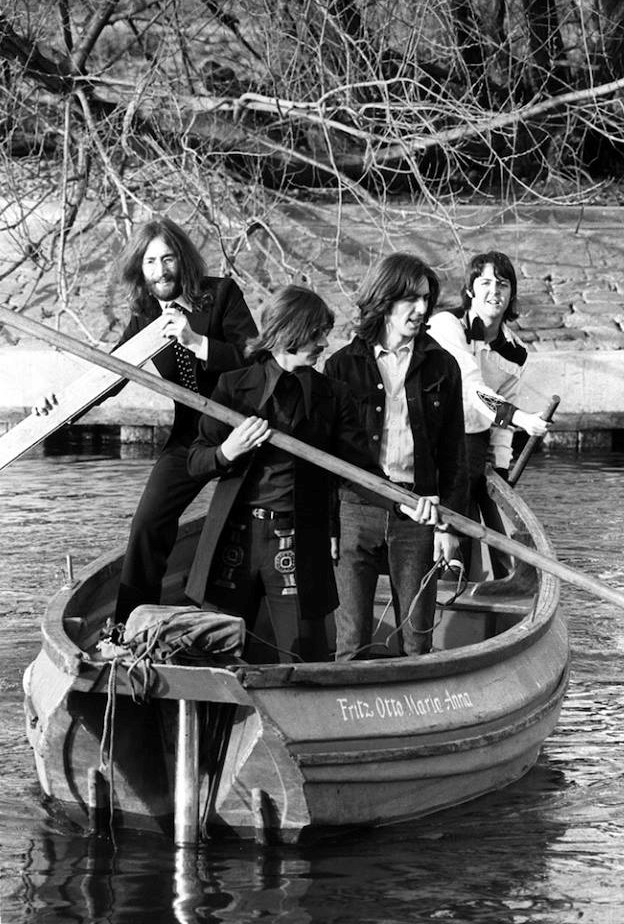
Picture yourself in a boat: The Beatles aboard the Fritz Otto Maria Anna, in the River Thames, on April 9, 1969.

It’s a simplistically obvious metaphor, and a literal description of what the group was seriously considering in the waning moments of their January, 8, 1969, session at Twickenham. If the TV show in production was to be episodic, this sequence would have provided a true cliffhanger.

Ringo Starr, codename “Russia,” wasn’t unwilling to drop his automatic veto, and it was John Lennon spearheading the effort withing the group, resurfacing as the group’s leader after so many years, who worked the sell on the drummer, along with Paul McCartney.

“Just give me one reason to stay here,” John asked.

“For the people,” Ringo answered with complete sincerity.

“All right, we’ll take ‘em with us,” John replied.

Paul McCartney clarified the pitch for a Winter 1969 rock cruise.

Look, we were going to give tickets away at this door here and say the first thousand people who come from Britian — British, white people (said to laughter as Paul was clearly joking; don’t write his reps). No, it’s going to be the first thousand that got here. We give them out, those tickets, but they include a boat ride, as well.

“We take them with us, and that’s the show,” Michael Lindsay-Hogg said.

France — aka George Harrison — took a more skeptical view of the potential naval movements than Russia and voiced several specific concerns with the plan:

  • Traveling with fans: “We’re stuck with a bloody big boatload of people for two weeks. At least you can go home from here, you can get away from it all. … It’d have be a bloody big boat, it’ll have to be bigger than the Royal Iris.”
  • Technical logistics: ” It’s just impracticable to lug all those people there and get all that equipment. … Of course it’s our problem.”
  • Cost:  “I think the idea of a boat is completely insane. It’s very expensive and insane.”

While at apparent odds, all the Beatles were deeply engaged in the discussion, and Michael took a straw poll for this proposal. “If we can get the audience and the boat, who votes to go?”

One hand — undoubtedly John’s — shot up immediately. George, despite his vocal objections, would still grudgingly go along with a trip if everyone else was joining. “I just want to get it over with, you know?”

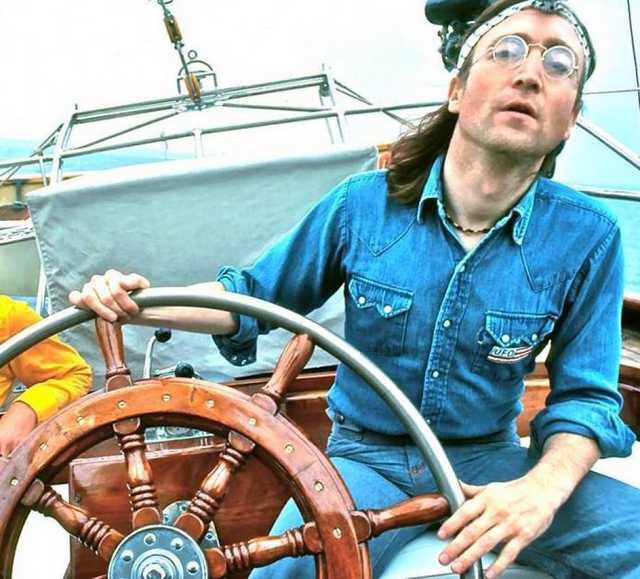
John piloting the ship (in 1975)

It was all coming together for Michael. The boat trip compromise to include a British audience was a bonus for him, an easy way to compile captivating footage for his documentary, another unusual setting — the Beatles not just mingling with fans, but doing it as they sail along the coasts of Western Europe and Northern Africa.  It all would culminate with his deep wish to bring the group to the Sabratha amphitheater: the world’s greatest band making its stage comeback at a spectacular, unique venue.

“See, it’s like having the most fantastic set on earth, but we haven’t made a set, you know? It’s still simplicity itself,” John said.

Ringo still wasn’t sure.

Ringo: But how many’s going to be looking at the set besides us and [Michael]? … [Viewers] want to see what’s on, not what’s around.

John: We’re bound to get something from it.

Ringo: A nice time, get a bit of sun.

Michael: After you’ve had your nine or ten closeups each, we’ve got to have something else to shoot about.

John: It’ll be like being on the roof in India, only we’ll be fully equipped.

The roofs in India were where, not coincidentally, John was at his most prolific in this latter phase of Beatles history.

Even though, as Michael said, “the vibes are very good at the moment,” there was enough obvious dissent in the room to lead John to say that the group will mull it over that night. “We all could say yes now, and somebody could decide no tomorrow.”

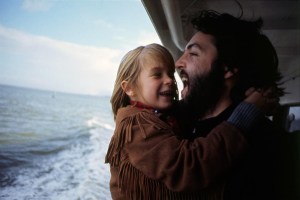
Paul and Heather at sea, 1969. (Photo by Linda McCartney)

As they wrapped up, a final, spirited discussion — as animated as the room has been with no fewer than six people all talking at once (the four Beatles, plus Michael and Apple Films head Denis O’Dell) — emerged over the cost of the boat trip, Ringo and George most concerned.

“We should be able to get the boat for nothing,” John said. “We should be able to get the boat for the publicity they get from it.”  Denis replied to Ringo’s skepticism that he could get a ship “in three hours on the phone.”

John confirmed Denis’ skills, relaying how the producer was able to secure a vessel for How I Won the War. “It was the American Navy making an antiwar film.”

Really, it was all falling into place.

January 8, 1969, was the band’s sixth day back to work at Twickenham, and while most of their new songs were still a work-in-progress, the was actual progress.  One day earlier, George was on the brink of leaving the group. Now, while he was bothered to do so, he was still seemingly willing to get on a boat with the group — and 1,000 fans he wanted little to do with — to go to Africa for a concert he didn’t really want to play.  Ringo was dead-set against going, and now he was willing to bend. Paul was always ready “for an adventure” and as the group’s de facto musical director, he was shaping the material to have ready for the production. As for John, he wasn’t just finally involved — during the final conversation, you heard him speak on the tapes, not Yoko Ono — but he was the group’s leader again.

Days of discussion of where and how to stage the concert had been a distraction from the music-making process, which needed to continue. They were almost ready for a decision.

“Sleep on it then,” said Paul. “I am.”

One question remained as the working day ended: Would the great democracy that was the Beatles agree to this plan for a live show and have a goal they could rehearse toward, or would January 9, 1969, be just another day?

11 Comments

Filed under Day by day