Tag Archives: Twickenham

Jan. 8: Nothing is real

Far from chaotic, the Get Back sessions, if anything, could be defined by its routines. Paul arrived early to play piano, and then pretty much ran the rehearsals. George’s songs — whether written overnight or brought back for another day — were a slog for everyone else. John didn’t have much new to offer, while Ringo did Ringo things like participate in conversations and keep the beat. Turn the page to the next day on the calendar, and do it all again.

Beyond music, the daily pattern underlying the scene centered around discussion of the live concert the Beatles were trying to put together. At once a footnote to the songs, the show was simultaneously the purpose of these January sessions and thus ostensibly what mattered most. The push and pull between director Michael Lindsay-Hogg’s wanderlust and the group’s default stance — to stay put — was a constant. And the more they couldn’t settle on a British venue, the closer they collectively moved toward simply staying in the very room where they were rehearsing and ruminating.

January 8, 1969, then, was no different than so many other days the Beatles spent at Twickenham the first half of the month. Discussion about the concert surfaced late in the work day, concurrent with Paul introducing the unfinished “The Long and Winding Road” and “Let It Be” to the rest of the band for the first time, and with their initial attempts at a full-band arrangement.

Yet now, to stage the “honest” sound they sought to achieve these sessions, the Beatles began to consider an ersatz solution. Rock and roll begets rocks, or something imitating it, at least.
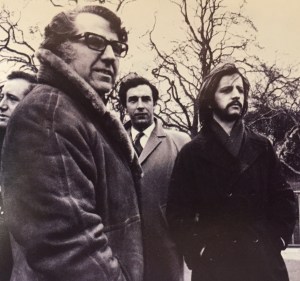
Denis O’Dell (left) with Ringo at The Magic Christian shoot. Photo from O’Dell’s book, At The Apple’s Core.

“If we try to cover all this (Twickenham’s sound stage) and build caverns and caves, it’s nice, you see,” said Denis O’Dell, the head of Apple Films.

Why perform at the Cavern in Liverpool for the nearly 300th time, when you can simply craft your own cavern indoors? (Please don’t answer that.)

Denis had been in the film industry since before the Beatles were born, and his association with the group began in 1964, when he was associate producer on the A Hard Days Night film. It was the start of a mutually beneficial partnership to this point, which included How I Won the War (associate producer and John starred), Magical Mystery Tour (producer) and led to his appointment as an Apple executive.

Of course, you already know his name (but have to look up his number) from his time at Slaggers, and do note he is NOT related to Miss Chris O’Dell.

Denis had appeared sporadically on the tapes to this point, and here it dovetailed with one of the first times John seemed even marginally interested in what was going on with the live show.

“Then we could do what we’d like with a backing,” Denis told John. “Go black, or stark or something. Then we could control all our lights from a panel, and we could have all colors you’d like.”

“Yes. And they’ll be able to see us through everything.”

John invoked sets used by Stanley Kubrick, Denis’ boss on Dr. Strangelove (that film was the source of the footage used during the “Flying” sequence in Magical Mystery Tour), and the man floated to direct a version of Lord of the Rings starring the Beatles. An extensive recap of that aborted episode in Beatles history is discussed at length in Denis’ 2003 fine autobiography of his Beatles years, At The Apple’s Core.

The conversation would continue, with Denis asking someone to fetch George Djurkovic, art director of The Magic Christian, from the film’s set elsewhere at Twickenham to provide added insight. But while Paul continues to play “The Long and Winding Road” in the background the conversation on the tapes meandered to a new duo: Ringo — one of the stars of The Magic Christian — and Michael. While Denis and John spoke as if the live show was to be held at the studio, Michael continued negotiations on taking the show on the road with Ringo. They were the leaders of the rival factions: Stay-put Starr vs. the whole Hogg.

“If I do go, I think it’s better just to go for four or five days,” Ringo said, showing newfound flexibility. “We don’t need to go to rehearse.”

Ringo was willing to bend and travel, but there’s a catch: “I’d like to do it to a British audience.”

It’s a catch, but one Michael is willing to receive. “Can we all talk about it? Will you take the veto off if you can be convinced we can get an audience?” Michael asked.

A Roman amphitheater wasn’t artificial, but to Ringo, the whole reason to perform overseas was contrived. The only reason to travel was the “helicopter shot, you’ll see the sea, the theater. And that is, for one, two minutes, say, that shot isn’t worth me going down there when I really prefer to do it here.”
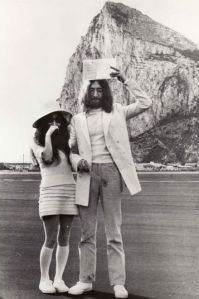
Two and a half months after Ringo suggested the Beatles perform before there for a “British audience,” John and Yoko would be married in Gibraltar (near Spain).

“I see us doing a good show here [at Twickenham], because it’s you [the Beatles],” Michael said, again conceding this could be the last TV program the band will ever do.

Speaking quickly, Michael continued:  “Everything you do has got to be good. All your albums are good. …. It’s not only you as the band, it’s not only them as songwriters, it’s the four of you.

“It’s got to be the best.”

Of course they’re the best. Like Ringo doesn’t know that?

“Every time we do anything it’s going to be the best,” Ringo replied. “Can’t we just do something straight?”

And back to Twickenham, and staying precisely put.

“At the moment, that scaffolding set and the tubular thing, it is kind of like four years ago,” Michael said. “And there’s nothing wrong with four years ago. … We’re all 28 now, or whatever we are. The audience isn’t the same, life isn’t the same.”

For the record, John, Ringo and Michael were all 28, Paul was 26 and George a wee 25. But his point remained legitimate. This wasn’t 1965 anymore.

“This place, it could be rock and roll, ” Michael began.

“It could be rock and roll in Tahiti or wherever you want to put us. What’s it called? (laughing)”

Michael’s not even sure himself. “It’s either Tunisia or Tripoli.”

Ringo asks about a British possession likewise on the Mediterranean — “What about Gibraltar?” — before turning his attention back to the room he was in and the music, ignored during the conversation.

How’s this for an idea of stripping a show down?

“See, Ringo said, “I’d watch an hour of just [Paul] playing the piano.”
7 Comments

Filed under Day by day

Jan. 8: Let it be hers

Mid-afternoon on January 8, 1969, at Twickenham Film Studios, Paul McCartney sat at a piano and microphone and ran though “Let It Be.” Nine months later, and 3,500 miles to the west of London, the Queen of Soul was doing the very same thing.

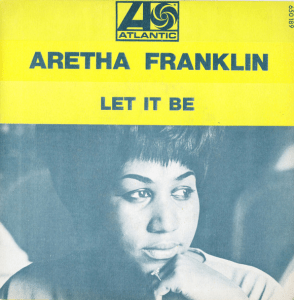
By that point — October 1969 — Abbey Road was in stores while “Let It Be,” along with the rest of the songs slated for the Get Back LP that would ultimately evolve into the Let It Be LP, remained on the shelf. Aretha Franklin had a copy of the unreleased track, though, and we know she had been promised that song for a long time, going back at least as far as the start of the new year. But she wasn’t getting an exclusive.

Let’s go back to Twickenham, January 8, 1969:

George:  You going to give it to Aretha Franklin?
Paul:  I’m going to do it, and give it to her.

Specifically, Paul planned to have the Beatles cut a “rough demo from the first rehearsal” once the song was complete and would “try to get her to do it as a single.” But “Let It Be” was not quite complete yet on this, the fifth day of the sessions. The melody is locked down, but Paul only presented the first verse and chorus to this point.

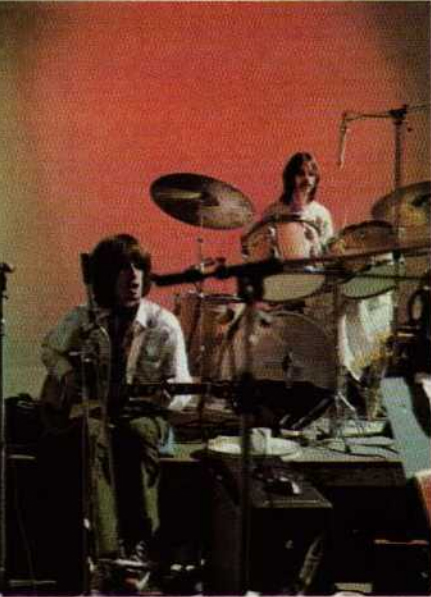
Weight and see: Aretha Franklin does her thing, while Duane Allman (right) does his on a cover of The Band’s “The Weight” on January 9, 1969.

Still, he knew what he had, and its potential as a cover. “It would be great for Aretha Franklin, that number,” Paul said before singing a line in an absolutely terrible imitation of her. (For the record, that same January 8, 1969, Aretha was recording her version of “The Weight” by The Band, whose influence weighed heavily on the Beatles these sessions.)

Ringo provided upbeat drum accompaniment —  exactly as laid out by Paul, with a faster tempo than would ultimately surface on the record, and with several awkwardly inserted fills.

Tongue firmly in cheek, John soon offered a lyrical tweak and a poke at Paul’s pseudo-religious lyric, suggesting “Brother Malcolm” as a nod to the group’s do-it-all assistant. (Paul will deliver that line in a few future takes.)

The group would return to the day’s on-again, off-again writing-cum-rehearsal session for “I Me Mine” followed by “The Long and Winding Road,” which like “Let It Be” was similarly unfinished lyrically and being given its first introduction on the tapes to the full band this afternoon.

These repeated truncated takes of “The Long and Winding Road” — which lasted nearly a half hour, split into two separate stagings late in the day — mainly served, as far as the Nagra reels were concerned, as background music for an increasingly captivating conversation about the eventual live show. More about that in the next post.

“The Long and Winding Road” caught George’s fancy, and he called the song “lovely.” Before the end of the day, Paul taught George the song’s chords. Likewise, Paul sketched out how to play “Let It Be,” which was played for about 10 minutes at the very end of the day’s musical portion, and George and Ringo were full participants.  The song was never to be played live in front of an audience by the Beatles, but at this point it was clearly in line for the upcoming concert, and Paul sought out additional accompaniment come showtime.

“It’s sort of gonna do like a hymn. That’s why I was thinking we could get audience participation on that,” he told George.

af-lib

The sleeve for the French release of Aretha’s version of “Let It Be.”

The January 8 session was really the formal coming-out party for “Let It Be,” marking first time Paul played it to the rest of the band these sessions (on tape, at least, but it seems clear if it had been played prior, it wasn’t as extensive).

Like “Yesterday,” the song was famously sourced from a dream, but this time around it was the lyrics that were nocturnally inspired.

Here’s Paul, as quoted in Barry Miles’ Many Years From Now:

In the dream she said, “It’ll be all right.” I’m not sure if she used the words “Let it be” but that was the gist of her advice, it was “Don’t worry too much, it will turn out okay.”  It was such a sweet dream I woke up thinking, Oh, it was really great to visit with her again. I felt very blessed to have that dream. So that got me writing the song “Let It Be.” I literally started off “Mother Mary,” which was her name, “When I find myself in times of trouble,” which I certainly found myself in.

But to be clear, the trouble wasn’t dated to January 1969. Rather, like “The Long and Winding Road,” “Let It Be” materialized in 1968 amid the lengthy and tumultuous White Album sessions. The two gospel-flavored songs had another link, and that was they were written with other people in mind from the start, too: “The Long and Winding Road” was influenced by Ray Charles.

As for Ray’s future Blues Brother co-star, Aretha never did end up releasing “Let It Be” as a single in the U.S. or U.K., but it was among the standout tracks (her covers of “Elanor Rigby” and “The Weight” were among others) on her This Girl is in Love With You LP, which was released January 15, 1970 — two months before the Beatles’own version came out as a single, and 11 days after the last Beatles recording session.

6 Comments

Filed under Day by day

Jan. 8: An hors d’oeuvre

“All Things Must Pass” should have been a Beatles song, another gripping, iconic anthem dating to the group’s long goodbye.

gh-rs

By the time the Beatles were rehearsing and recording in January 1969, George Harrison’s emergence into a songwriter that rivaled John Lennon and Paul McCartney was essentially complete, with “All Things Must Pass” part of that transformation. Taste matters, but a fair argument could be made that the song could have been the band’s greatest.

“All Things Must Pass” — which had the potential to emerge during the Get Back sessions, be performed live and later land on the Let It Be LP — thus could have gone a long way to giving George his ‘moment’ prior to the group’s send-off of Abbey Road. It never happened. But on January 8, John and Paul gave George the option of taking his song, creating that moment and enjoying his own spotlight at the live show to come. They never said it, but based on the prior week’s tapes, the two senior members of the band were probably just disinterested in playing the song.

“Do you fancy just doing it on your own on an acoustic?” Paul asked. “That would work. But it’s a bit of a thing for you.” The “thing” in question was effort.

Paul would know about playing alone on stage with an acoustic guitar while the rest of the Beatles waited in the wings.

Would opportunity knock, but for George this time?

John was on board, too, condescendingly positing George could serve “an hors d’oeuvre” to the presumptive hungry crowd.

George didn’t directly knock the idea, but didn’t follow up on the suggestions, instead trying work Paul and John on the chorus’ harmonies. After scuttling Paul’s suggestion to begin the song with George’s instrumental opening straight into the chorus, instead of the first verse — hey, it worked for “Don’t Let Me Down” a few days earlier — the pair haggled over the bassist’s harmony line, with Paul complaining it moved too much.

The group spent about a half hour on the tapes working on and around “All Things Must Pass” on January 8 — returning to the song after skipping it the day before — and while there was no significant or specific alterations to the song from the previous days’ rehearsals, they capped the day’s work on the song with a legitimate, listenable and, dare I say, enjoyable take of “All Things Must Pass.” It’s a version that should have shown up, at least, on Anthology 3, in addition to George’s one-man demo from a month later.

While the day’s final take is not too dissimilar in overall form than the one ended up on the final recording on George’s solo debut the following year (excepting the orchestration and dozens of additional flourishes, of course), John’s piano part here — he had moved over from organ in the final phases of the day’s takes — added little, usually amounting to pounding out chords. Still, it’s not wholly detrimental, and Paul’s bass line is on point.  Ringo, as usual, hits the spot.

The Beatles’ greatness has been amplified by the what ifs and what could have beens, and the possibility of a “Beatles’ 1969 classic ‘All Things Must Pass’” is a genuine opportunity lost.

It sounds as good as it could at this point in what amounts to a few hours of overall rehearsal and arrangement with half to three-quarters of the band giving a fraction of effort. It’s the Beatles playing a coherent, complete version of “All Things Must Pass,” and that counts for something in a world where such a release never existed, yet we all paid money (several times, in fact, thanks to new formats, remastering, etc.) to buy “Wild Honey Pie” and “Dig It.”

There is a “rest of the story.” But the vast majority of history of “All Things Must Pass” by the Beatles is now mostly told. This pre-lunch performance marked the final time they played the song at Twickenham. They returned to it very briefly near the end of the month at Savile Row with the support of Billy Preston, who released the song a few months before George would in 1970. By January 8, 1969, the rehearsal stage was essentially over, however, and this was really the final fumes of “All Things Must Pass” as a Beatles song.

Notably, the song never appeared in the Let It Be film. “I Me Mine,” revealed earlier on January 8, did, joining “For You Blue” (which was properly introduced to the band a day later) as George’s contribution to the Get Back sessions. Despite all the hours of rehearsals, the song he carried over into January 1969 as a product of his days with Dylan and The Band, would be passed over by his own band. And it was good enough to serve as the title track of what could be argued to be the greatest Beatles solo album.

6 Comments

Filed under Day by day

Jan. 8: No blue moon in history

Having completed a spirited four-song run-through to jump-start the full band’s session at Twickenham on January 8, 1969, with the ancient “One After 909,” the Beatles managed to dig to the very bottom of the vault and the genesis of the Lennon/McCartney songwriting partnership.

It’s a stretch to say the Beatles played “Too Bad About Sorrows” in the moments after they finished “One After 909,” itself a primeval composition, one John had said was his own, but Paul claimed to have shared credit writing. The spark of “909” propelled the group further down Memory Lane and over to 20 Forthlin Road. Dating back more than a decade to 1957, “Too Bad About Sorrows” has the distinction of being the very first Lennon/McCartney collaboration, per Paul.

We would sit down with a school notebook which I have to this day, an old tattered copybook, blue lines on white paper, and I would write down anything we came up with, starting at the top of the first page with ‘A Lennon-McCartney Original’. On the next page, ‘Another Lennon-McCartney Original’; all pages have got that. We saw ourselves as very much the next great songwriting team. Which funnily enough is what we became! We started off, I think, with a song called ‘Too Bad About Sorrows’. They all had very simple chord structures but we learned our craft that way.

Paul said much of the same here, on the South Bank Show in 1978.

Lasting about 15 seconds long, all we really hear on the January 8, 1969, performance is John singing the first line of the song — the title — over incoherent guitar and bass accompaniment, and two more garbled lines: “Too bad about love/There’ll be no tomorrow.” The performance itself is obviously forgettable as are so many of the brief stabs at songs these sessions, but this is particularly notable as it enabled the public — via decades of bootlegs and now YouTube clips like the one below sourced from those same bootlegs — to hear the very first Lennon/McCartney song.

The group would similarly perform a taste of “Too Bad About Sorrows” nearly two weeks later after the sessions shifted to Savile Row.

Straight out of the stab at “Too Bad About Sorrows,” John playfully delivered the line, “There’s no blue moon in history,” before letting out a giggle. Seconds later, he and Paul shared vocals on an impromptu version of “Just Fun,” the song John had just referenced and what is considered the second collaboration from the Lennon/McCartney team. In between, John delivered the line about “pot-smoking FBI members” that would eventually appear on the Let It Be album, and referenced in the last post.

Two days earlier, “Just Fun” had come up in conversation with director Michael Lindsay-Hogg and producer Glyn Johns in a sequence that ended up in the Let It Be film as they discussed the revival of “One After 909.” Paul weakly sang the opening lines from “Just Fun” as part of a greater recounting of the early days of writing with John.

The Jan. 6 discussion of “Just Fun,” from the “Get Back” book.

This attempt wasn’t as comprehensive as the abbreviated January 6 version, lasting just a single line: “They said that our love was just fun.” Things broke down as George interrupted to go over new songs to be rehearsed. “Just Fun” wasn’t performed — at least at these sessions, and that we know of — by the Beatles again. Like “Too Bad About Sorrows,” this wasn’t any kind of groundbreaking performance, but it’s a slice of history that’s thankfully preserved.

Beyond the South Bank Show clip above, Paul has dusted off “Just Fun” elsewhere, including two verses’ worth of the song at a 2004 soundcheck in Zurich, of all dates and places. Quite oddly, John’s singing of the line “There’s no blue moon in history” shows up in the once indispensable 1982 documentary “The Compleat Beatles” (this author’s first real exposure to the band’s history) as background during an interview with George Martin about Beatles For Sale, for some reason. So in that strict sense, it’s actually been officially released, albeit a few seconds’ worth.

Unfortunately, “Just Fun” is a terrible, terrible, awful lyric. Even Paul agrees.

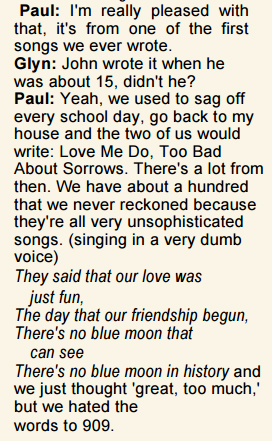
There was one called ‘Just Fun’ we couldn’t take any further: ‘They said that our love was just fun / The day that our friendship begun / There’s no blue moon / That I can see / There’s never been / In history …’ Ooops! It’s horrible, this is horrible. When we heard heard that rhyme we just went off that song in a big way. We were never really able to fix it either. But they’d get written down and we’d play ‘em. We’d say, ‘Wow, we’ve written some songs, you know, d’you wanna hear them? “Said our love was just fun …”’

There’s never been a blue moon in history? For heaven’s sake, Paul, there was a blue moon over Liverpool in August 1956, 11 months before you met John and wrote this song!

It turned out OK for these guys, though, and Lennon/McCartney — together and alone — figured it out. For instance, we all can agree that “She Said She Said” — the next song the group played on January 8, after a mention from George — is a quite terrific lyric.

Considering the band never performed the song live, and presumably hadn’t played it at all together in two-and-a-half years, the group holds together the first verse decently enough.

As we recount events two days before George left the Beatles on January 10, it’s worth marking that the original 1966 recording session of “She Said She Said” was missing Paul. He walked out after he “had a blarney” with the others, the first Beatle to tentatively leave the group.

1 Comment

Filed under Day by day

Jan. 8: Rocky and the Rubbers

Our world lost — and the stars and heavens regained — David Bowie last week. I didn’t feel much like blogging about the Beatles for a little bit, even though this post had already been mostly written. But as the man once sang, time is waiting in the wings, and we should be on by now. So please enjoy the continuation of the Beatles’ Nagra tapes timeline, picking up with the morning of January 8, 1969, as David Bowie was celebrating his 22nd birthday across town and working on writing Space Oddity.

It’s tough to say “this is when they got serious” when there were laughs and smiles throughout, but after more than a half hour on the January 8, 1969, Nagra reels, the Beatles at least found a bit of motivation and a short-term goal to complete, getting serious in deed if not demeanor. With a concert to be staged, John, Paul, George and Ringo gathered their focus for a chirpy, energetic run-through of four songs deemed early contenders for a live show.

Paul led the proceedings, tabbing his original duet as the opener: “Johnny, ‘On Our Way Back Home.’”

If you’ve seen Let It Be — and I really hope you have and will one day again on some sort of modern entertainment replay device – you’ve been struck by how loose John and Paul are, hamming it up as they sing into the same microphone.

Two of Us

Paul, who Ringo in an interview the previous year referred to as“Elvis” in reference to his performance of “Lady Madonna,” was closer to the toxically impaired King, comically slurring and sneering throughout a take that both he and John sang without benefit of a lyric sheet. That’s how we end up with John, laughingly repeating his mistake “two of us wearing postcards” once the take was complete. They laughed the as they sang it during the take, too.

While Paul and John can’t often get through more than a few words without butchering a lyric, there was no turning back once they started, with this a sincere attempt at a run-through.

The sequence appears slightly edited in the film, cutting the performance in half from its actual three minutes to a minute-and-a-half. Had the group secretly abandoned the film and this leaked, conventional wisdom would have been that the group had a blast at Twickenham. Maybe they were just hamming it up for the cameras — or John was, at least — but it’s hard to deny a somewhat different spirit in the room with a watch and listen. When things were languid at Twickenham, it was painfully clear.

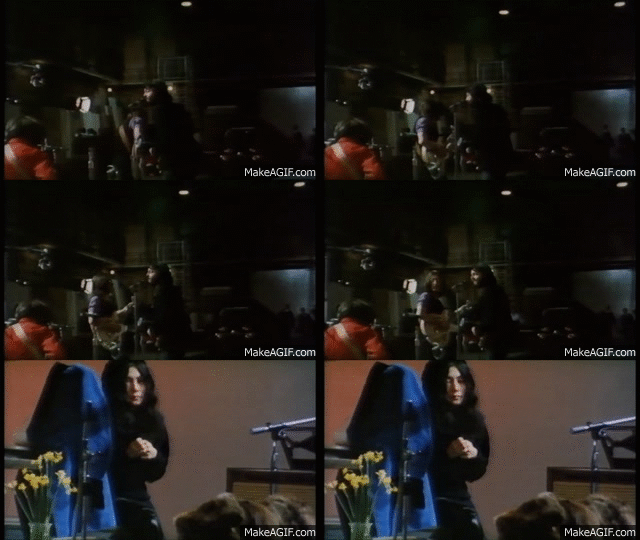
A visually telling edit by movie director Michael Lindsay-Hogg comes around 30 seconds into the clip, as we catch John glancing over at Yoko, who blankly stares back, as he stands oh, so close to Paul, showing some of the genuine affection that they certainly used to have and somewhere deep in there still did.

Yoko and Us

Two of us, and also Yoko

If you can use the word “tragedy” when referring to the fact a song was omitted from a compilation –- you shouldn’t, but I will, deplorably -– it’s a tragedy this take didn’t make it onto Anthology 3. It’s in the film, thus is a recognizable, published “official” release, so despite the issues with the lyrics, it’s “out there.” Consumers would have understood having an(other) imperfect take on the compilation, if not welcomed it.

In the film, the song comes out of the “shocktric shocks” sequence from a few days earlier, and then dumps into “I’ve Got a Feeling,” but in reality the group – after the improvised “You Got Me Going” and a few unserious seconds of “Twist and Shout” – delivers “Don’t Let Me Down.” Note the time between the end of “Two of Us” and “Don’t Let Me Down” is less than a minute. Dallying was at a minimum. While “Don’t Let Me Down” appears several times in Let It Be, this version is not in the film.

George didn’t quite nail the introduction, but again there was no concern when the lyrics were muffed. John simply shouted “Snotgobbler!” and moves on. That’s rock and roll. So was the pre-primal scream from John as the song began.  So were the lyrics “nobody ever rubbed me like she do me,” which John subs in at one point. The band played on, and musically it was relatively tight, really an achievement at this point in the song’s lifespan.

beardclose up

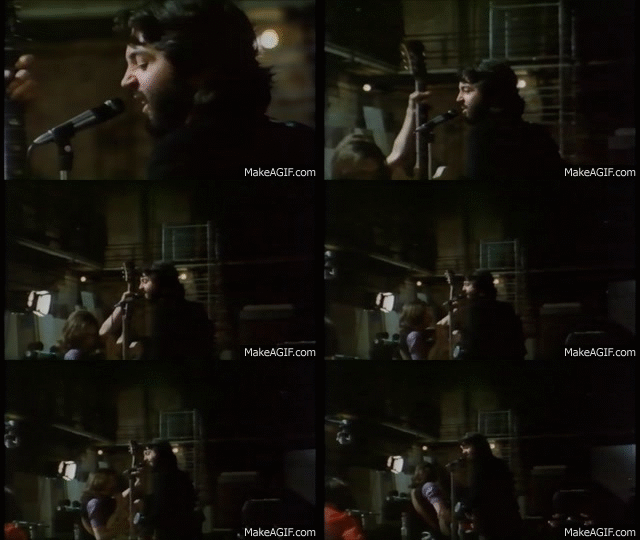
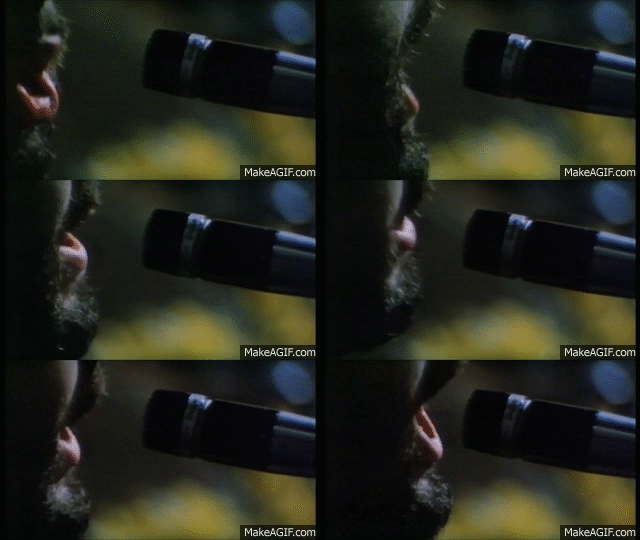
Paul beard porn from the January 8 sessions, as seen in Let it Be. Thank me later.

John came out of the high-energy take with thanks from the “band.” “God bless you, ladies and gentlemen, I’d just like to say a sincere farewell from Rocky and the Rubbers, this is Dirty Mac himself saying …”

Paul cut in, all business: “I’ve Got a Feeling.”

goodmorning

“Good morning!”

The performance was a tick slower at the outset, and with continued lyrical miscues (especially Paul and John mismatching “oh no” and “oh yeah” early on), but it retained the same vigor as the two previous songs. Paul shouts a celebratory “good morning!” after wailing “somebody who looks like you!” as George hits the middle-eight guitar part.

This sequence made the film, notably appended to a particularly torturous rehearsal from a day later.

Three songs into the run-through, John revealed some fatigue, perhaps reflecting the weight of the previous week more than the prior 10 minutes: “Only another two days to go, then we’ll have another two off.” But Paul then offers a pick-me-up, suggesting, “Do ‘One After 909’.” So they did.

This number marked the one point in the four-song run-through the group stopped after they started, rebooting the take after George’s solo. Once again, there’s a disconnect with the film. Based on clothes alone, this performance of “One After 909” is featured visually early in the movie — after Paul’s discussion of the song with Lindsay-Hogg from a couple days earlier (as seen in the film) — but paired with the audio of a take from January 9.

The movie and even a moment of the Let It Be LP was further fleshed out with a bit of memorable dialogue coming out of “One After 909.” You’ll hear it on the Let It Be LP prior to “For You Blue,” George’s eventual lone contribution to album that was just days old, as John reads from the newspaper.

Queen says no to pot-smoking FBI members.

What, you thought she’d be OK with it?

Again, we have a disconnect between the movie and the tapes, as the film moves to a previous day’s take of “Oh! Darling” while in real time, the band had completed their first commitment to a run-through for a show yet to materialize. It was rough, but it was spirited, and if anything, the set must have given them the idea there would be a light at the end of the tunnel if they chose to shine it. With at least four fully formed songs, they were on their way, and the apparent positivity could easily be read to bode good fortune ahead.

Probably inspired by “One After 909,” they continued a quick dip into their back catalog.

10 Comments

Filed under Day by day